
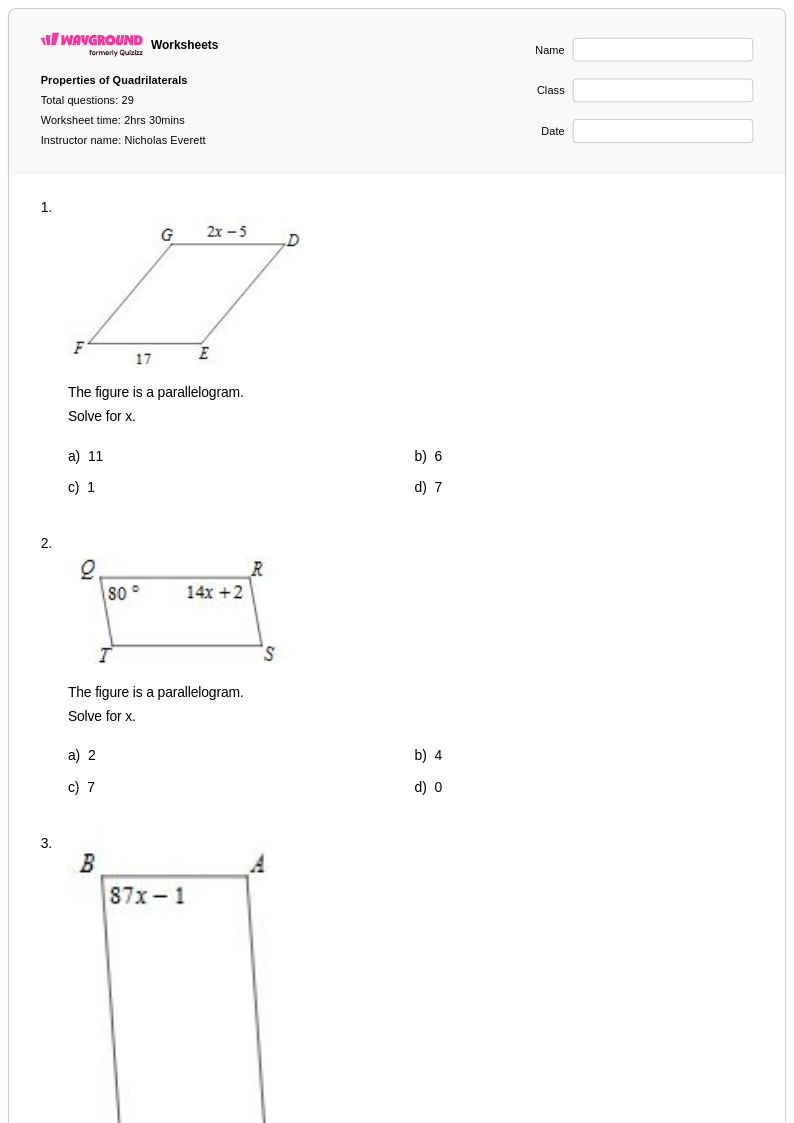
29Q
9th - 12th
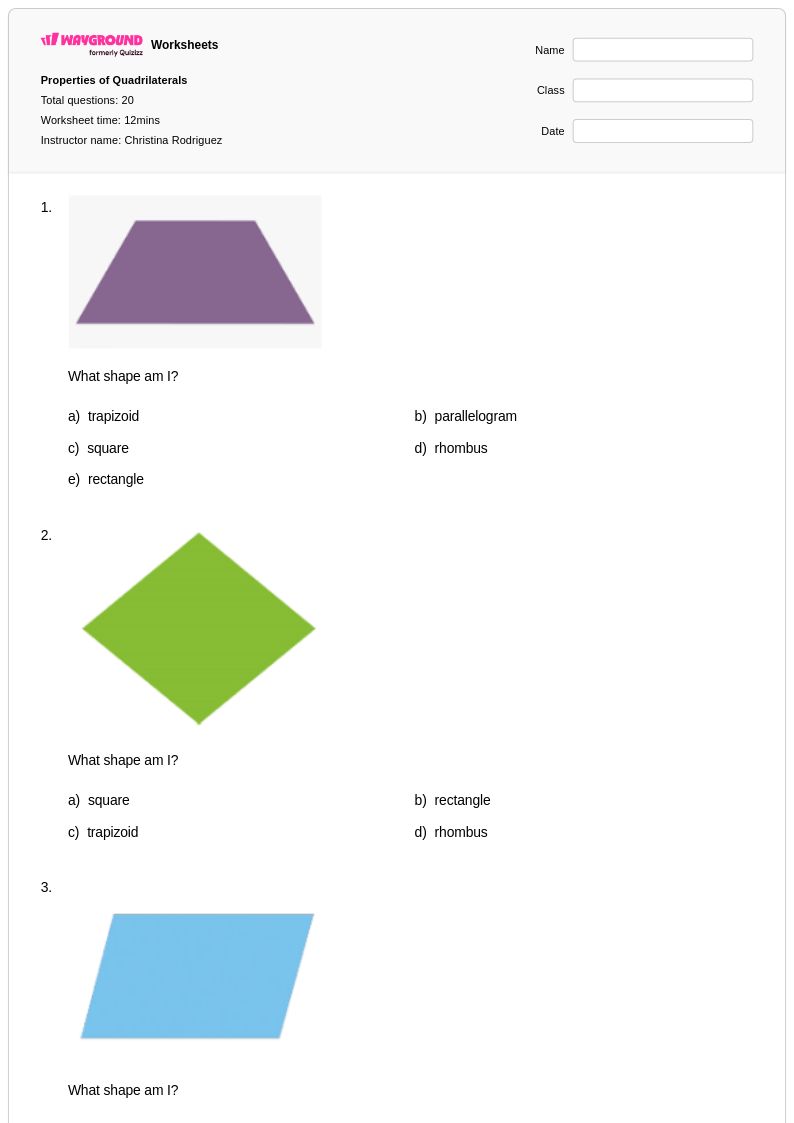
20Q
3rd
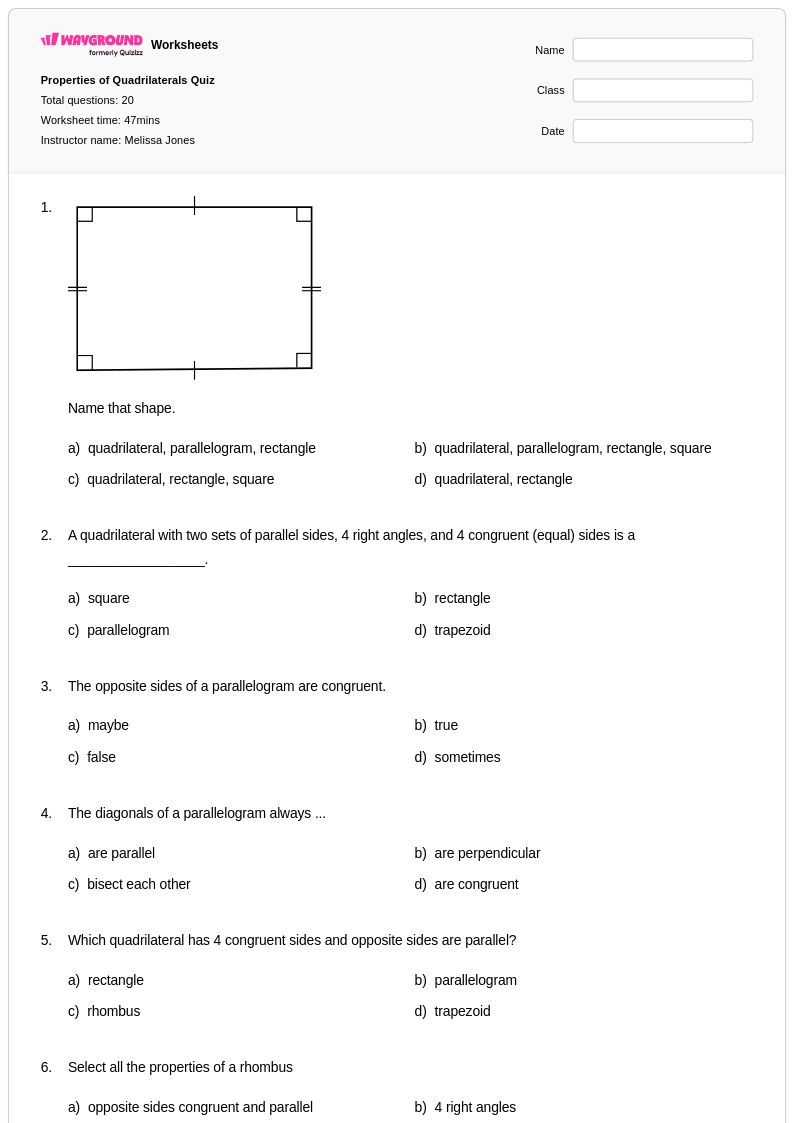
20Q
10th
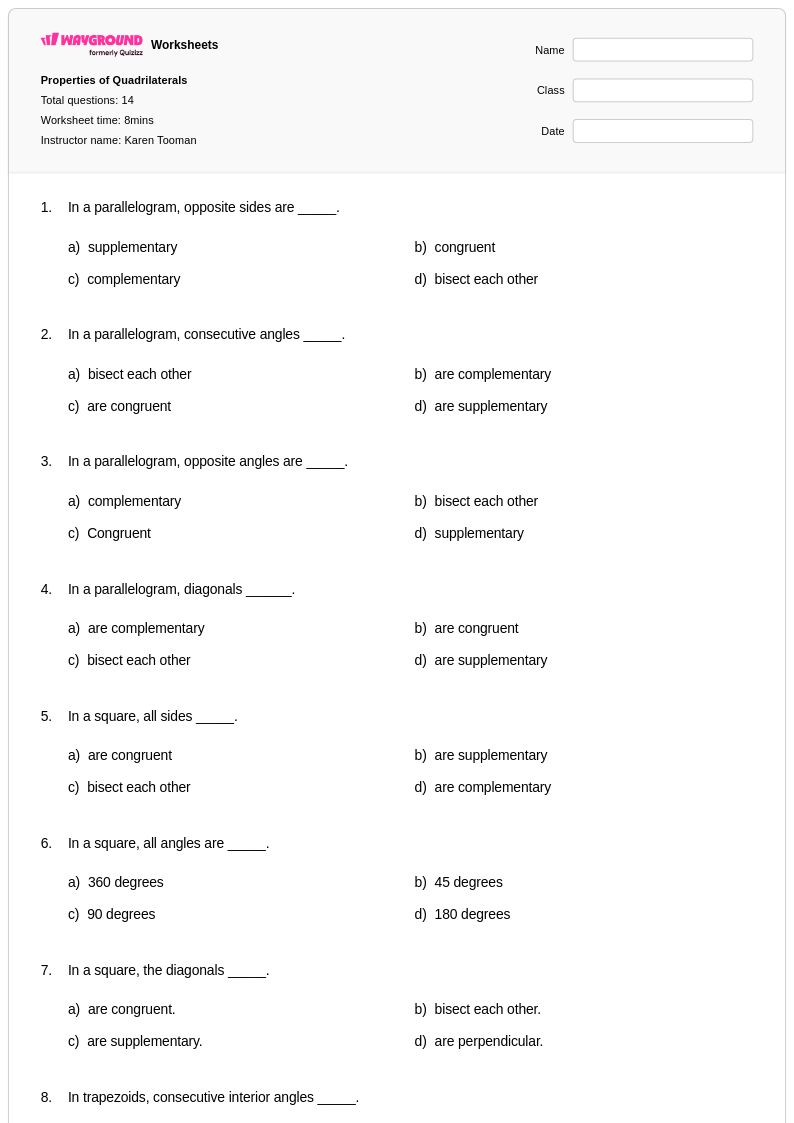
14Q
10th
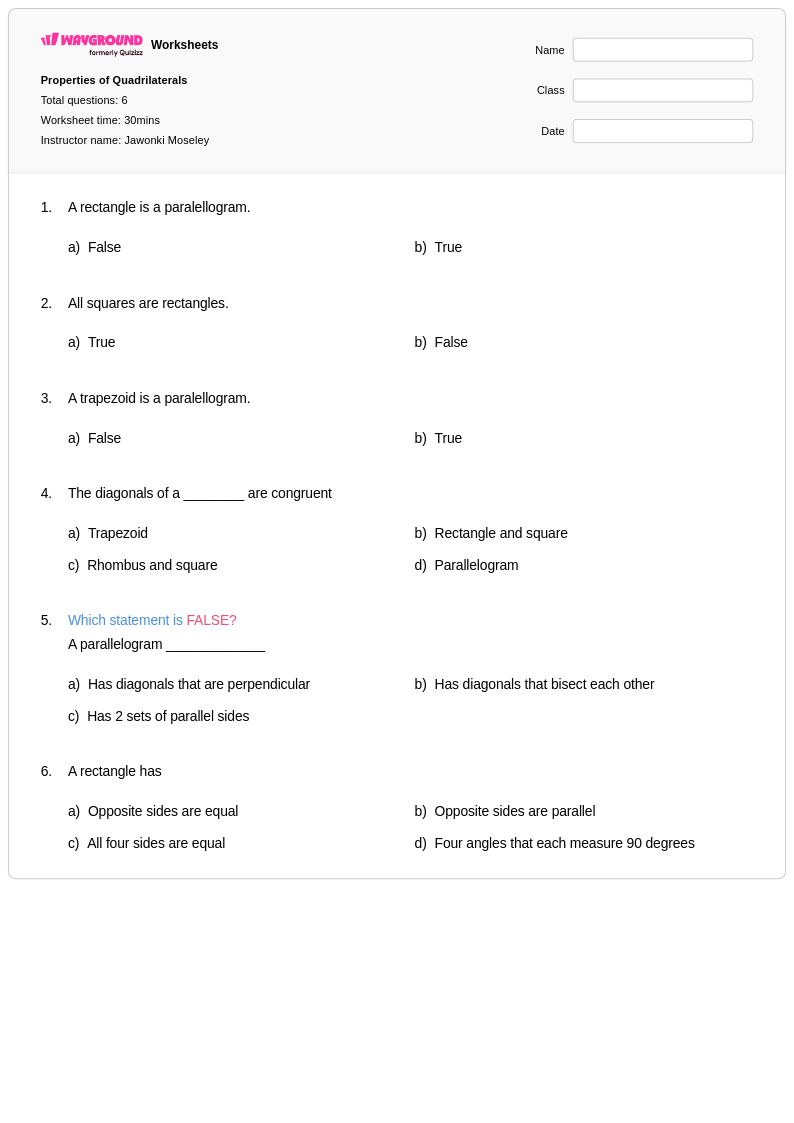
6Q
9th
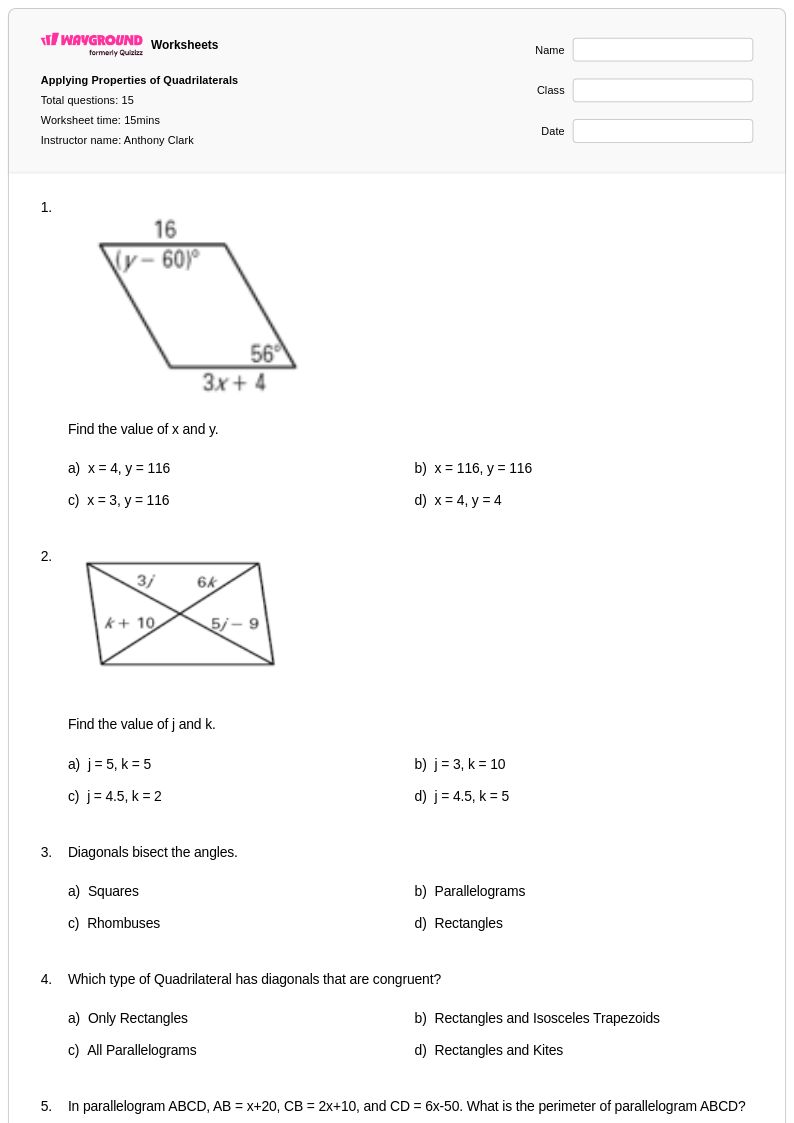
15Q
12th - Uni
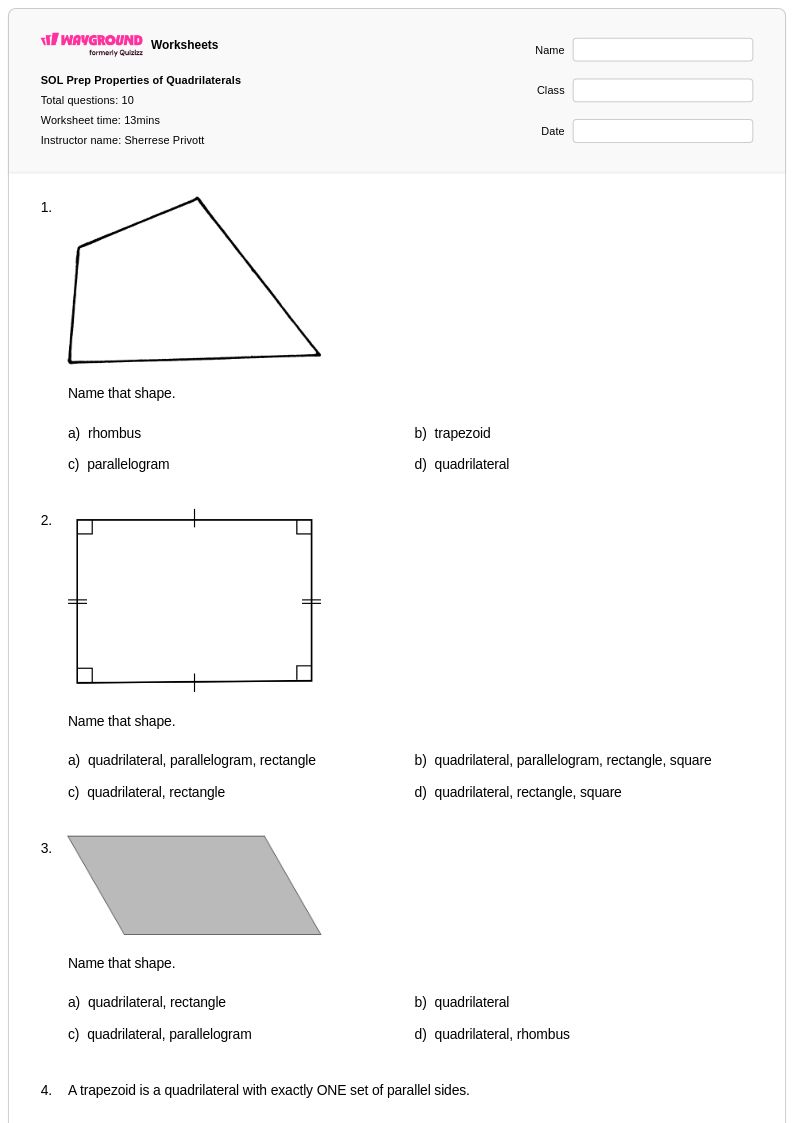
10Q
7th
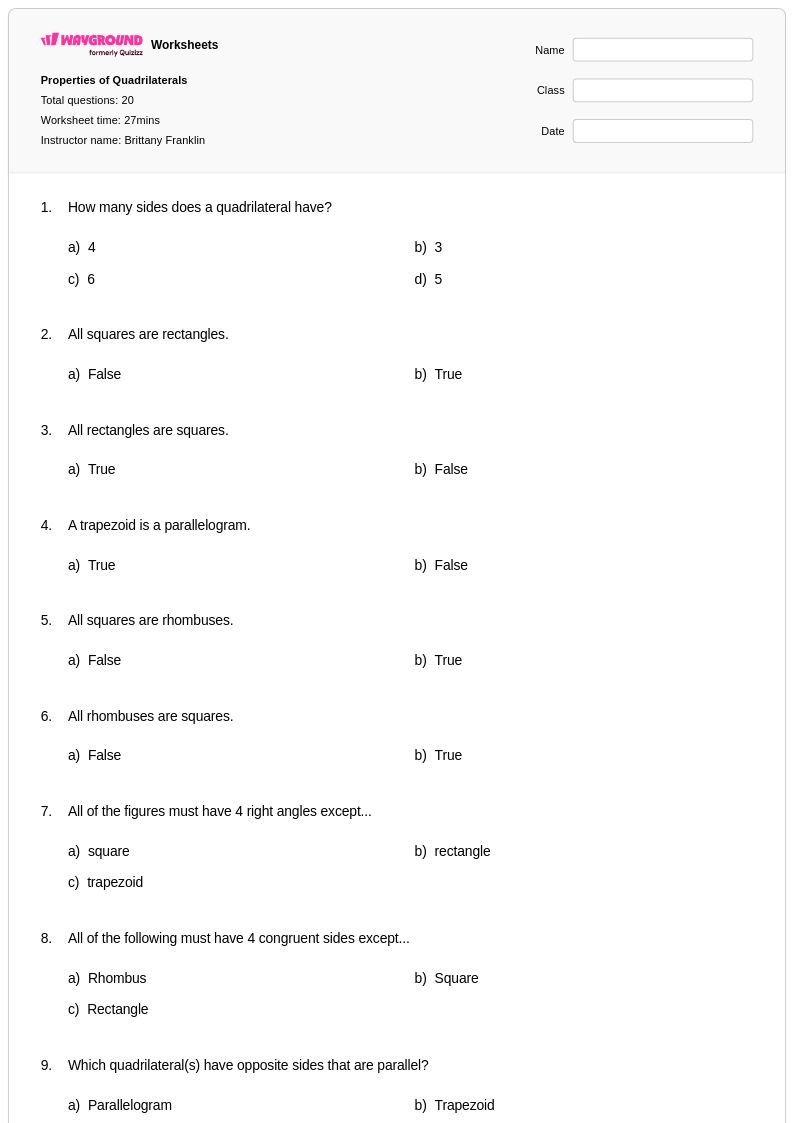
20Q
7th
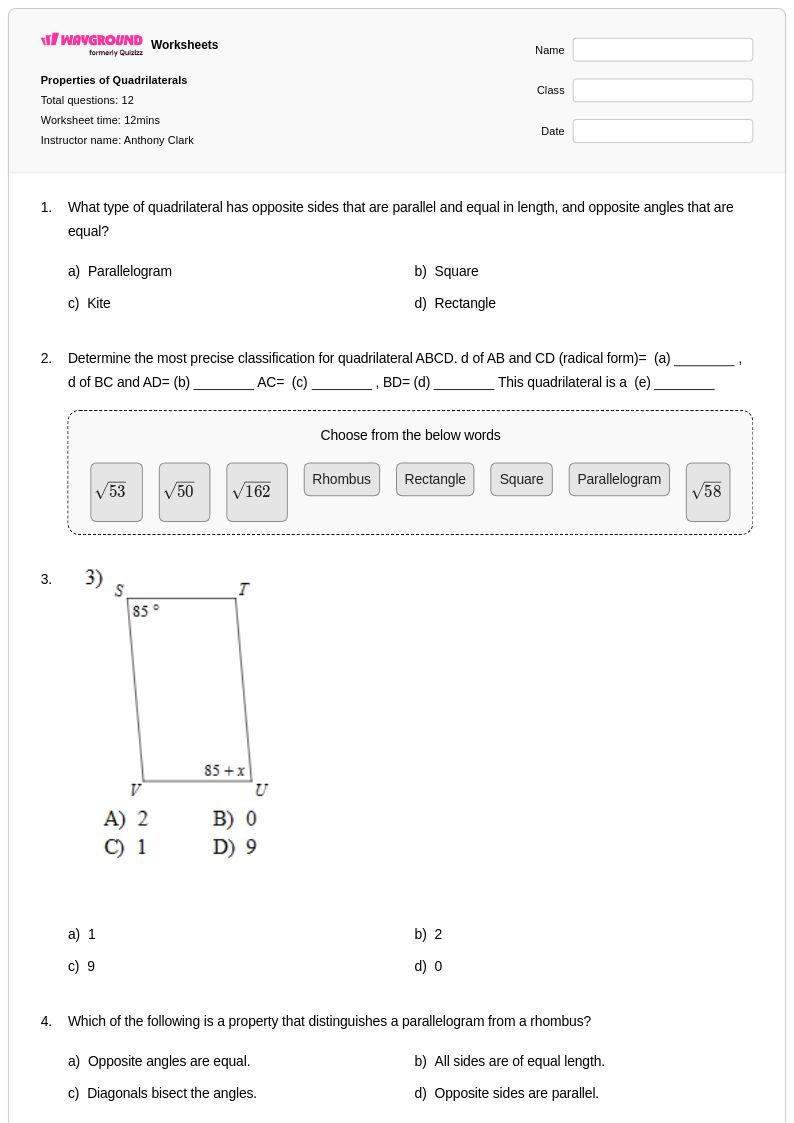
12Q
7th - Uni
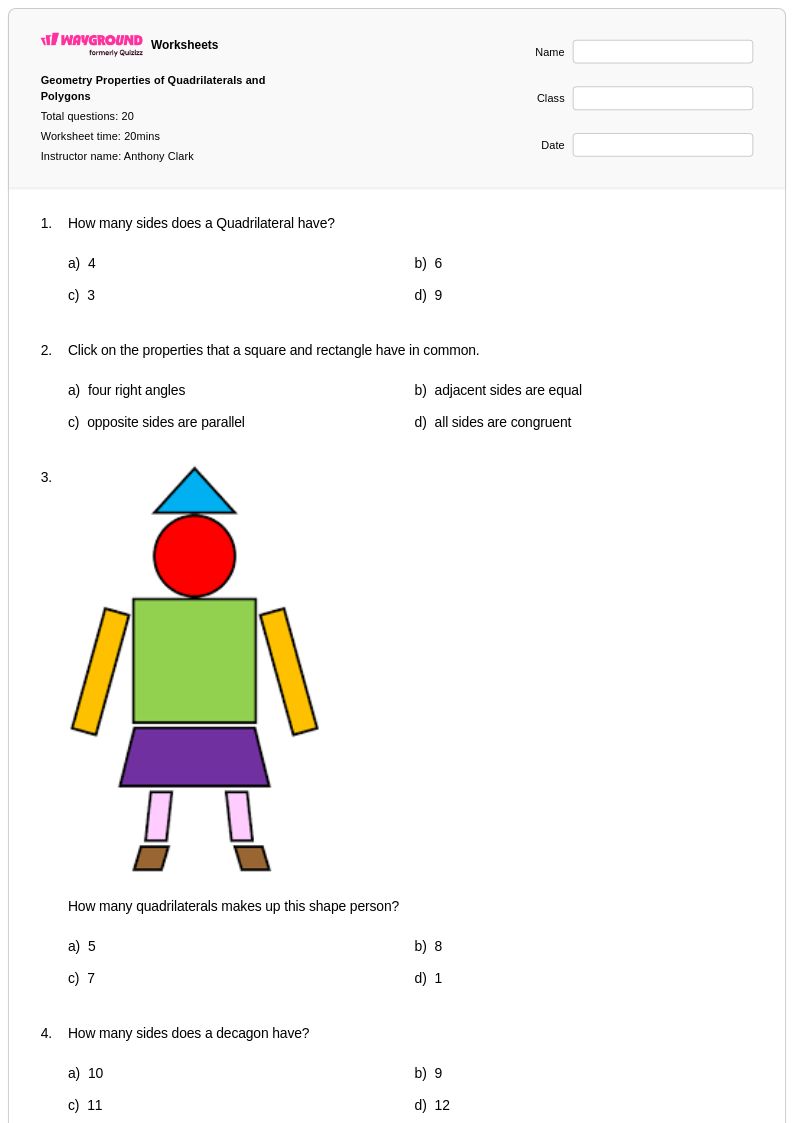
20Q
3rd - Uni
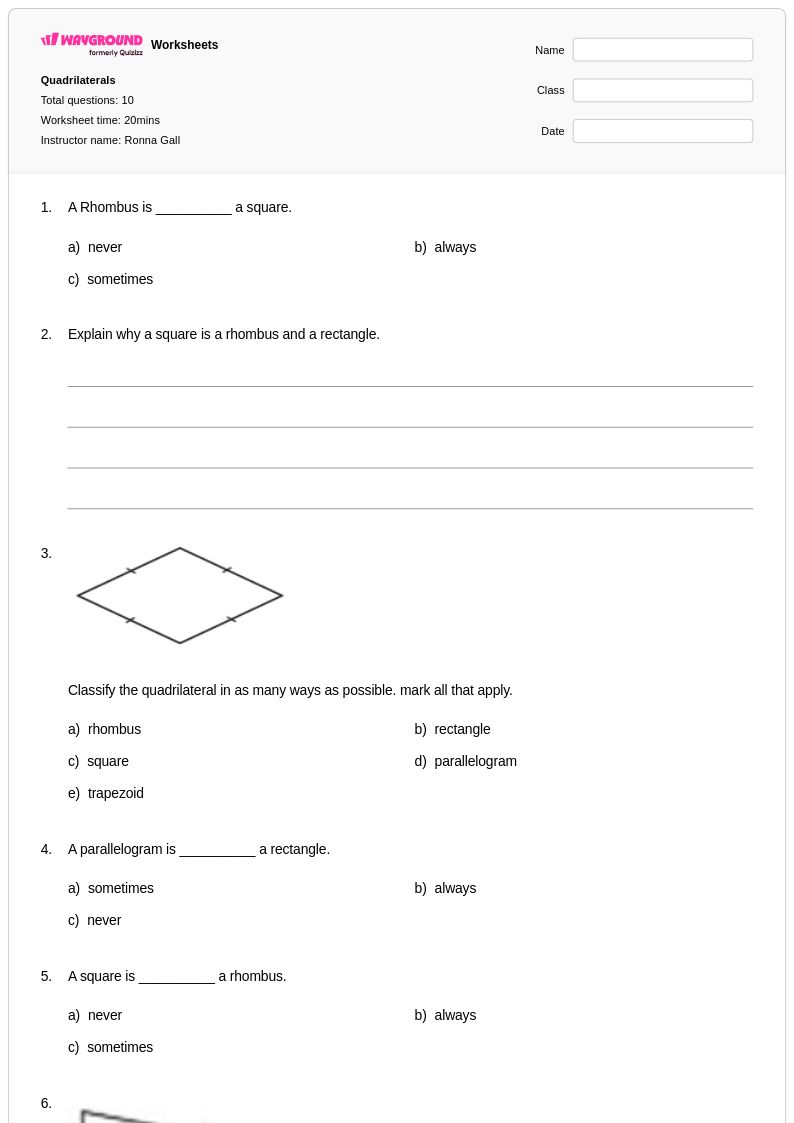
10Q
5th
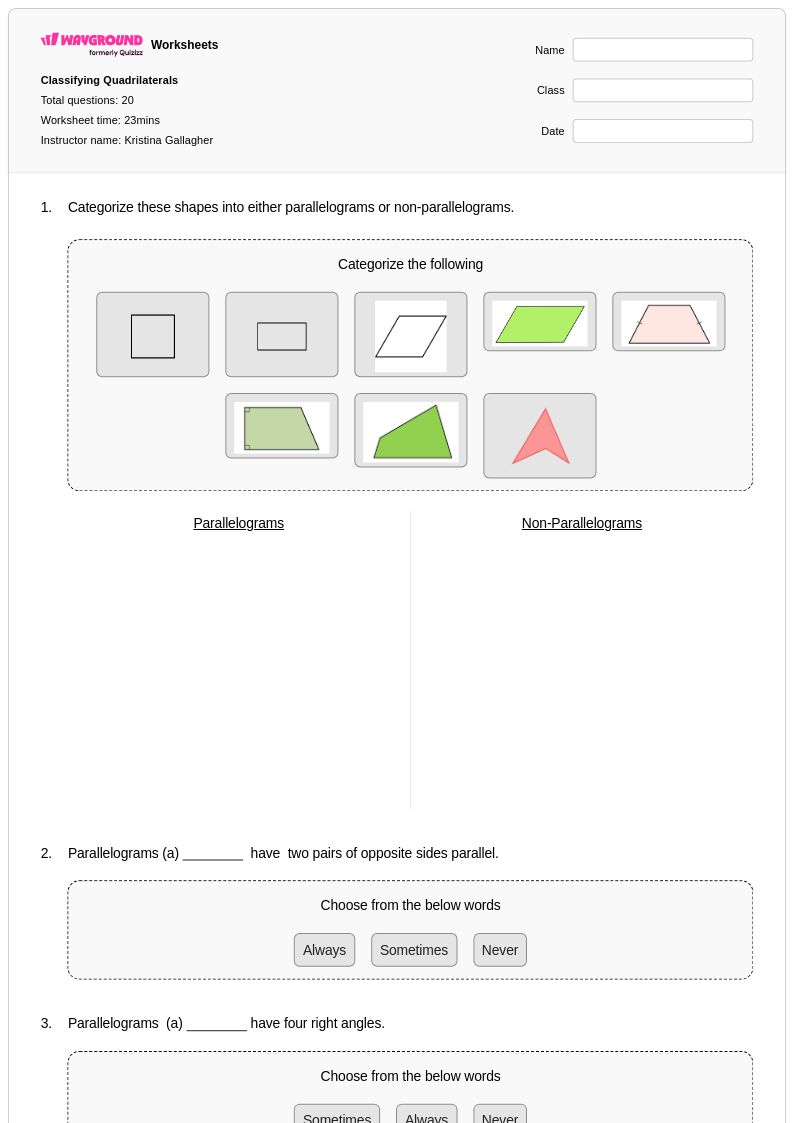
20Q
5th
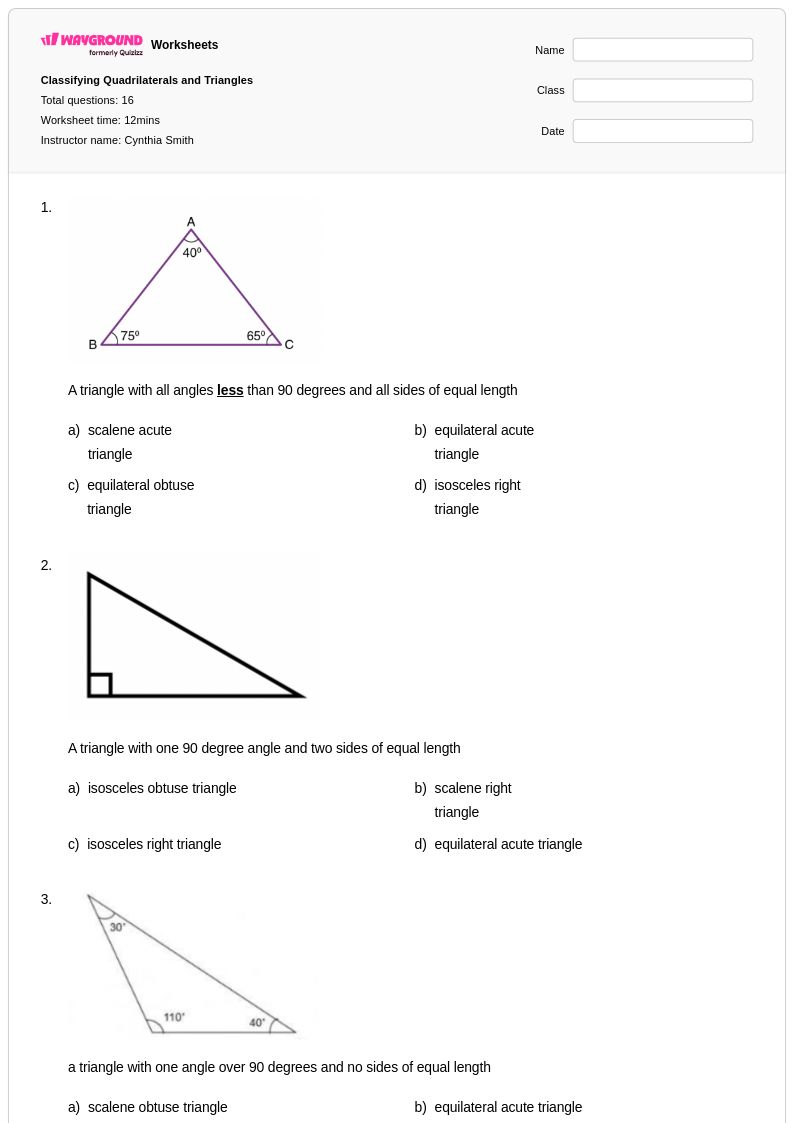
16Q
5th
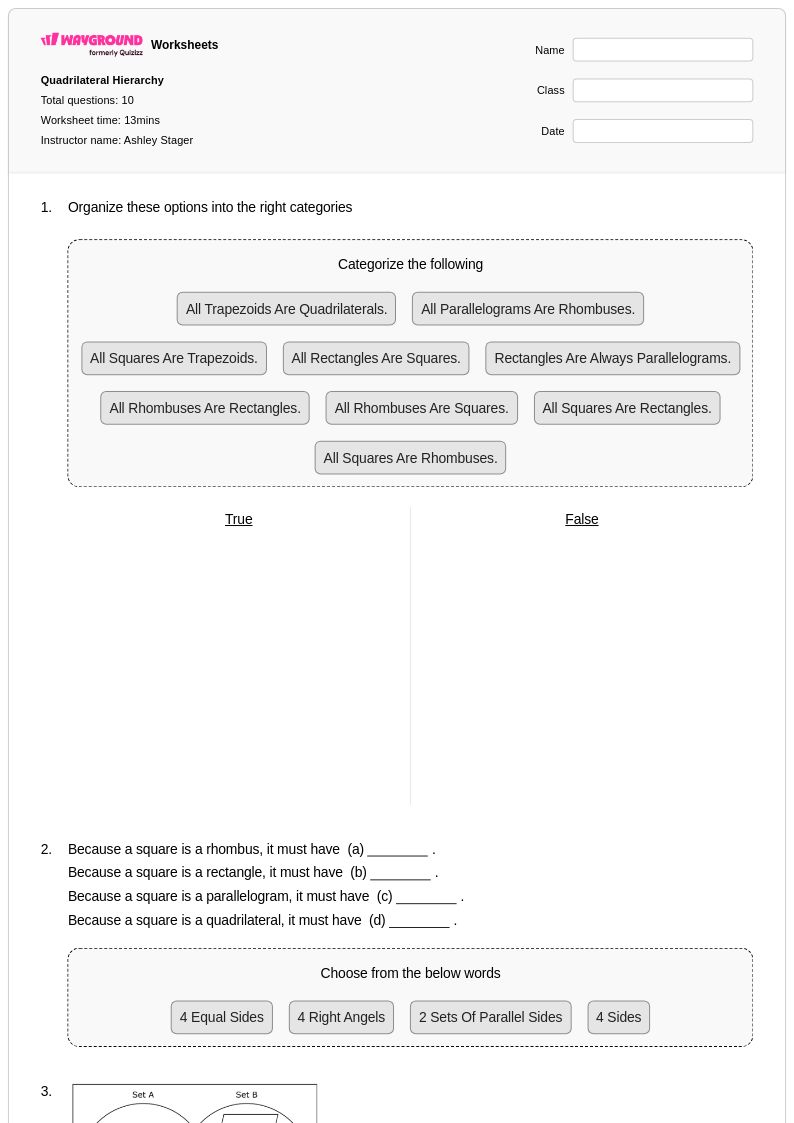
10Q
5th
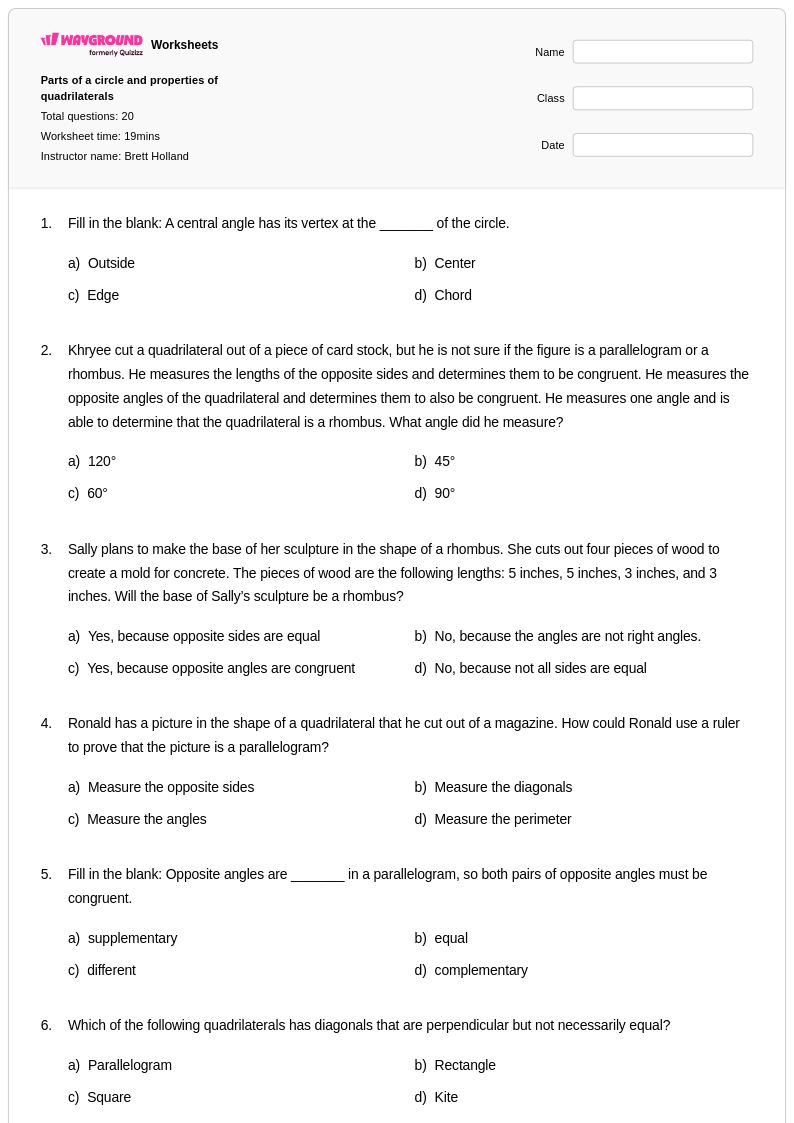
20Q
9th
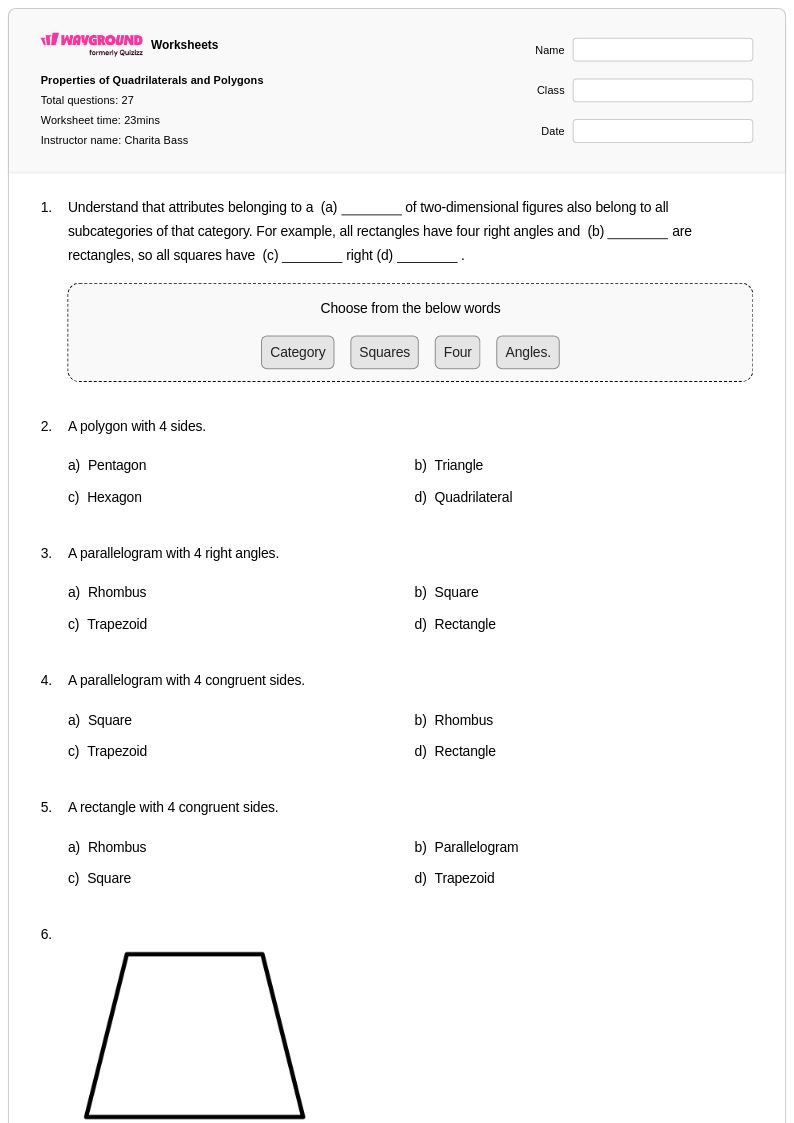
27Q
5th
43Q
9th - 12th
10Q
10th
10Q
5th
15Q
12th
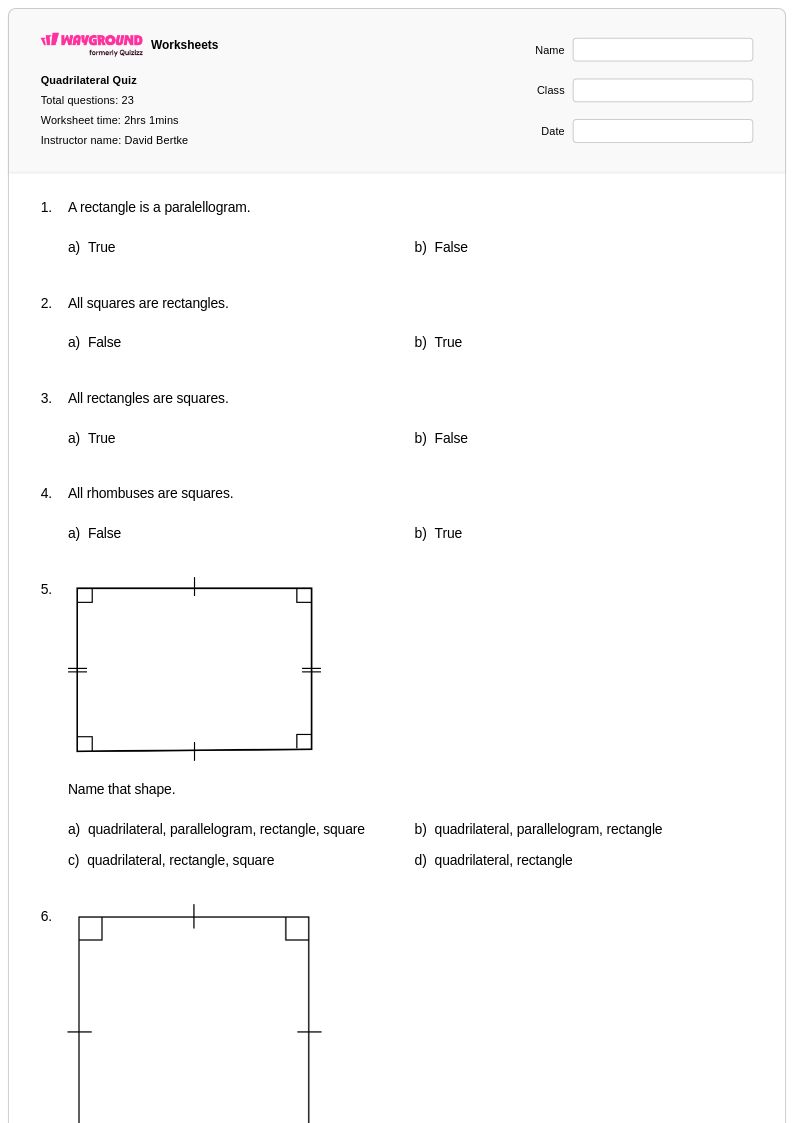
23Q
5th
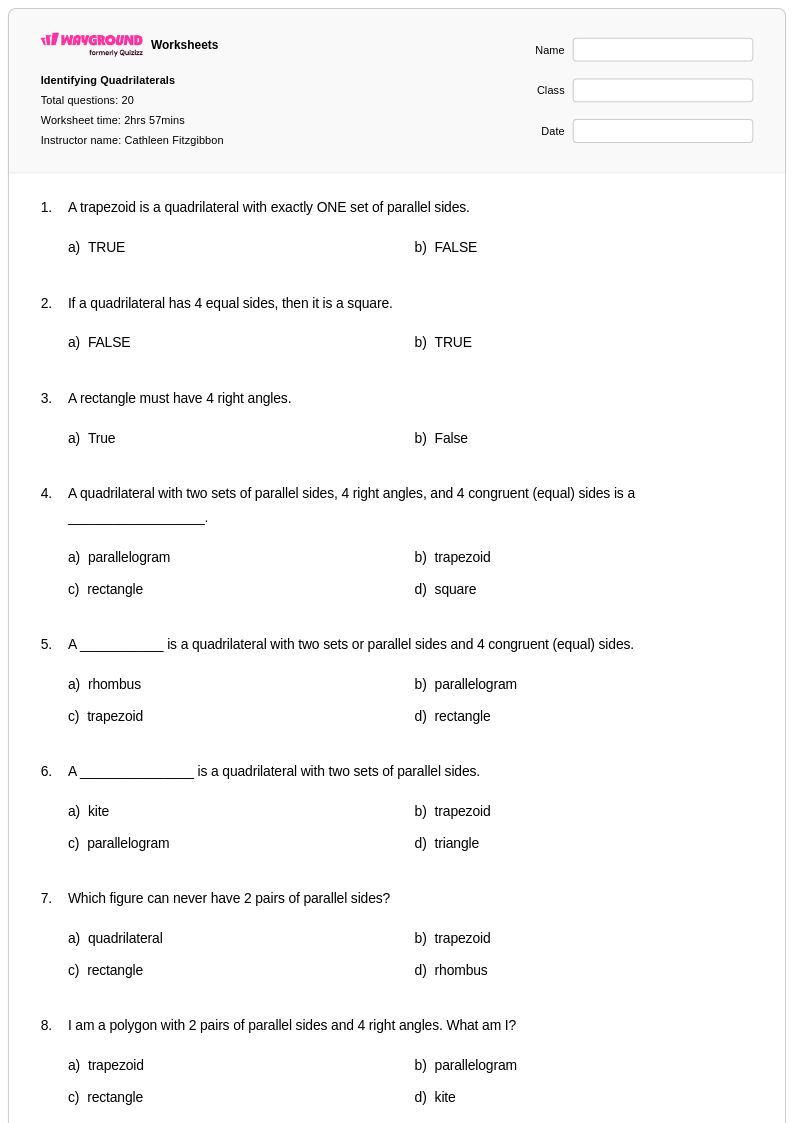
20Q
10th
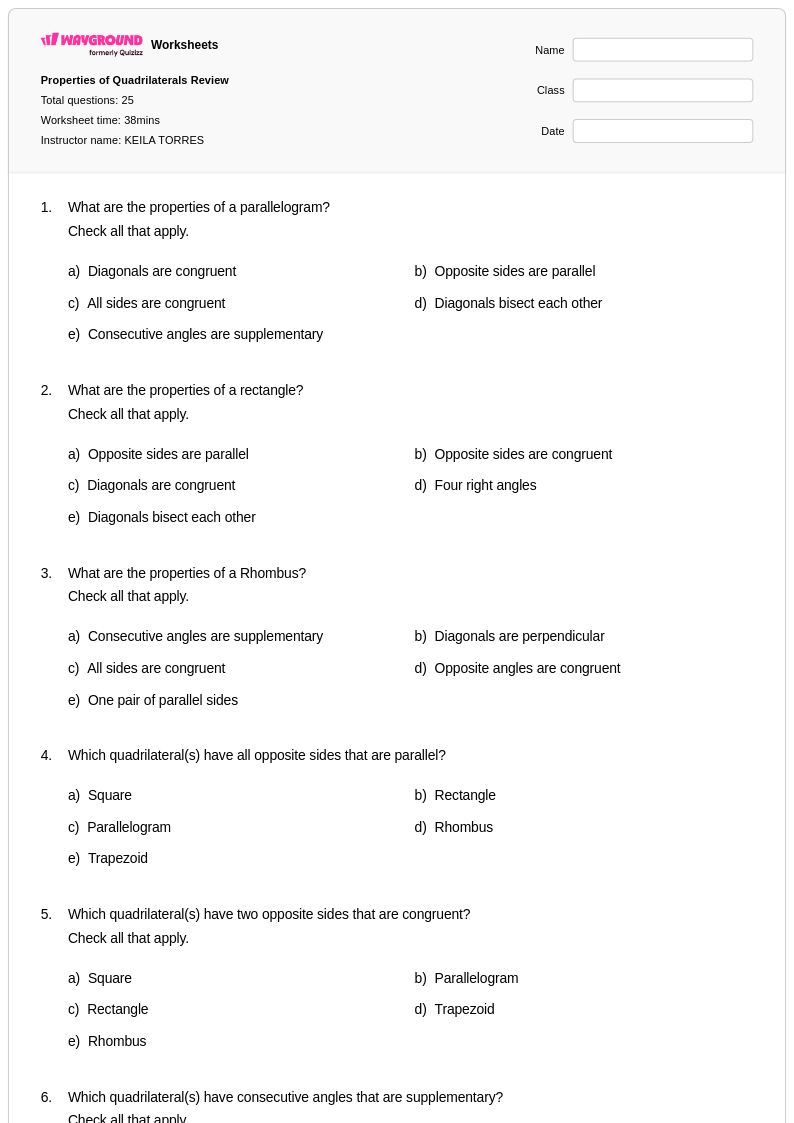
25Q
10th
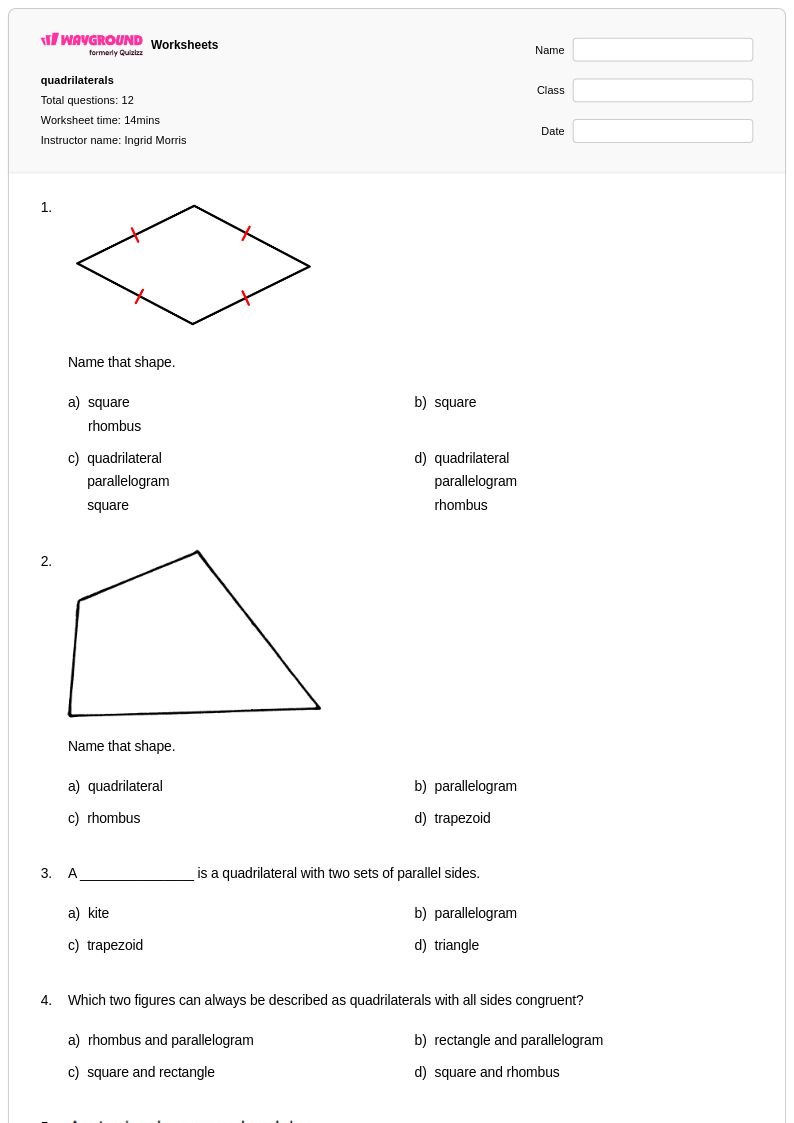
12Q
9th - 12th
Explore planilhas por assuntos
Explore printable Properties of Quadrilaterals worksheets
Properties of quadrilaterals worksheets available through Wayground (formerly Quizizz) provide comprehensive practice opportunities for students to master the fundamental characteristics that define squares, rectangles, parallelograms, rhombuses, trapezoids, and kites. These expertly designed worksheets strengthen critical geometric reasoning skills by engaging students with practice problems that explore angle relationships, side length properties, diagonal characteristics, and symmetry patterns inherent to each quadrilateral type. Students develop proficiency in identifying, classifying, and analyzing quadrilaterals while working through systematic exercises that reinforce theoretical understanding with practical application. Each worksheet includes a detailed answer key to support independent learning and self-assessment, and the free printable pdf format ensures accessible distribution for both classroom instruction and home study.
Wayground (formerly Quizizz) empowers educators with an extensive collection of millions of teacher-created resources specifically focused on quadrilateral properties, featuring robust search and filtering capabilities that allow precise targeting of specific geometric concepts and skill levels. The platform's standards-aligned worksheets support differentiated instruction through flexible customization options, enabling teachers to modify content complexity and format to meet diverse learning needs within their classrooms. Available in both printable and digital pdf formats, these resources facilitate seamless integration into lesson planning while providing versatile tools for remediation, enrichment, and ongoing skill practice. Teachers can efficiently locate worksheets that address specific quadrilateral properties such as parallel sides, congruent angles, or perpendicular diagonals, ensuring targeted instruction that builds conceptual understanding and procedural fluency in geometric analysis.
FAQs
How do I teach the different types of quadrilaterals?
What exercises help students learn quadrilateral properties?
What are common mistakes when classifying quadrilaterals?
How can I use this properties of quadrilaterals worksheet?
How does learning about quadrilaterals fit into the math curriculum?
How can I support students who struggle with quadrilateral vocabulary?