
20 Q
3rd - Uni
20 Q
5th - Uni
20 Q
5th - Uni
20 Q
5th - Uni
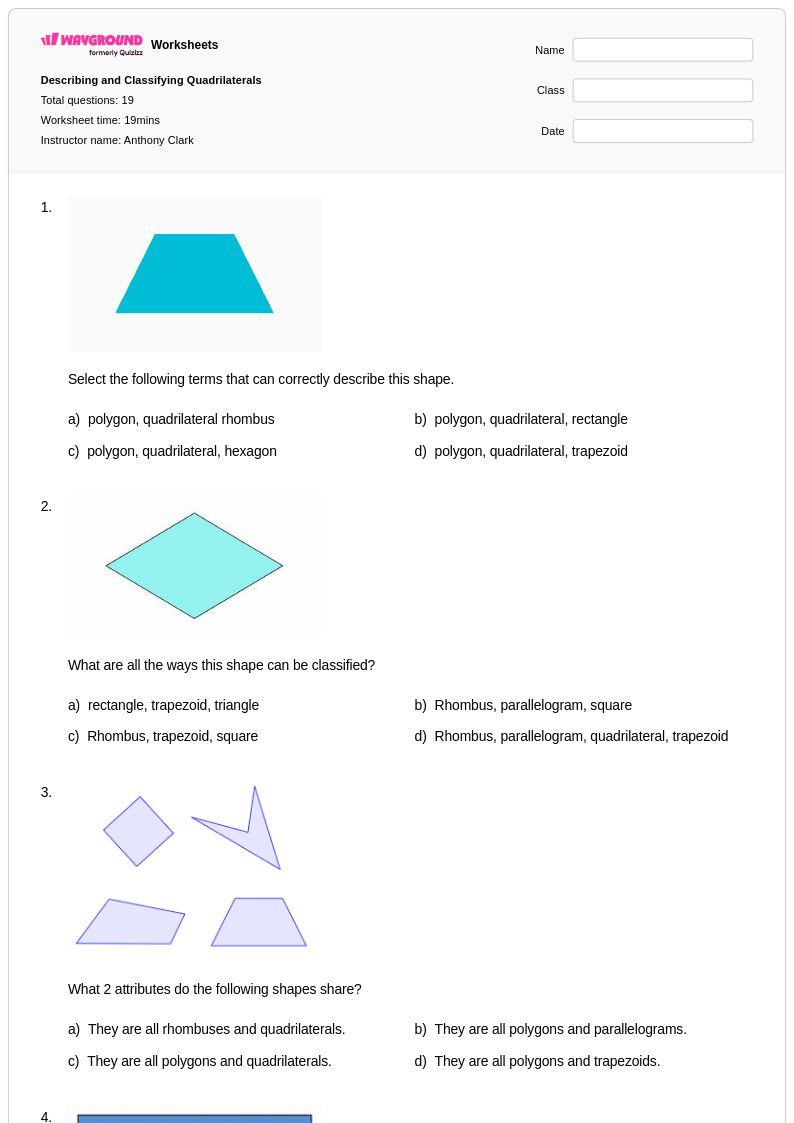
19 Q
5th - Uni
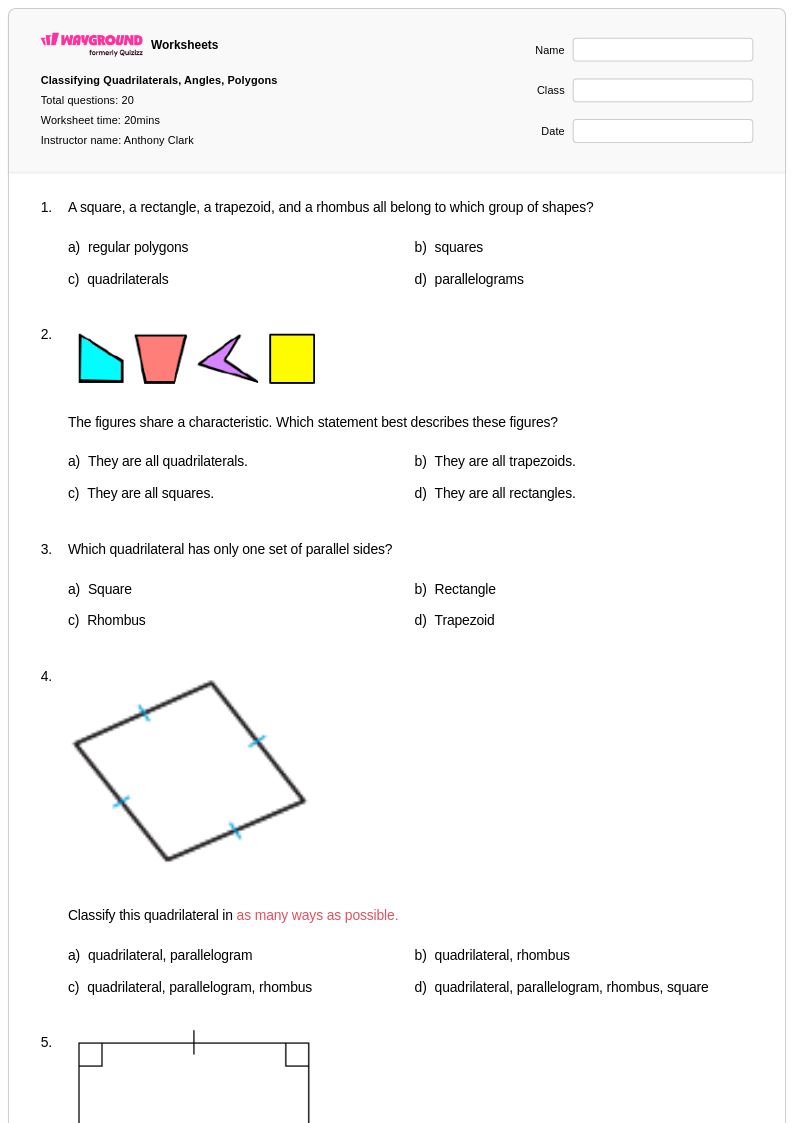
20 Q
5th - Uni
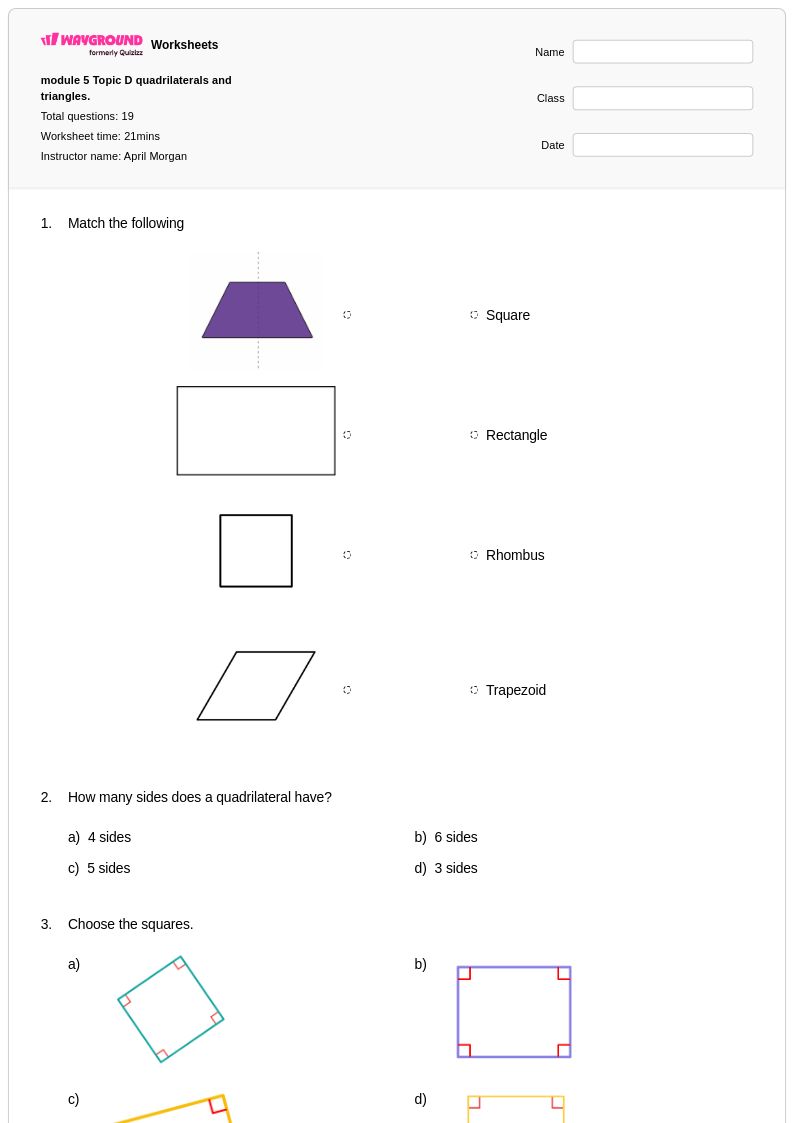
19 Q
5th
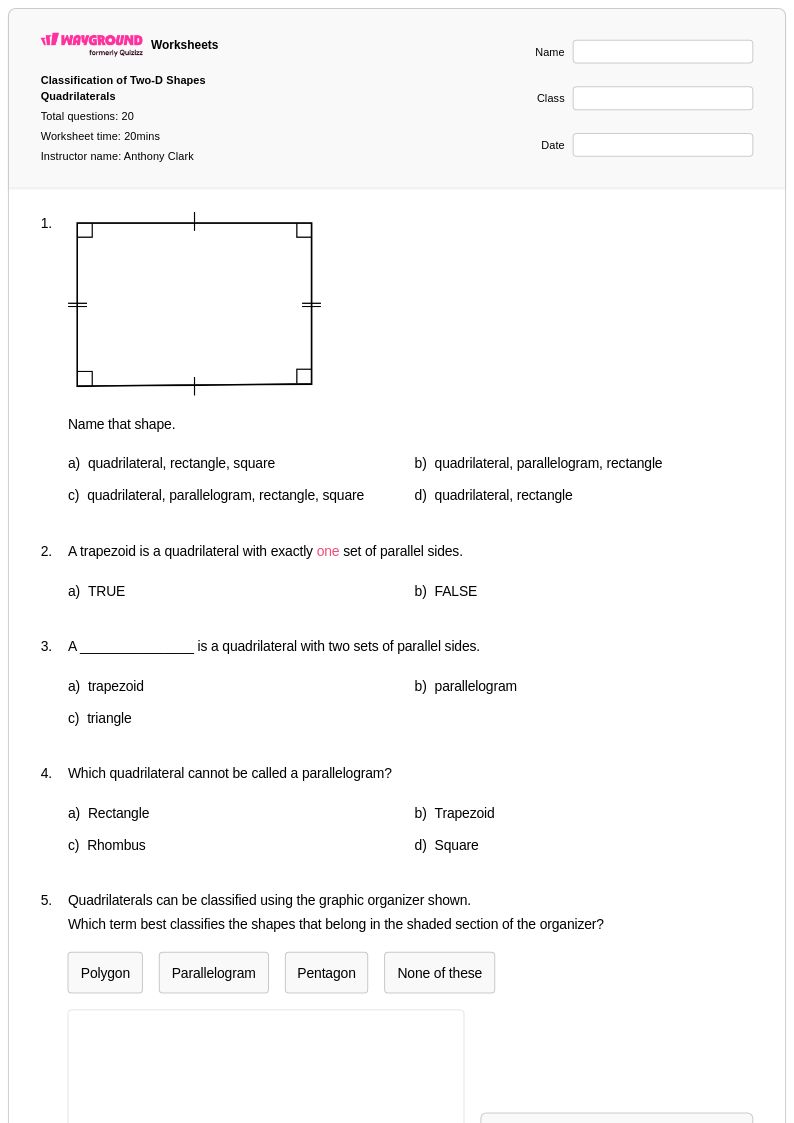
20 Q
5th - Uni
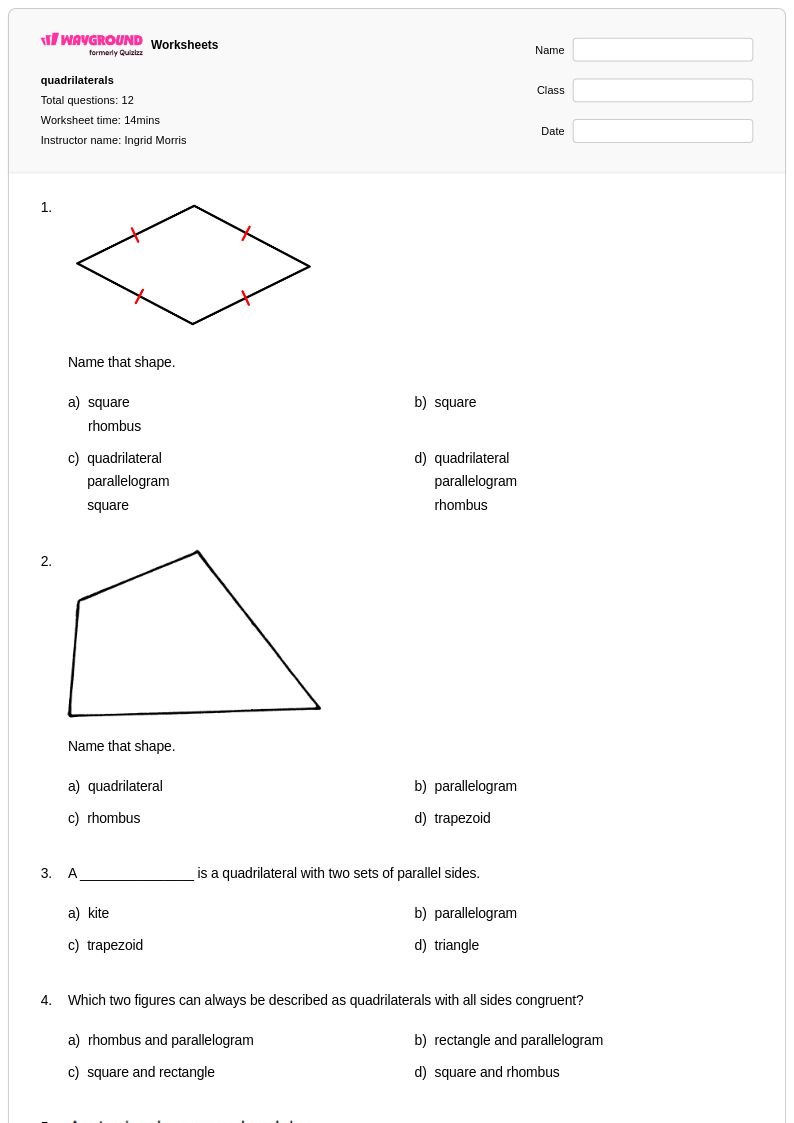
12 Q
9th - 12th
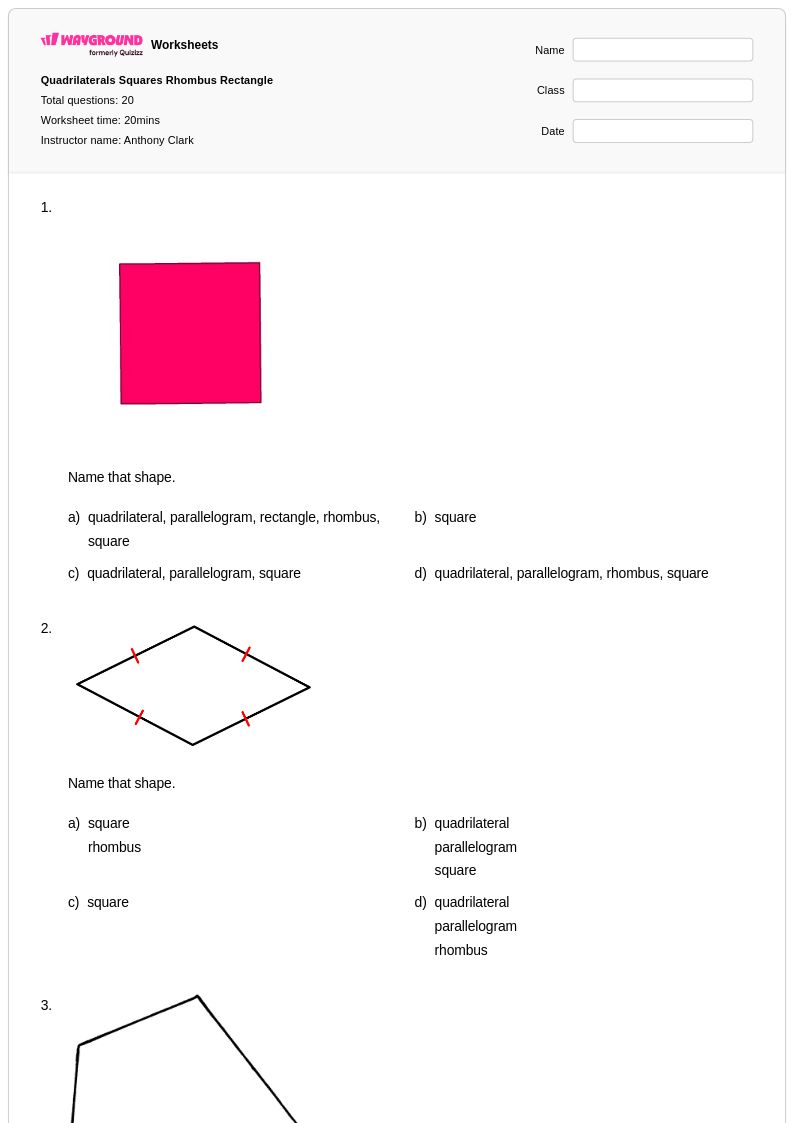
20 Q
5th - Uni
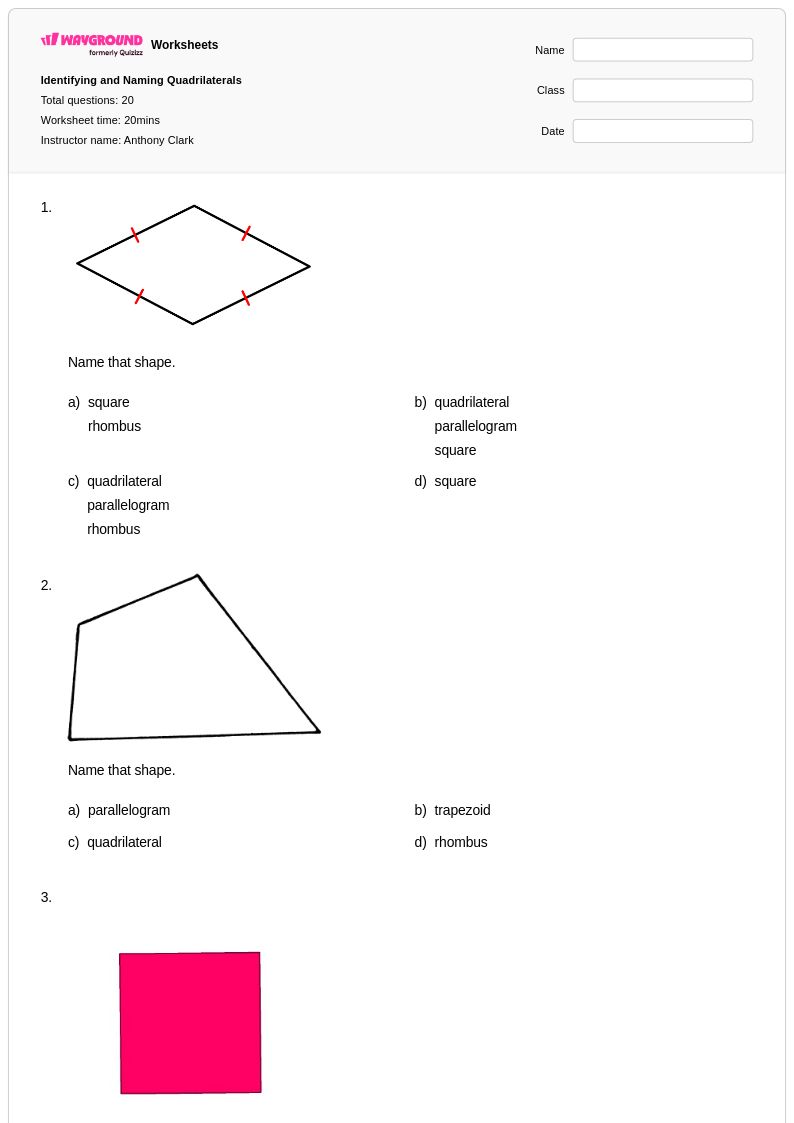
20 Q
5th - Uni
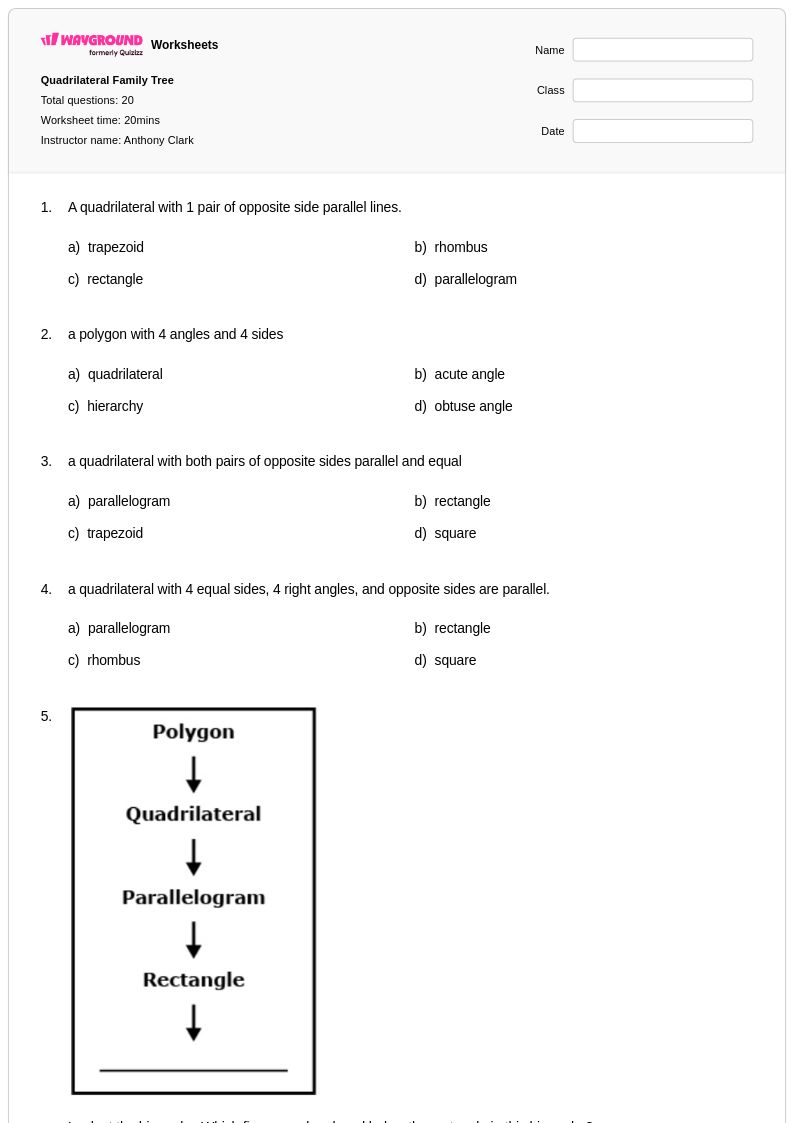
20 Q
5th - Uni
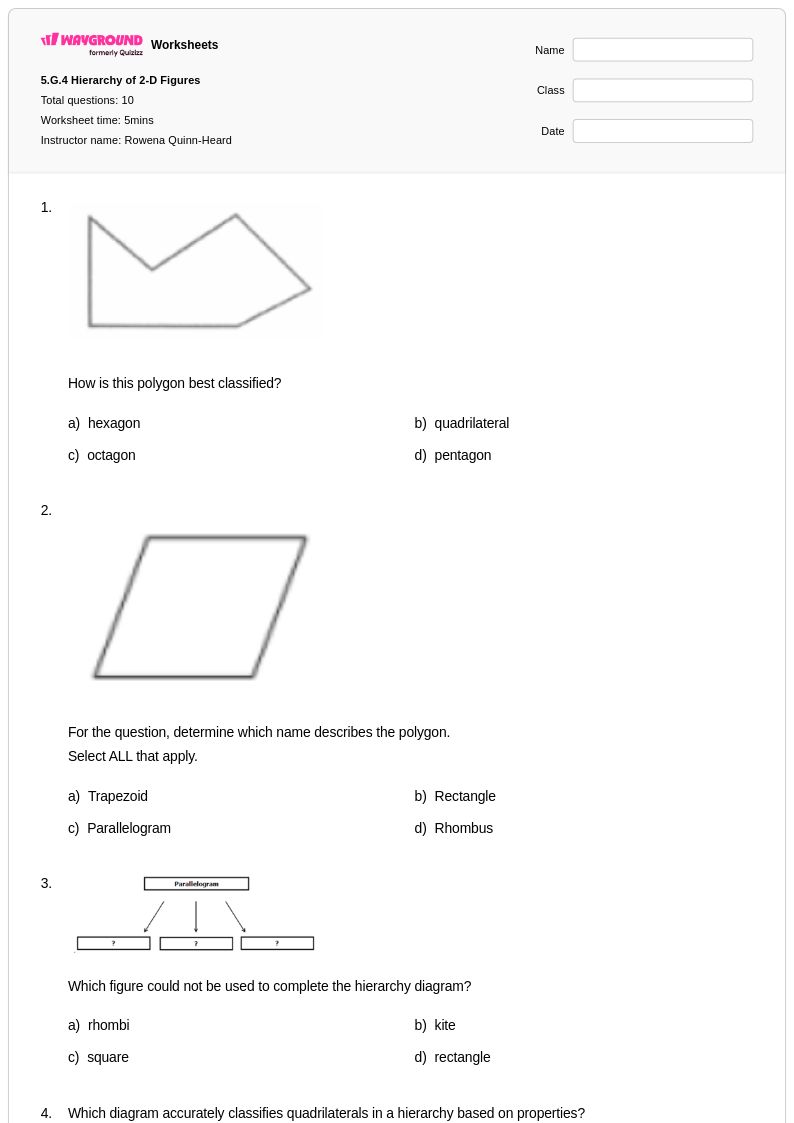
10 Q
5th
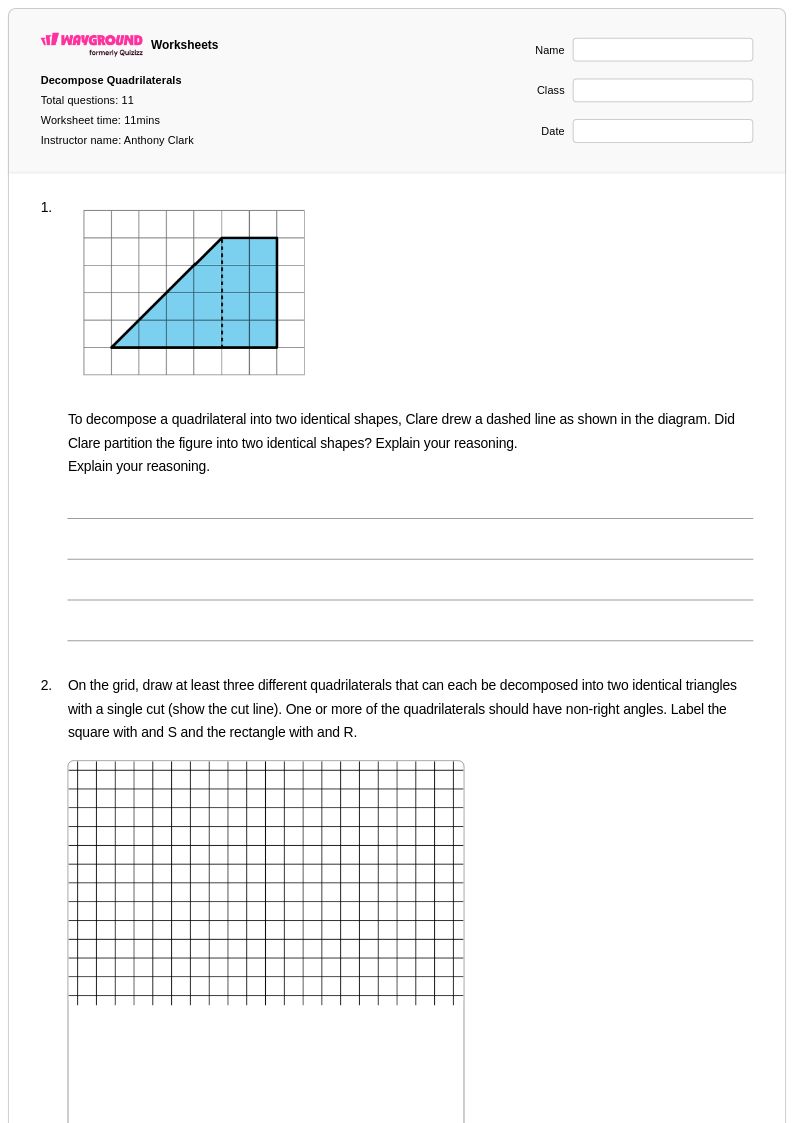
11 Q
6th - Uni
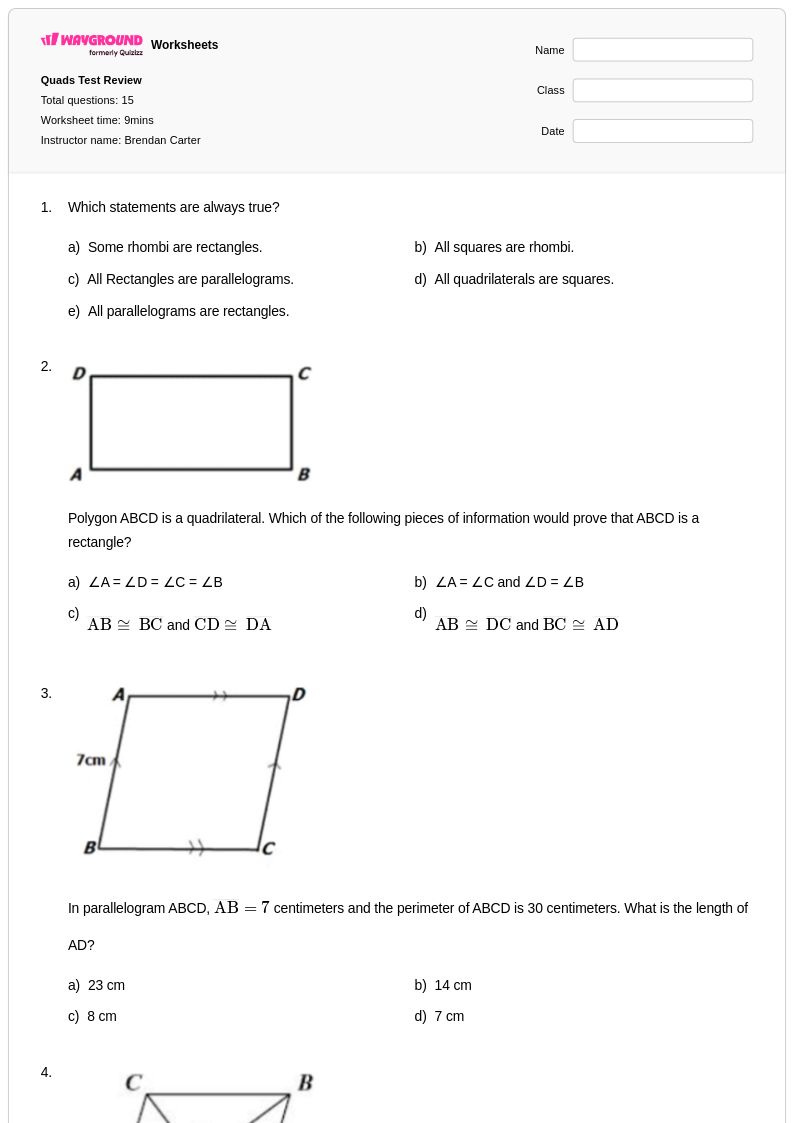
15 Q
12th
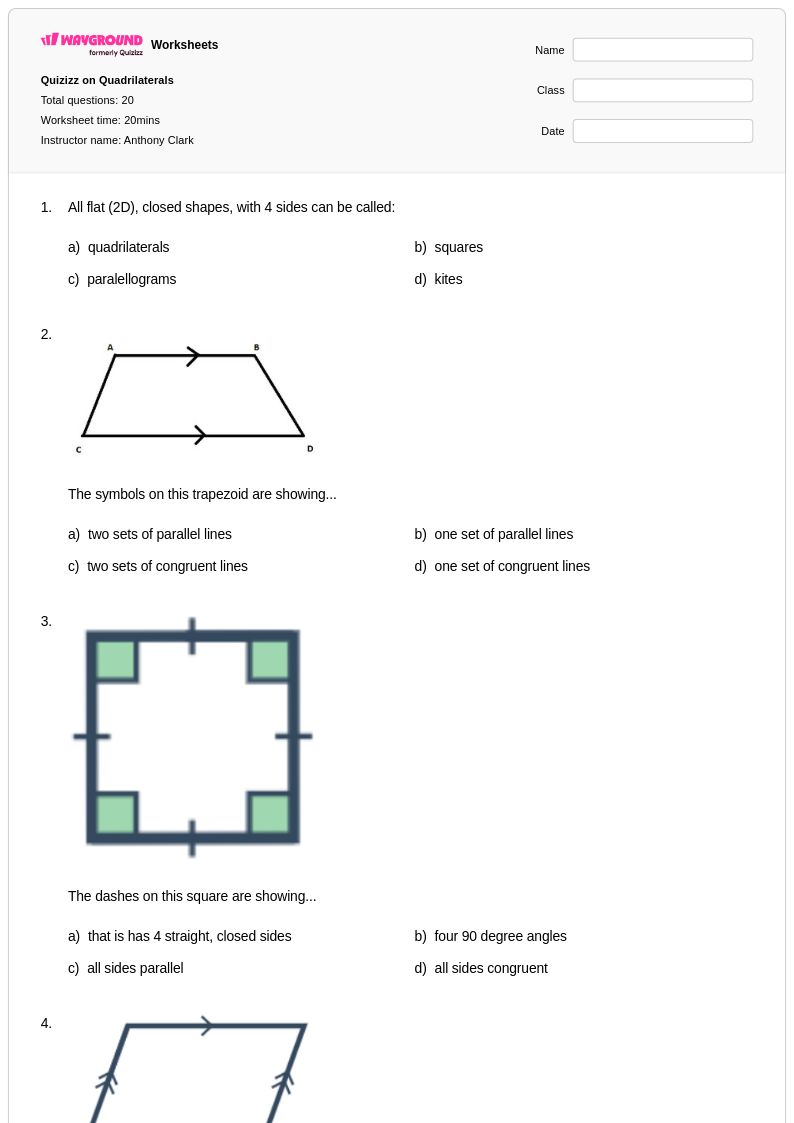
20 Q
5th - Uni
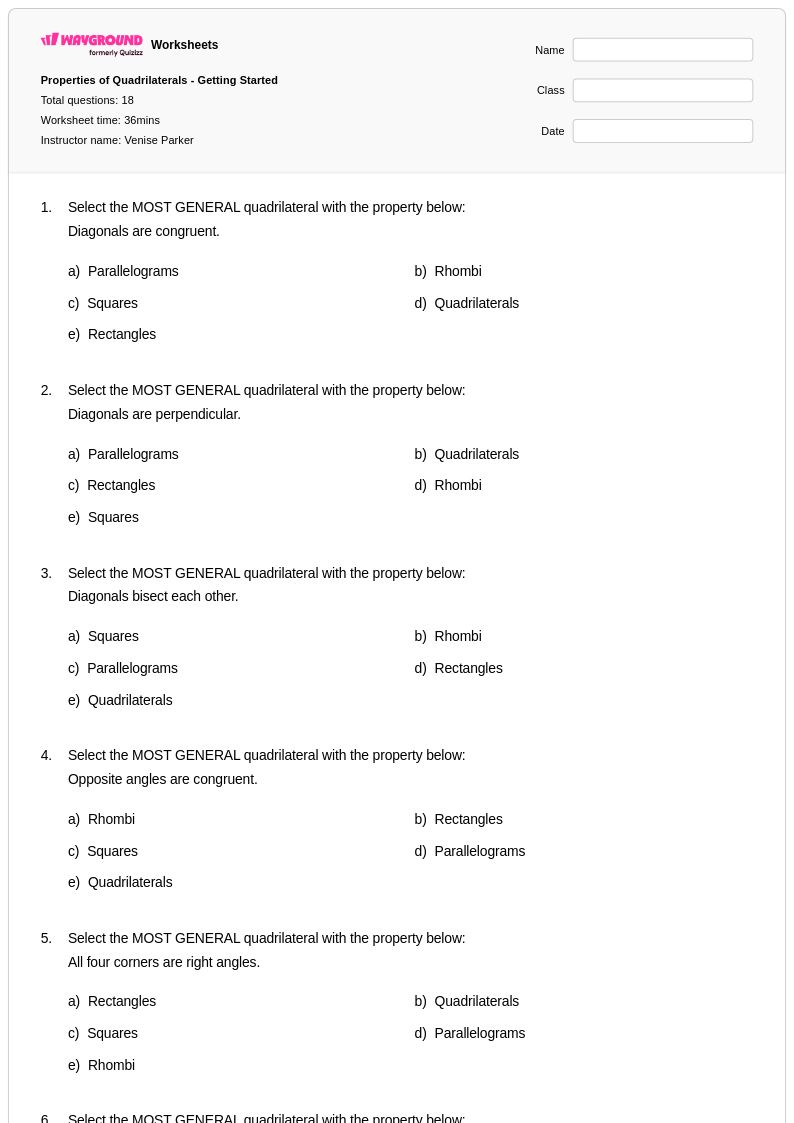
18 Q
10th
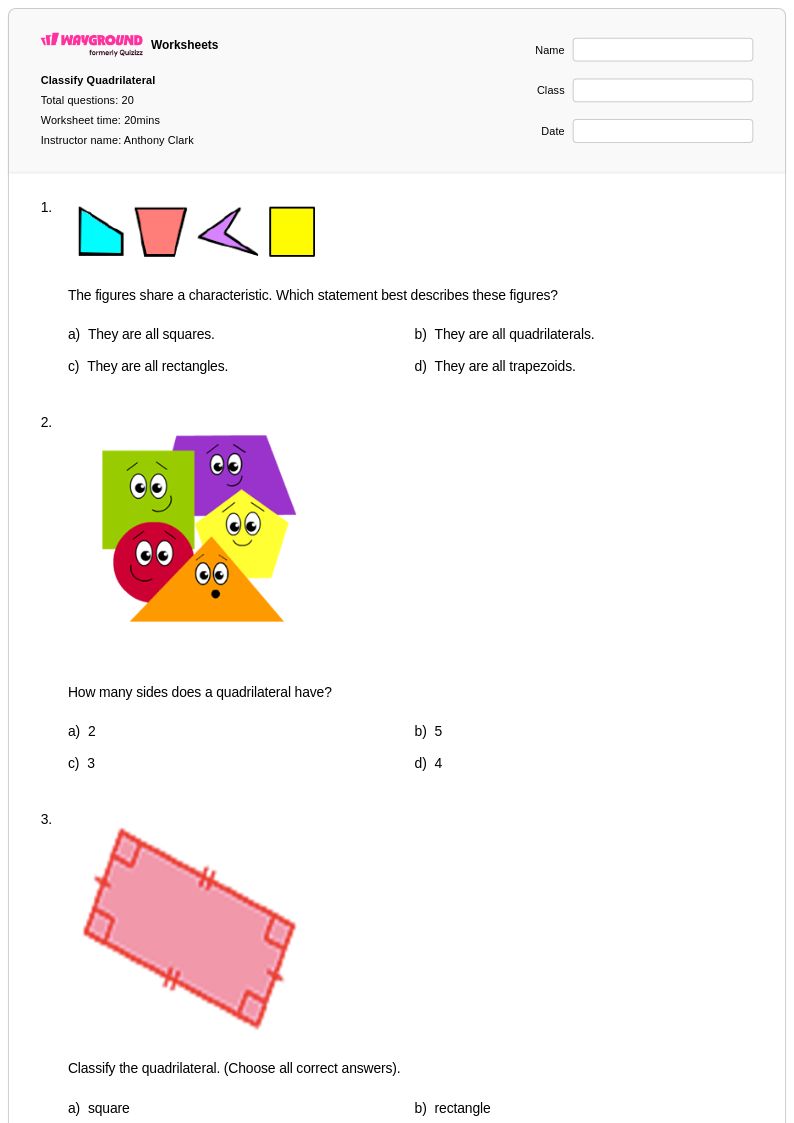
20 Q
5th - Uni
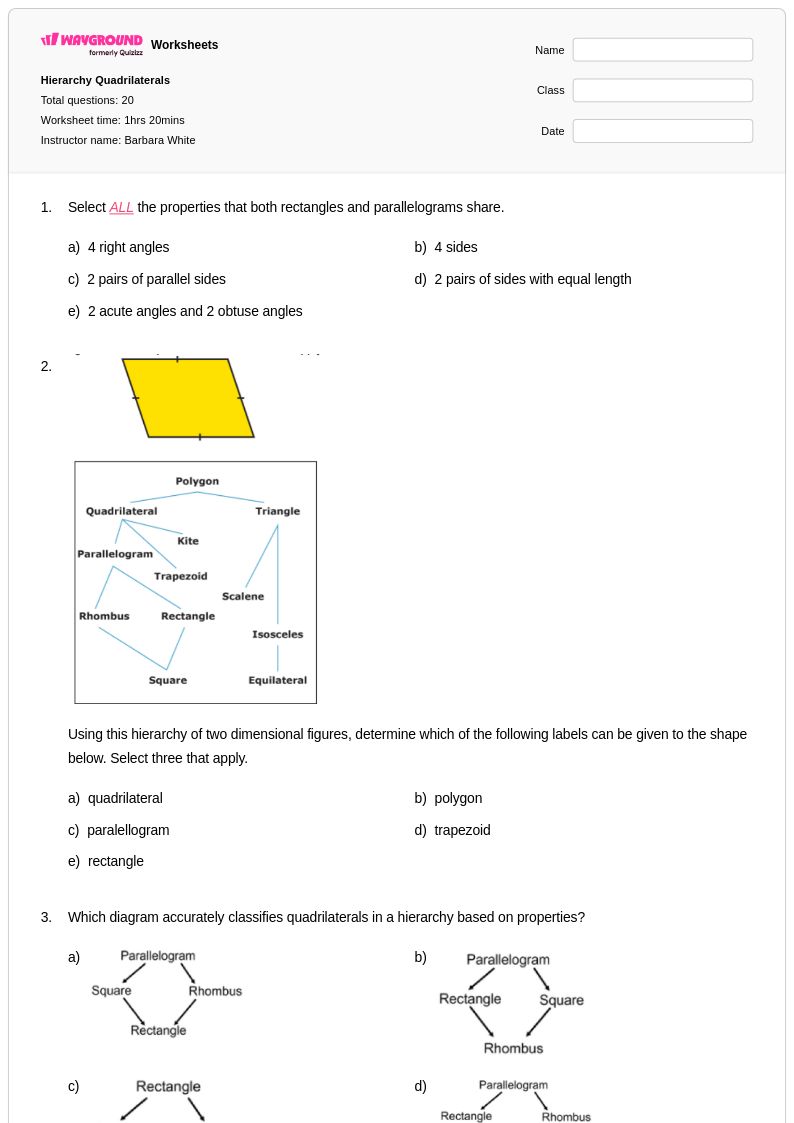
20 Q
5th
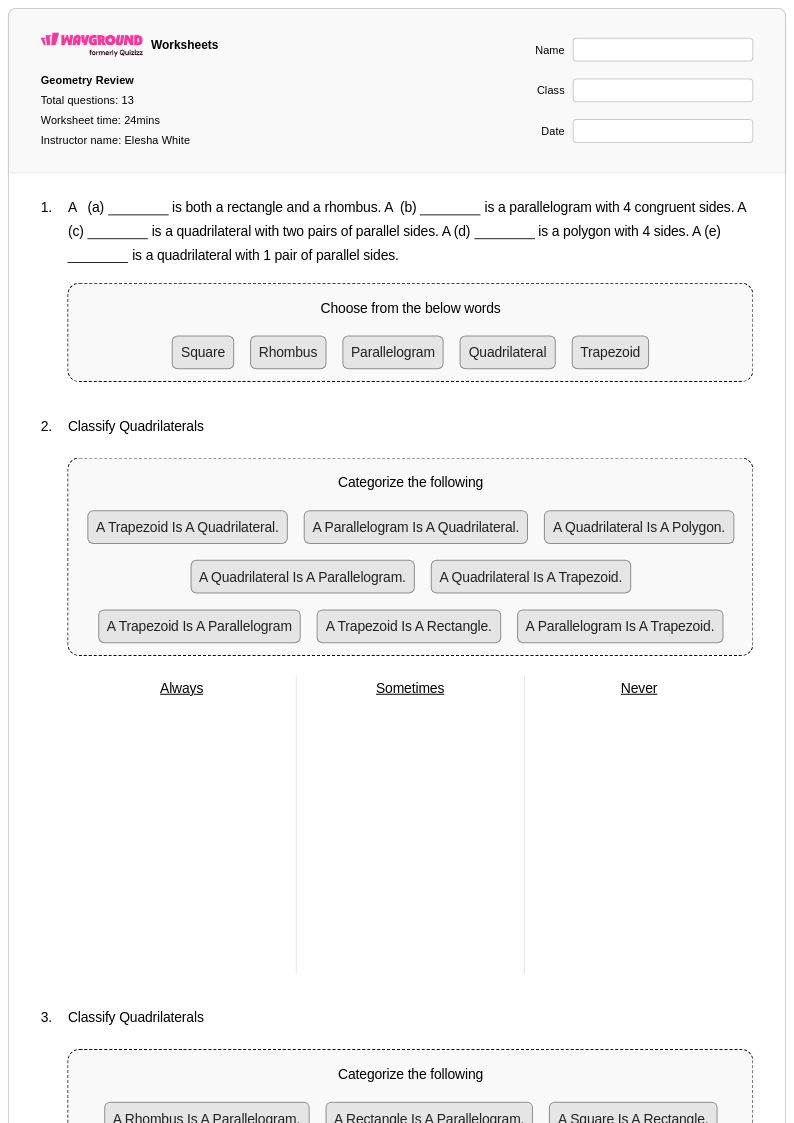
13 Q
5th
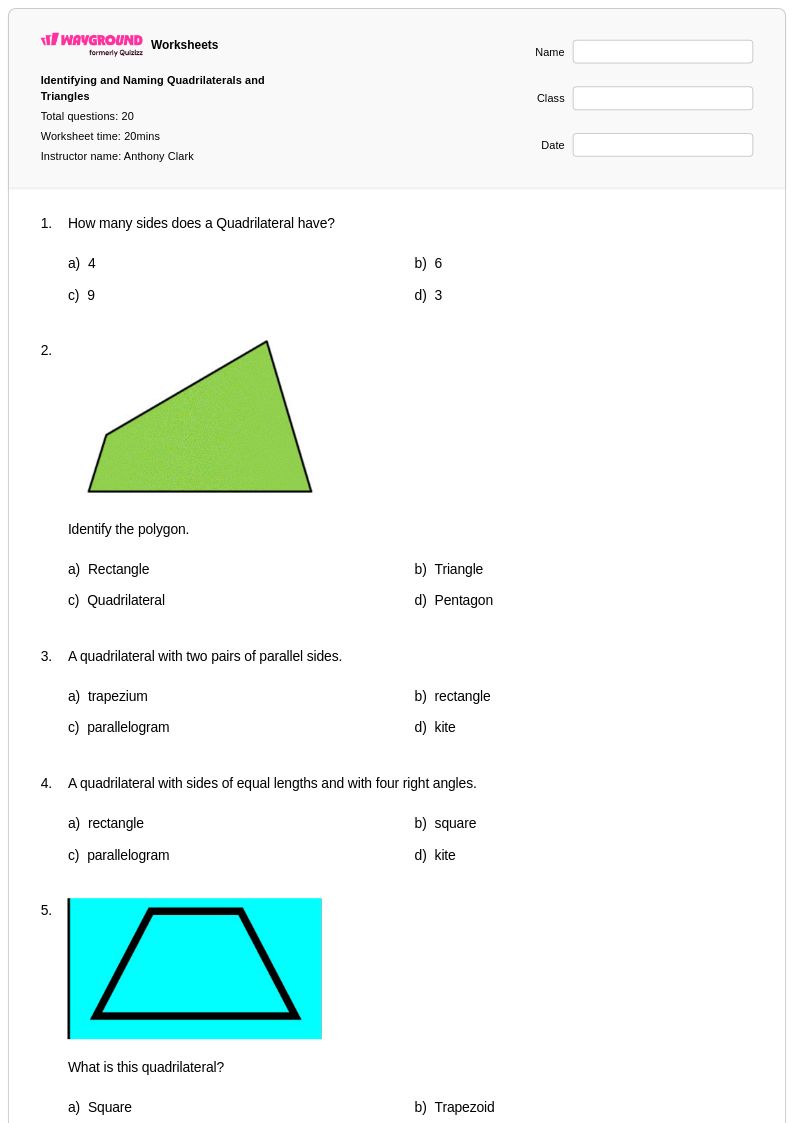
20 Q
5th - Uni
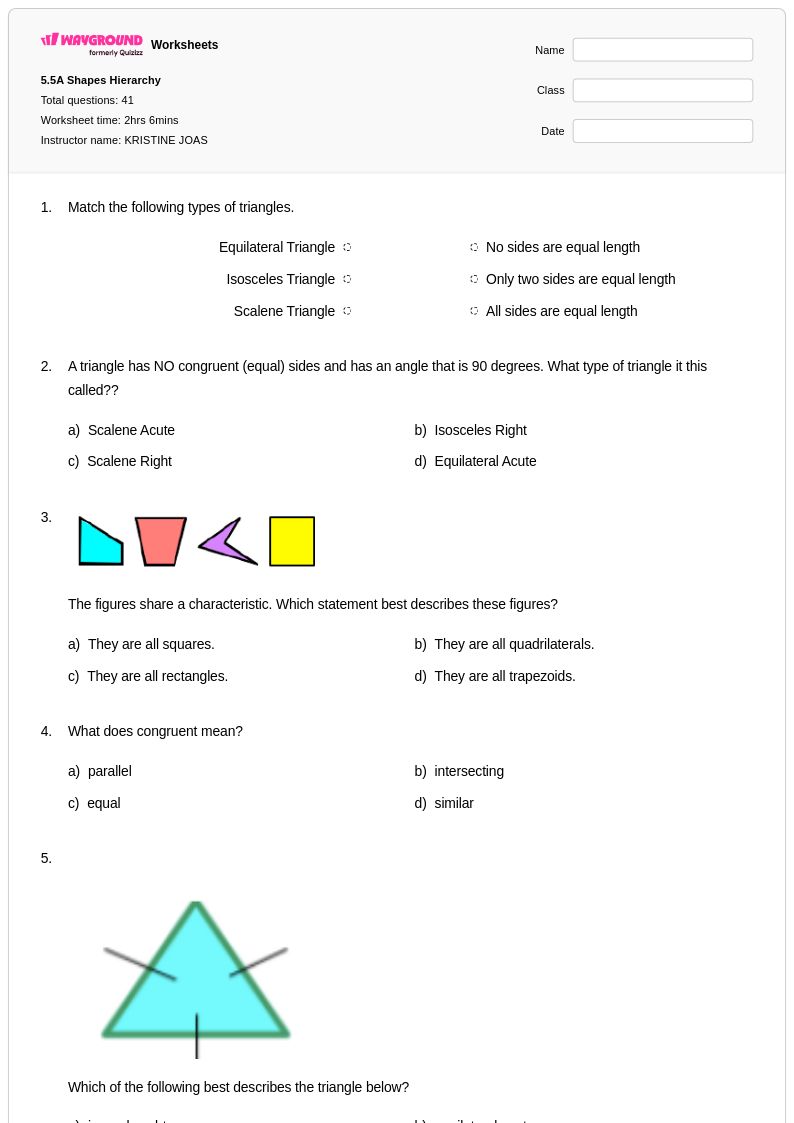
41 Q
5th - Uni
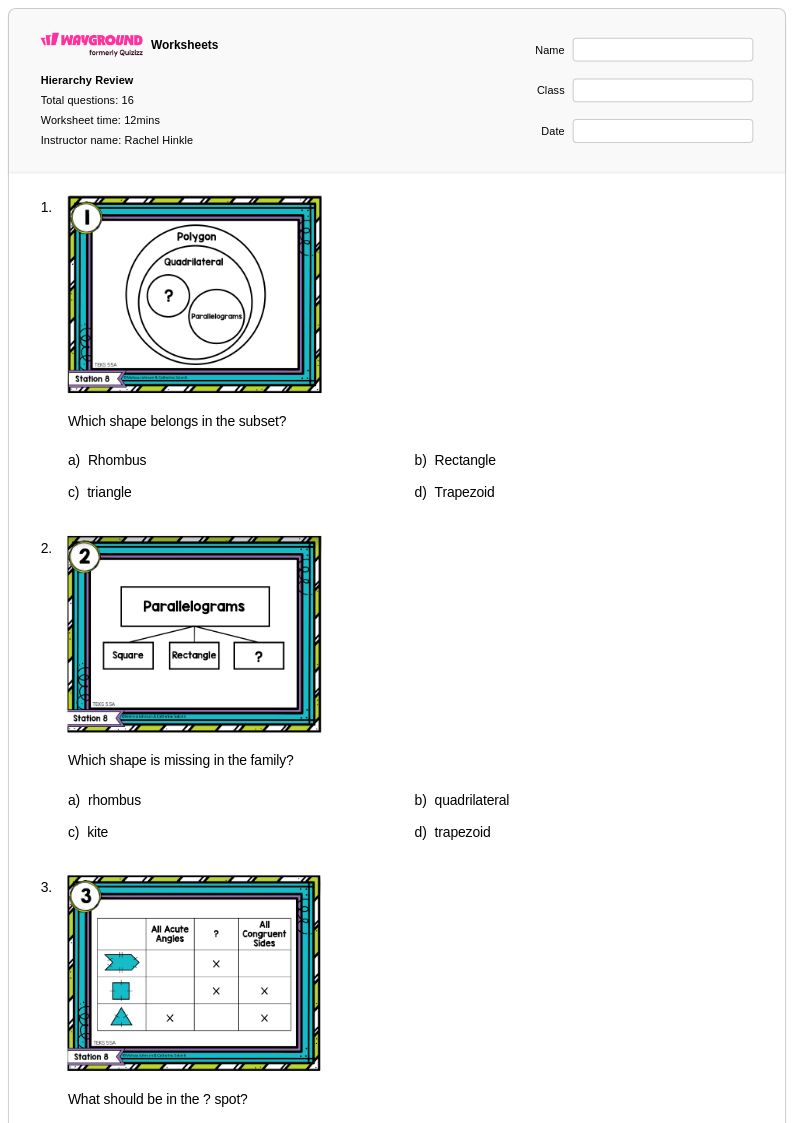
16 Q
5th
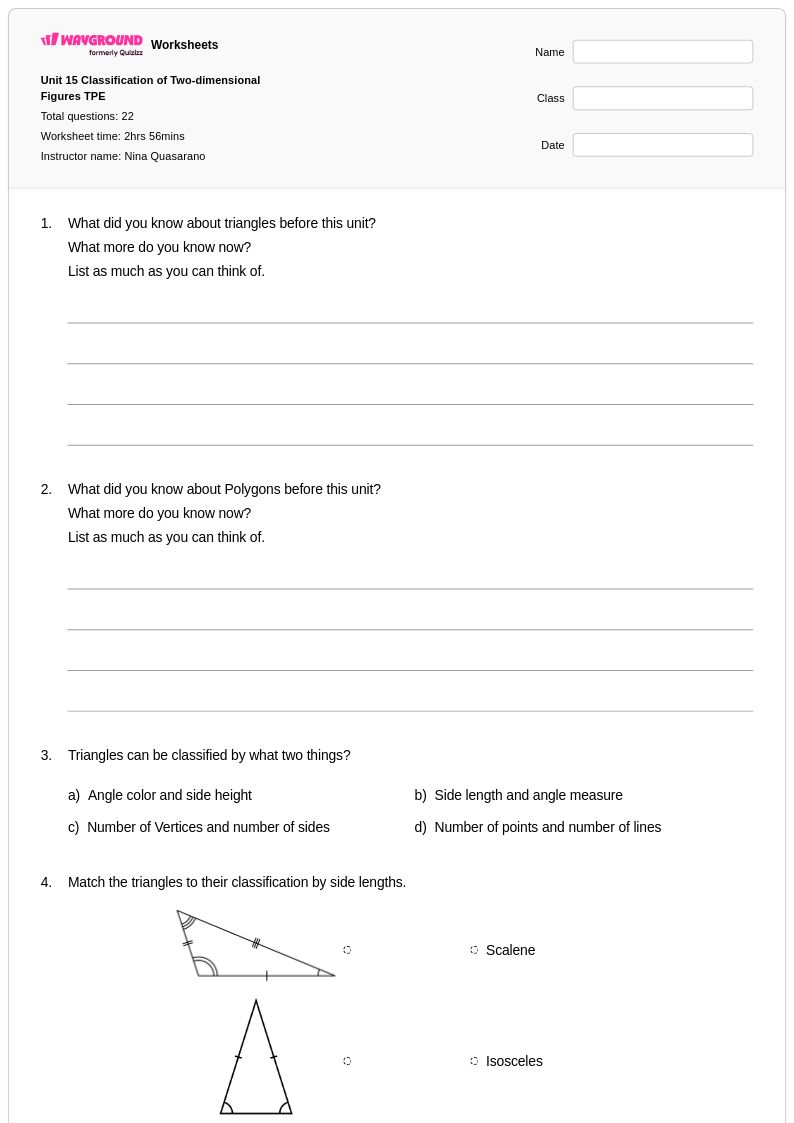
22 Q
5th
Explore Worksheets by Subjects
Explore printable Quadrilateral Hierarchy worksheets
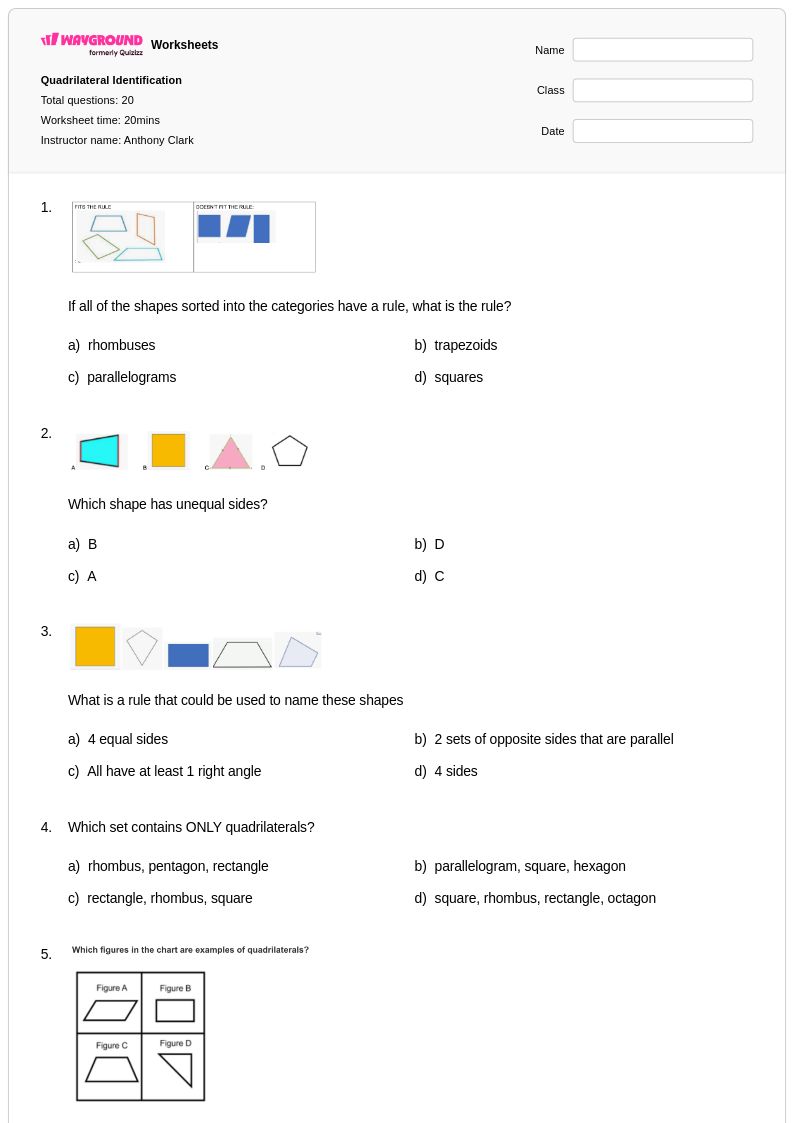
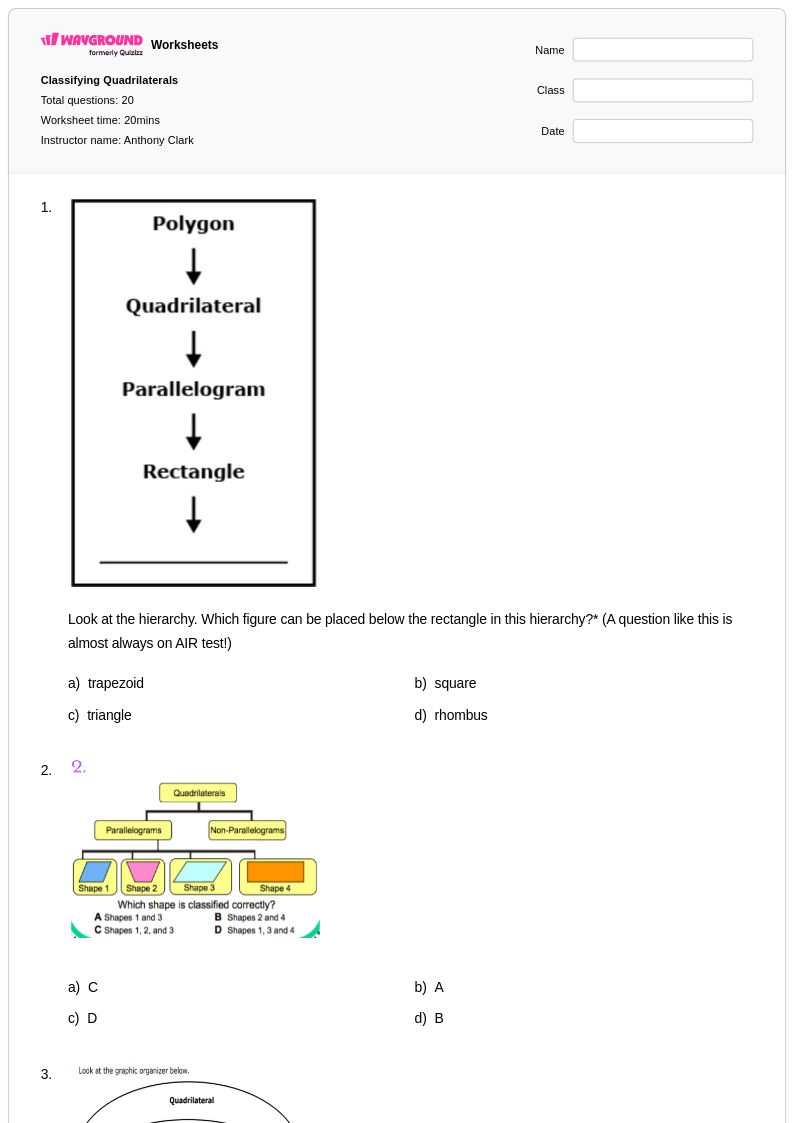
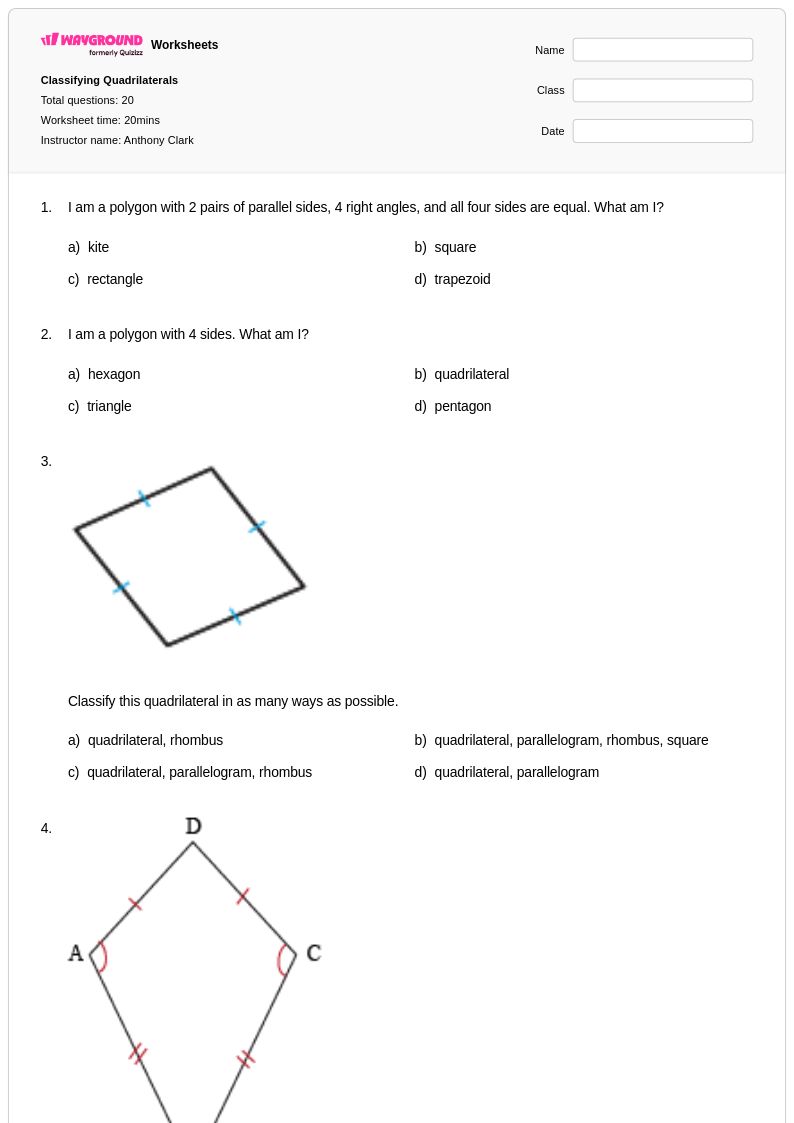
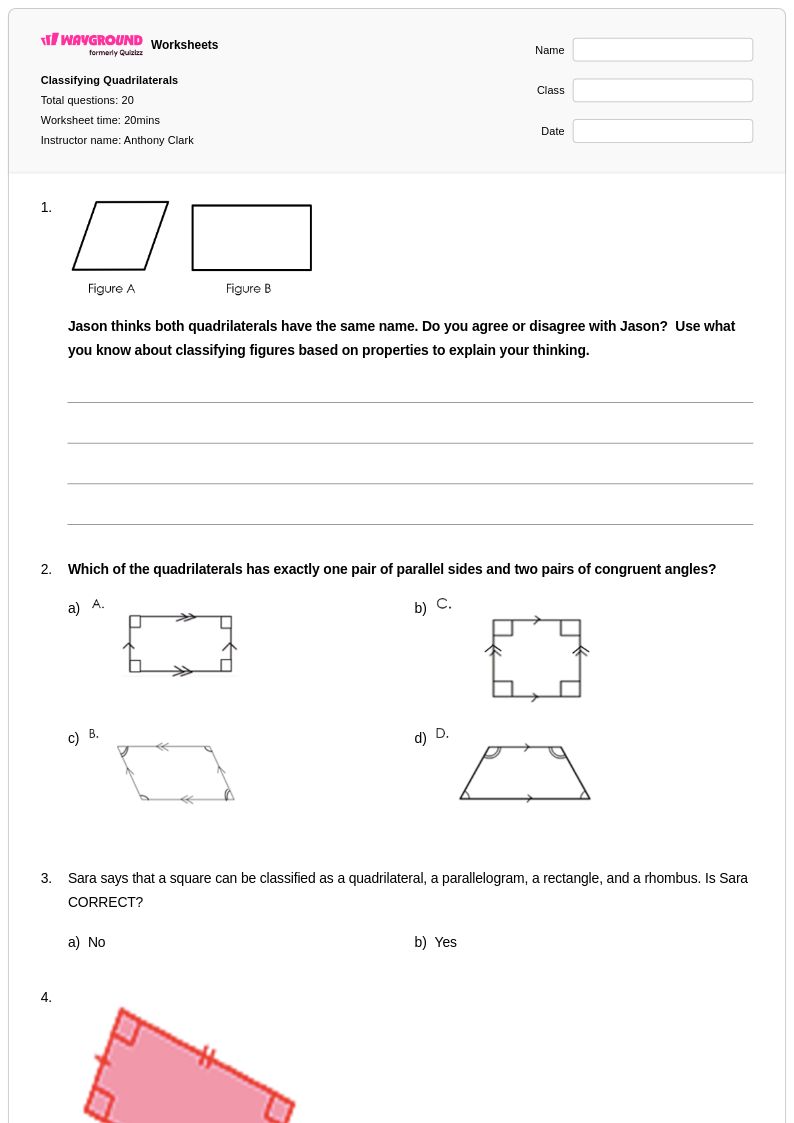
Quadrilateral hierarchy worksheets available through Wayground (formerly Quizizz) provide comprehensive practice for students to master the classification and relationships between different four-sided polygons. These expertly crafted resources help students understand how parallelograms, rectangles, rhombuses, squares, trapezoids, and kites relate to each other within a structured hierarchy, strengthening critical thinking skills in geometric reasoning and classification. The worksheets feature diverse practice problems that challenge students to identify properties, classify shapes based on specific characteristics, and analyze the parent-child relationships between quadrilateral families. Each worksheet collection includes detailed answer keys and is available as free printables in convenient pdf format, making it easy for educators to implement immediate feedback and assessment strategies.
Wayground (formerly Quizizz) supports mathematics teachers with an extensive collection of millions of teacher-created quadrilateral hierarchy resources that can be easily accessed through powerful search and filtering capabilities. The platform's standards-aligned materials offer flexible customization options, allowing educators to differentiate instruction based on individual student needs and learning objectives. Teachers can seamlessly transition between printable pdf worksheets for traditional classroom use and digital formats for interactive learning experiences, making these resources ideal for lesson planning, targeted remediation, and enrichment activities. The comprehensive nature of these quadrilateral hierarchy materials enables educators to provide systematic skill practice that builds student confidence in geometric classification while addressing diverse learning styles and academic requirements.
FAQs
How can I teach the quadrilateral hierarchy effectively?
What exercises help students practice classifying quadrilaterals?
What are the most common student misconceptions with the quadrilateral hierarchy?
How does understanding the quadrilateral hierarchy fit into the math curriculum?
How can I support students who struggle with the abstract nature of shape hierarchies?
How can I use this quadrilateral hierarchy worksheet in my class?