
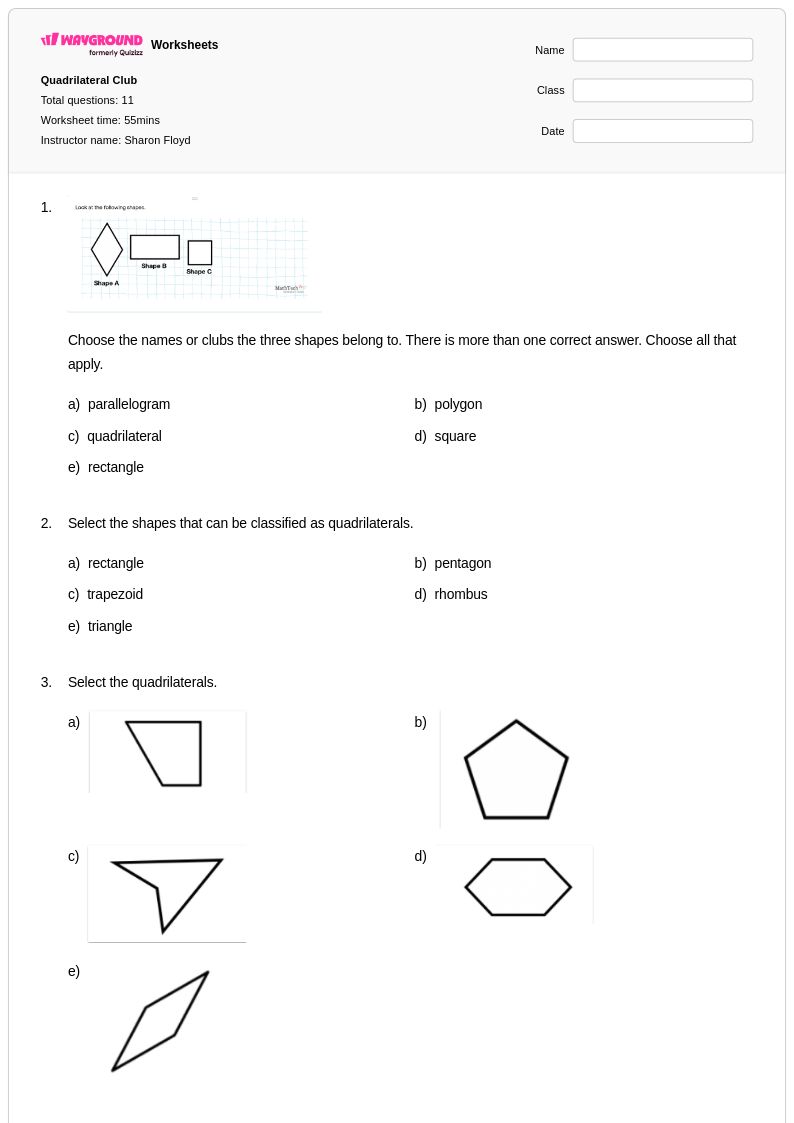
11 Q
3rd
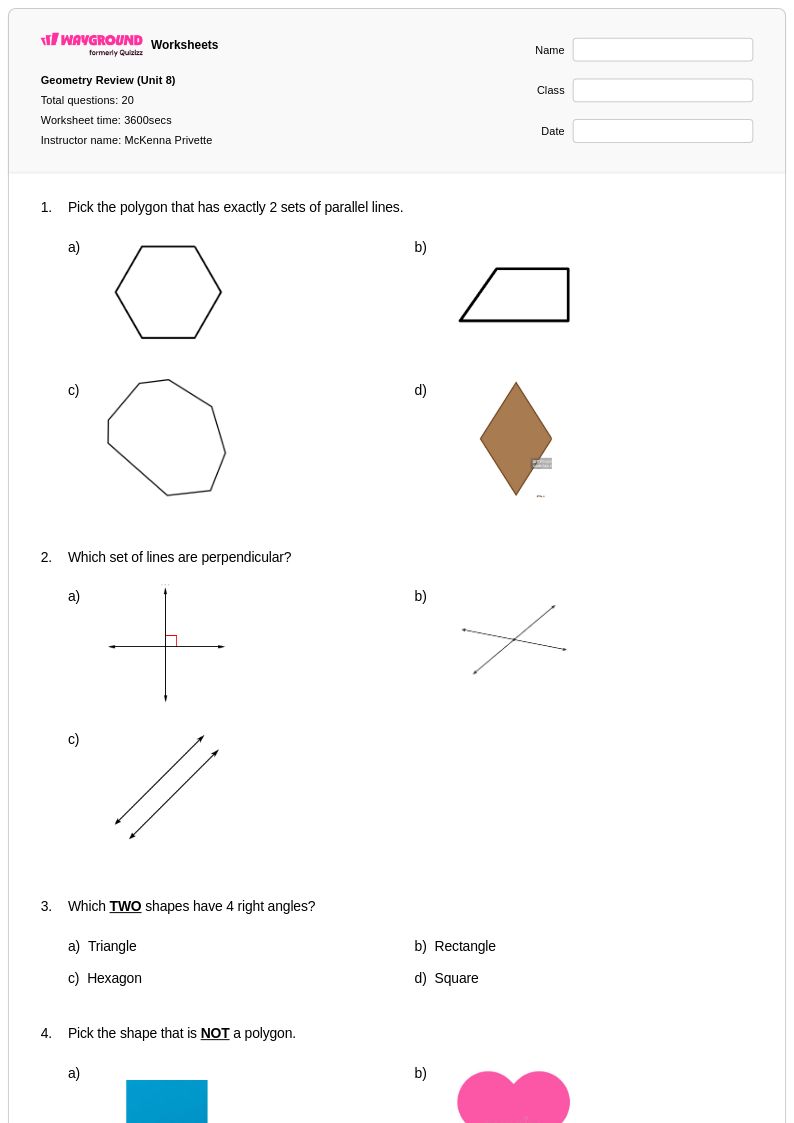
20 Q
3rd
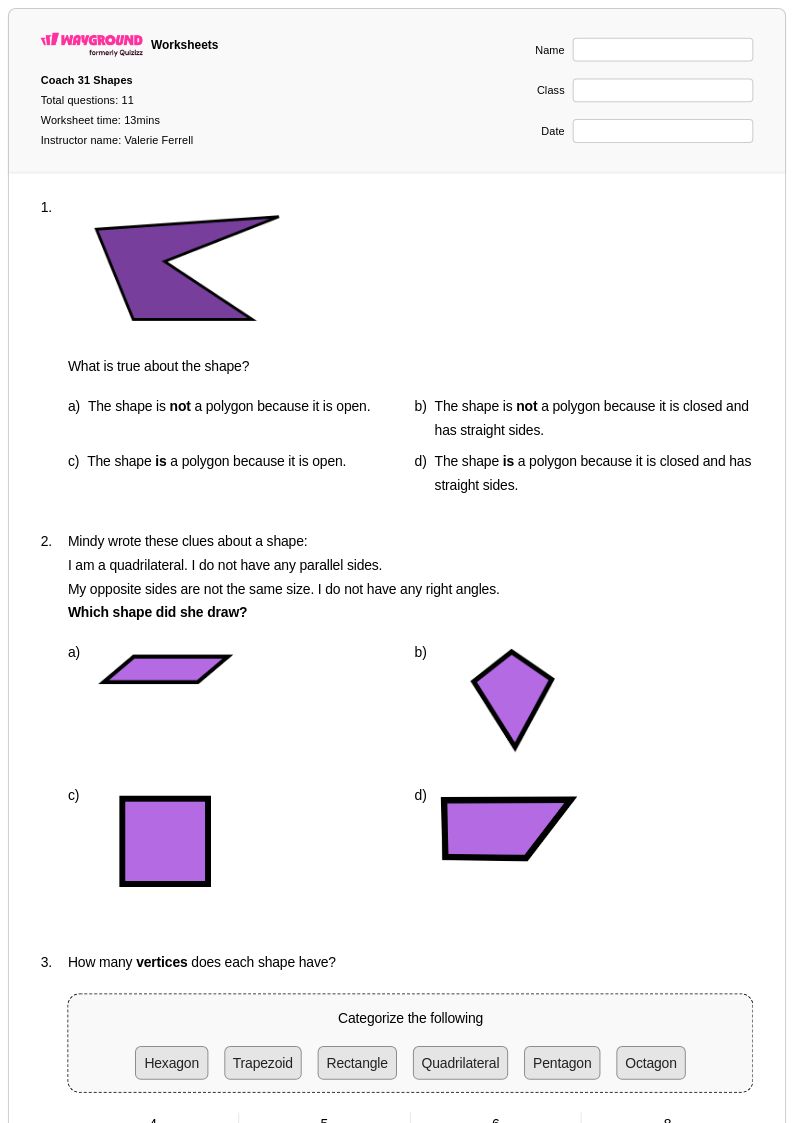
11 Q
3rd
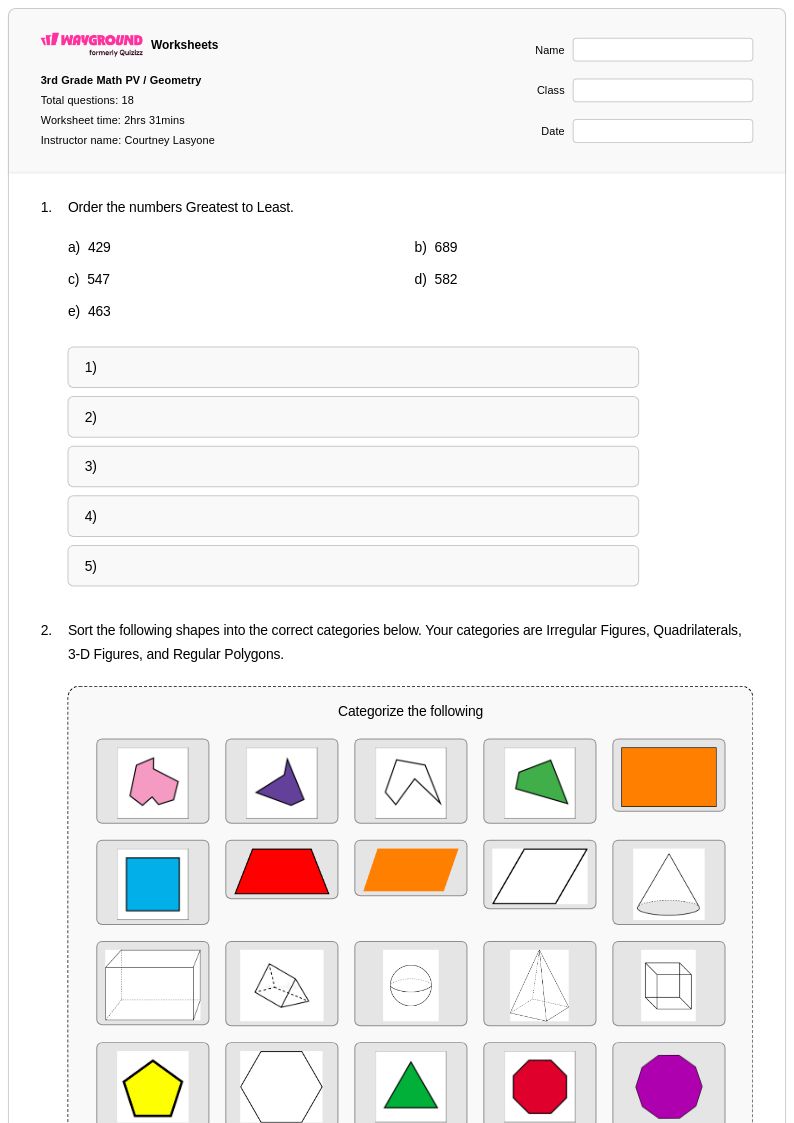
18 Q
3rd
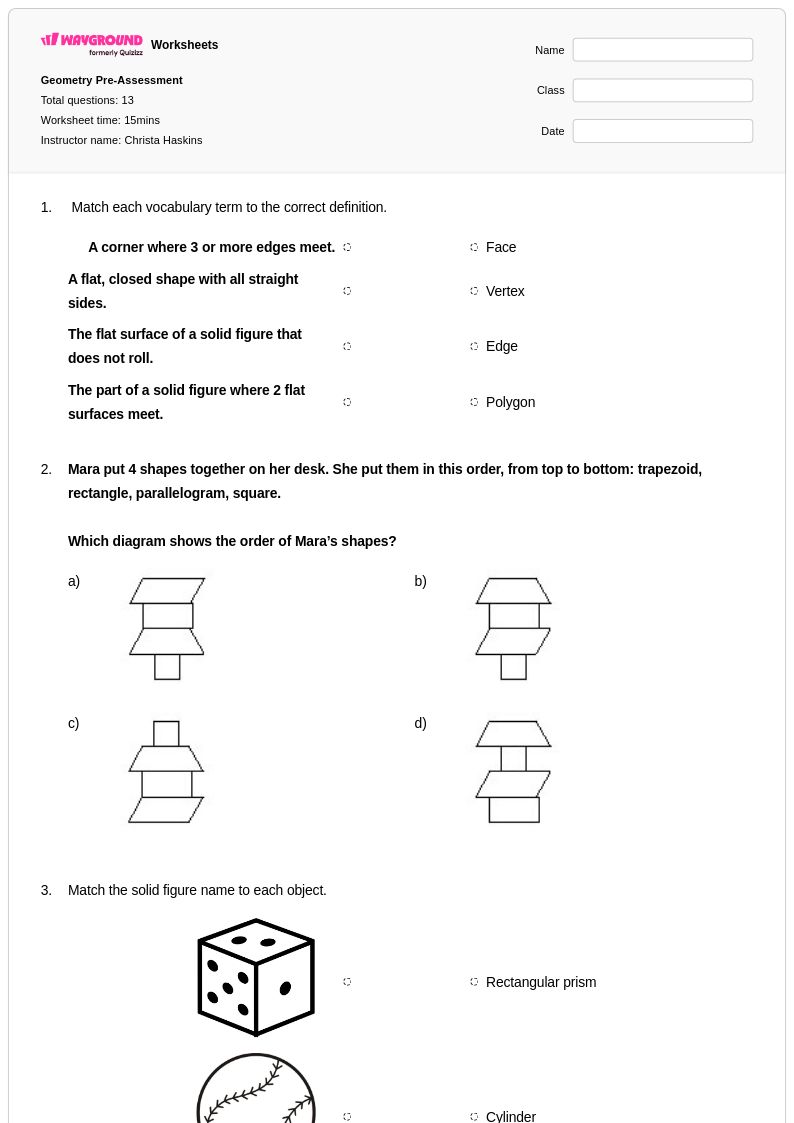
13 Q
3rd
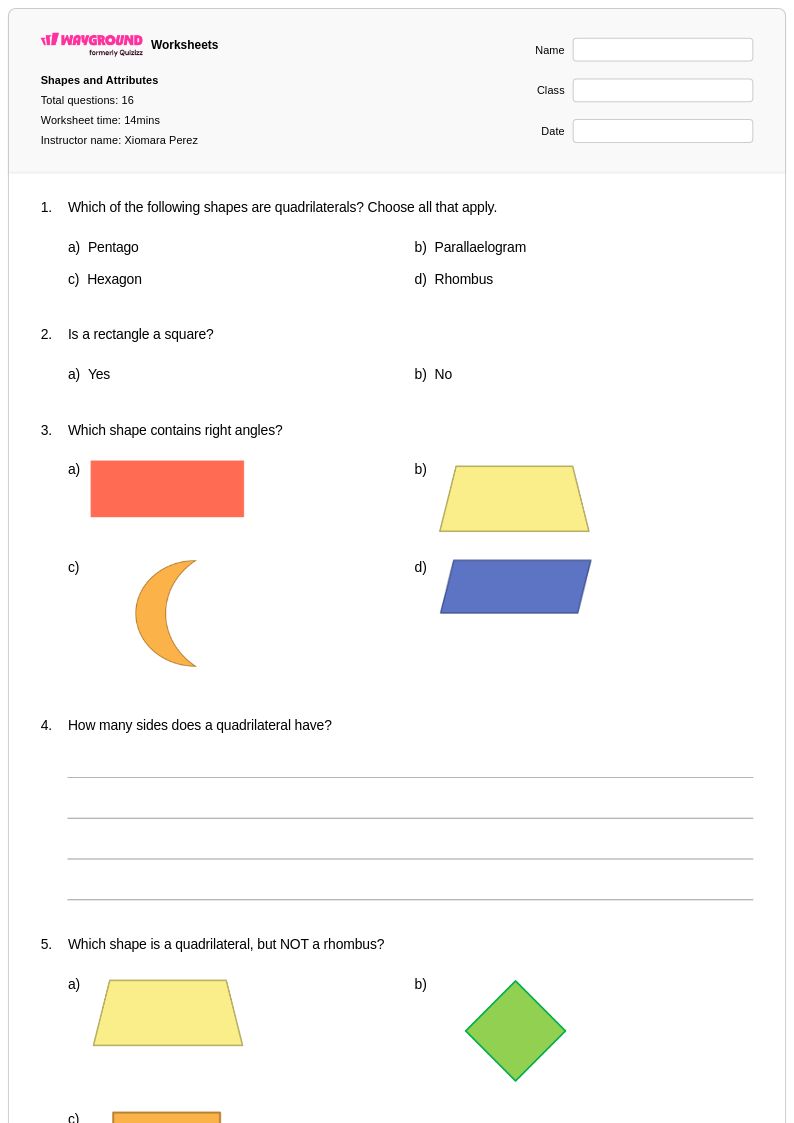
16 Q
3rd
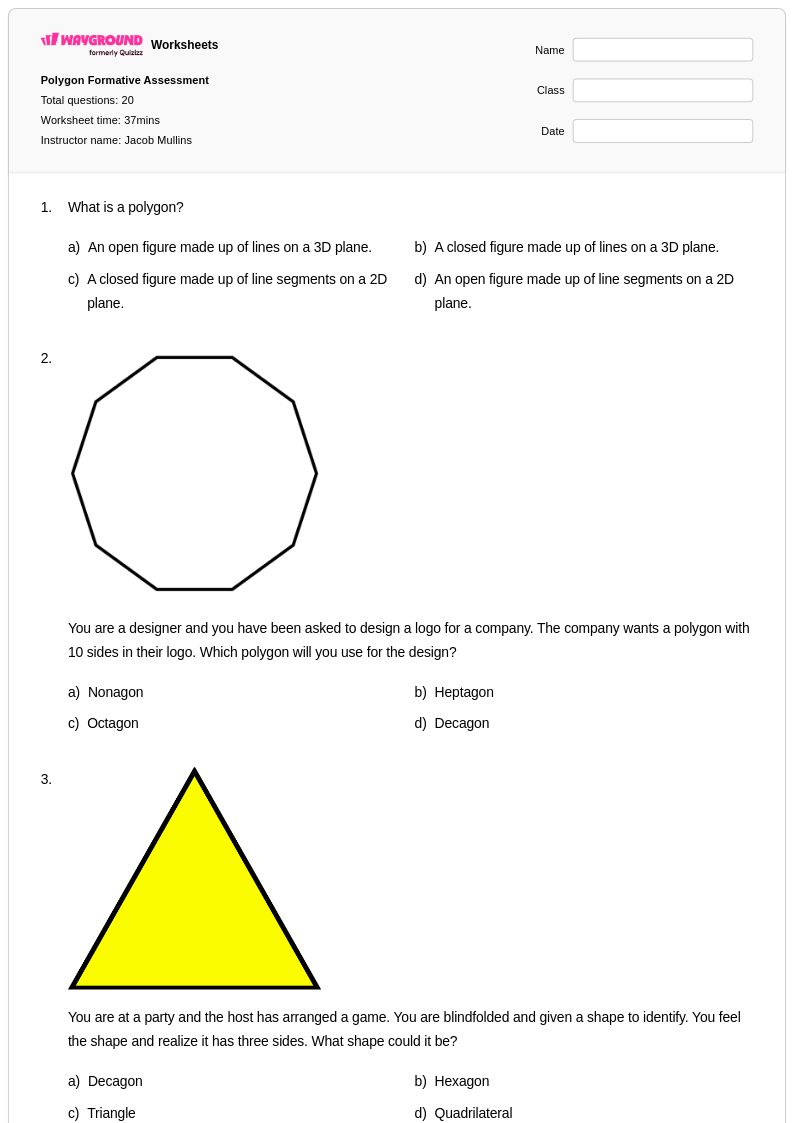
20 Q
3rd
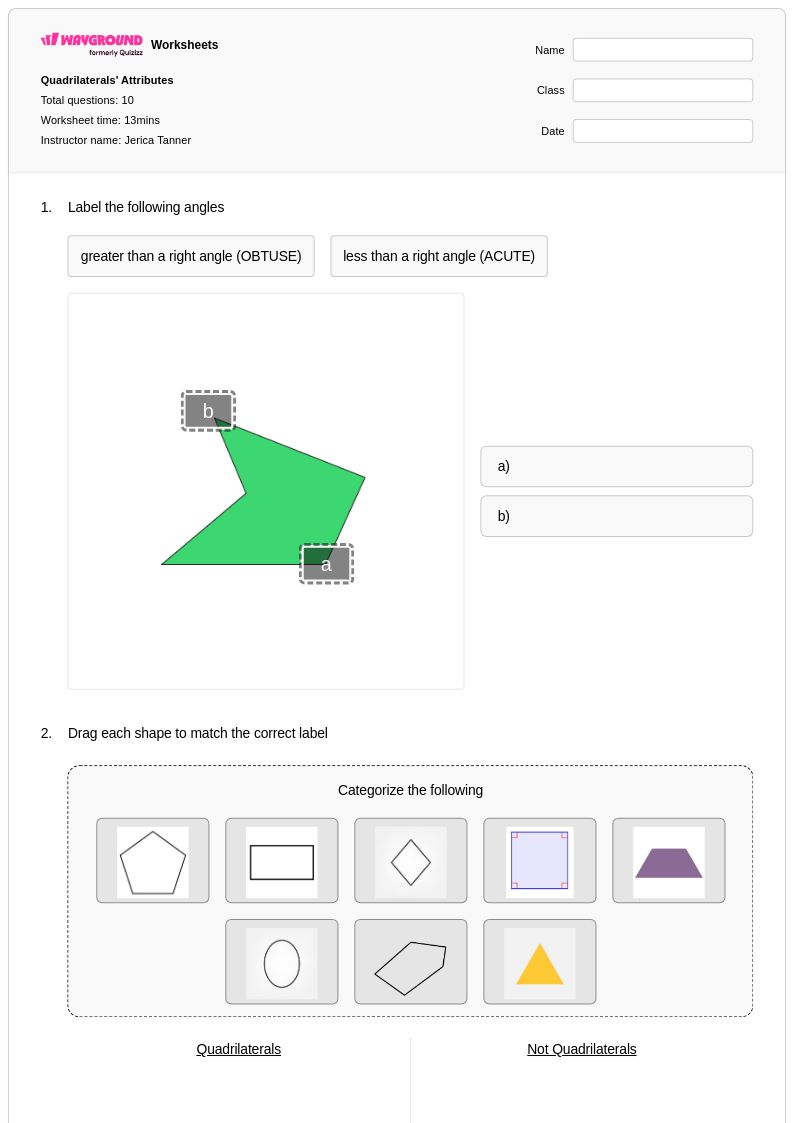
10 Q
3rd
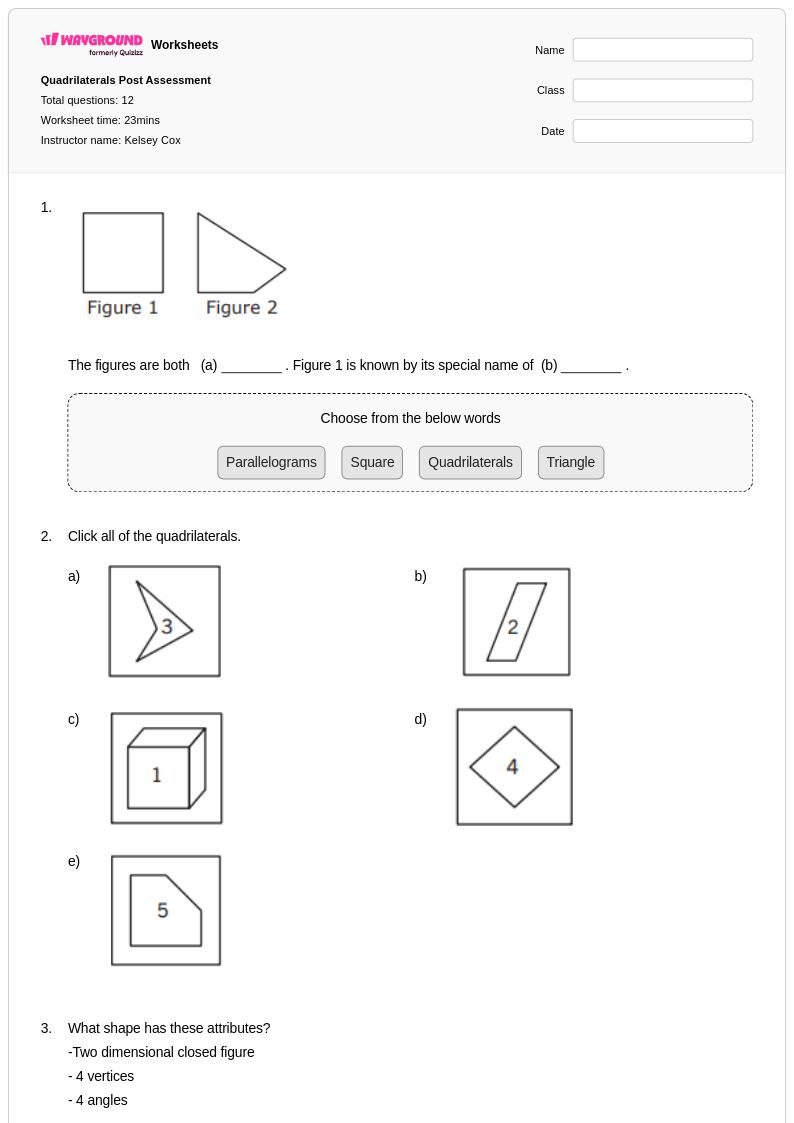
12 Q
3rd
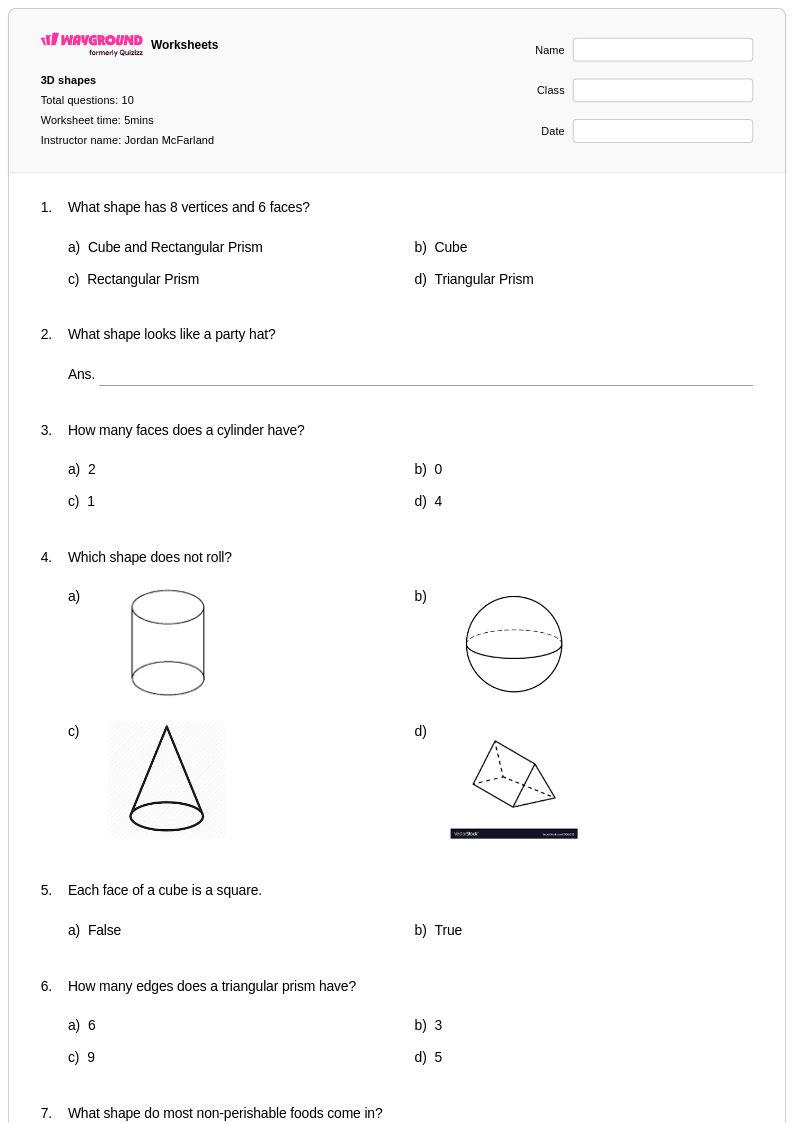
10 Q
3rd
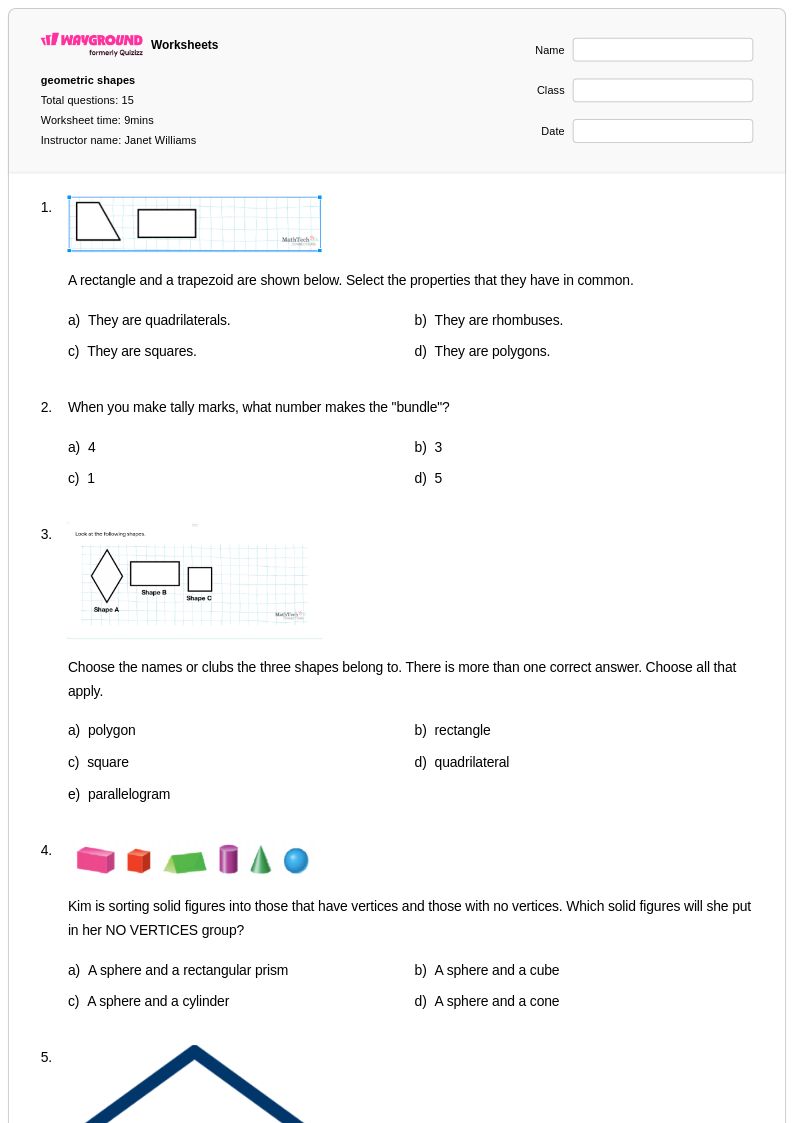
15 Q
3rd
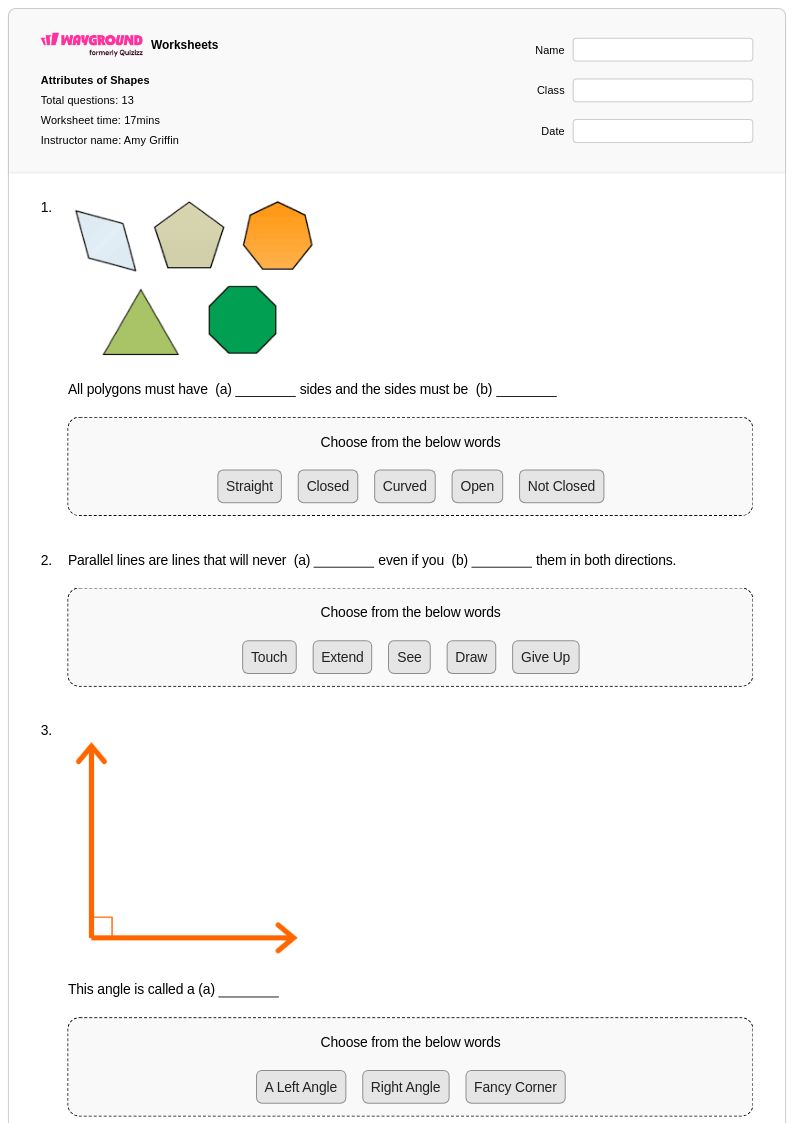
13 Q
3rd
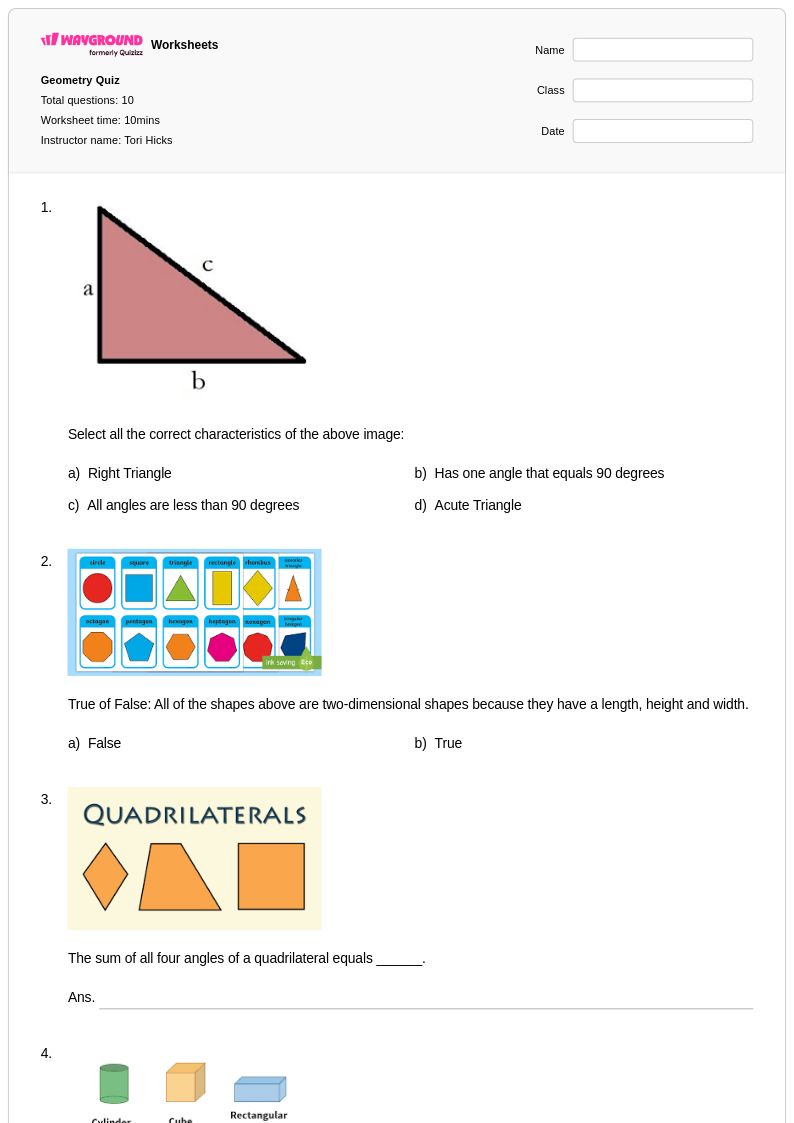
10 Q
3rd - 5th
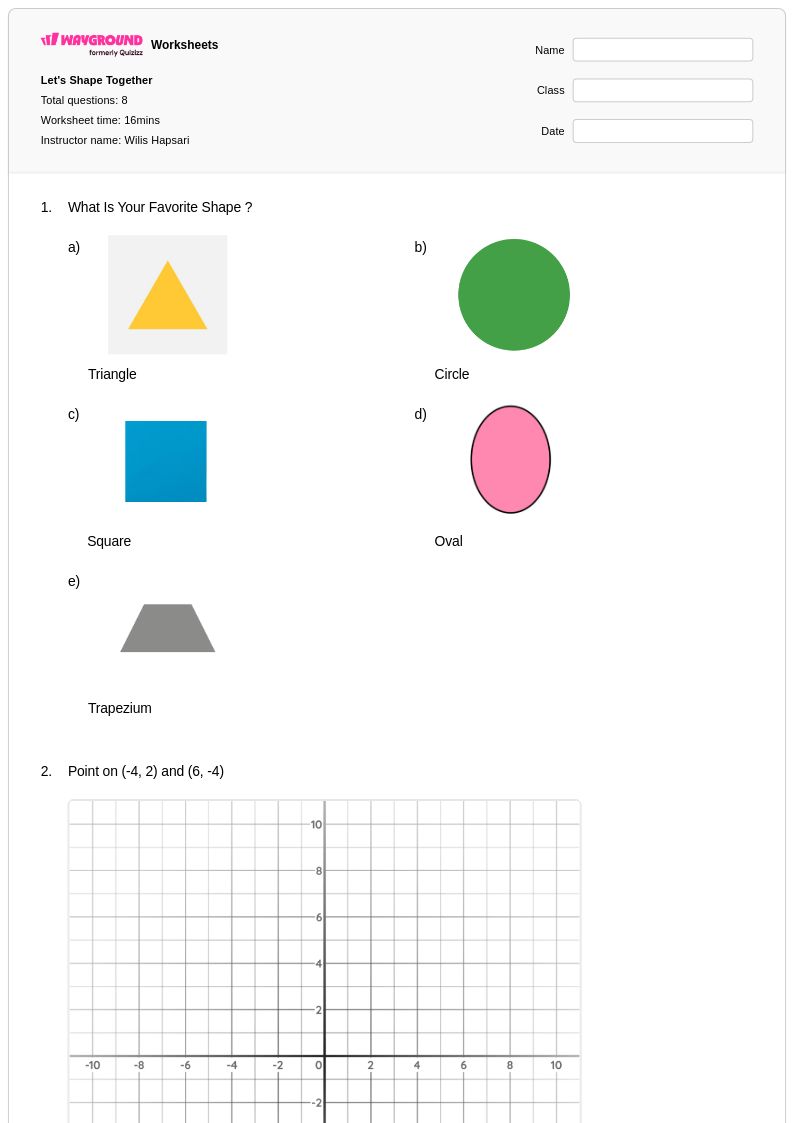
8 Q
1st - 5th
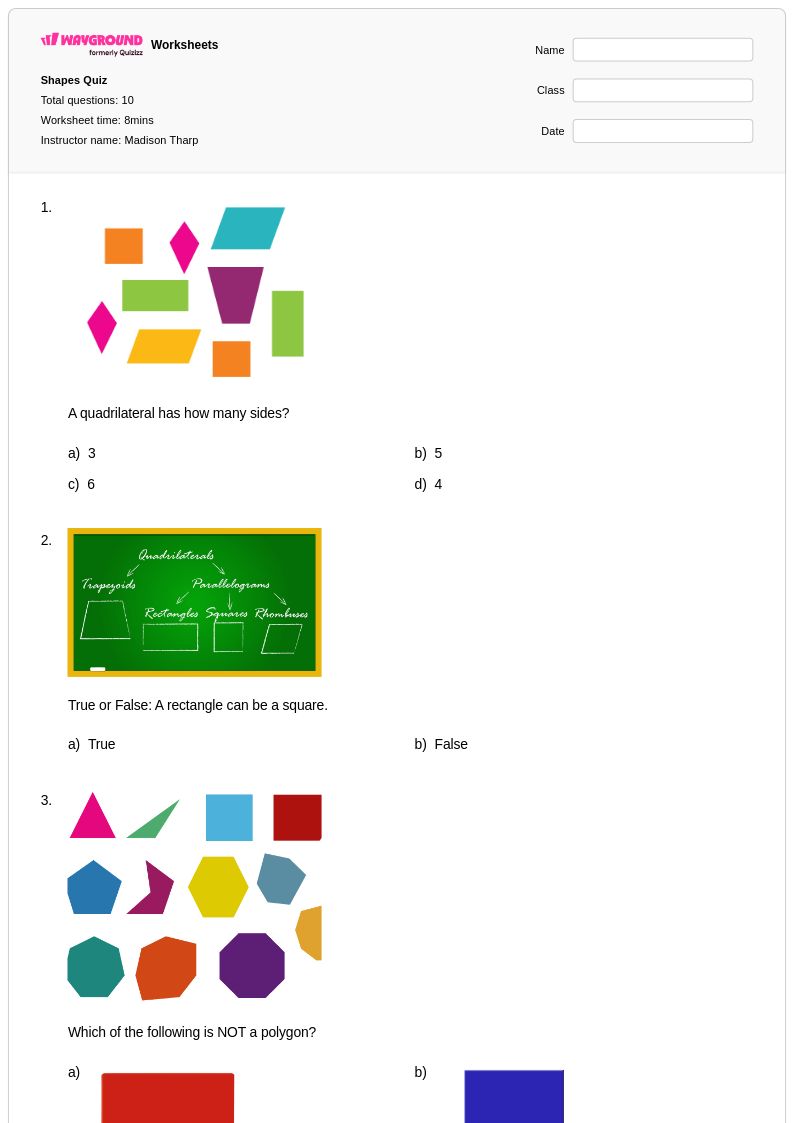
10 Q
3rd
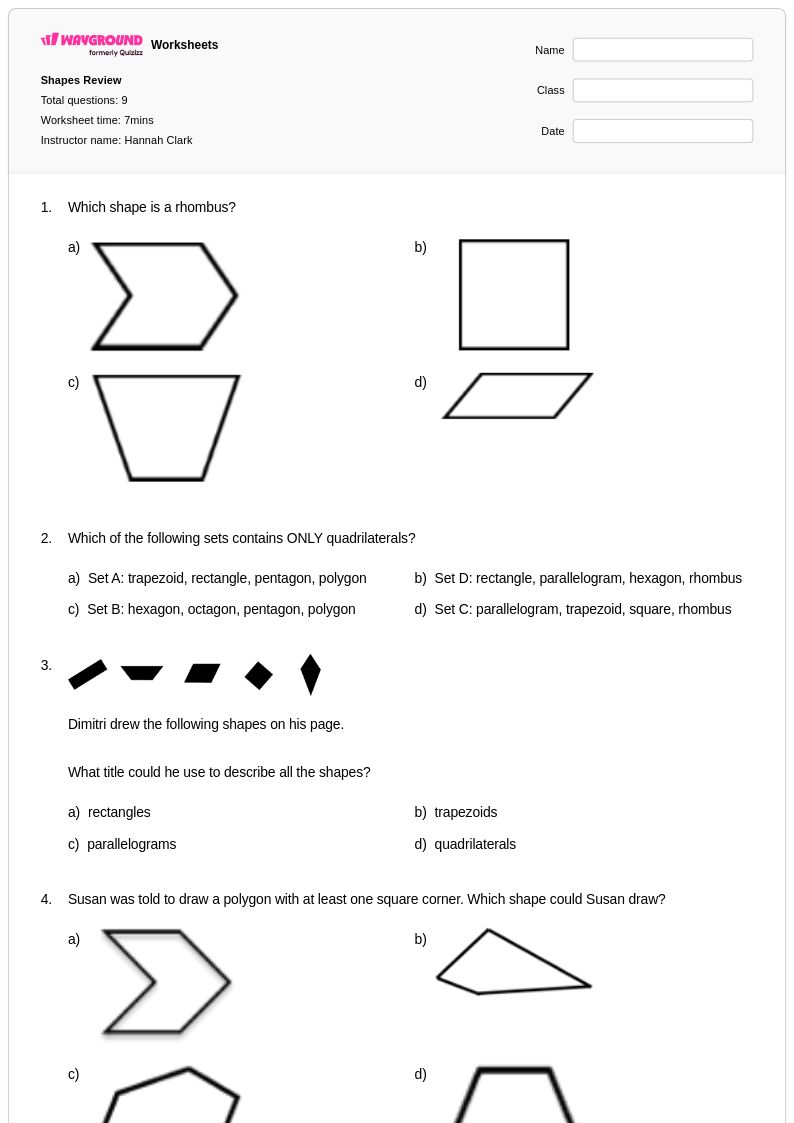
9 Q
3rd
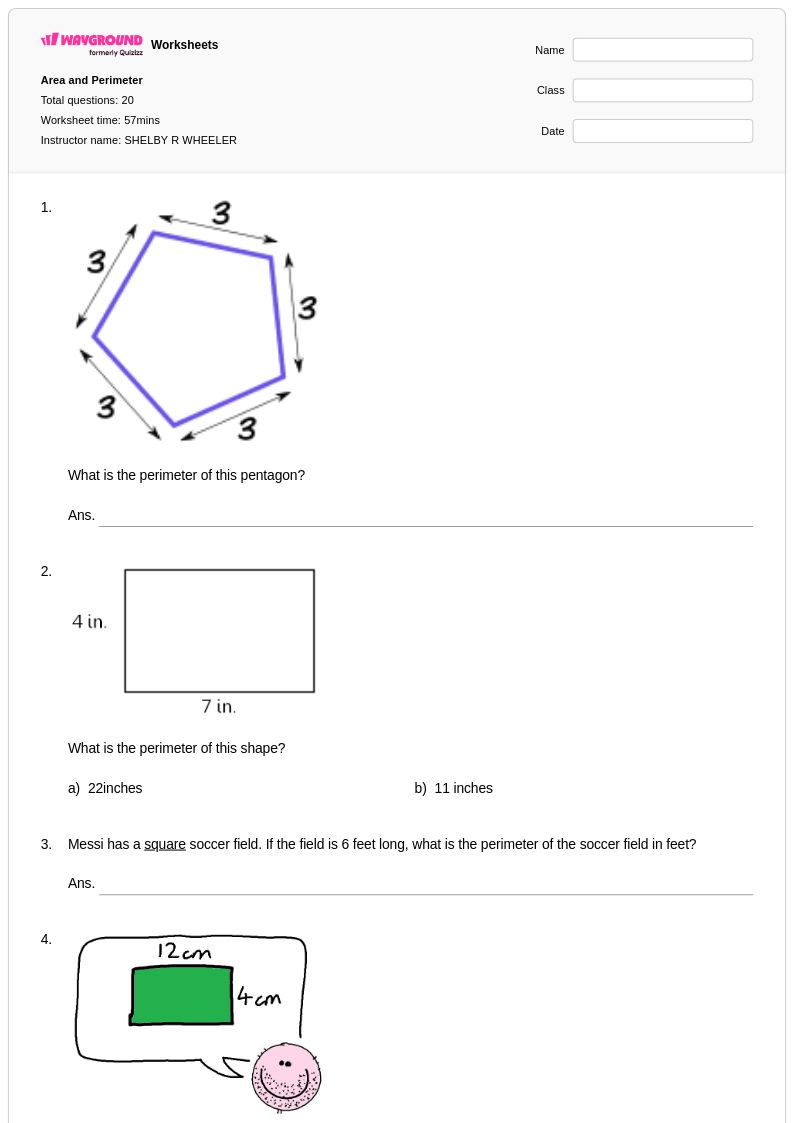
20 Q
3rd
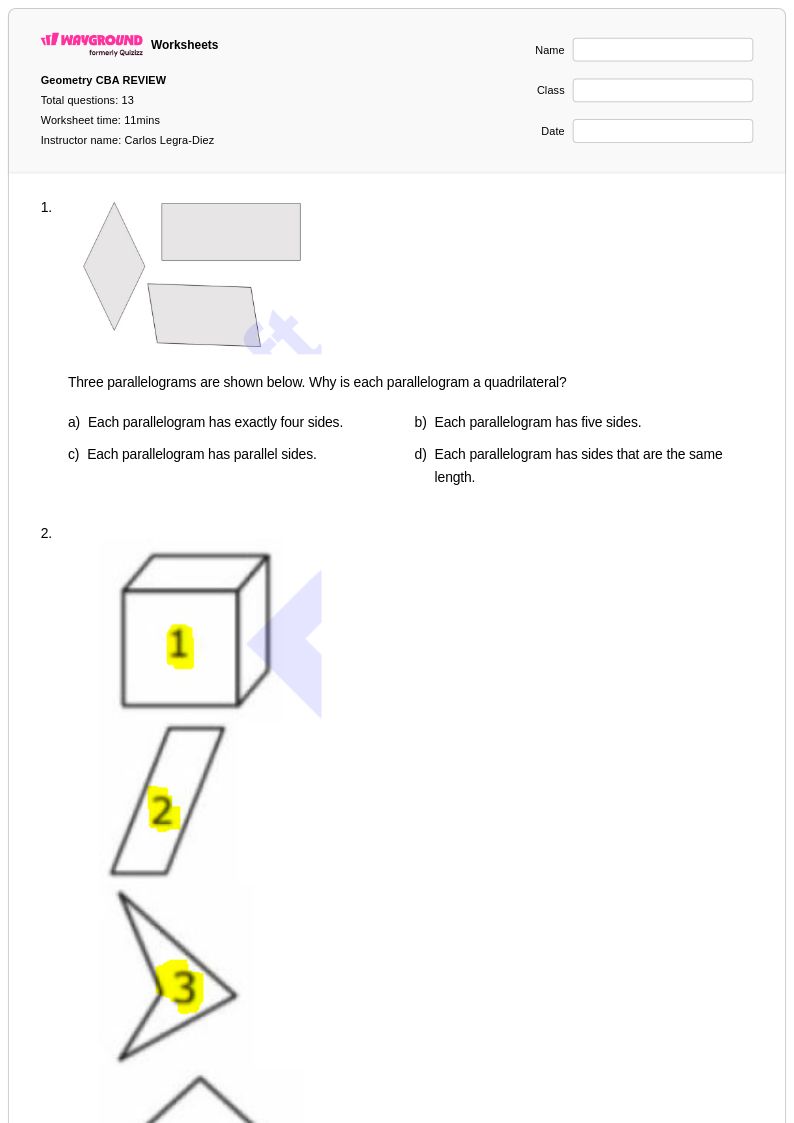
13 Q
3rd
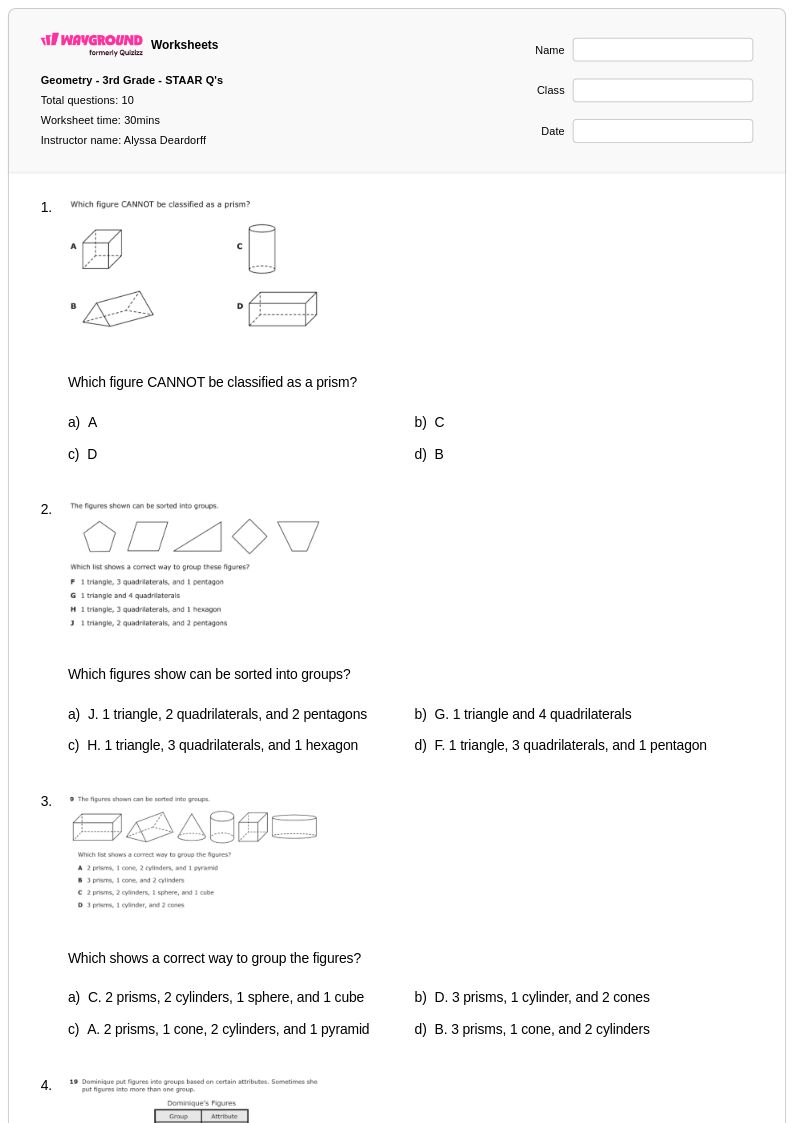
10 Q
3rd
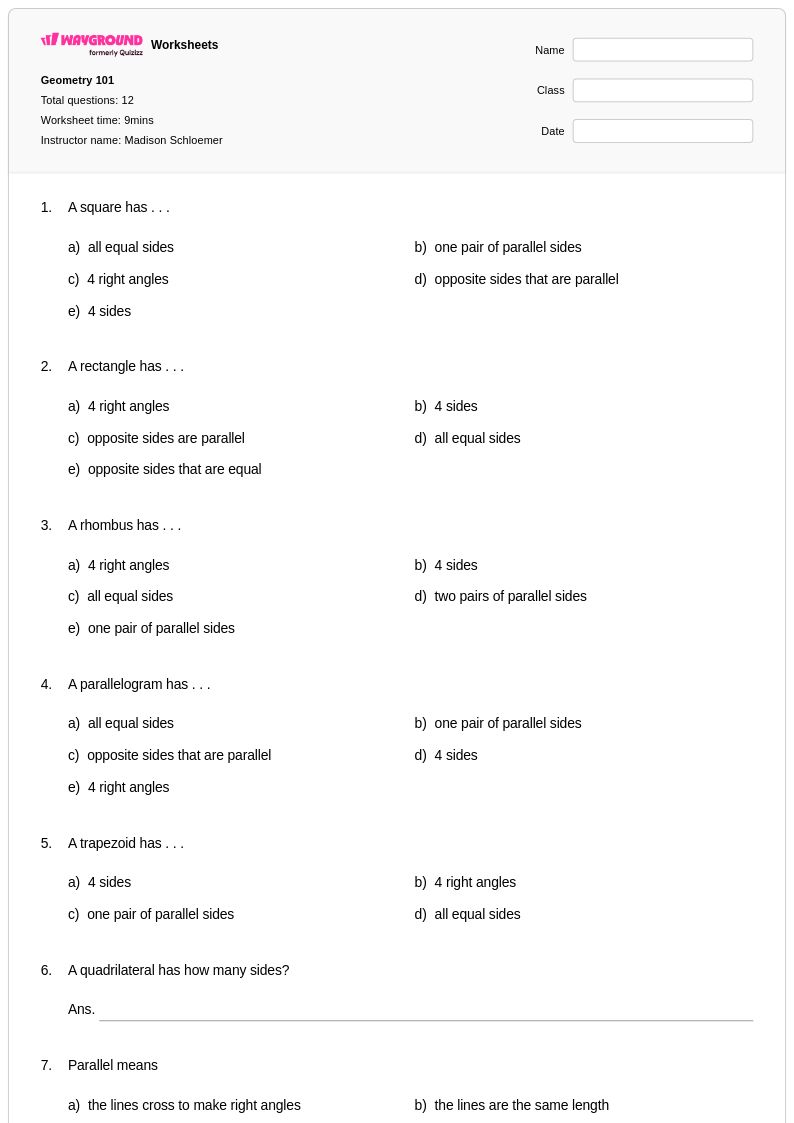
12 Q
3rd
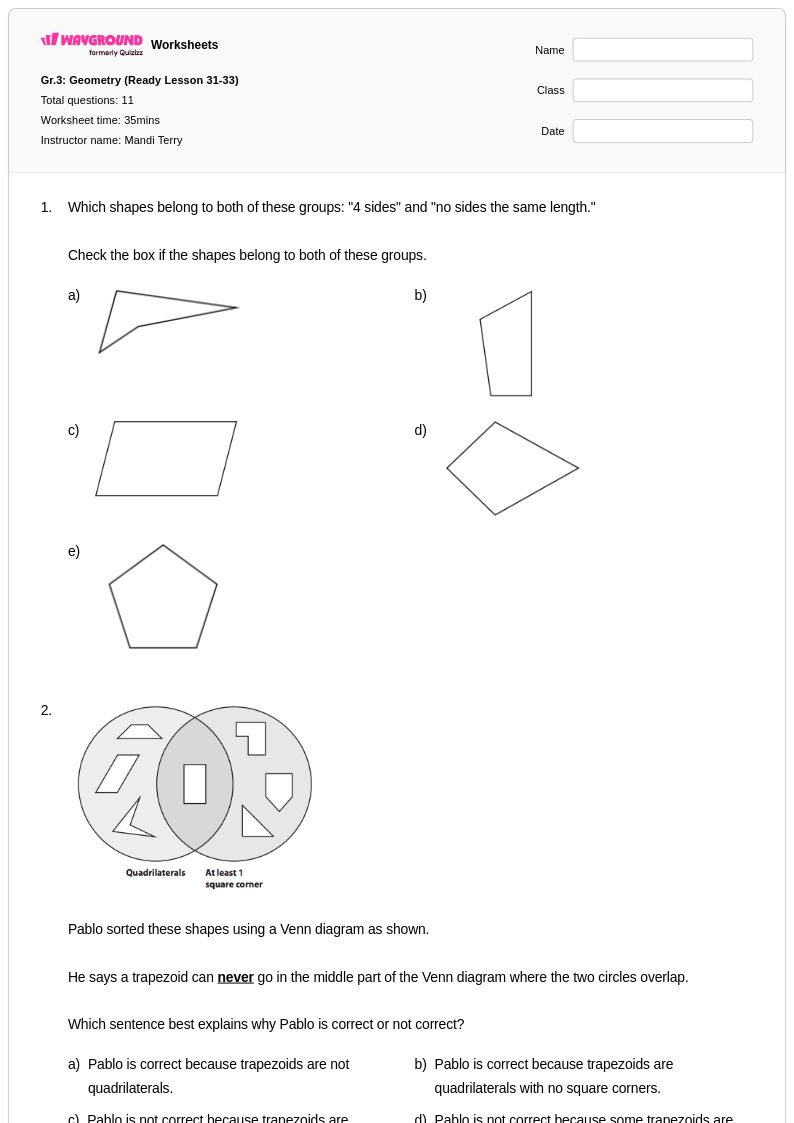
11 Q
3rd
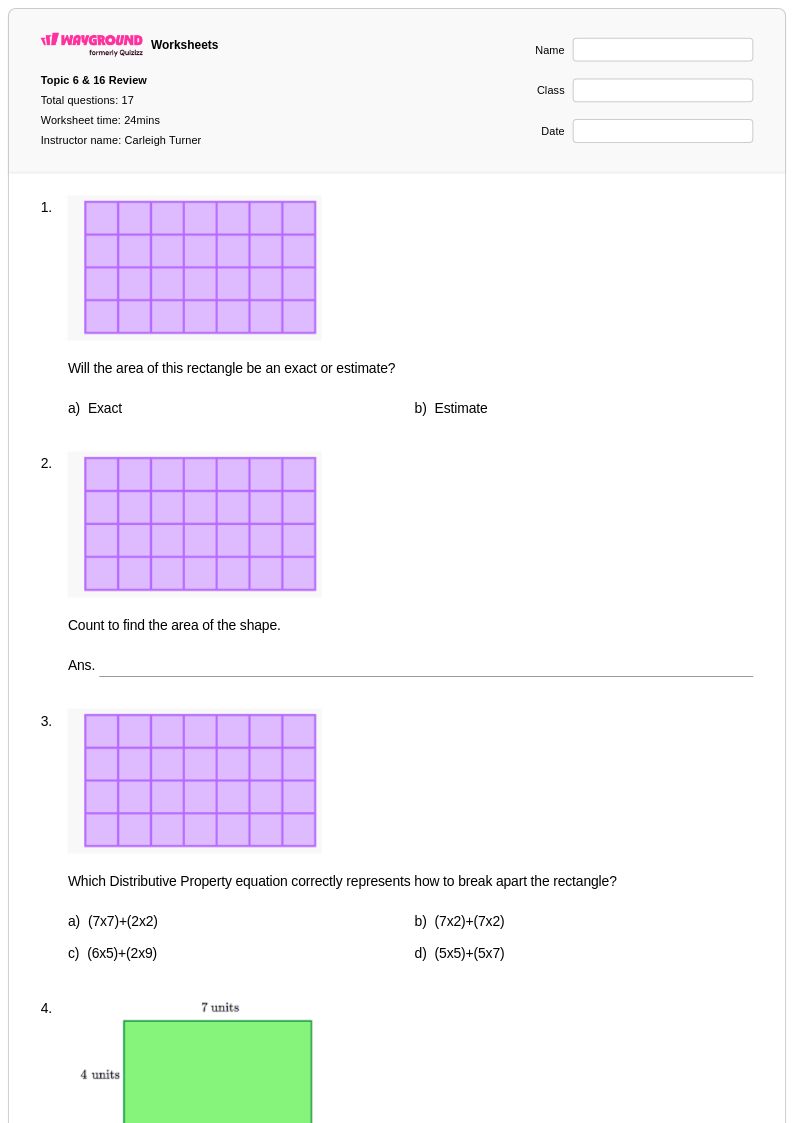
17 Q
3rd
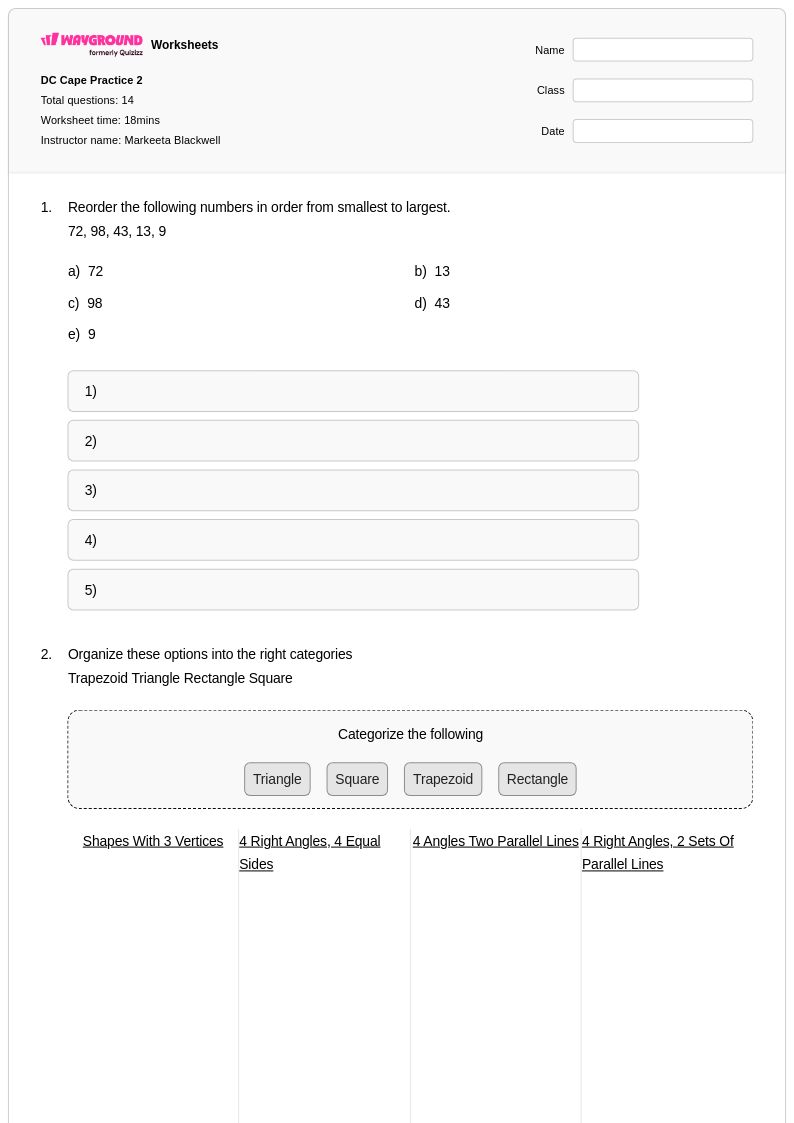
14 Q
3rd
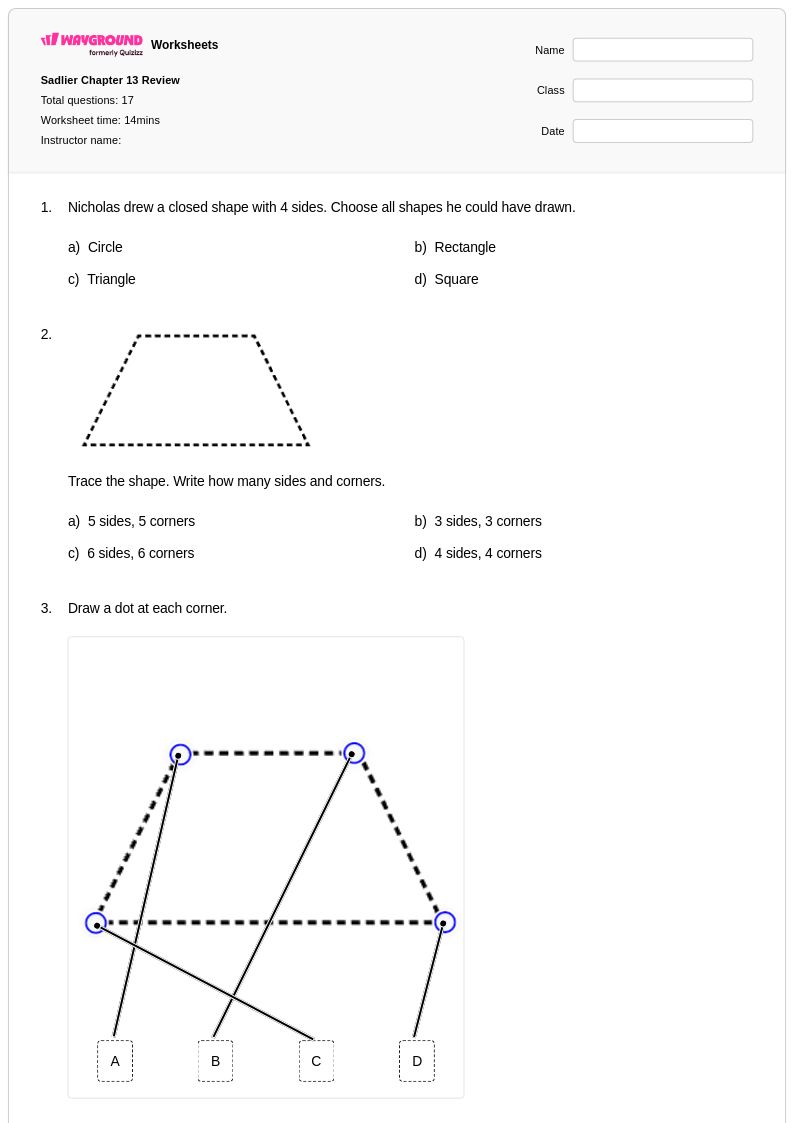
17 Q
1st - Uni
Explore Shape Sorting and Classification Worksheets by Grades
Explore Other Subject Worksheets for class 3
Explore printable Shape Sorting and Classification worksheets for Class 3
Shape sorting and classification worksheets for Class 3 students through Wayground (formerly Quizizz) provide essential foundational practice in geometric reasoning and spatial awareness. These carefully designed printables help young learners develop critical skills in identifying, categorizing, and organizing two-dimensional and three-dimensional shapes based on their attributes such as number of sides, angles, and geometric properties. Students work through engaging practice problems that challenge them to sort circles, triangles, squares, rectangles, and other polygons while building vocabulary and conceptual understanding. Each worksheet comes with a comprehensive answer key, making it easy for educators to assess student progress and provide targeted feedback on classification strategies and geometric thinking.
Wayground's extensive collection of millions of teacher-created resources ensures educators have access to diverse, high-quality shape sorting and classification materials that align with mathematical standards and support differentiated instruction. The platform's robust search and filtering capabilities allow teachers to quickly locate worksheets that match specific learning objectives, skill levels, and classroom needs for geometry instruction. These customizable resources are available in both printable pdf format and digital versions, providing flexibility for various teaching environments and learning preferences. Teachers can efficiently plan comprehensive geometry units, create targeted remediation activities for struggling learners, develop enrichment opportunities for advanced students, and establish consistent skill practice routines that reinforce shape recognition and classification concepts throughout the academic year.
FAQs
What are the key geometry skills for Grade 3?
How should I teach shape categories in third grade?
What exercises help third graders understand shape hierarchies?
What is a common misconception for third graders when classifying shapes?
How can I use these Grade 3 shape classification worksheets?
How does Common Core approach shape classification in Grade 3?
How can I differentiate this topic for my third graders?