
 Worksheets
What's That Bone?
Total questions: 90
Worksheet time: 54mins
Name
Class
Date
1.
What are the four types of bones?
a)
Long bones, short bones, left bones, right bones
b)
right bones, long bones, short bones, irregular bones
c)
irregular bones, short bones, long bones, flat bones
d)
flat bones, irregular bones, right bones, long bones
2.
What is the bone called in the middle of the forehead?
a)
Glabella
b)
Parietal
c)
Occipital
d)
Temporal
3.
Top half of the skeleton
a)
Appendicular Skeleton
b)
Axial Skeleton
4.
The skeleton system consists of all of the following except-
a)
bones
b)
joints
c)
ligaments
d)
muscles
5.
What bone is located at the center top of the skull?
a)
Parietal Bone
b)
Frontal Bone
c)
Occipital Bone
d)
Temporal Bone
6.
What is the upper region of the spine called?
a)
thoracic
b)
cervical
c)
lumbar
d)
coccyx
7.
What is the hip bone called?
a)
calcaneus
b)
patella
c)
coxal bone
d)
ilium
8.
Bone shaped like the mickey mouse ears
a)
ischium
b)
spinal process
c)
axis
d)
lateral condyle
9.
What is the eye hole called ?
a)
inferior concha
b)
maxilla
c)
eye hole
d)
orbit
10.
What are considered holes in the body?
a)
optic foramen
b)
supraorbital foramen
c)
infraorbital foramen
d)
all of the above
11.
What are the bottom ribs that don't connect to your sternum called?
a)
true ribs
b)
floating ribs
c)
ribs
d)
false ribs
12.
What is the jaw bone called?
a)
mandible
b)
orbit
c)
maxilla
d)
vomer
13.
What is the cheek bone called?
a)
zygomatic process
b)
zygomatic bone
c)
maxilla
d)
optic foramen
14.
Which is the correct definition of a process?
a)
Holes in the body
b)
Sticks out
c)
Mustache area
d)
Pinky bone
15.
An extension of Maxilla that articulates with the cheek bone
a)
Buccal Process
b)
Zygomatic Process
c)
Alveolar Process
d)
Frontal Process
16.
Which of the following is not part of the axial skeleton?
a)
ribs
b)
skull
c)
vertebrae
d)
shoulder
17.
In the knee joint, the fibula (the thinner bone of the lower leg) is considered medial to the tibia.
a)
True
b)
False
18.
Which of the cranial bones are paired?
a)
parietal and temporal
b)
occipital and temporal
c)
frontal and occipital
d)
parietal and sphenoid
19.
Which of the facial bones are not paired?
a)
maxilla and nasal
b)
zygomatic and palatine
c)
vomer and mandible
d)
nasal concha and lacrimal
20.
Which of the following facial bones cannot be seen from the outside?
a)
nasal
b)
maxilla
c)
mandible
d)
palatine
21.
Which of the following bones do not make up the orbit?
a)
frontal
b)
maxilla
c)
nasal concha
d)
zygomatic
22.
Which suture joins the frontal and parietal bones?
a)
sagittal
b)
squasmosal
c)
lambdoidal
d)
coronal
23.
The squasmosal suture is found between the parietal and temporal bones.
a)
True
b)
False
24.
Alveolar sacs are found in the maxilla and mandible.
a)
True
b)
False
25.
Which of the following markers is not found on the mandible?
a)
mental foramen
b)
mental protuberance
c)
glabella
d)
ramus
26.
The supraorbital foramen and the supraorbital margin are found on the temporal bone.
a)
True
b)
False
27.
Which structure is not found on the temporal bone?
a)
styloid process
b)
external auditory meatus
c)
mastoid process
d)
foramen magnum
28.
The infraorbital foramen is found within what bone?
a)
mandible
b)
lacrimal
c)
palatine
d)
maxilla
29.
All of the bones of the cranium (skull) are part of the _____ skeleton.
a)
axial
b)
appendicular
30.
Found within the cranium (skull) are the bones of the middle ear. Which of the following is not one of those bones?
a)
malleus
b)
patella
c)
incus
d)
stapes
31.
Which of the following is not a function of the human skeleton?
a)
support and framework
b)
protect internal organs
c)
stores calcium and produces components of blood
d)
breaks down worn out blood cells
32.

a)
coronal suture
b)
parietal suture
c)
lambdoidal suture
d)
sagittal suture
33.

a)
lambdoidal suture
b)
sagittal suture
c)
squamousal suture
d)
coronal suture
34.

What is this structure called?
a)
Mastoid Process
b)
Styloid Process
c)
Zygomatic Process
d)
External Acoustic Meatus
35.

a)
squamousal suture
b)
frontal suture
c)
coronal suture
d)
sagittal suture
36.
located on the sides of the head; houses the internal portion of the ear
a)
temporal bone
b)
occipital bone
c)
zygomatic bone
d)
frontal bone
37.

a)
lumbar vertebrae
b)
coccyx bone
c)
sacral bone
d)
thoracic vertebrae
38.

a)
lumbar vertebrae
b)
thoracic vertebrae
c)
coccyx bone
d)
sacral bone
39.

a)
thoracic vertebrae; 5
b)
lumbar vertebrae; 5
c)
lumbar vertebrae; 7
d)
lumbar vertebrae; 12
40.

a)
cervical vertebrae; 12
b)
thoracic vertebrae; 12
c)
thoracic vertebrae; 7
d)
lumbar vertebrae; 5
41.

a)
cervical vertebrae; 7
b)
cervical vertebrae; 12
c)
cervical vertebrae; 5
d)
thoracic vertebrae; 12
42.
Whats all the little bones in your finger called
a)
Carpals
b)
Tiny Sticks
c)
Phalanges
d)
Spider Webs
43.
The wrist is called the
a)
Tarsal
b)
Metacarpal
c)
Carpal
d)
Metatarsal
44.
Which of these is NOT a bone in the leg?
a)
Femur
b)
Tibia
c)
Fibia
d)
Fibula
45.
The skeletal term for your upper arm is
a)
scapula
b)
humerous
c)
ulna
d)
radius
46.
The shoulder blade is known as our
a)
Scapula
b)
Clavicle
c)
Phalanges
d)
Ulna
47.
Do bones grow?
a)
yes
b)
no
48.
What do we call the place where two or more bones meet?
a)
head
b)
cranium
c)
joints
d)
feet
49.
What is another name for your collar bone?
a)
scapula
b)
clavicle
c)
patella
d)
sternum
50.
What is the biggest bone in your body?
a)
fibula
b)
humerus
c)
pelvis
d)
femur
51.

a)
ischium
b)
illium
c)
pubis
d)
sacrum
52.

a)
ischium
b)
illium
c)
pubis
d)
sacrum
53.

Name this bone.
a)
xyphoid process
b)
coccyx
c)
sacrum
54.

Name this bone.
a)
xyphoid process
b)
coccyx
c)
sternum
55.
There are _____ bones in the adult human body?
a)
106
b)
206
c)
306
d)
96
56.

a)
Tarsals
b)
Metatarsals
c)
Phalanges
d)
Metacarpals
57.

a)
Tarsals
b)
Metatarsals
c)
Phalanges
d)
Metacarpals
58.
What's another name for your knee?
a)
Knee
b)
Nutella
c)
Patella
d)
Nee
59.
What is the only bone in the body that's not attached to another?
a)
Mandible
b)
Coccyx
c)
Distal Phalanges
d)
Hyoid
60.
What type of cartilage is found in the ribs?
a)
elastic cartilage
b)
fibrocartilage
c)
floating cartilage
d)
costal cartilage
61.
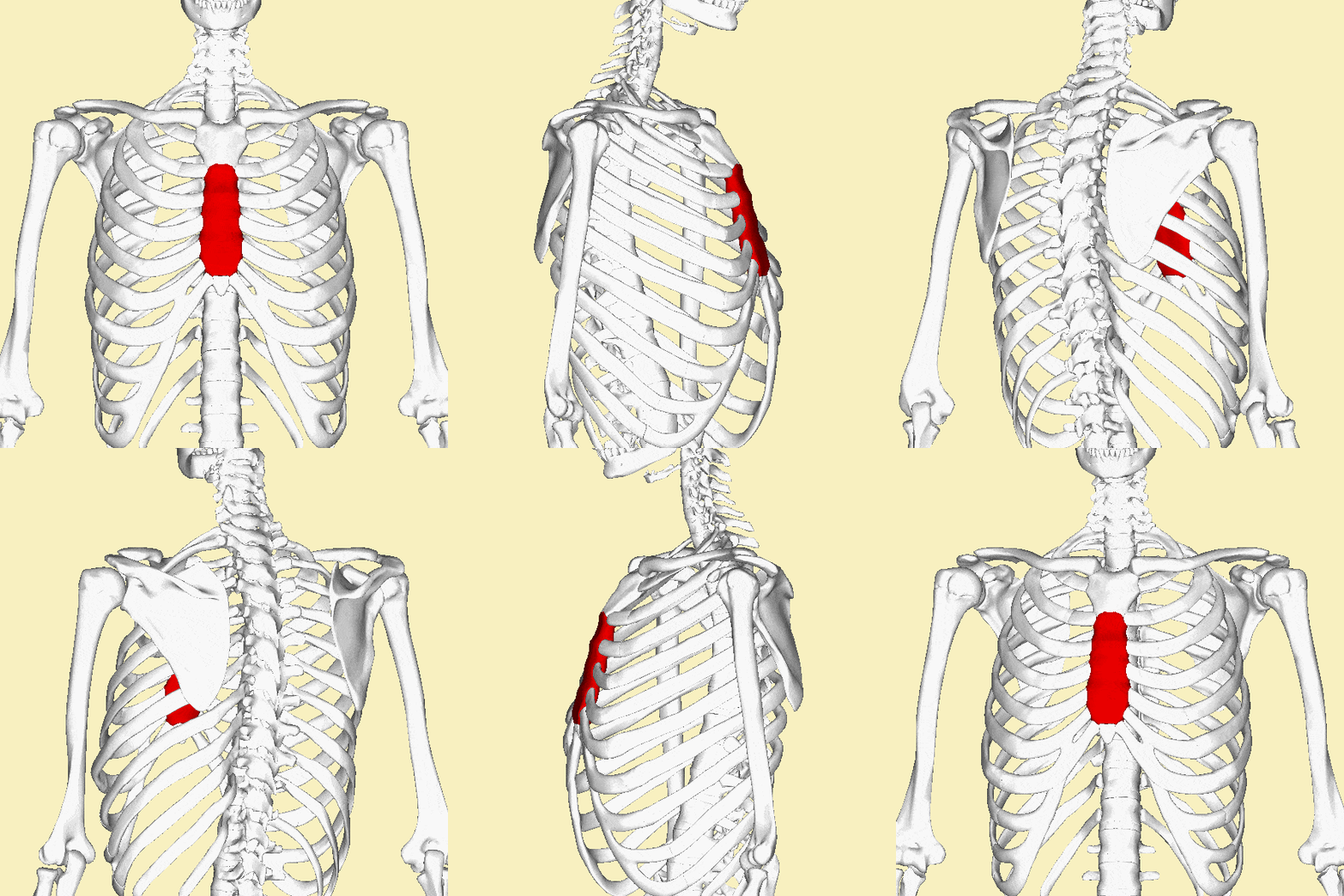
What is this?
a)
Manubrium
b)
Body
c)
Xiphoid Process
d)
True Ribs
62.
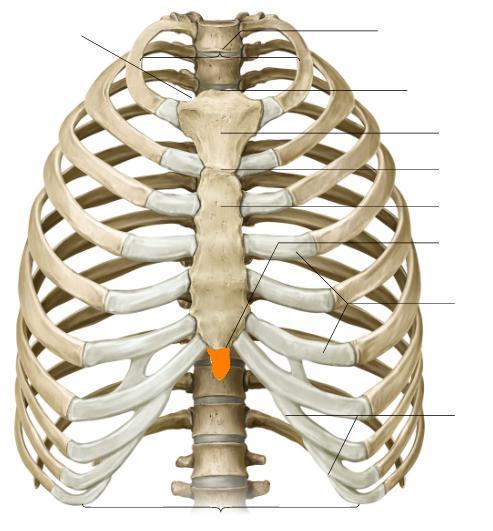
What is this?
a)
Manubrium
b)
Xiphoid Process
c)
Body
d)
Costal Cartilage
63.
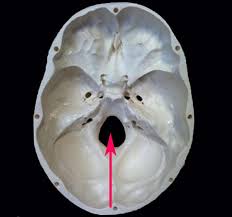
What is this?
a)
Foramen Magnum
b)
Jugular Foramen
c)
Carotid Canal
d)
External Acoustic Meatus
64.
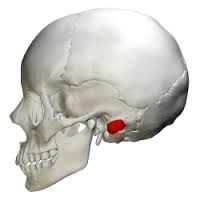
What is this?
a)
Mastoid Process
b)
Styloid Process
c)
External Acoustic Meatus
d)
Zygomatic Process
65.
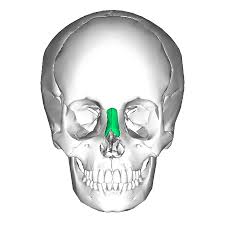
What is this?
a)
Nasal
b)
Lacrimal
c)
Ethmoid
d)
Vomer
66.
Bones of the thoracic cage that articulate directly to the sternum and vertebrae
a)
true ribs
b)
false ribs
c)
floating ribs
d)
strong ribs
67.
How many cervical vertebrae are in the spine?
a)
7
b)
12
c)
5
d)
4
68.
Vertebrae would be considered what shape of bone?
a)
Long
b)
Short
c)
Flat
d)
Irregular
69.
A "flat" bone would be the ________________.
a)
Radius
b)
Vertebrae
c)
Sternum
d)
Phalange
70.

What is the Scaphoid?
a)
12
b)
9
c)
8
d)
6
71.

What is #3?
a)
distal phalanges
b)
proximal phalanges
c)
middle phalanges
d)
metacarpal bones
72.

Which is the Capitate
a)
5
b)
7
c)
8
d)
9
73.

What is #12
a)
Hamate
b)
Pisiform
c)
Triquetrum
d)
Lunate
74.

What is #5?
a)
trapezoid
b)
metacarpal bones
c)
Trapezium
d)
hamate
75.

What is #9?
a)
Capitate
b)
Lunate
c)
scaphoid
d)
pisiform
76.
What does distal mean?
a)
furthest away from the center of the body
b)
closest to the midline of the body
c)
on the front of the body
d)
on the back of the body
77.
What does Proximal mean?
a)
closer to the mid-line of the body
b)
on the front of the body
c)
on the back of the body
d)
furthest from the midline of the body
78.
What is superior, the talus or the calcaneous
a)
Calcaneous
b)
Talus
79.
Which is proximal, the navicular or the cunieform?
a)
cunieform
b)
navicular
80.
Which is lateral, the cuboid or the navicular?
a)
cuboid
b)
navicular
c)
neither
d)
both
81.
Which is the most medial phalange?
a)
big toe
b)
pinky toe (baby toe)
82.
What kind of joints are in the tarsals?
a)
synovial
b)
fibrous
c)
cartiliginous
83.

Which is the cuboid?
a)
7
b)
2
c)
6
d)
5
84.
The ankle joint is made up of these 3 bones.
a)
Tibia, Talus, Calcaneus
b)
Fibula, Talus, Calcaneus
c)
Tibia, Fibula, Talus
d)
Talus, Fibula, Femur
85.
Which bone is at the very top the vertebrae? And what bone is directly under it?
a)
Axis, Sacrum
b)
Axis, Atlas
c)
Atlas, Sacrum
d)
Atlas, Axis
86.
What is the difference between the greater trochanter and the lesser trochanter?
a)
the greater trochanter is on the inside portion of the femur
b)
The lesser trochancher is on the inside portion of the femur
87.
What bone could the pubis symphysis be found?
a)
Coxal Bone
b)
Radius
c)
Fibula
d)
Condyloid Process
88.
What are holes in the jaw referred as?
a)
Mental Process
b)
Styloid Process
c)
Mastiod Foramen
d)
Mental Foramen
89.
What does the Perpendicular Plate of Ethnoid Bone do?
a)
Right and Left sections in the ribs
b)
Left and right sections in the Manubrium
c)
Left and right sections in the nose
d)
Right and left sections in the Maxilla
90.
How many different types of ribs are there?
a)
9
b)
3
c)
2
d)
5
100 %

