
 Worksheets
Ecosystems
Total questions: 87
Worksheet time: 1hrs 27mins
Name
Class
Date
1.
Temperature, light, air, water, and soil are all _____ parts of the environment
a)
alive
b)
biotic
c)
abiotic
d)
living
2.
Temperature is an example of what kind of factor?
a)
Biotic
b)
abiotic
c)
dead
d)
living
3.
What is an example of a biotic factor?
a)
skunk
b)
rocks
c)
soil
d)
water
4.
A collection of organisms that belong to different populations but all live in the same area and interact with one another.
a)
Population
b)
Ecosystem
c)
Community
d)
Ecosphere
5.
A collection of organisms that make up a community as well as all of the nonliving aspects of the environment.
a)
Population
b)
Community
c)
Habitat
d)
Ecosystem
6.
Food, water, sunlight, shelter, and space are resources that are often __________.
a)
limiting factors
b)
wet
c)
messy
d)
found in rocks
7.
A living or once-living organisms in an ecosystem is a
a)
population
b)
biotic factor
c)
abiotic factor
d)
community
8.
"Bio" means _________.
a)
non-living
b)
not/without
c)
life
d)
dead
9.
Is sunlight an abiotic or biotic factor?
a)
abiotic
b)
biotic
10.
The prefix "a" means
a)
life
b)
science
c)
not or without
d)
one
11.
Bacteria
a)
Biotic
b)
Abiotic
12.
Oxygen
a)
Biotic
b)
Abiotic
13.

pollution
a)
biotic
b)
abiotic
14.

waste
a)
biotic
b)
abiotic
15.
An individual living thing is a/an __________.
a)
habitat
b)
ecosystem
c)
organism
d)
population
16.
Example of a producer:
a)
frog
b)
algae
c)
worm
d)
mouse
17.
Example of a consumer
a)
worm
b)
bacteria
c)
mushroom
d)
hawk
18.
Which one is NOT an example of a decomposer?
a)
mushroom
b)
leaves
c)
mold
d)
worm
19.

What is a producer?
a)
an organism that gets energy from eating other organisms
b)
an organisms that uses sunlight to make its own food
c)
an organism that gets energy from eating dead organisms, non-living material or waste
d)
an organism that uses chemical energy to make its own food
20.

An organism that gets energy from eating other organisms is a ______________
a)
producer
b)
consumer
c)
decomposer
d)
prey
21.

A connection of food chains with many food energy paths in an ecosystem is called a ____________
a)
ecosystem
b)
food web
c)
environment
d)
population
22.
The way energy is passed from one organism to another
a)
food chain
b)
energy
c)
extinct
d)
habitat
23.

What is a carnivore?
a)
an animal that gets energy by eating other animals
b)
An animal that gets energy by eating only plants
c)
an animal that gets energy by eating both plants and animals
d)
an animal that makes its own energy through photosynthesis
24.

An animal that gets energy from eating both plants and animals is a
a)
herbivore
b)
carnivore
c)
omnivore
d)
autotroph
25.

Which of the following is NOT a consumer
a)
grass
b)
dog
c)
shark
d)
fish
26.

The shrew provides energy for the _______?
a)
cricket
b)
grasshopper
c)
frog
d)
snake
27.

Which of the following is a herbivore?
a)
cricket
b)
frog
c)
hawk
d)
shrew
28.

Where do all life forms get their energy?
a)
Earth's Core
b)
Water
c)
Plants
d)
The Sun
29.
The arrows in a food chain or web represents what?
a)
They point to the organism that is being eaten.
b)
It shows how sunlight flows within an ecosystem.
c)
They show what direction the energy is flowing between organisms.
d)
They represent how water is transferred within a habitat.
30.

What is this called?
a)
Food Web
b)
Food Chain
31.

What's the role of consumers in a food chain?
a)
Use sunlight to make food
b)
Eat other species and keep them from overpopulating
c)
Break down dead stuff
d)
Add nutrients to the soil
32.
Trophic levels
a)
show each step in the transfer of energy through an ecosystem
b)
are each level in an energy pyramid
c)
get smaller the more steps away they are from the sun
d)
all of the choices are correct
33.
An energy pyramid shows
a)
how energy is lost from one trophic level to the next
b)
the foods that you should eat every day
c)
the habitat of each organism
d)
the producers on the smallest top level
34.

In the energy pyramid here, which organisms have the most energy available?
a)
Producers
b)
Carnivores
c)
Herbivores
d)
Top Predator
35.

In the energy pyramid below, which organism has the least amount of energy available?
a)
Producers
b)
Herbivores
c)
Carnivores
d)
Top Predator
36.

In the energy pyramid here, how much of the energy in each level gets lost as heat or used by the organism for survival?
a)
80%
b)
90%
c)
10%
d)
20%
37.

The diagram represents a pyramid of energy in an ecosystem. Which level would most likely contain members of the plant kingdom?
a)
A
b)
B
c)
C
d)
D
38.

The deer, grasshopper, and bird are all examples of which type of consumers on this food pyramid?
a)
decomposers
b)
omnivores
c)
carnivore
d)
herbivore
39.
Which level includes organisms of the same species in the same area?
a)
Organism
b)
Habitat
c)
Population
d)
4 Needs of Life
40.
Which accurately lists the levels from smallest to largest?
a)
ecosystem, community, organism, population
b)
organism, population, community, ecosystem
c)
population, ecosystem, organism, community
d)
organism, population, ecosystem, community
41.
The carrying capacity of an environment for a particular species at a particular time is determined by the
a)
number of individuals in the species.
b)
distribution of the population.
c)
reproductive potential of the species.
d)
supply of the most limited resources
42.
A tick and a dog have this type of relationship.
a)
mutualism
b)
commensalism
c)
neutralism
d)
parasitism
43.

The role an organism plays in its ecosystem
a)
niche
b)
behavior
c)
structure
d)
function
44.

The place where an organism lives.
a)
terrain
b)
habitat
c)
community
d)
population
45.
The organism that does the killing in a predation interaction
a)
Predator
b)
Prey
c)
Competition
d)
Adaptation
46.
The struggle between organisms to survive as they attempt to use the same resource
a)
Predator
b)
Prey
c)
Competition
d)
Adaptation
47.
An organism that is killed and eaten by another organism
a)
Predator
b)
Prey
c)
Competition
d)
Adaptation
48.
Camouflage is an example of an ______________________ that a prey might have to survive.
a)
Niche
b)
Prey
c)
Competition
d)
Adaptation
49.
Most animals have ________ for food, water, and living space.
a)
competition
b)
fun
c)
predation
d)
commensalism
50.
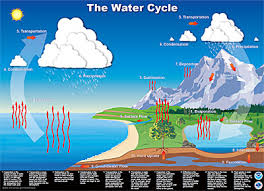
During which stage do clouds form?
a)
condensation
b)
evaporation
c)
precipitation
51.
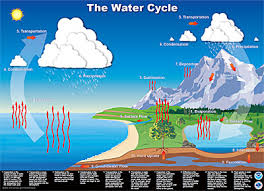
Which stages does liquid water from the ocean turn into water vapor?
a)
condesantion
b)
evaporation
c)
precipitation
d)
run off
52.
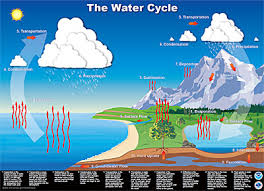
Which stage does ground water try to return to the ocean or soak into the ground?
a)
condensation
b)
evaporation
c)
precipitation
d)
run off
53.
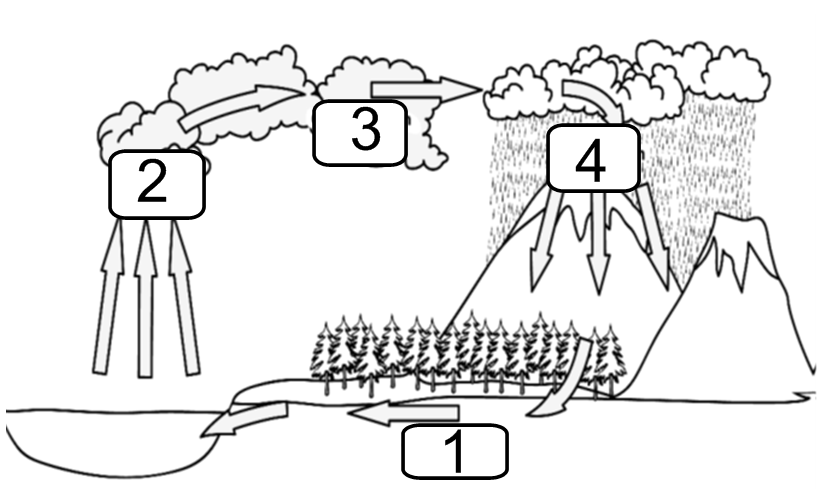
Which stage does the #2 show in the diagram?
a)
condensation
b)
evaporation
c)
precipitation
d)
run off
54.

Which stage does the #3 show in the diagram?
a)
condensation
b)
evaporation
c)
precipitation
d)
run off
55.

what does the #4 show in the diagram?
a)
condensation
b)
evaporation
c)
precipitation
d)
run off
56.

What is it called when plants give off water vapor as a waste product?
a)
condensation
b)
evaporation
c)
sublimation
d)
transpiration
57.
what does the #4 show in the diagram?
a)
condensation
b)
evaporation
c)
precipitation
d)
run off
58.
oxygen is a gas produced by _ and used by _
a)
plants and animals
b)
photosynthesis and carbon dioxide
c)
animals and plants
d)
carbon dioxide and photosynthesis
59.
carbon dioxide is a gas produced by _ and used by -
a)
plants and animals
b)
carbon and photosynthesis
c)
animals and plants
d)
photosynthesis
60.
How do living organisms return carbon to the atmosphere in the carbon cycle?
a)
respiration and photosynthesis
b)
decomposition and respiration
61.
planting large numbers of trees result in _
a)
a decrease in oxygen production
b)
an increase in oxygen production
c)
oxygen and carbon
d)
carbon and oxygen
62.
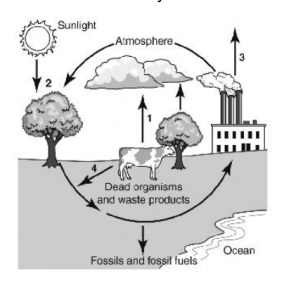
What is happening at 1?
a)
respiration: releasing CO2
b)
decomposing CO2 in the soil
c)
photosynthesis: absorbing CO2
d)
turning CO2 from the atmosphere into organic molecules
63.
What is the end product of burning fossil fuels (whether they are coal, oil or natural gas) and where does it go?
a)
Carbon dioxide; atmosphere
b)
Methane; atmosphere
c)
Oxygen; atmosphere
d)
Water; atmosphere
64.
Organisms that need nitrogen to survive
a)
only plants
b)
only animals
c)
only bacteria
d)
all living organisms
65.
Gas that makes up almost 80% of Earth's atmosphere
a)
oxygen
b)
carbon dioxide
c)
nitrogen
d)
hydrogen
66.
Plants and animals cannot use nitrogen directly from the air.
a)
True
b)
False
67.
How do animals get nitrogen?
a)
the atmosphere
b)
eating other organisms
c)
bacteria
d)
lightning
68.

What is the correct order of primary succession shown in this figure?
a)
A, B, C, D
b)
B, A, D, C
c)
C, D, A, B
d)
D, A, B, C
69.
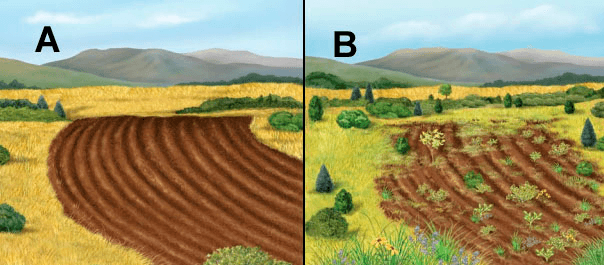
What type of succession is shown going from figure A to figure B?
a)
primary succession
b)
ecological succession
c)
secondary succession
d)
intermediate
70.
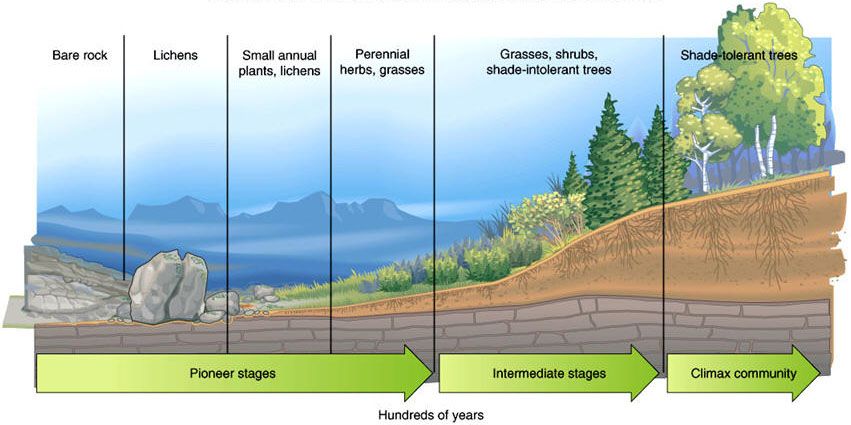
The picture shows what type of succession?
a)
primary
b)
secondary
c)
tertiary
d)
quadanary
71.
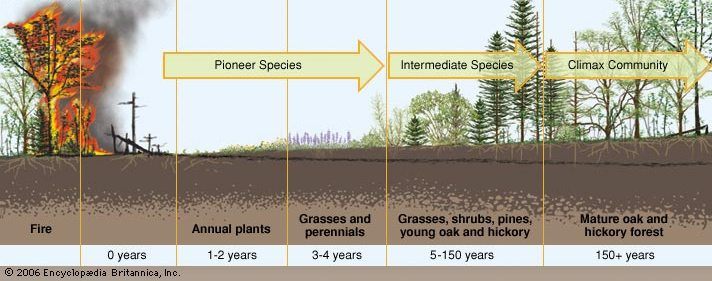
The picture shows what type of succession?
a)
primary
b)
secondary
c)
tertiary
d)
quadanary
72.
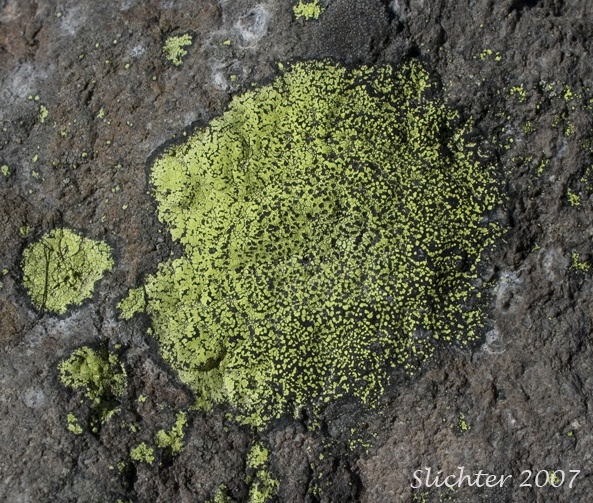
What is the name given to lichen or algae after a primary succession?
a)
pioneer species
b)
volunteer species
c)
founder species
d)
conqueror species
73.
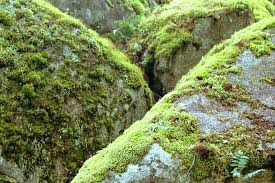
What are examples of pioneer species in a primary succession?
a)
Bushes and Shrubs
b)
Oak trees
c)
Mossess and Lichens
d)
A rose Bush
74.
After a volcanic eruption, lava covers the land. What is the order that plants grow to repopulate the area?
a)
Lichens → Shrubs → Grasses → Trees
b)
Lichens → tree → shrubs→Grasses
c)
Grasses → Lichens → Shrubs → Trees
d)
Lichens → Grasses → Shrubs → Trees
75.

Final illustration (#8) shows
a)
pioneer species
b)
climax community
c)
only biotic factors
d)
only abiotic factors
76.

Succession type?
a)
primary succession
b)
secondary succession
c)
tertiary succession
d)
variable succession
77.
To keep our ecosystem healthy, we must keep our?
a)
biodiversiety
b)
earth
c)
sun
d)
biodiversity
78.
The following natural events will cause primary succession to occur:
a)
floods and hurricanes
b)
wildfires and controlled burns
c)
tsunamis and tornadoes
d)
glacier movement and volcanoes
79.
Which biome is more biodiverse?
a)
Desert
b)
Sand
c)
Tundra
d)
Rainforest
80.

What does biodiversity mean?
a)
Only one species in an area.
b)
The different amount of species in an area
c)
All abiotic life
d)
Nitrogen fixation
81.
True or False: Climate change can have global, not just local, impacts on biodiversity.
a)
true
b)
false
82.
What is the most impactful cause of biodiversity loss world wide?
a)
habitat loss
b)
pollution
c)
invasive species
d)
overharvesting
83.
Why is biodiversity so important?
a)
Because all species depend on each other to survive, so if one becomes extinct another species that relies on it could go extinct as well
b)
Because it’s better to have only one variation of each species.
c)
Because it better to only have a few species on Earth.
d)
Honestly, I have no idea what biodiversity is!
84.
A species in danger of becoming extinct in the near future is
a)
habitat destruction
b)
crustaceans and arachnids
c)
endangered
d)
threatened
85.
_______ are the second most diverse ecosystems in the world.
a)
Coral reefs
b)
Tropical rain forests
c)
Deciduous forests
d)
Polar regions
86.
Protecting and not using and ENTIRE habitat is known as ________________.
a)
Habitat Preservation
b)
Habitat Conservation
c)
Habitat Destruction
87.
The controlled and wise use of the environment is known as _____________.
a)
Habitat Preservation
b)
Habitat Conservation
c)
Habitat Destruction
100 %

