Wayground logo

Free Printable Worksheets

Font size

S
M
L
XL
Worksheets

Module 1 TEST REVIEW: Energy and Matter

Total questions: 65

Worksheet time: 1hrs 5mins

Name
Class
Date
1.

Conduction is heat transfer by -

a)

Touch

b)

Circles

c)

Waves

d)

fluid movement

2.
Convection is heat transfer by-
a)
Touch an object
b)
The heating and cooling of a fluid
c)
Electromagnetic Waves
d)

molecular transfer

3.

Warm air rises and the cool air sinks demonstrates this type of heat transfer.

a)

conduction

b)

convection

c)

radiation

d)

Insulation

4.
The heat from a hot burner to a pot is transferred by ______.
a)
convection
b)
insulation
c)
radiation
d)
conduction
5.
The sun warming your skin is an example of heat transfer through 
a)
conduction
b)
convection
c)
radiation
d)
thermal electricity
6.

A group of friends gather around a fire to stay warm. What type of heat transfer is happening?

a)
conduction
b)
convection
c)
radiation
d)

thermal expansion

7.
Hot coffee is stirred with a spoon; the spoon gets hot due to
a)
conduction
b)
convection
c)
radiation
d)

thermal expansion

8.
What type of heat transfer takes place in solids?
a)
Conduction
b)
Convection
c)
Radiation
d)

Insulation

9.
Which is more dense?
a)
Hot Liquid
b)
Cold Liquid
c)

Room Temp Liquid

d)

Liquid on the way to becoming a gas

10.
Heat transfer always goes from-
a)
Cold to Hot
b)
Hot to Cold
c)
Heat doesn't transfer
d)
Freezing to Cold
11.
What happens to particles as they heat up?
a)
They slow down
b)
Nothing
c)
They don't move
d)
They speed up
12.
What happens to particles as they cool down?
a)
They slow down
b)
Nothing
c)
They don't move
d)
They speed up
13.
Mittens help keep your hands warm in winter because:
a)
They are conductors of heat.
b)
They are fuzzy.
c)
They are conductors of electrical energy.
d)
They are insulators.
14.
Conductors are materials that...
a)
Allow heat to pass through
b)
Stop heat from passing through
c)
Allow cold to pass through
d)
Stop cold from passing through
15.

No more energy can be removed from matter at

a)

its freezing point

b)

0°C

c)

absolute zero

d)

273 K

16.

The movement of thermal energy from a warmer object to a cooler object is called

a)

heat

b)

temperature

c)

motion

d)

momentum

17.

What is the process called when a solid, liquid, or gas increases in size due to heating?

a)

condensation

b)

evaporation

c)

thermal expansion

d)

vaporization

18.

Water freezes at 32 degrees on which temperature scale?

a)

Fahrenheit

b)

Celsius

c)

Kelvin

d)

absolute zero

19.

Absolute zero is shown as 0 on which scale?

a)

Fahrenheit

b)

Celsius

c)

Kelvin

d)

Centigrade

20.

Which of the following is true of the Celsius scale?

a)

212 degrees is the boiling point of water

b)

0 degrees is absolute zero

c)

0 degrees is the freezing point of water

d)

32 degrees is the freezing point of water

21.

A measure of the average kinetic energy of the individual particles in an object is called

a)

thermal energy

b)

conduction

c)

convection

d)

temperature

22.
What type of energy is in this picture?
a)
Kinetic
b)
Potential
c)
Chemical
d)
Sound
23.
When plants convert the sun's energy into food, which type of energy is it?
a)
kinetic
b)
chemical
c)
thermal
d)
radiant
24.
What kind of energy is represented in this picture?
a)
Thermal
b)
Potential
c)
Nuclear
d)
Mechanical
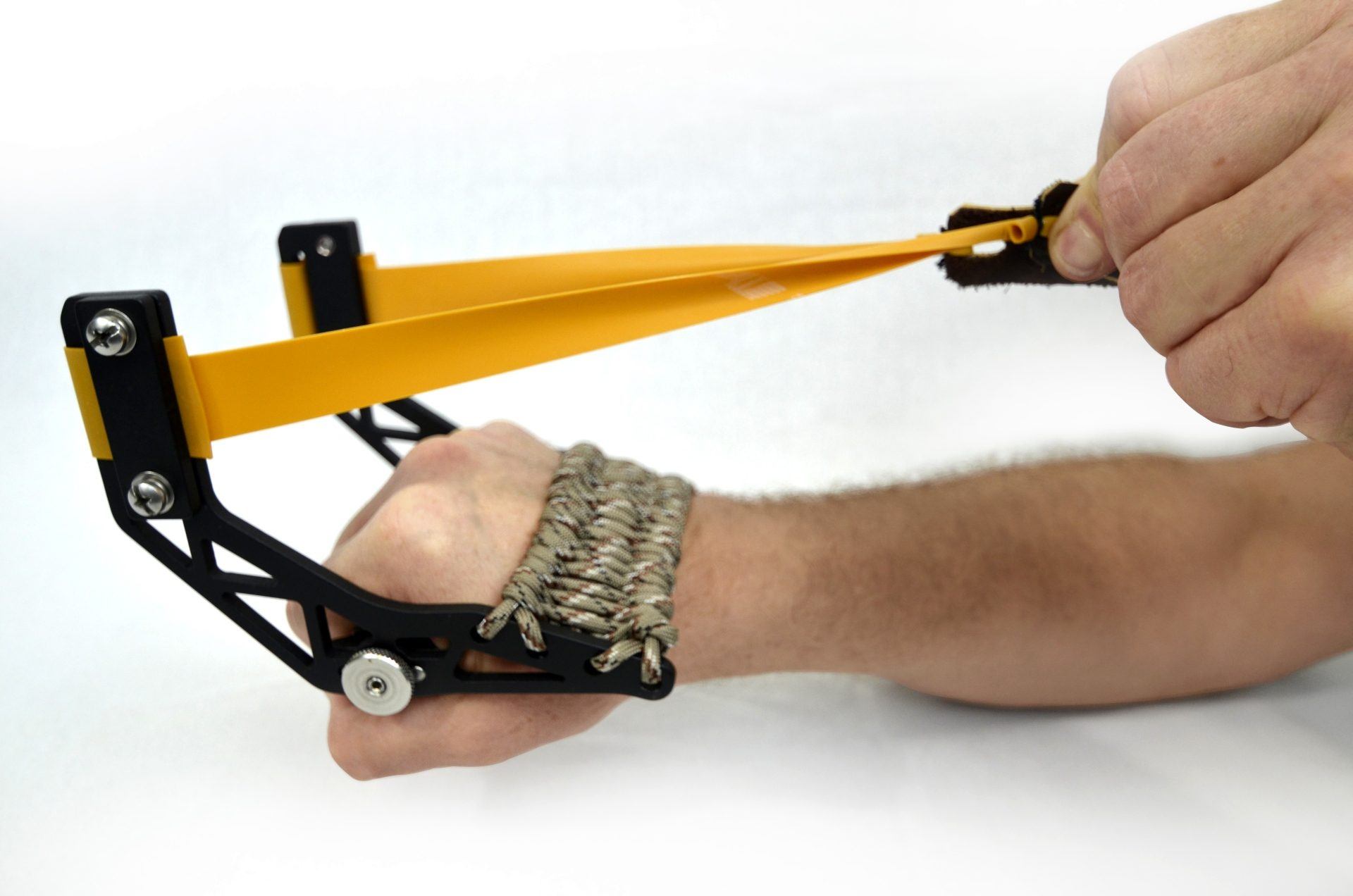
25.
What kind of energy does this device use?
a)
Chemical
b)
Electrical
c)
Thermal
d)
Chemical
26.
What kind of energy is represented in the picture?
a)
Thermal
b)
Chemical
c)
Sound
d)
Nuclear
27.
A battery converts what type of energy to another?
a)
sound to kinetic
b)
light to heat
c)
mechanical to electrical
d)
chemical to electrical
28.
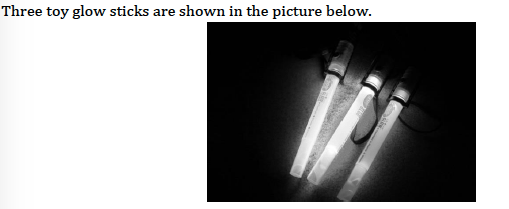
The glow sticks produce light for a short amount of time. The light from the glow stick is a conversion from what to what?
a)
thermal to light
b)
gravitational to potential
c)
radiant to electrical
d)
chemical to light
29.
Wind turbines and windmills convert what energy to another?
a)
Kinetic to electric
b)
Gravitational potential to electric
c)
Mechanical to potential
d)
Thermal to sound
30.
What type of energy increases as molecules move faster? 
a)
mechanical energy
b)
electrical energy
c)
thermal energy
d)
sound energy
31.
Energy transformations occur when...
a)
energy is created through conduction
b)
energy changes from one form to another
c)
two forces slide together that are touching
d)
a chemical reaction takes place
32.
Mechanical energy
a)
energy built up before being in motion
b)
energy released in a chemical reaction
c)
energy of motion
d)
sum of kinetic and potential energy
33.
The roller coaster cart has the most gravitational potential energy at position-
a)
W
b)
X
c)
Y
d)
Z
34.
On a roller coaster, where is maximum kinetic energy?
a)
At the bottom of a big hill
b)
When going around a corner
c)
When going upside down
d)
At the top of a big hill
35.
The picture shows a microwave oven. As a microwave oven is operated, electrical energy is transformed into all of the following types of energy EXCEPT —
a)
solar
b)
light
c)
thermal
d)
mechanical
36.
Which items would have this energy transformation: chemical energy -> electrical, light and thermal energy?
a)
turning on a flashlight
b)
nuclear power plant
c)
digesting an apple
d)
tanning bed
37.
____________ is the ability to cause change. 
a)
Energy 
b)
Force 
c)
Friction
d)
Motion
38.

____________ is the transfer of energy that occurs when a force makes an object move in the direction of the force.

a)

Work

b)

Energy

c)

Friction

d)

Motion

39.
The faster an object moves, the ________ kinetic energy it has. 
a)
more
b)
less
c)
none of the above
d)
all of the above 
40.
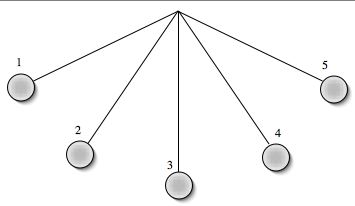
When a pendulum swings, at which point is kinetic energy highest?
a)
1
b)
2
c)
3
d)
4
41.

What is the energy called that travels in waves through vibrating matter?

a)

Sound Energy

b)

Chemical Energy

c)

Mechanical Energy

d)

Light Energy

42.

Total kinetic energy of the particles in matter

a)

Light Energy

b)

Potential Energy

c)

Thermal Energy

d)

Electrical Energy

43.
In this experiment, the WARM red dye and the COLD blue dye was placed in the water at the same time. The warm red dye rose to the top while the cold blue dye sank to the bottom.
a)
conduction
b)
convection
c)
radiation
d)

insulation

44.
Heat transfers from an area of ____temperature to an area of ___ temperature.
a)
high to low
b)
low to high
c)
high to high
d)

low stays low

45.
What happens when ice cubes melt in a glass?
a)
Heat travels from the ice to the warmer water.
b)
No energy is transferred.
c)
Heat is transferred from the warmer water to the ice cubes.
d)

The water from the ice goes to the outside of the glass as little droplets of water.

46.
What is the measurement of the average kinetic energy of a substance?
a)
Kinetic energy
b)
Temperature
c)
Thermal energy
d)
Potential energy
47.
Why do we wear sweaters in cold weather?
a)
To keep cold out.
b)
To generate heat.
c)
To reduce heat loss.
d)
All of the above.
48.
What is the Scientific unit of Temperature?
a)
Fahrenheit
b)
Celsius
c)
Kelvins
d)
Joes
49.

____________ does not undergo thermal expansion the way other substances do.

a)

Water

b)

Gases

c)

Liquids

d)

Helium

50.

Which method of heat transfer does not require matter to transfer energy?

a)

Insulation

b)

Radiation

c)

Convection

d)

Conduction

51.

What happens to the thermal energy of an object as its temperature increases?

a)

It disappears

b)

It stays the same

c)

It decreases

d)

It increases

52.

Which of the following is an example of potential energy?

a)

A moving car

b)

A stretched rubber band

c)

A ringing bell

d)

A burning candle

53.
The heat from a hot burner to a pot is transferred by ______.
a)
convection
b)
insulation
c)
radiation
d)
conduction
54.

What type of thermal energy is being displayed in this picture?

a)

convection

b)

conduction

c)

radiation

d)

kinetic

55.

What is the term used to describe the transfer of thermal energy through empty space, as shown in the second diagram?

a)

Convection

b)

Conduction

c)

Radiation

d)

Insulation

56.

What type of energy transformation occurs when you turn on a flashlight?

a)

Thermal to electrical

b)

Electrical to light

c)

Chemical to sound

d)

Mechanical to thermal

57.

Which of the following is an example of chemical energy?

a)

A stretched rubber band

b)

A moving car

c)

Food before it is eaten

d)

A hot cup of tea

58.

Which of the following is an example of energy transformation in a toaster?

a)

Electrical energy to thermal energy

b)

Chemical energy to mechanical energy

c)

Thermal energy to light energy

d)

Mechanical energy to electrical energy

59.

When you ride a bicycle, which energy transformation mainly occurs?

a)

Chemical to mechanical

b)

Thermal to chemical

c)

Light to thermal

d)

Electrical to sound

60.

What type of energy transformation takes place when a solar panel generates electricity?

a)

Mechanical to chemical

b)

Thermal to mechanical

c)

Radiant to electrical

d)

Chemical to radiant

61.
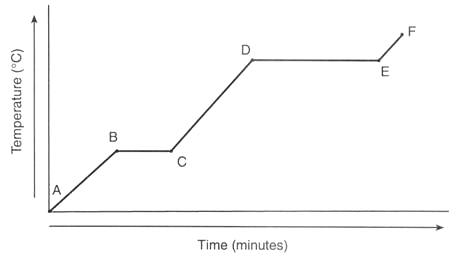
A substance's heating curve is shown in the graph.  What is its boiling point?
a)
100 C
b)
60 C
c)
80 C
d)
20 C
62.

What state/phase is the object likely from points A to B?

a)

Solid

b)

Liquid

c)

Gas

d)

Plasma

63.

What is the freezing point of the substance?

a)

0oC

b)

60oC

c)

120oC

d)

180oC

64.

Describe how the kinetic energy of particles changes as a substance transitions from a liquid to a gas.

a)

Kinetic energy decreases

b)

Kinetic energy remains constant

c)

Kinetic energy increases

d)

Kinetic energy fluctuates

65.
Question Image

Match the letter in the picture with the word

a)

A

1.

all solid

b)

B

2.

melting/

freezing

c)

C

3.

all liquid

d)

D

4.

vaporizing/

condensing

e)

E

5.

all gas