wayground logo

Free Printable Worksheets

Font size

S
M
L
XL
Worksheets

Biology Fall Semester Exam

Total questions: 142

Worksheet time: 2hrs 44mins

Name
Class
Date
1.
The diffusion of WATER across a semi-permeable membrane is
a)
osmosis
b)
diffusion
c)
endocytosis
d)
exocytosis
2.
What is diffusion
a)
active transport
b)
passive transport
c)
cell division
d)
cell mutation
3.
The movement of molecules from higher concentration to lower concentration is
a)
diffusion
b)
cell division
active transport
c)
active transport
d)
tonicity
4.
Active transport requires
a)
energy
b)
the nucleus
c)
chloroplasts
d)
lysosomes
5.
What organelles are only found in PLANT cells
a)
lysosomes & centrioles
b)
cell wall & chloroplasts
c)
nucleus & nucleolus
d)
mitochondria & ribosomes
6.
What organelles is NOT found in a PROkaryote
a)
nucleus
b)
cell membrane
c)
Chromosomes (DNA)
DNA
d)
ribosomes
7.
The mitochondria....
a)
produces energy
b)
causes cell division
c)
is not an organelle
d)
is found in a prokaryote
8.
The cell membrane
a)
regulates what enters/leaves cell
b)
helps maintain homeostasis
c)
keeps contents of cell in place
d)
all of the above
9.
What organelle PRODUCES proteins?
a)
ribosomes
b)
centrioles
c)
lysosomes
d)
nucleus
10.
If an atom has 3 electrons, how many protons does it have?
a)
1
b)
2
c)
4
d)
3
11.
If the number of protons equal the number of _____, the atom will have no charge
a)
protons
b)
neutrons
c)
electrons
d)
nucleus
12.
What is the atomic number?
a)
the number of protons
b)
the number of protons and neutrons
c)
the number of neutrons
d)
the number of protons and electrons
13.
Ions are: 
a)
atoms with a positive or negative charge
b)
atoms with no charge
c)
atoms with ONLY a positive charge
d)
atoms with ONLY a negative charge
14.
Two atoms of the same element but with different mass numbers are called________
a)
electrons
b)
isotopes
c)
variables
d)
electron cloud
15.
all matter is made of what 
a)
energy 
b)
atoms 
c)
electrons 
d)
compounds 
16.
What is the atomic number for an element with three protons?
a)
2
b)
1
c)
3
d)
6
17.
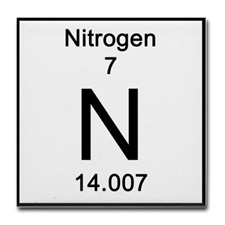
What is the number of protons that the element in this image contain?
a)
14
b)
7
c)
15
d)
18
18.
The first energy level can hold up to how many electrons?
a)
8
b)
4
c)
2
d)
5
19.
What is the atomic mass of "F"
a)
9
b)
18
c)
17
d)
19
20.
"C" is the element symbol for which element?
a)
calcium
b)
carbon
c)
chlorine
d)
cadmium
21.
What are the 3 particles that make-up the atom?
a)
protons, neutrons, and isotopes
b)
neutrons, isotopes, and electrons
c)
positives, negatives, and electrons
d)
protons, neutrons, and electrons
22.

If an electron is removed from an atom, what will the overall charge become?

a)

the charge won't change

b)

positive

c)

negative

d)

you can't remove electrons

23.
A homozygous dominant dog with brown fur is crossed with a heterozygous dog with brown fur. What are the percentages of the possible genotypes?
a)
100% BB
b)
75% BB and 25%Bb
c)
50 % BB and 50% Bb
d)
50% Bb and 50% bb
24.
The man who studied genetics and came up with genetics is
a)
Watson
b)
Crick
c)
Mendel
d)
Darwin
25.
Genotype refers to the ...
a)
physical expression of the genes
b)
the possible combination of alleles in a gene
c)
whether an allele is dominant or recessive
d)
how an organism will appear
26.
An offspring will receive how many alleles from each parent to determine a specific trait?
a)
one
b)
two
c)
three
d)
five
27.
Which of the following is a phenotype?
a)
BB
b)
Bb
c)
bb
d)
Blue eyes
28.
What is a phenotype
a)
The genetic make up (code)
b)
The physical trait
29.
the passing of genetic traits from parent to offspring.
a)
heredity
b)
trait
c)
gene
d)
allele
30.
having two of the same genes for the trait (sometimes called purebred).
a)
homozygous
b)
hetrozygous
c)
protein
d)
chromosome
31.
having two different genes for a trait (sometimes called hybrid).
a)
protein
b)
homozygous
c)
heterozygous
d)
genotype
32.
Magda is a tall, 11 year old drummer. She has a scar on her right cheek. She is good at swimming. Which of her traits did Magda most likely inherit?
a)
height
b)
the scar
c)
ability to swim
d)
ability to play drums
33.
G = green, g = yellow
The genotype for a yellow plant is...
a)
GG
b)
Gg
c)
gg
d)
all of the choices result in yellow
34.
An allele whose trait only shows up when no dominant allele is present.
a)
hidden allele
b)
dominant allele
c)
recessive allele
d)
present allele
35.
Which answer best describes codominant alleles?
a)
Both are equally dominant
b)
Both are equally recessive
c)
Neither are dominant or recessive
36.
R=round seed
r=wrinkled seed.
Cross a homozygous round with a wrinkled. Which statement predicts the results?
a)
offspring will be Rr
b)
offspring will be RR
c)
round seeds will be recessive to wrinkled
d)
Wrinkled will be observed in half of offspring
37.
A human usually has _____ total chromosomes.
a)
6
b)
22
c)
4
d)
46
38.
Which of the following alleles is homozygous recessive?
a)
Tt
b)
tt
c)
TT
d)
T
39.
This type of inheritance pattern is a MIXTURE of both traits.
a)
incomplete dominance
b)
co-dominance
c)
complete dominance
d)
recessive pattern
40.
This type of inheritance pattern shows BOTH traits in possible offspring
a)
complete dominance
b)
incomplete dominance
c)
co-dominance
d)
dominant pattern
41.
In humans, skin tone is caused by 3 genes, each with 2 alleles.  This is an example of
a)
codominance
b)
incomplete dominance
c)
polygenic inheritance
d)
multiple alleles
42.
one of the alternative forms of a gene that governs a characteristic, such as hair color
a)
allele
b)
gene
c)
trait
d)
DNA
43.
genetic makeup
a)
phenotype
b)
genotype
c)
heterzygous
d)
allele
44.
the chances of something happening
a)
dominant
b)
genotype
c)
phenotype
d)
probability
45.
having two of the same genes for the trait (sometimes called purebred).
a)
homozygous
b)
hetrozygous
c)
protein
d)
chromosome
46.
Complex molecules which make up structures and carry out functions of an organism
a)
protein
b)
chromosome
c)
DNA
d)
gene
47.
A single piece of coiled DNA found in the cells; contains genes that encode traits.
a)
gene
b)
chromosome
c)
trait
d)
DNA
48.
A characteristic that an organism can pass on to its offspring through its genes
a)
protein
b)
trait
c)
DNA
d)
gene
49.
Complex molecule that carries genetic information that defines an organism's traits. It is stored in the nucleus.
a)
DNA
b)
protein
c)
RNA
d)
glucose nucleic acid (GNA)
50.
Proteins are made of monomers called ___________
a)
Nucleotides
b)
Monosaccharides
c)
Amino Acids
d)
Glycerol and fatty acids
51.
The element _______is found in all of the organic compounds.
a)
Iron
b)
Nitrogen
c)
Carbon
d)
Oxygen
52.
_________ are composed out of carbon (C), hydrogen (H), oxygen (O), nitrogen (N), and phosphorus (P)
a)
Carbohydrates
b)
Lipids
c)
Proteins
d)
Nucleic Acids
53.
DNA and RNA are examples of 
a)
Carbohydrates
b)
Lipids
c)
Proteins
d)
Nucleic Acids
54.
Nucleotides are monomers of
a)
Carbohydrates
b)
Lipids
c)
Proteins
d)
Nucleic Acids
55.
Monosaccharides are monomers of
a)
Carbohydrates
b)
Lipids
c)
Proteins
d)
Nucleic Acids
56.
Waxes, oils and fats are examples of
a)
Carbohydrates
b)
Lipids
c)
Proteins
d)
Nucleic Acids
57.
Glycerol and fatty acids are the monomers of
a)
Carbohydrates
b)
Lipids
c)
Proteins
d)
Nucleic Acids
58.
The organic compounds that have many structural purposes and are used in many processes within the
cell are called ____________________.
a)
Carbohydrates
b)
Lipids
c)
Proteins
d)
Nucleic Acids
59.
Which macromolecule is shown?
 View Figure 1 (if not visible)
a)
lipid
b)
protein
c)
nucleic acid
d)
carbohydrate
60.
What is the function of nucleic acids?
a)
store genetic information
b)
store energy (long-term)
c)
store energy (short-term)
d)
build skin, hair, nails, muscles
61.
Which macromolecule is shown?
 View Figure 2 (if not visible)
a)
lipid
b)
protein
c)
nucleic acid
d)
carbohydrate
62.
Which macromolecule is shown?
 View Figure 3 (if not visible)
a)
lipid
b)
protein
c)
nucleic acid
d)
carbohydrate
63.
Which macromolecule is shown?
 View Figure 4 (if not visible)
a)
lipid
b)
protein
c)
nucleic acid
d)
carbohydrate
64.
What type of macromolecule are enzymes?
a)
Protein
b)
Carbohydrate
c)
Lipid
d)
Nucleic Acid
65.
Which of the following organic compounds is the main source of energy for living things?
a)
carbohydrates
b)
lipids
c)
nucleic acids
d)
proteins
66.
Carbohydrates are made of... 
a)
C H O
b)
C H O N
c)
C H O N P
d)
C H O N S
67.
Lipids are made of... 
a)
C H O
b)
C H O N
c)
C H O N P
d)
C H O N S
68.
Proteins are made of... 
a)
C H O
b)
C H O N
c)
C H O N P
d)
C H O N S
69.
Which macromolecule stores energy, insulates us, and makes up the cell membrane?
a)
lipids
b)
proteins
c)
carbohydrates
d)
nucleic acids
70.
This is one job proteins do NOT have in the body
a)
insulation
b)
structure for tissues and organs
c)
speed up chemical reactions
d)
transport things through cell membrane
71.
Which macromolecule is made of simple and complex sugars?
a)
lipids
b)
proteins
c)
carbohydrates
d)
nucleic acids
72.
What are the four macromolecules?
a)
proteins, nucleic acids, carbohydrates, and lipids
b)
monosaccharides, lipids, polysaccaharides, and proteins
c)
RNA, DNA, proteins, and carbohydrates
d)
proteins, DNA, RNA, and steroids
73.
All of the following are examples of lipids except:
a)
oil
b)
wax
c)
fatty acid
d)
cellulose
74.
What suffix (word ending) is used in the names of most carbohydrates?
a)
-ase
b)
-nic
c)
-ose
d)
-yme
75.

Monomer is to Macrocolecule like ___ is to ____

a)

Building is to Bricks.

b)

Brick is to Building.

c)

Carpenter is to Building.

d)

Building is to Carpenter.

76.
What type of macromolecule is being represented in this image? 
a)
carbohydrate
b)
lipid
c)
protein
d)
nucleic acid
77.
What is the building block of a lipid?
a)
monosaccharide
b)
nucleic acid
c)
fatty acid
d)
amino acid
78.
Which macromolecule is this?
a)
carbohydrates
b)
lipids
c)
proteins
d)
nucleic acids
79.

Photosynthesis involves the production of sugar and oxygen. Select the drawing that shows a carbohydrate that is formed in photosynthesis.

a)

A

b)

B

c)

C

d)

D

80.
What is the correct name of the macromolecule in the diagram below and what is its correct function?
a)
Nucleic acid/ Storage of energy
b)
Protein/ Formation of enzymes
c)
Nucleic acid/ Contains genetic information
d)
Lipid/ Water soluble membranes
81.
An organized procedure that involves making measurements and observations is a(n)
a)
hypothesis
b)
constant
c)
control 
d)
experiment
82.
A factor that does not change during an experiment is a ____________.
a)
dependent variable
b)
constant
c)
hypothesis
d)
control
83.
The knowledge that covers general truths or the operation of general laws, especially when acquired and tested by the scientific method is known as 
a)
a theory
b)
science
c)
a variable
d)
a hypothesis
84.
What's the difference between a hypothesis and a theory?
a)
"Theory is another word for "fact"; hypothesis is another word for "guess".
b)
Hypothesis can't be proven; theories can.
c)
Theories have been confirmed through tests; hypotheses haven't.
d)
Theories contain many hypothesis; a hypothesis only contains one theory.
85.
If you were running an experiment to determine the temperature at which beans sprout the fastest, what would be the variable?
a)
The number of beans you plant
b)
The height of the sprouts you grow
c)
The amount of water you give the beans
d)
The temperature at which each bean is kept
86.
What might cause a theory to change over time?
a)
New laws passed by the government
b)
New but untestable ideas
c)
Changes in public opinion
d)
The discovery of new evidence
87.
Evolution is one example of a theory. From what you know about the scientific method, what can you conclude about this theory?
a)
It's been tested many times.
b)
Scientists don't need to test it anymore.
c)
No one is allowed to test whether it's true or not.
d)
There is very little evidence to support it. 
88.
Which of the following is a testable hypothesis?
a)
Roses are more beautiful than violets.
b)
A plant needs at least five hours of sunlight per day to grow.
c)
Ice cream is delicious.
d)
Humans will someday land on Mars. 
89.
Indepenent variable is:
a)
the one being manipulated
b)
constant
c)
being influcenced
d)
the variable we have no control over
90.
Variable that changes because of the manipulation is:
a)
dependent
b)
independent
c)
control
d)
confounding
91.
True or False: A hypothesis must be stated in a way that is falsifiable.
a)
True
b)
False
92.

What is qualitative data?

a)

Using your 5 senses

b)

Using dice

c)

A store

d)

A place

93.

What is quantitative data?

a)

Using numbers and measurements

b)

A cookie

c)

A plane

d)

A fictional story

94.
What is one of the reactants of cellular respiration?
a)
energy
b)
glucose
c)
carbon dioxide
d)
water
95.
______________ produces the most ATP.
a)
photosnthesis
b)
aerobic respiration
c)
anaerobic respiration
d)
glycolysis
96.
The reactants of photosynthesis are
a)
sugar and water.
b)
sugar and oxygen.
c)
carbon dioxide and water.
d)
carbon dioxide and oxygen.
97.
Which statement about photosynthesis is correct?
a)
Plants get the energy they need for photosynthesis from water.
b)
Plants get the energy they need for photosynthesis from soil.
c)
Plants get the energy they need for photosynthesis from sunlight.
d)
Plants do not require energy to perform photosynthesis.
98.
What are the products of photosynthesis?
a)
Carbon dioxide and water
b)
Carbon dioxide and oxygen
c)
Glucose and oxygen
d)
Glucose and water
99.
Which of the following is the correct equation for PHOTOSYNTHESIS?
a)
6CO2 + 6H2O --> 6O+ C6H12O6
b)
6CO+ C6H12O6 + 6H2O --> O
c)
6O2 + 6H2O --> 6CO+ C6H12O6
d)
C6H12O6 + 6O2 ---> 6H2O + 6CO2 
100.
What gas is released by plants during photosynthesis?
a)
sulfur
b)
carbon dioxide
c)
oxygen
d)
hydrogen
101.
What is one of the reactants of cellular respiration?
a)
energy
b)
glucose
c)
carbon dioxide
d)
water
102.
Which of the following structure is where cellular respiration occurs in the cell?
a)
nucleus
b)
cytoplasm
c)
mitochondria
d)
vacuoles
103.
What are the reactants in the equation for cellular respiration?
a)
oxygen and lactic acid
b)
carbon dioxide and water
c)
glucose and oxygen
d)
water and glucose
104.
What is the correct equation for cellular respiration?
a)
6O2 + C6H12O6 -> 6CO2 + 6H2O + Energy
b)
6O2 + C6H12O6 + Energy -> 6CO2 + 6H2O
c)
6CO2 + 6H2O -> 6O2 + C6H12O6 + Energy
d)
6CO2 + 6H2O + Energy -> 6O2 + C6H12O6
105.
What is cellular respiration?
a)
the breakdown of glucose  to release ATP
b)
the breakdown of glucose to release NADH
c)
the breakdown of glucose to release FADH
d)
the breakdown of glucose to release carbon
106.
This means that oxygen is not needed
a)
anaerobic 
b)
aerobic
107.
This means that oxygen is needed
a)
anaerobic 
b)
aerobic
108.
This molecule contains three phosphate groups
a)
ADP
b)
ATP
c)
Mitochondria
d)
Nucleus
109.
This is referred to as the energy currency of the cell
a)
ADP
b)
ATP
c)
Mitochondria
d)
Nucleus
110.
This molecule contains two phosphate groups
a)
ADP
b)
ATP
c)
Mitochondria
d)
Nucleus
111.
This process releases chemical energy from sugars and other carbon-based molecules to make ATP when oxygen is present.
a)
photosynthesis
b)
light-independent reaction
c)
cellular respiration
d)
light-dependent reaction
112.
Cellular respiration takes place in the
a)
nucleus
b)
cytoplasm
c)
ribosomes
d)
mitochondria
113.
Glucose is broken down during which process
a)
Krebs cycle
b)
Calvin cycle
c)
Glycolysis
d)
Photosynthesis
114.
This is the first step of cellular respiration
a)
Glycolysis
b)
Lactic Acid Fermentation
c)
Alcoholic Fermentation
d)
Aerobic Respiration
115.
All living things do which of the following?
a)
Chemosynthesis
b)
Respiration
c)
photosynthesis
d)
all of the answers
116.
What are the products of aerobic respiration?
a)
Glucose and oxygen
b)
Carbon dioxide and water
c)
Lactic acid
d)
Carbon monoxide
117.
In which way are photosynthesis and cellular respiration different?
a)
Cellular respiration stores ATP, while photosynthesis releases ATP.
b)
Cellular respiration produces oxygen, while photosynthesis uses oxygen.
c)
Photosynthesis releases energy, while cellular respiration stores energy.
d)
Photosynthesis used carbon dioxide, while cellular respiration produces carbon dioxide.
118.

Where does the Krebs Cycle take place?

a)

Cristae

b)

Matrix

c)

cytoplasm

d)

nucleus

119.
Which molecule isn't an energy carrier?
a)
FADH2
b)
NADH
c)
oxygen
d)
ATP
120.
Glycolysis results in a net gain of how many ATP?
a)
0
b)
2
c)
4
d)
1
121.
Glycolysis takes place in the 
a)
mitochondria
b)
cell membrane
c)
cytoplasm
d)
nucleus
122.
This is the first step of cellular respiration
a)
Glycolysis
b)
Lactic Acid Fermentation
c)
Alcoholic Fermentation
d)
Aerobic Respiration
123.
This process produces molecules that carry energy to the second part of cellular respiration
a)
Photosynthesis
b)
Kreb's Cycle
c)
Glycolysis
d)
Electron Transport Chain
124.
This is made of proteins that need energy-carrying molecules from the Krebs cycle and oxygen to make ATP
a)
Glycolysis
b)
Kreb's Cycle
c)
Photosynthesis
d)
Electron Transport Chain
125.
What are the products of photosynthesis?
a)
water and carbon dioxide
b)
oxygen and glucose
c)
oxygen and carbon dioxide
d)
oxygen and water
126.
What molecule absorbs sunlight for photosynthesis?
a)
chloroplast
b)
thylakoid
c)
grana
d)
chlorophyll
127.
Plants need ________ for photosynthesis
a)
oxygen
b)
soil
c)
carbon dioxide
d)
sugar
128.
What are the products of photosynthesis?
a)
Carbon dioxide and water
b)
Carbon dioxide and oxygen
c)
Glucose and oxygen
d)
Glucose and water
129.
The raw materials or reactants of photosynthesis are
a)
sugar and water.
b)
sugar and oxygen.
c)
carbon dioxide and water.
d)
carbon dioxide and oxygen.
130.
Where does photosynthesis occur?
a)
mitochondria
b)
stomata
c)
xylem
d)
chloroplast
131.

Which is a product of the ETC?

a)

Water and 34 ATP

b)

Carbon dioxide and 34 ATP

c)

2 ATP 6 NADH 2 FADH

d)

4 ATP

132.

Water molecules are held together by what type of bonds

a)

hydrogen

b)

ionic

c)

van de Waals

d)

covalent

133.

Reproduction that requires 2 parents is called ___

a)

asexual reproduction

b)

sexual reproduction

c)

cloning

d)

budding

134.

Biological catalysts are proteins called ____

a)

carbohydrates

b)

enzymes

c)

nucleic acids

d)

lipids

135.

In a chemical reaction, what changes?

a)

atoms

b)

molecules

c)

bonds

d)

electron movement

136.

If a scientist measures something he is gathering ______

a)

quantitative data

b)

qualitative data

c)

variables

d)

constants

137.

Saying that "your desk is 12 inches wide" is an ___

a)

observation

b)

hypothesis

c)

theory

d)

inference

138.

A well-tested explanation that unifies a broad range of observations is a/an

a)

theory

b)

hypothesis

c)

inference

d)

experiment

139.

A useful hypothesis is _____

a)

observable

b)

correct

c)

measurable

d)

testable

140.

A logical interpretation of an observation is an/a __

a)

theory

b)

inference

c)

collecting data

d)

a scientific law

141.

Macromolecule that acts to move things through the cell membrane and regulate processes is a

a)

protein

b)

carbohydrate

c)

lipid

d)

nucleic acid

142.

Regulating cell processes, biological catalysts and the basis of all structure and function in a cell are all functions of what macromolecule?

a)

protein

b)

carbohydrates

c)

lipids

d)

nucleic acids