wayground logo

Free Printable Worksheets

Font size

S
M
L
XL
Worksheets

biology 3rd 9 weeks review

Total questions: 134

Worksheet time: 6hrs 22mins

Name
Class
Date
1.
The stages of mitosis in order
a)
Metaphase, Anaphase, Prophase, Telophase
b)
Prophase, Anaphase, Metaphase, Telophase
c)
Prophase, Metaphase, Anaphase, Telophase
d)
Anaphase, Prophase, Telophase, Metaphase
2.
In prophase of Mitosis, DNA will condense into...
a)
Centromeres
b)
Chromosomes
c)
Nuclei
d)
Spindle fibers
3.
What is the next phase of mitosis?
a)
Prophase
b)
Metaphase
c)
Anaphase
d)
Telophase
4.
What is the next phase of mitosis?
a)
Prophase
b)
Metaphase
c)
Anaphase
d)
Telophase
5.
When a cell divides in mitosis, what do we call the 2 new cells?
a)
mother cells
b)
father cells
c)
daughter cells
d)
son cells
6.
If the message never gets through for a cell to stop dividing and it just keeps dividing through mitosis over and over again, what can form?
a)
tumor
b)
freckle
c)
goosebump
d)
scab
7.
In which type of cells will mitosis occur?
a)
egg cells
b)
sperm cells
c)
jail cells
d)
Body cells except the sperm and egg cells
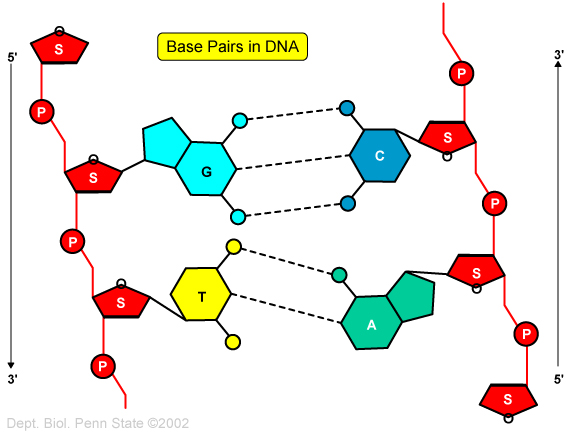
8.
When you start with 1 cell, at the end of mitosis, how many identical cells will you have?
a)
1
b)
2
c)
3
d)
4
9.
How many cells are created at the end of Mitosis?
a)
1 diploid cell
b)
2 diploid cells
c)
3 diploid cells
d)
4 diploid cells
10.
Cells of organism must replicate for ?
a)
growth
b)
repair of damaged cells
c)
replacement of dying cells.
d)
All of the above
11.
Before cells can divide, what must be copied?
a)
mitochondria
b)
cytoplasm
c)
DNA
d)
Cell Wall
12.
The cell spends most of it's life in ________________.
a)
mitosis
b)
cytokinesis
c)
Interphase
d)
None of the above
13.
Which phase of the cell cycle is this cell in?
a)
Prophase
b)
Metaphase
c)
Anaphase
d)
Interphase
14.
a)
Prophase
b)
Interphase
c)
Anaphase
d)
Telophase
15.
a)
Cytokinesis
b)
Interphase
c)
Anaphase
d)
Metaphase
16.
a)
Anaphase
b)
Cytokinesis
c)
Telophase
d)
Metaphase
17.
a)
Anaphase
b)
Cytonkinesis
c)
Interphase
d)
Prophase
18.
a)
Cytokinesis
b)
Anaphase
c)
Telophase
d)
Prophase
19.
The cells produced via meiosis are called:
a)
sex cells (gametes)
b)
somatic cells
c)
body cells
d)
skin cells
20.
Which of the following cells is a gamete?
a)
egg
b)
bone
c)
heart
d)
muscle
21.
What is the name of the process in which DNA (genetic information) is exchanged during meiosis?
a)
crossing under
b)
crossing over
c)
melding
d)
blending
22.
After meiosis is complete how many cells will there be?
a)
1
b)
2
c)
3
d)
4
23.
Another name for a sex cell is a:
a)
gamete
b)
embryo
c)
bone cell
d)
muscle cell
24.
After meiosis is complete, the new cells:
a)
are all identical
b)
are all different
c)
are half identical and half different
d)
are all stretched out
25.
Why is sexual reproduction better than asexual reproduction?
a)
It gives an advantage to organisms to be different than the rest, if the environment changes.
b)
It is better for all organisms to be the same.
c)
It happens faster.
d)
It helps skin cells divide faster to heal wounds.
26.
The process on the left is:
The process on the right is:
a)
Left: meiosis
Right: meiosis
b)
Left: meiosis
Right: cloning
c)
Left: mitosis
Right: meiosis
d)
Left: mitosis
Right: mitosis
27.
products of meiosis are genetically
a)
different
b)
identical
28.
You get one homologous chromosome from your ________ and one from your _______.  
a)
dad, mom
b)
brother, sister
c)
grandmother, grandfather
d)
the stork, the stork
29.
Why do we need meiosis?
a)
To double the number of chromosomes going into sex cells
b)
To halve the number of chromosomes going into sex cells
c)
To triple the number of chromosomes going into sex cells
d)
To not change the number of chromosomes going into sex cells
30.
Which of these is NOT a way that your DNA gets mixed in Meiosis?
a)
Random fertilization
b)
Independent assortment
c)
Crossing over and Recombination
d)
Centromerization
31.
Interphase is when a cell is growing, replicating its DNA, and carrying out cell processes. Which of these is correct regarding its occurence?
a)
It occurs once before mitosis and once before meiosis.
b)
It occurs once before mitosis and twice before meiosis.
c)
It occurs once before mitosis and does not occur before meiosis.
d)
It does not occur before mitosis and occurs once before meiosis.
32.
Why would it be important to replicate DNA before a cell divides in mitosis or meiosis?
a)
In order for genetic information to be transferred into daughter cells.
b)
In order for the cell to be able to increase in size.
c)
In order for the DNA to be contained in the nucleus.
d)
In order for the cell to re-order the DNA sequencing in the new cells.
33.
In mitosis, the two resulting cells are
a)
different from the starting cell and identical to each other.
b)
different from the starting cell and different from each other.
c)
identical to the starting cell and different from each other.
d)
identical to the starting cell and identical to each other.
34.
Meiosis produces different types of cells than mitosis. If there was a "meiosis club," all of these cells could be included EXCEPT
(Which cell type is not produced in meiosis?)
a)
gametes
b)
body cells
c)
sperm cells
d)
egg cells
35.
In meiosis, crossing over occurs in prophase 1. What is the significance of this event?
a)
This process ensures that chromosomes are evenly divided into daughter cells.
b)
This process can lead to genetic variation in daughter cells.
c)
This process can create gaps in the chromosome DNA for RNA to bind.
d)
This process allows for spindles to connect to the chromosomes in order to pull chromosomes apart.
36.
Mitosis is useful for the creation of new cells which is important for all of the following EXCEPT
a)
organism growth.
b)
repair of damage.
c)
replacement of worn out cells.
d)
generation of gametes.
37.
Fruit fly body cells have 8 chromosomes. After mitosis, you would expect a resulting fruit fly daughter cell to have -
a)
16 chromosomes.
b)
46 chromosomes.
c)
8 chromosomes.
d)
4 chromosomes.
38.
Meiosis makes sperm and egg cells. In humans, sperm and egg cells each have _____ chromosomes. Therefore a fertilized human egg cell (sperm and egg cell combined) would create a cell with _____ chromosomes.
a)
23, 46
b)
46, 23
c)
2, 4
d)
50, 100
39.
Have you ever heard of a skin graft? Skin cells can be harvested from one area and be grown in order to help burn victims or other skin injuries. Which process would result in the development of more skin cells in this treatment? 
a)
Mitosis
b)
Meiosis
c)
Crossing Over
d)
Interphase
40.
In meiosis, the four resulting cells are 
a)
identical to the starting cell and different from each other.
b)
different from the starting cell and different from each other. 
c)
identical to the starting cell and identical to each other.
d)
different from the starting cell and identical to each other.
41.
Who is considered the "Father of Genetics?"
a)
James Watson
b)
Francis Crick
c)
Gregor Mendel
d)
Albert Einstein
42.
True or False: Genetics is the scientific study of heredity.
a)
True
b)
False
43.
What is another name for "true breeding?"
a)
Heterozygous
b)
Purebred
c)
Hybrid
d)
Cross Pollinating
44.
Gregor Mendel's "P" Generation consisted of plants which were ______________ with opposite traits.
a)
Purebred
b)
Hybrid
c)
Heterozygous
d)
Incompletely Dominant
45.
All offspring plants in the F1 generation were purple because purple is the ______________ trait.
a)
Heterozygous
b)
Homozygous
c)
Dominant
d)
Recessive
46.
Which of the following does NOT describe the flowers in the F1 Generation?
a)
Hybrid
b)
Heterozygous
c)
Purebred
47.
Gregor Mendel's "P" generation consisted of purple flower plants crossed with white flower plants. What were the results of this cross?
a)
All purple flower offspring
b)
All white flower offspring
c)
Some purple flowers and some white flowers
48.
True or False: The trait NOT seen in the F1 generation is the DOMINANT trait.
a)
True
b)
False
49.
Which of the following best explains the results of letting the F1 purple hybrids self pollinate?
a)
100% Purple
b)
100% White
c)
50% Purple, 50% White
d)
75% Purple, 25% White
50.
A __________ is a segment of DNA that codes for a particular protein, which leads to a particular trait.
a)
Gene
b)
Allele
c)
Codon
d)
Nucleotide
51.
The different forms of a gene are known as _____________.
a)
Codons
b)
Proteins
c)
Alleles
d)
Nucleotides
52.
True or False: Mendel's "Law of Dominance" states that some alleles are dominant which others are recessive.
a)
True
b)
False
53.
How many alleles do you get from each parent?
a)
1
b)
2
c)
23
d)
46
54.
Which of the following best describes a GENOTYPE?
a)
The allele/genetic makeup of an organism.
b)
The physical expression of a trait.
55.
Which of the following is an example of a GENOTYPE?
a)
25%
b)
Blue
c)
1:2:1
d)
Bb
56.
Which of the following is an example of a PHENOTYPE?
a)
25%
b)
Blue
c)
1:2:1
d)
Bb
57.
Which of the following is an example of a homozygous dominant genotype?
a)
RR
b)
Rr
c)
rr
58.
Which of the following is an example of a homozygous recessive genotype?
a)
RR
b)
Rr
c)
rr
59.
Which of the following is an example of a heterozygous genotype?
a)
RR
b)
Rr
c)
rr
60.
What is the FUNCTION of the visual tool seen in the image?
a)
Identifies the location of a gene.
b)
Determines the DNA sequence of an organism.
c)
Predicts the possible results of a genetic cross.
d)
Tests for the presence of dominant alleles.
61.
The letters on the TOP AND SIDE of a punnett square represent ______________.
a)
The combination of alleles in offspring.
b)
The possible alleles given by the parents following meiosis.
c)
The genotype and phenotype of offspring.
d)
The results of genetic mutations in offspring.
62.
True or False: A phenotype describes the physical expression (characteristics) of a gene. In other words, how something looks.
a)
True
b)
False
63.
Geneticists use ___________ to represent _____________, the different forms of a gene.
a)
Numbers ; Alleles
b)
Letters ; Factors
c)
Letters ; Alleles
d)
Numbers ; Factors
64.
True or False: If a dominant allele is present, the trait will always appear in the organism.
a)
True
b)
False
65.
What is another name for heterozygous?
a)
Hybrid
b)
Purebred
c)
Codominant
d)
Mixed Breed
66.
If a person has a genotype of RR, what do you know about their gametes (sex cells)?
a)
They will all carry the R allele.
b)
They will all carry RR.
c)
Some will carry R, some will carry r.
d)
They will all carry the r allele.
67.
If a person has a genotype of Rr, what do you know about their gametes (sex cells)?
a)
They will all carry the R allele.
b)
They will all carry Rr.
c)
Some will carry R, some will carry r.
d)
They will all carry the r allele.
68.
T - tall and t = short
In the punnett square below, what belongs in the missing square
a)
tt
b)
Tt
c)
Bb
d)
TT
69.
B = brown fur  b = white fur
In the punnett square, what is the probability for white fur? 
a)
0%
b)
25%
c)
50%
d)
75%
70.
In plants, tall (T) is dominant to short (t). Perform the following cross: Tt x Tt. What is the probability of producing a short plant?
a)
0%
b)
25%
c)
50%
d)
75%
71.
Two brown eyed parents (Bb) have a baby. What is the chance the baby is blue eyed?
a)
0 %
b)
25%
c)
50%
d)
75%
72.
Why is DNA important?
a)
it is very small and very complicated
b)
it's in everything
c)
it serves as the blueprint for traits of all living things
d)
because we eat it every day for energy
73.

If we were to look inside a normal male bone cell, how many total chromosomes would we find?

a)

1

b)

2

c)

23

d)

46

74.

If we were to look inside a normal male bone cell, how many total sex chromosomes would we find?

a)

1

b)

2

c)

23

d)

46

75.

If we were to look inside a female egg cell, also known as a sex cell, what sex chromosome(s) would we find?

a)

One X and one Y

b)

Two Y

c)

Two X

76.

If we were to look inside a male sperm cell, also known as a sex cell, what sex chromosome(s) would we find?

a)

One X and one Y

b)

Two X

c)

Two Y

77.
What percentage of chromosomes are handed down by a sperm cell?
a)
75%
b)
25%
c)
50%
d)
100%
78.
Sexual reproduction requires _____ parents and asexual reproduction requires ___ parents
a)
1,1
b)
2,2
c)
2,1
d)
1,2 
79.
What is an advantage of sexual reproduction?
a)
Allows genetic variation
b)
Only needs one parent
c)
Happens very quickly
d)
Offspring are exact copies of parent
80.
What is one disadvantage of sexual reproduction?
a)
Only one parent needed
b)
Off spring are exact copies of parents
c)
Happens very quickly
d)
Needs two parents
81.
What does a filled in square represent?
a)
Not affected Female
b)
Not affected Male
c)
Affected Male
d)
Affected Female
82.
How many kids did the mother and father from the first generation have?
a)
2
b)
4
c)
5
d)
6
83.
Which of the following best describes a DNA molecule?
a)
double helix
b)
contains ribose
c)
made of amino acids
d)
contains Uracil
84.
Adenine bonds with ______________.
a)
Guanine
b)
Thymine
c)
Cytosine
d)
Adenine
85.
Guanine bonds with ______________.
a)
Adenine
b)
Guanine
c)
Cytosine
d)
Thymine
86.
Which organelle is DNA usually found in?
a)
cell membrane
b)
vacuole
c)
chloroplast
d)
nucleus
87.

The word DNA is abbreviated for is ________________________.

a)

Disconuggets Acid

b)

Dioramanucleous Acid

c)

Deoxyribonucleic Acid

d)

Detoxifynubs Acid

88.

Sometimes mistakes occur curing cell division when DNA is being copied. What scientific word is used to describe the permanent changes in DNA?

a)

mutations

b)

alterations

c)

transformations

d)

mutilitions

89.

Genes are short segments of DNA and are located on the ______ in a cell.

a)

vaculoes

b)

chromosomes

c)

ribosomes

d)

lysosmes

90.
What determines body traits?
a)
Genes
b)
Cells
c)
Bones
d)
Structures
91.

Which sequence of DNA bases would pair with this part of a strand

ATG TGA

a)

ATG TGA

b)

TAC ACT

c)

GTA AGT

d)

CAT TCA

92.
The haploid number of human chromosomes is
a)
11
b)
12
c)
23
d)
46
93.
The diploid number of human chromosomes is
a)
23
b)
46
c)
92
94.
Each identical side of a chromosome is the 
a)
centromere
b)
chromatin
c)
centriole
d)
chromatid
95.
When DNA is in its less coiled, "relaxed," state, between cell divisions, it is called
a)
autosomes
b)
chromatid
c)
chromatin
d)
centromere
96.
The structure that holds two chromosomes together until they separate for cell division is the
a)
chromatid
b)
chromatin
c)
centromere
d)
cytoplasm
97.
The structure labeled A is a(n)
a)
chromatid
b)
centriole
c)
centromere
d)
chromophere
98.
The structures labeled B are
a)
centrioles
b)
chromatids
c)
centromeres
d)
chromopheres
99.
A pair of chromosomes that consists of  XX is  a __________________.
a)
Male
b)
Female
100.
Which sentence is FALSE?
a)
All organisms have 23 pairs of DNA.
b)
Chromosomes are made of genes.
c)
DNA is made out of 4 chemicals: adenine, cytosine, thymine, guanine
d)
DNA is the recipe for life.
101.
A cat has a total of 38 chromosomes in its body cells.  How many in its gametes?
a)
38
b)
19
c)
76
d)
10
102.
chromosomes that have the same sequence of genes and the same structure
a)
homologous chromosomes
b)
alleles
c)
phenotypes
d)
genotypes
103.
If a diploid cell of a beetle has 10 chromosomes, how many chromosomes will be in one stomach cell from this beetle?
a)
2
b)
5
c)
10
d)
20
104.
Which of the following units are repeatedly joined together to form a strand of DNA?
a)
amino acids
b)
nucleotides
c)
fatty acids
d)
polysaccharides
105.
In a molecule of double-stranded DNA, the amount of Adenine present is always equal to the amount of
a)
cytosine
b)
guanine
c)
thymine
d)
uracil
106.
What determines the code, or information, of a DNA molecule?
a)
the shape (structure) of the nitrogen bases
b)
the order (sequence) of the nitrogen bases
c)
the color of the nitrogen bases
d)
the frequency (number) of nitrogen bases
107.
Which 2 molecules form the sides (backbone) of the DNA ladder?
a)
deoxyribose sugar and adenine
b)
deoxyribose sugar and a hydrogen bond
c)
deoxyribose sugar and the nucleus
d)
deoxyribose sugar and phosphate
108.
Nitrogenous bases are joined by which type of bond?
a)
polar bonds
b)
ionic bonds
c)
covalent bonds
d)
hydrogen bonds
109.
Replicate the following strand of DNA: 
AATCATGGA
a)
AATCATGGA
b)
TTAGTACCT
c)
UUAGUACCU
d)
GGATAUCUA
110.
The enzyme that unzips the DNA to prepare for replication
a)
helicase
b)
replicase
c)
polymerase
d)
synthase
111.
DNA replication results in two DNA molecules,
a)
each one with two original strands
b)
each one with two new strands
c)
each one with one new strand and one original strand
d)
one with two new strands and the other with two original strands
112.
A process in which DNA has the unique ability to make an exact copy of itself.
a)
Replication
b)
Translation
c)
Transcription
113.
What is the correct complimentary strand for the following DNA?ATCGAG
a)
TACGAG
b)
ATCGAG
c)
TAGCTG
d)
TAGCTC
114.
What are the three components of a nucleotide?
a)
sugar, hydrogen, nitrogen base
b)
sugar, oxygen, nitrogen base
c)
sugar, phosphate, nitrogen base
d)
sugar, phosphate, protein
115.

A codon consists of ___ nucleotides?

a)

2

b)

3

c)

4

d)

5

116.

This is the process by which double stranded DNA produces single stranded RNA:

a)

Photosynthesis

b)

Translation

c)

Pollination

d)

Transcription

117.

Proteins aren't made in the nucleus because they are too big to escape the ______________:

a)

Nuclear Membrane

b)

Cell Membrane

118.

This organelle is crucial for the translation process:

a)

Mitochondria

b)

Ribosome

c)

Gogli Apparatus

d)

Vacuole

119.

The start codon is _______:

a)

AUG

b)

GGG

c)

UCG

d)

AAU

120.

The stop codons are:

a)

UAA

b)

UAG

c)

GUC

d)

UGA

121.

The DNA sequence UAGCGAUUACGU is part of a gene. How many amino acids are coded for by this sequence?

a)

20

b)

4

c)

8

d)

12

122.
In RNA, Uracil pairs with ______. 
a)
cytosine
b)
adenine
c)
guanine
d)
thymine
123.
The process to go from DNA to mRNA is _______
a)
translation
b)
transcription
c)
replication
124.
The process to go from mRNA to a protein is called ____
a)
transcription
b)
rRNA
c)
replication
d)
translation
125.
DNA holds the code for
a)
lipids
b)
carbohydrates
c)
protein
d)
sugar
126.
The main function of tRNA is to...
a)
carry a message that, when translated, forms proteins
b)
form a portion of ribosomes
c)
string together complementary RNA and DNA strands
d)
bring amino acids from the cytoplasm to the ribosomes
127.
a change in the nucleotide sequence of DNA 
a)
is a mutation
b)
can be a mutation or an epigenetic change
c)
is an epigenetic change
d)
always leads to a permanent change in DNA
128.
which of the following mutations results in the loss or addition of a single nucleotide, changing the DNA triplets
a)
missense
b)
nonsense
c)
frameshift
d)
silent
129.
What do mutations change?
a)
DNA
b)
Chromosomes
c)
Genes
130.
Are all mutations bad?
a)
Yes
b)
No
131.
A type of substitution in which no  amino acids change is called 
a)
Missense
b)
Nonsense
c)
Silent
d)
Deletion
132.

Mutations can benefit humans because they can:

a)

Cause illness

b)

Make an organism more suited to live in its environment.

c)

Make organisms live shorter lives

d)

Cause organisms to grow extra limbs.

133.
What causes mutations?
a)
Mistakes in replication or environmental substances
b)
The amino acids
c)
Passed down by genetics
d)
It's how your born
134.

A mutation is any change in the _________ of a gene or chromosome.

a)

DNA

b)

mRNA

c)

rRNA