wayground logo

Free Printable Worksheets

Font size

S
M
L
XL
Worksheets

3rd Quarter Review

Total questions: 100

Worksheet time: 2hrs 21mins

Name
Class
Date
1.
Which process and type of resulting cells are represented?
a)
mitosis, gametes
b)
mitosis, body cells
c)
meiosis, gametes
d)
meiosis, body cells
2.
The chromosomes that pair up during meiosis, are called __________ chromosomes.  
a)
homozygous 
b)
asexual
c)
homologous
d)
genes
3.
Which letter(s) in the diagram correspond to cells that are haploid? 
a)
A
b)
B
c)
C
d)
A and B
4.
Compared to the number of chromosomes contained in a body cell, how many chromosomes would normally be contained in a gamete?
a)
The same number
b)
One-fourth as many
c)
Twice as many
d)
Half as many
5.
What causes genetic variation in meiosis?
a)
chromosomes lining up
b)
crossing over of chromosomes
c)
separation of chromosomes
d)
chromosomes pulling apart
6.
What is one of the advantages, why is it better to reproduce sexually versus asexually?
a)
survival of the fittest
b)
overproduction
c)
genetic variation
d)
cloning
7.
Females have ____ and males have _____ chromosomes.
a)
XX, XY
b)
XY, XX
c)
XX, XX
d)
XY, XY
8.

What would you call the failure of one or more pairs of homologous chromosomes or sister chromatids to separate normally during meiosis?

a)

nondisjunction

b)

anaphase I

c)

nondiploidy

d)

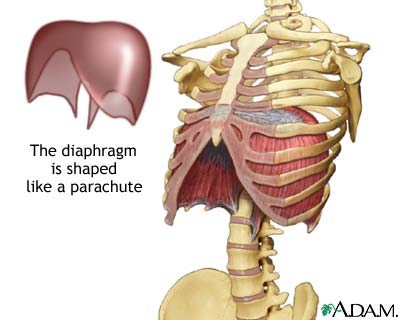
karyotype

9.
Oogenesis results in the formation of:
a)
1 ovum; 3 polar bodies
b)
2 ova; 2 polar bodies
c)
1 ovum; 3 secondary oocytes
d)
4 ova
10.
What did Gregor Mendel use to discover the principles that rule heredity?
a)
Pea Plant
b)
Pigeons
c)
Pear trees
d)
Photosynthesis
11.
What did Mendel call the two kinds of traits exhibited by the pea plants (one coming from the father, one from the mother)?
a)
Genesis
b)
Elective traits
c)
Alleles
d)
Quadrants
12.
What do we call the table used to calculate the probability of an offspring's genotype?
a)
Punnett square
b)
Venn diagram
c)
Golden ratio
d)
Fibonacci sequence
13.

Which of the following is heterozygous?

a)

MM

b)

Mm

c)

mm

14.

Which of the following is homozygous recessive?

a)

PP

b)

Pp

c)

pp

15.

Which term denotes the combination of genes an organism has?

a)

genotype

b)

phenotype

c)

heterozygous

d)

homozygous

16.

Which of the following laws claims that alleles will separate during meiosis, one going to half the sex cells, the other allele going to the other half.

a)

Law of Domination

b)

Law of Segregation

c)

Law of Speciation

d)

Law of Genetics

17.

What word would be INCORRECT to describe "QQ"

a)

homozygous

b)

dominant

c)

genotype

d)

recessive

18.

If Y (yellow) is the dominant allele for pea plant seed color, which of the following would produce green seeds?

a)

yy

b)

Yy

c)

YY

d)

gg

19.

What are the chances that two white flower (pp) pea plants could produce a purple flower pea plant?

a)

0%

b)

25%

c)

50%

d)

75%

20.
What do half colored symbols represent?
a)
The individual is a carrier (heterozygous).
b)
The individual expresses the trait.
c)
The individual has both recessive alleles.
d)
The individual has both dominant alleles.
21.
How many people in this whole pedigree have the trait/disease?
a)
2
b)
3
c)
4
d)
6
22.
What type of inheritance do two alleles have if their traits blend together? 
a)
Incomplete Dominance
b)
Co-Dominance
23.
A calico cat shows both the traits for orange fur and black fur. What kind of allele expression is this?
a)
Incomplete Dominance
b)
Co dominance
24.

Process, that is responsible for the development of the various types of tissue in the body is called

a)

differentiation

b)

implantation

c)

gastrulation

d)

neurulation

25.
How can a person's muscle cells have the same exact DNA sequences as their nerve cells even though the look and perform completely different?
a)
The two different cells become mutated
b)
The proteins expressed in each cell are different
c)
They actually have different DNA in the two types of cells.
d)
The genome of the different cells changes
26.

The arctic fox inhabits northern areas of North America. The same arctic fox is shown in the drawing at different times of the year. What causes this change in fur color?

a)

the alleles for fur color change as the arctic fox grows older

b)

gene expression for fur color is regulated by latitude

c)

the arctic fox has two traits for fur color that are determined at birth

d)

gene expression for fur color is regulated by temperature

27.
How would the DNA sequence GCTATA be transcribed to mRNA?
a)
GCUAUA
b)
CGATAT
c)
CGAUAU
d)
GCUTUT
28.
The process by which the genetic code of DNA is copied into a strand of RNA is called
a)
translation
b)
transcription
c)
transformation
d)
replication
29.
Which of the following describes RNA?
a)
RNA is usually double-stranded and contains the base thymine
b)
RNA is usually single-stranded and contains the base uracil
c)
RNA is longer than DNA and uses five bases to encode information
d)
RNA is made in the nucleus of eukaryotic cells and stays there to carry out its functions
30.
In messenger RNA, each codon specifies a particular
a)
nucleotide
b)
enzyme
c)
amino acid
d)
promoter
31.
The process of making proteins on the ribosome based on instructions from messenger RNA is called
a)
transcription
b)
transformation
c)
translation
d)
molecular biology
32.
Changes is DNA sequences that affect genetic information are known as
a)
replications
b)
mutations
c)
transformations
d)
translations
33.
A substance that can cause a change in the DNA code of an organism is called a 
a)
toxin
b)
mutagen
c)
nitrogenous base
d)
nucleotide
34.

The Process of creating RNA from DNA

a)

Transcription

b)

Translation

c)

Replication

35.
What is the product of translation?
a)
DNA
b)
mRNA
c)
tRNA
d)
proteins
36.

In RNA the base T is replaced with

a)

U

b)

G

c)

C

d)

A

37.

What organelle is the site of translation?

a)

Nucleus

b)

Ribosome

c)

Mitochondria

d)

Chloroplast

38.

What is the order for Protein Synthesis?

a)

Transcription -> Translation -> Protein

b)

Translation - > Transcription -> Protein

c)

Protein -> Transcription -> Translation

d)

Translation -> Protein -> Transcription

39.
Which type of RNA takes the instructions from the nucleus to the cytoplasm?
a)
mRNA
b)
tRNA
c)
rRNA
d)
RNA polymerase
40.
What is the product of transcription?
a)
DNA
b)
mRNA
c)
tRNA
d)
proteins
41.

Which type of mutation occurs when there is an addition or removal of a base?

a)

missense mutation

b)

nonsense mutation

c)

frameshift mutation

d)

point mutation

42.

A type of mutation that affect every codon beyond the point of mutation.

a)

Point Mutation

b)

Silent Mutation

c)

Nonsense Mutation

d)

Frameshift Mutation

43.
Mutations affect the ________ of a protein. Because of this the proteins ______ is affected as well. 
a)
gene, function 
b)
sequence, gene
c)
shape,function
44.

When using your codon chart, what sequence can you use to find the correct amino acid?

a)

DNA

b)

mRNA

c)

tRNA

d)

Any of these will do

45.

How many nucleotides make up a codon?

a)

1

b)

3

c)

5

d)

15

46.

Selective breeding is...

a)

a process to create an organism with desired traits from parents with those desired traits

b)

natural method of producing offspring with desired traits

c)

creating a new species

d)

making organisms reproduce during times of stress

47.

One problem with selective breeding is

a)

creating a new species

b)

gene variety is lost

c)

extinction of a species

48.
Where humans have bred organisms together based on traits we like.
a)
Evolution
b)
Natural Selection
c)
Extinction 
d)
Artificial Selection
49.
Evidence shows that the wolf is the ancestor to all of the breeds of dogs shown below. How did this variation arise in a relatively short period of time?
a)
A.  Genetic manipulation
b)
Natural selection
c)
Random chance
d)
Selective breeding
50.

What is recombinant DNA

a)

DNA from 2 different organisms combined

b)

DNA from 2 different ribosomes

c)

DNA that is separated out from a vector

51.

A circular piece of DNA, found in bacteria, is called:

a)

A plasmid

b)

mRNA

c)

Ribosome

d)

Nucleotide

52.
When DNA is manipulated and moved from one source to another it is known as
a)
genetic engineering
b)
electrophoresis
c)
gene therapy
d)
GMO
53.
Gel electrophoresis enables scientists to
a)
separate DNA fragments.
b)
combine DNA fragments.
c)
count the genes in DNA.
d)
insert DNA in cells.
54.
Which is used to cut DNA molecules at specific points?
a)
gel electrophoresis
b)
PCR analysis
c)
a restriction enzyme
d)
recombinant DNA
55.
Which produces offspring from a single cell of an adult?
a)
inbreeding.
b)
mutations.
c)
hybridization.
d)
cloning.
56.

What is a GMO?

a)

An organism that has had its DNA modified by humans

b)

An organism missing a chromosome

c)

Epigenetics

d)

A genetically identical organism

57.
When making a DNA Fingerprint, the gel electrophoresis machine filters the DNA by size. Which fragments make it further down in the gel?
a)
shorter
b)
longer
c)
codons
d)
anticodons
58.

DNA fingerprinting can help police

a)

Identify crime scene DNA

b)

Identify suspects

c)

Idenitify victims

d)

All choices are correct.

59.

Look at the image and choose the correct name...

a)

DNA ligases

b)

Recombinant DNA

c)

Restriction enzymes

d)

Transfer vectors

60.
Change over time is
a)
evolution
b)
generation
c)
growth
d)
biogenesis
61.
Mutations are important because they bring about
a)
death of the organism in which they develop
b)
genetic variation needed for a population to evolve
c)
benefits for the individual, not for the population
d)
Hardey-Weinberg equilibrium within a population
62.

What is the term for a feature that allows an organism to survive better in its environment?

a)

variation

b)

adaptation

c)

homologous structure

d)

vestigial structure

63.
Some organisms that share a common ancestor have features that have different functions, but similar structures.  These are known as
a)
vestigial structures
b)
analogous structures
c)
homologous structures
d)
fossil structures
64.
This is a process by which organisms inherited advantageous traits that tend to reproduce more successfully than the other organisms do. 
a)
Artificial selection
b)
Natural selection
c)
Populations
d)
Environment
65.
The death of every member of a species.
a)
Competition
b)
Population
c)
Extinction
d)
Evidence
66.

When looking at two birds of the same species, you notice that one has darker feathers than the other one. You also notice that one has a beak that is just a little longer. These slight differences within members of the same species are called.....

a)

Fossils

b)

Extinction

c)

Meiosis

d)

Variations

67.

What is the study of organisms at the early stages of development?

a)

DNA studies

b)

Comparative Embryology

c)

Extinction

d)

Fossil Record

68.
According to this evolutionary tree, which organism is most distantly related to the human?
a)
crayfish
b)
grasshopper
c)
perch
d)
frog
69.
Where is the alligator and T. rex's common ancestor?
a)
Point A
b)
Point B
c)
Point C
d)
Point D
70.
Which two animals are most closely related?
a)
Swordfish and Frog
b)
Swordfish and Alligator
c)
Frog and Alligator
d)
T. rex and Alligator
71.
Scientists classify organisms to ____________.
a)
Count the organisms quicker
b)
Catch the organisms in the wild
c)
Train the organisms to behave
d)
See how organisms are alike and different from each other
72.
What is the difference between gradualism and punctuated equilibria?
a)
Gradualism is slowly but surely and P.E. are rapid changes preceeded followed by long periods of little or no change
b)
P.E. is slowly but surely and Gradualism are rapid changes preceeded followed by long periods of little or no change
c)
Gradualism had no intermediate forms of species
d)
punctuated equilibria has intermediate forms of species
73.
Which statement best describes a relationship between these organisms?
a)
Organism A was probably more primitive than Organisms B and C
b)
Organism A was probably more complex than organism B and C
c)
All of these organisms probably lived at the same time
74.
The scientific name for an organism is made from the:
a)
class and family name
b)
genus and species name
c)
domain and kingdom name
d)
kingdom and phylum name
75.

Which 2 organisms would be able to reproduce and produce fertile offspring?

a)

2 organisms in the same class

b)

2 organisms in the same family

c)

2 organisms in the same genus

d)

2 organisms in the same species

76.
An illustration and a dichotomous key are given. What is the correct classification for this organism?
a)
Class Insecta
b)
Order Amblygygi
c)
Order Araneae
d)
Order Scorpiones
77.
The most general in the order of classification is?
a)
Kingdom 
b)
Phylum 
c)
Class 
d)
Order
78.
A series of wave-like muscle contractions that moves food to different processing stations in the digestive tract.
a)
adduction
b)
primary wave
c)
peristalsis
d)
inversion
79.
Where does most of the chemical digestion of food takes place?  Nutrients from food are also absorbed into the bloodstream here. 
a)
Large Intestines
b)
Small Intestines
c)
Gall Bladder
d)
Liver
80.
The main purpose of the large intestine.
a)
absorb hormones
b)
absorb protein
c)
absorb nutrients
d)
absorb water
81.
Bile is made by which digestive organ?
a)
Gallbladder
b)
Stomach
c)
Rectum
d)
Liver
82.
The lining of the small intestine that absorbs the nutrients from digested foods.
a)
Ureters
b)
Villi
c)
Gallbladder
d)
Pancreas
83.
When oxygen-rich blood is carried AWAY from the heart, it travels through an...
a)
artery
b)
neuron
c)
vein
d)
straw
84.
Veins have special ________________ to stop blood from flowing backward.
a)
gravity
b)
valves
c)
arteries
d)
ventricles
85.
The cells in the blood that help fight germs and illnesses are the...
a)
red blood cells
b)
platelets
c)
white blood cells
d)
axons
86.
What part of blood is responsible for carrying oxygen and carbon dioxide to body cells?
a)
Red Blood Cells
b)
White Blood Cells
c)
Platelets
d)
Plasma
87.
What part of blood is responsible for carrying wastes, nutrients, and minerals?
a)
Red Blood Cells
b)
White Blood Cells
c)
Platelets
d)
Plasma
88.
Separates the chambers of the heart.
a)
mitral valve
b)
septum
c)
aortic valve
89.
Major artery at the top of the heart sends oxygenated blood from the left ventricle to the rest of the body.
a)
aorta
b)
pulmonary artery
c)
inferior vena cava
90.

What part of the heart has strong walls and is bigger?

a)

atrium

b)

Aorta

c)

ventricle

91.

Which side of the heart has the oxygenated blood?

a)

Left

b)

right

c)

both

d)

top

92.

What is the main function of the respiratory system?

a)

to provide oxygen and remove carbon dioxide from the body

b)

o break down food and absorb nutrients

c)

to remove oxygen from the body and deliver carbon dioxide
93.

What is function of the dome-shaped diaphragm muscle?

a)

This is where gas exchange happens.

b)

Air passes through the diaphragm on the way to the lungs.

c)

It attaches to the lungs and contracts and relaxes to help in breathing.

94.

Flap of tissue that covers the opening to the windpipe during swallowing

a)

Pharynx

b)

Trachea

c)

Epiglottis

95.
Clusters of tiny air sacs that allow the exchange of oxygen and carbon dioxide
a)
Pharynx
b)
Diaphragm
c)
Alveoli
d)
Lungs
96.
Passage way that moistens the air and has hairs to trap dust and particles
a)
Nasal cavity
b)
Bronchi
c)
Mouth cavity
d)
Larynx
97.
What is the main function of the excretory system?
a)
to collect and remove wastes from the body
b)
to strengthen skeletal muscles
c)
to protect the nervous system
d)
to bring oxygen to body cells
98.
Tiny filtering structures where urine is produced in the kidneys are called
a)
ureters.
b)
alveoli.
c)
nephrons.
d)
bronchi.
99.
Using the picture, what is the function of structure A?
a)
Carries urine away from the kidneys
b)
Stores urine
c)
Eliminates urea, excess water, and some other materials
d)
Carries urine away from body and eliminates it
100.
Using the picture, what is the function of structure C?
a)
Carries urine away from the kidneys
b)
Stores urine
c)
Eliminates urea, excess water, and some other materials
d)
Carries urine away from body and eliminates it