
 Worksheets
Year 11 Revision #2
Total questions: 150
Worksheet time: 1hrs 15mins
The response to an infection. Causes the area to redden, swell, and feel warm.
Fever
Mucus
Dilation
Inflammation
Chemical that causes the blood vessels around the infection to dilate (expand) so that more blood can flow to the infection
Stomach acid
Mucus
Epithelial cells
Histamines
What is phagocytosis?
WBCs
When a cells eat other cells
When a cell collapses
When a cell releases nutrients
The innate immune system is...
Always working and doesn't require any special preparation
Needs to be "primed" before it can work to its full effectiveness
Very specific and only defends against a specific pathogen
Not very effective at preventing intruders
Cells that provide a physical barrier to resist pathogen invasion, as well as secrete protective substances to discourage the accumulation of pathogens.
Macrophages
White blood cells
Epithelial cells
Helper T Cells


Antigens
Are chemical markers on pathogens
Are a type of white blood cell
Are part of the bodies 3rd line of defense against pathogens

Antibodies are part of the 3rd line of defense they
bind to antigens, preventing the spread of pathogens and promoting phagocytosis by white blood cells
Are a type of white blood cell which eats pathogens
Are a type of white blood cell which activates other white blood cells

B cells are a type of white blood cell involved in the 3rd line of defense. B cells
Help to activate other white blood cells such as killer T cells and B cells
Produce antibodies
Produce antigens
Kill pathogenic cells

T helper cells are a type of white blood cell involved in the 3rd line of defense. T helper cells
Help to activate other white blood cells such as killer T cells and B cells
Produce antibodies
Produce antigens
Kill pathogenic cells

Killer T cells are a type of white blood cell involved in the 3rd line of defense. T cells
Help to activate other white blood cells such as killer T cells and B cells
Produce antibodies
Produce antigens
Kill specific pathogenic cells


The illustration shows...
alpha-glucose
beta-glucose
fructose
D-ribose
Alpha-glucose differ from its beta isomer in position of:
OH group at carbon 1
OH group at carbon 4
lack of O at carbon 3
OH group at carbon 2

The illustration shows:
amylose
amylopectin
cellulose
maltose
Tick the subunits of starch:
amylose
amylopectin
cellulose
lactose
maltose
What typ of sugar is glucose?
triose
pentose
hexose
polysaccharide

The process used to split polymers; this is done by adding water
Dehydration
Hydrolysis
Condensation
Tetratonic

The image is an example of a
Disaccharide
Polysaccaride
Polypeptide
Triglyceride

What is a condensation reaction?
Breaking of a hydroxyl bond
Formation of a hydroxyl bond
Formation of a water molecule
Removal of a water molecule

The bond linking these two monomers is called a:
1,4 Glycosidic Bond
1,6 Glycosidic Bond
Peptide Bond
Hydrogen Bond

Which isomer of glucose is this?
Beta glucose
Alpha glucose

Which isomer of glucose is this?
Beta glucose
Alpha glucose

Triglycerides are types of
carbohydrates
lipids
proteins
nucleic acid
none of them

One trigyceride molecule is made up of
1 fatty acid + 1 glycerol
2 fatty acids + 1 glycerol
3 fatty acids + 1 glycerol
1 fatty acid + 2 glycerol
1 fatty acid + 3 glycerol

What is the label 1?
phosphate
hydrophobic tail
glycerol
hydrophobic head
1. Makes up the cell membrane
2. Has a polar, hydrophilic head
3. Has 2 non-polar, hydrophobic tails

Which diagram is a triglyceride?


How many water molecules would be required to hydrolyse a triglyceride?
One
Two
Three
None
What type of bond is being broken when a triglyceride is hydrolysed?
glycosidic
peptide
ester
phosphodiester

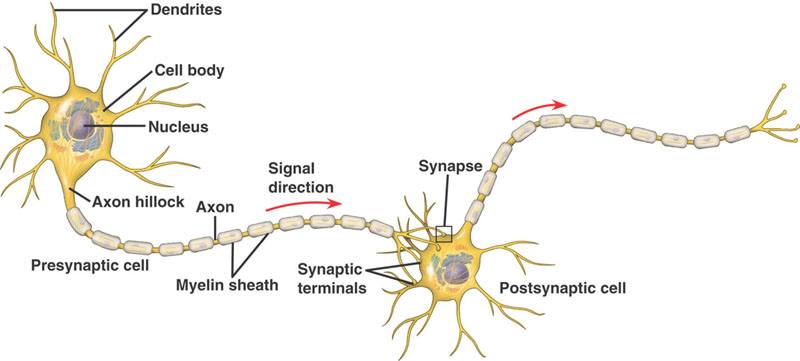


Which pattern shows how signals are transmitted from the presynaptic neuron to the post synaptic neuron
electrical --> electrical
electrical --> chemical
chemical --> electrical --> chemical
electrical --> chemical --> electrical
Which side of the synapse contains ligand-gated ion channels?
presynaptic
postsynaptic
both
A chemical message is known as
a phosphatase
a phosphate
a ligand
a charge

Select the correct term for the following definition:
"The water transport system in plants."
Villi
Bronchi
Bolus
Xylem

Recall what is dissolved in the water in the xylem.
Glucose
Amino acids
Mineral ions
Starch

Recall the main funtion of a phloem cell.
To transport nutrients (mainly sucrose) to different parts of a plant.
To transport water to different parts of a plant.
To make energy for the plant via photosynthesis.
To provide structural support to a plant.

Recall which of the following form part of the phloem.
Sieve-tube elements
Trachieds
Vessels
Companion cells
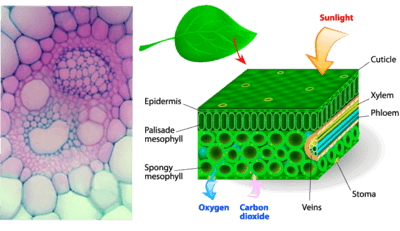
Recall that the movement of food in the phloem is called.
Translocation
Transpiration stream
Evaporation
Respiration

When the forces of cohesion and adhesion work together, water can move up the plant against the force of gravity by....
Phototropism
Geotropism
Photosynthesis
Capillary Action
Xylem tubes are made of...
Dead cells
Living cells
Phloem tubes are made of...
Dead cells
Living cells
Xylem tubes transport..
Water
Mineral ions
Food substances (e.g. sucrose)
Which process are the phloem tubes part of?
Translocation
Transpiration
Which process are the xylem tubes part of?
Translocation
Transpiration

Name structure A
Collecting duct
Proximal convoluted tubule
Distal convoluted tubule
Glomerulus

Name Structure B
Bowmans Capsule
Loop of Henle
proximal Convoluted tubule
Collecting duct

Name structure C
Distal convoluted tubule
Proximal convoluted tubule
Loop of henle
Glomerulus

Name structure D
Glomerulus
Bowmans Capsule
Collecting duct
Loop of henle

Name structure E
Glomerulus
Collecting Duct
Loop of henle
Distal convoluted tubule

What is the function of structure A?
For the selective re-absorption of glucose
To filter the small molecules in the blood to create the glomerular filtrate
For osmoregulation
This is a network of capillaries that carries blood at relatively high pressure.
afferent arteriole
efferent arteriole
peritubular capillary network
glomerulus
Thermoregulation means?
Maintain temperature
Maintain water levels
Maintain heart rate
Maintain breathing
What toxic substance is excreted in the urine?
Glucose
Sodium ions
Carbon dioxide
Urea

Which of the following is NOT filtered out of the blood in the kidneys?
Blood cells
Amino acids
Urea
Glucose
Anti-diuretic hormone (ADH) is released by which gland of the endocrine system
Thyroid
Pituitary
Ovaries
Adrenal
If you are over-hydrated (high water potential in the blood), the body must excrete excess water. To do so, the brain triggers the pituitary gland to ...
release MORE ADH, making the collecting duct MORE permeable
release LESS ADH, making the collecting duct LESS permeable
release MORE ADH, making the collecting duct LESS permeable
release LESS ADH, making the collecting duct MORE permeable
Release of ADH is caused by...
Excellent feedback
Bad feedback
Positive feedback
Negative feedback

Structures B and C are the site of...
selective reabsorption
ultrafiltration
water reabsorption
macrofiltration
Where do the dark reactions (Calvin cycle) take place?
thylakoid membrane
lumen
stroma


Main products of the Calvin Cycle
Oxygen, NADP+, ADP
Glucose, CO2, ADP
ADP, NADP+, Glucose
ATP, NADPH, Oxygen


After the NAD+ receives electrons, what does it change to?
ATP
NADH
ADP
Where does the link reaction take place
inner mitochondrial membrane
cytoplasm
mitochondrial matrix
ribosome
The products of the link reaction are
pyruvate and carbon dioxide
carbon dioxide and co-enzyme A
carbon dioxide, acetyl coA and NADH
NADH and carbon dioxide
The removal of carbon from a molecule in the form of carbon dioxide is known as
decarboxylation
dehydrogenation
phosphorylation
oxidation
Krebs Cycle takes place in the:
Cytoplasm
Mitochondrial Matrix
Ribsome
InterMembrane Space
The number of ATP molecules produced out of Krebs Cycle for 1 molecule of glucose is:
2
3
4
0
How many FADH molecules are produced by 1 molecule of glucose?
1
2
3
4
How many FADH molecules are produced by 1 turn of the Krebs Cycle?
1
2
3
4
How many NADH molecules are produced by a molecule of glucose through the Krebs' Cycle for 1 molecule of glucose?
2
3
4
6
The "regenerator" molecule of the Krebs Cycle is:
Oxaloacetate
Acetyl-CoA
Citrate
α-Ketoglutarate


After Acetyl-CoA is added to an oxaloacetate molecule, __________ is immediately formed. This is why the Kreb's cycle is sometimes called the citric acid cycle.
malate
succinate
citrate
ketoglutarate
What type of conditions do xerophytes live in?
wet
damp
humid
dry

Type of neuron that carries messages from the body to the brain/spinal cord:
Afferent/sensory
Efferent/motor
Type of neuron that carries messages from the brain/spinal cord to the body
Afferent/Sensory
Efferent/Motor
When you are dehydrated what out of the following options will happen? [3]
Less ADH will be secreted by the pituitary.
More water will be reabsorbed back into the blood.
Osmoreceptors in the hypothalamus will detect increased blood concentration.
The volume of urine will increase.
More ADH will be secreted by the pituitary.

The proteins found on the surface of RBCs that allow us to type blood as A, B, O or AB are called
antigens
antibodies
aggluntates
Rh factors

What is produced by your body in response to foreign antigens, such as the wrong type of blood?
agglutinates
clotting factors
phagocytes
antibodies
Someone with Type A blood also has...
Type A antibodies
Type B antibodies
both Type A & B antibodies
neither Type A nor B antibodies
Someone with both Type A & B antibodies is which blood type?
A
B
AB
O
Someone with Type A blood has...
A antigens
A antibodies
B antigens
A & B antigens
Someone with Type AB blood has...
Both A & B antibodies
No antibodies
only A antigens
only B antigens

