
Font size
 Worksheets
Unit 6 Bonding Review
Total questions: 58
Worksheet time: 1hrs 17mins
Nitrogen, N, will form which of the following ions?
N
N-3
N-5
N+5
Beryllium, Be, will ____ valence electrons when forming an ionic bond.
lose 4
gain 4
lose 2
gain 2
Ionic bonds happen because of the ____ of valence electrons.
sharing
transfer
keeping
covering
Boron, B, will ____ valence electrons when forming an ionic bond.
lose three
gain three
lose 5
gain 5
Sulfur, S, will ____ valence electrons when forming an ionic bond.
gain 1
lose 1
gain 2
lose 2
The name of FeCl₂ is
iron chloride
iron (II) chloride
iron (I) chloride
iron dichloride
LiBr is called
lithium bromine
lithium (I) bromine
lithium bromide
lithuim (I) bromide
Name the ionic compound SnSe2
Tin diselenide
Tin (IV) Selenide
Tin selenide
Tin (II) triselenide
Which of the following combinations would need roman numerals in the name?
potassium + fluorine
beryllium + oxygen
boron + iodine
gold + oxygen
When naming ionic compounds with transition metals you need to include roman numerals to show the _____ of the metal..
atomic number
mass number
charge
ionization energy
When naming a compound, which of these is written first?
Metal
Nonmetal
Anion
Cation
When naming a compound, what must the last part be?
the element with "ide" at the end
the element with the ending "ite"
the name of the element
the element with "ide" at the end, unless its a polyatomic ion
What is the name of the compound Na2(SO4)?
Sodium sulfate
Sodium sulfide
Sodium sulfite
Sodium sulfuroxide
What is the name of the compound Sc(OH)3?
Scandium (III) hydroxide
Scandium (I) hydroxide
Scandium (II) hydroxide
Scandium hydroxide
The name of the compound Ca3(PO4)2
calcium phosphate
tricalcium diphosphate
calcium phosphorus oxide
calcium phosphide
Magnesium Nitrate
MgNO3
Mg(NO3)
Mg(NO3)2
(MgNO3)2
Zinc Oxide
ZnO2
Zn2O
Zn4O
ZnO
Name the ionic formula of PbO
Lead(II) oxide
Lead(IV) oxide
Lead oxide (II)
Lead Oxide (IV)
Name the ionic formula of AgNO3
Silver nitrite
Silver Chloride
Silver nitrate
silver sulphate
Name the ionic formula of FeSO4
Iron (II) sulphate
Iron sulphate(II)
Iron Sulphate (IV)
Iron(III)Sulphate (V)



True or false? Ionic compounds have low boiling points.
true
false
At room temperature, are ionic compounds solids, liquids or gases? Justify your answer.( click 2 boxes)
solids
liquids
gases
Room temperature is lower than the melting points of ionic compounds.
Room temperature is higher than the boiling points of ionic compounds.
Intramolecular forces are the forces
within molecules
between molecules
Intermolecular forces are the forces
within molecules
between molecules
High viscosity can be described as...
a liquid that flows quickly
a liquid that flows slowly
Which statement explains why Br2 is a liquid at room temp and I2 is a solid at room temp?
Molecules of Br2 are polar, and molecules of I2 are nonpolar
Molecules of Br2 are nonpolar, and molecules of I2 are polar
Molecules of Br2 have stronger intermolecular forces than molecules of I2.
Molecules of I2 have stronger intermolecular forces than molecules of Br2.
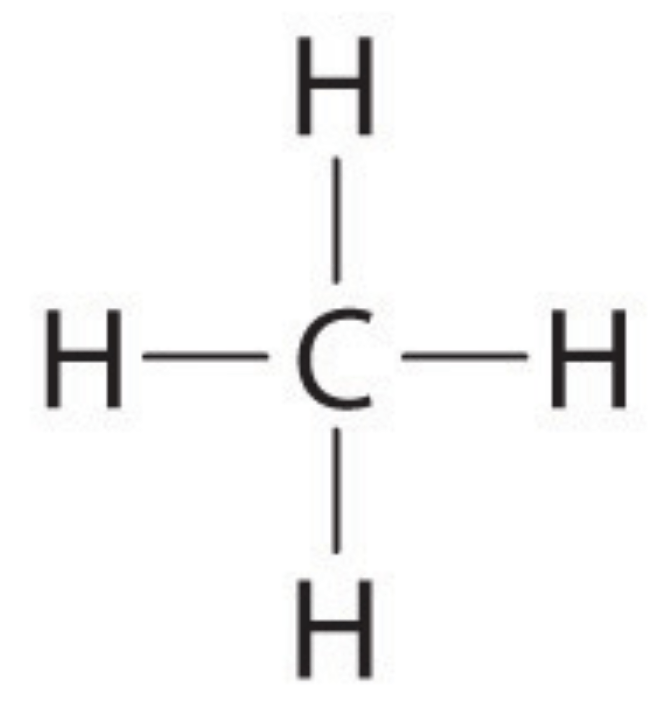
Classify the following molecule.
polar
nonpolar

Classify the following molecule.
polar
nonpolar

Is the following molecule polar or nonpolar?
polar
nonpolar

Is the following molecule polar or nonpolar?
polar
nonpolar

Is the following molecule polar or nonpolar?
polar
nonpolar
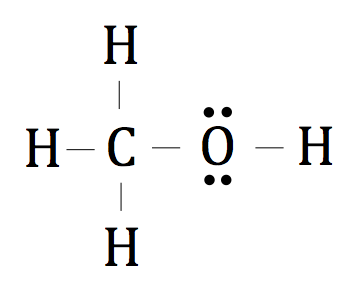
Is the following molecule polar or nonpolar?
polar
nonpolar
If an element is diatomic it should have a subscript of___
1, always
2, only when it is an element
it shouldn't have a subscript, it should have a coefficent
2, when bonded in a compound
Predict the products of this synthesis reaction: H2 + Cl2 →
HCl
H2Cl2
H2Cl
HCl2
Predict the products for the this Single Replacement reaction:
K + HCl →
KCl + H2
KHCl
KH + Cl2
HCl + K2
Predict the products for the this Double Replacement reaction:
AgNO3 + KCl →
AgCl + KNO3
AgK + ClNO3
KAg + NO3Cl
AgCl + 3 KNO
Complete the balanced equation for this Double Replacement reaction.
3 NaOH + Fe(NO3)3 →
NaFe + OH(NO3)3
NaNO3 + Fe(OH)3
3 NaNO3 + Fe(OH)3
3 NaFe + 3 (OH)NO3

