wayground logo

Free Printable Worksheets

Font size

S
M
L
XL
Worksheets

12 HB Exam Review

Total questions: 132

Worksheet time: 1hrs 27mins

Name
Class
Date
1.
What is the main purpose of the immune system?
a)
support the body through bones and muscles
b)
get rid of waste from the body
c)
protect the body from pathogens
d)
move blood through the body
2.
What do antibodies attach to on the pathogen?
a)
Anti inflammatory
b)
Antigens
c)
Antiseptic
d)
Antibodies
3.
Which one is a way the body defends against a pathogen?
a)
Fever
b)
Stomach Acid digesting
c)
White Blood Cells fighing
d)
All of these are correct
4.
Pathogens are recognized by their...
a)
antigens
b)
antibodies
c)
killer t-cells
d)
B-cells
5.
 Like all other body systems, the immune system helps the body maintain homeostasis.  Which statement best describes how the immune system does this?  
a)
it protects other organs and tissues from infection and disease
b)
it breaks down food to provide cells with nutrients
c)
it gathers information through the senses and controls all other body systems
d)
 it transports oxygen and carbon dioxide
6.
The picture below illustrates one internal part of the body’s immune system. What process is illustrated in the picture?  
a)
a skin cell destroying germs.
b)
inflammation near an opened wound
c)
a white blood cell destroying pathogens
d)
mucus in the lungs destroying pathogens
7.
Cells that ingest pathogens are
a)
plasma cells
b)
phagocytic cells
c)
helper T cells
d)
antibodies
8.
The ______________ system returns interstitial fluid to the blood stream.
a)
ureters
b)
spleen
c)
thymus
d)
lymph vessels
9.
T cells are made in the___________
a)
bone marrow
b)
spleen
c)
thymus
d)
tonsiles
10.
__________ immunity is when the bodies makes its own antibodies.
a)
passive
b)
active
c)
cell mediated
d)
false
11.
Y shaped proteins that may mark pathogens for destruction are
a)
antigens
b)
T cells
c)
antibodies
d)
neutrophils
12.
T cells that kill infected cells are
a)
cytotoxic T's
b)
helper T's
c)
plasma cells
d)
antigen presenting c
13.
Name this process
a)
eating
b)
phagocytosis
c)
destruction
d)
ingesting
14.
Antibiotics do not work on 
a)
bacteria
b)
viruses
c)
fungi
d)
children
15.
HIV is an example of what kind of transmission?
a)
Bloodborne
b)
Waterborne
c)
Airborne
16.
What is the scientific term for spreading a disease?
a)
Passing
b)
Catching
c)
Transmitting
d)
Giving
17.
What is one way a pathogen can enter the body?
a)
Nose
b)
Mouth
c)
Broken Skin
d)
All of the Aove
18.
Viruses are
a)
easily killed
b)
destroyed by antibiotics
c)
nonliving
d)
different kinds of bacteria
19.
Disease-causing microorganism, such as a bacterium or virus.
a)
pathogen 
b)
allergen
c)
prion 
d)
antigen 
20.
Inflammation is designed to be a protective defensive mechanism. 
a)
True
b)
False
21.
What do white blood cells do?
a)
Seek out and kill all living tissue
b)
Seek out and kill pathogens
c)
Transport food around the body
d)
Repair cuts and injuries
22.
What cell snipes virally or cancer infected cell causing water and ions to rush in and make the cell burst?
a)
Sniper Cells
b)
Natural Killer Cells
c)
Rifle Cells
d)
Bandit Cells
23.
After an initial infection, B-cells recognize the measles virus. How is this helpful in human immune response? 
a)
The B-cells use this recognition to defend the body against other pathogens, such as bacteria.
b)
 The B-cells more quickly recognize and respond to any other virus that invades the body.
c)
The B-cells produce antibodies more quickly if the measles virus is encountered again.
d)
The B-cells transfer this recognition to T-cells, which will then devour the viruses.
24.

A Substance made of weakened, killed, or partial pathogens are designed to protect the body from future invasions of that pathogen.

a)

Vaccine

b)

Virus

c)

Disease

d)

Microbe

25.

Sticky mucus are...

a)

a type of mechanical barrier

b)

a type of chemical barrier

c)

a type of direct transmission

d)

a type of indirect transmission

26.

Vaccines only work if at least

a)

85% of the people are vaccinated

b)

80% of the people are vaccinated

c)

90 % of the people are vaccinated

d)

100% of the people are vaccinated

27.

(a)   passive immunity involves the passive transfer of antibodies from mother to foetus prior to birth, and mother to baby via breastfeeding.

28.

Which type of vaccine would you find a living microbe in?

a)

Subunit vaccine

b)

Toxoid vaccines

c)

Inactivated vaccine

d)

Live attenuated vaccine

29.

Herd immunity is the result of a large number of people being immune to a pathogen.

a)

True

b)

False

30.

Vaccination is an example of..

a)

Artificial passive immunity

b)

Natural active immunity

c)

Artificial active immunity

d)

Natural passive immunity

31.

Can herd immunity be lost?

a)

Yes

b)

No

c)

Maybe

32.

A mast cell contains

a)

lymphocytes

b)

ceratin

c)

histamine

d)

enzymes

33.

Should you try to expose yourself to get Covid-19 to participate in Herd Immunity?

a)

A. Yes! That will help with the vaccine.

b)

B. No, wait until there is a vaccine.

c)

C. It doesn't really matter - either way you'll get the virus.

d)

D. Herd Immunity doesn't really exits.

34.

Herd immunity protects people whose immune system is weak.

a)

True

b)

False

35.

What is the main function of the nervous system?

a)

to inhale oxygen and exhale carbon dioxide

b)

to break down food consumed by a person for nutrients

c)

to control the body's activities by relaying messages

d)

to control the body's movements

36.

What are the two divisions of the nervous system?

a)

Central and Lower nervous systems

b)

Central and Peripheral nervous systems

c)

Lower and Cerebral nervous systems

d)

Central and Muscular nervous systems

37.

What are the three parts of the nervous system?

a)

brain, spinal cord, nerves

b)

brain, lungs, spinal cord

c)

heart, brain, nerves

d)

brain, nerves, neurons

38.

A nerve cell is called a:

a)

neutron

b)

nerve

c)

neuron

d)

synapse

39.

Dendrites are part of a neuron that carries electrical signals _______ the cell body.

a)

to

b)

away

c)

in between

40.

Axons are part of a neuron that send electrical signals ________ the cell body

a)

to

b)

away from

c)

in between

41.

True or False: the cell body of a neuron has a nucleus.

a)

True

b)

False

42.

The space between an axon of a neuron that is communicating with a dendrite of another neuron is called a ________________.

a)

Neuron

b)

Brain message

c)

Stimulus

d)

Synapse

43.

The cerebellum is labeled as #...

a)

1

b)

2

c)

3

44.

#1 is pointing to the...

a)

cerebrum

b)

cerebellum

c)

medulla

45.

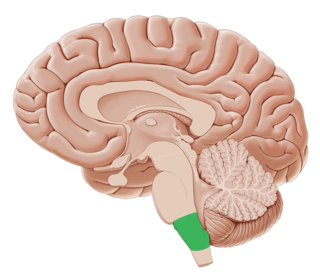
Which part of the brain controls involuntary movements such as digestion and your heartbeat?

a)

cerebrum

b)

cerebellum

c)

medulla/spinal cord

46.

Which part of the brain controls balance and coordination?

a)

cerebrum

b)

cerebellum

c)

medulla

47.
What bone protects your brain?
a)
Skull
b)
Cerebellum
c)
Cerbrum
d)
Deltoids
48.
Without the ____ the two sides of our brain couldn't communicate. 
a)
Frontal Lobe
b)
Cerebral Cortex
c)
Thalamus
d)
Corpus Callosum 
49.
The Medulla Obolongata controls our ___.
a)
Blood Pressure 
b)
Muscle Memory 
c)
Pain reaction
d)
Memory 
50.
The lobe responsible for making plans and evaluating consequences
a)
Frontal Lobe
b)
Temporal Lobe
c)
Parietal Lobe
d)
Occipital Lobe
51.

What is this?

a)

Corpus callosum

b)

Medulla Oblongata

c)

Cerebellum

d)

Hypothalamus

52.
Controls motivational behaviors, including: feeding, fight-flight response
a)
Hippocampus
b)
Amygdala
c)
Reticular Formation
d)
Hypothalamus
53.
What is the normal resting potential of a neuron cell membrane?
a)
+40mV
b)
-30mV
c)
+55mV
d)
-70mV
54.
Which ions are involved in an action potential?
a)
Na; Cl
b)
Na; K
c)
K; Cl
d)
Na; Ca
55.
At which point on the diagram does depolarisation of the axon occur? 
a)
A
b)
B
c)
C
d)
D
56.
The sodium potassium pump restores the resting potential. By which process does this work? 
a)
Osmosis
b)
Diffusion
c)
Facilitated diffusion
d)
Active transport
57.
When a neuron is not engaged in an impulse.
a)
Resting potential
b)
Action potential
c)
Neural potential
d)
Synaptic potential
58.
A membrane potential becoming less negative is called
a)
hyperpolarization
b)
depolarization
c)
repolarization
d)
polarization
59.

What number(s) on the graph represents the THRESHOLD level of stimulus?

a)

1 and 5

b)

2

c)

3

d)

6

60.

When is the potassium channel open?

a)

during rest only

b)

during repolarization only

c)

during depolarization only

d)

all the time

61.
Part of a neuron that receives information from other neurons
a)
axon
b)
dendrites
c)
myelin sheath
d)
synapse
62.

Which hormone is produced in the testes

a)

Insulin

b)

Adrenalin

c)

Testosterone

d)

Thyroxine

63.

Where is insulin produced

a)

Liver

b)

Heart

c)

Pancreas

d)

Pineal gland

64.

Which hormone is involved in regulating blood glucose levels?

a)

Thyroxine

b)

Oestrogen

c)

Testosterone

d)

Insulin

65.

Where are the adrenal glands? (pick the correct number in diagram)

a)

2

b)

4

c)

6

d)

5

66.

Which gland(s) is sometimes referred to as the master gland?

a)

Adrenal

b)

Pituitary

c)

Testes

d)

Ovaries

67.
A goiter is an enlargement of what gland?
a)
Pituitary
b)
Adrenal
c)
Mammary
d)
Thyroid
68.
Which of the following anterior pituitary hormones stimulates Cortisol production?
a)
Adrenocorticotropic hormone
b)
Insulin like growth factors
c)
Luteinizing hormone
d)
Prolactin
69.
Glands located on the kidneys that regulate the use of carbohydrates and salt, and prepare the body for emergencies.
a)
Thyroid gland
b)
Pancreas
c)
Adrenal glands
d)
Ovaries/testes
70.
What is an Hormone?
a)
Substance produced in one part of an organism that affects another part of the organism
b)
Cells that has an receptor for a particular hormone
c)
Cells that pick up on a particular hormones through receptor
d)
Steroids that cause the abnormal actions in hormones
71.
What are the functions of the Pancreatic hormones?
a)
Reduce or increase blood sugar levels
b)
Increase blood calcium levels
c)
Increase blood pressure
d)
Decrease rate of metabolism
72.
The Adrenal Cortex secretes what type of hormone?
a)
Amine
b)
Peptide
c)
Steroid
d)
Glyco-Protein
73.
Which hormone is not secreted by the anterior pituitary.
a)
Oxytocin
b)
FSH
c)
TSH
d)
ACTH
74.
What element is needed to produce proper amounts of Thyronine (T3) and Thyroxine (T4)?
a)
Iodine
b)
Iron
c)
Calcium
d)
Zinc
75.
What element is needed to produce proper amounts of Thyronine (T3) and Thyroxine (T4)?
a)
Iodine
b)
Iron
c)
Calcium
d)
Zinc
76.
Which hormone is secreted directly from the Posterior Pituitary Gland?
a)
Oxytocin
b)
Aldosterone
c)
Epinephrine
d)
Cortisol
77.
Glucagon is secreted by:
a)
α-cells in the Islets of Langerhans
b)
β-cells in the Islets of Langerhans
c)
β-cells in the pancreatic medulla
d)
α-cells in the pancreatic cortex
78.
Thickening of the endometrium is controlled by:
a)
FSH
b)
LH
c)
Estrogen
d)
Progesterone
79.
Hormones that enter cells directly to cause changes are usually:
a)
Steroids
b)
Proteins
80.

The response to stress is called

a)

Stay or Stray Response

b)

Fight or Stay Response

c)

Flee or Stray Response

d)

Fight or Flight Response

81.

What is the function of receptors

a)

keep a balance between internal/external

b)

learned by being tricked

c)

respond to the stimulus

d)

learning by repetition

82.

what is homeostasis

a)

a learned response

b)

balance between internal/external

c)

causes a response

d)

born with

83.

what is a reflex

a)

learned response

b)

born with, not learned

c)

fluid like substance

d)

trait you carry but do not have

84.

What type of neuron is illustrated in #2?

a)

CNS

b)

Integrating

c)

Sensory

d)

Motor

85.

What type of protein is found #4?

a)

PNS

b)

Myelin

c)

Myosin

d)

Actin

86.

Which general Nervous Division is #4 pointing to?

a)

Peripheral Nervous System

b)

Autonomic Nervous System

c)

Brain

d)

Central Nervous System

87.

A reflex reaction is an .....

a)

involuntary response

b)

voluntary response

c)

conscious response

d)

response

88.

What is the name of the gaps between neurones?

a)

synapse

b)

relay neurone

c)

myelin sheath

d)

Dendrite

89.

Look at the reflex arc shown in the diagram. Which neurone is marked by the letter X?

a)

Sensory neurone

b)

Relay neurone

c)

Motor neurone

d)

CNS

90.

Which is the following is represented by the letter B?

a)

Cell body

b)

Dendrite

c)

Nucleus

d)

Axon

91.

What part of the brain receives signals regarding changing breathing rate?

a)

Cardiac control centre

b)

Respiratory control centre

c)

Breathing control centre

d)

Hypothalamus

92.

What is the name of the receptors that detect change in blood pH?

a)

Baroreceptors

b)

Chemoreceptors

c)

pH receptors

d)

chemicalreceptors

93.

During child birth a woman's body over produces a hormone called oxytocin until the baby is born. What kind of feedback loop would this be?

a)

Negative Feedback Loop

b)

Positive Feedback Loop

c)

Neutral Feedback Loop

d)

Linear Feedback Loop

94.

When you are hot, your body sweats to cool you down. This means your temperature went above normal and your body sweats to counteract that change to bring you back to normal. What kind of feedback loop would this be?

a)

Negative Feedback Loop

b)

Positive Feedback Loop

c)

Neutral Feedback Loop

d)

Linear Feedback Loop

95.

Osmoregulation means....

a)

maintain water levels

b)

maintain temperature

c)

maintain heart rate

d)

maintain breathing

96.

Thermoregulation means?

a)

Maintain temperature

b)

Maintain water levels

c)

Maintain heart rate

d)

Maintain breathing

97.

When you are hot you....

a)

sweat

b)

shiver

c)

get goosebumps

d)

hairs stand up on arm

98.

When you are cold you...

a)

shiver to create heat

b)

sweat

c)

blood vessels dilate

d)

increase heart rate

99.
The job of the somatic nervous system is to control breathing and the respiratory system.
a)
True
b)
False
100.
What is NOT part of the peripheral nervous system (PNS)?
a)
axons
b)
sensory receptors
c)
spinal cord
d)
motor neurons
101.
Division of the Autonomic Nervous System (which is a subdivision of the Peripheral Nervous System) that is FIGHT OR FLIGHT
a)
sympathetic
b)
parasympathetic
102.
You're giving a speech in front of the class (most of you would feel this)
a)
sympathetic
b)
parasympathetic
103.
What tissue is not innervated by the autonomic nervous system?
a)
Glands
b)
Skeletal Muscle
c)
Cardiac Muscle
d)
Smooth Muscle
104.

What happens in your body temperature drops below 35 oC?

a)

Hyperthermia

b)

Hypothermia

c)

Hypertonic

d)

Hypotonic

105.

Three ways you body can lose heat

a)

Evaporation of sweat

b)

Warm air exhaled out

c)

Hairs becoming erect

d)

Vasodilation

106.

What happens if your core body rises above 40oC?

a)

Hyperthermia

b)

Hypothermia

c)

Hypertonic

d)

Hypotonic

107.

Which progress produces heat in every living cell?

a)

digestion

b)

respiration

c)

protein synthesis

d)

photosynthesis

108.

Which organ of the body produces the most heat?

a)

The brain

b)

The small intestine

c)

The heart

d)

The liver

109.

What does MRI stand for?

a)

Magical Rainbow Inducer

b)

Magnification Refractory Index

c)

Magnetic Resonance Imaging

d)

Multiple Record Imaging

110.

What effect will caffeine have on reaction time?

a)

Increase Reaction Time

b)

Decrease Reaction Time

c)

No Effect

111.

In which of the following, do blood vessels near the surface of the body loosen up to release heat?

a)

Vasoconstriction

b)

Vasodilation

112.

Which of the following ISN'T a thermoregulatory strategy for warming up?

a)

vasoconstriction

b)

shivering

c)

sweating

d)

extra layers of blubber (fat)

113.

What is the top layer of skin called?

a)

callus

b)

epidermis

c)

dermis

d)

hypodermis

114.

What type of foods are broken down into glucose in the small intestine?

a)

carbohydrates

b)

proteins

c)

fats

115.
A person that requires insulin shots has
a)
type 1 diabetes
b)
type 2 diabetes
116.
An application of using DNA technology to help environmental scientists would be ___.
a)
use PCR to analyze DNA at a crime scene
b)
create a tobacco plant that glows in the dark
c)
clone the gene for human growth hormone to treat pituitary dwarfism
d)
make transgenic bacteria that can be used to clean up oil spills more quickly than do the natural bacteria
117.
Which of the following would be an example of gene therapy technology?
a)
development of a nasal spray that contains copies of the normal gene that is defective in person with cystic fibrosis
b)
cutting DNA into fragments with restriction enzymes
c)
modifying E. coli to produce indigo dye for coloring denim blue jeans
d)
separation DNA fragments using gel electrophoresis
118.
Recombinant DNA are currently used to produce____.
a)
clothing dye, cheese, and laundry products
b)
human antibiotics and vaccines
c)
crops that taste better and stay fresh longer
d)
all of these
119.
The Human Genome Project has made diagnosing genetic disorders easier.Once a genetic disorder is diagnosed, ____ can be used as a possible treatment.
a)
cell cultures
b)
gene therapy
c)
DNA fingerprinting
d)
PCR
120.
A gene gun and a virus may both be classified as ____ because they are mechanisms by which foreign DNA may be transferred into a host cell.
a)
bacteria
b)
plasmids
c)
vectors
d)
splicers
121.
____ are produced when DNA from another species is inserted into the genome of an organism, which then begins to produce the protein encoded on the recombinant DNA.
a)
vectors
b)
plasmids
c)
transgenic organisms
d)
gene guns
122.
A ____ is a small ring of DNA found in a bacterial cell.
a)
virus
b)
plasmid
c)
gene bullet
d)
PCR
123.
_________________ is NOT a common ethical  concern related to human cloning.
a)
That humans will be created who exist solely as a supply of organs for transplants
b)
That clones will be more prone to abnormal development
c)
That parents will pay to have a child that is a clone of a famous athlete
d)
That cloned humans will have no personality
124.
What is the purpose of PCR?
a)
To produce millions of copies of DNA.
b)
To produce millions of copies of a specific region of DNA
c)
To add nucleotides to a DNA sequence
d)
To watch polymerase work.
125.
What does PCR stand for?
a)
Polymerase Chronic Reagent
b)
Principle Chorionic Reliability
c)
Polymerase Chain Reaction
d)
Probably Cannot React
126.
From where does Taq polymerase come?
a)
Bacteria that live in hydrothermal vents/hot springs.
b)
Cambodia
c)
The rain forest
d)
The CDC
127.
At what temperature does the Denature step of PCR occur?
a)
94-96° C
b)
50-65° C
c)
72° C
d)
Any temperature
128.
At what temperature does the Anneal step of PCR occur?
a)
94-96° C
b)
50-65° C
c)
72° C
d)
Any temperature
129.
At what temperature does the Extension step of PCR occur?
a)
94-96°C
b)
50-65°C
c)
72°C
d)
Any temperature
130.
What happens in the Denature step of PCR?
a)
The DNA nucleotides are broken apart.
b)
The base-pairing rules for DNA are reversed.
c)
The double-stranded DNA is separated into two single strands of DNA.
d)
The DNA is returned to its natural setting.
131.
What happens during the Anneal step of PCR?
a)
Primers are created.
b)
The primers attach to the target DNA region.
c)
Primers copy the new DNA strand.
d)
Primers sequence DNA
132.
What is the function of a primer?
a)
To identify the particular region of DNA to be copied by PCR.
b)
To copy DNA.
c)
To create DNA nucleotides.
d)
To maintain the temperature of the PCR reaction.