
Font size
 Worksheets
Advanced Biology G11 Final exam revision Term 2
Total questions: 85
Worksheet time: 3hrs 44mins

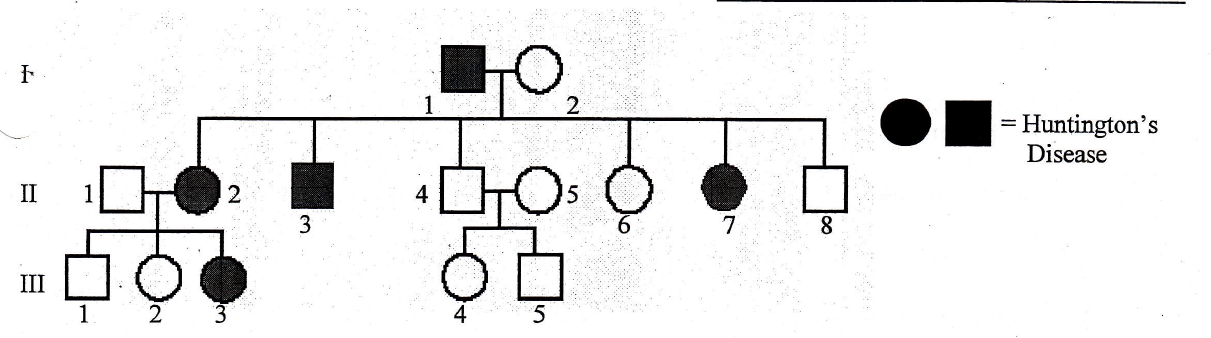
If this pedigree shows an autosomal recessive disorder, what MUST the genotype of individual II-3 be?
HH
Hh
hh
None of the above

If this pedigree shows a recessive disorder, what MUST the genotype of individual 4 be?
HH
Hh
hh



What is the correct genotype for individual I-2?


Is this trait (the shaded individuals) dominant or recessive?
dominant
recessive

This is an autosomal recessive disorder. The parents in generation one must
have the disease.
be homozygous.
be heterozygous.
be related.

This is a __ trait.
autosomal recessive.
sex-linked.
autosomal dominant.
Generation 2 individual 3 is
male.
female.
What blood type is the universal recipients?
O
AB
B
A


A red flowered plant (RR) is crossed with a white flowered plant (WW). The gene for petal color in these plants expresses incomplete dominance. What percentage of the offspring will have pink (RW) flowers?
0%
25%
50%
100%


A black male and white female produced this grey offspring:
Incomplete dominance
Codominance
Complete dominance
what is a symptom of achondroplasia?
no head
headches
short limbs
big ears
Which is the correct genotype for a carrier?
AA
Aa
aa
Which disease causes a build-up of fluid in the lungs?
Galactosemia
Tay-Sachs
Albinism
Cystic Fibrosis
Which genetic disorder can be inherited even if only one allele is present?
Achondroplasia
Tay-Sachs
Albinism
Cystic fibrsis

People with Sickle Cell Disease are often immune or unable to contract this disease
Cystic Fibrosis
Meningitis
Marfan Syndrome
Malaria

Mark the effects of Cystic Fibrosis:
Excessive mucus production
Enlarged liver
Vision problems
Digestive and respiratory failure
Mental disabilities
Mark the effects of Albinism:
Mental disabilities
No color in the skin, eyes, and hair
Skin susceptible to UV damage
Vision problems
Enlarged liver
Mark the effects of Tay-Sachs disease:
Vision problems
Excessive mucus production
Kidney failure
Buildup of fatty deposits in the brain
Mental disabilities
Dominant genetic disorder that affects the nervous system
Huntingtons disease
cystic fibrosis
Galactosemia
Albinism
Which of the following are examples of recessive genetic disorders
huntingtons disease, Albinism
Achondroplasia, Tay-Sachs disease
Galactosemia, Cystic fibrosis
Huntingtons disease, Achondroplasia

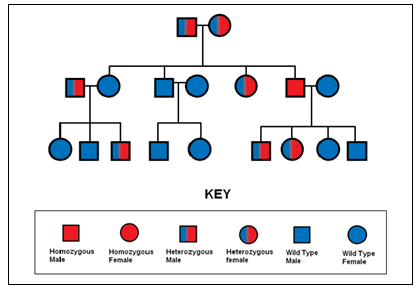
How many affected males and females are in this pedigree?
1 male, 2 females
5 males, 3 females
2 males, 1 female
3 males, 5 females

The different forms of a gene are called
traits
pollinators
alleles
hybrids

The physical appearance of an organisms is its
Genotype
Phenotype
characteristic
Heterozygous

Examples include skin color and height (the individual's phenotype exists somewhere along a spectrum)
polygenic inheritance
multiple alleles
linked genes
incomplete dominance
A trait that is located on the X chromosome is called
Multiple alleles
Codominance
Polygenic Inheritance
X-linked traits
Which blood-type is co-dominant, where both alleles are expressed in the phenotype
Type A
Type B
Type AB
Type O
States that each pair of alleles segregates independently of each other pair of alleles during gamete formation.
Law of Dominance
Law of Segregation
Law of Loci
Law of Independent Assortment
Which genotype represents a female who is a carrier for hemophilia?
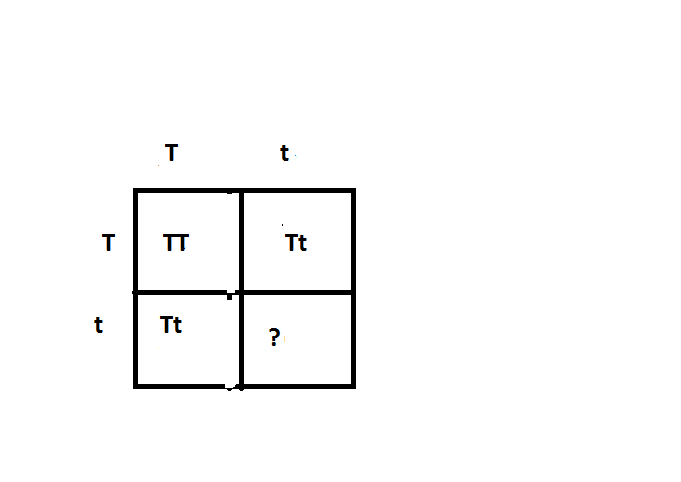
In the punnett square below, what belongs in the missing square
Which genotype represents a female who is a carrier for hemophilia?
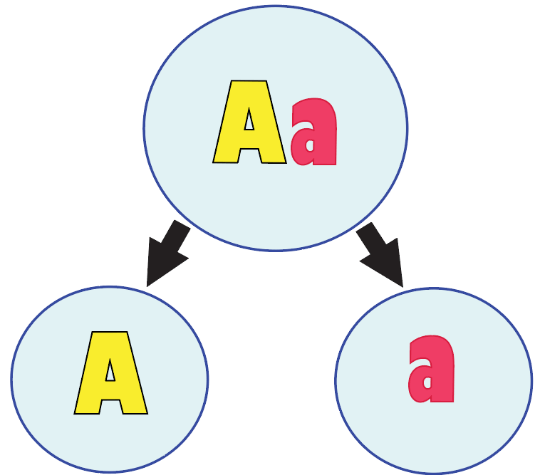
During meiosis and gamete formation, homologous (paired up) alleles split up
Phenotype
Law of Segregation
Genotype
Dihybrid Cross
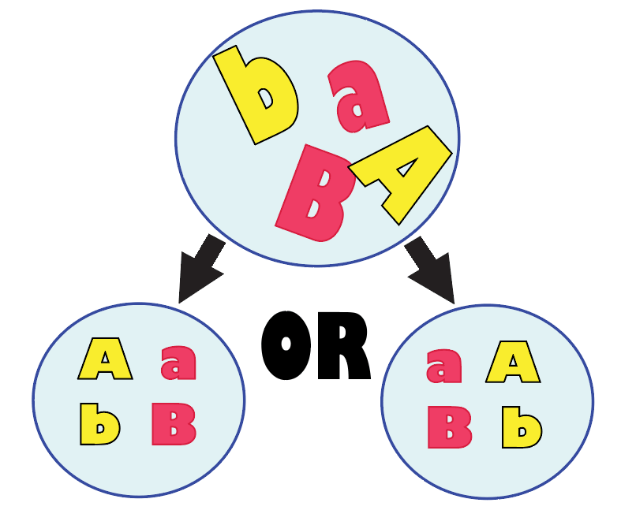
During meiosis, the homologous pairs of chromosomes and the matching alleles are lined up independently.
Offspring are a mix of maternal genes and paternal genes.
This increases genetic variation.
Homozygous Dominant
Law of Segregation
Crossing Over
Independent Assortment
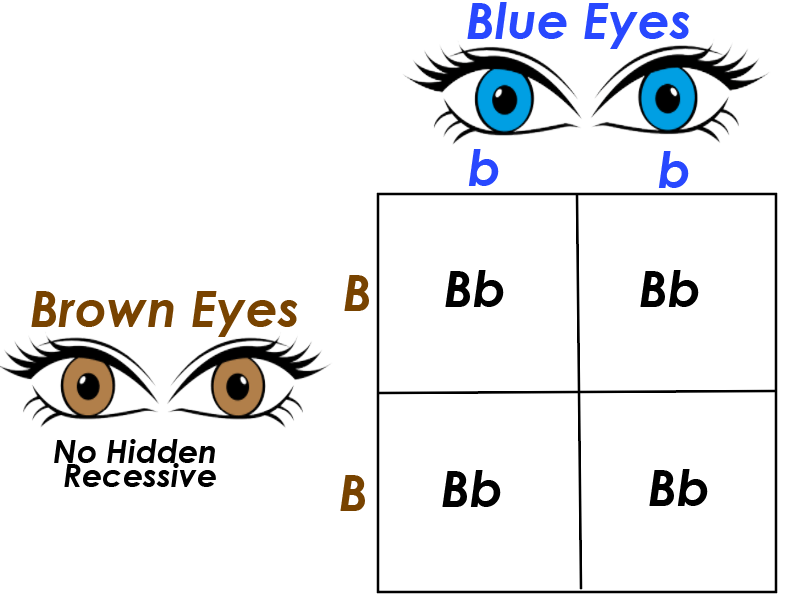
The genetic cross between two parents for one trait:
Example BB x bb
B = dominant for brown
b = recessive for blue
Incomplete Dominance
Dihybrid Cross
Monohybrid Cross
Iron Cross
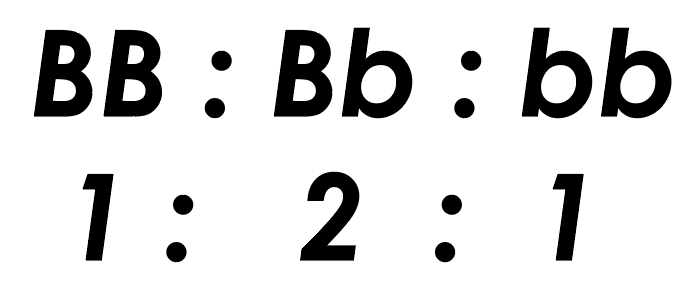
The ratio of homozygous dominant to heterozygous
to homozygous recessive offspring
Genotypic Ratio
Phenotypic Ratio
Monohybrid Cross
Homologous Pair


How can we do test cross?
crossing orginal parents
Crossing offsprings
crossing progeny and recessive parent
crossing progeny and dominant parent
BB is
Homozygous Dominant
Homozygous Recessive
Heterozygous
None of the above
Bb is
Homozygous Dominant
Homozygous Recessive
Heterozygous
None of the above
Albinism is caused by what?
The gene that codes for a membrane protein is defective.
Genes do not produce normal amounts of the pigment melanin
Absence of the gene that codes for the enzyme that breaks down galactose.
Absence of a necessary enzyme that breaks down fatty substances.
Galactosemia is caused by what?
The gene that codes for a membrane protein is defective.
Genes do not produce normal amounts of the pigment melanin.
Absence of the gene that codes for the enzyme that breaks down galactose.
Absence of a necessary enzyme that breaks down fatty substances.
What is the cause for Tay-Sachs Disease?
The gene that codes for a membrane protein is defective.
Genes do not produce normal amounts of the pigment melanin.
Absence of the gene that codes for the enzyme that breaks down galactose.
Absence of a necessary enzyme that breaks down fatty substances.
Mark the effects of Albinism:
Mental disabilities
No color in the skin, eyes, and hair
Skin susceptible to UV damage
Vision problems
Enlarged liver

What type of inheritance is determined by multiple genes and there can be a range of traits?
Codominance
Incomplete dominance
Polygenic traits

AB blood type is an example of what type of inheritance? Both alleles show in the phenotype
complete dominance
incomplete dominance
codominance
polygenic inheritance
Polydactyly is caused by an allele which is
Dominant
Recessive
Cystic Fibrosis is caused by an allel which is
Dominant
Reccessive
A male with an inherited disorder will be represented by


A female caring a trait for an inherited disorder would be represented by


A male who did not inherit a disorder will be represented by

A couple has 3 children: a daughter and two sons. If the mother and daughter both have a genetic disorder what would the pedigree of this family look like?


How many generations in this pedigree?
One
Two
Three
Four

How many individuals have this trait?
9
5
7
0

How many carriers in this family?
four
three
six
seven
What mode of inheritance is shown?
Autosomal Dominant
Autosomal Recessive

What mode of inheritance is shown?
Autosomal Dominant
Autosomal Recessive

