
 Worksheets
Unit 8 Test Review
Total questions: 117
Worksheet time: 17hrs 7mins
Evaporation is a state change from?
Ice to liquid.
Liquid to gas.
Gas to solid.
Crystals to water.
The __________ is all the water on the surface of the Earth, underground, and in the atmosphere.
Hydrosphere
Asthenosphere
Geosphere
Atmosphere
What part of the water cycle takes place when any form of water falls from clouds and reaches Earth's surface?
Evaporation
Condensation
Water accumulation
Precipitation
What part of the water cycle takes place when water vapor sticks to particles in the air and forms clouds?
Precipitation
Evaporation
Condensation
Water accumulation
During the water cycle, when water changes to a solid is is during which step?
Evaporation
Condensation
Precipitation
During the water cycle, when water changes to a gas it is during which step?
Evaporation
Condensation
Precipitation
T/F: The water cycle is driven by energy from the sun and the force of gravity.
True
False
T/F: Only water from the ocean is evaporated.
True
False


Humans burn fossil fuels and wood, releasing carbon dioxide into the atmosphere. This carbon dioxide is then absorbed by trees for photosynthesis. These processes are contributory to which chemical cycle?
The carbon cycle
The water cycle
The nitrogen cycle
The phosphorous cycle
How does the human body return carbon to the atmosphere in the carbon cycle?
Waste products
Photosynthesis
Cellular respiration
Formation of glucose
In the carbon cycle, animals can release carbon back into the cycle through __________ or through __________.
burning . . . photosynthesis
fixation . . . decomposition
decomposition . . . photosynthesis
respiration . . . decomposition
respiration . . . photosynthesis
Which of the following is an example of human impact on the carbon cycle?
The increased production of methane gases from cattle farms
The burning of fossil fuels
The cutting down of trees for lumber
Driving automobiles
All of the above
If a forest fire occurs, what will happen to the carbon in the forest?
It will go into the soil
It will go into the atmosphere
It will runoff into nearby streams and rivers
It will be destroyed
What kind of organism takes out the most carbon from the atmosphere?
Plants
Bacteria
Animals
Humans
Which of the following are some of the major carbon stores on Earth? You can choose multiple answers
The ocean
The lithosphere (upper part of Earth's crust)
The atmosphere
What converts nitrogen gas into a usable form for plants and animals?
bacteria
rain
fungi
car exhaust
The process in which nitrogen circulates and is recycled is called
The nitrogen cycle
The carbon cycle
The water cycle
The phosphorus cycle
How is nitrogen "fixed" into a usable form for plants?
Through action of bacteria only
Through lightning only
Through action of bacteria and lightning
Through photosynthesis
Gas that makes up 78% of our atmosphere.
Oxygen
Nitrogen
Hydrogen
Carbon Dioxide
What is the process of combining nitrogen gas with other elements to make nitrogen into usable compounds?
nitrogen composition
nitrogen fixation
ammonia
denitrification
What process occurs when dead plant and animal matter decomposes and nitrogen is released back into the atmosphere?
Assimilation
Fixation
Ammonification
Denitrification
All food webs and food chains begin with _________________.
primary consumer
producers
secondary consumers
tertiary consumers


In an ecological pyramid, which type of organism always has the least amount of energy available?
Producers
Herbivores
Carnivores
Apex Predator

If there are 100 Kcal of energy available in the producers, how much energy would be available in the primary consumers?
10 Kcal
1 Kcal
100 Kcal
1000 Kcal

Which organism do the owl and the weasel compete for in the food web?
Hawk
Spider
Grasshopper
Shrew

Based on the image, which organism recieves the least amount of energy from the producer?
Owl
Grasshopper
Lilypad
Mouse

How are primary consumers different from secondary consumers?
Primary consumers eat only plants; secondary consumers eat other consumers.
Primary consumers eat other consumers; secondary consumers eat only plants.
Primary consumers eat plants and other consumers; secondary consumers eat plants and decompose matter.
Primary consumers eat plants and decompose matter; secondary consumers eat plants and other consumers.


Which of the following shows the symbiotic relationship between the Rodent and the Bird?
Mutualism
Commensalism
Competition

Which of the following is an example of a population?
All of the trees in a given area
All of the trees and soil in a given area
The trees together with the organisms that live in them
All of the blue jays living in a given area
An ecosystem has a family of rabbits living together in a burrow. This is an example of a(n):
organism
species
population
community
All of the living organisms in an ecosystem make up its:
population
community
habitat
species
Food webs are models that show
one sequence of producers and consumers.
complex networks of feeding relationships.
stored energy in food chains
only primary consumers in an ecosystem
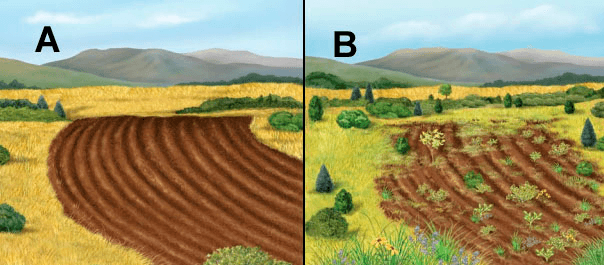
Which takes longer, primary or secondary succession?
Primary Succession
Secondary Succession
What are the species called that appear first during primary succession?
Pioneer Species
New Species
Alpha Species
Mature Species
True or false: trees are a type of pioneer species
True
False

Which experiences the least change over time?
Pioneer Species
Primary Succession
Aquatic Succession
Climax Community
Which of the following best describes primary succession?
Volcano wipes out ecosystem that gradually grows back from ash covered soil
Volcano creates a new island of rock that must break down to form an ecosystem
Forest fire burns down forest that must bounce back over time
Tornado destroys a crop that must slowly grow back over time.
If farmers use a controlled burn to prevent forest fires, what would most likely be the first plants to return?
trees
shrubs
mosses
grasses


What decreases the size of a population
immigration
emigration

Populations consist of
a single species
multiple species
the biotic and abiotic factors of an environment
a grouping of ecosystems

At what population was carrying capacity met?
250
1000
400
720

Exponential population growth can be described as
growth when resources are limited
a j-shaped curve
a s-shaped curve
growth that reaches carrying capacity
Logistic population growth can be described as
growth when resources are limited
a s-shaped curve
reaching carrying capacity
all of the above
What limits Population Growth?
birth rates increasing
resources being used up
natural selection taking place
none of the above

Which country will have the most rapid population growth?
Sweeden
United States
Mexico
None
As resources become less available the growth of a population
slows or stops
decreases or increases
up or down
in or out
occurs when population slows or stops following a period of exponential growth.
no growth
population growth
logistic growth
exponential growth

Exponential Growth occurs when-
populations have plenty of food/space
home to keystone species
have few evasive species in a habitat
have little to no competition or predators
Causes of death in a population may be-
density dependent & density independent
dispersion independent
density independent
independent density
Three factors can affect population size
births, deaths,leaves or enters population
deaths, birth, buildings
photosynthesis, weather, deaths
houses, weather, heath

If the amount of food or resources available increases, the carrying capacity for an animal.....
Stays the same
Increases
Decreases
Fluctuates

When a population grows past the ecosystem's carrying capacity, what happens to the population?
Continues to grow
The population starts to die off to return to carrying capcity
The population will go extinct due to lack of resources
The population grows then finds a new carrying capacity

Predator population lags behind prey population because......
Increase in predators leads to decrease in prey
Increase in predators leads to increase in prey
Increase in predators leads to decrease in producers
Increase in producers leads to increase in prey
Which of the following is a density-dependent limiting factor?
human activities
unusual weather
competition
natural disaster
Which of the following would NOT be an example of a density dependent limiting factor?
fire
disease
lack of food
space
Which of the following would NOT be an example of a density independent factor?
predation
tornado
hurricane
fire
Which of the following are examples of a density independent factors?
forest fire
seasonal cycles
storms
disease
Which of the following are density dependent factors?
competition for resources
predation
disease
natural disasters
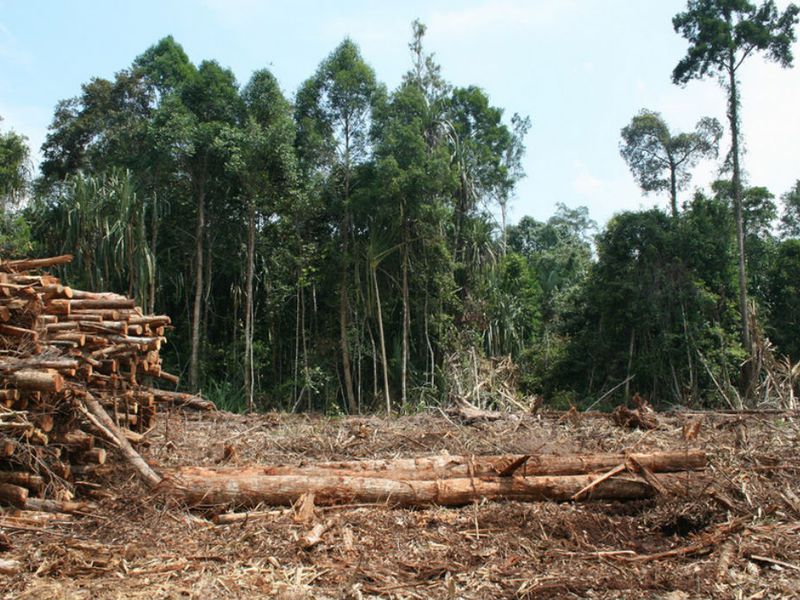
What would human alterations of the environment be considered? Ex. Cutting down the rain forests
Density-independent
Density-dependent
Since snakes prey on frogs, an increase in the frog population causes an increase in the snake population.
Density-dependent
Density-independent
Which of these is NOT an example of interspecific competition?
Oysters and barnacles competing for settling space on the rocky shore
Goats and sheep in the same paddock competing for grass
Ferns and kawakawa competing for shaded locations in a forest
Stags competing for mates
Which of these are conditions required for two species to compete? (select all that are correct):
Live in the same habitat
Use the same resources
Active at the same time of day
Have different niches
Which of these best describes interspecific competition?
One species benefits while another species is harmed
One species benefits while another species is killed
One species is harmed and the other species is harmed too
One species benefits while nothing happens to the other species
What happens to two competing species that have exactly the same niche?
Both of them will move into their realised niches to avoid competition
One of them will move into its realised niche to avoid competing and the other better competitor will take up its fundamental niche
One of them will go extinct in the local area and the other one will take over the niche
A small island nation is tracking its total population. It started with exactly 100 people. During the year, 10 people immigrated, while 20 emigrated. The birth rate was 15, and the death rate was 5. What is the new population of the country?
115
110
90
No change; the population is still 100.
Factors that affect population size:
INCREASE: Number of ___________ & ____________
(Choose 2 answers)
Birth
Death
Immigration
Emigration
Factors that affect population size:
DECREASE: Number of ___________ & ____________
Choose all that applies.
Birth
Death
Immigration
Emigration



