
 Worksheets
Biology Review
Total questions: 169
Worksheet time: 2hrs 55mins
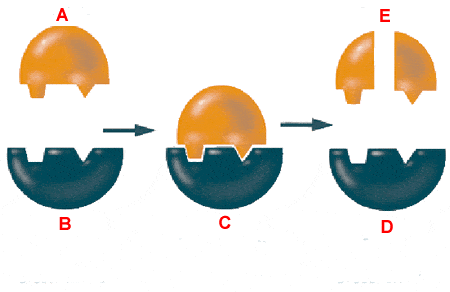
Which of the following converts food into energy for the cell?
vacuole
mitochondria
cytoplasm
cell membrane
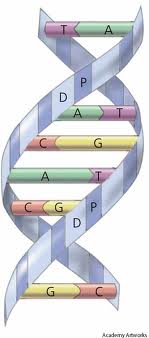

The light independent reactions (Calvin Cycle) of photosynthesis happen where?
stroma of chloroplast
mitochondrial matrix
stem
thylakoid membrane


Plant cells are able to produce their own food. This process happens in which structure?
cell wall
chloroplast
mitochondrion
vacuole

These diagrams show a variety of cells from the same organism.
How can cells from the same organism have such different shapes and functions?As each cell differentiates, the DNA changes so that each type of cell has different DNA once it reaches maturity.
As each cell differentiates, the DNA changes so that each type of cell has different
Mutations in the cells’ nuclei lead to new combinations of DNA, resulting in different shapes and functions in the different types of cells.
During differentiation, different parts of the DNA in each type of cell are activated, resulting in the different structure and function of the cells.
During differentiation, different types of cells produce proteins which destroy the nonactive DNA, leading to cell specialization.
Which statement best explains how sweating during exercise maintains homeostasis?
It regulates mineral concentrations in cells
It regulates body temperature
It maintains water balance
It maintains sugar balance in cells
The chemical colchicine disrupts cell division. Which cell process would most likely stop if colchicine were added to a culture of human liver cells?
mitosis
meiosis
crossing over
active transport
Which statement best explains why animals are considered heterotrophic?
They are able to produce food through the process of photosynthesis.
They are able to produce food through the process of respiration.
They are able to obtain nutrients by decomposing plant and animal tissue.
They are able to obtain nutrients by consuming other organisms or their products
In some ecosystems, wolves have been eliminated due to their threats to humans. How can the reintroduction of wolves benefit the ecosystem?
It can eliminate weak animals from a prey population, thereby decreasing competition for natural resources
It can eliminate the most fit animals among the prey population, which will cause an increase in birth rates of the prey
It can cause the prey population to migrate to other areas, resulting in more fit prey.
It can cause the prey population to better blend in with their environment.
What will most likely be the result as humans move into new areas, forests are clear cut and housing developments are built?
Global temperatures will decrease because trees are removed.
Many organisms will lose their homes because their habitats have been destroyed.
Better sanitation in the area will reduce the amount of pollution.
The rainfall in the area will increase because there will be increased runoff.
What activity most contributes to the depletion of the ozone layer?
burning of fossil fuels
release of CFCs
deforestation
overuse of fertilizers
Which effect could a mutation in mRNA have on the production of proteins?
The protein produced will have a different identity
The protein produced will have a coiled shape.
The protein produced will produce excess nitrogen.
The protein produced will produce excess water
What carries the instructions for making amino acids in a protein?
the nitrogen base on the tRNA
the hydrogen bonding between nitrogen bases
the sequence of nitrogen bases on the mRNA
the nitrogen base bonding on the DNA molecule

Which process does photosynthesis and respiration have in common?
The water cycle
The nitrogen cycle
The carbon cycle
What impact would the absence of nitrogen fixing bacteria have on consumers?
could not make proteins
could not make carbonhydrates
could not make lipids
could not make fatty acids
Mosses are short due to the absent of which tissues?
vascular
non-vascular
All of the following are characteristics of nonvascular plants EXCEPT:
Do not have tube like cells to water water and nutrients
Grows tall
Near a water source
Grows close to the ground
An increase in human population leads to _______________ in natural resources.
the increase
the depletion
no change
______________ causes tree leaves to have brown spots.
Acid rain
Acid water
Pesticides
mutualism
Planting trees reduces which gas in the air?
carbon
carbon dioxide
oxygen
nitrogen
What is the benefit of planting different crops during the same year?
There is no benefit.
increase carbon monoxide
decrease phosphorus
improve soil quality
Adding lime to a flower garden changes the pH of the soil. What can happen to the flower?
Nothing.
It changes color.
It grows taller.
It dies.
All of the following are examples of good stewardship (help preserve the environment) EXCEPT:
Recycling
Conserve resources
Planting trees
Increase CO2
What are the effects of deforestation?
increase of biodiversity, loss of wildlife, and decreased soil erosion
loss of biodiversity, loss of wildlife, and increased soil erosion

A dog salivates each time it hears a bell. This is what type of learned behavior?
estivation
habituation
imprinting
classical conditioning
What can lead to an increase of the moose population?
Increase in predators
Decrease in moose predators
Decrease in food
Cowbirds lay their eggs in other nests. What type of behavior is this?
learned behavior
innate (instinct) behavior
social behavior
When fossil fuels are formed and stored, what happens to atmospheric CO2?
Nothing happens
CO2 increases.
CO2 decreases.
What are two characteristics of AEROBIC HETEROTROPHS?
Uses CO2 and makes own food
Uses CO2 and cannot make own food
Uses O2 and makes own food
Uses O2 and cannont make own food
Why should limits be placed on pesticide use?
to decrease pesticide resistance
to increase pesticide resistance
to save money
What three factors influence ecosystem stability?
food, shelter, and amount of CO2
shelter, disease, and amount of CO2
disease, amount of CO2, and food
food, shelter, and disease
A section of DNA has these bases: TAG CAG TAC
Which mRNA sequence is produced from this DNA section?
ATC GTC ATG
AUC GUC AUG
AUG CUG AUC
UTC GTC UTG
What is the difference between the DNA of a dog and the DNA of a fly?
the type of sugar building blocks
the sequence of nucleotides
the strength of hydrogen bonds
the strength of covalent bonds
Waxes create a waterproof layer on the outside of some living organisms. To which group of organic molecules do waxes belong?
carbohydrates
lipids
nucleic acids
proteins
Which best summarizes the role of DNA in the production of proteins?
DNA moves to the cytoplasm to build proteins.
DNA transports amino acids to the ribosomes to make proteins.
DNA contains the instructions used to make proteins.
DNA breaks hydrogen bonds between amino acids.
A student noticed that the freshwater plant, Elodea, produced bubbles when placed in direct light. What could the student most likely conclude?
Bubbles of carbon dioxide were produced as a result of photosynthesis.
Bubbles of oxygen were produced as a result of photosynthesis.
Bubbles of carbon dioxide were produced as a result of cellular respiration.
Bubbles of oxygen were produced as a result of cellular respiration.
Plant cells are able to produce their own food. This process happens in which structure?
cell wall
chloroplast
mitochondrion
vacuole
Which statement best explains how sweating during exercise maintains homeostasis?
It regulates mineral concentrations in cells.
It regulates body temperature.
It maintains water balance.
It maintains sugar balance in cells.
Which effect could a mutation in mRNA have on the production of proteins?
The protein produced will have a different identity.
The protein produced will have a coiled shape.
The protein produced will produce excess nitrogen.
The protein produced will produce excess water.
What carries the instructions for making amino acids in a protein?
the nitrogen base on the tRNA
the hydrogen bonding between nitrogen bases
the sequence of nitrogen bases on the mRNA
the nitrogen base bonding on the DNA molecule
Salivary amylase is an enzyme in humans that breaks down starches. What substance would humans have difficulty digesting without this enzyme?
lipids
nucleic acids
proteins
carbohydrates
Which best explains why the rate of a biochemical reaction decreases at high temperatures?
The activation energy increases.
The shape of the enzyme changes.
The enzyme-substrate complex forms.
The bonds between substrates are broken.
A contractile vacuole helps protists eliminate excess liquid. This is a “pumping" process which reduces pressure inside the cell and prevents the cell from bursting. What is most likely the source of energy for this process?
DNA
lipids
ATP
ribosomes
During translation, what does the tRNA deliver to the ribosomes?
amino acids
DNA
mRNA
proteins
Which molecules are joined together to make proteins?
fatty acids
nucleic acids
amino acids
acetic acids
Which word equation best represents the process of cellular respiration?
carbon dioxide + glucose → oxygen + water
carbon dioxide + water → glucose + oxygen
glucose + oxygen → carbon dioxide + water
oxygen + water → carbon dioxide + glucose
How does the body of a runner keep up with the demand for energy when cellular oxygen levels are low?
through energy production in the mitochondria
through aerobic respiration in the plasma membrane
through ATP produced directly from sunlight
through anaerobic respiration in the cytoplasm
What will most likely be the result if all of the mitochondria are removed from a plant cell?
It will be unable to carry out respiration.
It will lose water through osmosis.
It will break down the ribosomes in the cell.
It will be unable to photosynthesize.
During strenuous exercise, body temperature increases. The body responds to the increase in temperature by sweating, which helps to reduce the body temperature. Which is demonstrated in this situation?
excretion
metabolism
homeostasis
synthesis
Which statement best describes the relationship that exists among proteins, DNA, and cells?
Proteins combine to produce cells, which produce DNA.
Proteins are made up of DNA, which determines the cells that are produced.
DNA is made up of proteins, which tell a cell how to function.
Cells contain DNA, which controls the production of proteins.
What type of organic molecules are enzymes?
carbohydrates
lipids
nucleic acids
proteins
What are the subunits of DNA and their function?
nucleotides that store information
monosaccharides that provide quick energy for the cell
lipids that store energy and provide insulation
proteins that provide the building blocks for the structural components of
organisms
How does the amount of energy resulting from fermentation compare with that of aerobic respiration?
Aerobic respiration results in less energy.
Aerobic respiration results in more energy.
Each process results in equal amounts of energy.
Each process results in variable amounts of energy.
A segment of DNA has this sequence: ATA GCA CAT GTA. What is the mRNA sequence transcribed from this segment?
TAT CGT GTA CAT
TAT GCT CTA GAT
UAU CGU GUA CAU
UAU GCU CUA CAU

This chart shows which amino acids are coded for by different combinations of mRNA nucleotides. Which amino acids are coded for by an mRNA segment that reads CAG GUG?
arginine and valine
isoleucine and arginine
glutamine and valine
valine and isoleucine
Which type of molecule do whales use for energy storage and insulation?
DNA
glucose
fat
starch
Which most directly controls the rate at which food is broken down to release energy?
enzymes
hormones
nucleic acids
vitamins
If energy is needed to move materials into or out of a cell, what is most likely occurring?
active transport
passive transport
osmosis
diffusion
How does DNA code for proteins in a cell?
by creating a new double helix structure
by using its phosphate and sugar molecules
by adding more hydrogen bonds to its structure
by arranging certain nitrogen bases of the cell in a particular order
Which factor most affects the order of amino acids in a protein?
the DNA located in the nucleus of the cell
the cell in which the protein is located
the amount of ATP available for the cell’s use
the area in a cell where proteins are produced
Which statement best compares aerobic and anaerobic respiration?
Less ATP is generated during anaerobic respiration than during aerobic respiration.
More water is generated during anaerobic respiration than during aerobic respiration.
More oxygen is generated during anaerobic respiration than during aerobic respiration.
Less lactic acid is generated during anaerobic respiration than during aerobic respiration.
Which would be the best evidence that a cell is using active transport to move a substance across its cell membrane?
Substances are moving rapidly across the cell membrane.
ATP is being rapidly consumed near the cellular membrane.
Substances are moving from high to low concentrations.
Substances are moving through channels in the cell membrane.
Which nitrogen base makes RNA different from DNA?
guanine
uracil
adenine
cytosine
Which may cause an increase in the rate of an enzyme-controlled reaction?
an increase in temperature
a decrease in substrate
a change in substrate color
a decrease in enzyme
A green plant cell is making glucose and giving off oxygen. Which process is taking place?
cellular respiration
photosynthesis
protein synthesis
anaerobic respiration
Which best describes the role of translation in helping cells code for proteins?
The bases in transfer RNA code for the sequence of amino acids in proteins.
The bases in messenger RNA code for the sequence of amino acids in proteins.
The nucleotides in RNA and DNA determine the sequence of amino acids in proteins.
The bases in ribosomal RNA code for the sequence of amino acids in proteins.
Which process uses energy to maintain homeostasis?
active transport
osmosis
protein synthesis
diffusion
What are the main molecules that make up muscle fibers?
lipids
proteins
carbohydrates
nucleic acids
Which causes plants to produce more oxygen on sunny days?
There is more energy for photosynthesis
There is more water available for transpiration.
There is more carbon dioxide for respiration.
There is more chlorophyll for fermentation.
Which substance provides the instructions for producing proteins?
ATP
DNA
H2O
CO2
Which best represents a long-term energy storage molecule in animals?
cellulose
cholesterol
glycogen
starch
Which statement explains how producers are dependent upon consumers for their survival?
Consumers supply oxygen for producers to undergo aerobic respiration.
Consumers produce carbon dioxide for producers to use during photosynthesis.
Consumers provide chemical energy needed by producers for cellular respiration.
Consumers make lactic acid that producers use in photosynthesis.
Photosynthesis and cellular respiration both involve the use and release of gases. Which statement correctly identifies the role of gases in the two processes?
Photosynthesis and cellular respiration both use carbon dioxide and release oxygen.
Photosynthesis and cellular respiration both use oxygen and release carbon dioxide.
Cellular respiration uses oxygen and releases carbon dioxide, while photosynthesis uses carbon dioxide and releases oxygen.
Cellular respiration uses carbon dioxide and releases oxygen, while photosynthesis uses oxygen and releases carbon dioxide.





When we say a process requires oxygen, we call it what?
Anaerobic
Aerobic
Oxyphillic
Oxygenphilia
When we say a process that does not require oxygen, we call it what?
Anaerobic
Aerobic
Oxyphillic
Oxygenphilia
True or False: An anaerobic process is one that does not require oxygen to take place.
True
False
True or False: We call the first phase of cellular respiration glycolysis.
True
False
Which of the following is a reactant of cellular respiration?
Oxygen
Carbon Dioxide
Glucose
Glucose and Oxygen
Glycolysis is responsible for breaking glucose down into what?
CO2
H2O
Acetyl CoA
2 Pyruvic Acids
True or False: This is the cellular respiration equation:
C6H12O6 + O2 ------> CO2 + H2O
True
False
True or False: Only heterotrophs need to perform cellular respiration.
True
False
During which phase of cellular respiration is the most ATP harvested?
Glycolysis
Krebs Cycle
Electron Transport Chain
Citric Acid Cycle
Which of the following is NOT a product of cellular respiration?
Water
Carbon Dioxide
Energy in the form of ATP
Glucose
Many different chemical reactions occur during cellular respiration. It is a process that requires certain resources to get started and in turn it produces resources when it is finished. With all of that being said, why do organisms want to perform cellular respiration? What is the main purpose?
To make H2O from CO2
To harvest energy from food
To create much needed O2
To create glucose
In each phase of cellular respiration there is a certain amount of chemical energy harvested in the form of ATP. On a perfect day, with everything running at 100% efficiency, how many molecules of ATP can we harvest from 1 molecule of glucose?
38
23
4
2
When an organism is in a low oxygen situation, such as running sprints, cellular respiration ceases and the organism must use a different metabolic pathway for creating energy without oxygen. What do we call this process?
Acidification
Hydrolysis
Fermentation
Citric Acid Cycle
During the Krebs cycle, pyruvic acid molecules are broken down to harvest 2 ATPs. What is created and released as a byproduct of that reaction?
CO2
H2O
Neither of these
Both of these
Many electrons are excited during the first two phases of cellular respiration. These electrons hitch a ride on special electron carriers and are dropped off at the Electron Transport Chain. These electrons travel down the ETC and eventually get oxidized. Once this happens, O2 gets converted into…
C6H12O6
H2O
CO2
O2
Where do the reactions of cellular respiration occur?
Thylakoid & Stroma
Cytoplasm & Mitochondria
Mitochondria only
None of these
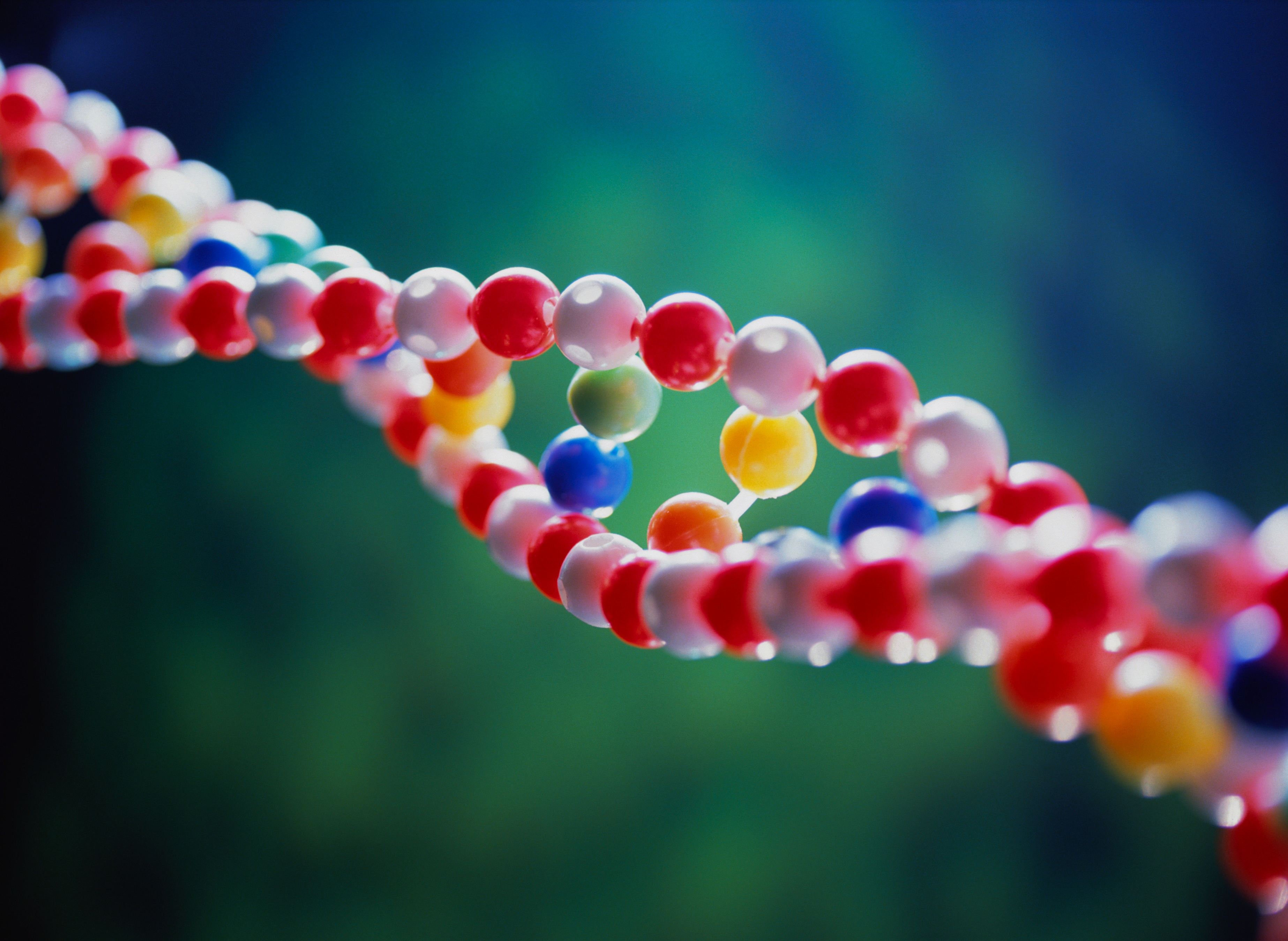
ATG TGA CAG
In eukaryotes, which organelle is DNA usually found in?
cell membrane
vacuole
chloroplast
nucleus


What base pairs with guanine?
cytosine
guanine
thymine
sugar
If a DNA sequence it GAATGCCT, what are the matching base pairs?
ACGTACCTG
AEIOU and sometimes Y
CTTACGGA
GCCTATGC
If a DNA sequence is CATCAT, what are the matching base pairs?
ACGTAC
MEOW
GTAGTA
GCCTAT

Based on the DNA sequences shown, the unknown species is most closely related to ________.
Species I
Species II
Species III
Species IV

The example shown of these 2 mammals incubating their offspring in a pouch provides evidence that they______.
belong to the same species
must range great distances to eat
have very similar skeletal structures
are descended from a common ancestory

Based on the map shown, which organisms are more closely related?
1 and 4
2 and 6
7 and 8
2 and 3

Based on the table, which organisms are more closely related?
G. atlantica and G. stehini
G. galloti palmae and G. stehini
G. galloti eisentrauti and G. stehini
G. galloti eisentrauti and G. galloti palmae

Which beetles are more fit for the environment?
Green beetles
Brown beetles
What is biological fitness?
Being able to escape from predators
Being among the strongest in a population
Being able to survive, find a mate, and produce offspring.
Being ale to survive long enough to reach adult age.

Based on the cladogram, the chimp will be more closely related to the _________.
Hagfish
Salamander
Lizard
Mouse

Based on the dichotomous key, which organism is purple and has a pointy hump?
Deerus octagis
Deerus humpis
Derus purplinis
Derus deafus

Which two trees are the most closely related?
Taiwan beech and Taiwan catkin yew
Taiwan catkin yew and Lodgepole pine
Lodgepole pine and Japanese maple
Japanese maple and Taiwan beech

Which organisms belong to the kingdom bacteria?
Organisms 1 and 2
Organisms 3 and 4
Organisms 1 and 4
Organisms 2 and 3

