
 Worksheets
Topic 1 and 2 review quiz
Total questions: 128
Worksheet time: 1hrs 10mins

Vacuole
Cell Wall
Mitochondria
Nucleus
Vacuole
Cell Wall
Mitochondria
Nucleus

Mitochondria
Nucleus
Ribosome
Golgi Apparatus

Endoplasmic Reticulum
Cell Membrane
Ribosome
Cell Wall
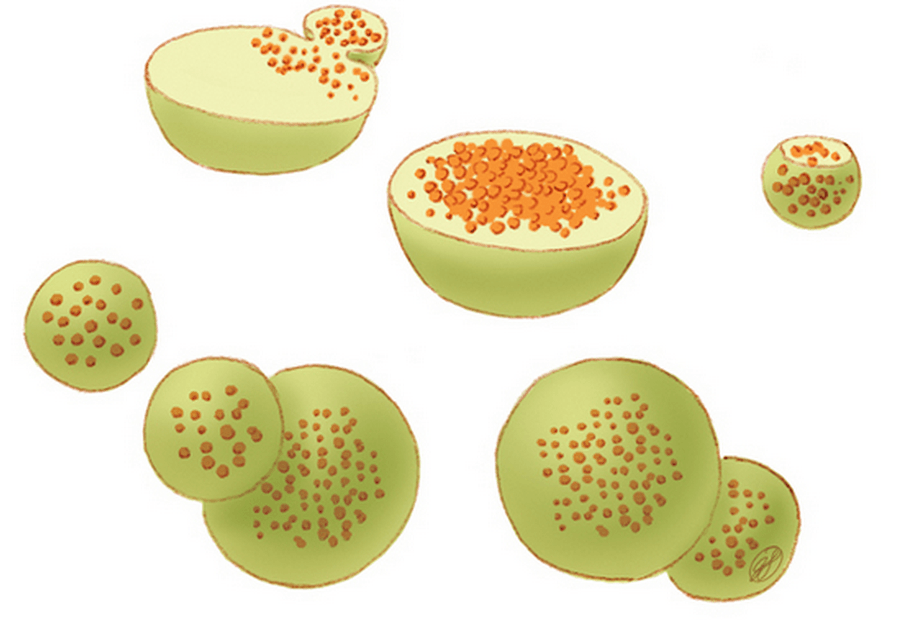
mitochondria
lysosome
vacuole
ribosome

Lysosomes
Nucleus
ribosomes
Mitochondria

What is organelle 7?
Golgi Body
Organelle
Vacuole
Cytoplasm

What is number 8?
This organelle is a jelly-like substance which flows inside the cell
Cytoplasm
Nucleus
Golgi Body

What is number 3?
Cytoplasm
Mitochondria
Cell Membrane
Cell Wall


C'mon, this one is easy!
Smooth E.R.
Rough E.R.
Smoother E.R.
The Brain

Rough E.R.
Smooth E.R.
Nuclear Envelope
Cytoplasm

Centrioles
Microtubules
DNA
Cell Membrane


Cell wall
Cell membrane
nucleus
DNA


During child birth a woman's body over produces a hormone called oxytocin until the baby is born. What kind of feedback loop would this be?
Negative Feedback Loop
Positive Feedback Loop
Neutral Feedback Loop
Linear Feedback Loop
When you are hot, your body sweats to cool you down. This means your temperature went above normal and your body sweats to counteract that change to bring you back to normal. What kind of feedback loop would this be?
Negative Feedback Loop
Positive Feedback Loop
Neutral Feedback Loop
Linear Feedback Loop
The 4 parts of the communication pathway to maintain homeostasis listed in order are:
target, sensors, control center, communication system
communication system, sensors, target, control center
sensors, control center, communication system, target
target, control center, sensors, communication system
These detect changes in the environment
Control Center
Sensors
Communication System
Target
This takes the messages from the sensors and is known as the control center
Brain
Kidney
Liver
Heart
Messages from the brain are sent to either the nervous system (muscles) or the endocrine system (hormones), what are they referred to as?
sensors
target
Communication System
Control Center
This responds to messages from the communication system and changes its level of activity to help you maintain homeostasis?
sensors
target organ or muscle
communication system
brain
Osmoregulation means....
maintain water levels
maintain temperature
maintain heart rate
maintain breathing
Thermoregulation means?
Maintain temperature
Maintain water levels
Maintain heart rate
Maintain breathing
Positive Feedback loops are...
Counteract changes that move above or below set values.
more common
regulate body temp
Purposeful pushes above normal set values.
Negative Feedback loops are...
Purposeful pushes above normal set values.
Counteract a change to bring it back to normal set values
Are rare
Help with childbirth

Why does a nerve cell look different from a circular red blood cell?
There is no connection between shape and function
Cells all look exactly the same
Cells are shaped differently according to their function. A nerve cell needs long arms for communication.
All cells have the same exact job
Maintaining internal stable conditions is the definition of...
Hypertonic
Hypotonic
Homeostasis
Heterotroph
Which of the following is a function (job) of the cell membrane>
breaks down lipids, carbohydrates, and proteins from food
stores water, salt, proteins, and carbs
keeps the cell wall in place
regulates the movement of materials into and out of the cell
Diffusion occurs because
molecules are attracted to one another
molecules are constantly moving in and out
cellular energy forces the molecules to collide with each other
cellular energy pumps molecules across the membrane

Which means of particle transport is shown in the picture?
endocytosis
exocytosis
facilitated diffusion
protein pump
Molecules tend to move from an area of high concentration to low concentration is called
facilitated diffusion
diffuson
osmosis
receptor
The diffusion of water across a selectively membrane is called
diffusion
active transport
homestatsis
osmosis
Large molecules, such as glucose, that cannot cross the lipid bilayer can still move across the membrane through a type of PASSIVE transport called
facilitated diffusion
active transport
osmosis
diffusion

Some materials can move across the cell membrane against a concentration gradient by
active transport
facilitated transport
osmosis
diffusion

Molecules from inside the cell being expelled out of the cell is known as
endocytosis
exocytosis
diffusion
osmosis
What would happen to to an animal cell with an internal salt concentration of 9% if it were placed in a salt solution with a concentration of 3%?
It would shrink/ hypertonic
It would stay the same/ isotonic
It would swell/ hypotonic

The picture shows an example of what type of solution?
hypertonic
hypotonic
isotonic
Once equilibrium is reached, equal numbers of molecules move in either directions across a semipermeable membrane.
true
false
Moving materials from an are of LOW concentration to HIGH concentration requires active transport. (against the gradient)
true
false
Which type of solution makes a cell shrink?
Hypotonic
Hypertonic
Isotonic

What type of transport is shown in the diagram?
diffusion
facilitated diffusion
endocytosis
exocytosis

What type of transport is shown in the diagram?
Ion pump
Facilitated diffusion
Endocytosis
Exocytosis

What type of transport is shown in the diagram?
Ion pump
Facilitated diffusion
Endocytosis
Exocytosis

What type of transport is shown in the diagram?
Ion pump
Facilitated diffusion
Endocytosis
Exocytosis
The thoracic cavity lies____________the abdominopelvic cavity.
dorsal (posterior) to
ventral (anterior) to
superior to
inferior to
The upper midportion of the abdomen is called the __________ region.
hypochondriac
iliac
hypogastric
epigastric
When the body is placed in the anatomical position, which of the following is NOT true?
The head is facing to the front.
The palms are facing backward.
The body is erect (standing position).
The upper limbs are at the sides.
The ears are lateral to the eyes.
True
False
All of the following regions are located on the Anterior side of the body except?
Frontal
Pectoral
Umbilical
Vertebral
What is the opposite directional term to lateral?
superior
anterior
median
medial
The opposite to proximal is ________________
Distant
Distal
Bilateral
Superficial
What section will cut an organ into EQUAL right and left parts?
sagittal
mid-sagittal
transverse
coronal
Which body plane divides the body into anterior and posterior portions?
transverse
sagittal
frontal
occipital
Which two body cavities are DORSAL body cavities?
thoracic
cranial
abdominopelvic
spinal

Name this body region:
femoral
gluteal
posterior
inguinal

What quadrant does number 3 Represent?
Right Upper
Left Upper
Right Lower
Left Lower

What is section 1?
Epigastric
Left Hypochondriac
Right Hypochondriac
Right iliac
What is section 2?
Epigastric
Left Hypochondriac
Right Hypochondriac
Right iliac
What is section 3?
Epigastric
Left Hypochondriac
Right Hypochondriac
Right iliac
What is section 5?
Umbilical
Left lumbar
Right lumbar
Right iliac
Closer to the head.
Anterior
Proximal
Superior
Medial
Away from the head.
Inferior
Lateral
Deep
Distal
Toward the back of the body.
Superficial
Distal
Superior
Posterior
Another term for anterior.
Dorsal
Distal
Lateral
Ventral
Toward the surface of the body.
Deep
Superficial
Inferior
Distal
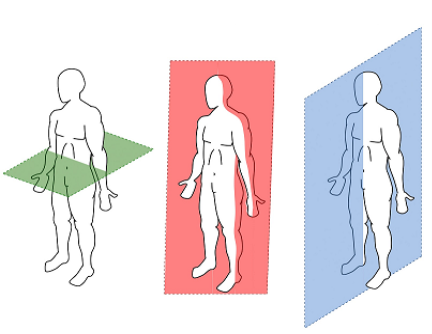
Divides the body into left and right portions.
Frontal
Transverse
Sagittal.
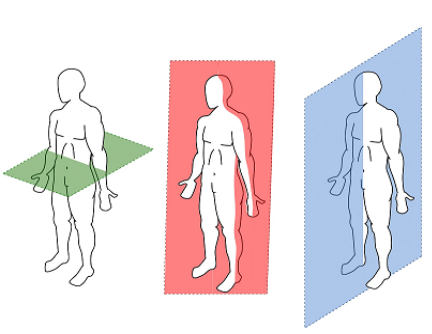
Divides the body into front and back portions.
Sagittal
Frontal
Transverse

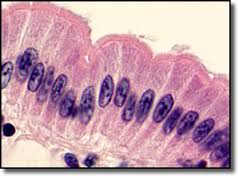


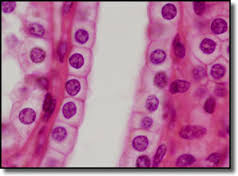


According to the picture, where is the basement membrane?
Apical Side
Columnar Cells
Avascular tissue
Basal Side

simple squamous
simple cuboidal
stratified squamous
stratified columnar

simple columnar
simple cuboidal
simple squamous
stratified cuboidal

simple cuboidal
simple columnar
stratified squamous
stratified columnar

pseudostratified columnar
stratified columnar
simple columnar
basic columnar
Found in your digestive tract


found in salivary glands


Tissue that is used for protection, secretion, absorption, and secretion
Epithelial
Connective
Muscle
Nervous
This tissue covers body surfaces, covers and lines internal organs, and composes glands.
Epithelial
Connective
Muscle
Nervous
This tissue transmits impulses for coordination and regulation.
Epithelial
Connective
Muscle
Nervous
This tissue is able to contract in response to stimuli causing movement.
Epithelial
Connective
Muscle
Nervous


What type of epithelium?
Stratified columnar.
Simple cuboidal.
Simple columnar.
Stratified cuboidal.

What type of epithelium?
Simple columnar epithelium.
Simple squamous epithelium.
Stratified squamous epithelium
Stratified columnar epithelium.

What type of epithelium?
Simple squamous epithelium.
Simple cuboidal epithelium.
Stratified squamous epithelium.
Stratified cuboidal epithelium.

What type of epithelium?
Non-Ciliated pseudostratified columnar epithelium.
Ciliated pseudostratified columnar epithelium.
Stratified columnar epithelium.
Simple columnar epithelium.

What type of epithelium?
Stratified columnar epithelium.
Stratified cuboidal epithelium.
Simple cuboidal epithelium.
Simple columnar epithelium.

What type of epithelium?
Relaxed transitional epithelium.
Stratified columnar epithelium.
Simple columnar epithelium.
Distended transitional epithelium.
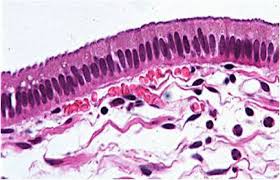
Name the type of epithelium
simple squamous
stratified squamous
simple cuboidal
simple columnar
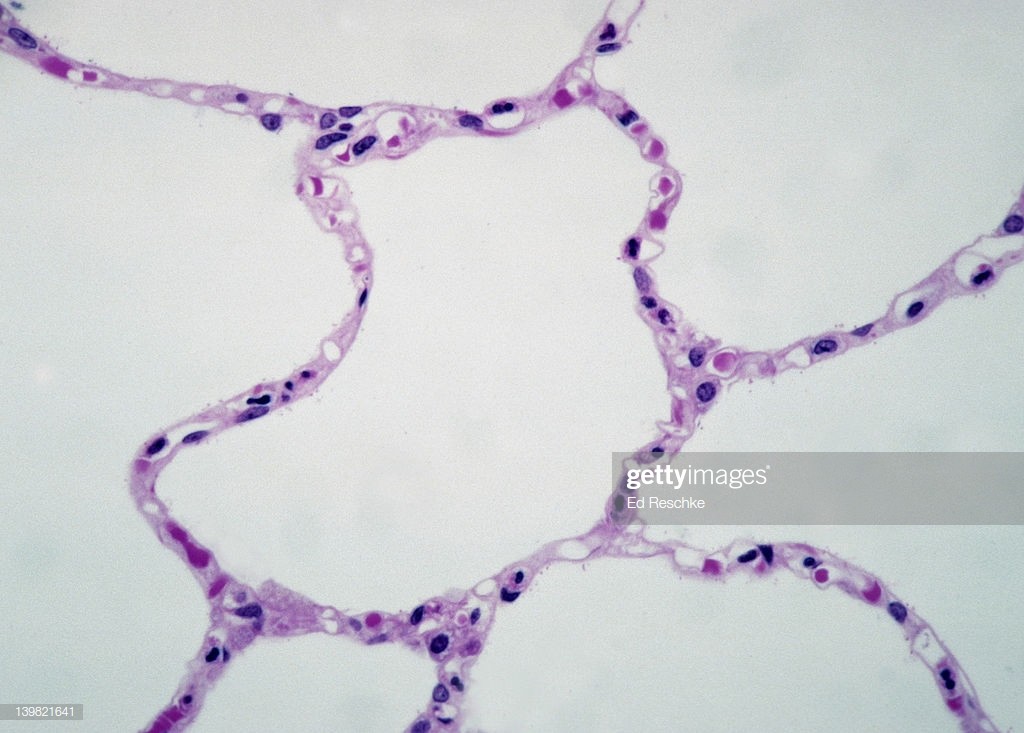
What type of epithelium lines the air sacs in this slide of lung tissue?
simple cuboidal
simple columnar
simple squamous
pseudostratified columnar

The type of epithelium pictured here is ______.
stratified squamous
simple squamous
transitional
cuboidal

