wayground logo

Free Printable Worksheets

Font size

S
M
L
XL
Worksheets

EOC Ultimate Units 1-4 (Cellular Level)

Total questions: 155

Worksheet time: 5hrs 57mins

Name
Class
Date
1.
Osmosis is the diffusion of _____ across a selectively permeable membrane.
a)
food
b)
air
c)
water
d)
oxygen
2.
During diffusion
a)
substances (things) moves from high to low concentration
b)
water moves when energy is used
c)
large or oddly shaped molecules move across a cell membrane
d)
water moves from high to low concentration
3.
 An animal cell placed in a hypertonic (salty) solution will
a)
Stay the same
b)
Shrink- get smaller
c)
Swell- get bigger
4.
In a solution, salt is considered the _______.
a)
solvent
b)
solute
c)
solution
5.
What does selectively-permeable mean?
a)
The cell controls what passes in and out of the cell
b)
Nothing gets through
c)
The cell lets only large substances through
6.
 If a cell containing 5% salt is placed into a glass of water with 20% salt, the water is _______ compared to the cell.
a)
hypertonic-
b)
hypotonic
c)
isotonic
7.
Both side of a selectively- permeable membrane are equal. The sides are ______.
a)
isotonic
b)
hypertonic
c)
hypotonic
8.
Why can't you drink salt water?
a)
It's hypertonic to your cells
b)
It's hypotonic to your cells
c)
It's isotonic to your cells
d)
It's paratonic to your cells
9.
Which way will the water molecules move during osmosis?
a)
Out of the cell, so the cell shrinks.
b)
Out of the cell, so the cell swells.
c)
Into the cell, so the cell shrinks.
d)
Into the cell, so the cell swells.
10.

Which organelle is the site of photosynthesis?

a)

Cell Wall

b)

Chloroplasts

c)

Cytoplasm

d)

Cell Membrane

11.

Which cell parts are not present in animal cells?

a)

cell membrane & cytoplasm

b)

nucleus & chloroplasts

c)

cell wall & chloroplasts

d)

ribosomes & mitochondria

12.

Which organelle is the location of DNA (genetic material)?

a)

mitochondria

b)

ribosomes

c)

nucleus

d)

Endoplasmic Reticulum

13.

Which part of the cell provides structural support?

a)

Cell Membrane

b)

Cell Wall

c)

Cytoplasm

d)

Nucleus

14.
This organelle takes food and turns it into ENERGY for plant and animal cells.
a)
Chloroplast
b)
Mitochondria
c)
Lysosome
d)
Ribosome
15.
I store water in both plant and animal cells. What am I?
a)
cytoplasm
b)
ribosomes
c)
vacuole
d)
lysosomes
16.

This organelle is a rigid outer layer that protects and provides structure for plant cells.

a)
Cell Membrane
b)
Cell Wall
c)
Nucleus
d)
Chloroplast 
17.

what is the function of a lysosome?

a)

To create energy for the cell

b)

To command the cell what to do

c)

To remove waste using digestive enzymes from the cell

d)

To protect the cell

18.
Enzymes are considered to be 
a)
Lipids
b)
Carbohydrate
c)
Protein
d)
Nucleic Acid
19.
What is the purpose  of an enzyme?
a)
give permission for the reaction
b)
raise activation energy
c)
speed up reactions
d)
control how many reactions occur
20.
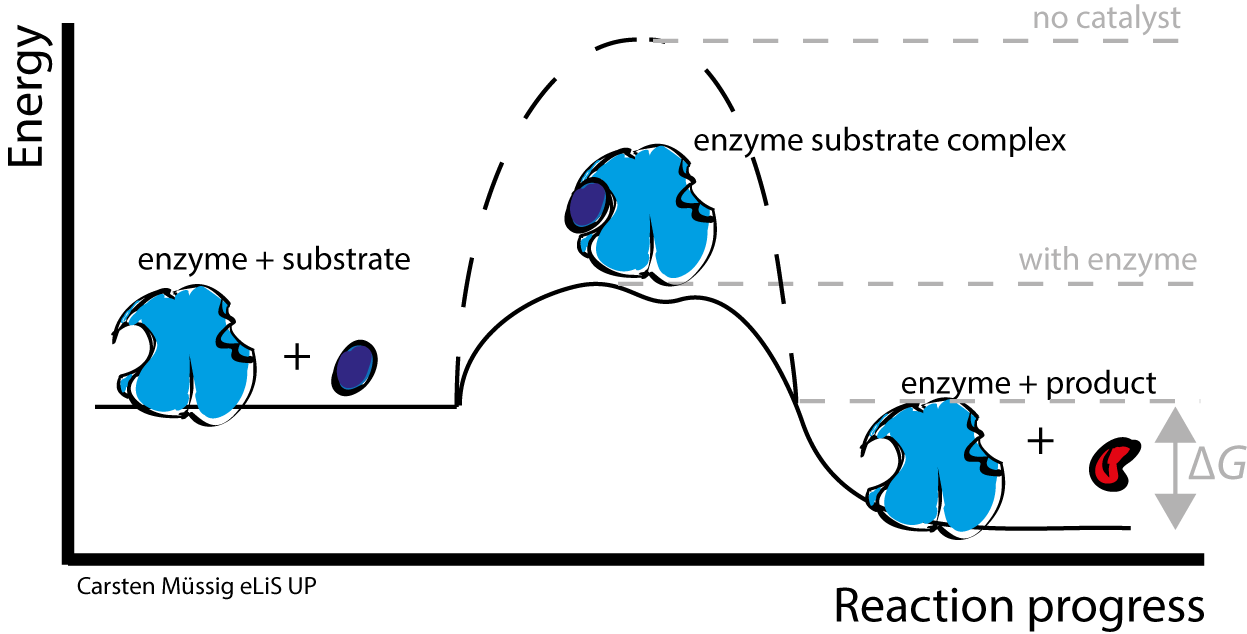
How do enzymes increase the speed of chemical reactions?
a)
reducing the number of products   
b)
reducing the activation energy
c)
increasing the temperature of the cell
d)
increasing the concentration of reactants 
21.
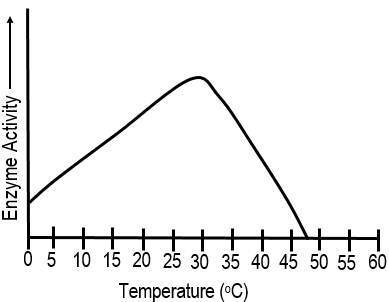
Based on the graph, what temperature does this enzyme work best? 
a)
15 C
b)
40 C
c)
30 C
d)
47 C
22.
Letter D...
a)
active site
b)
enzyme
c)
substrate
d)
products
23.
Letter B...
a)
active site
b)
enzyme
c)
substrate
d)
products
24.
Letter C...
a)
active site
b)
enzymes
c)
substrate
d)
products
25.
Letter E...
a)
active site
b)
enzyme
c)
substrate
d)
products
26.
What 3 letters do enzymes typically end in?
a)
-ose
b)
-ase
c)
-ese
d)
-tic
27.
An enzyme speeds up a reaction by
a)
lowering the activation energy.
b)
raising the activation energy.
c)
releasing energy.
d)
absorbing energy.
28.

Which process converts carbon dioxide, water, and sunlight into sugar and oxygen?

a)

Cell respiration

b)

Nucleus

c)

Chlorosynthesis

d)

Photosynthesis

29.

What are the 2 products of photosynthesis?

a)

Sugar and CO2

b)

sugar and O2

c)

H2O and CO2

d)

H2O and CO2

30.

What is the energy transformation that occurs in photosynthesis?

a)

Light energy to Chemical energy

b)

Light energy to Electrical energy

c)

Chemical energy to Light Energy

31.

What are the reactants (inputs) of Cellular Respiration?

a)

Glucose and O2

b)

O2 and H2O

c)

Glucose and CO2

d)

O2 and CO2

32.

Which organisms undergo cell respiration?

1. Plants

2. Animals

3. Bacteria

a)

1. Only

b)

1. and 2. Only

c)

3. Only

d)

ALL organisms, 1., 2. and 3.

33.

Which organelle is the site of Cell Respiration in Eukaryotes?

a)

Chlorplast

b)

Mitchondria

c)

Nucleus

d)

Cell Membrane

34.

Which describes the role of producers in an ecosystem?

a)

create sugars with sunlight

b)

eat consumers for energy

c)

release Carbon Dioxide into the atmosphere

d)

decompose once living things

35.

Humans add carbon to the atmosphere by:

1. burning fossil fuels

2. planting trees

3. burning rainforests

4. cellular respiration

a)

2 only

b)

1 and 4

c)

1, 3, and 4

36.

Process that removes Carbon from the atmosphere:

a)

Photosynthesis

b)

Cell Respiration

c)

Protein Syntesis

d)

Aerobic Cell Respiration

37.

What is the consequence of fewer trees on earth?

a)

More oxygen in atmosphere

b)

Less carbon dioxide in atmosphere

c)

More carbon dioxide in atmosphere

38.

If the plant population decreased, the amount of atmospheric carbon would _________.

a)

Stay the same

b)

Increase

c)

Decrease

39.

Which is a true statement?

a)

Humans depend on oxygen, plants depend on carbon dioxide

b)

Plants produce carbon dioxide

c)

Humans depend on carbon dioxide, plants depend on oxygen

40.
What is the correct equation for cellular respiration?
a)
6O2 + C6H12O6 -> 6CO2 + 6H2O + Energy
b)
6O2 + C6H12O6 + Energy -> 6CO2 + 6H2O
c)
6CO2 + 6H2O -> 6O2 + C6H12O6 + Energy
d)
6CO2 + 6H2O + Energy -> 6O2 + C6H12O6
41.

you breathe in oxygen for

a)

photosynthesis

b)

fermentation

c)

mitosis

d)

cellular respiration

42.

Which statement about photosynthesis is correct?

a)

Plants get the energy they need for photosynthesis from water.

b)

Plants get the energy they need for photosynthesis from soil.

c)

Plants get the energy they need for photosynthesis from sunlight.

d)

Plants do not require energy to perform photosynthesis.

43.
What is the function of ATP in living things?
a)
provides energy for cells
b)
stores genetic information
c)
provides structure in the nucleus
44.
Which structures shown in the Figure make up the ADP molecule?
a)
A and B
b)
A, B and C
c)
A, B, C, and D
d)
C and D
45.
Which bond of the ATP molecule is broken in order to release energy?
a)
A
b)
B
c)
C
d)
D
46.
Which structures shown in the Figure make up the ATP molecule?
a)
A and B
b)
A, B and C
c)
A, B, C, and D
d)
C and D
47.
Which of the following results in the storage of energy in terms of the ATP/ADP cycle?
a)
The breaking of the bond between the 5-carbon sugar and the 1st phosphate group
b)
The addition of a phosphate group
c)
The removal of a phosphate group
d)
The addition of glucose 
48.
Where is the energy stored in ATP molecules
a)
In the Ribose Sugar
b)
In the Adenine group
c)
In the Phosphate bonds
d)
In the Bank
49.
What type of macromolecule is ATP/ADP?
a)
Carbohydrate
b)
Nucleic Acid
c)
Lipid
d)
Protein
50.

What is the key role (function) of carbohydrates?

a)

energy storage

b)

immunity, muscles, structure for tissues, cell metabolism

c)

instant energy for cells and body functions

d)

genetic information (heredity)

51.

What is the key role (function) of a protein?

a)

instant energy for the cell/body

b)

hormones, buoyancy, forms cell membranes, insulation, energy storage

c)

growth, repair, and energy, immune system, enzymes

d)

store and transmit genetic information/heredity

52.

The monomer for a nucleic acid is:

a)

fatty acid

b)

monosaccharide

c)

nucleotide

d)

amino acid

53.

The monomer for a protein is:

a)

amino acid

b)

fatty acid

c)

monosaccharide

d)

nucleotide

54.

The monomer for a lipid is:

a)

monosaccharide

b)

fatty acid

c)

nucleotide

d)

amino acid

55.
Which sequence of DNA bases would pair with this partial strand
ATG TGA CAG
a)
ATG TGA CAG
b)
TAC ACT GTC
c)
GTA AGT GAC
d)
CAT TCA CTG
56.
Which of the following units are repeatedly joined together to form a strand of DNA?
a)
amino acids
b)
nucleotides
c)
fatty acids
d)
polysaccharides
57.

The enzyme that unzips the DNA to prepare for replication

a)

helicase

b)

replicase

c)

DNA polymerase

d)

synthase

58.
DNA replication results in two DNA molecules,
a)
each one with two original strands
b)
each one with two new strands
c)
each one with one new strand and one original strand
d)
one with two new strands and the other with two original strands
59.

order of replication

a)

3, 2, 1, 4

b)

2, 1, 4, 3

c)

2, 3, 1, 4

d)

3, 4, 1, 2

60.

The enzyme that copies DNA strands

a)

helicase

b)

replicase

c)

DNA polymerase

d)

synthase

61.

Proteins are made of _______________ linked together

a)

sugars

b)

amino acids

c)

lipids

d)

nucleotides

62.

Cells know how to build proteins based on

a)

the order of the amino acids

b)

the thickness of the phospholipid bilayer

c)

the sequence of bases in DNA

d)

the size of the nucleus

63.

Which organelle is the location where protein is made?

a)

Ribosome

b)

Nucleus

c)

Cytoplasm

d)

Nucleotide

64.

During transcription, this type of ribonucleic acid is responsible for copying the DNA and brining it out of the nucleus.

a)

tRNA

b)

mRNA

c)

rRNA

d)

dRNA

65.

mRNA occurs during this process

a)

Translation

b)

Transcription

c)

Replication

d)

Delivery

66.

Which of the following is the complementary mRNA sequence to this DNA strand: AACTGAA

a)

UUGACUU

b)

TTGACTT

c)

AACTGAA

d)

AACUGAA

67.
What is the term for a three-nucleotide sequence that codes for an amino acid?
a)
base
b)
codon
c)
amine
d)
serine
68.
The process to go from DNA to mRNA is _______
a)
translation
b)
transcription
c)
replication
69.
The process to go from mRNA to a protein is called ____
a)
transcription
b)
rRNA
c)
replication
d)
translation
70.
Genetic info flows in one direction. Which best represents this flow?
a)
DNA-protein-RNA
b)
Protein-RNA-DNA
c)
RNA-protein-DNA
d)
DNA-RNA-protein
71.

What is the location in the cell for translation?

a)

Cytoplasm

b)

Nucleus

c)

Lysosome

d)

Golgi apparatus

72.

What mutation has occurred here?

T-G-A-C-C-A

T-G-A-G-C-A

a)

Substitution

b)

Deletion

c)

Insertion

d)

Frameshift

73.

Which of the following would result in a frameshift mutation?

a)

Insertions only

b)

Substitution only

c)

Deletion only

d)

Insertions and Deletions

74.

DNA molecule segment is : TTACGCAAG

The mutated DNA segment is TTCGCAAG. This is an example of ___ mutation.

a)

Substitution

b)

Deletion

c)

Insertion

d)

Inversion

75.

A mutation is defined as:

a)

A change in the cell's structure

b)

Anything that changes in an embryo

c)

Any change in the physical features of a human

d)

A change in the DNA sequence

76.

Which mutation will cause translation to stop?

a)

Mutations 1 and 3 only

b)

Mutation 1 only

c)

Mutation 2 only

d)

Muations 1, 2, 3

77.
Genotype refers to the ...
a)
physical expression of the genes
b)
the possible combination of alleles in a gene
c)
whether an allele is dominant or recessive
d)
how an organism will appear
78.
An offspring will receive how many alleles from each parent to determine a specific trait?
a)
one
b)
two
c)
three
d)
five
79.
Which of the following is a phenotype?
a)
BB
b)
Bb
c)
bb
d)
Blue eyes
80.
having two of the same genes for the trait (sometimes called purebred).
a)
homozygous
b)
hetrozygous
c)
protein
d)
chromosome
81.
having two different genes for a trait (sometimes called hybrid).
a)
protein
b)
homozygous
c)
heterozygous
d)
genotype
82.
Two brown eyed parents (Bb) have a baby. What is the chance the baby is blue eyed?
a)
0 %
b)
25%
c)
50%
d)
75%
83.
An allele whose trait only shows up when no dominant allele is present.
a)
hidden allele
b)
dominant allele
c)
recessive allele
d)
present allele
84.
W=white hair
w= non-white hair
If you cross a horse with WW and a horse with ww what fraction of the offspring would be expected to have white hair?
a)
none
b)
3/4
c)
1/2
d)
all
85.

Punnett Square #1

In plants tall is dominant to short.

Cross two heterozygous plants.

What is the phenotypic ratio?

a)

1:2:1

b)

2:2

c)

3:1

86.

Punnett Square #1

In plants tall is dominant to short.

Cross two heterozygous plants.

What is the genotypic ratio?

a)

1:2:1

b)

2:2

c)

3:1

87.
T4 - Based off this Punnett Square, what fraction of the offspring will have wrinkled, yellow seeds?
a)
9/16
b)
3/16
c)
1/16
d)
16/16
88.
This type of inheritance pattern is a MIXTURE of both traits.
a)
incomplete dominance
b)
co-dominance
c)
Mendelian dominance
d)
complete dominance
89.
Incomplete dominance or co-dominance?
A calico cat shows both the traits for orange fur and black fur. 
a)
Incomplete Dominance
b)
Co-dominance
c)
Complete dominance
d)
Mendelian dominance
90.

This type of dominance is ........................... because the heterozygote shows a phenotype that is .............................. .

a)

co-dominance, blended

b)

co-dominance, equal

c)

incomplete dominance, blended

d)

incomplete dominance, equal

91.
A process where one cell forms two identical daughter cells is called...
a)
cell cycle
b)
cell division (mitosis)
c)
interphase
d)
cytokinesis
92.
What does DNA stand for?
a)
DeNatured Acid
b)
DomiNant Acid
c)
DeoxyriboNucleic Acid
d)
DiriboNucleic Acid
93.
Replication is when __________.
a)
the cell makes a copy of its DNA in nucleus 
b)
the cell forms 2 identical cells
c)
the cell produces 2 sets of organelles
d)
the cell continues to complete the same function
94.

Ends with diploid number of chromosomes

a)

Mitosis

b)

Meiosis

c)

Both

95.

Involves crossing over

a)

Mitosis

b)

Meiosis

c)

Both

96.

Produces four cells

a)

Mitosis

b)

Meiosis

c)

Both

97.

involves 1 division of nucleus

a)

Mitosis

b)

Meiosis

c)

Both

98.

produces identical daughter cells

a)

Mitosis

b)

Meiosis

c)

Both

99.

forms gametes

a)

Mitosis

b)

Meiosis

c)

Both

100.

for growth and repair

a)

Mitosis

b)

Meiosis

c)

Both

101.

involves two divisions of the nucleus

a)

Mitosis

b)

Meiosis

c)

Both

102.

produces haploid cells

a)

Mitosis

b)

Meiosis

c)

Both

103.

produces two cells

a)

Mitosis

b)

Meiosis

c)

Both

104.

produces non-identical cells

a)

Mitosis

b)

Meiosis

c)

Both

105.
What type of transport is illustrated?
a)
facilitated diffusion
b)
active transport
c)
diffusion
d)
osmosis
106.
Fruit fly body cells have 8 chromosomes. After mitosis, you would expect a resulting fruit fly daughter cell to have ...
a)
16 chromosomes.
b)
46 chromosomes.
c)
8 chromosomes.
d)
4 chromosomes.
107.
Structure B is pointing to the _____. 
a)
chromosome
b)
centromere
c)
DNA
d)
chromatid
108.

What is "A"?

a)

Nucleotide

b)

Deoxyribose Sugar

c)

Nitrogenous base

d)

Phosphate

109.

What is "B"?

a)

Nucleotide

b)

Deoxyribose Sugar

c)

Nitrogenous base

d)

Phosphate

110.
Mitosis produces cells with haploid or diploid number of chromosomes?
a)
Haploid
b)
Diploid
111.
Meiosis produces cells with a haploid or diploid number of chromosomes?
a)
Haploid
b)
Diploid
112.
A Goat has 60 chromosomes in its body cells.  What is the haploid number?
a)
60
b)
30
c)
100
d)
120
113.
What does a filled in square represent?
a)
Not affected Female
b)
Not affected Male
c)
Affected Male
d)
Affected Female
114.
How many generations are shown in this pedigree?
a)
1
b)
2
c)
3
d)
4
115.
What do half colored symbols represent?
a)
The individual is a carrier (heterozygous).
b)
The individual expresses the trait.
c)
The individual has both recessive alleles.
d)
The individual has both dominant alleles.
116.
What does an open circle represent?
a)
Not Affected Male
b)
Not Affected Female
c)
Affected Male
d)
Affected Female
117.
How many people in this whole pedigree have the trait/disease?
a)
2
b)
3
c)
4
d)
6
118.

Objective #13

This is a pedigree that follows blue eyes which is a recessive trait. What is the phenotype of the mother (circle) in generation 1?

a)

Brown

b)

Blue

c)

1 blue, 1 brown

119.

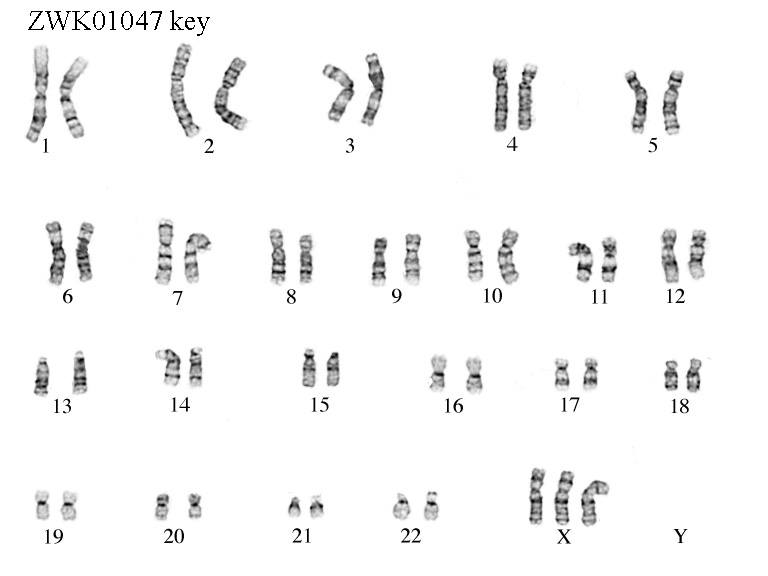
Based on the karyotype, can you guess the name of this genetic disorder?

a)

Curvy 3

b)

Jacob's syndrome

c)

Triple X

d)

Superwoman syndrome

120.
Give the genotype for person II-1
a)
GG
b)
Gg
c)
gg
121.
Give the genotype for person III-3
a)
GG
b)
Gg
c)
gg
122.
 An individual with two different alleles for a specific trait is said to be _____________.
a)
homozygous
b)
heterogenous
c)
homogenous
d)
heterozygous
123.
 Phenotype refers to the _________ of an individual
a)
genetic makeup
b)
physical appearance
c)
recessive alleles
d)
dominant alleles
124.

This is a plant cell. Select the two organelles that make plant cells different than animal cells.

125.

Which is pointing to the cell wall?

126.

Which line is pointing to the chloroplast?

127.

Match the following

a)

Mitochondria

1.

Makes energy (ATP)

b)

Cell Wall

2.

outside the cell membrane; gives plants added structure

c)

Nucleus

3.

Command center; houses DNA, boss

d)

Cytoplasm

4.

The "gel" that holds it all together

e)

Ribosomes on the ER

5.

Make proteins

128.

Match the following

a)

Mitochondria

1.

Makes energy (ATP)

b)

Cell membrane

2.

allows things in an out (selectively permeable)

c)

Nucleus

3.

Command center; houses DNA, boss

d)

Vacuole

4.

Storage bubble

e)

Ribosomes on the ER

5.

Make proteins

129.

The organelle that is the control center of the cell and contains nearly all of the cell’s DNA:

a)

Ribosome

b)

Centriole

c)

Nucleus

d)

Rough Endoplasmic Reticulum

130.

Which of the following shows the levels of organization in order from simple to complex?

a)

1. Cell

2. Tissue

3. Organ

4. Organ System

5. Organism

b)

1. Cell

2. Tissue

3. Organelle

4. Organ

5. Organ System

c)

1. Tissue

2. Organelle

3. Cell

4. Organ

5. Organism

d)

1. Organ

2. Tissue

3. Cell

4. Organism

5. Organ System

131.

What does the Lysosome do?

a)

Have chemicals (enzymes) that digest materials in the cell

b)

Make proteins and chemicals

c)

Stores water

d)

Converts nutrients into energy

132.

Match the following organelles

a)

Nucleus

1.

Contains DNA (the codes & information for making proteins)

b)

Endoplasmic Reticulum

2.

Makes, Processes, and transports chemicals

c)

Golgi Apparatus

3.

Packages the proteins/chemicals

d)

Mitochodrion

4.

Converts nutrients to energy

e)

Ribosomes

5.

Synthesizes (Makes) the proteins

133.

In Protein Synthesis,

​ ​ (a)   happens first.

​ (b)   happens last.

Choose from the below words
Transcription
Translation
134.

Match the following

a)

mRNA

1.

carrying instructions from DNA

b)

tRNA

2.

carries an amino acid

c)

rRNA

3.

the ribsome where proteins are made

135.

The mRNA reads CCA: what amino acid will the tRNA be carrying?

136.

What is the amino acid sequence for the following mRNA strand:

AUU-AAG-UGC

Write your answer like this: ___-___-___

(a)  

137.

Label this image:

1= ​ (a)  

2= ​ (b)  

4= ​ (c)  

7= ​ (d)  

Choose from the below words
DNA
mRNA
tRNA
rRNA (ribosome)
138.

Each codon found on a strand of mRNA codes for a single amino acid. The amino acid is identified on which characteristic of the codon?

a)

the number of nucleotides

b)

the sequence of nitrogen bases 

c)

the amount of thymine present

d)

the type of sugar found in each nucleotide

139.
Which RNA bases would pair with TAC  in transcription
a)
AUG
b)
ATG
c)
GCA
d)
GCA
140.

What mutation has occurred here?

T-G-A-C-C-A

T-G-A-G-C-A

a)

Substitution

b)

Deletion

c)

Insertion

d)

Frameshift

141.

Which of the following would result in a frameshift mutation?

a)

Insertions only

b)

Substitution only

c)

Deletion only

d)

Insertions and Deletions

142.

DNA molecule segment is : TTACGCAAG

The mutated DNA segment is TTCGCAAG. This is an example of ___ mutation.

a)

Substitution

b)

Deletion

c)

Insertion

d)

Inversion

143.

ATTTGAGCC- Original

ATTGAGCC - Mutated

The example above is an example of a

a)

Insertion- Frameshift

b)

Deletion- Substitution

c)

Deletion -Frameshift

d)

All of the above

144.

Which type of mutation does the model demonstrate?

a)

Deletion

b)

Substitution

c)

Insertion

d)

Translocation

145.

Which division results in two divisions?

a)

Meiosis

b)

Mitosis

146.
In meiosis, the end product is...
a)
2 haploid cells
b)
2 diploid cells
c)
4 haploid cells
d)
4 diploid cells
147.
The daughter cells in mitosis are...
a)
Identical
b)
Unique
148.
Sperm and Egg cells are produced using which process?
a)
Mitosis
b)
Meiosis
c)
Binary Fission
d)
None of these
149.

Mitosis creates: (check all that apply)

a)

diploid cells

b)

haploid cells

c)

somatic cells

d)

gametic cells

e)

2 daughter cells

150.

What will be the phenotypic ratio for the offspring?

a)

RR: 50% Rr: 50%

b)

Rounded seeds: 50% Wrinkled seeds: 50%

c)

Rounded seeds: 100% Wrinkled seeds: 0%

d)

RR: 100% Rr: 0%

151.

Cross a tall flower (Tt) with a short flower (pp). What percentage of the offspring will have tall flowers (TT or Tt)?

a)

0%

b)

25%

c)

50%

d)

75%

152.

Codominance

a)

has one allele dominant over the other.

b)

blends the two alleles.

c)

has both alleles expressed at the same time.

d)

has both recessive alleles.

153.

Crossing over leads to increase of

a)

your grade.

b)

mitosis.

c)

genetic variation.

d)

haploids.

154.

Is this karyotype a male or female?

a)

male

b)

female

c)
155.
What does the term HOMOLOGOUS mean when referring to "homologous chromosomes"?
a)
same size, same info
b)
different size, same info
c)
same size, different info
d)
different size, different info