
 Worksheets
Biology Midterm Review 2023
Total questions: 131
Worksheet time: 2hrs 2mins
Explains something we see in the natural world that has been verified through repeated experiments or testing.
hypothesis
law
theory
A ___ is observed and describes in the natural world what appears to always be true.
hypothesis
theory
law
Select ALL that both theories and laws have in common.
based on empirical evidence
supported by a large amount of data
revised or updated with new evidence
happens under very specific conditions in nature
What is the variable that scientists manipulate and test?
dependent variable
independent variable
constant
control group
Gavan throws a ball at the wall with a speed of 50 mph and it bounces back at him at 40 mph. He decides to throw the ball with a speed of 25 mph and it returns at 20 mph.
What is a possible claim he can make?
The wall is moving very fast.
His arm gets sore after throwing twice.
The higher the speed of the ball the slower it bounces back.
The higher the speed of the ball the faster it bounces back.
An experiment is performed on plants to see how different liquids affect plant growth. Each plant in the experiment is given a different liquid.
Group A: water.
Group B: apple juice.
Group C: milk.
Each plant has the same amount of soil, sunlight, and listens to the same music.
Identify the independent variable.
The type of plant
The amount of sunlight
The type of music
The type of liquid
An experiment is performed on plants to see how different liquids affect plant growth. Each plant in the experiment is given a different liquid; water, apple juice, or milk. Each plant has the same amount of soil, sunlight, and listens to the same music.
In this investigation, what are the constants?
water, apple juice, milk
plant height
soil, sunlight, music
water, apple juice, milk, soil, sunlight, music
How can participant bias affect the outcome of a study?
It can make others want to volunteer for the study
It can invalidate it, if the volunteers hold bias that is counter to the opinions of those who are not part of the study, but are represented by it
It can split the results in two
It can prove it correct, because volunteer opinions accurately represent everyone in the population
Who reviews articles for peer-review journals ?
friends of the scientists who wrote the article
anonymous and indepenedent experts
the scientists who did the experiment
people who paid for the experiments
What type of microscope do we use in this science classroom?
compound light microscope
scanning electron microscope
tunneling electron microscope
magnifying glass
What type of bond is found BETWEEN water molecules?
Hydrogen bonds
Ionic bonds
Nonpolar covalent bonds
Polar covalent bonds
What word describes when water is attracted to other substances?
Cohesion
Adhesion
Capillary action
Surface tension
When water molecules stick easily to other water molecules, this is called what?
Cohesion
Adhesion
Solution
Polar molecule
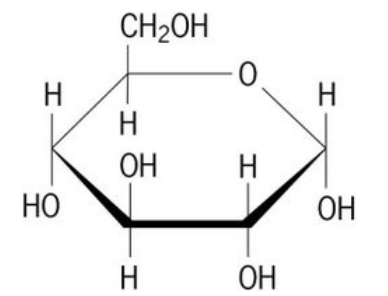
Which organic molecule would a long-distance runner most likely choose to eat two hours before a race?
A protein, because it builds muscle mass.
A lipid because it provides long term energy storage.
A carbohydrate because it releases energy quickly.
A protein, because it transports oxygen into the blood stream.
Which biomolecules contains your genetic information?
Proteins
Lipids
Carbohydrates
Nucleic Acids
Amino Acids are the monomers of __________.
Nucleic Acids
Proteins
Carbohydrates
Lipids
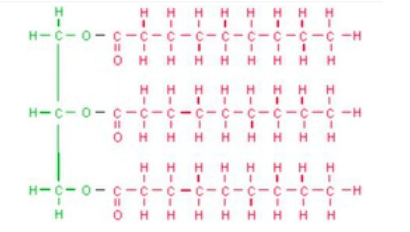
Which biomolecules act as energy storage for the cell and also cushions and insulates organs?
Carbohyrdates
Lipids
Proteins
Nucleic Acids
Enzyme is a/an...
carbohydrate
lipid
protein
nucleic acid
What biomolecule serves as structural materials in hair, nails and connective tissues?
protein
lipid
carbohydrate
nucleic acid


What is a substance called if it speeds up a chemical reaction?
reusable
catalyst
specific
fragile

In the diagram, what is letter A?
product
enzyme-substrate complex
substrate
active site

Letter D...
enzyme
active site
substrate
products

Letter B...
substrate
active site
enzyme
products

Letter C...
products
substrate
enzymes
active site

Letter E...
active site
products
substrate
enzyme
An enzyme speeds up a reaction by
raising the activation energy
lowering the activation energy
releasing energy
absorbing energy.
What happens when enzymes are heated to a high temperature?
The shape of the enzyme are changed and it denatures
The enzymes die
The enzymes' amino acid sequence changes
The enzymes remain the same
In living cells, enzymes act as catalysts, which may reduce the amount of activation energy required for a chemical reaction to occur. In the graphs below, pathway x is a solid line representing the uncatalyzed reaction. The dotted line shows the catalyzed reaction. Which graph best illustrates the changes in a reaction when the catalyst reduces the amount of energy required?


The diagram below shows the general structure of an amino acid. Which type of molecule is formed from amino acids?
lipids
proteins
carbohydrates
nucleic acids
Which of these graphs represents the rate of enzyme reactions under increasing temperature?


Which of these graphs represents the rate of enzyme reactions under increasing substrate concentrations?

Which of the following is NOT a part of the cell theory
All cells are made of atoms
All living things are made of cells
All cells come from pre-existing cells
Cells are the basic structure and function of life
All of the following apply to eukaryotic cells except:
All of the following apply to prokaryotic cells except:
They have the ability to reproduce
They have DNA
x-rays
computers
the light microscope
the scanning electron microscope
Plants have cells but animals do not.
They are both made of one or more cells.
They both come from the same kind of cell.
They both come from a non-living organism.
Cell 2 had a cell membrane and Cell 1 did not.
Cell 1 had a cell wall and Cell 2 did not.
Cell 2 had a chloroplast and Cell 1 did not.
Cell 1 had a nucleus and Cell 2 did not.
When a scientist makes a quick guess about something, it is called a scientific theory.
True
False

The cell theory applies to all organisms, including the two shown below. Which of the following statements describes how these organisms are examples of the cell theory?
The organisms are made up of cells that make their own food.
The cells of the organisms come from other living cells.
The organisms are made up of more than one cell.
The cells of the organisms have cell walls.
Where is DNA stored?
In the chlorophyll
In the vacuole
In the nucleus
In the lysosmes
Where plants do photosynthesis
Chlorophyll
Chloroplast
Cell wall
Cell membrane
Which two structures do plant cells contain that animal cells do not?
vacuoles and chloroplasts
chloroplasts and cell wall
nucleus and cell membrane
mitochondria and chlorophyll
What happens when a plant cell is placed into salt water?
It will shrink.
It will expand.
It will shrink and then expand.
None of the above.
the rigid layer surrounding a plant cell.
Photosynthesis
plant cell
cell wall
animal cell

What is the function of a chloroplast?
makes proteins for animal cells
allows materials in and out of the cell
provides structure and support
absorbs sunlight for photosynthesis

Identify the structure that is indicated by the arrow in the image.
cell wall
central vacuole
chloroplast
nucleus

Identify the structure that is indicated by the arrow in the image.
cell wall
central vacuole
chloroplast
cell membrane

The arrow is showing the fluid inside the cell that surrounds the cell organelles and gives the cell its shape. What is the arrow pointing to in the cell?
cytoplasm
mitochondria
ribosomes
nucleus

What organelle is this??
cell wall
chloroplast
mitochondria
nucleus
cell membrane

I make proteins for the cell. What am I?
ribosome
cell membrane
nucleus
chloroplast
This organelle breaks down (digest) worn out cell parts
cytoplasm
lysosomes
mitochondria
vacuoles
If many of the ribosomes of a cell were destroyed, what effect would this most likely have on the cell?
The cell would not be able to create energy.
The cell would not be able to make proteins.
The cell would not e able to photosynthesize.
The cell would not be able to break down waste in the cell.
Which statement is true about organelles that make food for animal and plant cells?
The mitochondria makes food for animal cells, and the nucleus makes food for plant cells.
The mitochondria makes food for plant cells, and the nucleus makes food for animal cells.
The chloroplasts make food for animal cells, but plant cells cannot make their own food.
The chloroplasts make food for plant cells, but animal cells cannot make their own food.

The organelle where lipids are synthesized along with proteins and other materials that are exported from the cell:
Endoplasmic Reticulum
Golgi Apparatus
Vacuoles & vesicles
Nucleus

The organelle that modifies, sorts, and packages proteins and other materials from the ER for storage in the cell or release from the cell:
Endoplasmic Reticulum
Golgi Apparatus
Vacuoles and Vesicles
Ribosome

The organelles that store materials like water, salts, proteins, and carbohydrates, and the other one that stores and moves materials between cell organelles, as well as to and from the cell surface:
Cytoskeleton
Lysosomes
Chloroplast
Vacuoles and Vesicles
Diffusion is a form of __________ transport.
Passive
Active
Easy
Free
What is the movement of particles with the concentration gradient using protein "helpers"?
diffusion
facilitated diffusion
active transport
enzymatic reactions

Some cells move large particles out of the cell through the process of:
Protein Synthesis
Endocytosis
Exocytosis
Cytoplasmic Streaming

If the body can no longer make ATP, which type of transport would be impacted?
Facilitated Diffusion
Osmosis
Active Transport
Simple Diffusion
What is embedded in the lipid bilayer?
Proteins
Salt
Water
Worms
What does is mean if a membrane is "selectively permeable"?
it has a high concentration
it is picky about what it lets in or out
it is at equilibrium
anything can pass through it


Which molecule is in equilibrium? How can you tell?
Molecule A; equal amounts inside and outside
Molecule B; passive movement into the cell
Molecule C; equal amounts inside and outside
Molecule C; all molecules are inside the cell
In an isotonic solution which way will the water flow
it will not flow at all
it will flow into the cell
it will flow both ways at equal rates
out of the cell

Nemo and other ocean dwelling fish cannot survive in freshwater because......
freshwater is hypertonic to Nemo's cells and will result in water leaving them causing the cells to shrink
freshwater is hypotonic to Nemo's cells and will result in water leaving them causing the cells to shrink
freshwater is hypertonic to Nemo's cells and will result in water entering them causing the cells to swell and burst
freshwater is hypotonic to Nemo's cells and will result in water enter them causing the cells to swell and burst

What phase of mitosis is represented?
prophase
metaphase
anaphase
telophase

What phase of mitosis is represented?
prophase
metaphase
anaphase
telophase

What phase of mitosis is represented?
prophase
metaphase
anaphase
telophase

What phase of mitosis is represented?
prophase
metaphase
anaphase
telophase
What phase is described?
- nuclear envelope disappears
- chromosomes become visible
- microtubules form
prophase
metaphase
anaphase
telophase
A repeated pattern of cell growth, and DNA replication, and cell division that occurs in Eukaryotic cells
interphase
mitosis
cell cycle
Cells of organisms must go through cell division for?
growth
repair of damaged cells
replacement of dying cells.
All of these
DNA is replicated during ______ of the cell cycle.
Gap 1
Synthesis (S phase)
Gap 2
Gap 0
The middle of a chromosome
Centriole
Cytokinesis
Centromere
Chromatid
Identical copies of chromosomes
Chromosome
Chromatid
Centriole
Centromere
Asexual reproduction creates offspring that are
genetically identical to the parent
different from the parent
different from each other
formed by 2 parents
In mitosis, how many cells are made?
2 cells with identical genetic information
2 cells with different genetic information
4 cells with identical genetic information
4 cells with different genetic information
In meiosis, how many cells are made?
2 cells with identical genetic information
2 cells with different genetic information
4 cells with identical information
4 cells with different genetic information
Asexual reproduction involves
mitosis
meiosis
The egg cell of a koala contain 12 chromosomes. How many chromosomes does a normal cell contain?
6
12
24
36
A hydra has 32 chromosomes and reproduces by budding. How many chromosomes does its offspring have?
8
16
32
64
Compared to the amount in a normal human cell, a sperm cell will have
the same amount of chromsomes
twice the amount of chromosomes
half the amount of chromosomes
one fourth the amount of chromosomes
Gametes are made in
skin cells
stomach cells
reproductive systems
the circulatory system
Advantages of sexual reproduction are
selective breeding
saves time
saves energy
genetic variation
What is the primary cause of genetic variation during meiosis?
chromosomes lining up
"crossing over" of chromosomes
separation of chromosomes
chromosomes pulling apart
The process of "crossing over" occurs in what phase of meiosis?
anaphase 1
prophase 1
prophase 2
telophase 2
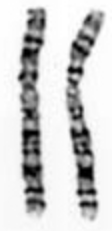
A pair of identical chromosomes (one inherited from mom and one inherited from dad) are called ______________________________.
sister chromotids
centromeres
homologous chromosomes
autosomes

Crossing over happens when part of the genetic information of one chromosome switches places with the genetic information from another chromosome. Another term for this process is
genetic recombination
genetic reduction
a mutation
nondisjunction

Which phase of meiosis is shown in the picture?
Prophase II
Metaphase II
Telophase I
Telophase II

What phase of Meiosis is in this picture?
Prophase I
Metaphase I
Anaphase I
Telophase I
In which phase of Meiosis does crossing-over happen?
Prophase I
Metaphase I
Anaphase I
Telophase I

Which phase of meiosis is shown in the picture?
Prophase I
Metaphase I
Anaphase I
Telophase I
Which phase of meiosis is shown in the picture?
Prophase II
Metaphase II
Telophase I
Telophase II

Which phase of meiosis does the picture on the left happen?
prophase I
prophase II
metaphase I
telophase II

Which phase of meiosis is shown in the picture?
prophase I
metaphase I
anaphase I
telophase I
After meiosis II, which of the following is true about the cells that are produced?
Four cells are produced. They are identical to each other and each contains half the number of chromosomes that the parent cell has.
Four cells are produced. Each is unique and contains half the number of chromosomes that the parent cell has.
Four cells are produced. Each is unique and contains the same number of chromosomes that the parent cell has.
Two cells are produced. Each is unique and contains the same number of chromosomes that the parent cell has.
True or False: Crossing-over also happens in Meiosis II.
True
False
What effect does crossing over has in terms of traits of offspring?
Results in identical traits of offsprings.
Causes variation in the traits of offsprings.
It really does nothing to the traits of offspring.
After meiosis I, which of the following is true about the cells that are produced?
Two cells are produced. They are identical to each other and each contains half the number of chromosomes that the parent cell has.
Two cells are produced. They are unique to each other and each contains half the number of chromosomes that the parent cell has.
Four cells are produced. They are unique to each other and contain the same number of chromosomes that the parent cell has.
Only one cell is produced. It is identical to the parent cell and contains the same number of chromosomes.
The four cells that are produced after Meiosis are _______.
haploid because they contain just half the number of chromosomes as the parent cell.
diploid because they contain as many chromosomes as the parent cell.
diploid because they contain twice as many chromosomes as the parent cell.
SC.6.N.1.2
Experiments are often repeated many times by the same or different scientists. What is the most important reason more than one scientist should conduct an investigation using the same methods?
a. If the results are the same, replication of the investigation helps to confirm the results.
b. The competition makes the scientists work more carefully.
c. More than one scientist is interested in the problem.
d. Different scientists might perform the experiment differently.
a
b
c
d

