
Font size
 Worksheets
Checkpoint 2 Review
Total questions: 66
Worksheet time: 39mins
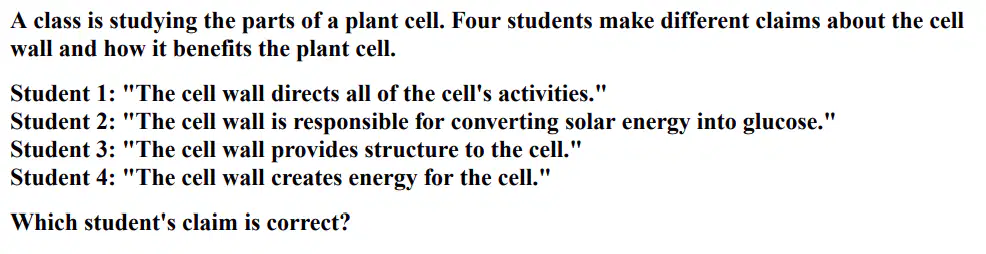
Student 1
Student 2
Student 3
Student 4
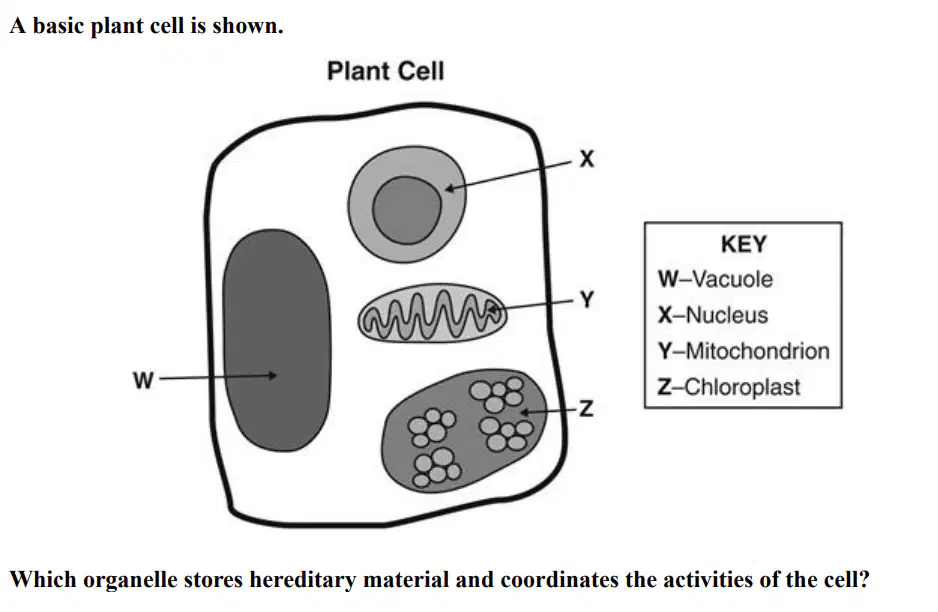
w
x
y
z
How is oxygen used by a cell organelle when it reaches the body cells?
The oxygen is used in the cell wall to store nutrients.
The oxygen is used in the chloroplasts to produce sugars
The oxygen is used in the mitochondria to release energy.
The oxygen is used in the nucleus to provide structure for the cell.
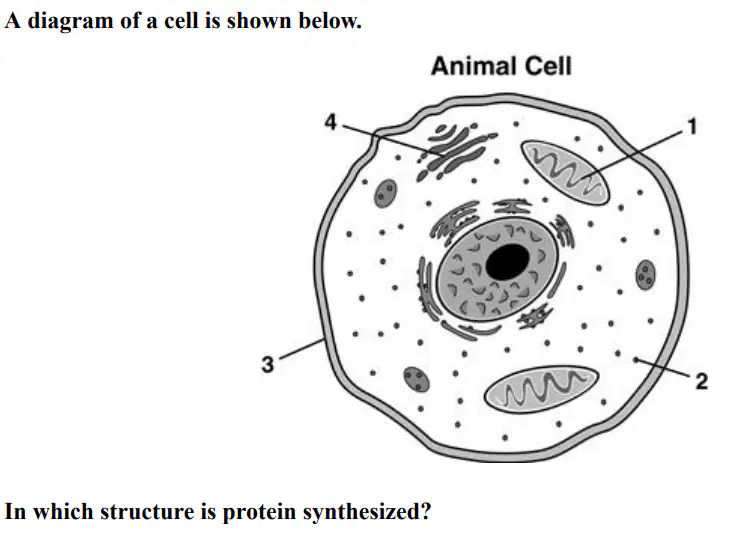
1
2
3
4
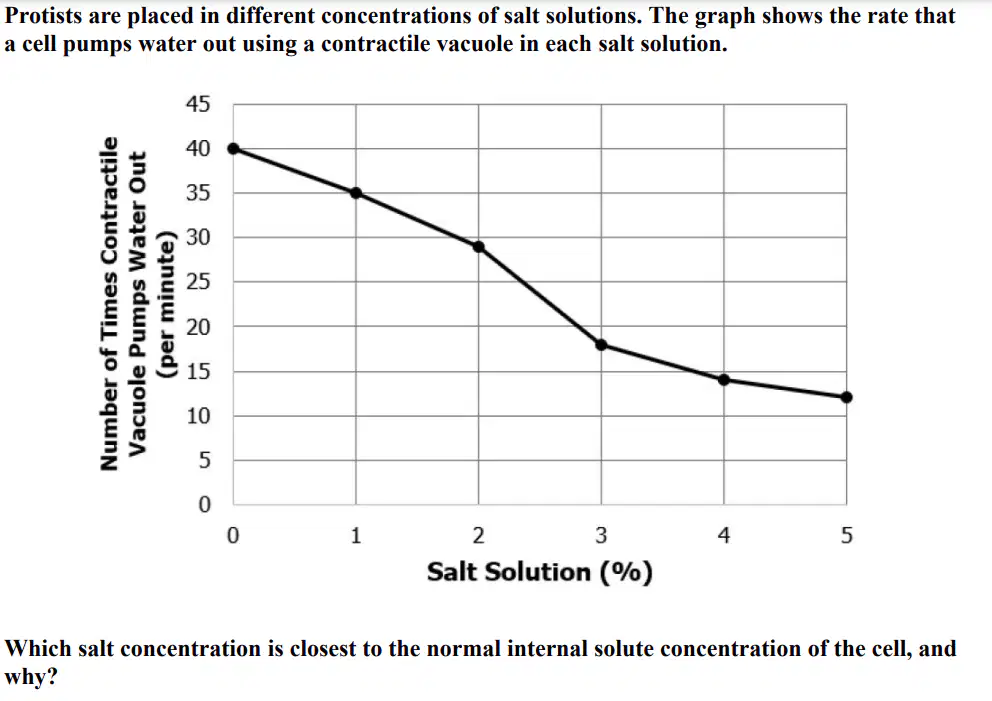
. 0% salt solution; the plant cell moves less water to maintain homeostasis with its environment.
. 0% salt solution; the plant cell moves more water to maintain homeostasis with its environment.
5% salt solution; the plant cell moves less water to maintain homeostasis with its environment.
5% salt solution; the plant cell moves more water to maintain homeostasis with its environment.
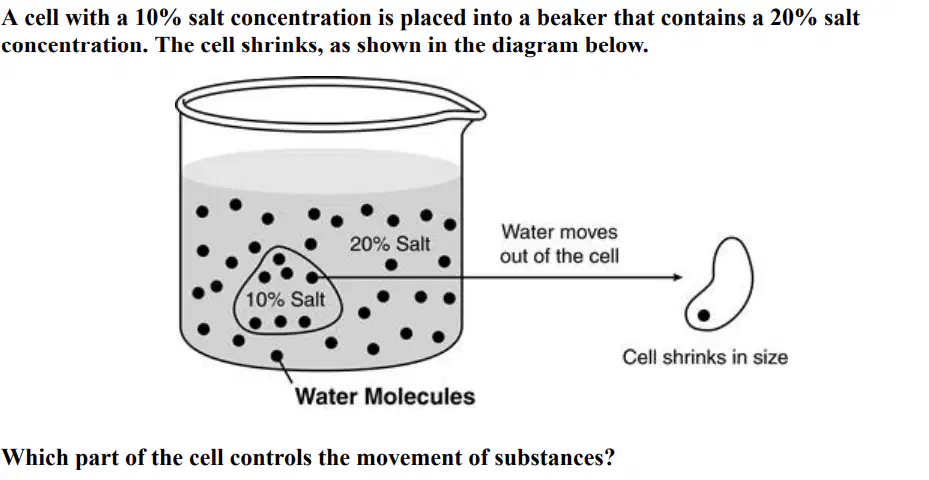
mitochondria
cell membrane
chloroplast
nucleus
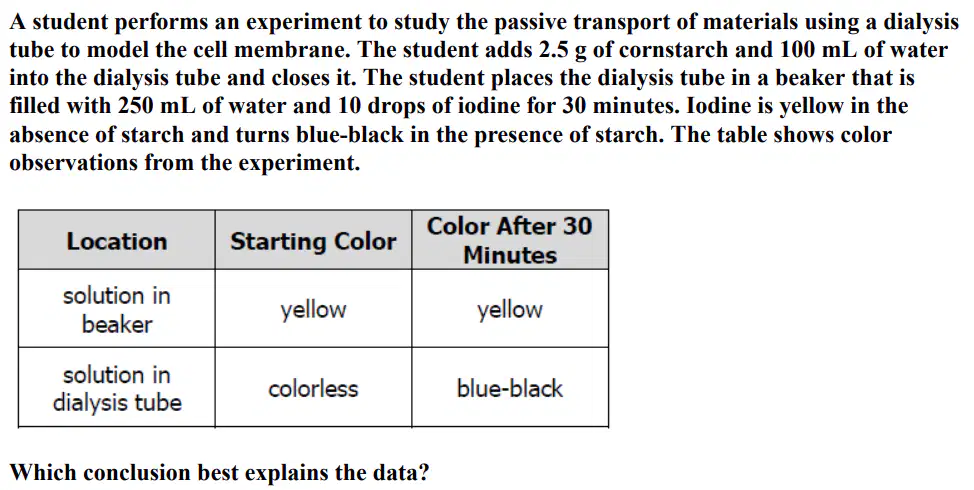
The water moved from the dialysis tube into the beaker.
The water did not move between the beaker and the dialysis tube.
The iodine moved from the beaker into the dialysis tube.
The iodine did not move between the beaker and the dialysis tube.
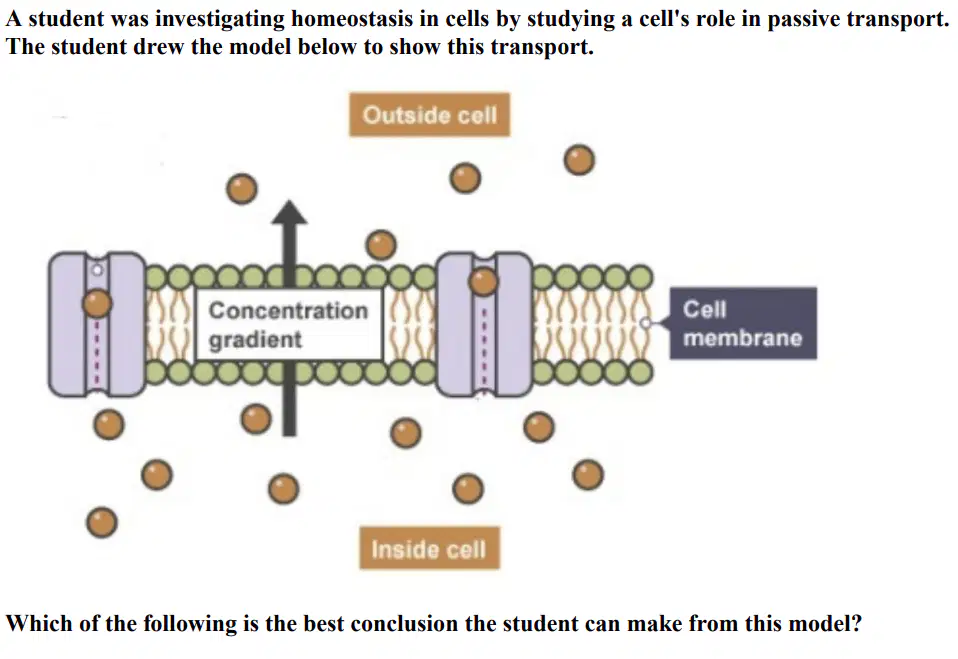
Particles move across the concentration gradient from areas of low concentration to higher concentration.
Particles move across the concentration gradient from areas of higher concentration to low concentration.
Particles always move from the bottom area toward the top.
Particles always move from the top area toward the bottom.
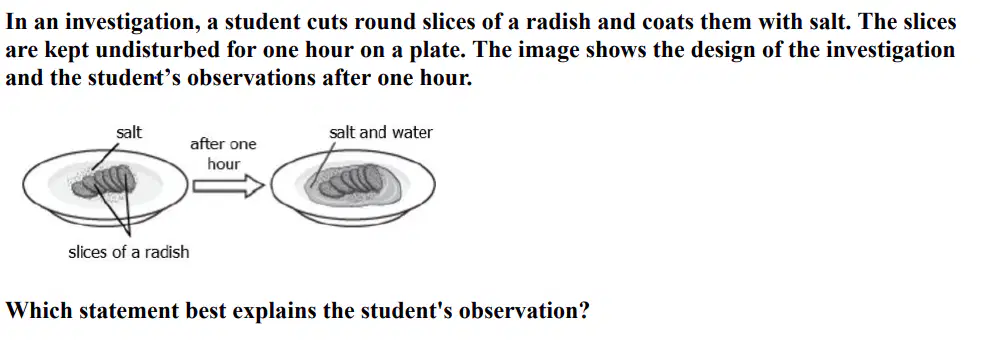
The radish cells release water to remove the excess salt coating that is on their surfaces.
The coating of salt moves water from the membranes of the radish cells. This forms a saltwater solution on the plate.
Water from inside the radish cells moves outside the cells. This balances the salt concentration inside and outside the cells.
Water from outside the radish cells moves inside the cells. This balances the salt concentration inside and outside the cells
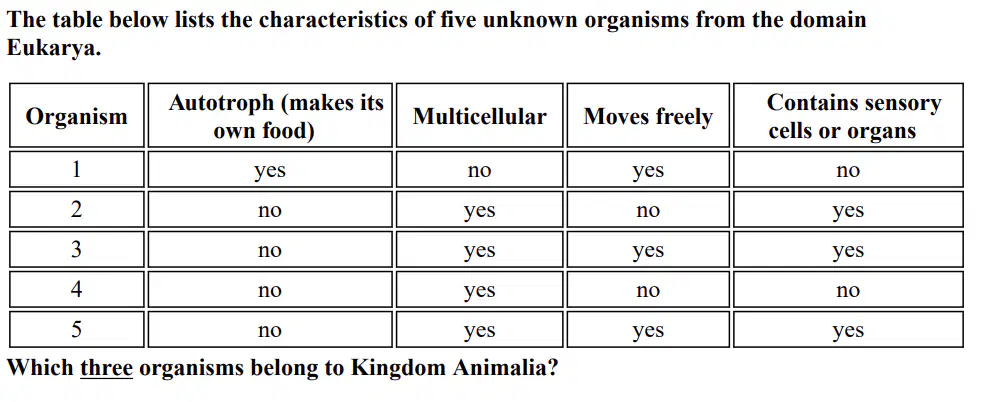
1
2
3
4
5
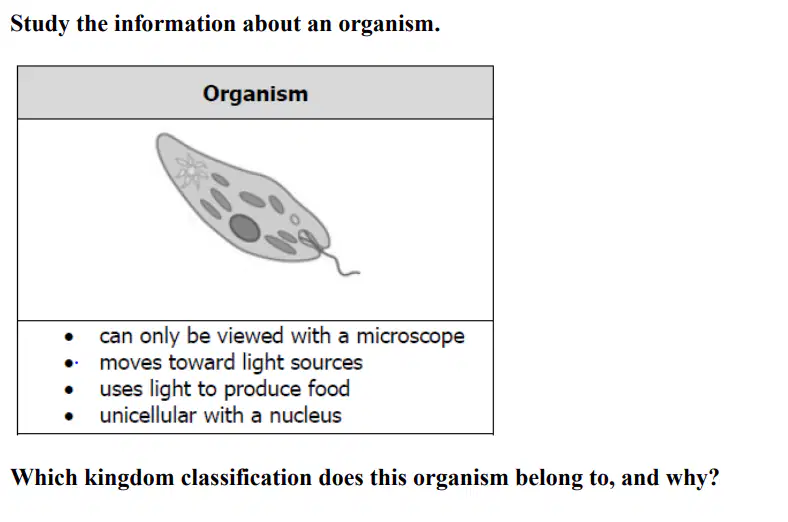
Protista; the organism is unicellular with a nucleus.
. Plantae; the organism uses light to produce food.
Fungi; the organism is very small in size.
Animalia; the organism uses energy to move.
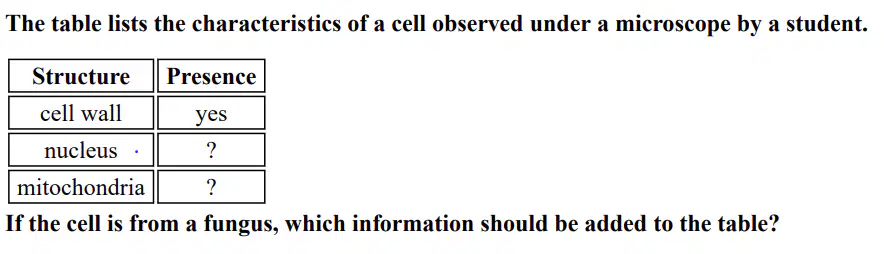
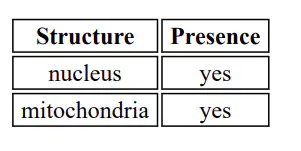
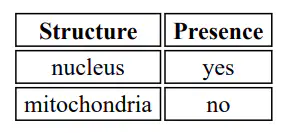
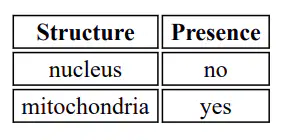
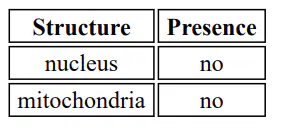
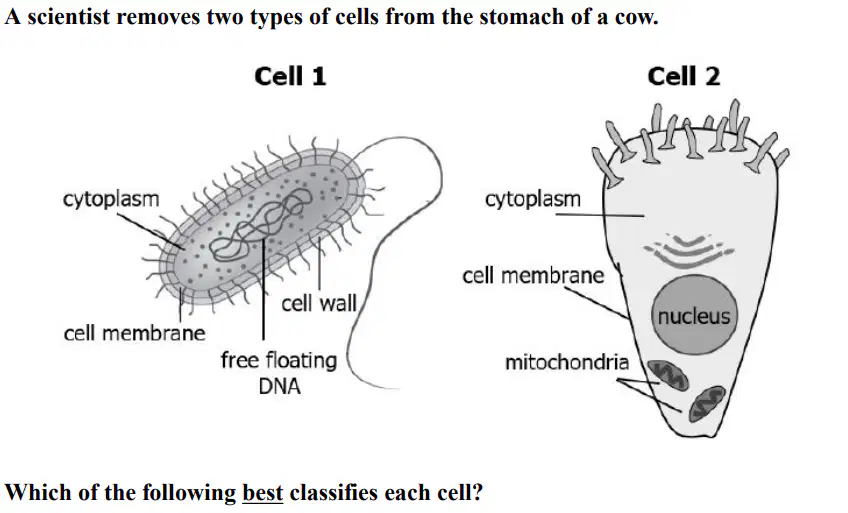
Cell 1: animal cell; Cell 2: protist cell
Cell 1: bacterial cell; Cell 2: protist cell
Cell 1: bacterial cell; Cell 2: animal cell
Cell 1: protist cell; Cell 2: animal cell
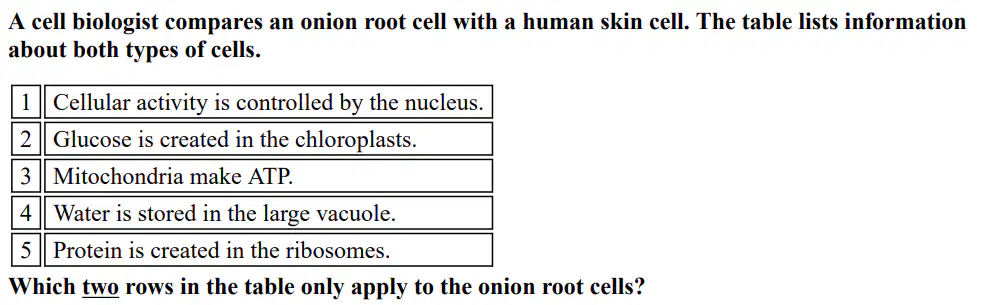
1
2
3
4
5

Cells are the basic level of structural organization in both organisms.
Organs and organ systems have the same level of organization as they contain the same tissues.
Tissues are formed by a group of cells that perform all the functions that an organ performs.
Both organisms follow the same level of organization starting from a similar type of tissue
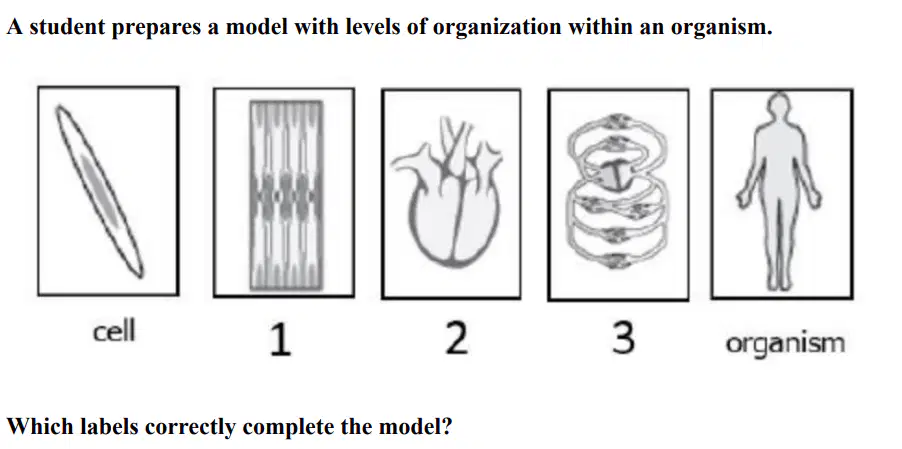
. 1: tissue; 2: organ system; 3: organ
1: tissue; 2: organ; 3: organ system
1: organ; 2: tissue; 3: organ system
1: organ; 2: organ system; 3: tissue
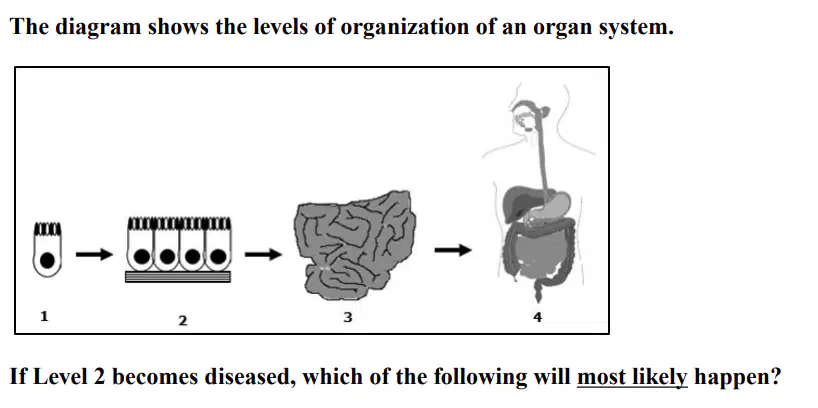
The cells will bypass creating tissues, instead creating the organ directly to limit the spread of the disease to the organism
The organ system will generate more cells to create a new organ to replace the diseased component.
The organ will fail to function properly, affecting the organ system and consequently the organism.
The organ will temporarily shut down until the disease is repaired with new cells, and the organism will not be affected.
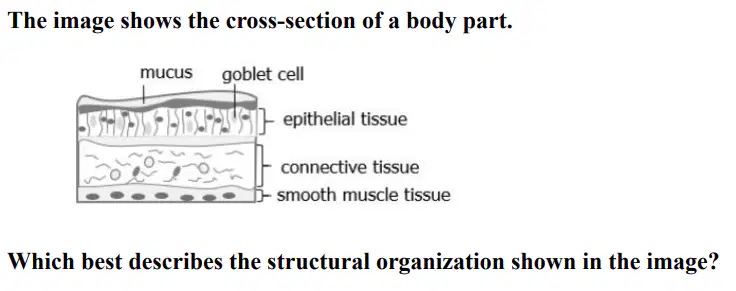
a group of different cells working together to form an organ
a group of similar cells working together to perform the function of a tissue
a group of different tissues working together to perform the function of an organ
a group of organs working together to form an organ system
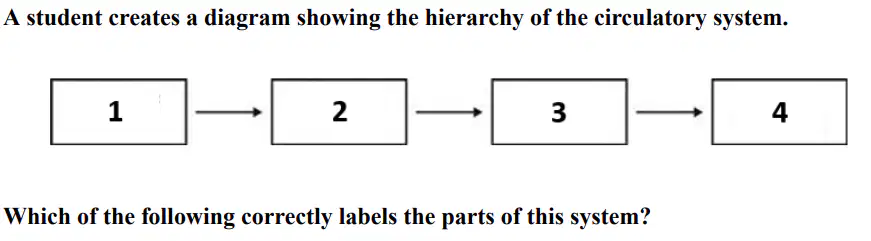
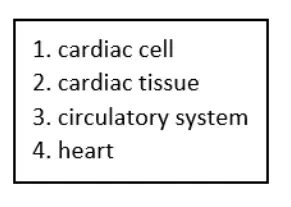
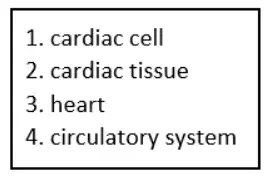
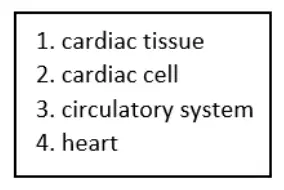
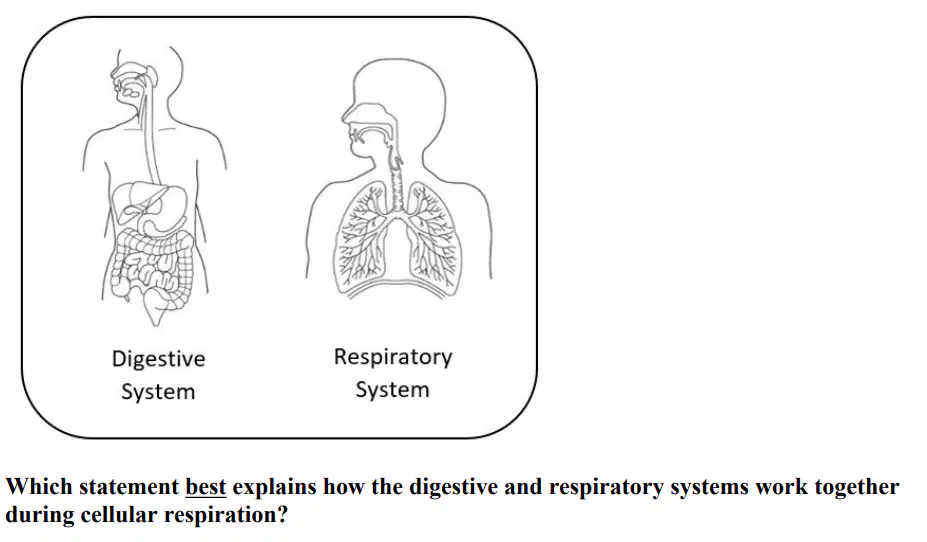
Digestion breaks down food to provide building materials, and respiration brings in oxygen to increase the amount of materials to produce energy.
Digestion breaks down food to provide building materials, and respiration brings in carbon dioxide to increase the amount of materials to produce energy
Digestion breaks down food to provide fuel, and respiration brings in carbon dioxide to react with that fuel to produce energy.
Digestion breaks down food to provide fuel, and respiration brings in oxygen to react with that fuel to produce energy
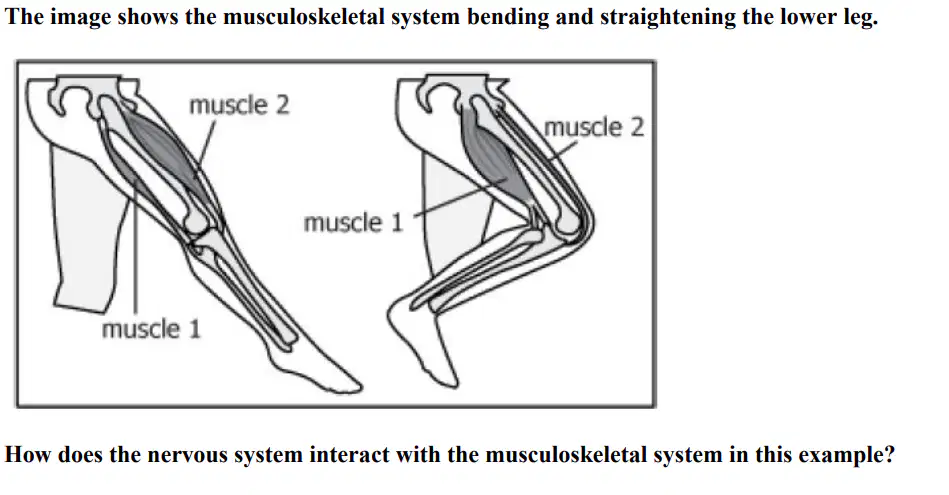
The nervous system sends a signal to contract muscle 1 and relax muscle 2.
The nervous system receives oxygen after muscle 1 contracts and muscle 2 relaxes.
The nervous system receives energy after muscle 1 contracts and muscle 2 relaxes.
The nervous system increases the flow of blood to contract muscle 1 and relax muscle 2.

An apple getting broken down in the stomach and the waste being removed
Breathing in oxygen and circulating oxygen to the rest of the body
Jumping and doing a backflip on a trampoline
Sensing the heat produced by a stove and realizing your finger is burning
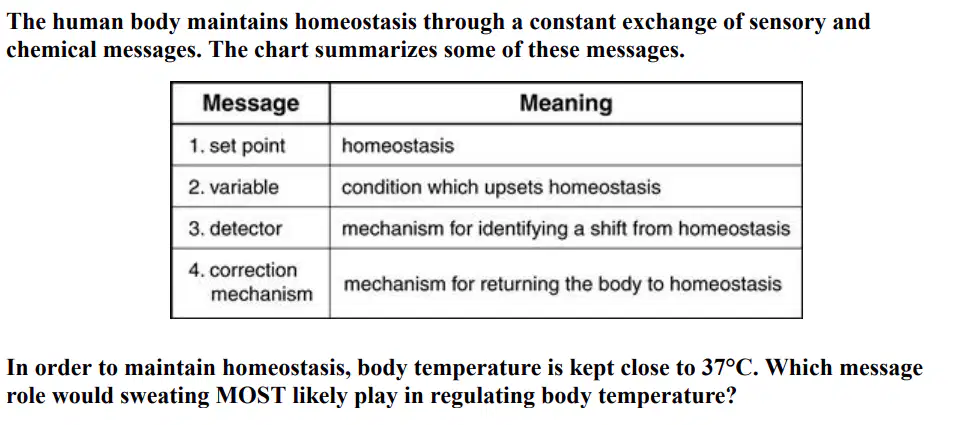
1
2
3
4
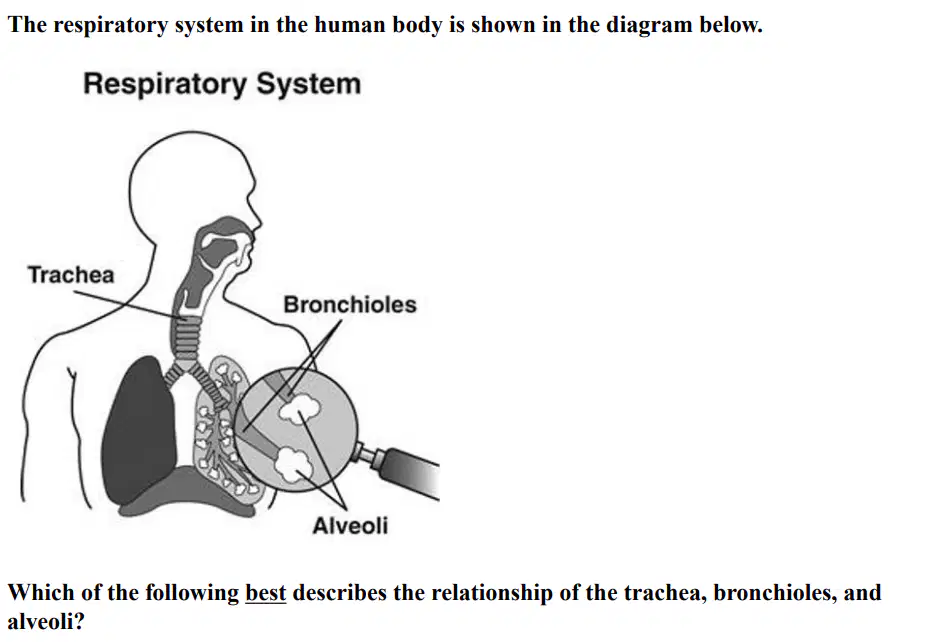
They work together to transport nutrients.
They work together to regulate body temperature
They work together to maintain the oxygen level in the blood.
They work together to store fluids to prevent dehydration.
Organ Systems work together in an organism to help the body maintain a stable internal environment. Which of the following is NOT an example of homeostatis?
Seeing lights turn on and off in a room
Which of the following best described how the digestive system supports the respiratory system?
Hair and skin are two organs that make up the integumentary system. How do they both help with homeostasis in the human body?
Most bones have marrow within them where new blood cells are made. These blood cells circulate through the body to distribute oxygen, nutrients, and wastes that diffuse into the blood. Which two systems work together to maintain this example of equilibrium within the body?
circulatory
integumentary
nervous
skeletal
Which system works with the urinary system to communicate to your body the need to urinate?
Integumentary system
In the body, system R takes in and breaks down food. System S then transports the raw materials throughout the body. What systems do R and S most likely represent?
Urinary and circulatory
Cells produce waste as part of their normal activities. Cellular waste is collected by blood in the circulatory system. The kidneys are organs that filter cellular waste from the blood. This waste is stored in the bladder until it can be excreted from the body. Which system is the circulatory system interacting within this example.
The excretory system
How are organisms categorized into kingdoms? Choose the BEST answer.
based on whether or not it can move
based on how it reproduces
According to their size
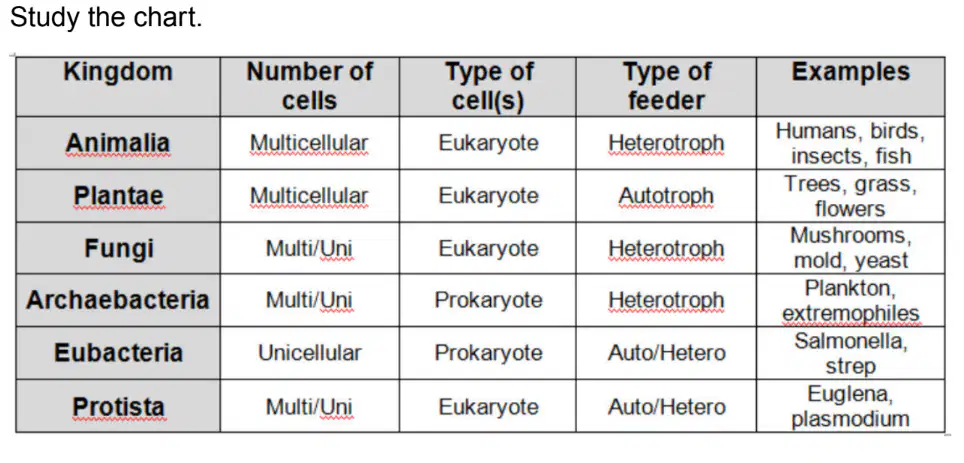
Which kingdom of organism is has a nucleus in its cell and chloroplasts, is
always multicellular?
The list contains four structures in the nervous system that have different
levels of complexity.
gray matter neuron cell membrane brain
What is the most complex structure listed in the chart?
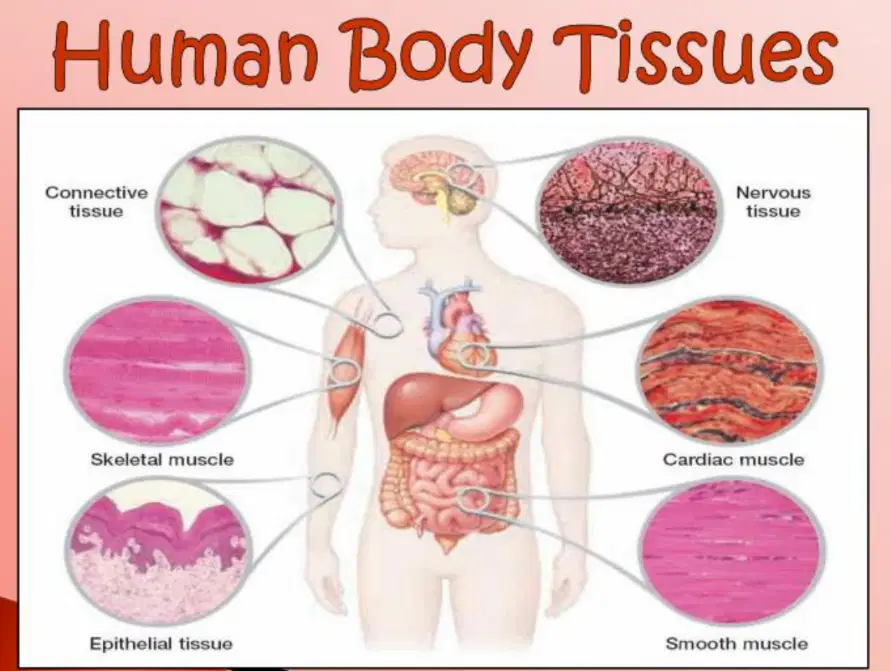
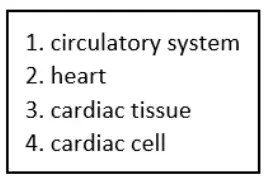
According to this diagram, which tissue is most directly associated with an
organ of the circulatory system?
cardiac tissue
skeletal muscle tissue
epithelial tissue
smooth muscle tissue
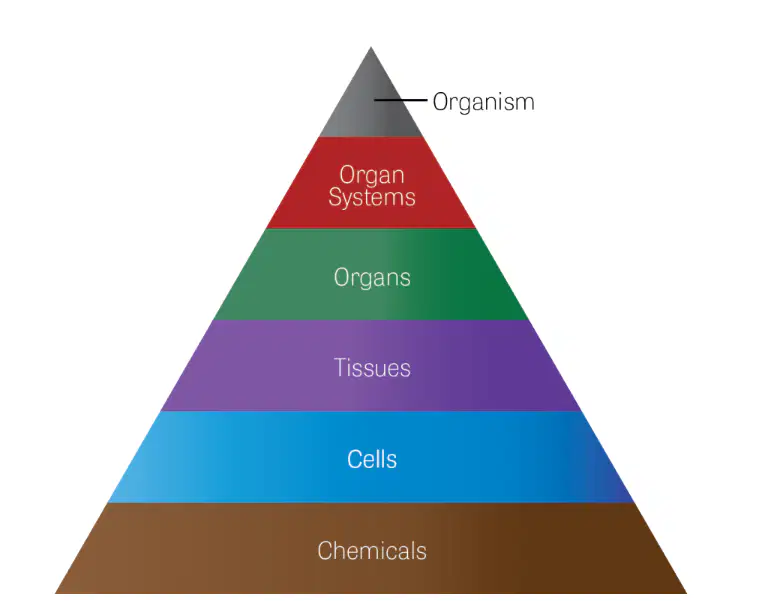
Use this diagram to determine which of the following answers is the most complex?
Oxygen (O2)
Excretory System
Muscle Tissue
Oak Tree
All living things across all kingdoms have which of the following in common?
They each make their own food.
They all have some organisms that are multicellular.
They are all made of a minimum of one cell.
They each can reproduce both sexually and asexually.
Match the following:
cells
tissues
lungs


Which structure is made of tissue?
Cell
Organ
Organ System
Organism
Which system transports nutrients and oxygen to the parts of the body?
Respiratory System
Digestive System
Circulatory System
Integumentary System
What is the most complex structure?
Tissue
Organ
Organ System
Cell
Which system is responsible for the absorption of nutrition?
Circulatory
Integumentary
Digestive
Respiratory

Which system is this?
Integumentary
Respiratory
Nervous
Digestive

Which two structures is this?
Organs and Organ Systems
Organs and Tissues
Cells and Tissue
Cells and Organ Systems
Match the organ system with its function
Nervous System
Controls the body
Circulatory System
Transports oxygen and nutrients through the body
Muscular System
Helps move the body
Excretory System
Removes waste
Reorder the following from simplest to most complex.
Organelle
Cell
Tissue
Organ
Organ System
Drag the images to match the labels.

Cell

Tissue

Organ

Organ System

Organism
Drag the images to match the labels

Cell

Tissue

Organ

Organ System

Organism
What kingdoms have organisms that are prokaryotic? (hint: 2 correct answers)
animalia
fungi
eubacteria
archeabacteria


All of the following have a nucleus except...
Bacteria
Animalia
Plantae (Plant)
Protista (Protist)

What are the kingdoms that are eukaryotic? (select all that apply)
animalia
Fungi
Protista
Plantae
Eubacteria
Single celled organisms that live in extreme conditions getting energy from taking in chemicals from their surrounds
Fungi
Eubacteria
Protists
Archaebacteria
Many celled organisms that do not move around, but make their own food for energy
Plants
Animals
Fungi
Protists
Mushrooms are an example of which kingdom?
Protists
Fungi
Plants
Bacteria
What do you think homeostasis is?
Keeping your body systems stable
Staying at home
Making body systems unstable

