
 Worksheets
Unit 8 Ecology Test
Total questions: 180
Worksheet time: 8hrs 33mins
If a scientist in New Zealand was studying how a group of herbivores interacted with a group of omnivores, and all of their abiotic surroundings, what level of ecology would she be studying?
Community
Population
Species
Ecosystem
Biome
If there are 100 KJ of energy available at the secondary consumer level, how many KJ of energy are available at the producer level?
10 KJ
1,000 KJ
10,000 KJ
1 KJ
What is Ecology?
It is the study of the Earth.
It is the study of how organisms interact with each other and their environment.
It is the study of recycling.
It is the study of plants.
Nonliving factors that affects an ecosystem are called...
biotic factors
abiotic factors
food chain factors
biome factors
The tropical rain forest, the desert, and the tundra are all examples of ...
the biopshere.
biomes.
ecosystems.
communities.
What are the ecological levels of organization from smallest to the largest?
organism, population, community, ecosystem, biome, biosphere
organism, community, population, ecosystem, biome, biosphere
organism, population, community, biome, ecosystem, ecosphere.
organism, community, population, biome, ecosystem, ecosphere

What level of ecological organization do the animals represent?
Species
Population
Community
Ecosystem

What level of ecological organization do the organisms represent?
Species
Population
Community
Ecosystem

What level of ecological organization does the bird represent?
Organism
Population
Community
Ecosystem

What level of ecological organization does this entire picture represent?
Organism
Population
Community
Ecosystem

What is a population?
One individual member of a species
a group of individuals that belong to the same species and live in the same area
all the different populations of species that live together in an area
a community of species and the physical environment

What are the abiotic factors in this image?
water, sunlight, dirt
birds, plants, predators
water, plants, parasites
oxygen, water, grasses
Jacob is going out to his grandparents farm. On the farm is a stream that he likes to fish in. While he is fishing he sees many different species of fish as well as maple and oak trees and dragonflies. What Jacob is seeing is an example of what level of organization?
organism
population
community
ecosystem
This is a single individual animal, plant or other living thing.
Organism
Community
Population
Ecosystem
A group of organisms of the same species
that live in the same area
Community
Population
Organism
Biome
All the populations that live and interact with each other in a particular place
Biosphere
Community
Population
Ecosystem
The Biotic (living) and Abiotic (non-living) factors in a particular environment.
Biosphere
Population
Community
Ecosystem
Sun
Abiotic
Biotic
Soil
Abiotic
Biotic
Water
Abiotic
Biotic

This image depicts which organizational level of the environment?
Community
Population
Organism
Ecosystem

This image depicts which organizational level of the environment?
Organism
Population
Community
Ecosystem

This image depicts which organizational level of the environment?
Ecosystem
Population
Community
Biosphere
A region of Earth that has a particular climate and certain types of plants.
Biosphere
Ecosystem
Population
Biome
The part of the earth and atmosphere in which living things exist.
Biome
Biosphere
Ecosystem
Community

Orangutan
Abiotic
Biotic

Ginko Tree
Abiotic
Biotic

Bacteria
Abiotic
Biotic

Fungus
Abiotic
Biotic


Which ecosystem is more likely to survive a change in the environment?
One with High biodiversity
One with Low biodiversity

Which shows more biodiversity Image A or Image B. Why?
Image B is more biodiverse, because shows more different species than image A.
Image A is more biodiverse, because shows a greater number of organisms that image B
Both images show the same biodiversity

In this food web example you can see that rain forests have many producers consumer and predators. How would you describe the rain forest biome?
It has high biodiversity
It has low biodiversity.
A species form that supports an entire ecosystem.
Keystone Species
Herbivores
Umbrella Species
Predators

What is a keystone species?
A species that helps to hold an ecosystem together
A species that lives in or around rocks
Keys and stones have nothing to do with ecology
A keystone isn't a living thing, it's just a stone

What do the arrows represent in a food chain?
Separation of trophic levels
Flow of energy
Transfer of matter
Feeding niches
A _____________makes it's own energy and starts a food chain.
sun
producer
primary consumer
decomposer
The 10% rule states that only 10% of the available energy makes it from one trophic level to the next. If the producers have 100,000 kcals available how many kcals would be available to the primary consumers?
10
100
1,000
10,000
Organisms that make their own food
Producer
Consumer
Decomposer
Organisms that obtain energy by feeding on other organisms
Producer
Consumer
Decomposer
Organisms that break down wastes and dead organisms and return the raw materials to the environment
Producer
Consumer
Decomposer
Consumers that eat only plants
Carnivores
Omnivores
Herbivores
Scavengers
Consumers that eat only animals
Carnivores
Omnivores
Herbivores
Scavengers
Consumers that eat both plants and animals
Omnivores
Carnivores
Herbivores
Scavengers
A food _______ is a series of events in which one organism eats another and obtains energy.
chain
web
pyramid
plate
A food _______ consists of many overlapping food ________.
web, chains
chain, webs
pyramid, webs
web, pyramids
As you work your way up the energy pyramid, what happens to the energy?
It increases
It decreases
It stays the same
Nothing

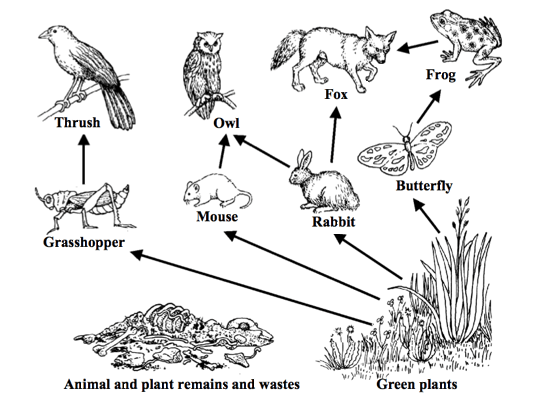
In the food web above, what eats the rabbit?
Fox
Hawk
Vole
Grass

In the food web above, what organism is missing from this food chain:
Grass --> Slug --> ________ --> Hawk
Vole
Frog
Insect
Thrush

In the energy pyramid, what is the bottom level composed of?
Producers
First-Level Consumers
Second-Level Consumers
Third-Level Consumers
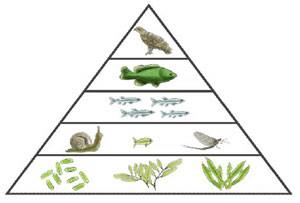
In the energy pyramid, what comes after the producers?
Producers
First-Level Consumers
Second-Level Consumers
Third-Level Consumers


The initial source of energy for all ecosystems is...
The Sun
Photosynthesis
Sugar
There is no one source
How much energy is available to be passed on to the next level in a food web?
100%
10%
50%
75%

Which of the following would be the most likely effect, if there were a sudden increase in the cricket population?
There would be a decrease in the small bird population.
There would be a decrease in the grass/flowers population.
There would be a decrease in the mice population.
There would be an increase in the grass/flowers population.

What would happen if their were no producers?
Every population would grow larger
Everything would die out
The animals would make their own food


In this energy pyramid, the grasshopper would be classified as a:
producer
decomposer
secondary consumer
primary consumer


Which trophic level has the least amount of energy?
1
2
3
4

All food webs and food chains begin with _________________.
primary consumer
producers
secondary consumers
tertiary consumers


In an ecological pyramid, which type of organism always has the least amount of energy available?
Producers
Herbivores
Carnivores
Apex Predator

If there are 100 Kcal of energy available in the producers, how much energy would be available in the primary consumers?
10 Kcal
1 Kcal
100 Kcal
1000 Kcal

Which organism is the carnivore?


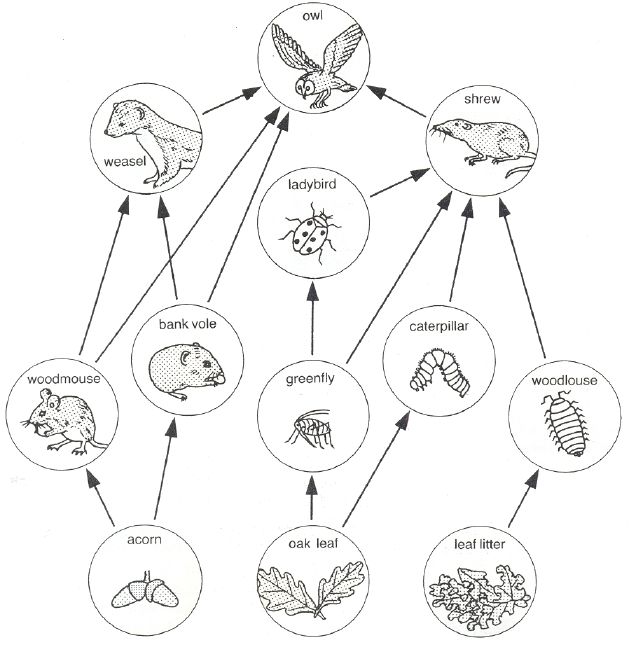
Which organism do the owl and the weasel compete for in the food web?
Hawk
Spider
Grasshopper
Shrew

Based on the image, which organism recieves the least amount of energy from the producer?
Owl
Grasshopper
Lilypad
Mouse


How are primary consumers different from secondary consumers?
Primary consumers eat only plants; secondary consumers eat other consumers.
Primary consumers eat other consumers; secondary consumers eat only plants.
Primary consumers eat plants and other consumers; secondary consumers eat plants and decompose matter.
Primary consumers eat plants and decompose matter; secondary consumers eat plants and other consumers.
A producer
Eats grass
Makes its own food
Does not need food(energy)
Is a primary consumer
A primary consumer
makes its own food
eats other animals
is a carnivore
consumes the producer
A secondary consumer
Only eats meat
Only eats plants
makes its own food
eats the primary consumer
tertiary consumers
Eat the primary consumer
Eat plants and animals
Consume the producer
eat the secondary consumer
A food chain shows more feeding relationships than a food web
true
false
A carnivore eats plants and animals
True
False
Humans are
carnivores
omnivores
herbivores
primary consumers
Chemosynthesis is the process in which organisms
form carbohydrates using chemicals.
get energy by eating other organisms.
use energy from the sun to form carbohydrates.
make chemicals that absorb sunlight.
A food chain contains oak trees (producer), mice (herbivore), black rat snakes (carnivore), and bald eagles (carnivore). How many trophic levels does this food chain have?
four
three
two
one
Giant pandas eat bamboo almost exclusively. For this reason, giant pandas are an example of a(n)
carnivore
omnivore
generalist
specialist
The temperature, rainfall, and soil/sand in an ecosystem would all qualify as
a whole ecosystem
abiotic factors
biotic factors
living things
An ecosystem consists of
the soil, water and weather.
a community of organisms.
energy.
all of the above.
A group of organisms of different species living together in a particular place is called a
A. community. C. biome.
B. population. D. habitat.
biome
population
community
habitat

What converts nitrogen gas into a usable form for plants and animals?
bacteria
rain
fungi
car exhaust
Organisms that need nitrogen to survive.
only plants
only animals
only bacteria
all living things
What is the process that converts nitrogen into a form that can be used by plants and animals?
Which of the following explains the long term portion of the phosphorus cycle?
Phosphorus is stored in rocks, and it is slowly recycled back into the ecosystem through weathering and erosion.
Phosphorus is constantly cycled through the food chain starting at the producer level and working its way to the apex predator.
Phosphorus does not have a long term portion.
Phosphorus cannot be recycled and reused because it is a nonrenewable resource.
Physical location where an organism lives
Niche
Habitat
Ecosystem
Adaptation
Role filled by an organism in an ecosystem (How it makes its living)
Habitat
Niche
Adaptation
Environment
Organism that is consumed by another organism
Predator
Herbivore
Prey
Producer
Organism that hunts and consumes another organism
Prey
Scavenger
Predator
Omnivore
The area where an organisms lives
niche
habitat
The role an organisms has in an ecosystem
niche
habitat

What is the niche of the oak tree?
be a scavenger and eat dead animals
be a producer and release oxygen
be a primary consumer and eat producers

Where is the polar bear's habitat?
ocean
forest
tundra

What is the jaguar's niche?
be a primary consumer and eat producers
be a producer and release oxygen
be a tertiary consumer

What is the mushroom's niche?
be a primary consumer and eat producers
be a tertiary consumer
break down dead organisms

A limiting factor is...
where an organisms lives
anything that keeps a population from growing
the role and organism has
Amount of food, water, living space, and oxygen are.....
carrying capacity
density-dependent limiting factors
density-independent limiting factors
Disease, competition, temperature, and natural disasters are ....
carrying capacity
density-dependent limiting factors
density-independent limiting factors
Predators keep a population from growing. Predators are...
habitats
limiting factors
prey
When the PREDATOR population INCREASES, the prey population....
increases
decreases
When the PREY population DECREASES, the PREDATOR population....
increases
decreases

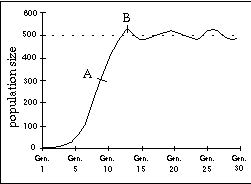


The total number of individuals that can survive in an habitat over time with the resources it has available.
Natural disasters can be considered limiting factors.
true: density independent limiting factors
false; natural disasters are not limiting factors
true: density dependent limiting factors
false: because Mrs. Burroughs said so
A lion and a cheetah attempt to occupy the same niche. The more aggressive lion survives; the cheetah does not.
Density-Dependent: Competition
Density-Independent: Competition
Density-Dependent: Predator-Prey
Density-Independent: Predator-Prey
Coyotes cross the winter pack ice and enter Newfoundland. The moose population starts to decline.
Density-Dependent: Competition
Density-Independent: Competition
Density-Dependent: Predator-Prey
Density-Independent: Predator-Prey
A severe frost wipes out 50% of the coffee crop in Brazil.
Density-Dependent
Density-Independent
Due to severe overcrowding in an Asian village, many children do not survive to reach adulthood.
Density-Dependent: Disease
Density-Independent: Disease
A severe flood in the Red River Valley causes a decline in the deer population.
Density-Dependent
Density-Independent

Competition between members of different species.
intraspecific competition
interspecific competition
Competition among members of the same species.
intraspecific competition
interspecific competition
A tick living on the body of a deer
predation
mutualism
commensalism
parasitism
A bee eating the flower's nectar and picking up the flower's pollen
predation
mutualism
commensalism
parasitism
A barnacle living on a whale's skin
predation
mutualism
commensalism
parasitism
A tapeworm living in a person's intestines
predation
mutualism
commensalism
parasitism

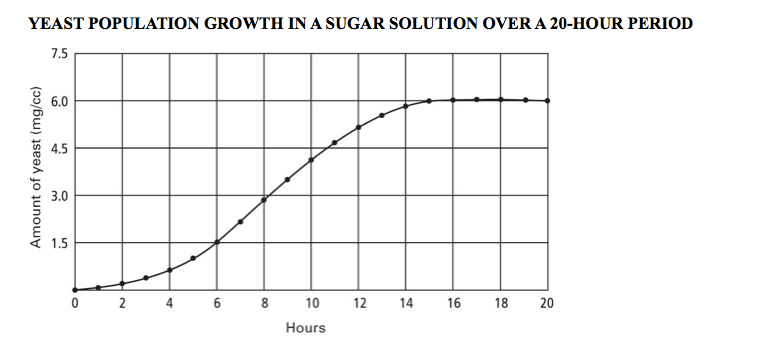
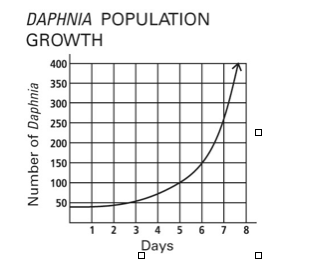


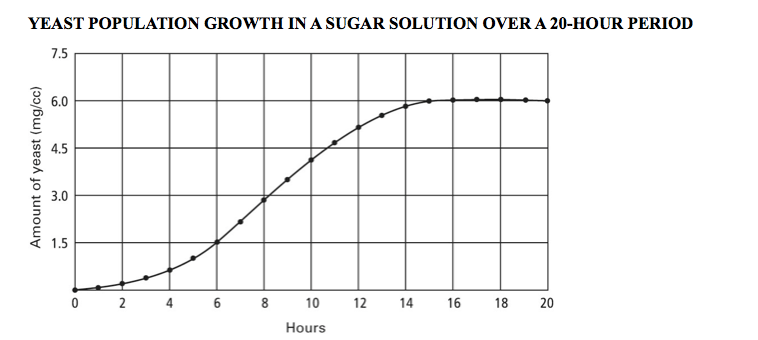
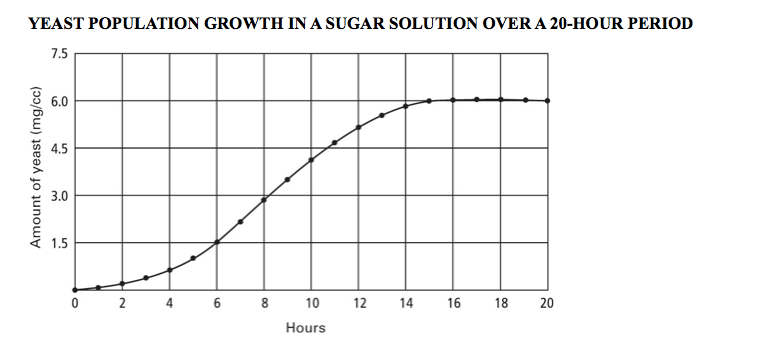


Exponential population growth can be described as
growth when resources are limited
a j-shaped curve
a s-shaped curve
growth that reaches carrying capacity
Logistic population growth can be described as
growth when resources are limited
a s-shaped curve
reaching carrying capacity
all of the above
What do we call the first species that colonize a new area?
Foreign Species
Pioneer Species
Intraspecies
Interspecies
Which of the following are examples of pioneer species? (select all that apply)
Maple Tree
Grass
Lichens
Moss
Which type of succession occurs after some kind of natural disaster wipes out most of the vegetation in a habitat?
Primary Succession
Secondary Succession
Which type of succession is quicker?
Primary Sucession
Secondary Succession
Which type of succession occurs on freshly formed barren land which was previously uninhabited?
Primary Succession
Secondary Succession

