Wayground logo

Free Printable Worksheets

Font size

S
M
L
XL
Worksheets

G8 Revision

Total questions: 106

Worksheet time: 1hrs 15mins
Name
Class
Date
1.
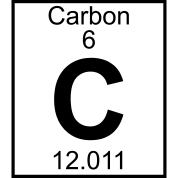
What does the 6 represent?
a)
atomic mass
b)
atomic number
c)
element name
d)
chemical symbol 
2.

What are valence electrons?

a)

Any of an atom's electrons

b)

Electrons located on the first energy level

c)

Electrons not attached to any atom

d)

electrons located on the outer energy level

3.

What category is silicon (Si) a part of?

a)

Metal

b)

Nonmetal

c)

Metalloid

d)

Halogens

4.

What is group name of the most reactive metals?

a)

Noble gases

b)

Halogens

c)

Alkali metals

d)

Alkaline earth metals

5.
Alkali metals are found in which group of the periodic table?
a)
Group 1
b)
Group 2
c)
Group 7
d)
group 8 
6.

True or false: Alkali Metals are so soft they can be cut with a plastic knife?

a)
True
b)
False
7.

What is the chemical symbol for Lithium?

a)

K

b)

Na

c)

Po

d)

So

e)

Li

8.

What is the chemical symbol for Potassium?

a)

K

b)

Na

c)

Po

d)

So

e)

Li

9.

What is the chemical symbol for Sodium?

a)

K

b)

Na

c)

Po

d)

So

e)

Li

10.

Natrium is the Swedish name for which element?

a)

Potassium

b)

Lithium

c)

Potassium

d)

Sodium

e)

Francium

11.

Group 1 has 7 elements , but for Alkali only has 6 elements member because of Hydrogen

a)

Incorrect

b)

Correct

12.

Lithium

a)

Li

b)

Be

c)

Na

d)

Mg

13.

Na

a)

Lithium

b)

Calcium

c)

Sodium

d)

Potassium

14.

Potassium

a)

Li

b)

Na

c)

Rb

d)

K

15.

How many electrons do alkali metals have on the outer shell?

a)

1

b)

2

c)

3

d)

4

16.

What is the atomic number of lithium?

a)

1

b)

2

c)

3

d)

4

17.

Alkali earth metals are found in which group of the periodic table?

a)

Group 1

b)

Group 2

c)

Group 7

d)

group 8

18.

Vertical columns on the periodic table are called ___?

a)

groups

b)

periods

c)

rows

d)

families

19.

Which color on the image of the periodic table corresponds with the lanthanides.

a)

red

b)

black

c)

blue

d)

orange

20.

Which color on the image of the periodic table corresponds with the transition metals.

a)

red

b)

black

c)

blue

d)

orange

21.

Which color on the image of the periodic table corresponds with the metalloids.

a)

yellow

b)

orange

c)

blue

d)

white

22.

Which color on the image of the periodic table corresponds with the alkaline earth metals.

a)

yellow

b)

orange

c)

blue/green teal

d)

grey

23.

Mendeleev first ordered the periodic table of elements by increasing

a)

atomic number

b)

atomic mass

c)

atomic symbol

d)

atomic weight

24.
Gold (Au)
a)
Transition Metal
b)
Alkali Metal
c)
Alkaline Earth Metal
d)
Heavy Metal
25.
Which element is not in the Alkali metal family?
a)
Li
b)
H
c)
Fr
d)
Cs 
26.

The is family has properties of both metals and nonmetals.

a)

Alkali

b)

Halogens

c)

Nonmetals

d)

Metalloids

27.
Which is an alkaline earth metal?
a)
Calcium
b)
Rubidium
c)
Carbon
d)
Iodine
28.

Metals are good conductors of-

a)

malleability and ductility

b)

magnetism and alloy

c)

electricity and heat

d)

corrosion and rust

29.
The particles that are found in the nucleus of an atom are
a)
neutrons and electrons
b)
electrons only
c)
protons and neutrons
d)
protons and electrons
30.

What is the atomic number of this atom shown in the Bohr model?

a)

11

b)

12

c)

13

d)

can't be determined

31.
How do you find out the number of neutrons in an atom?
a)
atomic number
b)
atomic mass
c)
charge
d)
atomic mass - atomic number
32.

Which is an electron?

a)

A

b)

B

c)

C

d)

electrons are not labeled in the diagram

33.
How do you find out the number of protons in an atom?
a)
atomic number
b)
atomic mass
c)
charge
d)
atomic mass - atomic number
34.
All matter is made of _________. 
a)
energy 
b)
atoms 
c)
electrons 
d)
compounds 
35.
Which particle has a similar mass to a proton?
a)
Electron
b)
Neutron
c)
Photon
d)
Marble
36.
The mass of a proton is _______.
a)
1 amu
b)
1 gram
c)
has no mass
d)
undetermined
37.
The part of the atom that determines the identity of the atom is the ____________.
a)
proton
b)
nucleus
c)
electron
d)
neutron
38.
A substance that is made up for one type of atom is called an:
a)
atom
b)
element
c)
compound
d)
mixture
39.
Which is a neutron?
a)
A
b)
B
c)
C
40.
Which is a proton?
a)
A
b)
B
c)
C
41.

What particle in the atom has a positive charge?

a)

proton

b)

neutron

c)

electron

d)

quark

42.

What is the particle in the atom that has no charge?

a)

neutron

b)

proton

c)

electron

d)

alpha particle

43.

The particle in the atom that has a negative charge is called?

a)

electron

b)

proton

c)

neutron

d)

megatron

44.

the smallest particle that still can be considered an element

a)

proton

b)

neutron

c)

electron

d)

atom

45.

the dense center of an atom

a)

proton

b)

nuetron

c)

nucleus

d)

election

46.

a positively-charged particle in the atoms nucleus

a)

proton

b)

neutron

c)

electron

47.

Which TWO of the following subatomic particles are inside the nucleus?

a)

protons

b)

electrons

c)

neutrons

d)

There are no subatomic particles in the nucleus of an atom.

48.

Which label correctly identifies the nucleus of the atom?

a)

A

b)

B

c)

C

d)

D

49.

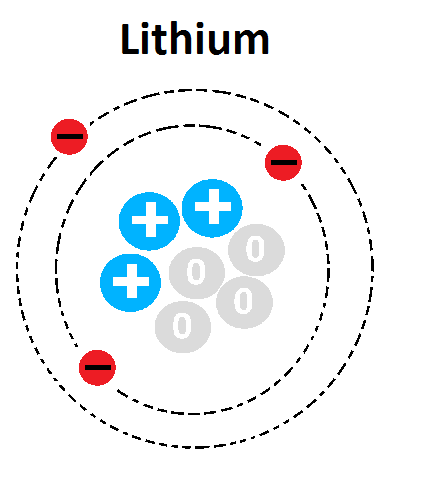
What is the atomic number of this atom?

a)

1

b)

3

c)

4

d)

7

50.

A model of Nitrogen is shown, in this model, what do the blue spheres represent?

a)

electrons

b)

neutrons

c)

photons

d)

protons

51.

Which subatomic particle has a negative charge?

a)

proton

b)

neutron

c)

electron

d)

atom

52.

Which of the following is an element?

a)

salt

b)

oxygen

c)

vinegar

d)

water

53.

What is at the center of every atom?

a)

an electron

b)

only protons

c)

a molecule

d)

a nucleus

54.

What does an element's atomic number represent?

a)

the element state at room temperature

b)

how metallic an element is

c)

the number of atoms in a compound

d)

the number of protons in an element

55.

Audra is looking at the diagram of an atom. Which particle(s) does she see inside the nucleus?

a)

electrons only

b)

protons only

c)

electron and protons

d)

protons and neutrons

56.

A model of Nitrogen is shown, in this model, what do the blue spheres represent?

a)

electrons

b)

neutrons

c)

photons

d)

protons

57.

Which subatomic particle has a neutral (0) charge?

a)

proton

b)

nuetron

c)

electron

d)

atom

58.

This Scientist model is the most common. They said electrons orbit nucleus at fixed energy levels

a)

Ernest Rutherford

b)

Niels Bohr

c)

John Dalton

d)

JJ. Thompson

59.
What scientist is best known for his "Plum Pudding" model of the atom?
a)
J.J. Tomson
b)
Ernest Rutherford
c)
John Dalton
d)
Democritus
60.
Rutherford's gold foil experiment provided evidence that...
a)
negative and positive charges are spread evenly throughout the atom.
b)
alpha particles have a positive charge.
c)
gold is not a dense as previously thought.
d)
there is a dense positively charged nucleus at the center of an atom.
61.
Ernst Rutherford discovered which part of the atom through the use of gold foil?
a)
Proton
b)
Neutron
c)
Electron
d)
Orbitals
62.

This Scientist model is the most common. They said electrons orbit nucleus at fixed energy levels

a)

Ernest Rutherford

b)

Niels Bohr

c)

John Dalton

d)

JJ. Thompson

63.
The smallest unit of a pure substance that has the properties of that substance
a)
element
b)
atom
c)
neutron
d)
compound
64.
Atoms are made up of three basic parts, which are -
a)
Protons, neutrons, electrons
b)
neutrinos, protons, neutrons
c)
quarks, protons, electrons
d)
electrons, neutrons, and quarks
65.
What scientist is best known for his "Plum Pudding" model of the atom?
a)
J.J. Tomson
b)
Ernest Rutherford
c)
John Dalton
d)
Democritus
66.
Place the following scientists in order, from earliest to latest: 
A) Ernest Rutherford
B) J.J. Thomson
C) John Dalton
a)
B,C,A
b)
C,A,B
c)
A,C,B
d)
C,B,A
67.
J.J. Thomson provided evidence that an atom...
a)
is the smallest particle of matter
b)
contains negatively charged particles
c)
has an overall negative charge
d)
has an overall positive charge
68.
Rutherford's gold foil experiment provided evidence that...
a)
negative and positive charges are spread evenly throughout the atom.
b)
alpha particles have a positive charge.
c)
gold is not a dense as previously thought.
d)
there is a dense positively charged nucleus at the center of an atom.
69.
Ernst Rutherford discovered which part of the atom through the use of gold foil?
a)
Proton
b)
Neutron
c)
Electron
d)
Orbitals
70.

Which Scientist said, Uniform spheres of positive charges surrounded by electrons.

a)

Democritus

b)

Aristotle

c)

John Dalton

d)

JJ. Thompson

71.

Which Scientist performed the Gold foil experiment. Determined that Atoms are mostly empty space with a nucleus.

a)

Ernest Rutherford

b)

Niels Bohr

c)

John Dalton

d)

JJ. Thompson

72.
Who stated that all atoms of the same element are exactly alike?
a)
Democritus
b)
Dalton
c)
Thomson
d)
Borh
73.
Niels Bohr suggested that electrons.......
a)
are found in specific orbits
b)
electrons are scattered throughout the atom
c)
electrons move according to their energy level
d)
electrons are positive
74.
J.J. Thomson provided evidence that an atom...
a)
is the smallest particle of matter
b)
contains negatively charged particles
c)
has an overall negative charge
d)
has an overall positive charge
75.
His atomic model was depicted similar to a planetary/solar system
a)
Bohr
b)
Thomson
c)
Rutherford
d)
Dalton
76.
The Billiard Ball is the nickname for ________ theory.
a)
Dalton
b)
Neils Bohr
c)
JJ Thomson
d)
Ernest Rutherford
77.
Who discovered the proton?
a)
Thomson
b)
Dalton
c)
Bohr
d)
Rutherford
78.
He developed the planetary model of the atom.
a)
Rutherford
b)
Bohr
c)
Chadwick
d)
Dalton
79.

What does this image does this represent?

a)

Plum Pudding

b)

Billiard Ball

c)

Planetary model

d)

Electron Cloud

80.
What does this image represent
a)
Billiard Ball
b)
Solar System
c)
Plum Pudding
d)
Electron Cloud
81.
The Gold Foil experiment was done by __________.
a)
Chadwick
b)
Bohr
c)
Rutherford
d)
Thomson
82.

Greek philosopher that came up with the concept of "atomos"

a)

Democritus

b)

Dalton

c)

Thomson

d)

Schrodinger

83.

Said atoms of the same element are alike but atoms of different atoms are different. Elements can combine together to form new things.

a)

Dalton

b)

Thomson

c)

Rutherford

d)

Bohr

84.

John Dalton stated:

a)

Atoms are tiny, invisible particles.

b)

Atoms of one element are all the same.

c)

Atoms of different elements are different.

d)

Compounds form by combining atoms.

e)

All of the statements listed.

85.

Where are electrons likely to be found according to our Modern Atomic Theory?

a)
outer shell of the atom
b)
in the nucleus
c)
electron cloud
86.
Whose model of an atom is displayed in this figure?
a)
Bohr
b)
Rutherford
c)
Thomson
d)
Dalton
87.
Whose model of an atom is displayed in this figure?
a)
Bohr
b)
Rutherford
c)
Thomson
d)
Dalton
88.
Whose model of an atom is displayed in the figure?
a)
Bohr
b)
Rutherford
c)
Thomson
d)
Dalton
89.
Who's model is this? 
a)
Millikan
b)
Rutherford
c)
Thomson
d)
Bohr
90.
How did Thomson build upon Dalton's model? 
a)
His model was the same.
b)
He put electrons in orbitals.
c)
He discovered the nucleus.
d)
He discovere subatomic particles (electron).
91.

What are the shapes in this model representing?

a)

protons, neutrons, and electrons

b)

the nucleus

c)

cloud where electrons exist

d)

molecules

e)

electron orbits

92.
Who stated that all atoms of the same element are exactly alike?
a)
Democritus
b)
Dalton
c)
Thomson
d)
Borh
93.

Greek philosopher that came up with the concept of "atomos"

a)

Democritus

b)

Dalton

c)

Thomson

d)

Schrodinger

94.

Where are electrons likely to be found according to our Modern Atomic Theory?

a)
outer shell of the atom
b)
in the nucleus
c)
electron cloud
95.

What are the shapes in this model representing?

a)

protons, neutrons, and electrons

b)

the nucleus

c)

cloud where electrons exist

d)

molecules

e)

electron orbits

96.

Name the metal which is in liquid state.

a)

Iron

b)

Mercury

c)

Zinc

d)

Aluminium

97.
What does malleable mean?
a)
able to bend
b)
will break easily
c)
can be used for wire
d)
is shiny
98.
What does ductile mean?
a)
electricity flows easily
b)
quacks like a duck
c)
can be drawn into a wire
d)
able to bend
99.

Able to be beaten or hammered into shapes

a)

lustre

b)

malleable

c)

brittle

d)

insulator

100.
Where are the non-metallic elements found in the periodic table?
a)
In the middle
b)
In the top rows
c)
On the left-hand side
d)
On the right-hand side
101.
The list which contains only metals is .......
a)
aluminium, copper, nitrogen
b)
iron, oxygen, hydrogen
c)
iron, silver, aluminium
d)
iron, sulphur, copper
102.
Brittle
a)
Metal
b)
Nonmetal
103.
Which of the following is a metal?
a)
chlorine
b)
sodium
c)
Oxygen
104.

which of these are properties of metals?

a)

ductile

b)

low melting or boil point

c)

high melting/boiling point

d)

conduct electricity

e)

soluble in water

105.

The diagram represents the general structure of a solid Z.


What is Z?

a)

aluminium

b)

iodine

c)

silicon dioxide

d)

sulfur

106.

What property of metals is being shown in figure 1(b) in the image?

a)

malleable (bend without breaking)

b)

ductile (stretched into a wire)

c)

conductive (can conduct electricity)

d)

shiny