
 Worksheets
IS-Sam
Total questions: 150
Worksheet time: 2hrs 9mins
A camel has eyelashes that work to keep the dust and sand out of its eyes. Which characteristic of life does this represent?
All living things adapt to their environment
All living things grow
All living things have cells
All living things use energy
Which statement describes ALL living things?
They are composed of one or more cells.
They must reproduce sexually.
They have organ systems to carry out the processes of life.
They are capable of making their own food.
A baby song bird hatches from its egg with both parent songbirds watching. Which characteristic of life does this represent?
All living things reproduce
All living things maintain homeostasis
All living things use energy
All living things grow
The following are all characteristics of life EXCEPT:
made of cell(s)
eat food
respond stimuli
reproduce

Which characteristic is shown: A plant switches position and follows the sunlight throughout the day.
Grow and develop
Respond to a stimulus
Acquire and use energy
Reproduce
Which of the following is NOT an example of an adaptation?
birds migrating during the winter months
the total sum of all the chemical reactions in your body
humans evolving the ability to digest lactose (sugar in milk)
the ability of dolphins to communicate in aquatic environments

Which of these is not true about all organisms?
all living things are multicellular
all living things obtain and use energy
all living things reproduce

The following list represents characteristics of a living thing :
made of cells, has lungs, can reproduce
made of cells, grows and develops, uses energy
has similar chemicals, makes noises, made of cells
Which item listed is NOT a characteristic of life?
adjusting to stimuli
getting and using energy
growing and developing
breathing
The combination of chemical reactions through
which an organism builds up or breaks down
materials as it carries out its life processes is called ...
absorption
metabolism
digestion
consumption
Maintaining a stable internal
environment is called
homeostasis
equilibrium
balance
evenness
Which of the following is NOT an example of an adaptation?
birds migrating during the winter months
the total sum of all the chemical reactions in your body
humans evolving the ability to digest lactose (sugar in milk)
the ability of dolphins to communicate in aquatic environments


Which is the simplest level of organization within the environment?
cell
organism
population
community
Which of the following is the highest level of organization within the environment?
population
organism
ecosystem
biosphere

Which of the following describes #2?
An ecosystem is the interaction between biotic and biotic factors.
A community is a group of different populations in the same area.
An organism is one living thing.
A population is a group of the same organisms.

What level of ecological organization does this entire picture represent?
Organism
Population
Community
Ecosystem

What level of ecological organization does the bird represent?
Organism
Population
Community
Ecosystem

What level of ecological organization do the organisms represent?
Species
Population
Community
Ecosystem
Which of the following describes #3?
An ecosystem is the interaction between biotic and biotic factors.
A community is a group of different populations in the same area.
An organism is one living thing.
A population is a group of the same organisms.
Which of the following describes #4?
An ecosystem is the interaction between biotic and biotic factors.
A community is a group of different populations in the same area.
An organism is one living thing.
A population is a group of the same organisms.
All the alligators in a swamp are an example of a(n) _______________.
organism
community
population
group
A group of only one type of organism is a
Population
Community
Ecosystem
Niche

Is this an example of a population or community?
Population
Community

Is this an example of a population or community?
Population
Community
The living and nonliving things in an environment and all the interactions
population
food chain
ecosystem
community

What type of Energy does Photosynthesis create?
Glucose
Water
ATP
Oxygen

What type of Energy does Cellular Respiration create?
ATP
Water
Carbon Dioxide
Oxygen
multiple populations
of different species
living together
community
population
ecosystem
biodiversity
multiple
ecosystems that share
similar characteristics but
are located in different
parts of the planet
population
community
biome
biodiversity
Why do viruses need living hosts, such as bacteria or eukaryote cells?
Viruses have a cellular structure which never require a host.
Viruses depend on the host cells that they infect to reproduce.
Viruses depend on a host cell because they lack their own DNA or RNA.
The host cell is the source of food for the virus.
Viruses are not living, because they
are not cellular.
have no DNA.
do not reproduce.
lack a nucleus.
Cell theory states:
all living things are composed of one or more cells;
a cell is the smallest unit that still retains the properties of life;
and new cells only come from cells that already exist.
Based on cell theory, which of these answer choices would describe one reason a virus is considered nonliving?
A virus is too small to be considered a cell.
A virus does not contain genetic material.
A virus does not have a nucleus.
A virus cannot reproduce itself without a host
Which statement describes ALL living things?
They are composed of one or more cells.
They must reproduce sexually.
They have organ systems to carry out the processes of life.
They are capable of making their own food.
When scientists classify living things, they do not include viruses.
This is because viruses
do not contain DNA.
are much smaller than other organisms.
are not made of one or more cells.
cause disease.
Viruses CANNOT
be crystallized.
live in bacteria.
cause disease in plants.
reproduce on their own.

Examine the model of a viral structure shown here. Select the choice that accurately compares and contrasts the structures of viruses and cells.
Both cells and proteins have capsid structures surrounding their genomes.
Both cells and viruses have protein molecules.
Examine the model of a viral structure shown here. Select the choice that accurately compares and contrasts the structures of viruses and cells.
Viruses have enzymes for DNA replication, where cells do not.
Cells have specialized organelles, where viruses do not contain these structures.
Examine the model of a viral structure shown here. Select the choice that accurately compares and contrasts the structures of viruses and cells.
Viruses have the ability to maintain homeostasis.
Both cells and viruses have DNA/RNA.
Is this characteristic define as living organisms, viruses, or both:
The ability to grow.
Living Organisms
Viruses
Both
Is this characteristic define as living organisms, viruses, or both:
May mutate and evolve.
Living Organisms
Viruses
Both
Is this characteristic define as living organisms, viruses, or both:
Protein coat instead of membrane.
Living Organisms
Viruses
Both
Is this characteristic define as living organisms, viruses, or both:
Can have a DNA genome.
Living Organisms
Viruses
Both
Is this characteristic define as living organisms, viruses, or both:
Not made of cells.
Living Organisms
Viruses
Both
Is this characteristic define as living organisms, viruses, or both:
Ability to reproduce independently.
Living Organisms
Viruses
Both
Is this characteristic define as living organisms, viruses, or both:
Needs a host.
Living Organisms
Viruses
Both
Vaccines can be used to prevent viral infection by
destroying any viruses that enter the host.
creating a blocking protein on the cell.
creating an immune response in the host.
preventing replication of the virus.
Identify the correct characteristic of life:
Fox chasing a rabbit—rabbit running away
Energy
Cells
Responds to a Stimuli
Maintains Homeostasis
Does the presence of DNA help scientists classify disease-causing agents as bacteria or viruses?
No, both bacteria and some viruses contain DNA.
No, neither bacteria nor viruses contain DNA.
Yes, bacteria contain DNA but viruses do not.
Yes, viruses contain DNA but bacteria do not.
Which characteristic of life describes a person touching a hot stove and jerking their hand back.
Organization
Maintaining Homeostasis
Respond to a Stimuli
Grows and Develops
Identify the correct characteristic of life:
A lizard can change colors to blend in.
Levels of Organization
Adaptation
Homeostasis
Grows & Develops
In what ways are viruses like bacteria?
Viruses can also cause food to spoil.
Viruses are also prokaryotes.
Viruses are also decomposers.
Viruses are also pathogenic.
Why do viruses need living hosts, such as bacteria or eukaryote cells?
Viruses depend on a host cell because they lack their own DNA or RNA.
Viruses have a cellular structure which never require a host.
The host cell is the source of food for the virus.
Viruses depend on the host cells that they infect to reproduce.
What does a virus inject into a host cell?
Their brain
Their proteins
Their genetic material
Their nucleus
Identify the correct order
Cells, Tissue, Organ System, Organ
Tissue, Organ, Cell, Organ System
Cell, Tissue, Organ, Organ System
Cell, Tissue, Organ System, Organ
Which of the following is true for both bacteria and viruses?
both contain genetic material
can be killed using antibiotics
have a cell membrane
have a protein coat
Which statement is true about viruses?
Viruses can eat and metabolize food.
Viruses can reproduce only using a host cell.
Viruses can reproduce on their own at any time.
Viruses contain DNA, so they are alive.
Viruses contain genetic material either DNA or RNA
FALSE
TRUE


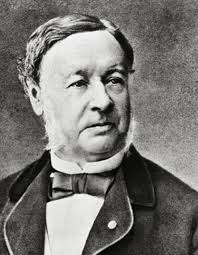


The scientist who stated: All plants are made of cells.
Matthias Schleiden
Rudolf Virchow
Robert Hooke
Aristotle


This is a rigid structure that gives plant cells protection and support.
cell membrane
cell wall
vacuole
endoplasmic reticulum

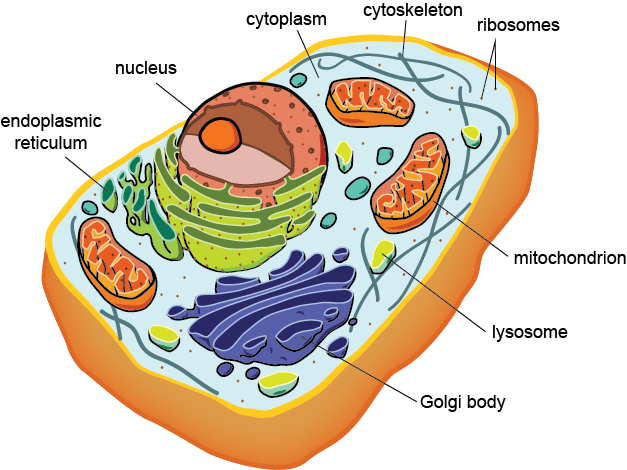
Function of this organelle?
transport proteins
package and ship proteins
synthesize proteins
digests food and worn-out organelles


Large balloon-shaped organelle?
nucleus
vacuole
chloroplast
lysosome


Plant and animal cells are examples of
prokaryotic cells
eukaryotic cells
Which of the following structures is ALWAYS found in both eukaryotic and prokaryotic cells?
nucleus
mitochondria
ribosomes
cell wall
Which of the following is only found in EUKARYOTIC cells?
nucleus
DNA
cell membrane
ribosomes
PROKARYOTIC cells do NOT have
membrane bound organelles
cell membrane
DNA
ribosomes
The smallest unit of a living thing are
atoms
cells
DNA
organelles

Which type of cell developed first?
Prokaryotic Cells
Eukaryotic Cells
Which cell type tends to be smaller?
Prokaryote
Eukaryote
there is not a size difference
A cytoplasm is found in
prokaryotic cells.
eukaryotic cells.
Bacteria is an example of a(n)
prokaryotic cell.
eukaryotic cell.
Organelles are found in
prokaryotic cells.
eukaryotic cells.
both
CHALLENGE QUESTION: Which of the following provides evidence for the hypothesis that prokaryotes evolved before eukaryotes.
prokaryotes are more complex
prokaryotes have no nucleus and fewer genes
eukaryotes are multicellular which makes them simpler
prokaryotes grow into eukaryotes

This type of cell has no nucleus, no organelles, smaller less complex
Prokaryotes
Eukaryotes
Does not have a nucleus
Only Prokaryotic Cells
Only Eukaryotic Cells
Both Prokaryotic & Eukaryotic Cells

There are three main sampling techniques that can be used in ecology. Which of the following is not one of them?
Random
Systematic
Stratified
Clustered

name this piece of equipment
quadrant
sqaure
frame
quadrat
What are the types of population distribution?
even, odd, and prime
random, uniform, and clumped
north, south, and east
large, medium, and small
How is population density measured?
By counting the number of buildings in an area
By calculating the total area of the area
By measuring the average height of the population
By dividing the total population of an area by the total land area of that area.
As of 2015, the most densely populated state in the US was New Jersey. The 2015 population was 8,957,907 people and the land area was 7,354 square miles. What is the the population density to the nearest tenth?
1218.1 people per sq mi
1500 people per sq. mi.
325 people per sq. mi.
8569 people per sq. mi.

Which graph shows logistic growth?


Which picture shows Unlimited Growth?


If the number of Births is the SAME as the number of Deaths, then the population is...
increasing
not growing
decreasing
If the number of Births is MORE than the number of Deaths, then the population is...
increasing
not growing
decreasing
Factors that affect population size:
DECREASE: Number of ___________ & ____________
Choose all that applies.
Birth
Death
Immigration
Emigration

At what population was carrying capacity met?
250
1000
400
720

Exponential population growth can be described as
growth when resources are limited
a j-shaped curve
a s-shaped curve
growth that reaches carrying capacity
Logistic population growth can be described as
growth when resources are limited
a s-shaped curve
reaching carrying capacity
all of the above
What limits Population Growth?
birth rates increasing
resources being used up
natural selection taking place
none of the above

Density-independent limiting factors to population growth includes
stress from overcrowding
parasitism
competition
natural disasters

Exponential Growth occurs when-
populations have plenty of food/space
home to keystone species
have few evasive species in a habitat
have little to no competition or predators
Which of the following is a density dependent factor?
volcanic eruption
earthquake
disease
hurricane
Which limiting factor is density independent?
water
food
natural disasters
Which limiting factor would increase due to the number of individuals in a population?
Unusual weather
Natural disaster
Disease
Limiting factors are sometimes helpful because they can keep the population from getting to large.
True
False

