
 Worksheets
DPHS Bio PMA 1 Review
Total questions: 118
Worksheet time: 3hrs 1mins

Producers get their energy from the sun by doing what?
Using photosynthesis to make sugars
Ordering energy off Amazon
Consuming other plants
Asking the sun very politely to give them some energy
Consumers get their energy by doing what?
Eating other living things
Consuming sunlight
Using photosynthesis to make sugars
Being tryhards

The rabbit receives its energy from which organism?
Mouse
Frog
Grass
Fox
The owl receives its energy from which organism?
Mouse
Hawk
Grass
Fox
Which organism from the food web has the HIGHEST available energy?
Mouse
Frog
Grass
Fox
Which organism from the food web has the LEAST available energy?
Mouse
Frog
Grass
Hawk
Assuming the grass has about 3000kj of available energy, approximately how much of that energy would the mouse get when it eats the grass?
30
3
300
10
Which of the following statements best describes the transfer of energy between a rabbit
and a fox, if the rabbit contains 4000 kJ of energy?
The rabbit will receive exactly 4000 kJ of available energy from the fox.
The fox will receive exactly 4000 kJ of available energy from the rabbit.
The rabbit will receive less than 4000 kJ of available energy from the fox.
The fox will receive less than 4000 kJ of available energy from the rabbit.
Which organism is NOT a primary consumer?
Mouse
Snake
Rabbit
Grasshopper
Which organism is a secondary consumer?
Hawk
Frog
Snake
Grasshopper
Which organism from the food web is a producer?
Mouse
Frog
Grass
Fox
Which organism from the food web is shown as a tertiary consumer?
Owl
Snake
Hawk
Mouse
According to the food web, which organism could be an energy source for the owl?
Mouse
Hawk
Grass
Fox
If the grasshopper population suddenly died out due to the introduction of an invasive species, what would be the long-term effect on the available energy of the ecosystem shown? (think carefully!)
The energy available to producers would increase
The energy available to tertiary consumers would decrease
The energy available for the primary consumers would decrease.
The energy available for the secondary consumers would increase.
If the population of grasses suddenly died out due to human activity, what would be the long-term effect on the available energy of the ecosystem shown? (think carefully!)
The energy available to producers would decrease
The energy available to tertiary consumers would increase
The energy available for the primary consumers would increase.
The energy available for the secondary consumers would decrease.

Florida is known as the "Sunshine State" because we have high amounts of sunlight exposure. How does all this sunlight affect the water cycle?
The water cycle will be more active due to higher evaporation rates
The water cycle will be less active due to lower evaporation rates
The water cycle will be unaffected
The water cycle will be more active due to higher percolation.

A local forest is infected with a disease that prevents tree roots from absorbing water and
transporting it throughout the plant. How will this affect the water cycle?
Transpiration will decrease; evaporation will be unaffected
Transpiration will increase; evaporation will increase
Transpiration will be unaffected; evaporation will be unaffected
Transpiration will be unaffected; evaporation will decrease

Combustion is a process of the carbon cycle where humans burn fossil fuels to produce energy. Which of the following statements correctly describes a consequence of burning fossil fuels? (hint: where does the carbon end up?)
Humans burning fossil fuels will lead to increased levels of carbon dioxide gas in the atmosphere.
If humans decrease their reliance on combustion, underground fossil fuels will also decrease.
Increased combustion of fossil fuels will encourage higher rates of respiration.
Decreased combustion of fossil fuels will lead to more organic carbon for photosynthetic
organisms like plants.

The graph shows how temperature will be affected by global warming. Which statement best describes how global warming will likely affect the water cycle?
A decrease in global land and ocean temperatures will result in lower rates of evaporation.
A decrease in global land and ocean temperatures will result in higher rates of
precipitation.
An increase in global land and ocean temperatures will result in higher rates of
evaporation.
An increase in global land and ocean temperatures will result in lower rates of
condensation.

Combustion is a process of the carbon cycle where humans burn what type of carbon source?
Fossil fuels
Organics
Atmospheric
Photosynthesis

Fossil fuels are a type of carbon source found underground. Fossil fuels were originally what?
Living organisms that died millions of years ago
Oil
Carbon dioxide in the air
Living organisms that died recently

Organic carbon is found where?
Deep underground
In living things
In the air
In cars and factories

Atmospheric carbon is found where?
In the air surrounding Earth
In living things
Deep underground
In cars and factories

Dermestid beetles are a type of insect that help the process of decay by eating and breaking down dead animals. If pesticides from a local farm caused a decrease in the local dermestid beetle population, how would the carbon cycle be affected?
Carbon in the atmosphere would increase
Carbon in the soil would decrease
Carbon in the soil would increase
Carbon would not be affected

As of 2024, the human population is over 8 billion! If humans keep growing in number, what is a likely impact on the carbon cycle?
Carbon in the atmosphere will increase due to increased reliance on fossil fuels
Carbon in the soil would decrease due to less decay
With more humans breathing, carbon in the atmosphere will decrease
Underground fossil fuel levels will increase due to increased reliance on combustion
Which of the following best describes how carbon moves during the process of decay?
Carbon moves from organic sources to the ground
Carbon moves from the atmosphere to the ground
Carbon moves from the ground to the atmosphere
Carbon moves from the ground to organic sources
Which of the following best describes how carbon moves during the process of respiration?
Carbon moves from organic sources to the atmosphere
Carbon moves from the atmosphere to the ground
Carbon moves from the ground to the atmosphere
Carbon moves from the ground to organic sources
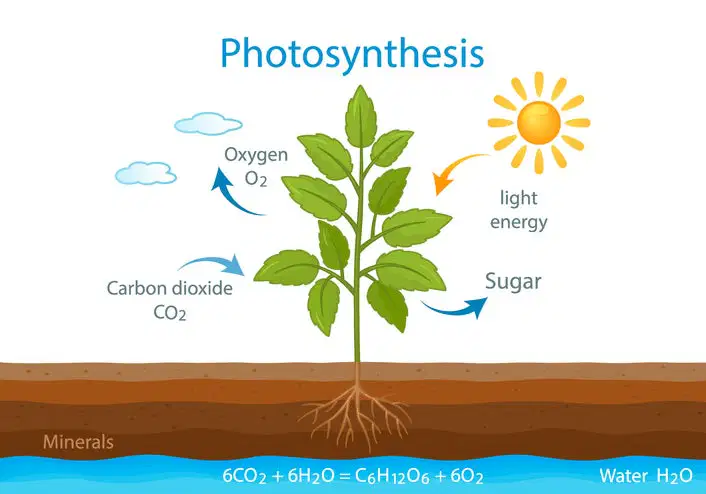
Which of the following best describes how carbon moves during the process of photosynthesis?
Carbon moves from the atmosphere into organic sources
Carbon moves from the atmosphere to the ground
Carbon moves from the ground to the atmosphere
Carbon moves from the ground to organic sources

Which of the following best describes how water moves during the water cycle process of evaporation?
Starts as liquid sources on the Earth's surface; moves to atmosphere as water vapor gas
Starts as water vapor gas in the atmosphere; moves down to the surface as a liquid
Starts as a water vapor gas on the surface of the earth; moves to the atmosphere as a liquid
Starts as a liquid in the atmosphere; moves to the surface as water vapor gas

Which of the following best describes how water moves during the water cycle process of transpiration?
Starts as liquid sources within the bodies of plants; moves to atmosphere as water vapor gas
Starts as water vapor gas in the atmosphere; is taken into the bodies of plants
Starts as a water vapor gas on the surface of the earth; moves to the atmosphere as a liquid
Starts as a liquid in the atmosphere; moves to the surface as water vapor gas
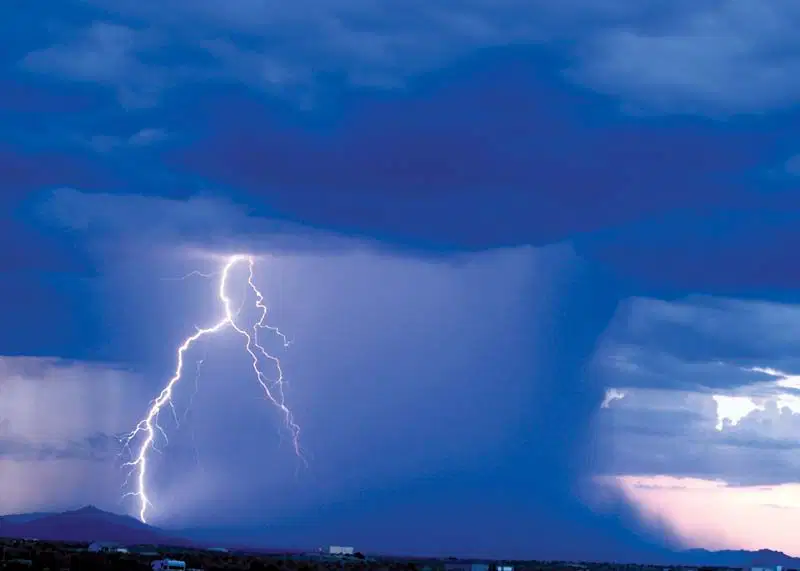
Which of the following best describes how water moves during the water cycle process of precipitation?
Starts as liquid sources within the bodies of plants; moves to atmosphere as water vapor gas
Starts as water vapor gas in the atmosphere; is taken into the bodies of plants
Starts as clouds in the atmosphere; moves down to the surface as a liquid or solid
Starts as clouds in the atmosphere; moves to the surface as water vapor gas
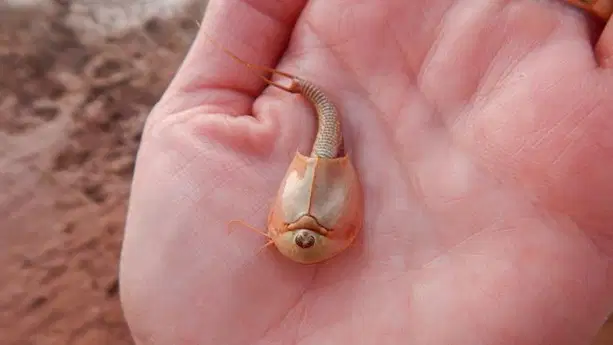
The Triops shrimp is a unique animal that has adapted to living in the extremely dry conditions of the desert. When rain finally comes, the shrimp live their entire lives in temporary puddles of water that last only a few weeks and then dry up. Which parts of the water cycle impacts the life cycle of these shrimp the most?
Condensation and transpiration
Precipitation and evaporation
Condensation and precipitation
Evaporation and condensation
Which of the following represents a population?
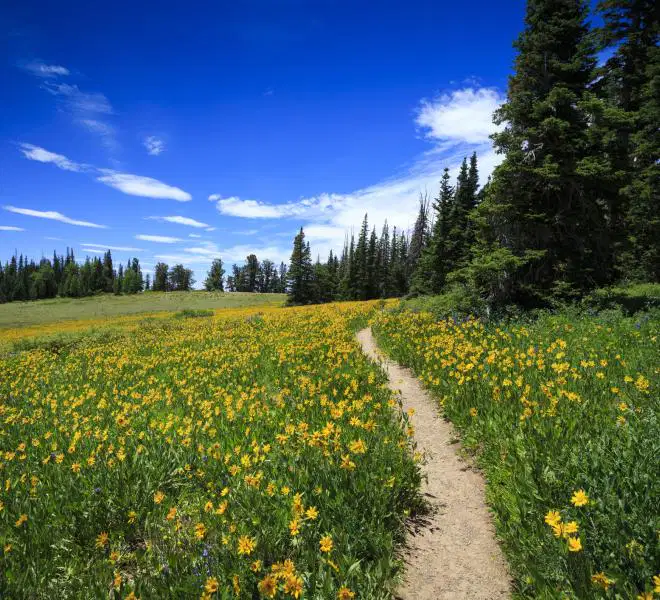


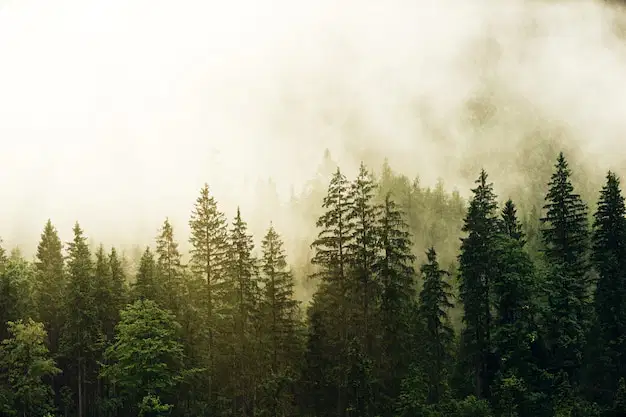
A population is defined as:
A group of different organisms living in the same place
A group of the same organisms living in the same place
The largest possible number of organisms that an environment can support
Something that limits growth

Which of the following limiting factors from this picture would be considered biotic?
Sunlight
Cactuses
Sand
Space

Which of the following limiting factors from this picture would be considered abiotic?
Yellow Damselfish
Coral
Black Tang Fish
Water temperature
Which graph best represents how a population will trend before it reaches its carrying capacity?
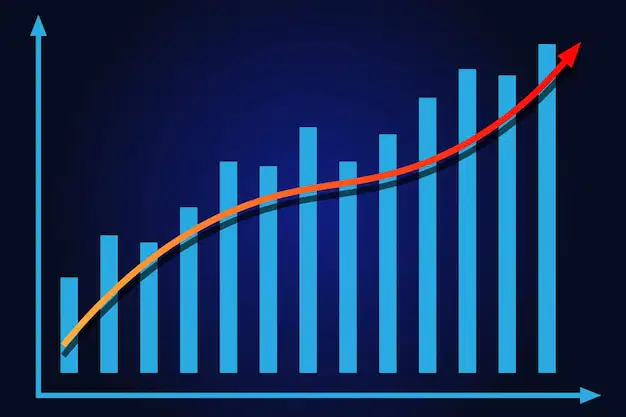

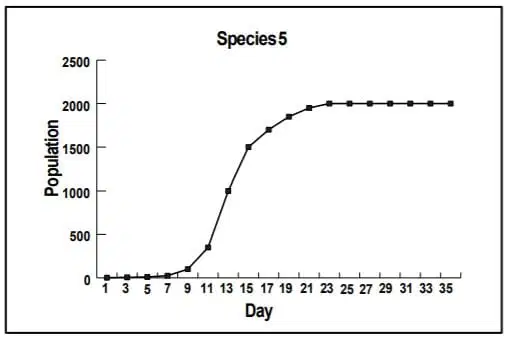
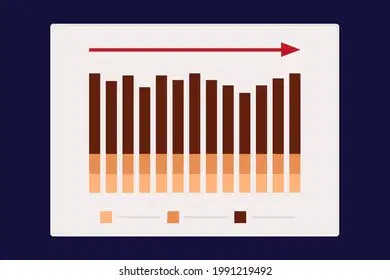
Which graph best represents how a population will trend after it reaches its carrying capacity?
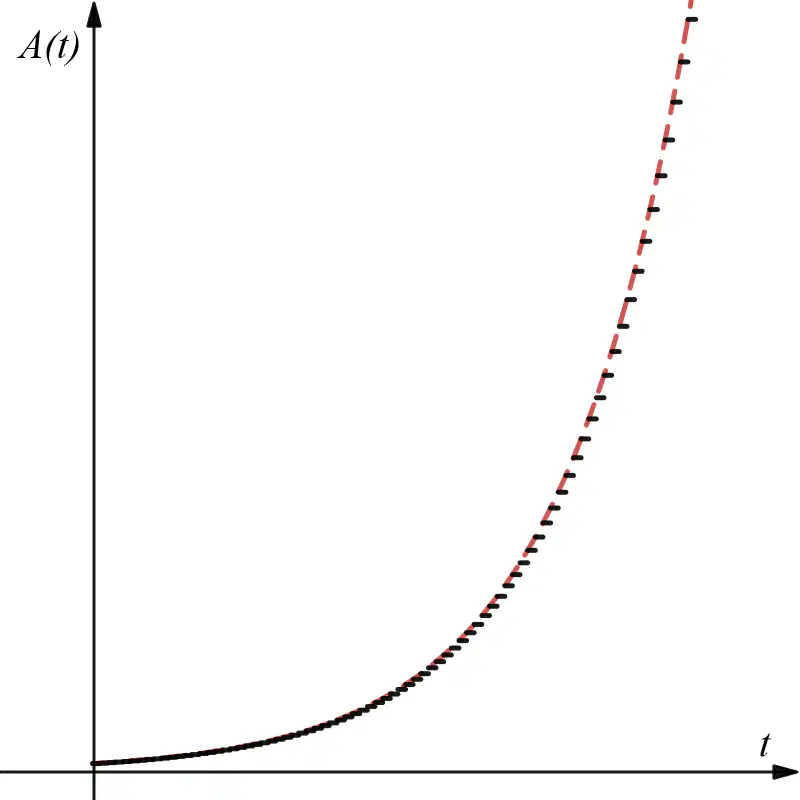

Green anoles are a type of small lizard native to Florida. Brown anoles are very similar lizards that immigrated to Florida from the Bahamas and Cuba. Which statement below best describes how the immigration of the brown anole will affect the green anole population of Florida?
The emigration of the brown anole will increase, causing a decrease in the immigration of the green anole
The immigration of the brown anole will cause a decrease in the green anole population by competing for the same resources
The immigration of the brown anole will increase, causing a decrease in the emigration of the green anole
The green anoles will emigrate to another state with more resources
Populations can be greatly affected by the immigration of new organisms. New organisms are biotic limiting factors that often compete for the same resources with the native species. Which graph below best shows how the overall population of an ecosystem would trend after the introduction of a new organism?

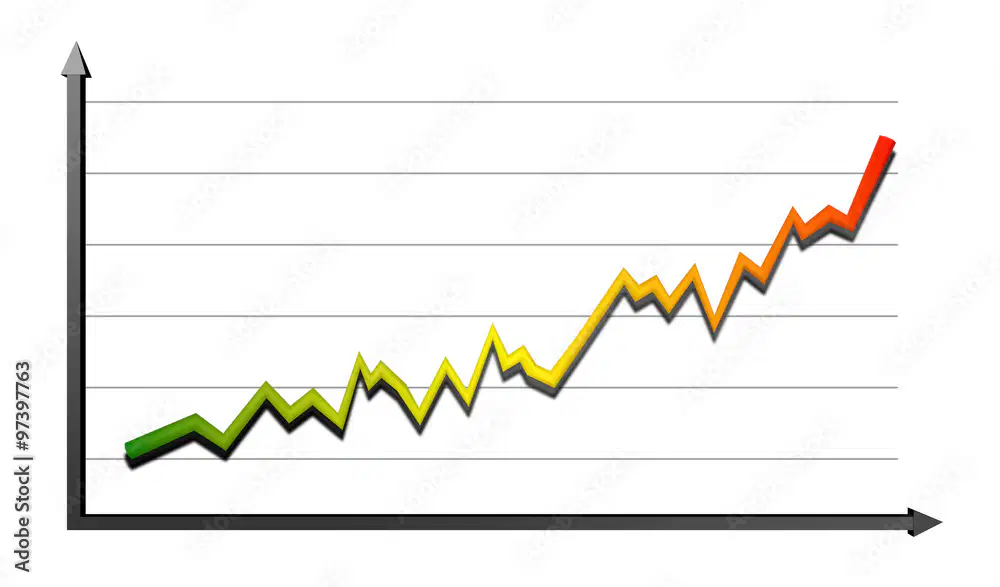


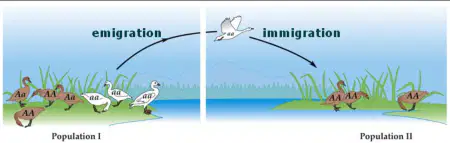
Which statement on biological immigration and emigration is correct?
Immigration refers to when organisms move into an ecosystem; emigration is when they exit a population
Immigration refers to when organisms leave an ecosystem; emigration is when they enter a population
Invasive species are an example of emigration
There is no difference between immigration and emigration
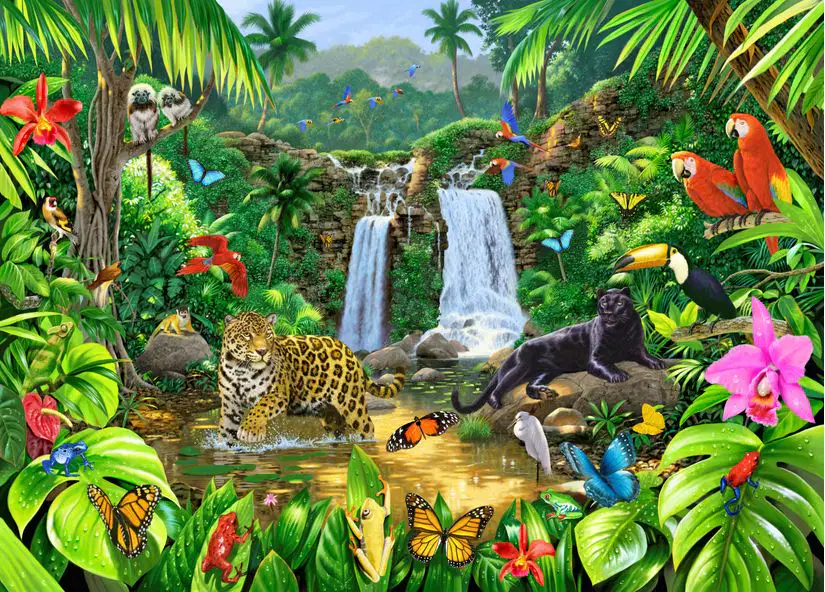
Biodiversity means what?
How many organisms there are in an ecosystem
How big an ecosystem is
How many different types of organisms there are in an ecosystem
How old an ecosystem is
Which statement(s) on biodiversity and ecosystem health are correct?
High biodiversity makes healthy ecosystems
High biodiversity makes weak ecosystems
Low biodiversity makes healthy ecosystems
Low biodiversity makes weak ecosystems
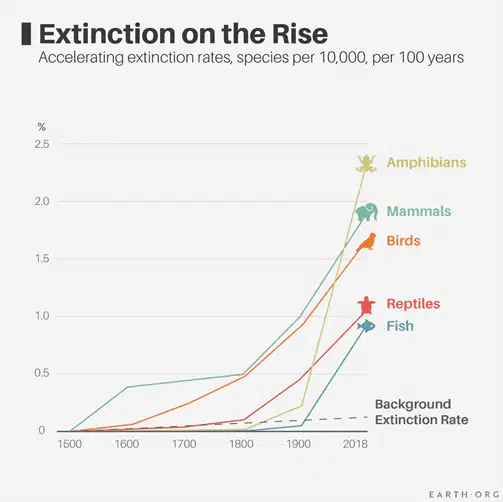
An extinction event happens when one or more species of organism die out completely. As humans have increased their impact on the world's ecosystems, more and more species are slowly going extinct. How will this impact biodiversity overall?
Biodiversity will increase because new species will take over
Biodiversity will decrease due to the loss of unique species
Biodiversity will not be impacted
Biodiversity will decrease because of an increase in new species

The oceans are the Earth’s largest carbon reservoirs. What property of water allows the
oceans’ water to dissolve and store carbon dioxide from the atmosphere?
Cohesive behavior
Versatility as a solvent
Expansion upon freezing
Moderation of temperature
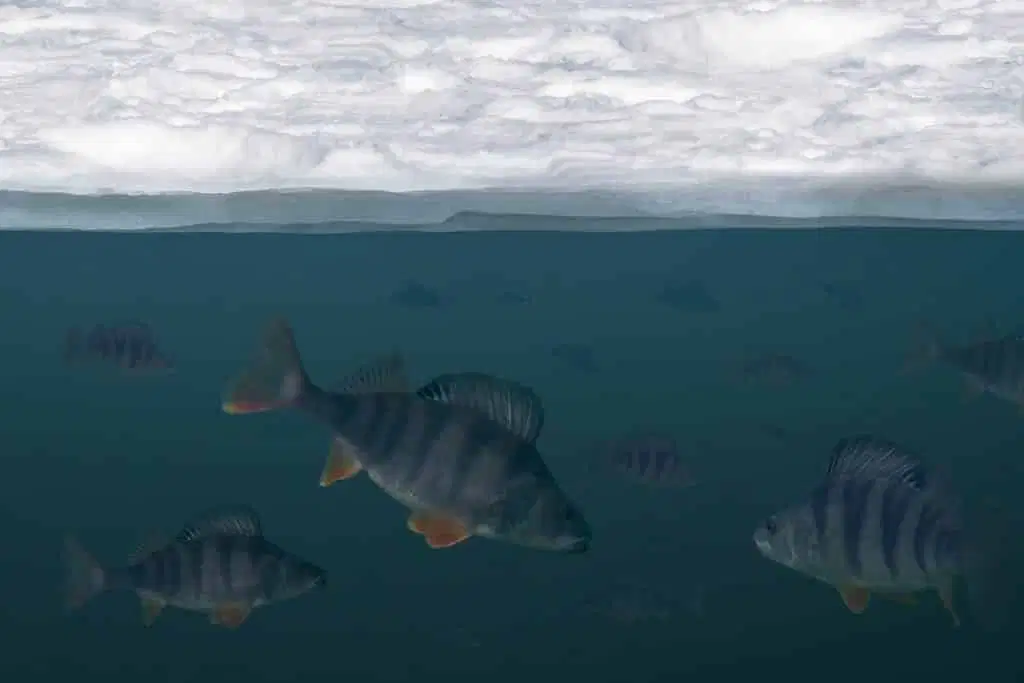
Which property of water helps freshwater animals like alligators and fish survive during the cold winter months?
Cohesive behavior
Versatility as a solvent
Expansion upon freezing
Moderation of temperature

Which property of water explains why sweating helps some animals to cool down when exerting themselves?
Cohesive behavior
Versatility as a solvent
Expansion upon freezing
Moderation of temperature

Which property of water explains how blood is able to carry so many important things like oxygen and nutrients?
Cohesive behavior
Versatility as a solvent
Expansion upon freezing
Moderation of temperature
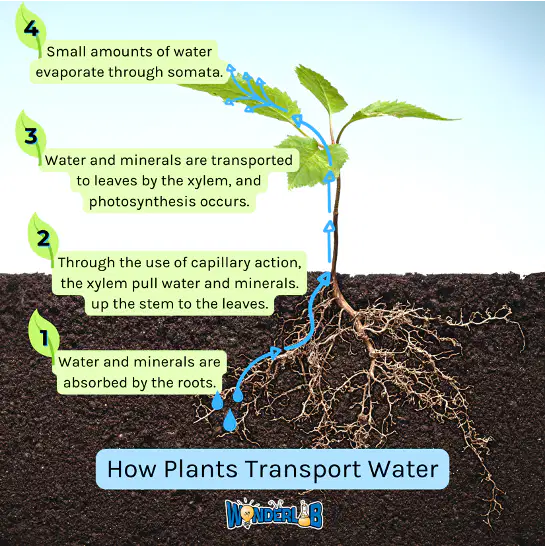
Which property of water best explains how plants are able to move water up from their roots to their leaves?
Cohesive behavior
Versatility as a solvent
Expansion upon freezing
Moderation of temperature

Condensation forms clouds that can cause precipitation like rain. Which property of water causes this to happen?
Cohesive behavior
Versatility as a solvent
Expansion upon freezing
Moderation of temperature

Cohesive behavior means that water tends to do what to other water molecules?
Stick to them
Move away from them
Evaporate
Moderate their temperature
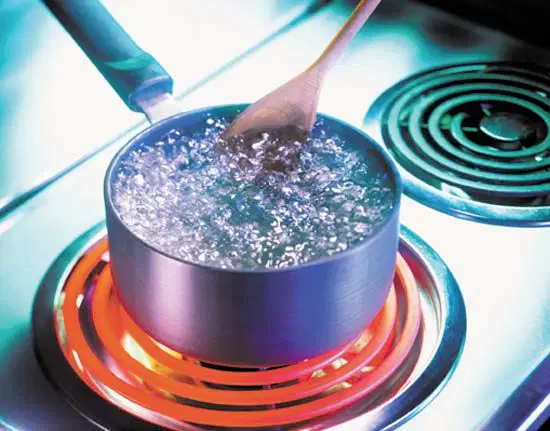
Moderation of temperature means that water tends to do what?
Change temperatures rapidly
Change temperatures slowly
Float as ice
Stick to other water molecules

Expansion upon freezing is a property of water that causes the molecules to be farther spaced apart as a solid. This means that water is...
Less dense as a solid
More dense as a solid
Less dense as a liquid
Chill

Which property of water allows humans to create these delicious carbonated, flavored beverages? (FACT: Coke is better than Pepsi)
Moderation of temperature
Versatility as a solvent
Cohesive behavior
Expansion upon freezing
What property of water allows it to form droplets on a surface?
Cohesive behavior
Versatility as a solvent
Expansion upon freezing
Moderation of temperature
Which property of water is responsible for its high surface tension?
Cohesive behavior
Versatility as a solvent
Expansion upon freezing
Moderation of temperature
Why does ice float on water?
Because ice is less dense than water
Because ice is more dense than water
Because ice has cohesive behavior
Because ice moderates temperature

The "stickiness" of water, or its ability to form drops is due to which property?
Adhesion
Density
Cohesion
High heat capacity
Why is water considered a universal solvent?
It can dissolve more substances than any other liquid
It is a liquid at room temperature
It has a high specific heat capacity
It has a low surface tension
How does the expansion of water upon freezing affect aquatic life during winter?
It causes all aquatic life to freeze and die
It decreases the oxygen level in water
It insulates the water below, helping to maintain a liquid environment for aquatic life
It increases the water temperature
What happens to water when it freezes?
It contracts
It expands
It evaporates
It becomes denser

Due to the high specific heat of water, which will heat up faster during the summer?
sand
water
they will heat up at the same rate

This image shows the detailed 3-D surface of a COVID-19 virus. Which microscope was used to get this image?
Transmission Electron
Dissecting
Scanning Electron
Compound

This image shows a group of bacterial cells. How can you tell that a compound microscope was used to get this image?
The image is 3-D showing the inside of the cells
The image is 2-D showing multiple whole cells
The image is 3-D showing a detailed surface
The image is 2-D showing the inside of the cells
If a scientist wants to examine the inner structures of a single stomach cell, which microscope would be best to use?
Scanning Electron
Dissecting
Compound
Transmission Electron

A scientist wants to study up-close how spiders walk...what is the best microscope that could be used to do this?
Dissecting
Scanning Electron
Transmission Electron
Compound

Which description best fits the image?
A low power scope used light to show details of the cell
A high power scope used electrons to show the surface of the cell
A medium power scope used light to show details of the cell
A high power scope used electrons to show inside the cell
Which microscope would be most suitable for studying the overall shape and structure of a small insect?
Compound
Dissecting
Scanning Electron
Transmission Electron
Choose which 2 microscopes COULD produce 2-D images:
Dissecting
Compound
Scanning Electron
Transmission Electron
Choose which 2 microscopes COULD produce 3-D images:
Dissecting
Compound
Scanning Electron
Transmission Electron
Choose which 2 microscopes have HIGH power:
Dissecting
Compound
Scanning Electron
Transmission Electron
Choose which microscope has LOW power:
Compound
Scanning Electron
Transmission Electron
Dissecting
Choose which microscope has MEDIUM power:
Dissecting
Compound
Scanning Electron
Transmission Electron
Choose which 2 microscopes use electrons to produce an image:
Scanning
Compound
Dissecting
Transmission
Choose which 2 microscopes use light to produce an image:
Scanning Electron
Transmission Electron
Dissecting
Compound

This image shows the inner structures of a bone cell. Which microscope was used to produce this image?
Scanning Electron
Dissecting
Compound
Transmission Electron
Which 2 microscopes would NOT be used to see a living organism?
Dissecting
Scanning Electron
Transmission Electron
Compound

A scientist wants to study a whole feather in a little bit more detail using light...which microscope would be best to sue?
Compound
Scanning Electron
Dissecting
Transmission Electron

A scientist wants to study some living cells from a piece of onion skin using light. Which microscope would she use?
Compound
Transmission Electron
Dissecting
Scanning Electron
In biology graphs, what does the x-axis typically represent?
The title of the graph
The y-axis
The independent variable
The dependent variable
When interpreting a line graph in biology, what does the slope of the line indicate?
The length of the line
The color of the line
The temperature of the environment
The trend of the data
When interpreting a line graph in biology, what does the y-axis typically represent?
The independent variable
The dependent variable
The control group
The x-axis
What is the significance of a flat trend line?
No impact
Trending towards stability
Rapid growth trend
Decreasing trend

What is the independent variable on this graph?
Year
Number of Visitors
None of these

In which year did exactly 60 students have scholarships?
2014
2010
2012

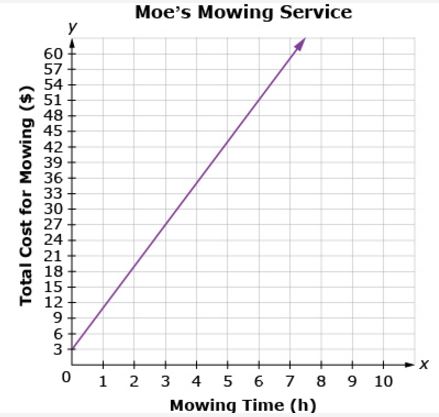
How much does it cost to have your lawn mowed for 2 hours?
$16
$17
$18
$19
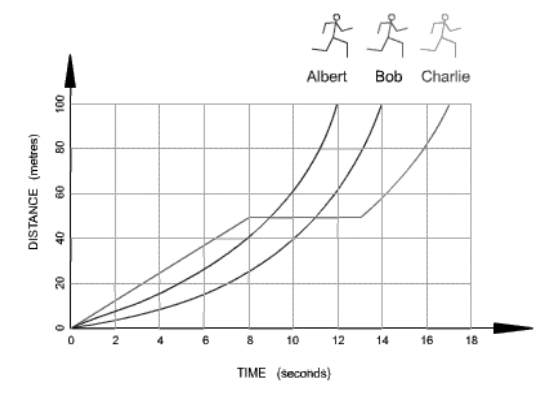
One of these runners stopped for a short rest, shown in the graph with a short stable trend line. Which runner fits this description?
Albert
Bob
Charlie

Click on the picture of the graph. What is this graph showing?
Lynx and hare populations over time
Lynx and hare captures over time
Lynx and hare offspring (babies) over time
Lynx and hare speed over time

Which pattern is found in the graph?
The populations do not show a similar pattern.
The populations cycle opposite of each other about every 10 years. When one increases, the other decreases.
The populations cycle with each other about every 10 years. When one increases, the other also increases.

Which population typically increases first? Hint: look at the key to determine the color of the line, then determine which line increases first.
The Canadian lynx population
The snowshoe hare population

Snowshoe hare populations typically increase first. Choose the statement that would BEST explain why.
The snowshoe hares increase when more Canadian lynx eat them.
The snowshoe hares increase because more plants grow in the summer for them to eat.
The snowshoe hares increase because they cannot survive the harsh winters.

At the end of the graph, the Canadian lynx population starts to decline. What do you predict will happen to the snowshoe hare population following the decline of their predator?
The snowshoe hare population will most likely increase.
The snowshoe hare population will most likely decrease.
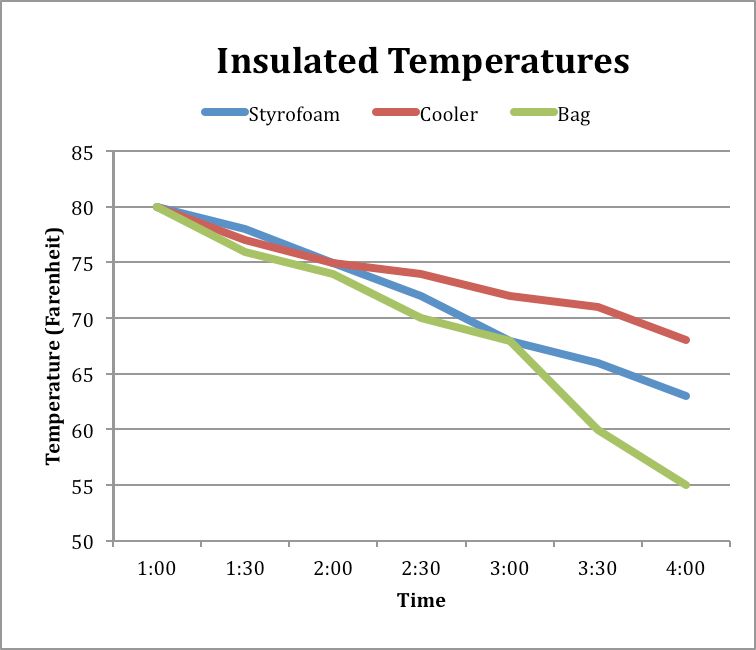
What was the temperature of the liquid in the Styrofoam container at 4:00?
55 degrees
68 degrees
73 degrees
63 degrees

Which type of milk is the favorite of respondents to this survey?
Plain skim milk
Plain 1% milk
Plain 2% milk
Plain whole milk

Which ice cream is most liked by second grade?
Vanilla
Strawberry
Lemon
Chocolate
Peach
Which ice cream is least liked by both grades?
Vanilla
Strawberry
Lemon
Chocolate
Peach

What is the approximate average height of the Douglas Fir trees sampled in this chart?
100 feet
150 feet
200 feet
225 feet
250 feet
Which tree has an average height of about 75 feet?
Lodgepole Pine
Western Red Cedar
Sitka Spruce
Douglas Fir
Impossible to tell


What best describes the term succession?
rapid changes that create an ecosystem overnight
gradual changes over time to fully create or restore and ecosystem
forest with the tallest trees
the rate species produce offspring
Why do grasses appear before shrubs in ecological succession?
loosen the dirt for new trees to take roots?
provide food for animals returning to the area
require plenty of sunlight to make their own food
can grow even in areas with shallow soil
Which would result in primary succession?
volcano destroying habitat leaving only soil and ash
Tornado destroying a crop leaving very little soil
Glacier retreating exposing bare rock
limiting factors
If farmers use a controlled burn to prevent forest fires, what would most likely be the first plants to return?
trees
shrubs
mosses
grasses



