
Font size
 Worksheets
A & P - First Quarter Final Exam
Total questions: 116
Worksheet time: 2hrs 36mins
What does "function" mean? (Select all that apply)
The job or role of something in the body
The parts and pieces of something in the body
Shape, Size, Location, Texture, Color
How something in the body works
A process described by verbs
The nervous system consists of the brain, spinal cord, nerves, and sensory receptors. The sensory receptors detect changes in temperature, pressure, or light, and send messages (via electrical signals called nerve impulses) to the central nervous system (brain and spinal cord) so that it is constantly informed about what is going on. The central nervous system then assesses this information and responds by activating the appropriate body effectors.
Which of the follow describes Physiology? (Select all that apply)
Consists of the brain, spinal cord, nerves, and sensory receptors
Detect changes in temperature, pressure, or light
Send messages (via electrical signals called nerve impulses) to the central nervous system
Central nervous system
Macroscopic
Large/Big
Small/Tiny
Microscopic
Large/Big
Small/Tiny
cells→ ___→ organs→ organ systems→ organism
What can fit in the blank?
Macromolecules
Cell Products
Proteins
Tissues
The highest level of structural organization.
Cell
Organ System
Organism
This system is the external covering of the body.
Endocrine
Integumentary
Lymphatic
Stimulus, Efferent Pathway, Response, Input, Output, Afferent Pathway, Receptor, Control Center
What is the correct order?
Receptor, Stimulus, Input, Efferent Pathway, Control Center, Output, Afferent Pathway, Response
Stimulus, Receptor, Input, Efferent Pathway, Control Center, Output, Afferent Pathway, Response
Stimulus, Receptor, Input, Afferent Pathway, Control Center, Output, Efferent Pathway, Response
Receptor, Stimulus, Input, Afferent Pathway, Control Center, Output, Efferent Pathway, Response
The heart is located ____ to the diaphragm.
Superior
Inferior
Medial
Lateral
The muscles are ____ to the skin.
Superficial
Proximal
Distal
Deep
The shoulder JOINT is ____ to the elbow JOINT.
Proximal
Distal
Superior
Inferior
In ANATOMICAL POSITION, the thumb is ____ to the index finger.
Medial
Lateral
Superior
Inferior
The vertebral region is _______ to the scapular region.
Lateral
Medial
Superior
Inferior
The gluteal region is located on the _____ surface of the body.
Superior
Inferior
Anterior
Posterior
Anatomical terms that apply to the backside of the body when it is in anatomical position:
Ventral and Anterior
Back and Rear
Posterior and Dorsal
Cephalic and Lateral
Which of the following groupings of the abdominopelvic regions is medial?
Hypochondriac, Hypogastric, Umbilical
Hypochondriac, Lumbar, Inguinal
Hypogastric, Umbilical, Epigastric
Lumbar, Umbilical, Iliac
Iliac, Umbilical, Hypochondriac
The midsagittal plane separates the body into...
top and bottom
left and right
front and back
Equal left and right
The frontal plane separates the body into...
anterior and posterior
medial and lateral
proximal and distal
cranial and caudal
Other words used for anterior/posterior are...
medial/lateral
superior/inferior
ventral/dorsal
proximal/distal
medial ________ : lateral __________
elbow/knee
thumb/pinky
ears/nose
pinky/thumb
The transverse plane separates the body into...
anterior/posterior
superior/inferior
medial/lateral
proximal/distal

Which anatomical plane is the ONLY horizontal plane?
sagittal
transverse
frontal

Which anatomical plane divides the body into anterior and posterior
frontal
transverse
sagittal
midsagittal
Another word for anterior (front) side is
ventral
posterior
dorsal
sagital
Another word for posterior (back side) is
ventral
anterior
dorsal
sagital

Which side is facing you?
Anterior
Posterior
Lateral
Medial
The digestive proceses starts in the:
stomach
mouth
esophagus
liver

The cavity surrounded by a box is?
Abdominal Cavity
Pelvic Cavity
Pleural Cavity
Cranial Cavity

The cavity surrounded by a box is?
Thoracic Cavity
Abdominal Cavity
Pelvic Cavity
Vertebral Canal

What is A?
upper right quadrant
lower right quadrant
upper left quadrant
lower left quadrant
What is B?
upper right quadrant
lower right quadrant
upper left quadrant
lower left quadrant
What is C?
upper right quadrant
lower right quadrant
upper left quadrant
lower left quadrant
What is D?
upper right quadrant
lower right quadrant
upper left quadrant
lower left quadrant

What is 1?
right hypocondriac
left hypochondriac
right lumbar
left lumbar
left iliac
What is 3?
right hypocondriac
left hypochondriac
right lumbar
left lumbar
left iliac
What is 4?
right hypocondriac
left hypochondriac
right lumbar
left lumbar
left iliac
What is 6?
right iliac
left hypochondriac
right lumbar
left lumbar
left iliac
What is 7?
right iliac
left hypochondriac
right lumbar
left lumbar
left iliac
What is 9?
right iliac
left hypochondriac
right lumbar
left lumbar
left iliac
What is 2?
epigastric
hypogastric
umbilical
What is 5?
epigastric
hypogastric
umbilical
What is 8?
epigastric
hypogastric
umbilical

How many valence electrons does a Fluorine atom have?
7
9
8
6

What type of ion is positively charged and formed by the loss of electrons?
anion
cation
proton
neutron

How many total Fluorine atoms do we need to make Boron stable?
4
1
7
3
Which is the correct lewis bonding diagram for MgF2?


What charge will Calcium have after it gives two electrons to the Chlorine atoms?
¿Que carge tendra Calcium despues de cedar dos electrones a los dos atomos de Chlorine?
-2
+2
-1
+1
Which is the correct definition of electronegativity?
The ability of an atom to attract electrons
La capacidad de un átomo para atraer electrones
A negatively charged atom
Un átomo cargado negativamente
The attraction between two atoms with opposite charges
La atracción entre dos átomos con cargas opuestas
Electrons that occupy the outermost energy level of an atom
Electrones que ocupan el nivel de energía más externo de un átomo

How many electrons does Silicon need to gain to become stable?
8
0
6
2
(Fill in the blank) An atom that loses or gains electrons to become negative or positive is called an ___________.
electron
ion
nonmetal
metal
Atoms are most stable with eight electrons in their valence level. (exceptions are H, He, Li, Be, and B)
Duet Rule
Octet Rule
Electronegativity
Ionic Bond
How will ions Fe3+ and O2- combine in an ionic bond?
Fe2O3
Fe3O2
Fe2O
FeO
What is the property of water being attracted to molecules other than water?
Polarity
Hydrogen Bonding
Adhesion
Dissociates into Acids and Bases
What is the bond that forms between two molecules of water?
Nonpolar Covalent Bonding
Hydrogen Bonding
Polar Covalent Bonding
Ionic Bonding
What is the ability of water to dissolve almost anything quickly or over time?
High Specific Heat
Universal Solvent
Adhesion
Cohesion
What is the uneven distribution of electrons causing one end to carry a (-) charge & the other a (+) charge?
Hydrogen Bonding
High Heat of Vaporization
Polarity
Surface Tension
What is the 'skin' which forms on top of water because of Cohesion and Hydrogen Bonding?
Exists in All 3 States
Low Density When Solid
Surface Tension
High Specific Heat
What is the ability of water to absorb a lot of heat?
High Heat of Vaporization
High Specific Heat
Exists in All 3 States
Low Density When Solid
Why does ice float on water?
Because water is less dense as a solid than a liquid
Because of High Heat of Vaporization
Because of High Specific Heat
Because water can be a solid, liquid, or a gas
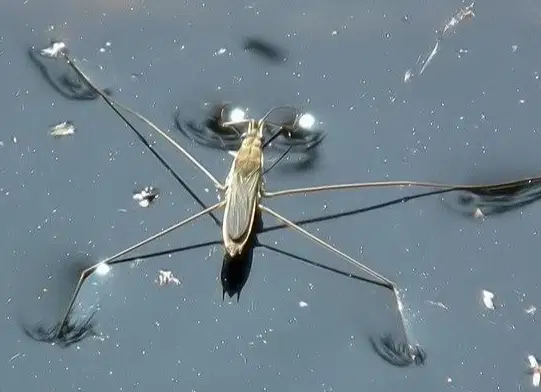
What property of water allows objects to stay on top of the surface of water even if they are more dense than the water and should logically sink?
volume
specific heat
adhesion
surface tension
Heat is transferred from objects with ____ temperature to objects with ____ temperature.
higher, lower
lower, higher
Which pH represents the solution with the highest Hydrogen ion concentration
pH=1
pH=3
pH=7
pH=11
Which pH represents the solution with the lowest Hydroxide ion concentration
pH=1
pH=3
pH=7
pH=11
Which compound represents an acid?
NaOH
HCl
CH2OH
NaCl
Which compound represents an base?
NaOH
HCl
CH2OH
NaCl
According to the alternate acid base theory, a compound is a base if it
donates a hydrogen ion
accepts a hydrogen ion
donates a hydroxide ion
accepts a hydroxide ion
According to the alternate acid base theory, a compound is an acid if it
donates a hydrogen ion
accepts a hydrogen ion
donates a hydroxide ion
accepts a hydroxide ion
A solution has a pH of 6.2, if its hydrogen ion concentration is increased by 10 times, what would its new pH be?
5.2
7.2
8.2
4.2
A solution has a pH of 6.2, if its hydrogen ion concentration is decreased by 100 times, what would its new pH be?
5.2
7.2
8.2
4.2
Which of the compounds below is an electrolyte?
LiCl
CH4
CH3OH
Na
Which of the compounds below is an electrolyte?
Li
CH4
CH3OH
NaOH
When the pH of a solution changes from a pH of 9 to a pH of 7, the hydrogen ion concentration is?
0.01 of the original content
0.1 of the original content
10 times the original content
100 times the original content
When the pH of a solution changes from a pH of 8 to a pH of 9, the hydroxide ion concentration is?
0.01 of the original content
0.1 of the original content
10 times the original content
100 times the original content
What pH is the strongest base?
1
7
4
14

What colour does a base turn red litmus paper?
Red
Blue
Stores genetic information
carbohydrates
lipids
proteins
nucleic acids
Source of quick energy
carbohydrates
lipids
proteins
nucleic acids
Long-term storage of energy
carbohydrates
lipids
proteins
nucleic acids
Fats, oils, waxes, cholesterol, hormones
carbohydrates
lipids
proteins
nucleic acids
DNA and RNA
carbohydrates
lipids
proteins
nucleic acids
Monosaccharides
carbohydrates
lipids
proteins
nucleic acids
Amino Acids
carbohydrates
lipids
proteins
nucleic acids

Which biomolecule is this a picture of ?
carbohydrate
Lipid
protein
nucleic acids

This molecule is a(n) ____________.
nucleic acid
lipid
protein
carbohydrate

What biomolecule is pictured here?
protein
lipid
carbohydrate
nucleic acids

What biomolecule is this?
protein
carbohydrate
lipid
nucleic acid
Triglyceride
Carbohydrate
lipid
protein
nucleic acid
Nucleotide
carbohydrate
lipid
protein
nucleic acid
Forms the cell membranes?
lipids
carbohydrates
proteins
nucleic acids
What two elements are found in organic compounds?
Carbon and Hydrogen
Nitrogen and Hydrogen
Carbon and Carbon
Carbon and Helium
Match the following Organic Compounds
Carbohydrates
Bread
Lipids
Oil
Proteins
Chicken
Nucleic Acids
DNA and RNA

