
 Worksheets
Environmental Review 2
Total questions: 121
Worksheet time: 2hrs 43mins
What below is NOT considered matter?
Carbon atoms
Gravity
Bacteria
Air
Matter is anything that.....
Has mass and takes up space
Has mass and is visible
Takes up space and has energy
Has energy and is visible
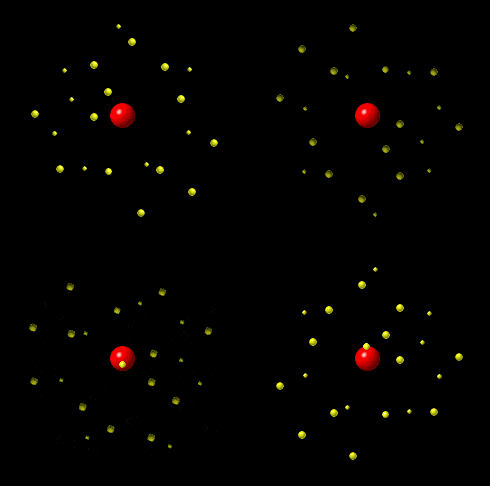
What particle view below is a mixture?


What is the best classification for this substance?
An element
A compound
A mixture

Is this a pure substance?
Yes
No

What is the best classification of this substance?
An element
A compound
A mixture of 2 elements
A mixture of 2 compounds
What is the best classification of this substance? H2SO4
An element
A compound
A mixture
What is the best classification of this substance? CO2 & H2S
An element
A compound
A mixture of 2 compounds
A mixture of many elements
What is an example of a physical property?
Silver is shiny
Alcohols are flammable
Alkali metals are reactive with water
Acids are sometimes corrosive
What is an example of a chemical change?
Tearing paper
Dissolving salt in water
Melting ice
Burning wood

Does this particle view show an element or a compound?
element
compound

Is this image showing a homogeneous or a heterogeneous mixture? Image: Cesar salad
homogeneous
heterogeneous

Is this image showing a homogeneous or a heterogeneous mixture? Image: Milk
homogeneous
heterogeneous

Does this image represent a chemical or a physical change?
Chemical change
Physical change

Does this image represent a chemical or physical change?
Chemical change
Physical change
The smallest unit of matter in the universe is the __________.
molecule
compound
atom
does it really matter?
All of the following are subatomic particles, EXCEPT:
proton
compound
electron
neutron
The number of protons an atom has is its _________ number.
neurotic
covalent
ionic
atomic
A(n) ______________ is an atom or molecule with a net electric charge due to the loss or gain of one or more electrons.
bond
ion
isotope
molecule
A(n) __________________ in a positively charges atom.
anion
cation
onion
isotope
A(n) _____________________ is the smallest amount of a compound you can have, and still have that compound.
atom
smidgen
proton
molecule
A bond created by a transferring of electrons from one atom to another is called a(n) _______________ bond.
transferric
covalent
ionic
lovely
A bond created by atoms sharing 1 or more electrons is called a(n) _______________________ bond.
moronic
covalent
ionic
isotonic
You can't live without water! What is its chemical formula?
H2
H2O2
H2O
O2

This symbol indicates a _______.
neutron
proton
electron
An electron is located ...
in the nucleus.
outside the nucleus.

The atomic number of oxygen is
8
15.9994
16
O

The 1.01 in parentheses stands for
atomic mass
atomic number
symbol
The 1 in the upper right corner stands for
atomic mass
atomic number
symbol
consists of one type of atom
element
compound
mixture
No charge charged found in nucleus of atom
proton
neutron
electron

What is the atomic number of this element?
20
60
40
41
The law of conservation of mass states that
The mass of a system (reaction) increases from beginning to end
The mass of a system (reaction) stays the same from beginning to end
The mass of a system (reaction) decreases from beginning to end


Which is the product in the reaction shown?
Al2O3
Al
O2
How many Oxygen (O) atoms are in one molecule of C2HO8Cl2
2
16
8
5
H2SO4
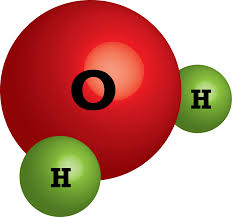
What is NOT evidence of a chemical change?
temperature change
color change
gas production
melting
Which of the following is an example of a physical change?
A glass falling and shattering on the floor.
Baking a birthday cake.
Burning a piece of paper.
Baking soda and vinegar mixing together.
Which one is the element?
Ba
C6H12O6
CaCl
n

How many Carbons are present on the reactant side?
1
2
3
4

How many Hydrogens are on the product side of this chemical equation?
1
2
3
4
Which state of matter is the earth's inner core?
plasma
liquid
solid
gas
Which earth layer is made up of the upper mantle and the crust?
core
lower mantle
asthenosphere
lithosphere
What is geology?
the study of rocks
the study of history
the study of maps
the study of earth
This layer of the earth is the thickest part
crust
outer core
mantle
inner core
This layer of the earth is the thinnest part
crust
outer core
mantle
inner core
The one large land mass before it drifted apart was called
Panthalassa
Terra
Pangaea
Pandora
The waves of energy that travel through the earth's layers are
scenic waves
tidal waves
cosmic waves
seismic waves
The theory of continental drift impacts land because
It causes the land to move over time
It causes sand and soil from one continent to “drift” into another through trade winds
If you stand still long enough you can feel continents drifting beneath you
All of the above
What is the outermost physical layer of earth?
crust
outer core
mantle
lithosphere
Which compositional layer is the least dense?
inner core
lithosphere
mantle
crust
Which word best describes the lithosphere?
liquid
rigid
bendable
metal
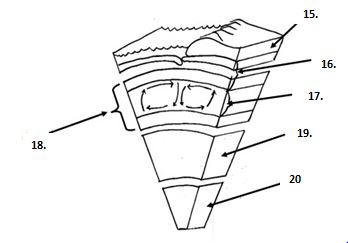
Which layer contains convection currents?
outer core
inner core
mantle
lithosphere
Which is the correct order of the Earths layers?
inner core, outer core, mantle, crust
crust, inner core, outer core, mantle
crust, mantle, inner core, outercore
crust, mantle, outer core, inner core


What is the difference between Continental and Oceanic Crust?
Continental crust is denser
Oceanic crust is thicker
Continental crust is made of younger rocks
Oceanic crust is denser
What happens when Continental and Oceanic crust collide?
Neither crust sinks
Continental crust sinks
Oceanic crust sinks
Both crusts sink
What does heat do when convection currents are moving?
Sinks
Rises
Stays in place
This layer is responsible for Earth's magnetic field.
Crust
Mantle
Outer Core
Inner Core
When water vapor is cooled and forms droplets of liquid water
Condensation
Evaporation
Transpiration
Runoff

________________ is movement of water past the soil going deep into the groundwater.
Evaporation
Transpiration
Percolation
Sublimation
__________________ is the process by which moisture is carried through plants from roots to small pores on the underside of leaves, where it changes to vapor and is released to the atmosphere. It is essentially evaporation of water from plant leaves.
Transpiration
Percolation
Infiltration
Plant Uptake

evapotranspiration
Rain, snow, sleet, and hail are all types of?
Precipitation
Runoff
Condensation
Water Vapor
Water that has soaked into the ground is known as ______.
Precipitation
Groundwater
Runoff
Water Vapor
Which of the following is in the correct order?
Evaporation -> Transpiration -> Groundwater
Precipitation -> Condensation -> Evaporation
Evaporation -> Sublimation -> Precipitation
Condensation -> Precipitation -> Runoff
Water can change to gas through which process?
Evaporation
Sublimation
Transpiration
All answer choices are correct
Rain and snow are two different forms of precipitation that fall on Earth's surface. Which factor is responsible for there being different forms of precipitation?
Evaporation
Run-off
Temperature
Transpiration

What is another name or synonym for the water cycle?
Geologic cycle
Hydrologic cycle
Geosphere
Carbon cycle

What form of energy transfer heats Earth?
Recycling
Conduction
Convection
Radiation
The transfer of heat by the flow of heated material. Hot air rises.
Radiation
Conduction
Convection
Condensation
When Earth receives energy from the sun..
some energy is reflected back into space
some is absorbed by the atmosphere
some is absorbed by land and water on Earth's surface
all of the above
The transfer of the Sun's energy through waves or rays.
Insolation
Radiation
Convection
Conduction
The transfer of heat through materials that are touching each other.
Insolation
Radiation
Convection
Conduction
The _____________ is the source of all energy in our atmosphere.
Sun
Water Cycle
Moon
Coriolis Effect
The order of the layers of the atmosphere from earth's surface to space
12%
60%
Take a deep breath in, take a deep breath out. Most of the gas that passed through your mouth was
oxygen
nitrogen
water vapor
carbon dioxide
The stratosphere is located between
thermosphere and mesosphere
core and mantle
troposphere and mesosphere
exosphere and mesosphere
your head and Uranus

