
 Worksheets
LBOBIO7 LE3 (Hematopoietic Tissue)
Total questions: 118
Worksheet time: 1hrs 13mins
The formed elements of blood, are suspended in a liquid medium called what?
(a)
Blood cells have a limited life span, and, as a result, they wear out and need to be continuously replaced in the body
True
False
What is the process of blood cell production is called?
(a)
Hemopoiesis occurs in different organs of the body, depending on the stage of development of the individual.
True
False
In a developing embryo, hemopoiesis initially occurs in which of the following?
Yolk sac
Liver
Spleen and lymph nodes
Bone marrow
Red marrow
In a developing embryo, hemopoiesis occurs later in which of the following?
Yolk sac
Liver
Spleen and lymph nodes
Bone marrow
Red marrow
After birth, hemopoiesis continues almost exclusively in which of the following?
Yolk sac
Liver
Spleen and lymph nodes
Bone marrow
Red marrow
A highly cellular structure and consists of hemopoietic stem cells and the precursors of different blood cells?
(a)
Which of the following best describe the arrangement and composition of red bone marrow?
Loosely arranged
Tightly packed
Comprised mainly of elastic fibers
Comprised mainly of reticular fibers
Comprised mainly of collagen fibers
As the individual ages and becomes an adult, the red marrow is found primarily where?
Flat bones of the skull
Sternum and ribs
Vertebrae
Pelvic bones
Long bones in the limbs
Which of the following have red marrow that gradually accumulate fat and become yellow, losing their hemopoietic function in adulthood.
Flat bones of the skull
Sternum and ribs
Vertebrae
Pelvic bones
Long bones in the limbs
In hemopoiesis, all blood cells originate from a common stem cell in the (a) that is self-renewing.
What type of stem cells can be found in the red bone marrow?
Totipotent hemopoietic
Pluripotent hemopoietic
Multipotent hemopoietic
Unipotent hemopoietic
How many major cell lineages are produced by pluripotential stem cells from the red bone marrow?
1
2
3
4
5
Which of the following develop from the myeloid stem cell lineage?
Erythrocytes
Eosinophils
Neutrophils
Basophils
Monocytes and megakaryocytes
Which of the following develop from the lymphoid stem cell lineage?
Erythrocytes
Eosinophils
Neutrophils
Basophils
B lymphocytes and T lymphocytes
Which of the following describe the development of lymphoid stem cells into B lymphocytes?
Remains in the bone marrow
Migrates through the bloodstream to lymph nodes
Migrates through the bloodstream to the spleen
Migrates to the thymus gland
Which of the following describe the development of lymphoid stem cells into T lymphocytes?
Remains in the bone marrow
Migrates through the bloodstream to lymph nodes
Migrates through the bloodstream to the spleen
Migrates to the thymus gland
Both B and T lymphocytes reside in numerous peripheral lymphoid tissues, lymph nodes, and spleen. Here, they initiate immune responses when exposed to antigens.
True
False
Both the B and T lymphocytes are morphologically indistinguishable. Only the different protein markers on their cell surfaces allow these cells to be distinguished by immunohistochemical means.
True
False
Which of the following are nonnucleated cells and are the most numerous blood cells?
Red blood cells (erythrocytes)
White blood cells (leukocytes)
Platelets (thrombocytes)
Which of the following are nonnucleated cells that extrude their nuclei during their maturation and enter the bloodstream without their nuclei?
Red blood cells (erythrocytes)
White blood cells (leukocytes)
Platelets (thrombocytes)
Which of the following remain in the blood and perform their major functions within the blood vessels?
Red blood cells (erythrocytes)
White blood cells (leukocytes)
Platelets (thrombocytes)
Which of the following are nucleated and subdivided into granulocytes and agranulocytes, depending on the presence or absence of granules in their cytoplasm?
Red blood cells (erythrocytes)
White blood cells (leukocytes)
Platelets (thrombocytes)
Which of the following perform their major functions outside the blood vessels and migrate out of the blood vessels through capillary walls and enter the connective tissue, lymphatic tissue, and bone marrow?
Red blood cells (erythrocytes)
White blood cells (leukocytes)
Platelets (thrombocytes)
Which of the following primarily functions to defend the body against bacterial invasion or the presence of foreign material?
Red blood cells (erythrocytes)
White blood cells (leukocytes)
Platelets (thrombocytes)
Which of the following is the smallest, nonnucleated formed element that appears in the blood of all mammals?
Red blood cells (erythrocytes)
White blood cells (leukocytes)
Platelets (thrombocytes)
Which of the following are membrane-bound cytoplasmic fragments or remnants of megakaryocytes (the largest cells in the bone marrow)?
Red blood cells (erythrocytes)
White blood cells (leukocytes)
Platelets (thrombocytes)
Which of the following are produced when small, uneven portions of the cytoplasm separate or fragment from the peripheries of the megakaryocytes and are extruded into the bloodstream?
Red blood cells (erythrocytes)
White blood cells (leukocytes)
Platelets (thrombocytes)
Which of the following continually monitors the vascular system and detects any damage to the endothelial lining of the vessels? If the endothelial lining breaks, these cells adhere to the damaged site and initiate a highly complex chemical process that produces a blood clot.
Red blood cells (erythrocytes)
White blood cells (leukocytes)
Platelets (thrombocytes)
Which of the following repairs minor tears in the walls of the blood vessels and promote blood clotting, thus preventing blood loss?
Red blood cells (erythrocytes)
White blood cells (leukocytes)
Platelets (thrombocytes)
Most leukocytes are concentrated in which tissue of different organs?
Epithelial tissue
Connective tissue
Muscle tissue
Nervous tissue
Which of the following leukocytes are granulocytes (presence of specific granules in their cytoplasm)?
Neutrophils
Eosinophils
Lymphocytes
Monocytes
Basophils
Which of the following leukocytes are agranulocytes (absence of specific granules in their cytoplasm)?
Neutrophils
Eosinophils
Lymphocytes
Monocytes
Basophils
Platelets or thrombocytes are not blood cells.
True
False
Mature erythrocytes are specialized to transport oxygen and carbon dioxide. This specialization is attributable to the presence of which protein in cytoplasm?
(a)
Iron molecules in hemoglobin bind with oxygen molecules. As a result, most of the oxygen in the blood is carried in the combined form of (a) , which is responsible for the bright red color of arterial blood.
Carbon dioxide diffuses from the cells and tissues into the blood vessels. It is carried to the lungs partly dissolved in the blood and partly in combination with hemoglobin in the erythrocytes as (a) , which gives venous blood its bluish color.
Before an erythrocyte is released into the systemic circulation, the nucleus is extruded from the cytoplasm, and the mature erythrocyte assumes what type of shape?
(a)
What is the purpose of the biconcave shape of the erythrocyte?
To increase surface area for gas exchange
To store more hemoglobin
To protect the cell from damage
To allow for faster cell division
Mature mammalian erythrocytes in the circulation are nucleated biconcave disks surrounded by a cell membrane and filled with hemoglobin and some enzymes.
True
False
What is the average approximate life span of erythrocytes?
60 days
90 days
120 days
150 days
180 days
Give one location in the body where worn-out cells are removed from the blood and phagocytosed by macrophages.
(a)
The platelets in the plug release adhesive glycoproteins that increase the plug size by adhesion of other platelets, which is then reinforced by the polymer (a) formed from numerous plasma proteins.
Following the vessel repair, the clot is formed by platelets is then removed through the action of which proteolytic enzyme formed from the circulating plasminogen?
(a)
Which of the following leukocytes have a multi-lobed nucleus connected by thin chromatin strands?
Neutrophils
Eosinophils
Basophils
Lymphocytes
Monocytes
Which of the following leukocytes are very active phagocytes that are attracted to foreign material by chemotactic factors?
Neutrophils
Eosinophils
Basophils
Lymphocytes
Monocytes
Which of the following leukocytes destroy phagocytosed (ingested) material with lysosomal enzymes?
Neutrophils
Eosinophils
Basophils
Lymphocytes
Monocytes
Which of the following leukocytes constitute approximately 60% to 70% of blood leukocytes?
Neutrophils
Eosinophils
Basophils
Lymphocytes
Monocytes
Which of the following leukocytes typically have a bilobed nucleus?
Neutrophils
Eosinophils
Basophils
Lymphocytes
Monocytes
Which of the following leukocytes are phagocytic cells with a particular affinity for antigen–antibody complexes that are formed in tissues after allergic responses?
Neutrophils
Eosinophils
Basophils
Lymphocytes
Monocytes
Which of the following leukocytes release chemicals that neutralize histamine and other mediators related to inflammatory allergic reactions?
Neutrophils
Eosinophils
Basophils
Lymphocytes
Monocytes
Which of the following leukocytes increase in number during parasitic infestation and defend the organism against helminthic parasites by destroying them?
Neutrophils
Eosinophils
Basophils
Lymphocytes
Monocytes
Which of the following leukocytes constitutes about 2% to 4% of blood leukocytes?
Neutrophils
Eosinophils
Basophils
Lymphocytes
Monocytes
Which of the following leukocytes have granules that contain histamine and heparin?
Neutrophils
Eosinophils
Basophils
Lymphocytes
Monocytes
Which of the following leukocytes have a similar function to mast cells involving exposure to allergens resulting in a release of histamine and other chemicals that mediate and intensify inflammatory responses?
Neutrophils
Eosinophils
Basophils
Lymphocytes
Monocytes
Which of the following leukocytes constitutes less than 1% of blood leukocytes?
Neutrophils
Eosinophils
Basophils
Lymphocytes
Monocytes
Which of the following leukocytes have no granules in the cytoplasm and vary in size from small to large?
Neutrophils
Eosinophils
Basophils
Lymphocytes
Monocytes
Which of the following leukocytes constitute about 20% to 30% of blood leukocytes?
Neutrophils
Eosinophils
Basophils
Lymphocytes
Monocytes
Which of the following leukocytes differentiate into plasma cells in the connective tissue and produce antibodies to counteract or destroy the invading organisms, when stimulated by specific antigens?
Neutrophils
Eosinophils
Basophils
Lymphocytes
Monocytes
Which of the following leukocytes are the largest agranular leukocytes characterized primarily by a horseshoe-shaped nucleus?
Neutrophils
Eosinophils
Basophils
Lymphocytes
Monocytes
Which of the following leukocytes live in connective tissue for months where they become powerful phagocytes?
Neutrophils
Eosinophils
Basophils
Lymphocytes
Monocytes
Which of the following leukocytes are part of the mononuclear phagocyte system?
Neutrophils
Eosinophils
Basophils
Lymphocytes
Monocytes
Which of the following leukocytes constitute about 3% to 8% of blood leukocytes?
Neutrophils
Eosinophils
Basophils
Lymphocytes
Monocytes
Which of the following have a short life span, ranging from hours to days?
Neutrophils
Eosinophils
Basophils
Lymphocytes
Monocytes
Red bone marrow consists of densely packed cords and islands of blood-forming (hemopoietic) stem cells. They are surrounded by numerous macrophages and an abundant blood supply that form extensive and branching sinusoidal capillaries opening into the thin venous sinuses.
True
False
A connective tissue stroma of elastic cells and elastic fibers also forms a delicate meshwork that surrounds the islands of hematopoietic cells and provides support for the bone marrow.
True
False
During the maturation process, hemopoietic cells become smaller and their nuclear chromatin more condensed. As the blood cells pass through a series of developmental stages, they exhibit morphologic changes and become microscopically identifiable.
True
False
Correctly order the development of the erythrocytic cell line from beginning to end. (Format: 1, 2, 3, 4, 5, 6,)
(1) Basophilic erythroblast
(2) Orthochromatophilic erythroblast (normoblast)
(3) Mature erythrocyte
(4) Proerythroblast
(5) Polychromatophilic erythroblast
(6) Reticulocyte
(a)
Which of the following comes directly from the differentiation of pluripotential stem cells, with a large cell with loose chromatin, one or two nucleoli, and a basophilic cytoplasm.
Proerythroblast
Basophilic erythroblast
Polychromatophilic erythroblast
Orthochromatophilic erythroblast (normoblast)
Reticulocyte
Which of the following comes directly from the differentiation of proerythroblasts, with a rim of basophilic cytoplasm and a more condensed nucleus without visible nucleoli?
Proerythroblast
Basophilic erythroblast
Polychromatophilic erythroblast
Orthochromatophilic erythroblast (normoblast)
Reticulocyte
Which of the following comes directly from the differentiation of basophilic erythroblasts, and experiences a decrease in basophilic ribosomes and an increase in the acidophilic hemoglobin content of their cytoplasm?
Proerythroblast
Basophilic erythroblast
Polychromatophilic erythroblast
Orthochromatophilic erythroblast (normoblast)
Reticulocyte
Which of the following comes directly from the differentiation of polychromatophilic erythroblasts, and experiences further reduction of the cell size, condensation of nuclear material, and a more uniform eosinophilic cytoplasm?
Mature erythrocyte
Basophilic erythroblast
Polychromatophilic erythroblast
Orthochromatophilic erythroblast (normoblast)
Reticulocyte
Which of the following comes directly from the differentiation of orthochromatophilic erythroblasts (normoblasts), after extruding its nucleus, with a small number of ribosomes stained in its cytoplasm?
Mature erythrocyte
Basophilic erythroblast
Polychromatophilic erythroblast
Orthochromatophilic erythroblast (normoblast)
Reticulocyte
Which of the following comes directly from the differentiation of reticulocytes, after losing its ribosomes?
Mature erythrocyte
Basophilic erythroblast
Polychromatophilic erythroblast
Orthochromatophilic erythroblast (normoblast)
Reticulocyte
Correctly order the development of the granulocytic cell line from beginning to end. (Format: 1, 2, 3, 4, 5, 6,)
(1) Metamyelocyte
(2) Myelocytes
(3) Promyelocyte
(4) Mature granular leukocyte
(5) Myeloblast
(6) Band cell
(a)
Correctly order the development of the platelet cell line from beginning to end. (Format: 1, 2, 3, 4, 5)
(1) Megakaryocyte
(2) Promegakaryocyte
(3) Megakaryoblast
(4) Mature platelets
(5) Metamegakaryocyte
(a)
Which of the following is the first recognizable precursor in the granulocytic cell line, and is a small cell with a large nucleus, dispersed chromatin, three or more nucleoli, and a basophilic cytoplasm rim that lacks specific granules?
Myeloblasts
Promyelocytes
Myelocytes
Metamyelocytes
Megakaryoblasts
Which of the following results from the differentiation of the myeloblasts, and exhibits numerous azurophilic granules in the cytoplasm with dispersed chromatin in the oval nucleus?
Myeloblasts
Promyelocytes
Myelocytes
Metamyelocytes
Megakaryoblasts
Which of the following results from the differentiation of the promyelocytes, is less basophilic and contains many azurophilic granules?
Myeloblasts
Promyelocytes
Myelocytes
Metamyelocytes
Megakaryoblasts
Which of the following is the last stage of the granulocyte line that can divide?
Myeloblasts
Promyelocytes
Myelocytes
Metamyelocytes
Megakaryoblasts
Which of the following results from the differentiation of the myelocytes, and has three forms of granulocytes, which can be recognized only by the increased accumulation and staining of the specific granules in their cytoplasm and have nuclei that appear bean or kidney-shaped?
Myeloblasts
Promyelocytes
Myelocytes
Metamyelocytes
Megakaryoblasts
Which of the following results are large cells with a basophilic, homogeneous cytoplasm largely free of specific granules and serve as precursor cells for platelets?
Myeloblasts
Promyelocytes
Myelocytes
Metamyelocytes
Megakaryoblasts
Which of the following metamyelocytes contains deep-staining azurophilic granules, lightly stained specific granules, and an indented, kidney-shaped nucleus?
Neutrophilic metamyelocytes
Eosinophilic metamyelocytes
Basophilic metamyelocytes
Which of the following metamyelocytes exhibit red granules in the cytoplasm?
Neutrophilic metamyelocytes
Eosinophilic metamyelocytes
Basophilic metamyelocytes
Which of the following metamyelocytes exhibit dark granules in the cytoplasm?
Neutrophilic metamyelocytes
Eosinophilic metamyelocytes
Basophilic metamyelocytes
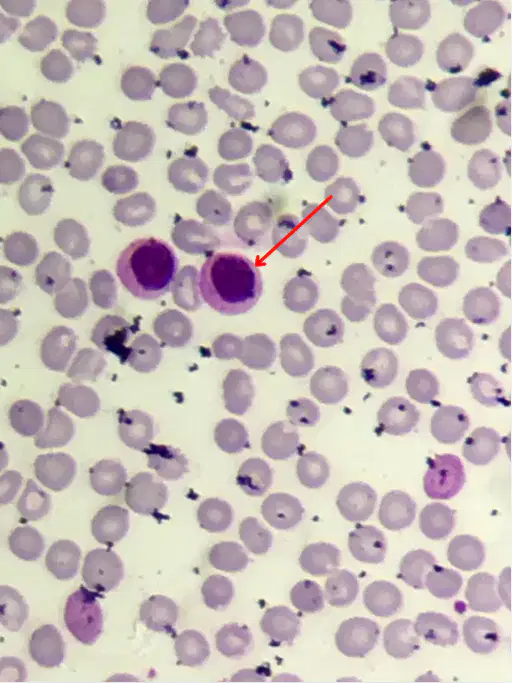
Identify the leukocyte being pointed by the red arrow.
Neutrophil
Eosinophil
Basophil
Lymphocyte
Monocyte
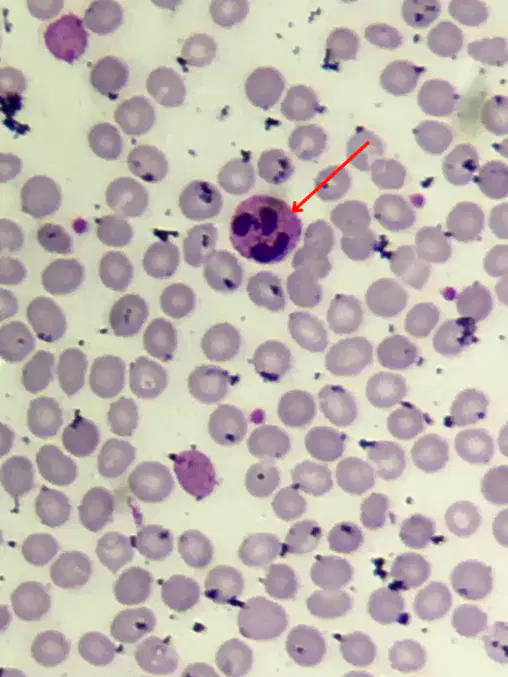
Identify the leukocyte being pointed by the red arrow.
Neutrophil
Eosinophil
Basophil
Lymphocyte
Monocyte
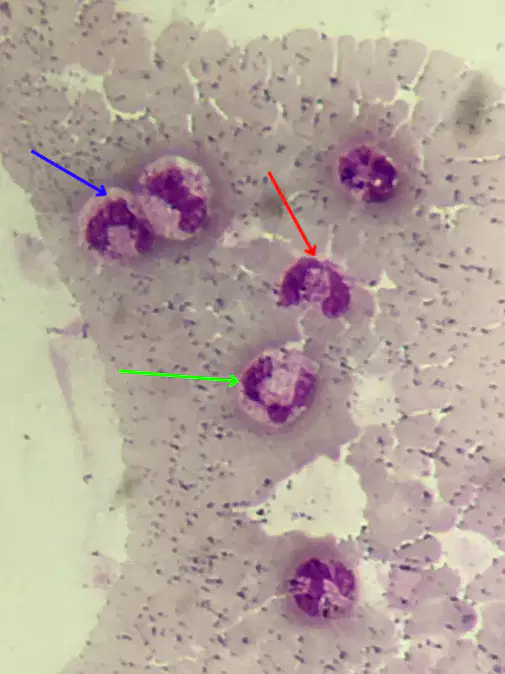
Identify the leukocyte being pointed by the red arrow.
Neutrophil
Eosinophil
Basophil
Lymphocyte
Monocyte
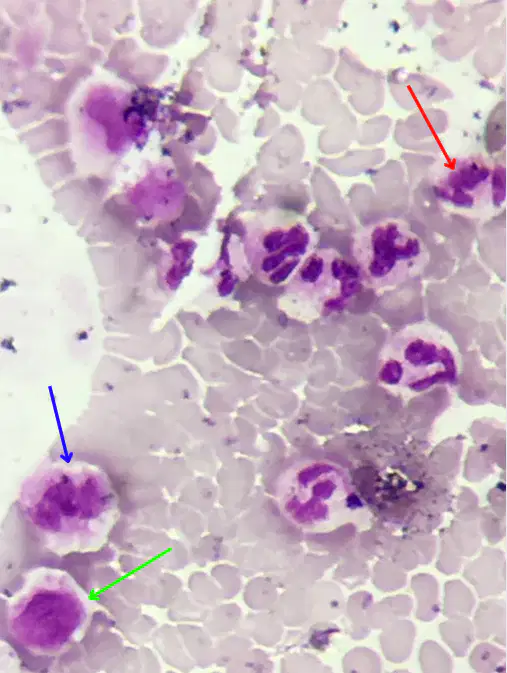
Identify the leukocyte being pointed by the red arrow.
Neutrophil
Eosinophil
Basophil
Lymphocyte
Monocyte
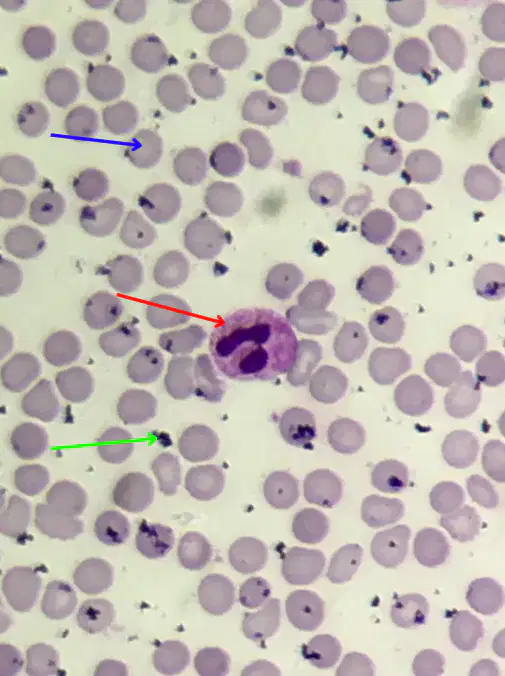
Identify the leukocyte being pointed by the red arrow.
Neutrophil
Eosinophil
Basophil
Lymphocyte
Monocyte
The cell being pointed at by the red arrow is a granulocyte.
True
False
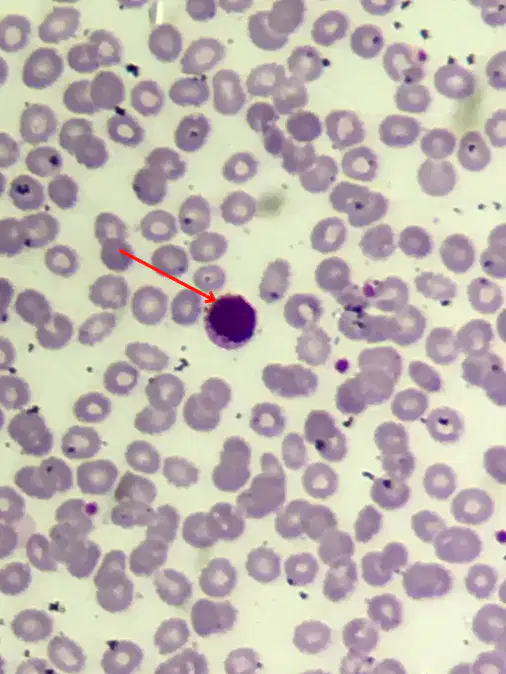
Identify the leukocyte being pointed by the red arrow.
Neutrophil
Eosinophil
Basophil
Lymphocyte
Monocyte
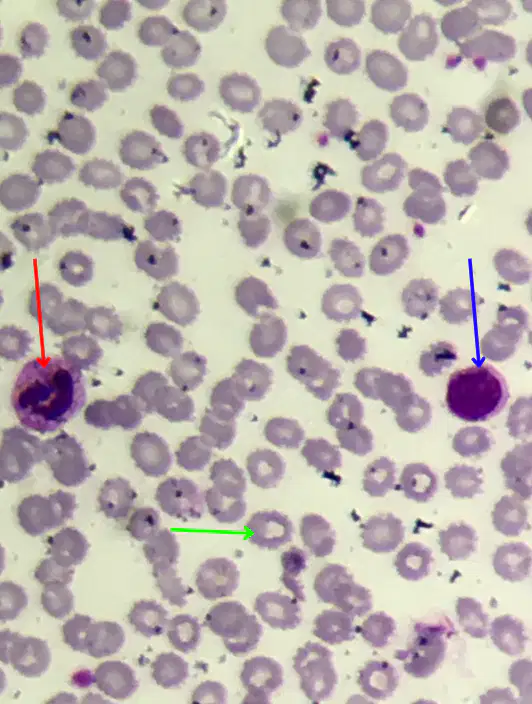
Identify the leukocyte being pointed by the red arrow.
Neutrophil
Eosinophil
Basophil
Lymphocyte
Monocyte
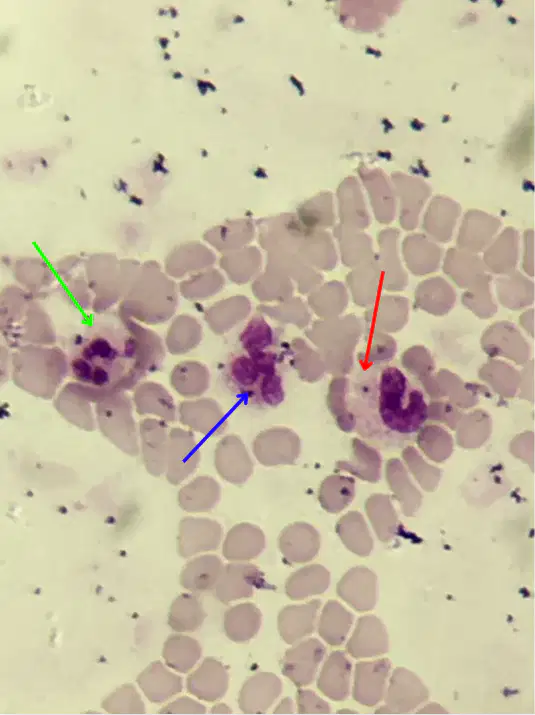
Identify the leukocyte being pointed by the red arrow.
Neutrophil
Eosinophil
Basophil
Lymphocyte
Monocyte
The cell being pointed at by the red arrow is a granulocyte.
True
False
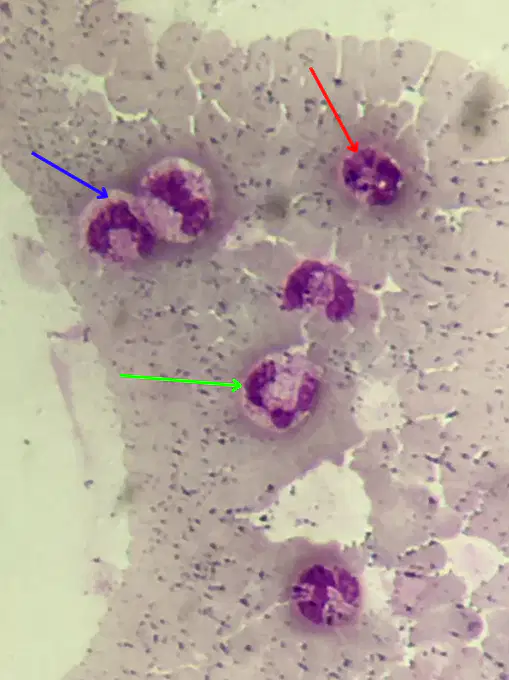
Identify the leukocyte being pointed by the blue arrow.
Neutrophil
Eosinophil
Basophil
Lymphocyte
Monocyte
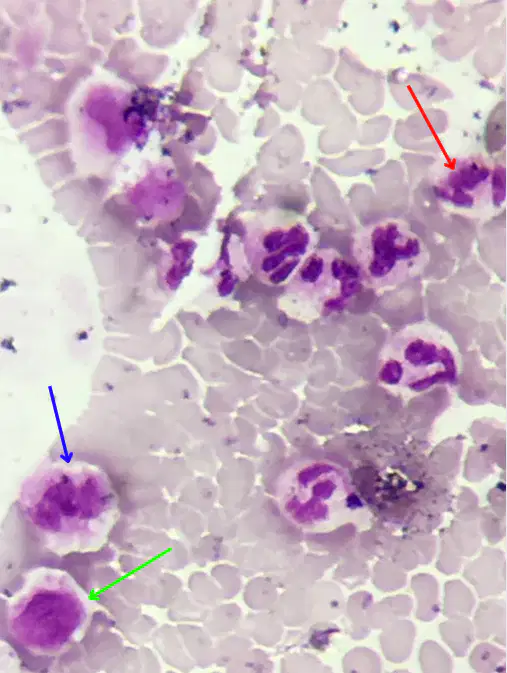
Identify the leukocyte being pointed by the blue arrow.
Neutrophil
Eosinophil
Basophil
Lymphocyte
Monocyte
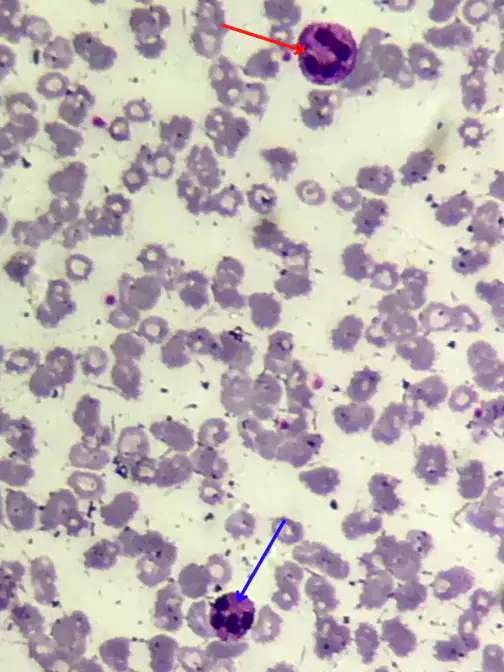
Identify the leukocyte being pointed by the red arrow.
Neutrophil
Eosinophil
Basophil
Lymphocyte
Monocyte
Identify the leukocyte being pointed by the blue arrow.
Neutrophil
Eosinophil
Basophil
Lymphocyte
Monocyte
The cell being pointed at by the blue arrow is an agranulocyte.
True
False
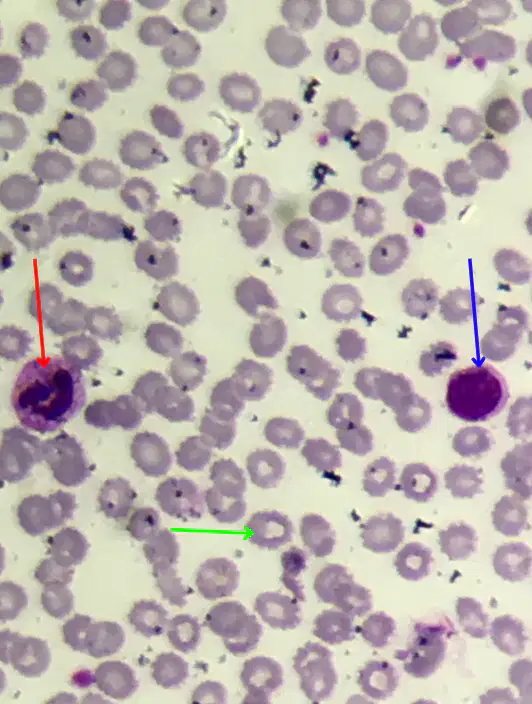
Identify the leukocyte being pointed by the blue arrow.
Neutrophil
Eosinophil
Basophil
Lymphocyte
Monocyte
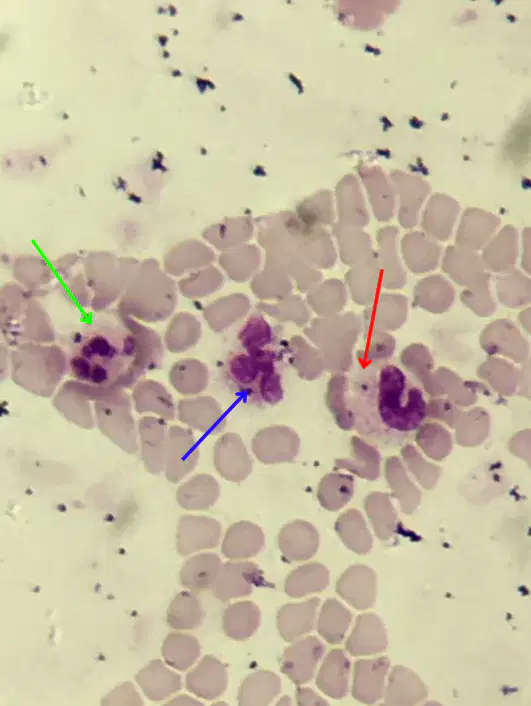
Identify the leukocyte being pointed by the blue arrow.
Neutrophil
Eosinophil
Basophil
Lymphocyte
Monocyte
Identify the leukocyte being pointed by the green arrow.
Neutrophil
Eosinophil
Basophil
Lymphocyte
Monocyte
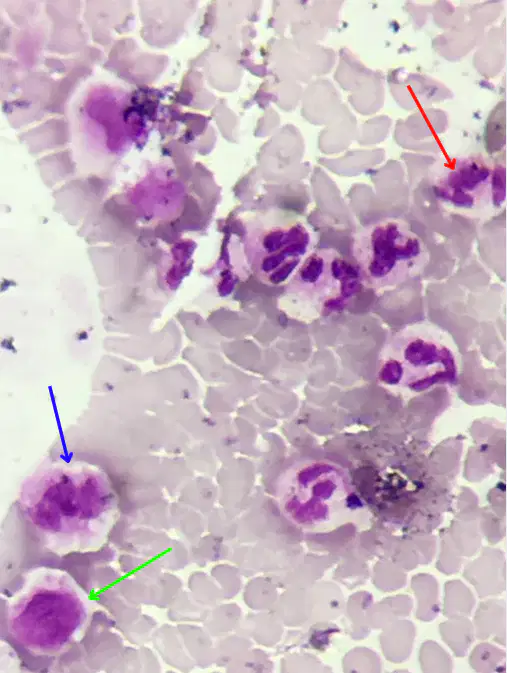
Identify the leukocyte being pointed by the green arrow.
Neutrophil
Eosinophil
Basophil
Lymphocyte
Monocyte
The cell being pointed at by the green arrow is an agranulocyte.
True
False
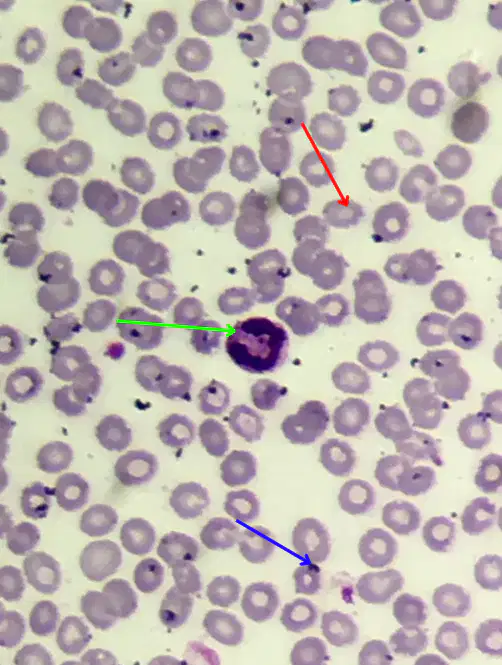
Identify the leukocyte being pointed by the green arrow.
Neutrophil
Eosinophil
Basophil
Lymphocyte
Monocyte
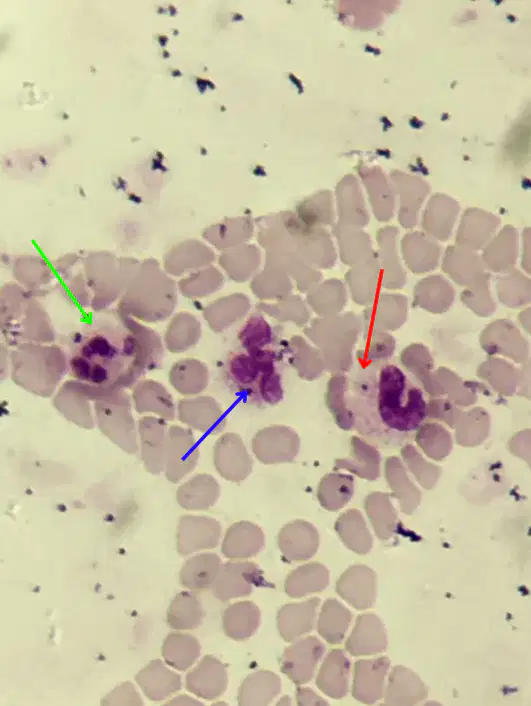
Identify the leukocyte being pointed by the green arrow.
Neutrophil
Eosinophil
Basophil
Lymphocyte
Monocyte
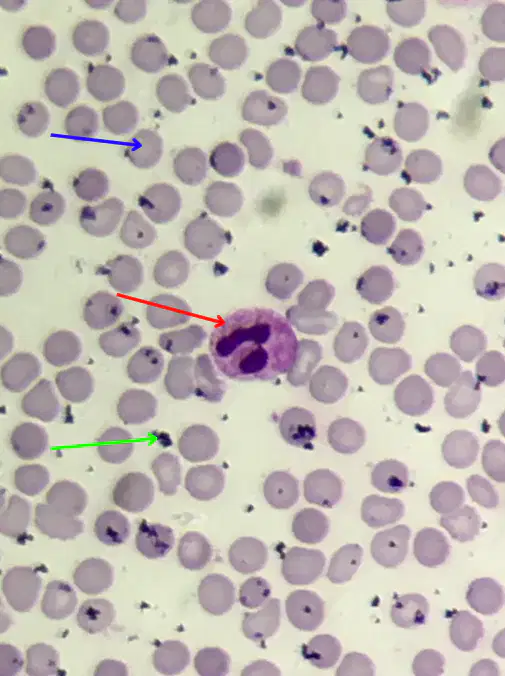
Identify what is being pointed at by the blue arrow (Answer in singular form).
(a)

Identify what is being pointed at by the red arrow (Answer in singular form).
(a)

Identify what is being pointed at by the green arrow (Answer in singular form).
(a)
The cell being pointed at by the green arrow is nucleated.
True
False
Identify what is being pointed at by the green arrow (Answer in singular form).
(a)
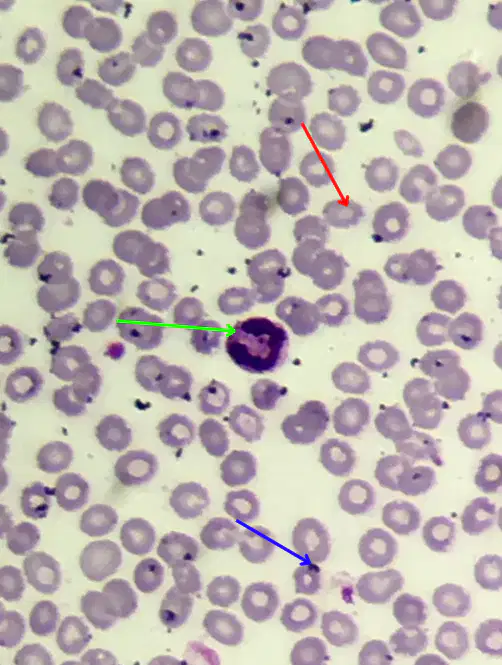
Identify what is being pointed at by the blue arrow (Answer in singular form).
(a)
Which of the following contain specific granules in their cytoplasm?
Neutrophils
Basophils
Eosinophils
Lymphocytes
Monocytes
Which of the following contain azurophilic granules in their cytoplasm?
Neutrophils
Basophils
Eosinophils
Lymphocytes
Monocytes
Which of the following statements about neutrophils are true?
Band neutrophils are immature neutrophils
Band neutrophils are fully mature neutrophils
Segmented neutrophils are fully mature neutrophils
Segmented neutrophils are immature neutrophils
Neutrophilic granules stain salmon pink while eosinophilic granules stain bright pink.
True
False

