wayground logo

Free Printable Worksheets

Font size

S
M
L
XL
Worksheets

Georgia Milestones

Total questions: 215

Worksheet time: 3hrs 27mins

Name
Class
Date
1.
Evidence of a chemical change would be a
a)
melting popsicle
b)
spinning top
c)
spilled bucket of water
d)
rusting car fender
2.
Moisture that collects on the outside of a cold glass results from the process of
a)
evaporation
b)
condensation
c)
sublimation
d)
vaporization
3.
A hot air balloon rises because
a)
molecules become lighter when heated
b)
molecules move faster and farther apart when heated
c)
molecules are less attracted by gravity when heated
d)
molecules become charged and repel each other when heated
4.
The solid, liquid, and gaseous states of water differ from each other in
a)
the mass of the individual atoms 
b)
the size of he individual atoms
c)
the net electrical charge of the individual molecules
d)
the average speed of movement of the individual molecules
5.
Compare and contrast mixtures and compounds. Which statement is true about mixtures and compounds?
a)
Both mixtures and compounds are the same throughout
b)
Mixtures and compounds are made of two or more elements in a definite proportion
c)
mixtures must be separated by chemical methods and compounds by physical methods
d)
mixtures contain two or more elements physically combined and compounds contain two or more elements chemically combined
6.
Which symbolizes a molecule of a compound?
a)
He
b)
Be
c)
N2
d)
NaCi
7.
A different chemical substance is formed when
a)
piece of cloth is cut
b)
cup breaks 
c)
candle burns
d)
piece of chalk breaks
8.

Carbon dioxide CO2 is...

a)

an element

b)

a compound

c)

a solution

d)

a mixture

9.
A chemical change combining two elements results in...
a)
an atom
b)
a compound
c)
an element
d)
a mixture
10.
All plant and animal life on Earth contains what element?
a)
sulfur
b)
carbon
c)
silicon
d)
aluminum
11.
Which is usually true about metals?
a)
Metals melt at a lower temperatures than any other elements
b)
metals always have their atoms arranged into crystals
c)
metals do not combine easily with nonmetals
d)
Metals conduct electricity more easily than nonmeals
12.
The element beryllium (Be, atomic number 4 and atomic mass 9) is right above magnesium (Mg, atomic number 12 and atomic mass 24) in the periodic table. How many more electrons does magnesium have than beryllium?
a)
5
b)
7
c)
8
d)
15
13.
Which action would result in a chemical change?
a)
crumpling several sheets of paper
b)
pounding a nail into a piece of wood
c)
peeling and slicing a carrot
d)
making blueberry muffins
14.
The amount of matter in an object is called its...
a)
weight
b)
gravity
c)
mass
d)
force
15.
A chemical change for a piece of metal would be
a)
being bent in half
b)
getting cut into two pieces
c)
being painted
d)
getting rusty
16.
Putting sand and salt together makes 
a)
a compound
b)
an element
c)
a mixture
d)
a solution
17.
All of the substances on the periodic table are classified as elements because they
a)
are pure substances
b)
are composed of atoms
c)
cannot be broken down into other substances
d)
cannot be dissolved in water or other liquids
18.
Which is correct symbol for the element sodium?
a)
S
b)
Al
c)
Cl
d)
Na
19.
Which statement is true about the electrical properties of metals?
a)
metals have high electrical resistance
b)
lightweight metals are the best conductors
c)
metals an plastics are both good insulators
d)
metals are good electrical conductors
20.
A difference between physical change an chemical change is that
a)
a chemical change involves energy while physical change does not
b)
physical change involves energy while chemical change does not 
c)
different kinds of molecules are present after a physical change but not a chemical change
d)
different kinds of molecules are present after a chemical change but not a physical change
21.
Silver is white metal that is an excellent conductor of heat ad electricity. The density of silver is 10.49 g/cm3. Silver does not react with water but does not react with nitric acid. Silver tarnishes when exposed to air. A physical property of silver is
a)
silver reacts with nitric acid
b)
silver does not react with water
c)
the density of silver is 10.49 g/ cm3
d)
silver tarnishes when exposed to air
22.
Each element in the periodic table is assigned an atomic number. This number is the same as...
a)
the number of electrons in the atom's nucleus
b)
the number of protons in the atom's nucleus
c)
the number of neutrons in the atom's nucleus
23.
Which shows only a physical change in the wood?
a)
a tree
b)
cutting wood
c)
burning wood
d)
ashes of the wood
24.
Two or more atoms, joined covalently, that act as a unit, are called a(n)... 
a)
ion
b)
atom
c)
mixture 
d)
molecule
25.
During science lab, some students added small pieces of magnesium (Mg) to hydrochloric acid (HCI). They noticed bubbles formed, the test tube got hot, and the magnesium disappeared. Which of the following is a sign that a chemical reaction has taken place in this experiment?
a)
odor
b)
formation of gas
c)
decrease in tempature
d)
formation of precipitation
26.

Stan did an experiment. The following are his results. Which one of these provided evidence of a physical property?

a)

vinegar fizzed

b)

test tube got hot

c)

cornstarch turned black

d)

cornstarch felt slippery

27.
Which of these is an observed chemical property?
a)
color of powder
b)
density of powder
c)
powder dissolves in water
d)
powder reacts with vinegar
28.
As you move across the periodic table from left to right within a period, the elements...
a)
become less stable
b)
become more reactive
c)
change from gases to solids
d)
change from metals to nonmetals
29.
Through which of the following materials does heat travel the fasest
a)
glass
b)
metal
c)
plastic 
d)
wood
30.
Which of the following is an example of kinetic energy?
a)
a child jumping rope
b)
a swimmer ready to dive
c)
a stuffed toy lying on a table
d)
firewood stacked in a fireplace
31.
Which represents kinetic energy?
a)
a bear standing in a field of berries 
b)
a salmon resting in still water
c)
a bear holding a salmon it has caught
d)
a salmon leaping up a waterfall
32.
When a hair dryer is being used, one of the energy transformations that takes place is
a)
electrical to chemial
b)
electrical to mechanical
c)
mechanical to electrical
d)
chemical to electric
33.
When electrical energy is "used" by an electric light, what really happens to the energy
a)
it is given off as other forms of energy
b)
it changes matter
c)
it stops at the electric light
d)
it dissapears
34.
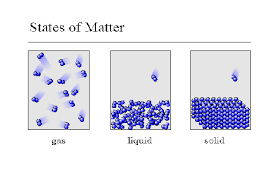
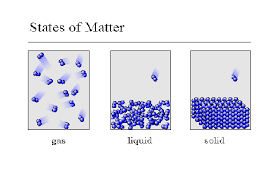
In which state of matter are molecules in contact with each other but free to move?
a)
solid
b)
liquid
c)
gas
35.
A car stopped at the top of the ramp has...
a)
heat energy
b)
potential energy
c)
kinetic energy
d)
mechanical energy
36.
In an amusement park a moving bumper car (car 1) collides with a bumper car at rest (car 2) and, after the collision, both cars move. If momentum is conserved, which statement is correct?
a)
The momentum of car 1 increases and the momentum of car 2 decreases
b)
The momentum of car 1 decreases and the momentum of car 2 increases
c)
The total momentum of both cars increase
d)
The total momentum of both cars decrease
37.
To pull up a bucket of water from a well, George pulled hard on a handle to wind up a rope. Which kind of energy was George applying to the handle?
a)
chemical energy
b)
frictional energy
c)
potential energy
d)
mechanical energy
38.
What is the process by which heat energy gets to Earth from the sun?
a)
conduction
b)
radiation
c)
subduction
d)
convection
39.
Which situation is an example of increasing potential energy?
a)
pulling a wagon uphill
b)
emptying a bucket of water
c)
a cat jumping from a tree
d)
a bicyclist stopping at a stop sign
40.
A pitcher throws a baseball towards the catcher and batter. Which of these has MOSTLY kinetic energy?
a)
the pitcher
b)
the ball
c)
the batter
d)
the catcher
41.
How do microwaves cook food?
a)
by using elctromagnetic waves and the process of radiation
b)
by using hot air currents through the process of convection
c)
by using the movement of charged particles through the process of induction
d)
by using direct contact of moving particles through the process of conduction
42.
On a cold, winter day, Sheena rubs her hands together. Stored chemical energy is transformed into mechanical energy. Due to the Law of Conservation of Energy some of the energy is also transformed into...
a)
heat energy
b)
light energy
c)
solar energy
d)
kinetic energy
43.
What form of energy is associated with the movement of charges, usually electrons?
a)
chemical
b)
electrical
c)
heat
d)
sound
44.
_____ energy is produced when a force causes a substance to vibrate, and the energy transferred through the substance in a wave. 
a)
heat
b)
light
c)
mechanical
d)
sound
45.
Which term refers to the rate of change in motion?
a)
acceleration
b)
speed
c)
momentum
d)
velocity
46.
What must happen to an object in order to accelerate it?
a)
a net force must be applied
b)
some weight must be removed
c)
its frictional coefficient must be reduced
d)
it must contain momentum
47.
A car is traveling down a hill. Which if the following will affect the amount of energy the car has?
a)
how long the car is
b)
the day of time
c)
how much the car weighs
d)
the color of the car
48.
This graph shows the velocity of a car. Which statement BEST explains how the car is moving?
a)
velocity is increasing, so the car is accelerating
b)
velocity is decreasing, so the car is accelerating
c)
velocity is increasing, so the car is not accelerating
d)
velocity is decreasing, so the car is not accelerating
49.
All objects in the universe is attracted to each other by the force of
a)
effort
b)
friction
c)
gravity
d)
inertia
50.
Jeff was riding in a car. Which change demonstrates the GREATEST effort of inertia?
a)
the car makes a sudden stop
b)
the car slows down gradually
c)
the car changes into another lane
d)
the car runs out of gas and rolls to a stop
51.
Manuel is coasting on a bike. Because he is not pedaling, his bike will come to a stop. Which of these will cause his bike to stop
a)
an increase of kinetic energy
b)
Earth's magnetic field
c)
the property of inertia
d)
the force of friction
52.
Simon rolled a ball down a hill. The ball stopped before it reached the bottom of the hill. Which of these MOST LIKELY stopped the ball from rolling?
a)
mass
b)
gravity
c)
friction
d)
inertia
53.
The force that holds to Earth's  surface is..
a)
gravity
b)
weight
c)
mass
d)
pressure
54.
Which is true about friction and gravity?
a)
both are forces
b)
both cause energy loss
c)
both cause things to speed up
d)
both cause heat
55.
If you travel to the moon, your weight would be about one-sixth less than it is on Earth. This s because the moon...
a)
has a smaller circumference tha Earth
b)
is much less massive than Earth
c)
rotates much slower than Earth
d)
has no water on it surface
56.
When a gas forms a liquid, which process is taking place?
a)
freezing
b)
condensation
c)
boiling
d)
evaporation
57.
Which statement about molecules in ice and the molecules in water is?
a)
The molecules in ice have more energy than the molecules in liquid water
b)
The molecules in ice contain different atoms than the molecules in liquid water
c)
The molecules in ice have more electric charge than the molecules in liquid water
d)
The molecules in ice are less free to move than the molecules in liquid water
58.
Which is not an example of a physical change?
a)
ice melting
b)
salt crystals being ground to powder
c)
water evaporating
d)
wood burning
59.
Which of the following is a compound?
a)
Oxygen 
b)
Water
c)
Nitrogen
d)
Air
60.
Which symbol represents carbon?
a)
Ca
b)
N
c)
K
d)
C
61.
Gasoline, wood, water behind a dam, and a boulder on the edge of a cliff all represents some form of potential energy. What form of potential energy do gasoline and wood have in common?
a)
heat
b)
light
c)
chemical
d)
mechanical
62.
Which runner won the race?
a)
A
b)
B
c)
C
63.
Which runner had a head start?
a)
A
b)
B
c)
C
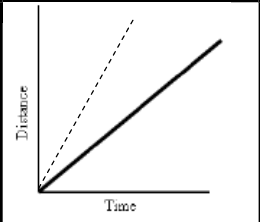
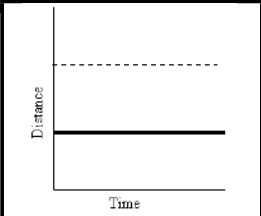
64.
What does this graph represent?
a)
Constant Speed
b)
Acceleration
c)
Not moving
65.
How long did it take this object to travel 10 m?
a)
0 s
b)
10 s
c)
15 s
d)
20 s
66.
What does this graph represent?
a)
Constant speed
b)
Acceleration
c)
Not moving
67.
What is happening at D?
a)
Stationary
b)
Accelerating
c)
Fast steady speed; moving away from the starting position
d)
Slower steady speed; moving away from the starting position
68.
What is happening at C?
a)
Stationary
b)
Accelerating
c)
Fast steady speed; moving away from the starting position
d)
Slower steady speed; moving away from the starting position
69.
What does this graph represent?
a)
Constant speed
b)
Acceleration
c)
Not moving
70.

Which of the graphs shows that one of runners started 10 yards further ahead of the

other?

a)
b)
c)
d)
71.

Match the description to the graph:

"The car is stopped."

a)
b)
c)
d)
72.

Match the description to the graph:

"The car is traveling at a constant speed."

a)
b)
c)
d)
73.

Match the description to the graph:

"The speed of the car is decreasing."

a)
b)
c)
d)
74.

Match the description to the graph:

"The car is coming back."

a)
b)
c)
d)
75.

Segment O-A The bus is _________________.

a)

at rest

b)

returning (to original position)

c)

moving forward

76.

Segment A-B The bus is _________________.

a)

at rest

b)

returning (to original position)

c)

moving forward

77.

Segment B-C The bus is _________________.

a)

at rest

b)

returning (to original position)

c)

moving forward

78.

Segment C-D The bus is _________________.

a)

at rest

b)

returning (to original position)

c)

moving forward

79.

Segment D-E The bus is _________________.

a)

at rest

b)

returning (to original position)

c)

moving forward

80.

How long did Charlie stop for a rest?

a)

2.5 seconds

b)

2 seconds

c)

3 seconds

d)

5 seconds

81.
The graph shows Ashley riding her bike to Maria's house. 
What was occurring from point B to point C?
a)
She was increasing her speed.
b)
She stopped for 4 minutes
c)
She was decreasing in speed
82.
What is the speed of an object that travels 60 meters in 4 seconds?
a)
240 m/s
b)
15 m/s
c)
0.067 m/s
d)
15 mph
83.

Tommy drove 50 km/hr for 2 hours. How far was he able to go?

a)

52 km

b)

100 km

c)

48 km

d)

1000 km

84.

Barbara went for a walk. Over 3 hours, she covered 15 kilometers. How fast was she walking to cover that distance?

a)

5 km/hr

b)

18 km/hr

c)

12 km/hr

d)

45 km/hr

85.
A ___________ is an arrangement of elements in columns
a)
columns
b)
rows
c)
periodic table
d)
electron shell
86.
Each column in the periodic table is called a 
a)
period
b)
group
c)
cluster
d)
unit
87.
The atomic number tells you what?
a)
number of electrons
b)
number of protons
c)
number of neutrons
d)
both electrons and protons in an atom.
88.
Which group of the periodic table is composed of inert (not reactive)  gases?
a)
alkali metals
b)
alkaline earth metals
c)
halogens
d)
noble gases
89.
Elements which are shiny, conduct electricity and heat are called
a)
metal
b)
nonmetal
c)
metalloid
d)
nonexistent
90.
Which element is not a metal?
a)
H
b)
Re
c)
Al
d)
B
91.
The atoms along the staircase are called 
a)
metals
b)
nonmetals
c)
metalloids
d)
noble gases
92.
Which is a halogen?
a)
Helium
b)
Chlorine
c)
Oxygen
d)
Neptune
93.
Which is an alkali metal?
a)
Magnesium
b)
Iron
c)
Sodium
d)
Europium
94.
A horizontal row of elements in the periodic table.
a)
column
b)
group
c)
period
95.
Elements in a ..................have similar chemical properties.  
a)
period
b)
group
c)
row
96.
The simplest substance is..?
a)
Carbon
b)
An element
c)
Water
d)
A simple compound 
97.
A proton is....
a)
A negatively charged subatomic particle
b)
A positively charged subatomic particle
c)
A neutrally charged subatomic particle
d)
The only subatomic particle located in the nucleus
98.
A neutron has a charge of
a)
+2
b)
No charge
c)
-1
d)
+1
99.
A proton is....
a)
A negatively charged subatomic particle
b)
A positively charged subatomic particle
c)
A neutrally charged subatomic particle
d)
The only subatomic particle located in the nucleus
100.
Which of these element is the least metallic?
a)
Potassium (K)
b)
Carbon (C)
c)
Sulfur (S)
d)
Neon (Ne)
101.
A rule that states that repeating chemical and physical properties of elements change periodically with the atomic number of the elements is the _________.
a)
periodic law
b)
alkaline-earth metals
c)
actinide
d)
group rule
102.
All of the actinides are ___________.
a)
stable
b)
radioactive
c)
shiny
d)
named after scientists
103.
Electricity that flows in a closed path is called a
a)
path
b)
current
c)
circuit
104.
The flow of electricity in a circuit-
a)
current
b)
flow
c)
circuit
105.
Magnetism created by an electric current
a)
electricity
b)
electromagnetism
c)
wind energy
106.
____________ allows electricity to flow.
a)
A conductor
b)
An insulator
c)
A magnet
107.
____________ stops the flow of electricity.
a)
A conductor
b)
An insulator
c)
A magnet
108.
To complete a circuit the switch must be
a)
unattached
b)
open
c)
closed
109.
When the switch is closed, the light
a)
comes on
b)
stays off
c)
burns out
110.
Two types of circuits are
a)
parallel and magnetic
b)
electromagnetic and series
c)
series and parallel
111.
An example of a parallel circuit is
a)
the wiring in a house
b)
a flashlight
c)
a single circular path
112.
what type of electricity is lightning 
a)
direct
b)
indirect
c)
copper, water, nuculer
d)
static
113.
Atoms are made up of?
a)
sugar, spice and nice
b)
neutrons, protons, electrons
c)
copper, water, nuclear
d)
air, solid, liquid
114.
electrons charge is
a)
negative
b)
positive 
c)
nutral
d)
forward
115.
what is the unit of measure of a battery (electric source)
a)
amps
b)
volts
c)
watts
d)
ohms
116.
what is the unit of measure for current?
a)
amps
b)
volts
c)
watts
d)
ohms
117.
what is the unit of measure for resistance?
a)
amps
b)
volts
c)
watts
d)
ohms
118.
what type of current comes from a battery?
a)
indirect
b)
alternating
c)
direct
d)
oscillating 
119.
what type of current comes from the power company?
a)
indirect
b)
alternating
c)
direct
d)
oscillating 
120.

what are the 2 main types of electricity?

a)

AC & DC

b)

Static & Current

c)

Negative & Positive

d)

Hot & Cold

121.
What kind of circuit dow the picture show?
a)
Parallel Circuit
b)
Series Circuit
122.
What kind of circuit does the picture show?
a)
Series 
b)
Parallel
123.
How is a permanent magnet DIFFERENT from a temporary magnet?
a)
A permanent magnet attracts materials made of iron.
b)
A permanent magnet has poles.
c)
A permanent magnet has a magnetic field.
d)
A permanent magnet keeps its magnetism for a long time.
124.
Which of the following changes liquid water into gas?
a)
boiling
b)
freezing 
c)
melting
125.
At higher temperatures
a)
particles in an object have less energy
b)
particles in an object move faster
c)
a gas contracts
126.
A gas
a)
has a definite shape but no definite volume
b)
has a definite volume but no definite shape
c)
has fast-moving particles
127.
Freezing
a)
Solid to gas
b)
Liquid to solid
c)
Gas to solid
d)
Liquid to gas
128.
Boiling
a)
liquid to gas
b)
gas to solid
c)
gas to liquid
d)
solid to liquid
129.
Which state of matter has tightly packed molecules?
a)
solid
b)
liquid
c)
gas
130.
Which state of matter has a definite shape?
a)
solid
b)
liquid
c)
gas
131.
What is happening when my ice cream changes from a solid to a liquid?
a)
freezing
b)
melting
c)
burning
d)
evaporation
132.
Define a liquid.
a)
Indefinite shape, indefinite volume
b)
Definite shape, definite volume
c)
Found in stars
d)
Definite volume, indefinite shape
133.
The state of matter that has no definite size or shape is
a)
Solid
b)
Liquid
c)
Gas
134.
What term describes a solid changing to a gas?
a)
Deposition
b)
Sublimation
c)
Evaporation
d)
Freezing
135.
The speed of the molecules determines the _____.
a)
volume
b)
density
c)
pressure
d)
temperature
136.
The slower the particles in a substance move,
a)
the colder it is.
b)
the warmer it is.
c)
the more energy it has.
d)
the less energy it has.
137.
Thermal energy is...
a)
heat energy.
b)
the energy of motion
c)
energy of nuclear processes.
d)
an indication of physical change.
138.
A chemical change
a)
doesn't really change much.
b)
creates a new substance
c)
is a change in the state of matter
139.
The atoms and molecules in this state of matter have the highest energy.
a)
Solid
b)
Liquid
c)
Gas
d)
Plasma
140.
The state of matter that has a definite shape and a definite volume. 
a)
Solid
b)
Liquid
c)
Gas
d)
Plasma
141.
Which list has the states of mater in order from highest energy to lowest energy.
a)
solid, liquid, gas, plasma
b)
plasma, solid, liquid, gas
c)
gas, liquid, plasma, solid
d)
plasma, gas, liquid, solid
142.
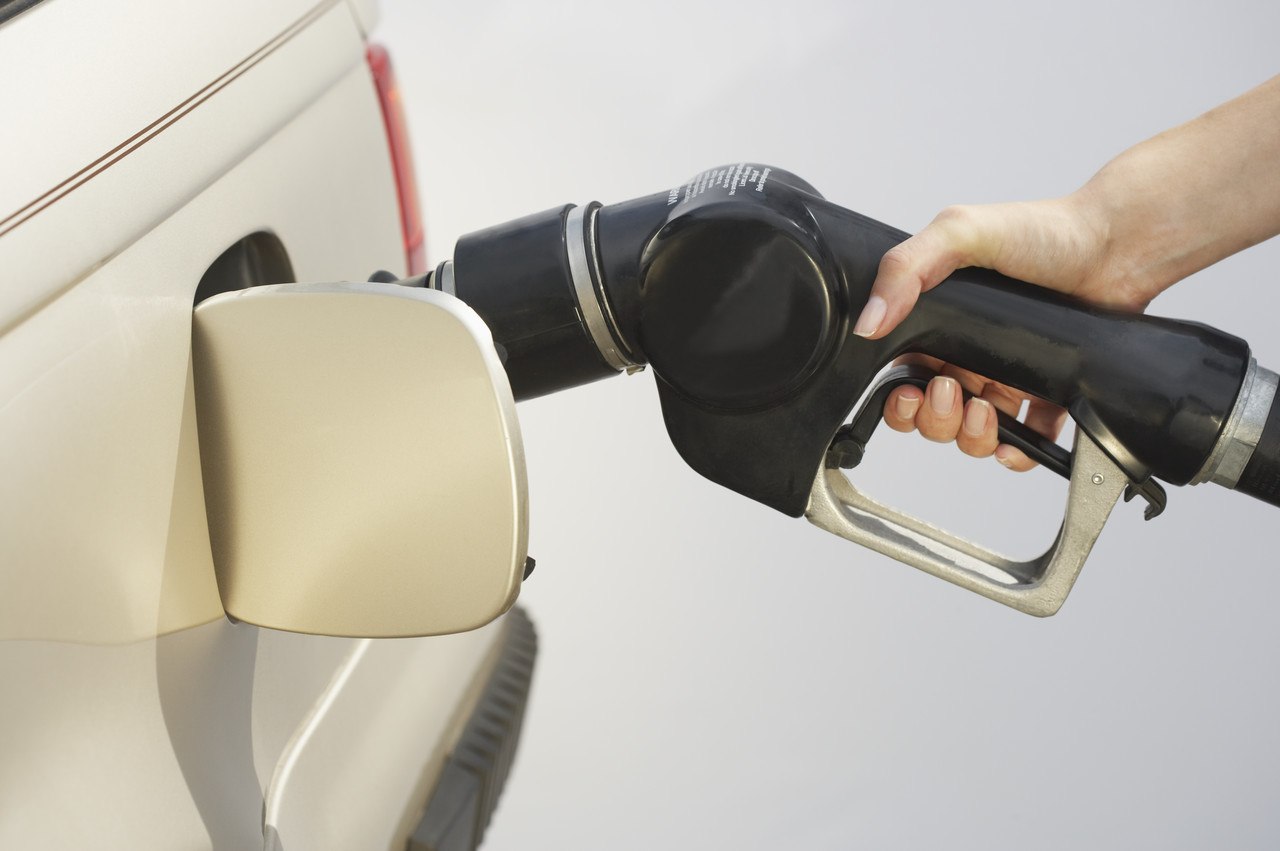
Which energy conversion is taking place when you put gasoline in a car?
a)
thermal -> electrical
b)
mechanical -> electrical
c)
chemical -> mechanical
d)
mechanical -> electromagnetic
143.
what type of energy is stored in a battery?
a)
electrical
b)
chemical
c)
thermal
d)
mechanical
144.
When you eat pizza, Chemical Energy is transferred to _____ Energy.
a)
Solar
b)
Electrical
c)
Mechanical
d)
Chemical
145.
Electrical Energy is transferred to _____ Energy.
a)
Thermal
b)
Solar
c)
Electrical
d)
None
146.
Which energy transformation occurs in a toaster?
a)
chemical to electric
b)
electric to thermal
c)
kinetic to chemical
d)
thermal to potential
147.
The picture shows a microwave oven. As a microwave oven is operated, electrical energy is transformed into all of the following types of energy EXCEPT —
a)
solar
b)
light
c)
thermal
d)
mechanical
148.
Which of the following devices transforms electrical energy into mechanical energy?
a)
An e-reader
b)
a fan
c)
a manual pencil sharpener
d)
ipod
149.
Electrical -> Mechanical -> Sound 
a)
A triple beam balance measuring an object’s mass
b)
A pencil sharpener plugged into a wall outlet
c)
A projector displaying a diagram on the screen
d)
A working flashlight used to light up a dark corner
150.

A hydroelectric power plant works by using flowing water to turn a turbine. The turbine is connected to a magnet inside of a generator. When the magnet turns inside of the generator, the coiled wire surrounding the magnet will generate the type of energy that is sent along power lines to your home.

What energy transformation occurs in a hydroelectric power plant?

a)

Mechanical to electrical

b)

Electrical to mechanical

c)

Chemical to mechanical

d)

Chemical to electrical

151.

Which of the following describes the energy transformations that occur when a toaster is used to make toast?

a)

Thermal energy is transformed into chemical energy in the toaster, and chemical energy is transformed into thermal energy in the toast.

b)

Electrical energy is transformed into thermal energy in the toaster, and chemical energy is transformed into thermal energy in the toast.

c)

Light energy is transformed into thermal energy in the toaster, and thermal energy is transformed into chemical energy in the toast.

d)

Electrical energy is transformed into thermal energy in the toaster, and thermal energy is transformed into chemical energy in the toast.

152.

Ions have charges because

a)

They have gained or lost electrons

b)

They are sharing electrons

c)

They are related to gases

153.
How are covalent bonds explained?
a)
When one atom takes the other atom's electron
b)
When the atom shares an electron with an another atom
c)
When the two nucleus merge
d)
When the neutrons leave the nucleus
154.
How are ionic bonds formed?
a)
When atoms share an electron
b)
When opposite charged atoms attract
c)
When one atom takes a proton
d)
When one atom takes a neutron
155.
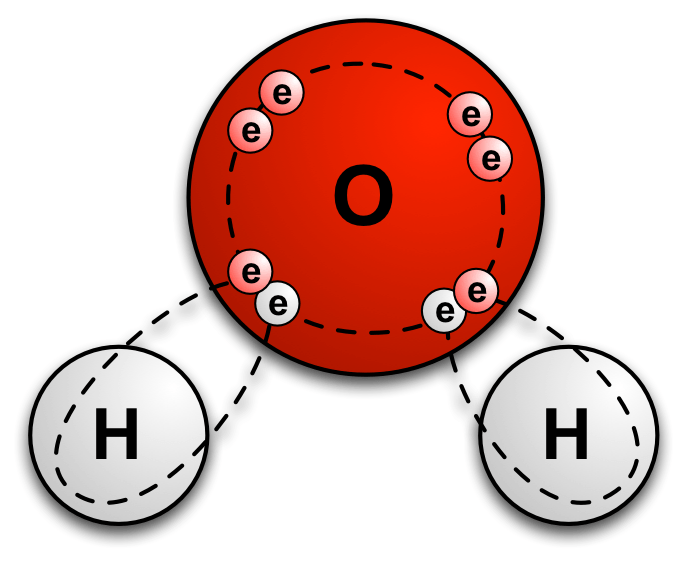
What would you name this molecule?
a)
SNa3
b)
H3O
c)
NaCl
d)
H2O
156.
What molecule is this?
a)
CO
b)
CO2
c)
C2O
d)
C2O2
157.
Polar or Nonpolar types
a)
Ionic 
b)
Covalent
158.
What happens when the sodium atom loses an electron?
a)
It become negatively charged 
b)
It become positively charged
c)
none
159.
What charges attract?
a)
Opposite
b)
Same
160.
What is a valence electron?
a)
an electron that is found in the outermost shell of an atom. 
b)
an electron found in the innermost shell of an atom.
c)
an electron found in the middle shell.
161.

Which electrons are involved in a chemical bond?

a)

Valence electrons

b)

Inner shell electrons

c)

Electrons are not involved in bonding

162.

A substance conducts electricity when dissolved in water. It can be classified as --

a)

ionic

b)

covalent

c)

metallic

163.
High Melting & Boiling Points
a)
Ionic
b)
Covalent
164.

Which term is represented by the following definition: Electron sharing usually occurs so that atoms attain a completely filled outer energy level

a)

Law of Octaves

b)

Octet Rule

c)

Duet Rule

d)

Full electron Configuration Rule

165.
What are the two properties of light?
a)
color and mass
b)
brightness and mass
c)
color and brightness
d)
energy and volume
166.
Which of these is an example of visible light?
a)
X-rays
b)
rainbow
c)
microwaves
d)
radio waves
167.
What do you get if you combine all of the colors in visible light?
a)
bright light
b)
white light
c)
brilliant light
d)
neon light
168.
What happens when light hits an object you can see?
a)
The light turns corners.
b)
The light curves around the object.
c)
The object reflects the light.
d)
The light and the object do not form a shadow.
169.
What happens to blue light when it hits a shirt that appears blue?
a)
The light is reflected.
b)
The light is absorbed.
c)
The light is refracted.
d)
The light is blocked.
170.
What is a property of a transparent object?
a)
Almost all of the light rays that reach it are scattered.
b)
Almost all of the light rays that reach it are absorbed.
c)
Almost all of the light rays that reach it are reflected.
d)
Almost all of the light rays that reach it pass through it.
171.
Which is translucent?
a)
tissue paper
b)
air
c)
wood
d)
clear plastic
172.
What is most likely to happen to light that hits an opaque object?
a)
All of the light passes through the object.
b)
None of the light passes through the object.
c)
Most of the light disappears.
d)
Some of the light passes through the object.
173.
Objects appear white because they absorb all colors, and objects appear black because they reflect all colors.
a)
True
b)
False
174.
Curve in
a)
Converse
b)
Convex
c)
Convection
d)
Concave
175.
When light strikes an object with a rough surface, photons bounce off at random angles.
a)
Occer
b)
Scope
c)
Scattering
d)
Scattegories
176.
Curve Out
a)
Converse
b)
Concave
c)
Convex
d)
Convection
177.
The bending of waves as they pass from one substance into another.
a)
Reaction
b)
Reflection
c)
Refraction
d)
Repost
178.
The distance between one peak and the next in a wave
a)
Transpartent
b)
Scattering
c)
Wavelength
d)
Waste Pro
179.
Transfer of energy when a wave disappears into a surface
a)
Transparent
b)
Refraction
c)
Reflection
d)
Absorption
180.
The number of vibrations a wave makes in a given amount of time is a 
a)
Absorption
b)
Medium
c)
Frequency
d)
Photon
181.
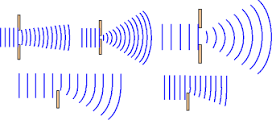
a)
Diffraction
b)
Interference
182.
a)
Reflection
b)
Refraction
183.
a)
Constructive Interference
b)
Destructive Interference
184.
A wave that does not require a medium
a)
A. electromagnetic  wave
b)
B. surface wave
c)
C. medium
d)
D. transverse wave
185.
A wave that requires a medium through wave which to travel
a)
A. electromagnetic  wave
b)
B. longitudinal wave
c)
C. mechanical wave
d)
D. transverse wave
186.
Wavelengths on the right side of the Electromagnetic spectrum are ______________.
a)
short
b)
long
c)
average
187.
This wave has the second highest frequency on the spectrum. 
a)
microwaves
b)
visible light
c)
x-rays
d)
gamma ray
188.
What do we call the bottom of a transverse wave?
a)
crest
b)
trough
c)
wavelength
d)
amplitude
189.
What do we call the top of the wave?
a)
crest
b)
trough
c)
amplitude
d)
frequency
190.
What happens when you increase the amplitude of a sound?
a)
it makes the sound louder
b)
it makes the sound travel faster
c)
it increases the wavelength of the sound
d)
it increases the frequency of the sound
191.
What happens when an object absorbs electromagnetic waves?
a)
It bends the object
b)
It heats the object u
c)
It causes it to become transparent
d)
It stays the same
192.
What kind of wave moves at right angles to the direction of the wave?
a)
compressional waves
b)
mechanical waves
c)
transverse waves
d)
ultraviolet rays
193.
Many times we associate transverse waves with this wave
a)
compressional wave
b)
electromagnetic wave
c)
mechanical wave
194.
Many times we associate compressional waves with this wave
a)
compressional wave
b)
transverse waves
c)
electromagnetic wave
195.
Which of the following is NOT a mechanical wave?
a)
sound
b)
light
c)
ocean
d)
seismic
196.
A wave carries...?
a)
energy only
b)
matter only
c)
energy and matter
d)
neither
197.
What kind of waves can travel through space?
a)
electromagnetic waves
b)
compressional waves
c)
longitudinal waves
d)
sound waves
198.
A compressional wave is another name for a 
a)
longitudinal wave
b)
electromagnetic wave
c)
radio wave
d)
hair wave
199.
In a longitudinal wave, the particles move...?
a)
back and forth
b)
up and down
c)
not at all
d)
at a 90 degree angle
200.
_____________________ is the distance between a point on one wave and the identical point of the next wave.
a)
Amplitude
b)
Wavelength
c)
Frequency
d)
Crest
201.
Of the following, ________ have the greatest frequency of the electromagnetic spectrum.
a)
ultraviolet rays
b)
gamma rays
c)
radio
d)
visible waves
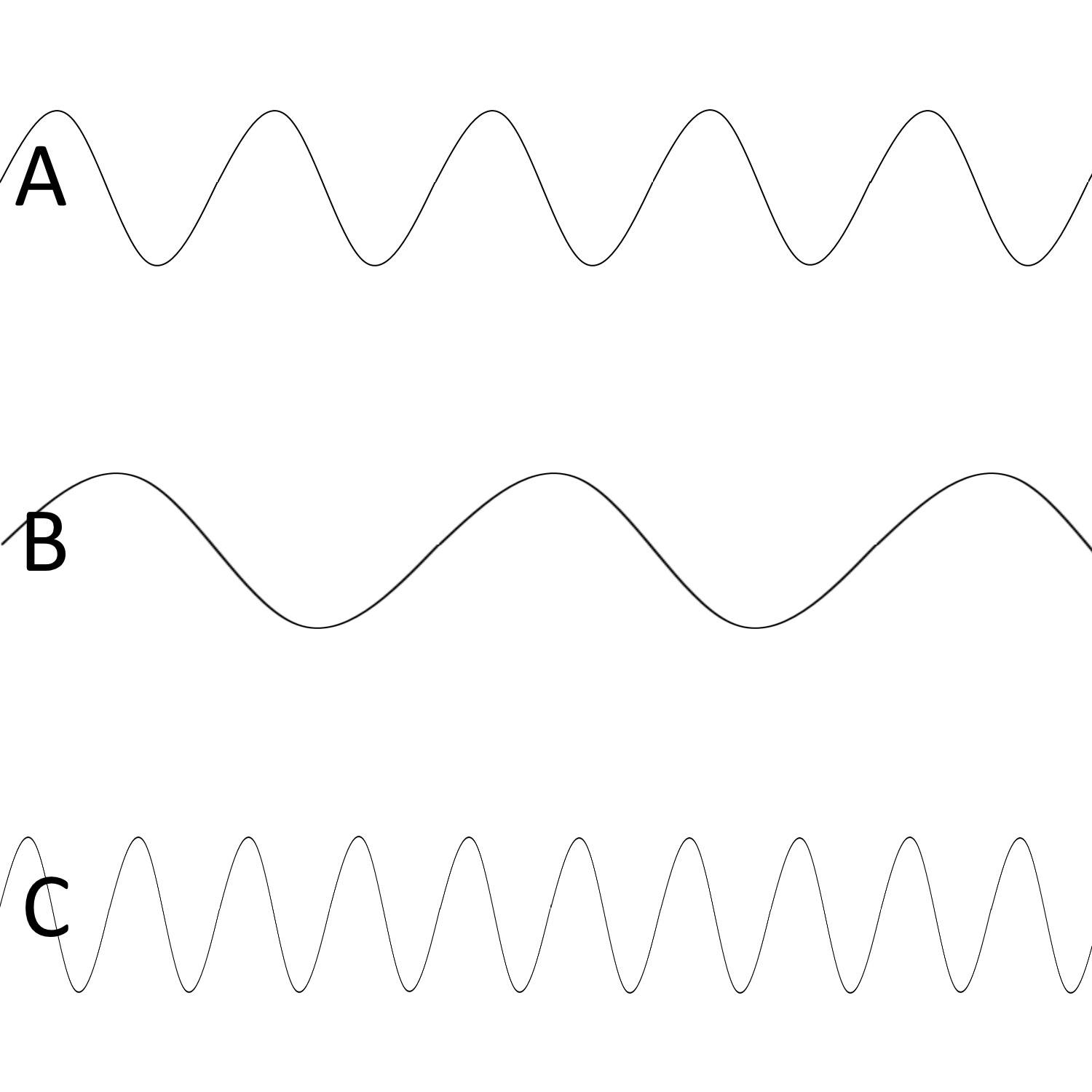
202.
Which wave has the largest wavelength?
a)
A
b)
B
c)
C
d)
None (same wavelength)
203.
Which wave has the largest frequency?
a)
A
b)
B
c)
C
d)
None (same frequency)
204.
If all three are waves of light, which wave has the largest speed?
a)
A
b)
B
c)
C
d)
None (same speed)
205.
Which type of light has the lowest energy of this group?
a)
Radio
b)
Microwave
c)
Infrared
d)
Ultraviolet
206.
Which type of light has the highest energy of this group?
a)
red
b)
yellow
c)
green
d)
blue
207.
Which type of light has the smallest frequency of this group?
a)
red
b)
yellow
c)
green
d)
blue
208.
This color in the visible part of the spectrum has the lowest energy. 
a)
Blue
b)
Green
c)
Red
d)
Violet
209.
This color in the visible part of the spectrum has the highest energy.
a)
Blue
b)
Red
c)
Violet
d)
Yellow
210.
What happens to frequency when the energy increases?
a)
it increases
b)
it decreases
c)
it stays the same
211.
What part of the wave is shown at letter A?
a)
crest
b)
trough
c)
wavelength
d)
frequency
212.
What does a wave carry?
a)
boats
b)
matter
c)
energy
d)
water
213.
Which wave has a longer wavelength?
a)
wave C
b)
wave D
214.
Which wave has a greater frequency?
a)
wave B
b)
wave C
215.
Which wave has the most energy?
a)
top wave
b)
bottom wave