Free Printable Atomic Models Worksheets for Year 10
Explore Year 10 atomic models through Wayground's comprehensive collection of free worksheets and printables, featuring practice problems and answer keys to help students master electron configurations, orbital theory, and quantum mechanical models.
Explore printable Atomic Models worksheets for Year 10
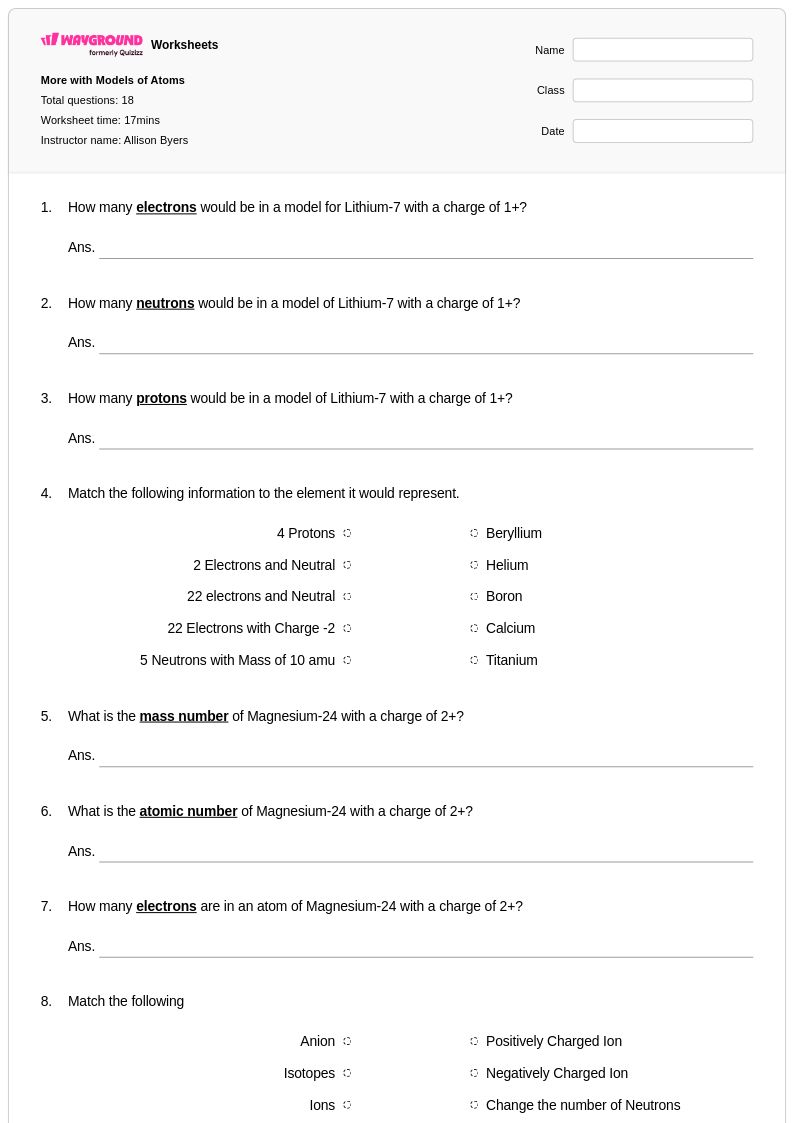
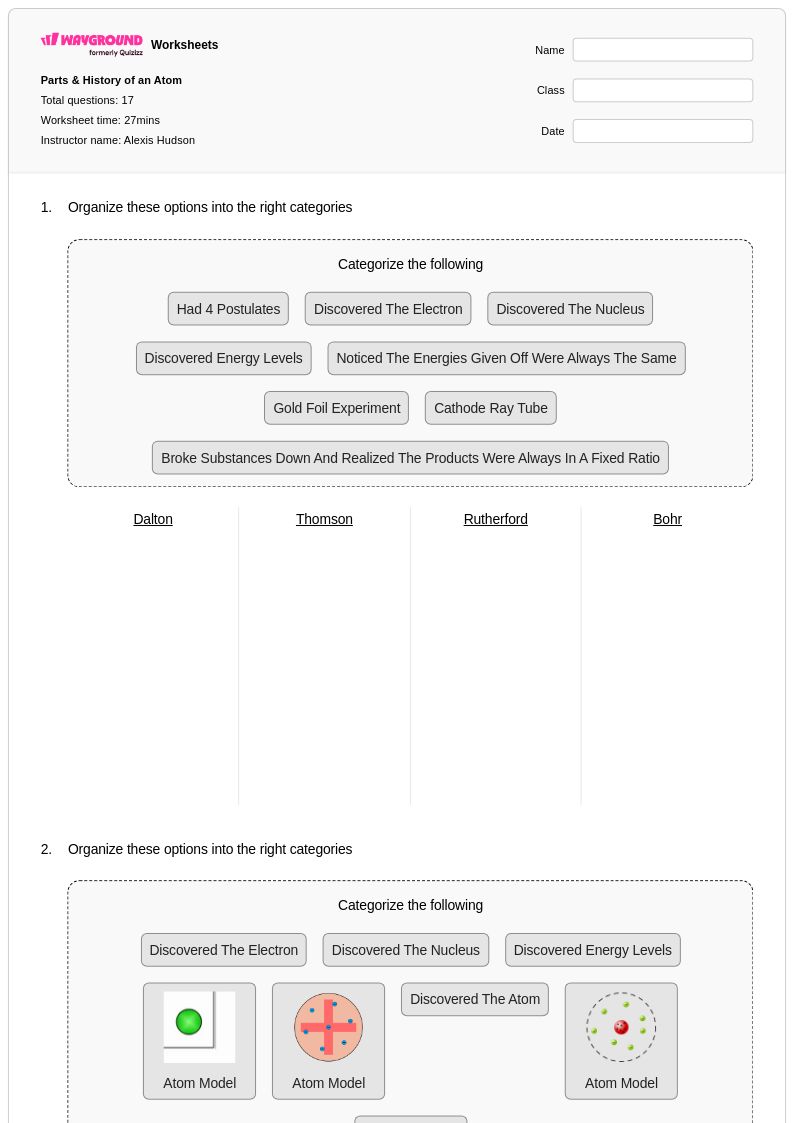
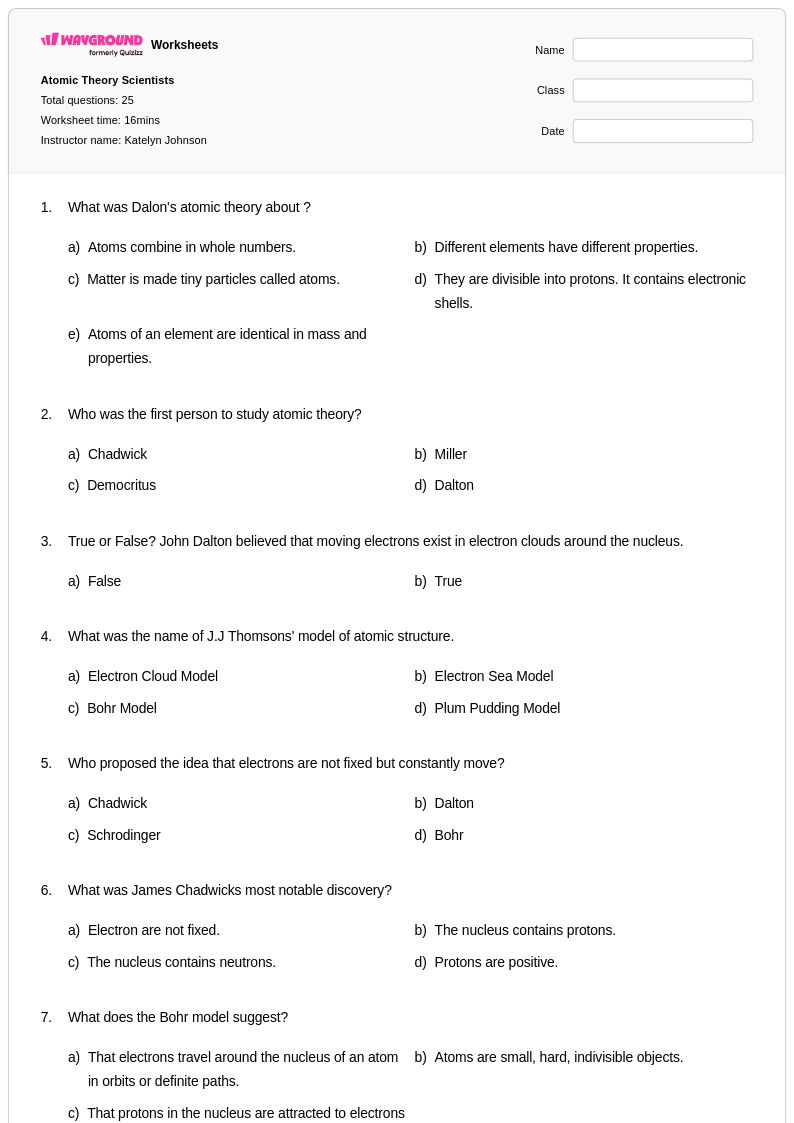
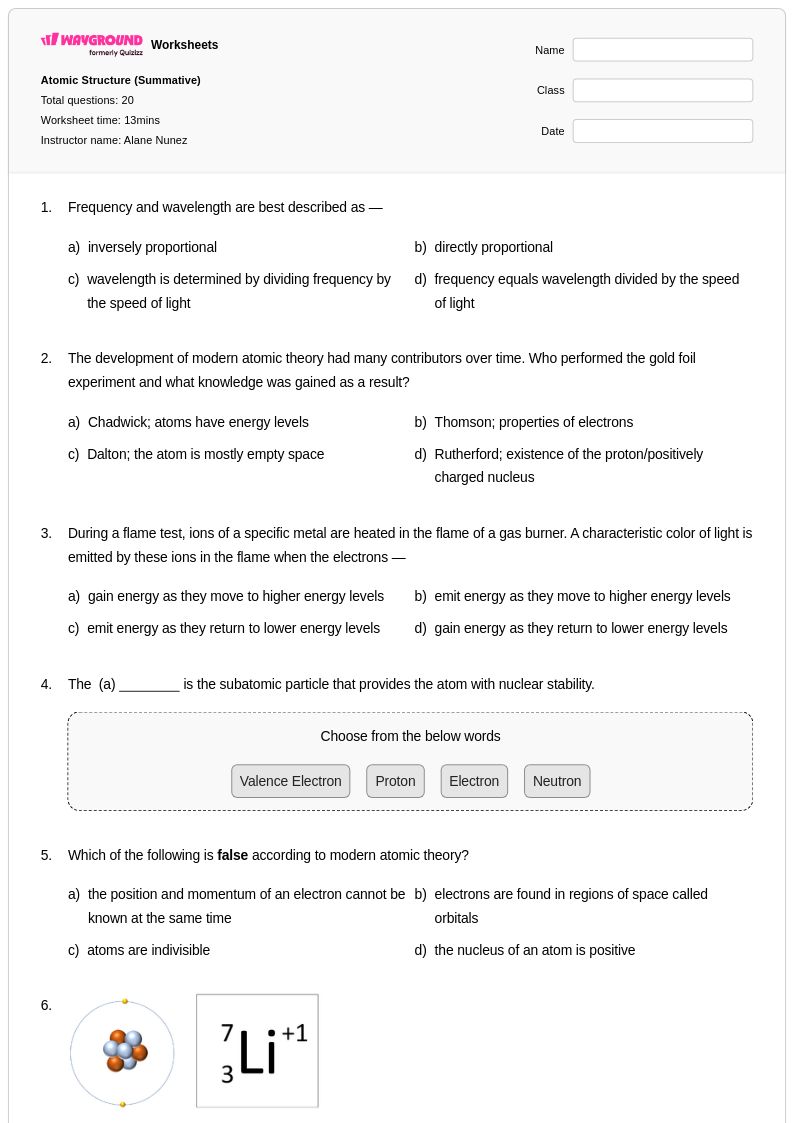
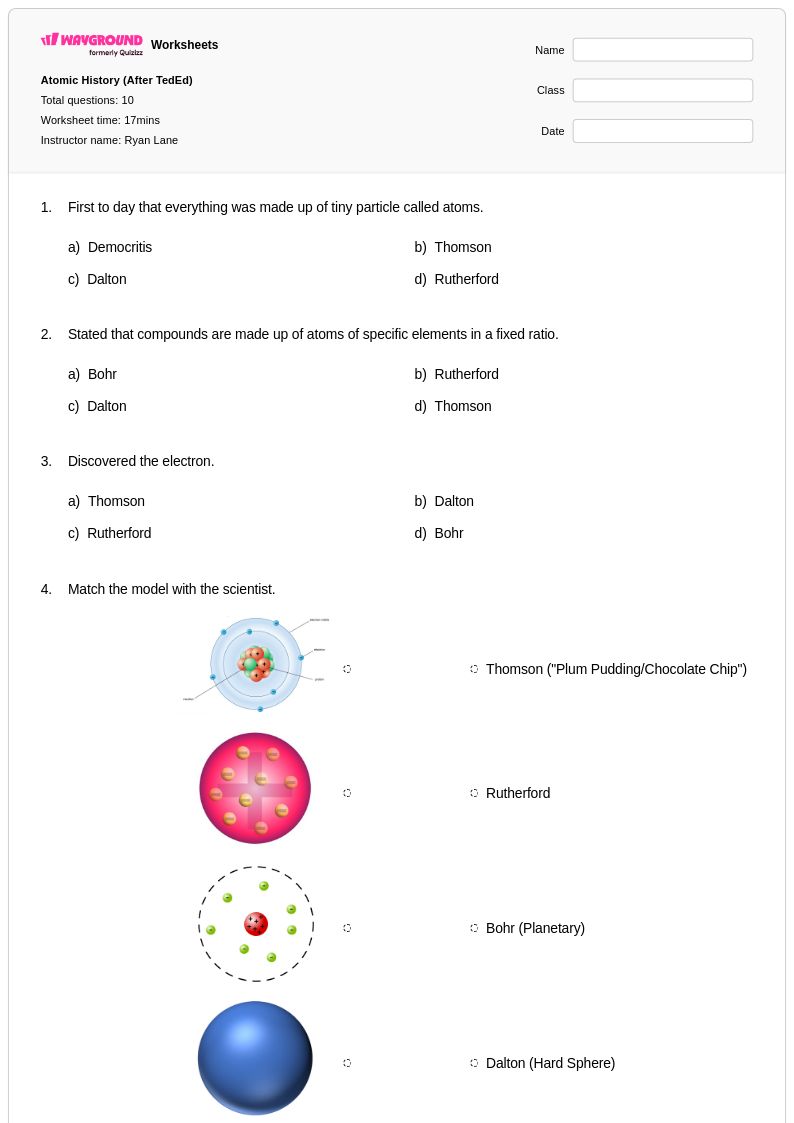
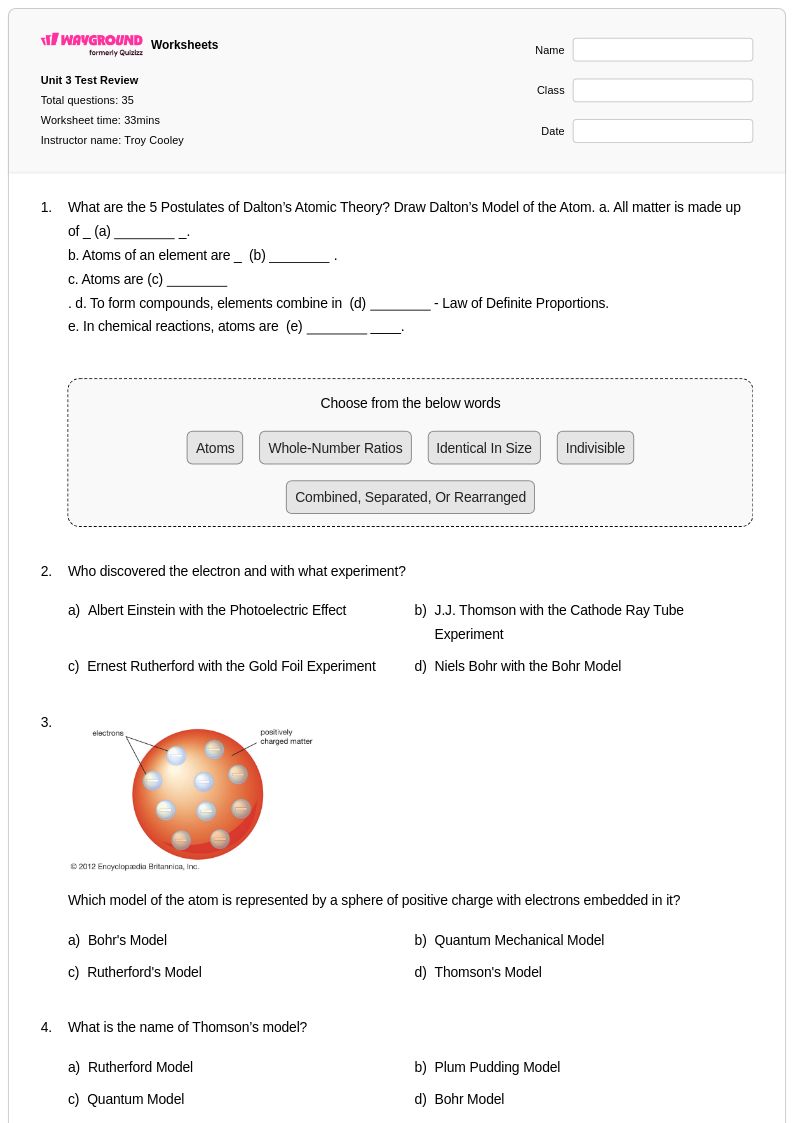
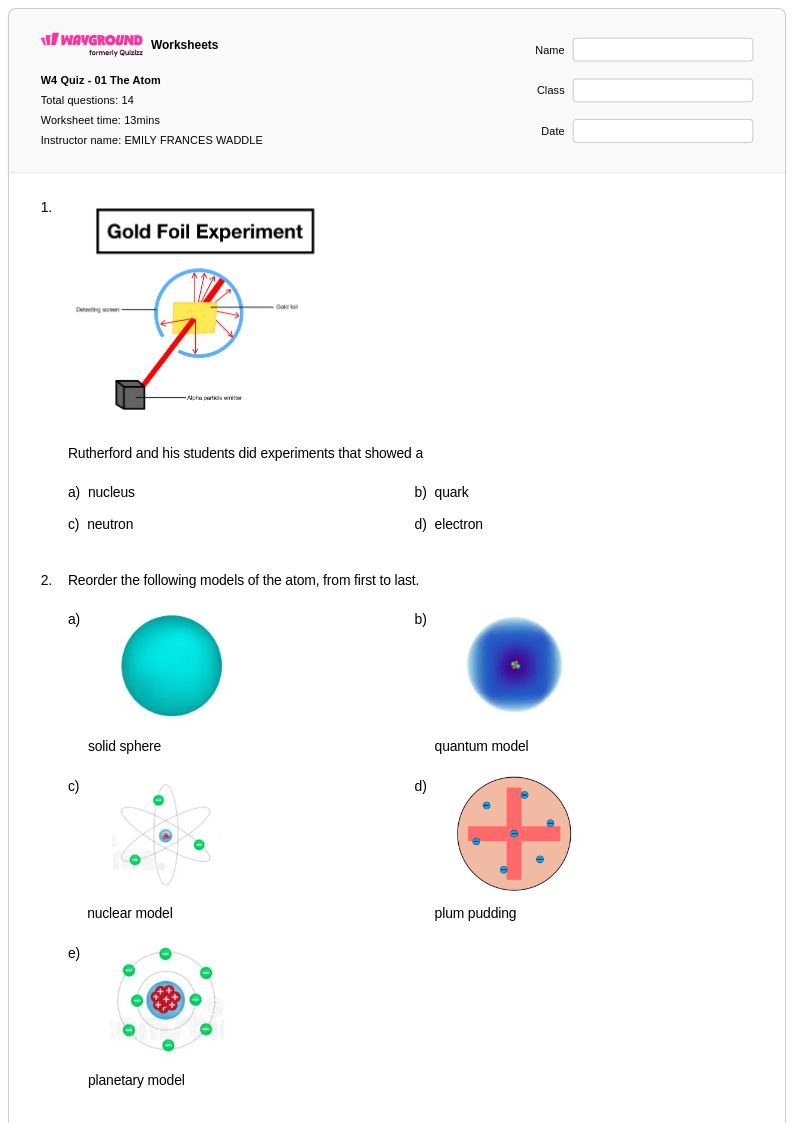
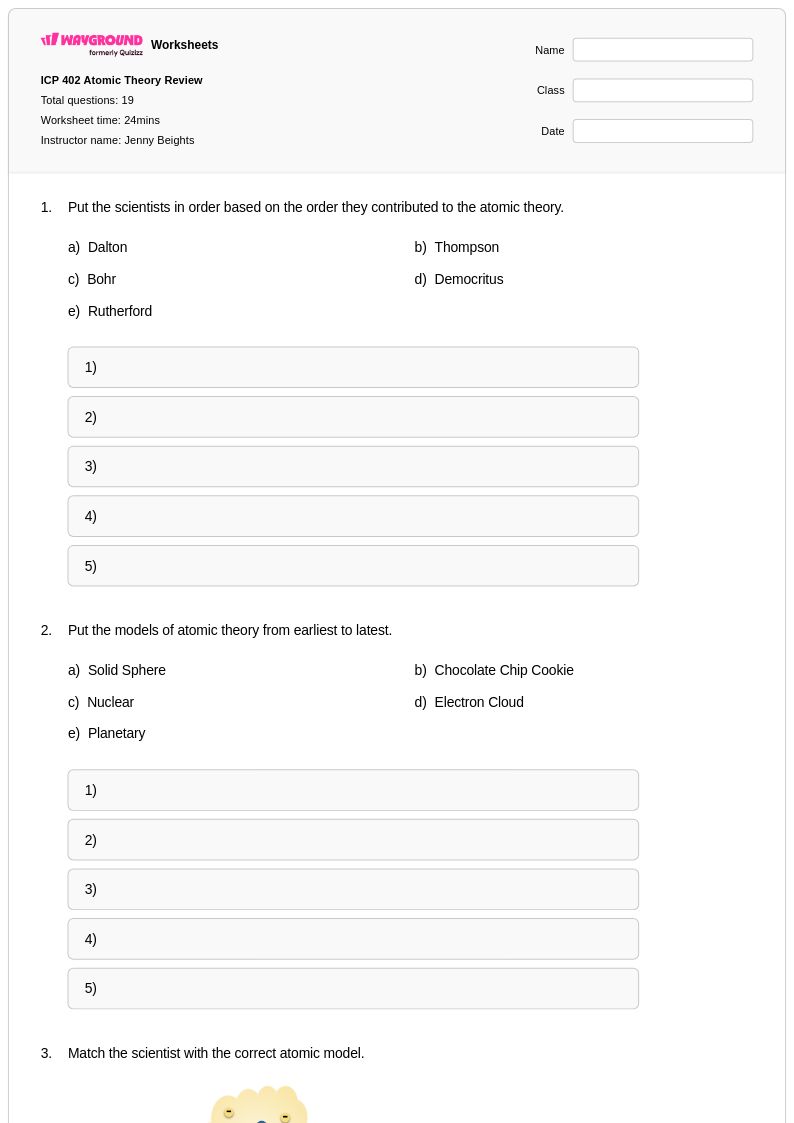
Year 10 atomic models worksheets available through Wayground (formerly Quizizz) provide comprehensive coverage of the fundamental concepts that define our understanding of atomic structure and behavior. These educational resources guide students through the historical progression of atomic theory, from Dalton's solid sphere model through Thomson's plum pudding model, Rutherford's nuclear model, Bohr's planetary model, and the modern quantum mechanical model. The worksheets strengthen critical analytical skills by challenging students to compare and contrast different atomic theories, interpret experimental evidence that led to model revisions, and apply their understanding to predict atomic behavior. Each worksheet collection includes detailed answer keys and is available as free printable pdf resources, featuring practice problems that range from basic model identification to complex applications involving electron configurations and orbital theory.
Wayground (formerly Quizizz) supports chemistry educators with millions of teacher-created atomic models worksheets that can be easily accessed through robust search and filtering capabilities aligned with national science standards. The platform's differentiation tools allow teachers to customize worksheets based on individual student needs, offering both remediation support for struggling learners and enrichment opportunities for advanced students. These atomic models resources are available in both printable pdf formats for traditional classroom use and digital formats for interactive learning experiences, giving educators the flexibility to adapt their instruction to diverse learning environments. Teachers can efficiently plan lessons, create targeted skill practice sessions, and provide focused remediation by leveraging the platform's extensive collection of atomic theory worksheets that address varying complexity levels and learning objectives.
FAQs
How do I teach the history of atomic models to my students?
Teaching atomic models chronologically helps students understand science as an evolving process rather than a fixed set of facts. Start with Dalton's solid sphere model and progress through Thomson's plum pudding model, Rutherford's nuclear model, Bohr's planetary model, and the modern quantum mechanical model. For each transition, emphasize the experimental evidence that made the previous model inadequate — for example, Rutherford's gold foil experiment directly challenged Thomson's model. Connecting each scientist's contribution to a specific experimental breakthrough gives students a clear framework for comparing and retaining the models.
What exercises help students practice comparing different atomic models?
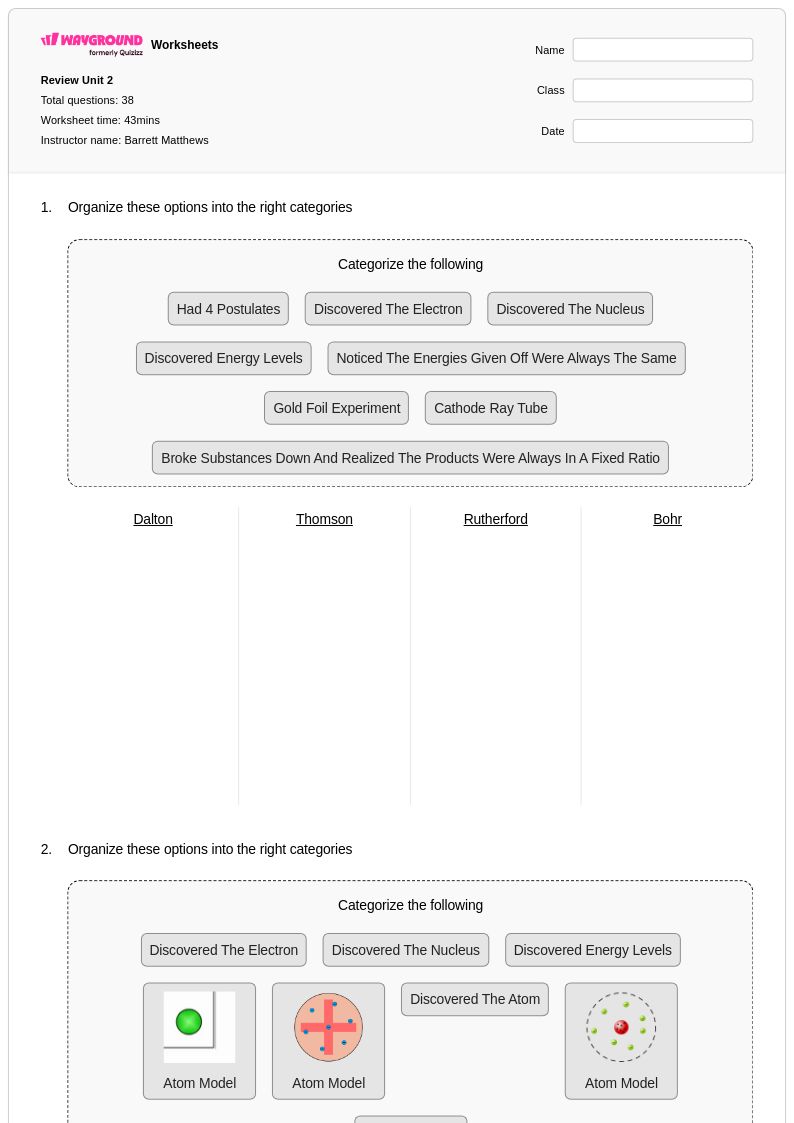
The most effective practice exercises ask students to identify each scientist's contribution, describe the key experimental evidence behind each model, and explain why each model was revised or replaced. Comparison charts and fill-in-the-blank timelines are particularly useful because they force students to organize information across all five major models simultaneously. Practice problems that ask students to match experimental results to the model they disproved are especially effective for building deeper conceptual understanding rather than surface-level memorization.
What mistakes do students commonly make when learning about atomic models?
A common misconception is that earlier atomic models were simply wrong rather than incomplete — students need to understand that each model was the best explanation available given the experimental evidence at the time. Students also frequently confuse the scientists and their associated models, particularly Thomson and Rutherford, since both worked with electrons and nuclei but drew very different conclusions. Another frequent error is treating Bohr's planetary model as the current accepted model rather than recognizing that the quantum mechanical model replaced it. Emphasizing the specific experiment that prompted each revision helps students keep the sequence accurate.
How can I use atomic models worksheets in my classroom?
Atomic models worksheets on Wayground are available as printable PDFs for traditional classroom use and in digital formats for technology-integrated learning environments, making them flexible enough for in-class practice, homework, or lab follow-up activities. Teachers can also host them as a quiz directly on Wayground, which allows for streamlined assessment with immediate feedback. The included answer keys support both independent student practice and guided instruction, reducing prep time for teachers.
How do I differentiate atomic models instruction for students with different learning needs?
Wayground's accommodation tools allow teachers to support diverse learners without disrupting the rest of the class. For students who need additional support, teachers can enable Read Aloud so questions and content are read to them, reduce the number of answer choices to lower cognitive load, or grant extended time on digital assignments. These settings can be applied to individual students, saved for future sessions, and combined so a single student receives multiple accommodations simultaneously, while the rest of the class receives default settings without any notification.
How do I assess whether students understand the progression of atomic theory?
Strong assessment of atomic models goes beyond recall and asks students to explain the logical connection between experimental evidence and model change. Effective assessment tasks include having students describe what Rutherford's gold foil experiment revealed and why it invalidated Thomson's model, or asking students to identify which model a given description corresponds to without naming the scientist. Common errors in assessments include students conflating the Bohr model with the quantum mechanical model or stating that atoms were discovered rather than that our understanding of their structure evolved over time.