Enhance algebra skills with Wayground's free Diamond Problems worksheets featuring printable PDFs, engaging practice problems, and comprehensive answer keys to help students master this essential factoring technique.
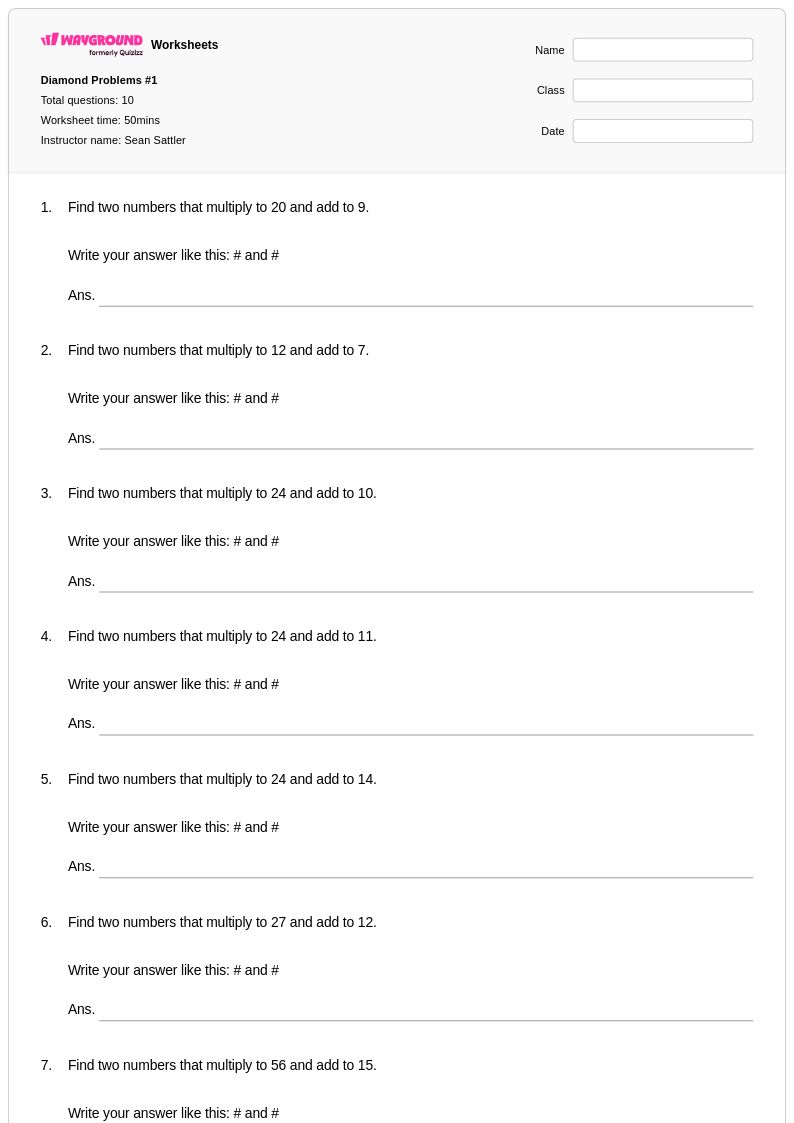
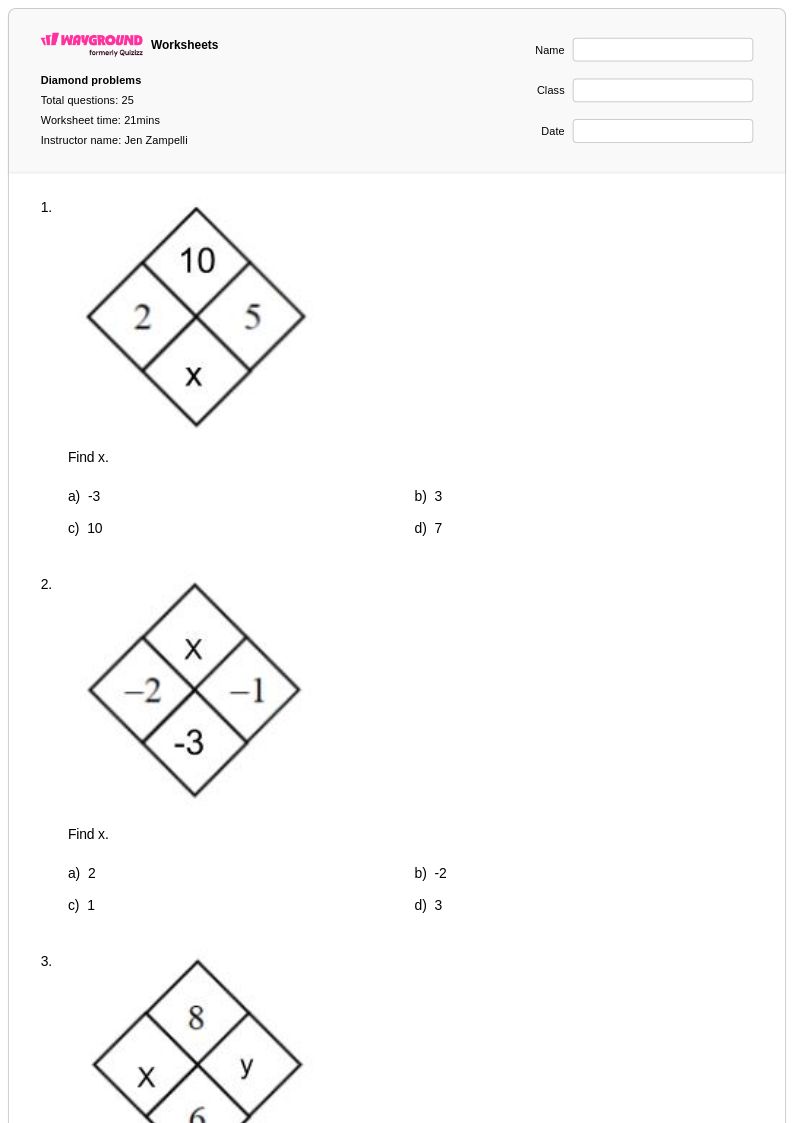
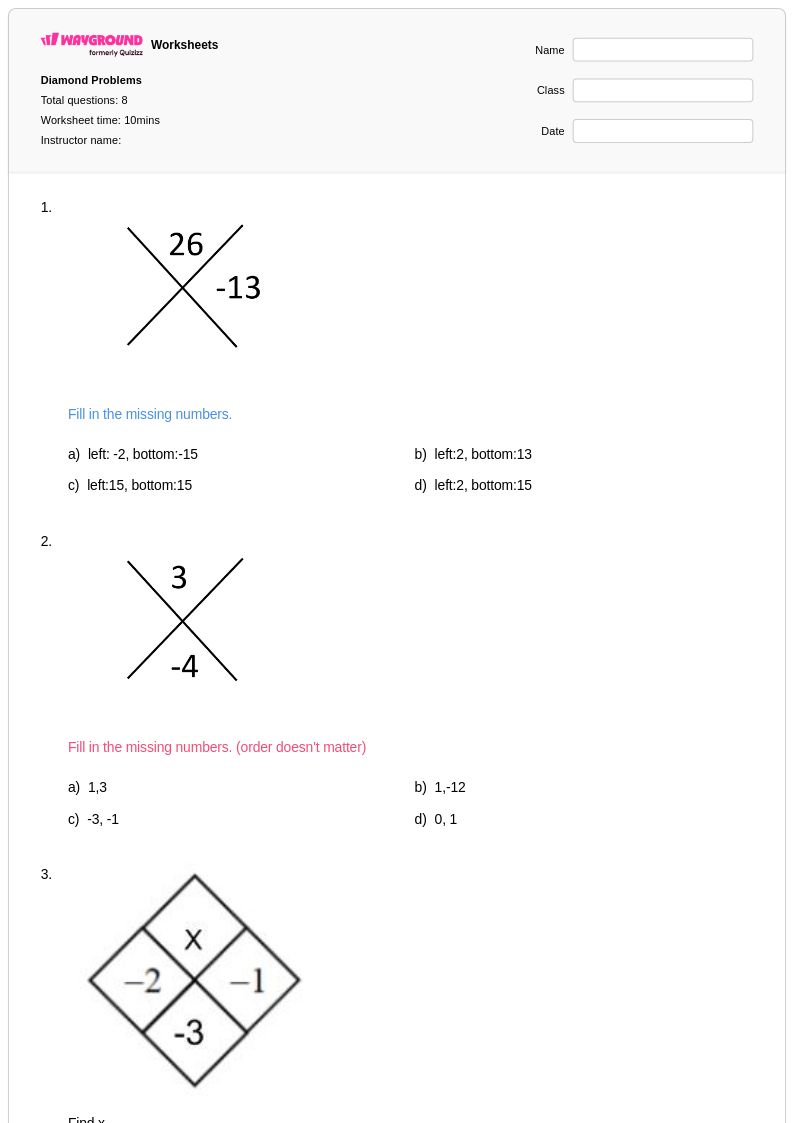
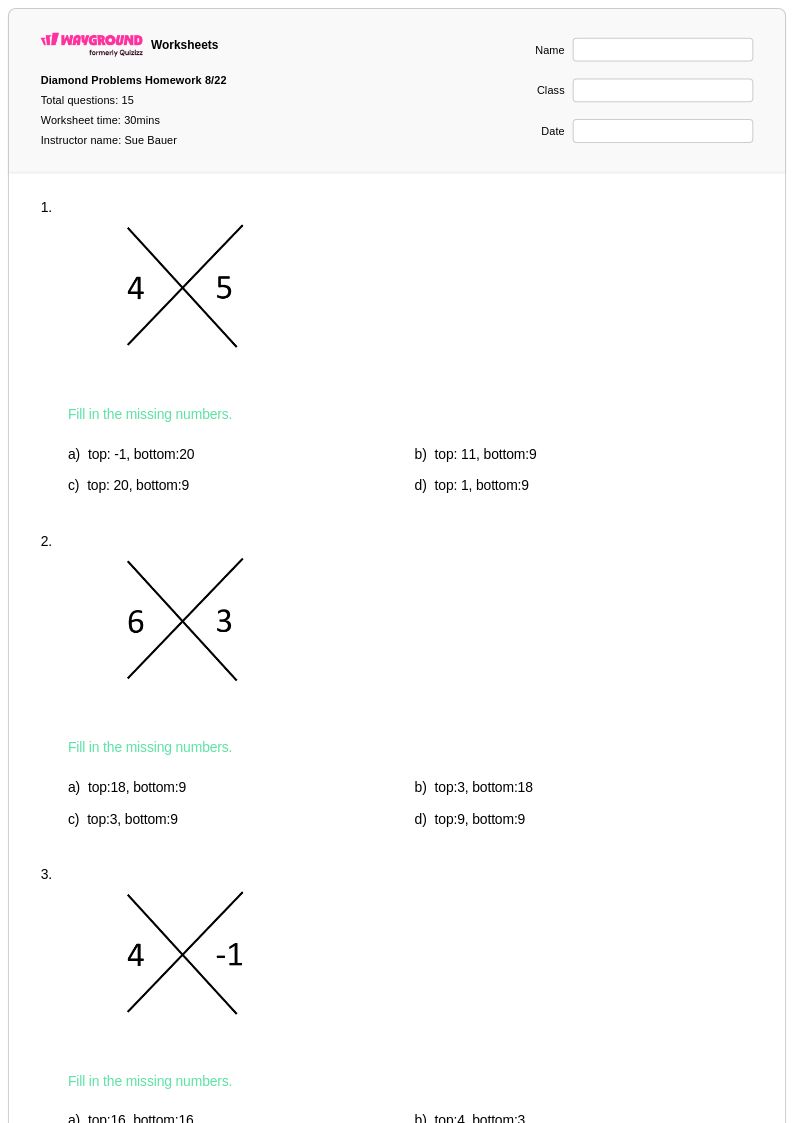
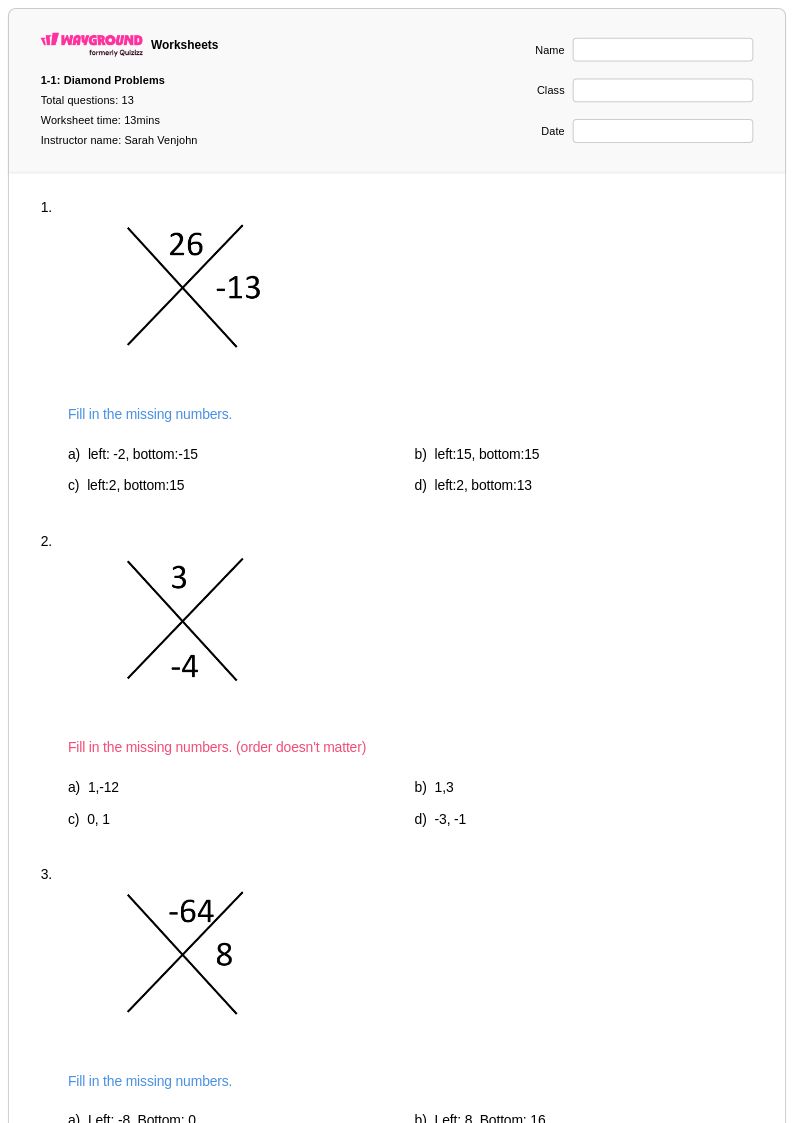
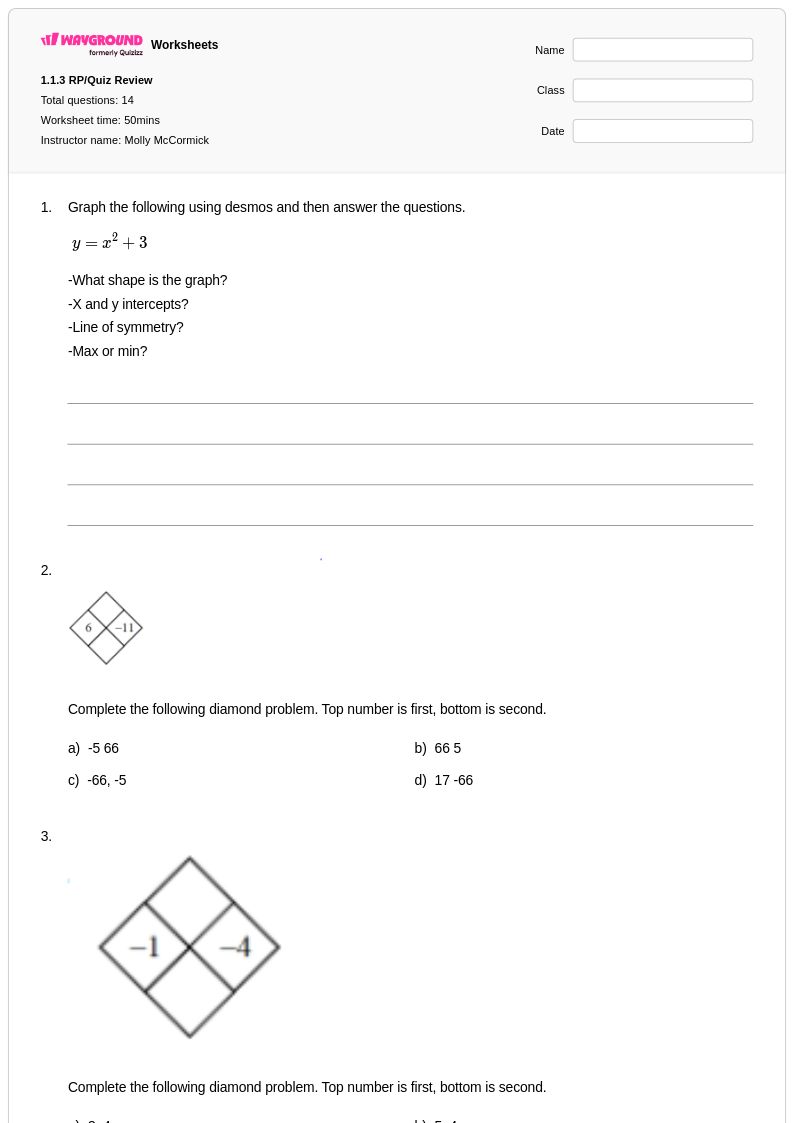
Diamond Problems worksheets available through Wayground (formerly Quizizz) provide students with essential practice in algebraic reasoning and number sense through this distinctive problem-solving format. These specialized worksheets challenge learners to work with diamond-shaped diagrams where they must find two numbers that satisfy both a sum and product relationship, strengthening critical thinking skills and mathematical flexibility. The collection includes comprehensive answer keys and free printable resources that allow students to practice systematic approaches to factoring, mental math strategies, and algebraic manipulation. These practice problems serve as excellent preparation for more advanced algebraic concepts while building confidence in working with multiple mathematical relationships simultaneously.
Wayground (formerly Quizizz) empowers educators with millions of teacher-created Diamond Problems resources that support diverse instructional needs through robust search and filtering capabilities. Teachers can easily locate worksheets aligned to specific mathematical standards and customize content to match their students' skill levels, whether for remediation or enrichment purposes. The platform's differentiation tools enable educators to modify problem complexity and provide multiple entry points for learners at various stages of algebraic development. Available in both printable pdf formats and interactive digital versions, these Diamond Problems collections streamline lesson planning while offering flexible options for classroom instruction, homework assignments, and targeted skill practice that builds foundational algebraic thinking.
FAQs
How do I teach diamond problems to students?
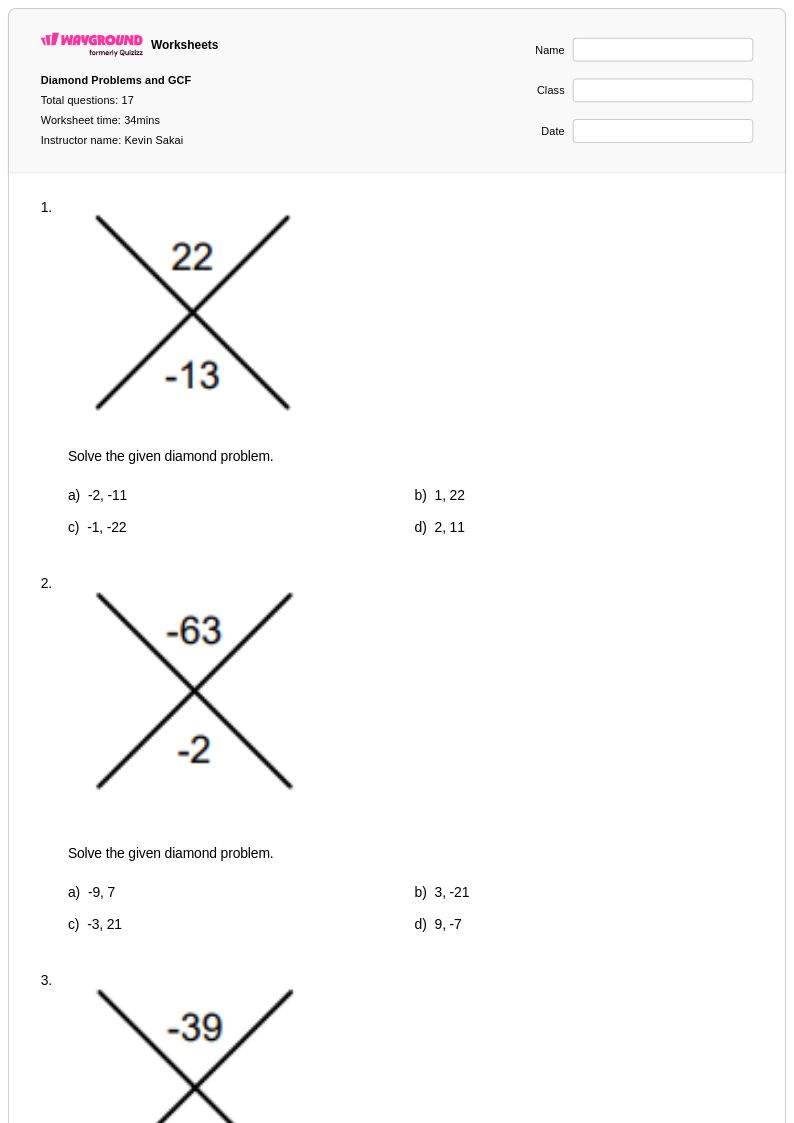
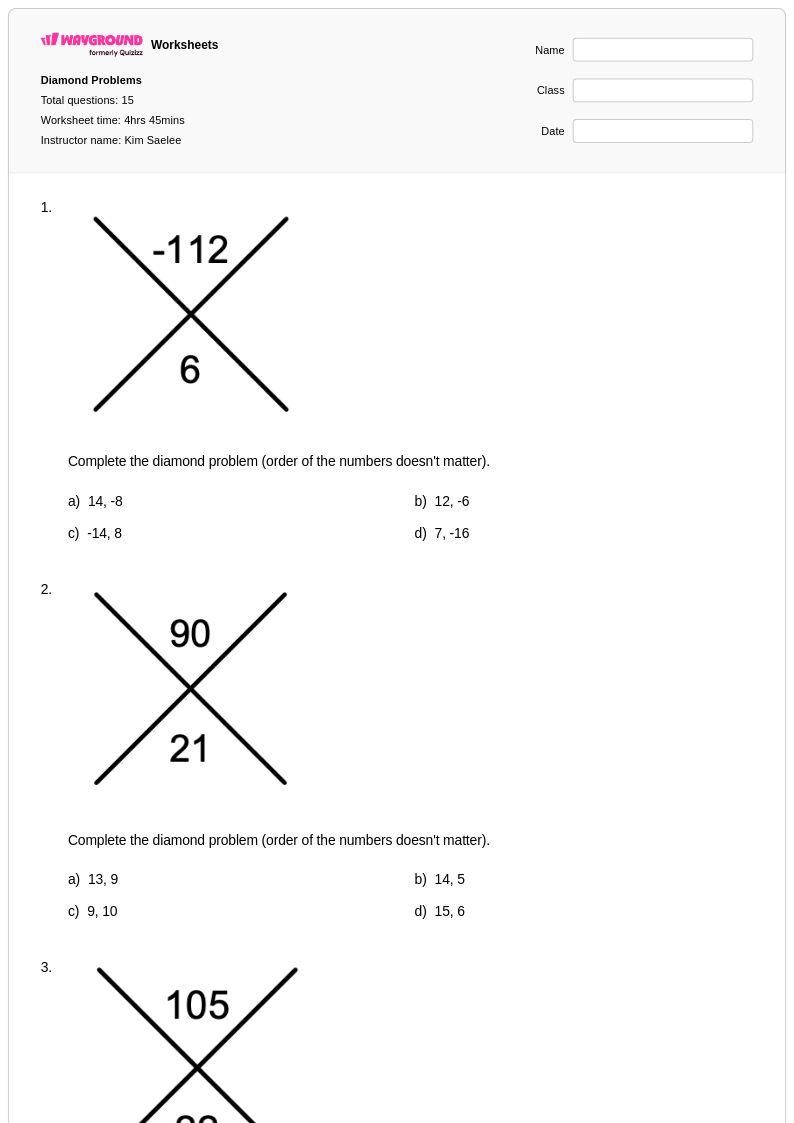
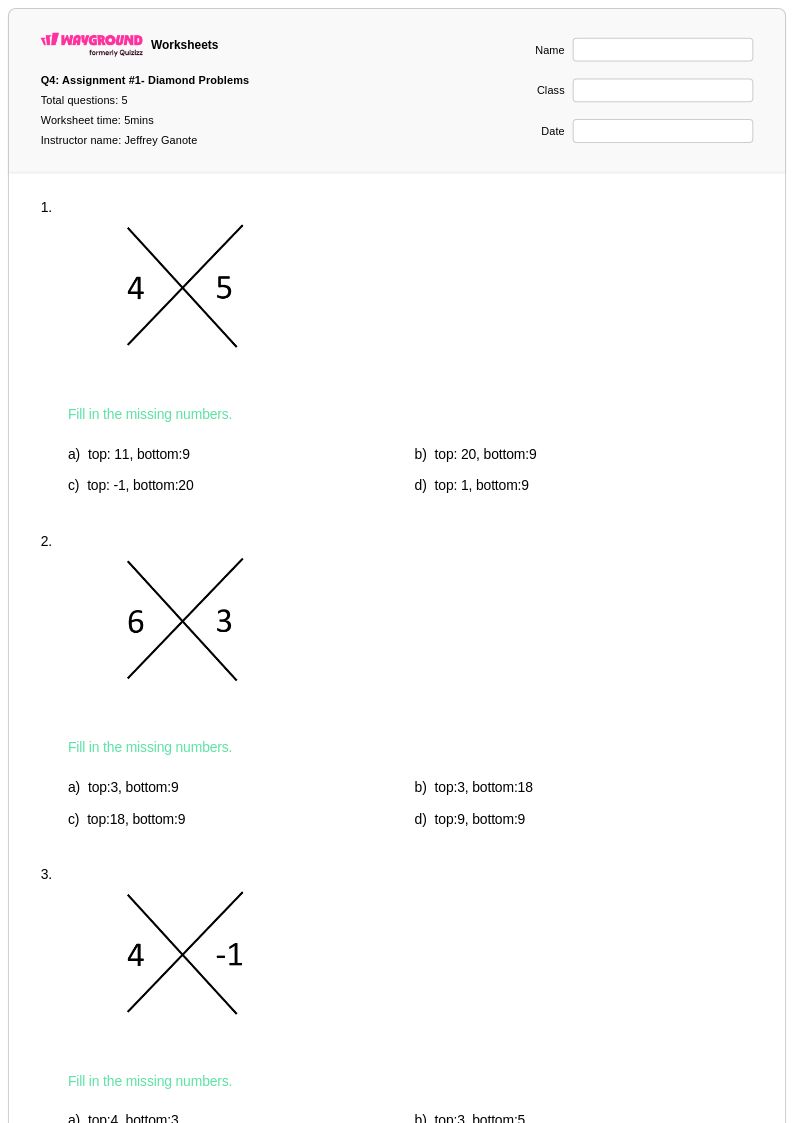
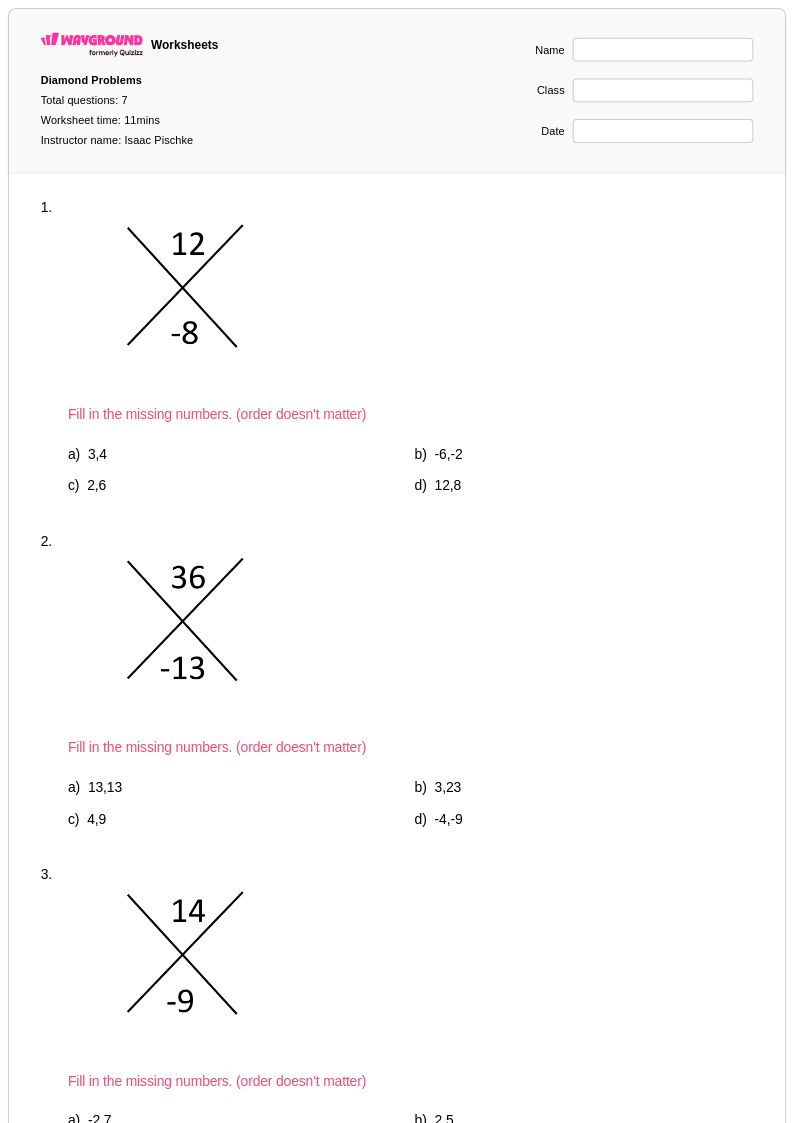
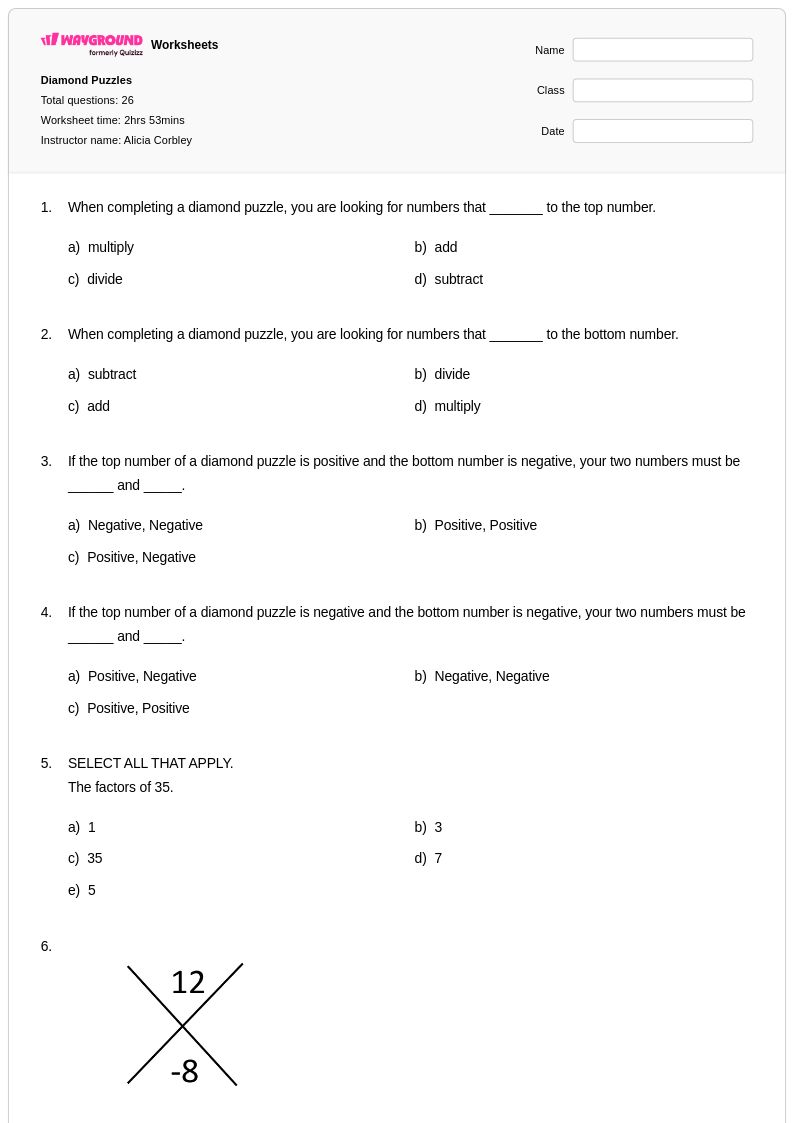
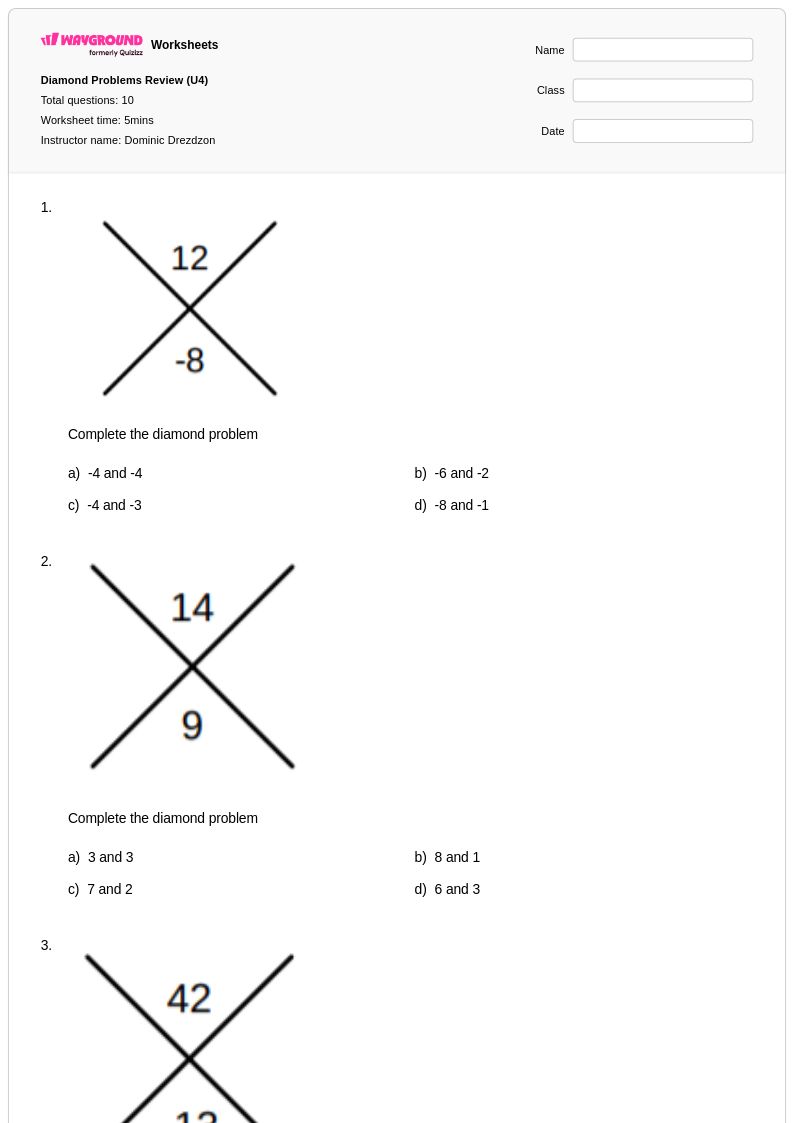
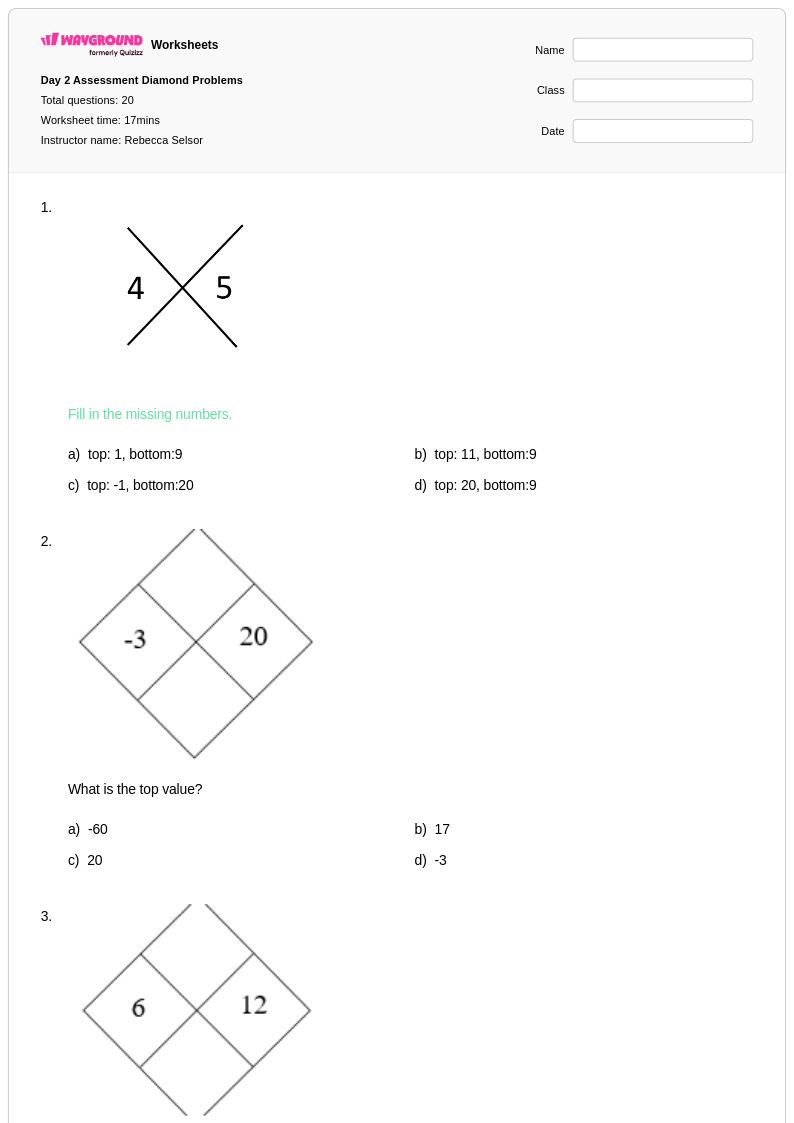
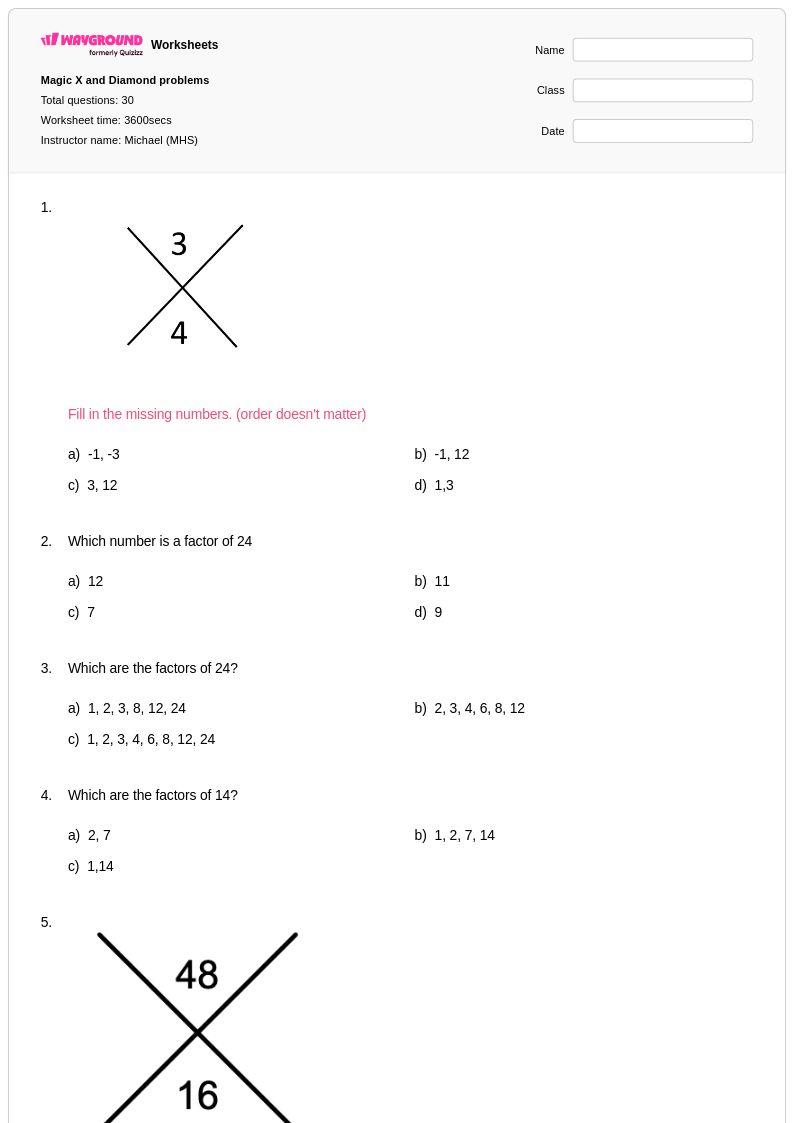
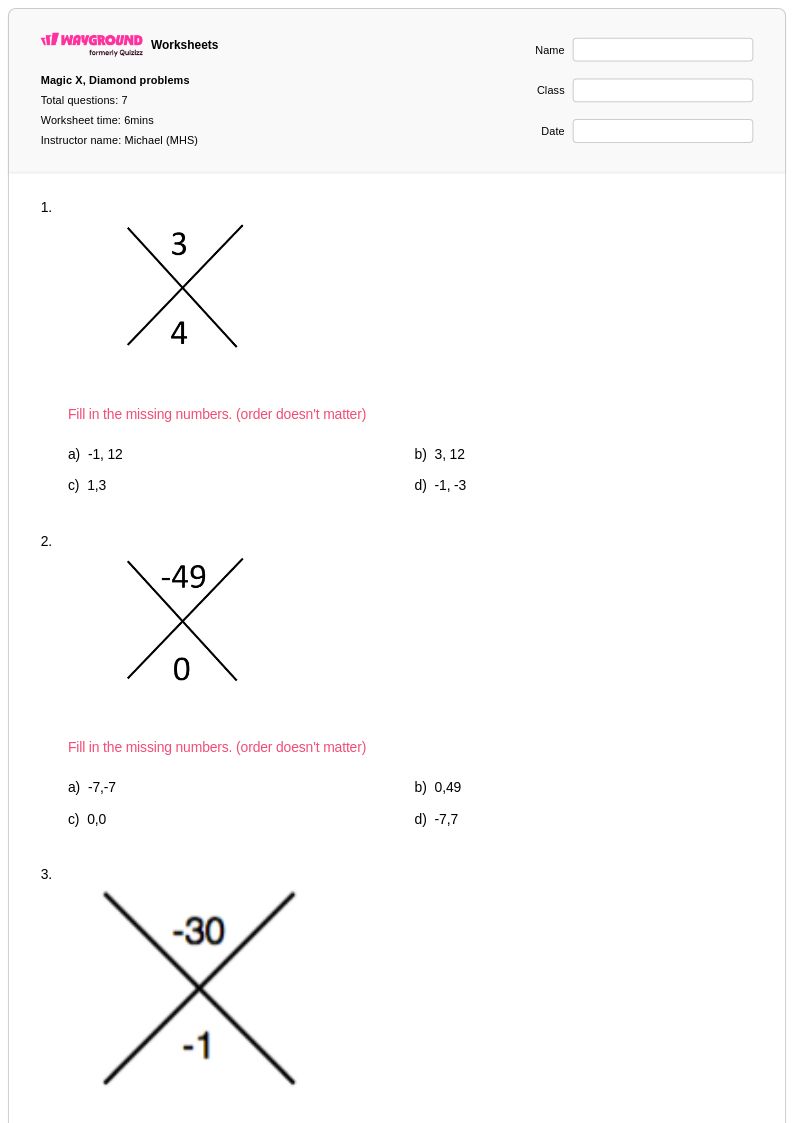
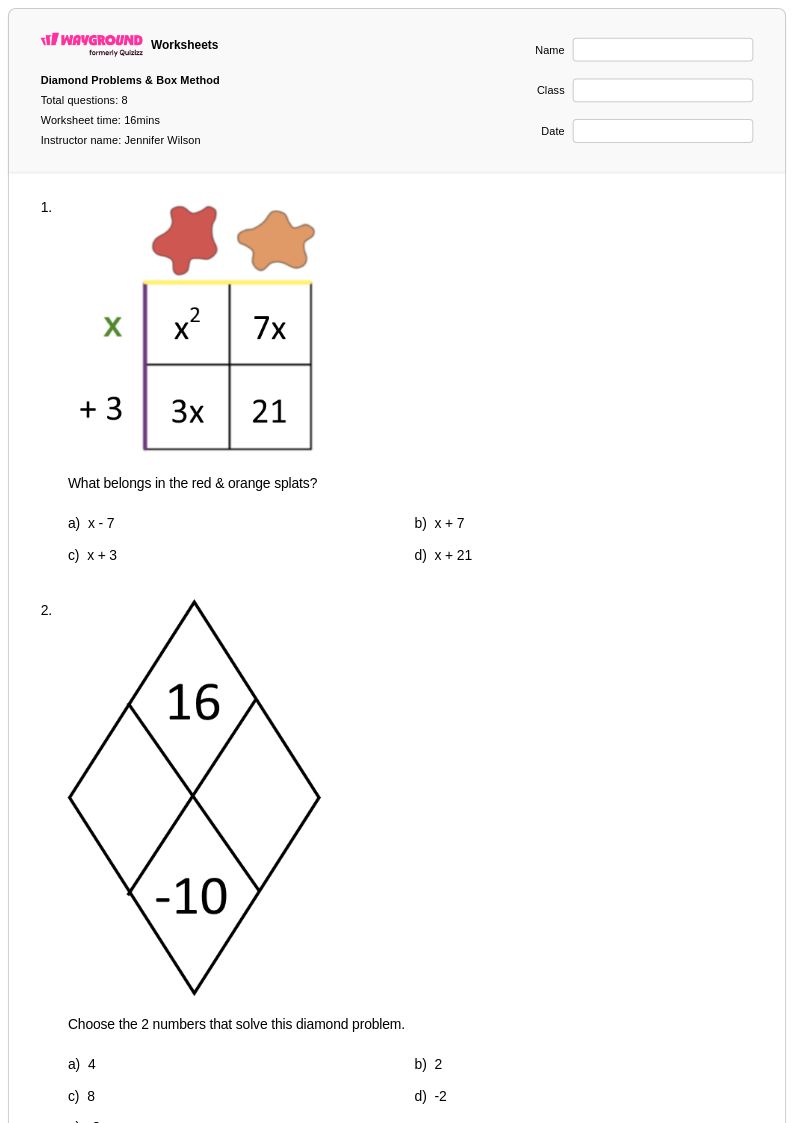
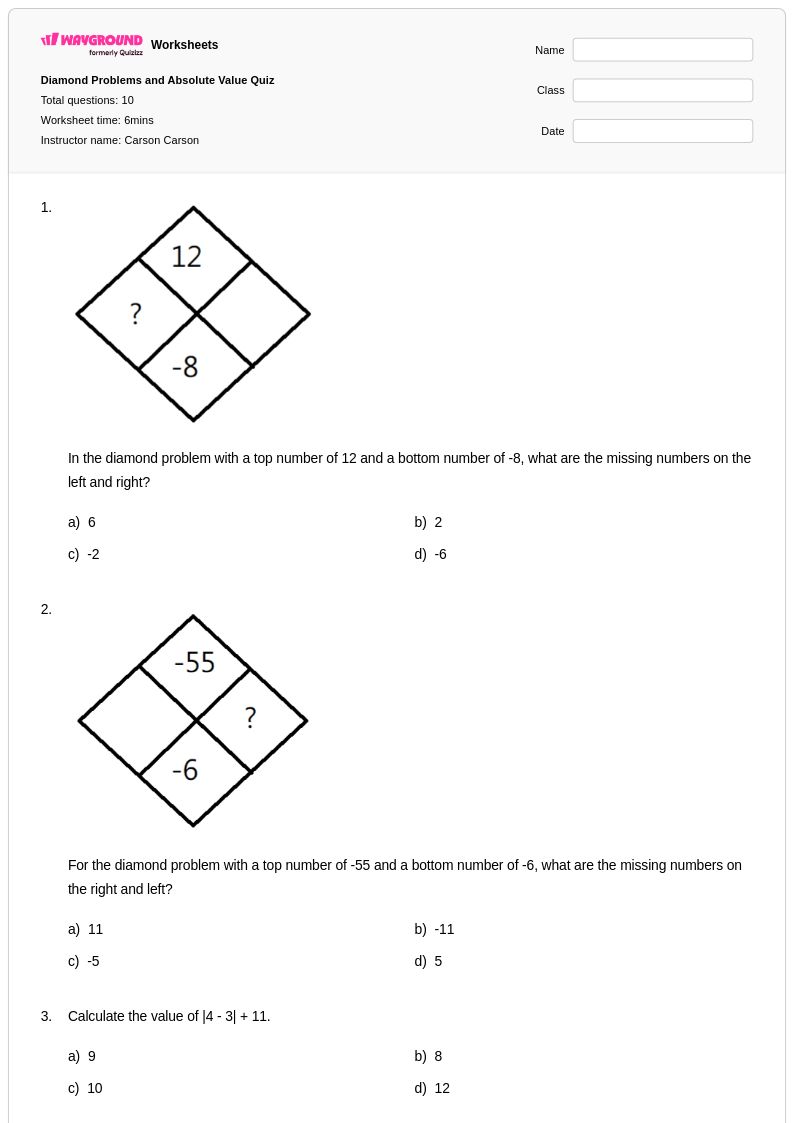
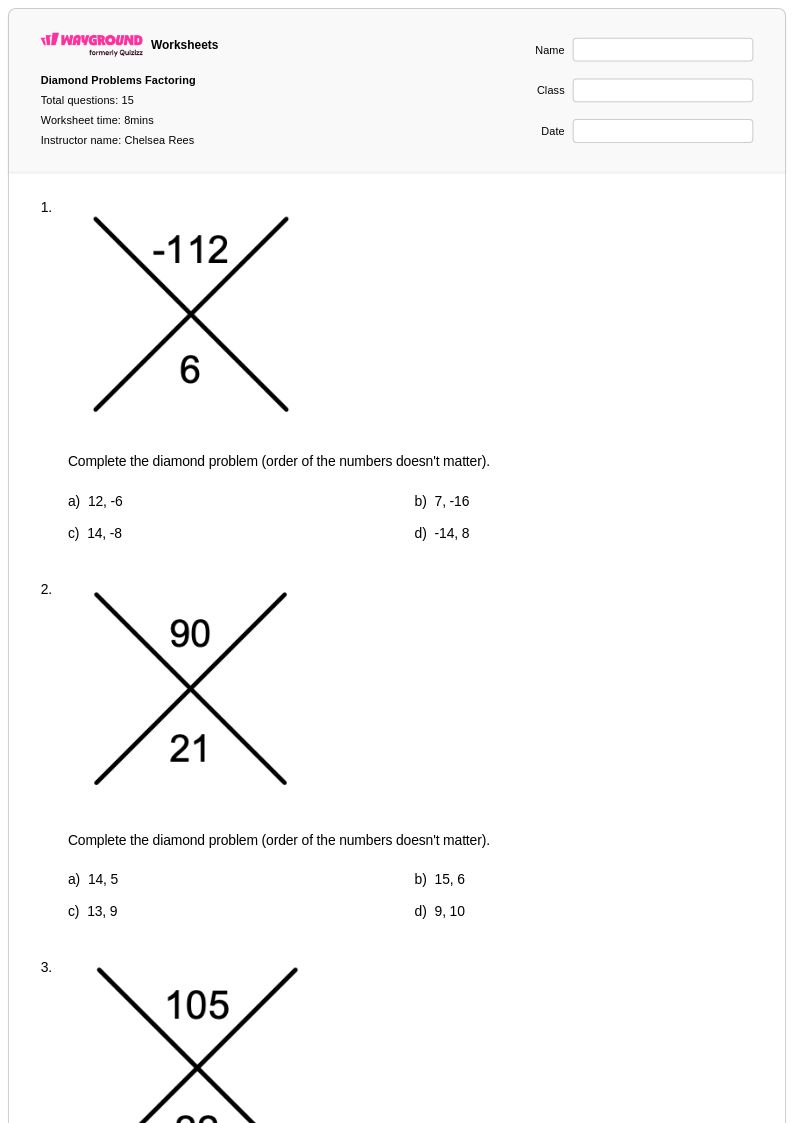
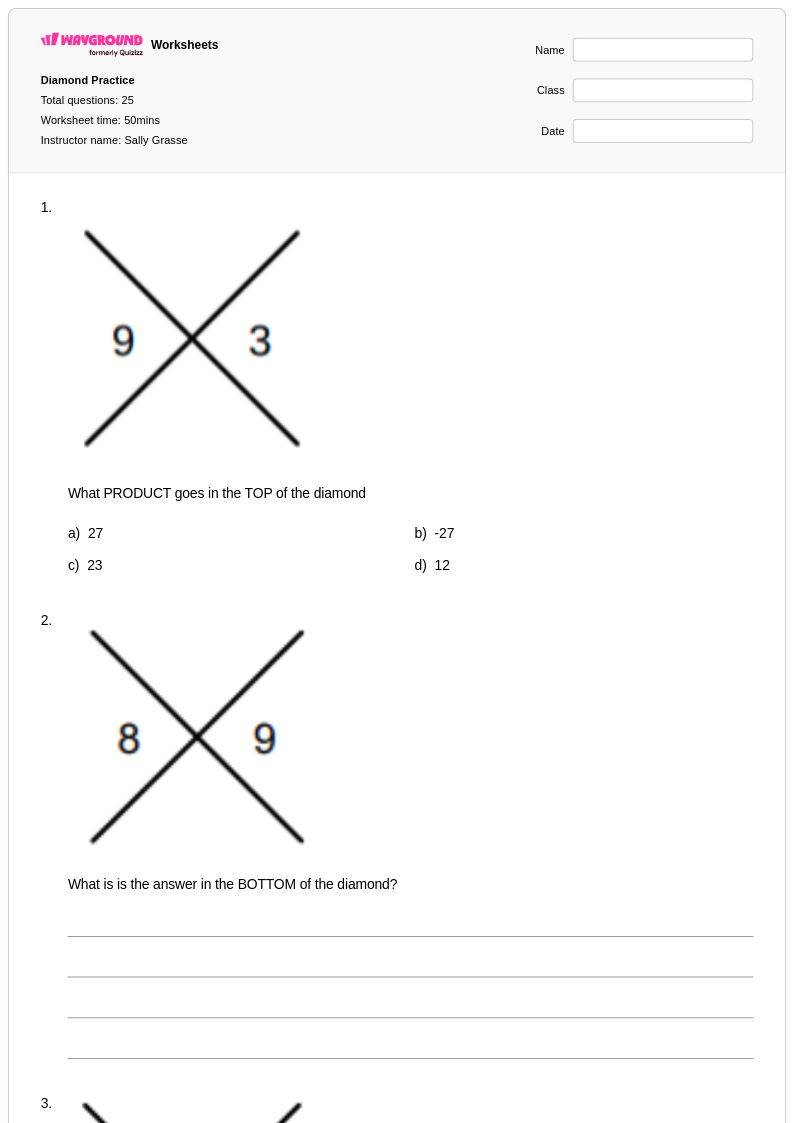
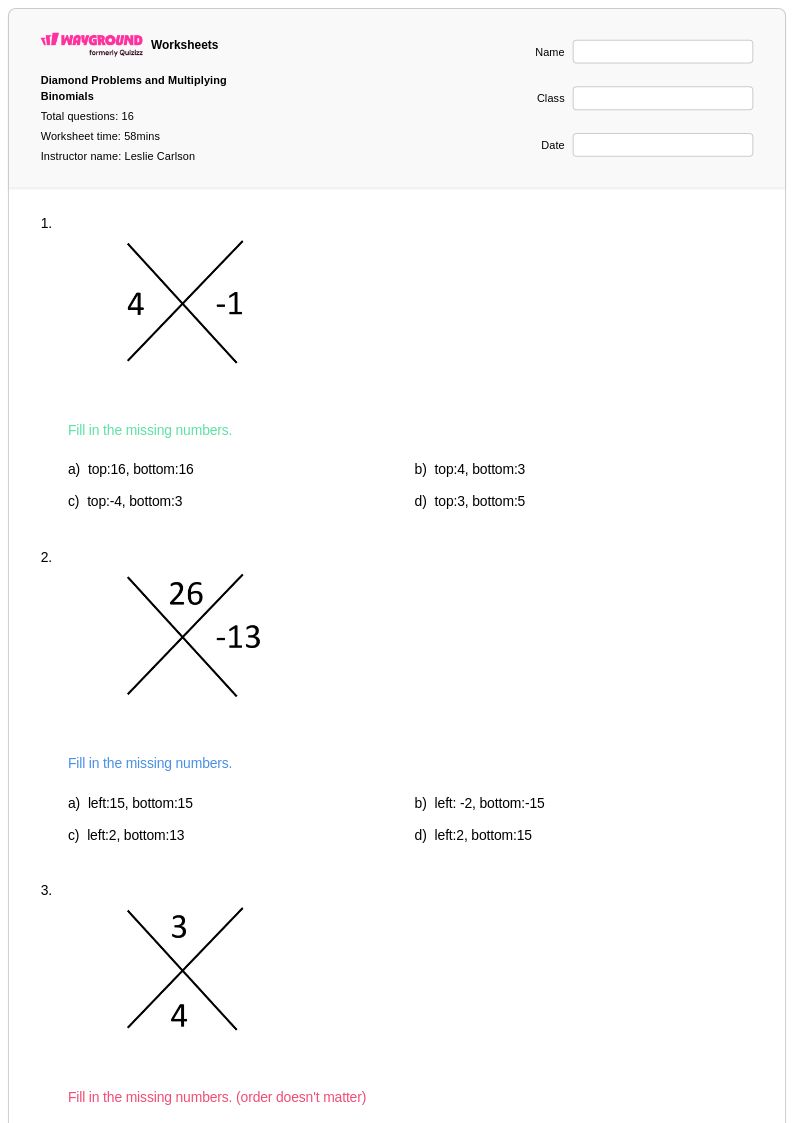
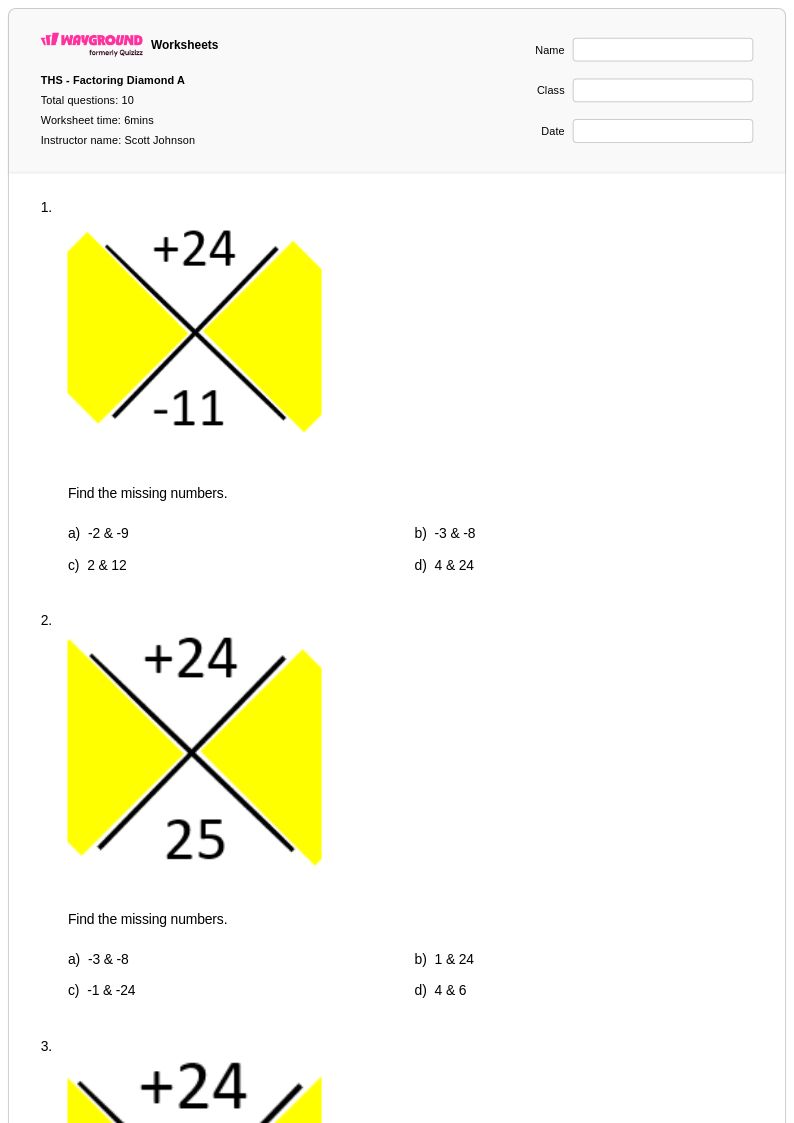
Start by making the structure explicit: the two side numbers multiply to give the bottom value and add to give the top value. Most students grasp the multiplication constraint first, so teach them to list factor pairs of the bottom number, then check which pair sums to the top. Once that direction is solid, introduce problems where the sum and product are given but the side numbers are missing — this is where students start reasoning algebraically rather than just computing. Connecting diamond problems to area models or factor rainbows helps students who struggle to see the relationship between multiplication and addition at the same time.
What exercises help students practice diamond problems?
The most effective progression moves from whole-number diamonds with positive values, to problems involving negatives, and finally to rational numbers. Mix in problems where different values are missing, sometimes the product is given, sometimes the sum, sometimes one side number, so students can't rely on a single procedure. Wayground's diamond problems worksheets cover this range and include a complete answer key, so students can self-check and identify exactly where their reasoning broke down.
What mistakes do students commonly make with diamond problems?
Three errors come up repeatedly. First, students confuse which position represents the sum and which represents the product — reinforce the layout explicitly every time. Second, when negative numbers are involved, students find a factor pair that works for the product but forget that one factor must be negative to produce a negative sum, or vice versa. Third, students guess rather than list factor pairs systematically, which works on easy problems but fails them on harder ones. Catching the second error early matters most, because it's the same mistake that derails trinomial factoring later.
How do I use Wayground's diamond problems worksheets in my class?
You can run the worksheet as a digital quiz hosted on Wayground — useful for instant feedback and tracking which students are stuck on negative-number problems. If you prefer paper practice, download the printable PDF and assign it in class or as homework; the built-in answer key means you don't have to grade every problem yourself, and you can use the Wayground for Teachers app to scan and grade student submissions quickly. Both formats contain the same problems, so the choice comes down to your classroom setup.
How do diamond problems fit into the algebra curriculum?
In Common Core-aligned math, students spend the middle grades building fluency with factor pairs, integer operations, and properties of multiplication — all of which diamond problems directly exercise. By the time students reach polynomial factoring, they need to find two numbers that satisfy a product and sum relationship simultaneously; diamond problems are essentially that skill in isolation. Working through them before introducing factored form of quadratics (like x² + bx + c) gives students a concrete strategy to fall back on rather than guessing-and-checking blindly.
How can I differentiate diamond problems practice for mixed-ability classes?
For students who need more support, Wayground's reduced answer choices accommodation limits the options displayed, which lowers the cognitive load while still requiring students to reason through the relationship. For students with reading barriers, the Read Aloud feature ensures the problem instructions don't become an obstacle. On the worksheet side, you can generate alternate versions with larger font sizes or a dyslexia-friendly font without changing the math — so every student is working the same problems with the presentation that works best for them.