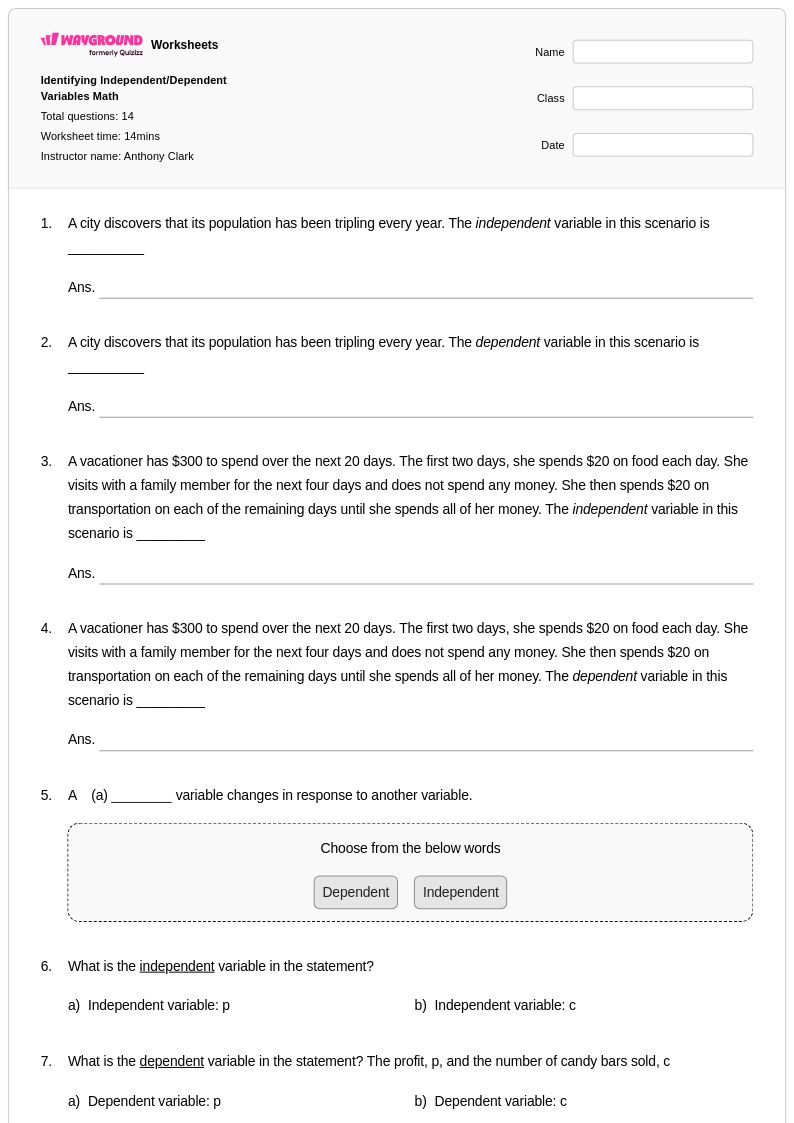
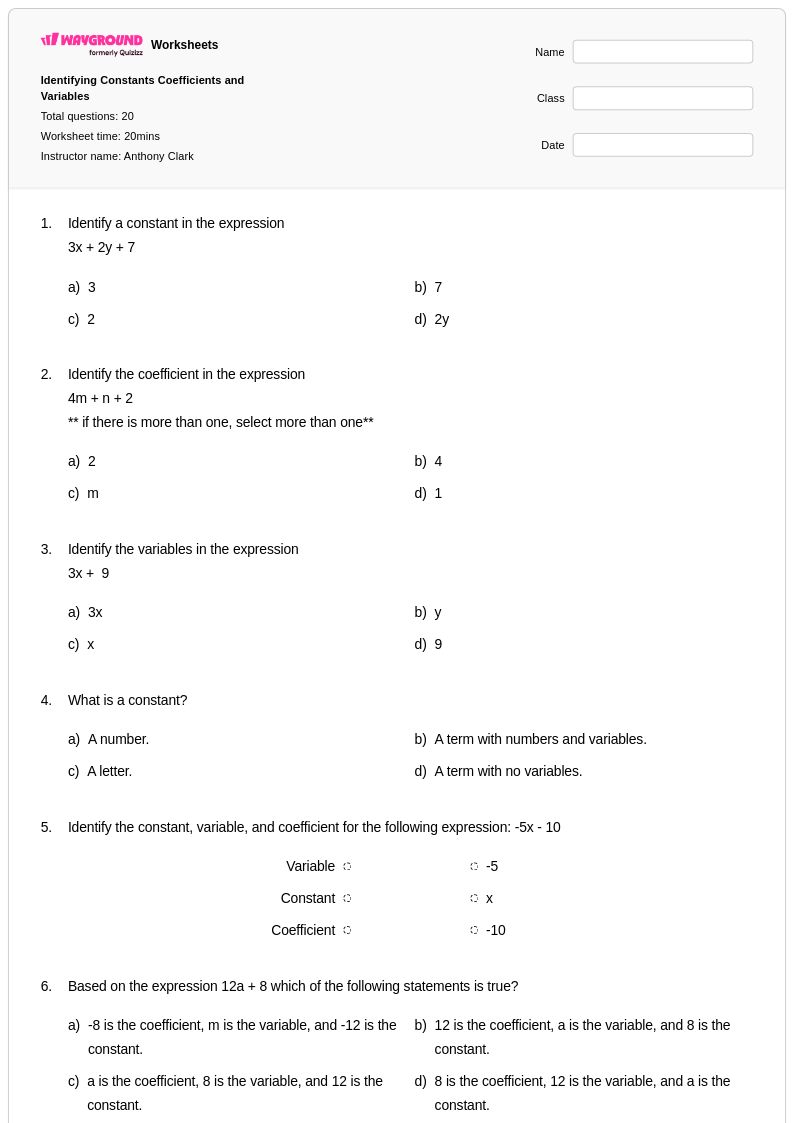
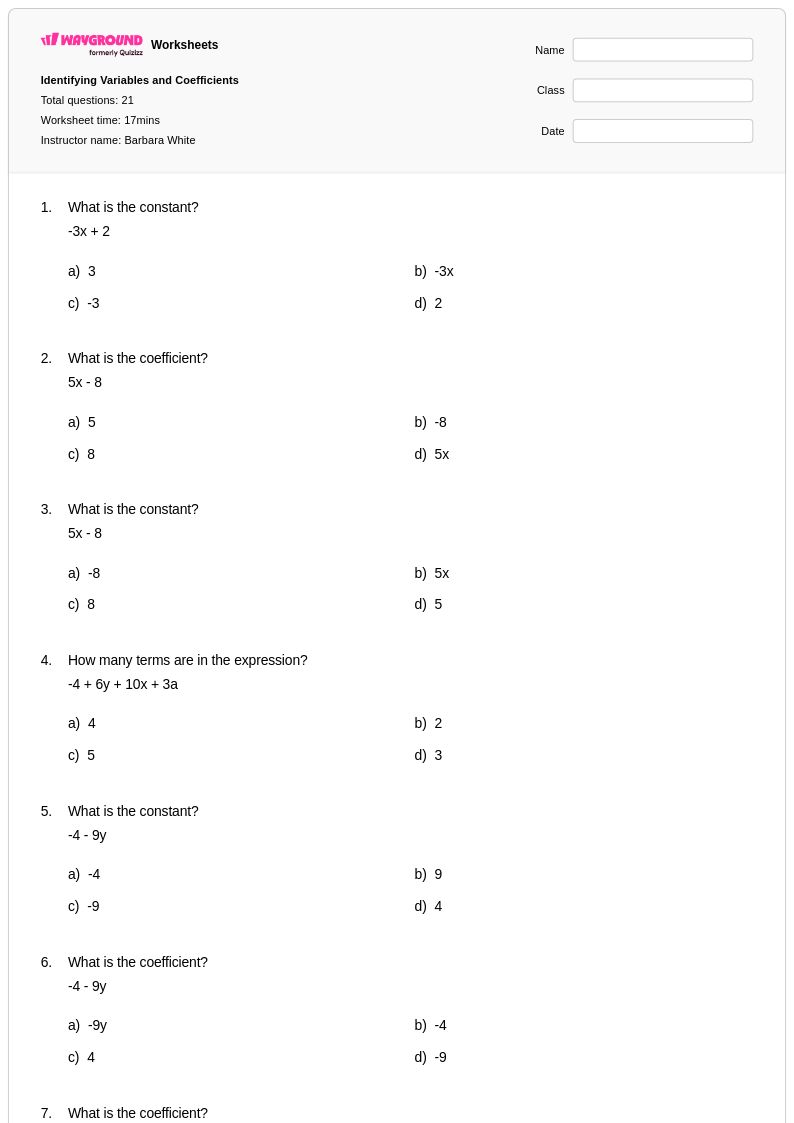
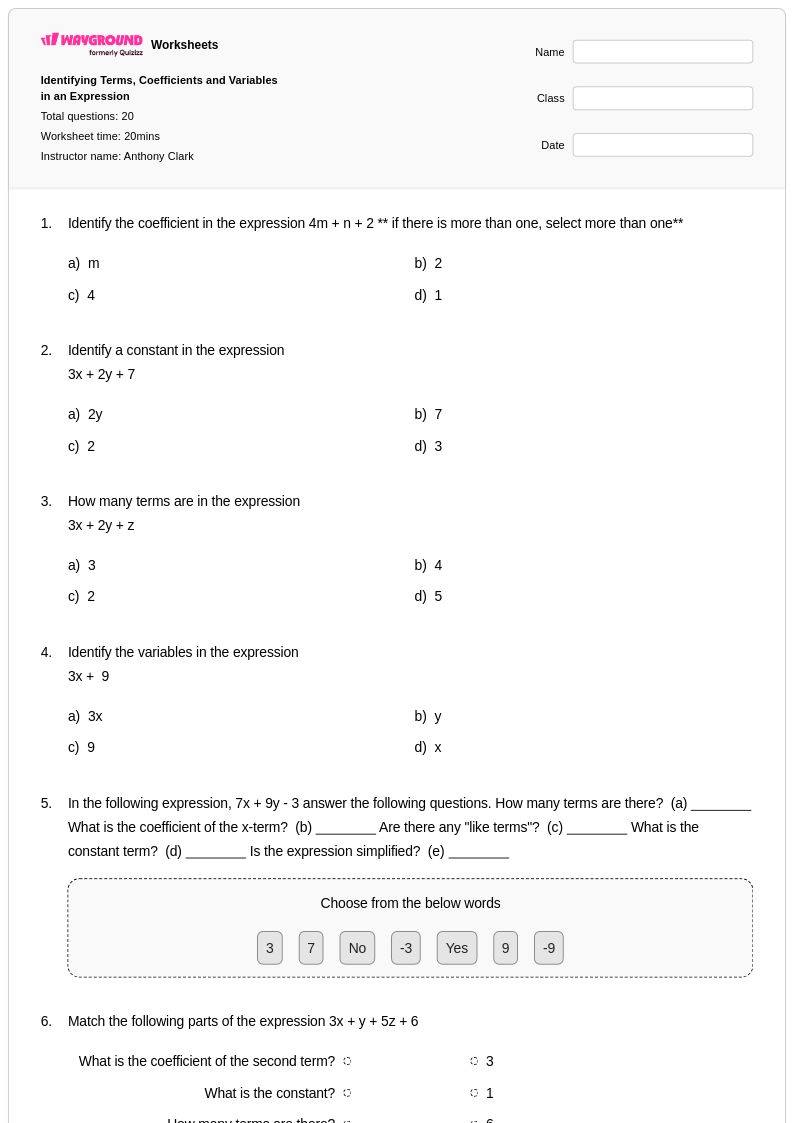
Free printable worksheets help students master identifying variables in mathematical expressions and equations through engaging practice problems with complete answer keys and PDF downloads.
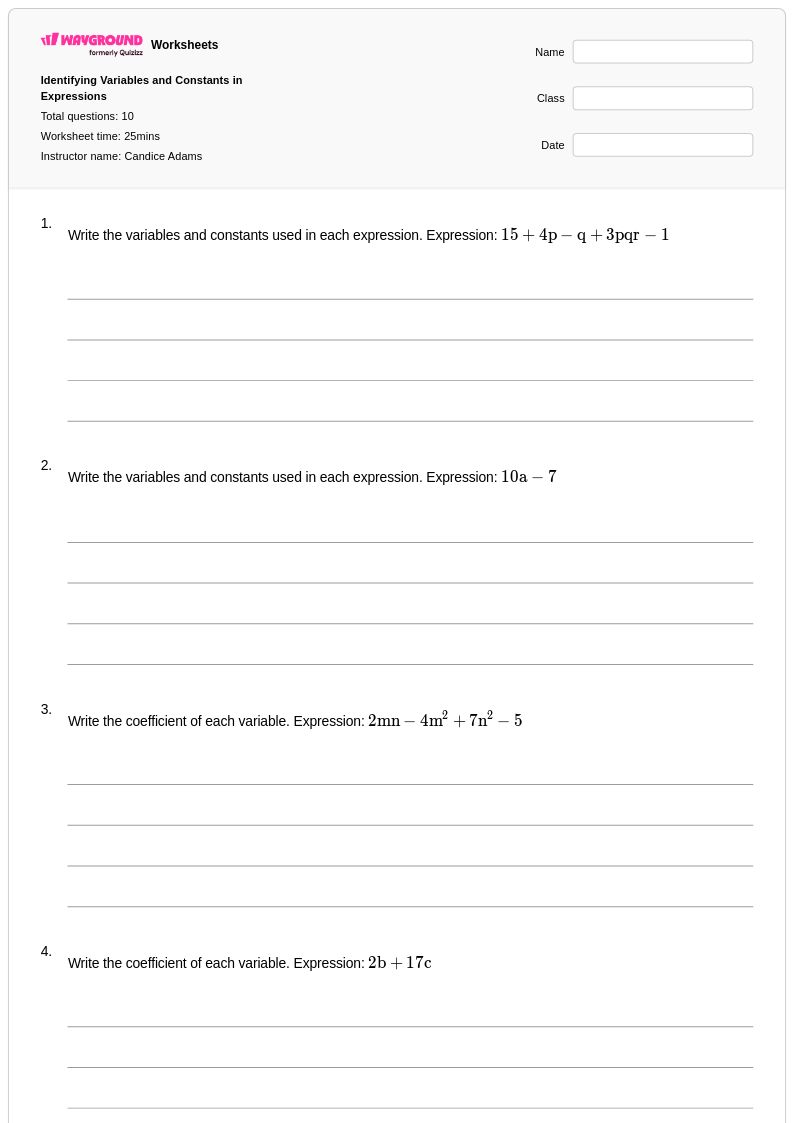
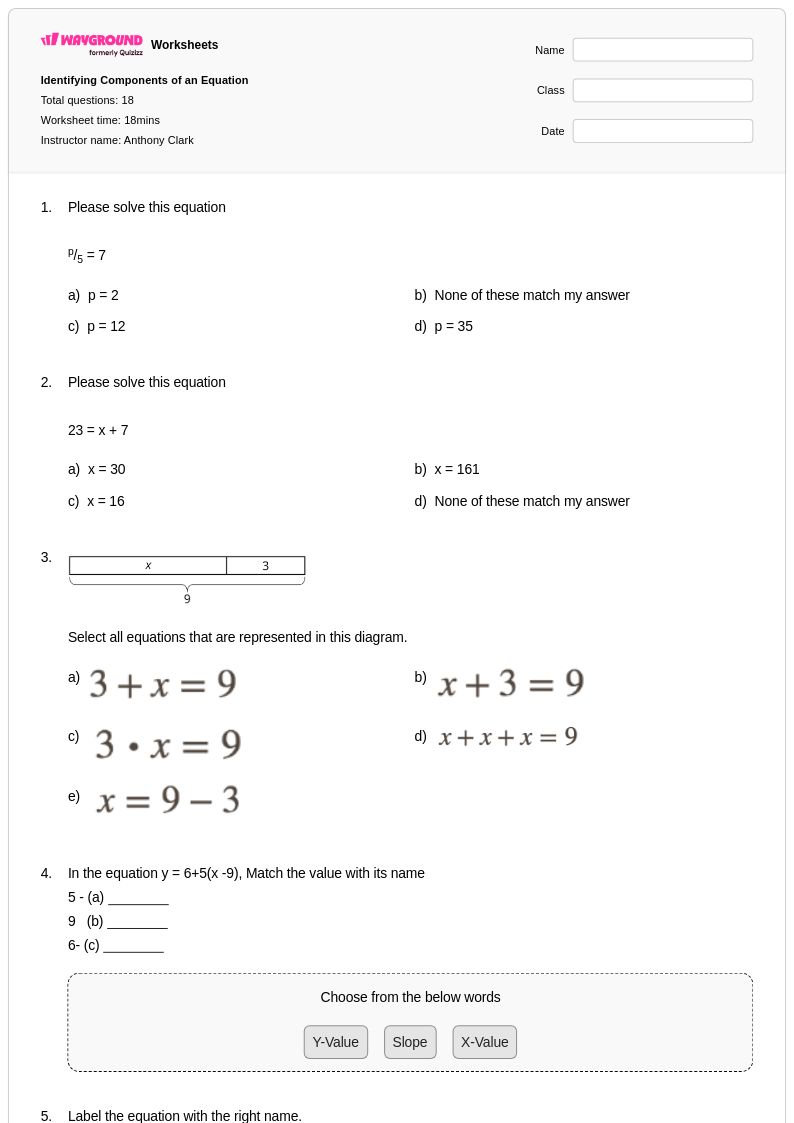
Identifying variables worksheets through Wayground (formerly Quizizz) provide students with essential foundational skills in algebraic thinking by teaching them to recognize and distinguish the unknown quantities represented by letters and symbols in mathematical expressions and equations. These comprehensive practice problems guide learners through the process of spotting variables within various mathematical contexts, from simple single-variable expressions to more complex multi-variable equations, helping students understand how variables function as placeholders for unknown values. Each worksheet includes a detailed answer key and is available as a free printable pdf, making it easy for educators to incorporate systematic variable identification practice into their mathematics curriculum while building students' confidence in working with abstract mathematical concepts.
Wayground (formerly Quizizz) empowers teachers with millions of educator-created resources specifically designed for identifying variables instruction, featuring robust search and filtering capabilities that allow educators to quickly locate worksheets aligned with specific mathematical standards and learning objectives. The platform's differentiation tools enable teachers to customize these printable and digital worksheet collections to meet diverse student needs, whether for remediation with struggling learners or enrichment activities for advanced students. These flexible resources are available in both interactive digital formats and downloadable pdf versions, supporting teachers in their lesson planning while providing targeted skill practice that helps students master the critical ability to identify variables across different mathematical contexts and complexity levels.
FAQs
How do I introduce the concept of variables to students?
Start with concrete examples before moving to abstract letters. Use a box or a question mark to represent an unknown number in a simple equation, like 3 + ? = 5. Framing it as a "mystery number" helps students bridge the gap from arithmetic to the algebraic concept of a variable as a placeholder.
What types of exercises help students practice identifying variables?
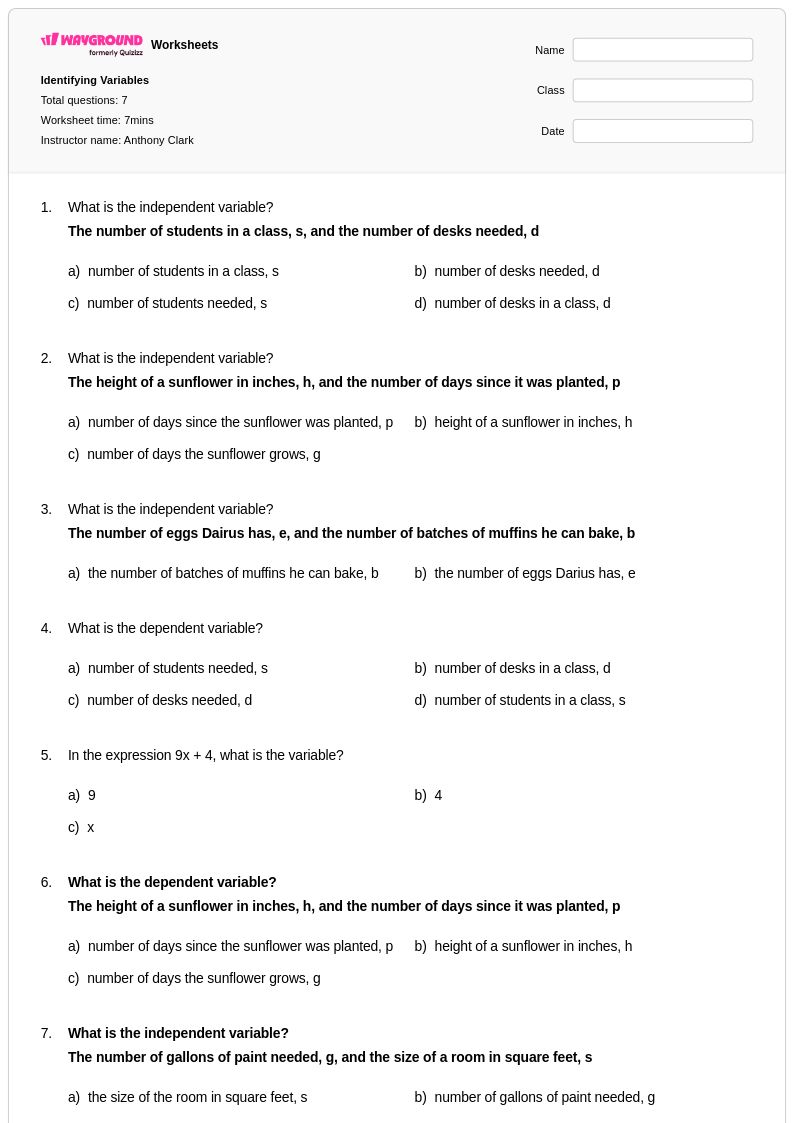
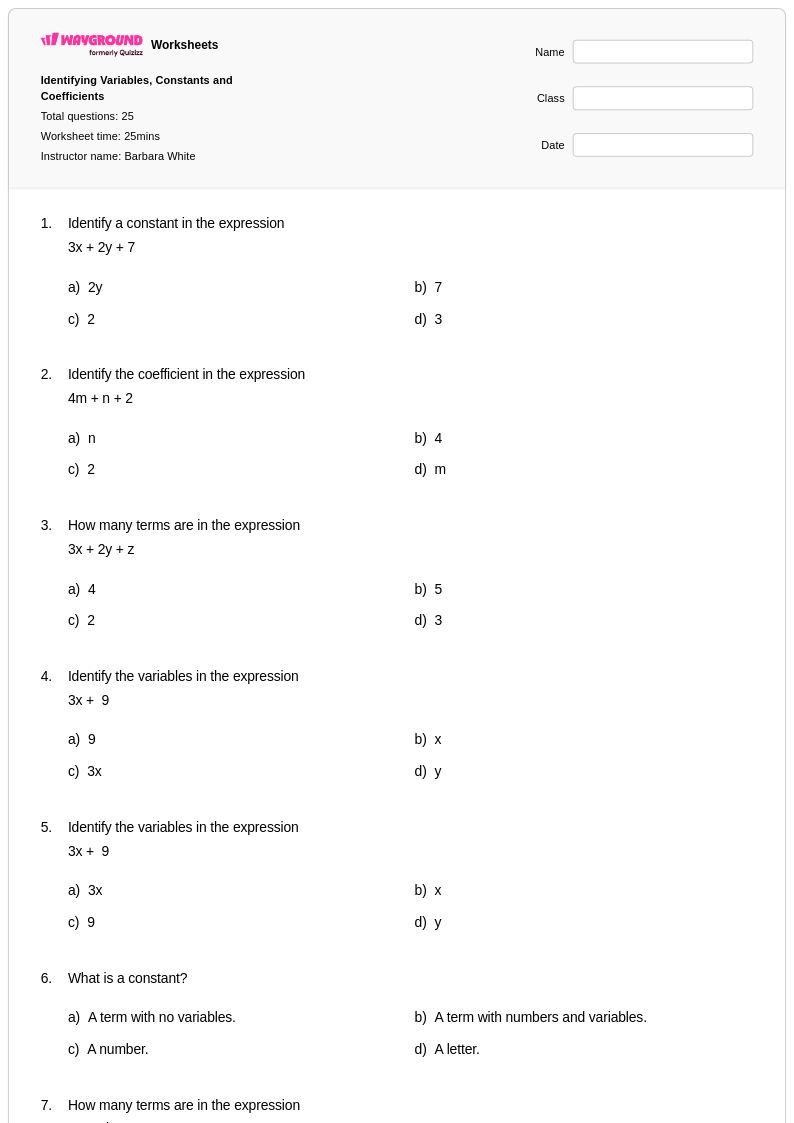
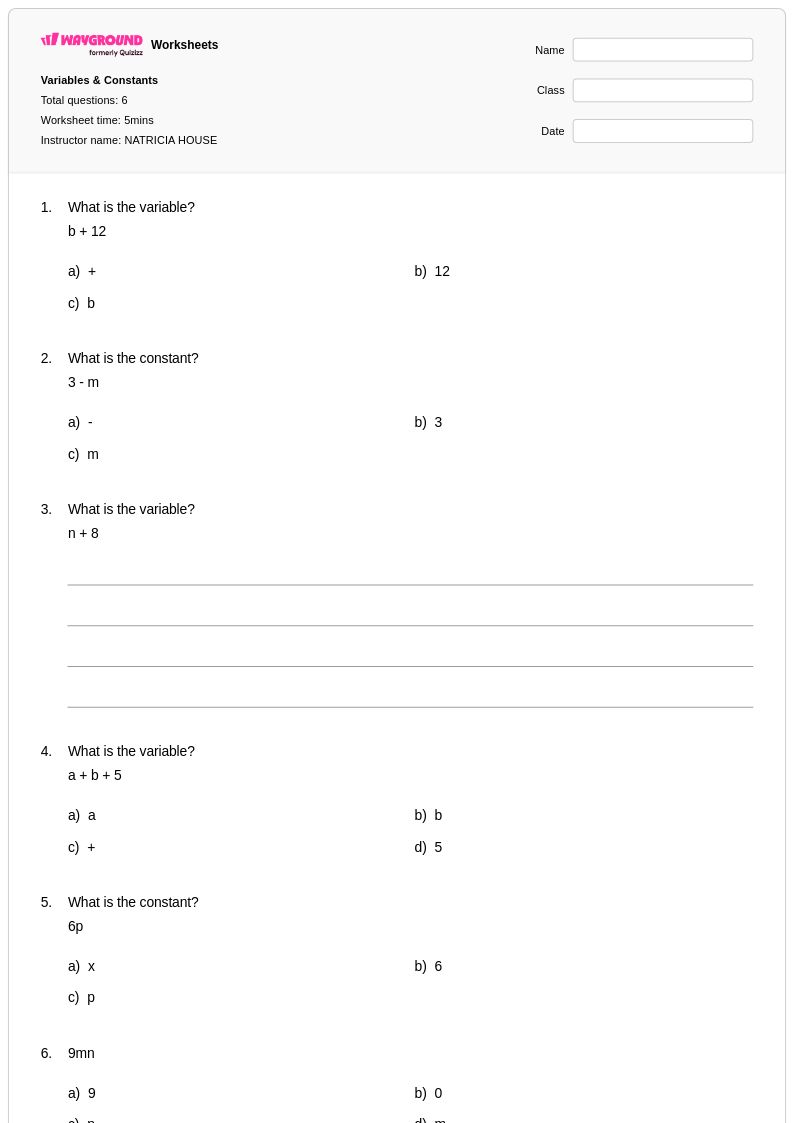
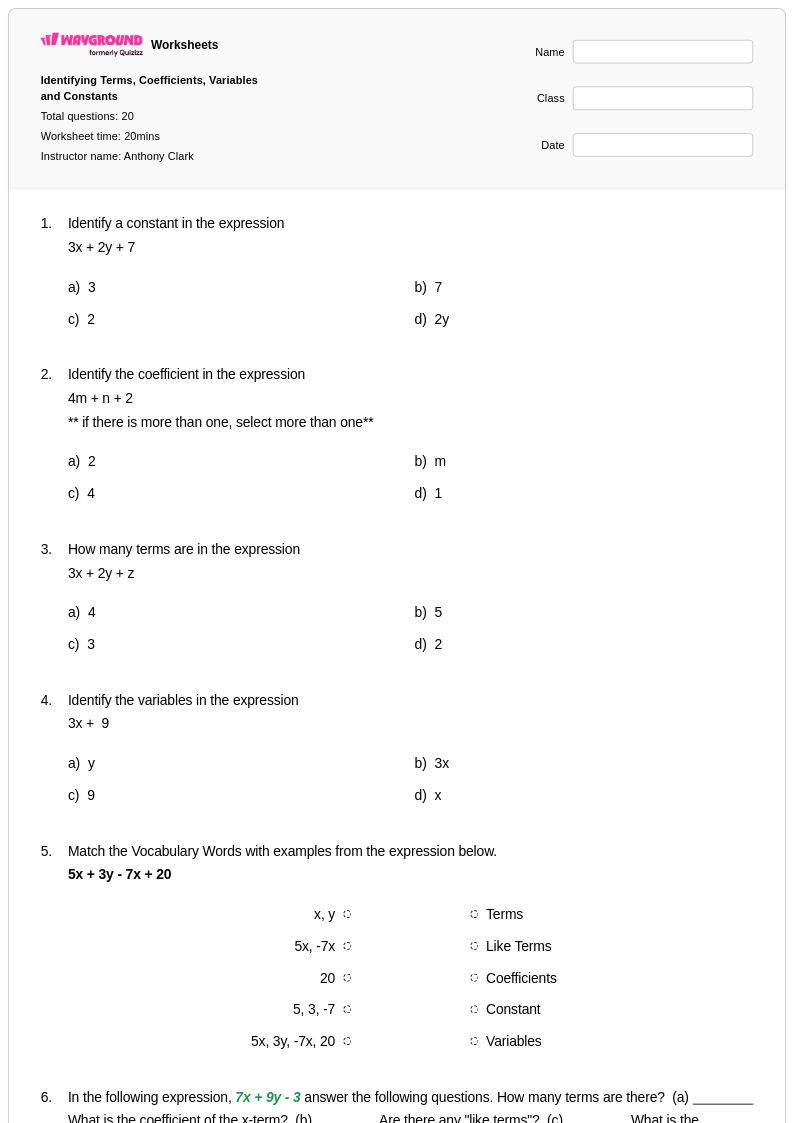
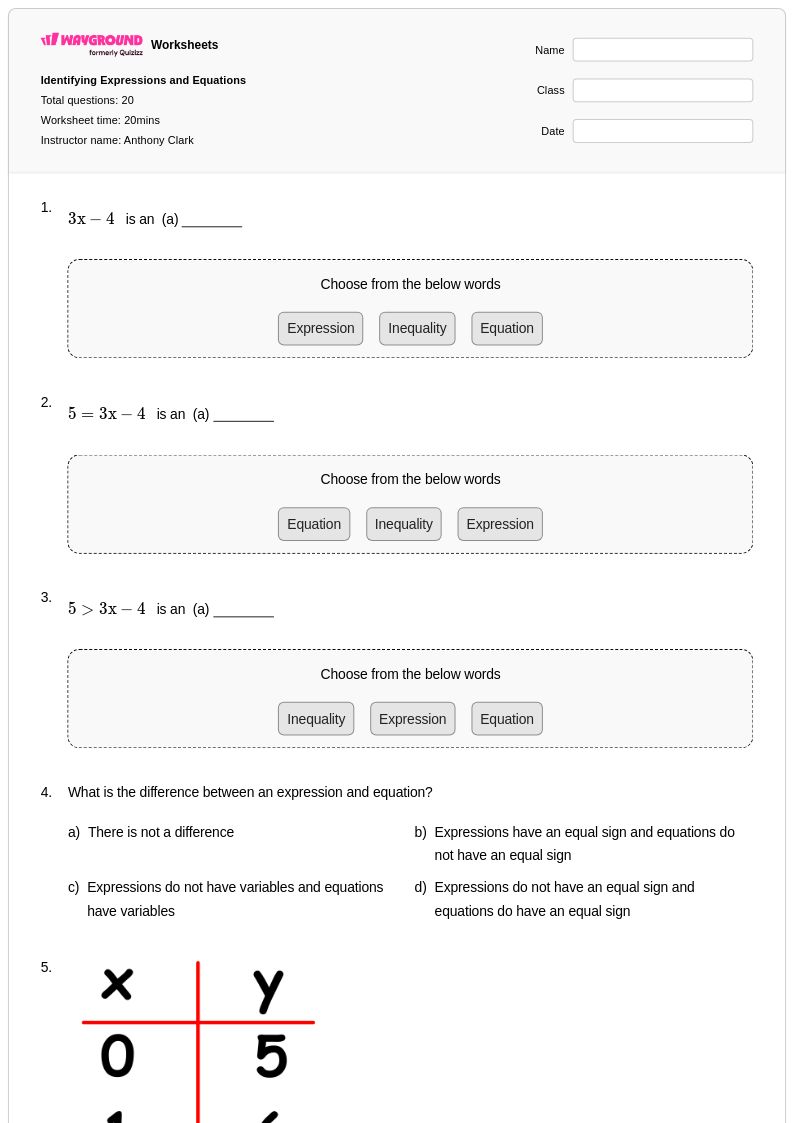
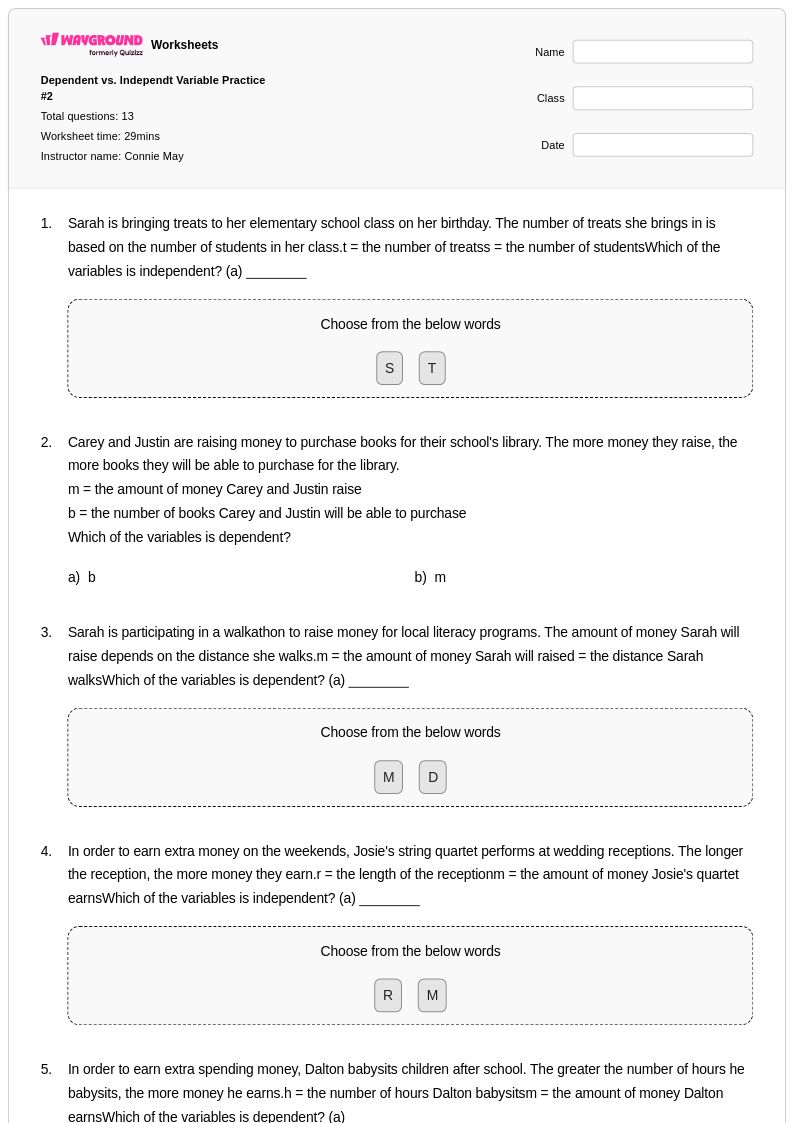
Effective practice includes a variety of formats. Begin with simple expressions like "x + 5" where students circle the variable. Progress to more complex equations with variables on both sides. Word problems that require students to first define a variable (e.g., "Let 'c' be the cost of one apple") are crucial for applying the concept in a real-world context.
What are common mistakes students make when learning to identify variables?
A frequent error is confusing a variable with a label or unit, for instance, thinking the 'f' in '3f' stands for 'feet'. Students may also mistakenly believe a specific letter always represents the same number in every problem. It's important to clarify that a variable is a placeholder whose value can change or is unknown within a given problem.
How can I use these identifying variables worksheets with my class?
Wayground's worksheets are flexible for any classroom. You can assign them as an interactive digital quiz on the platform or download them as printable PDFs for offline practice. Every worksheet includes a complete answer key, and for paper assignments, you can use the Wayground for Teachers app to quickly scan and grade student work.
How does identifying variables fit into the math curriculum?
This skill is a cornerstone of algebraic thinking and aligns with the Common Core State Standards' progression. Students typically begin in elementary grades by using symbols for unknowns in simple equations (e.g., 8 + ? = 11). This evolves in middle school into formally using letters as variables in expressions and equations, which sets the stage for solving for unknowns and understanding functions.
How can I differentiate instruction for identifying variables?
For students needing support, start with worksheets focused on single variables in simple expressions. On Wayground's digital platform, you can use the "Read Aloud" feature or reduce the number of answer choices to lower cognitive load. For advanced students, provide worksheets with multi-variable equations or problems that challenge them to write an expression based on a word problem.