
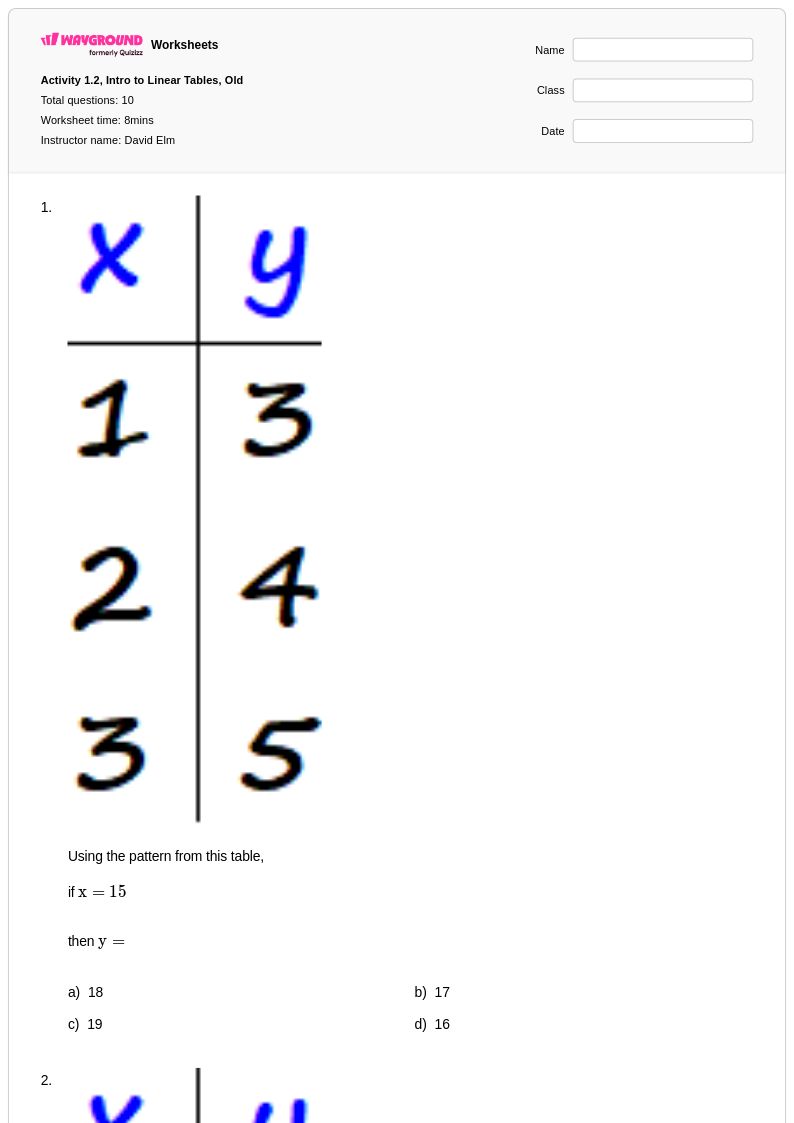
10 Q
9th - 12th
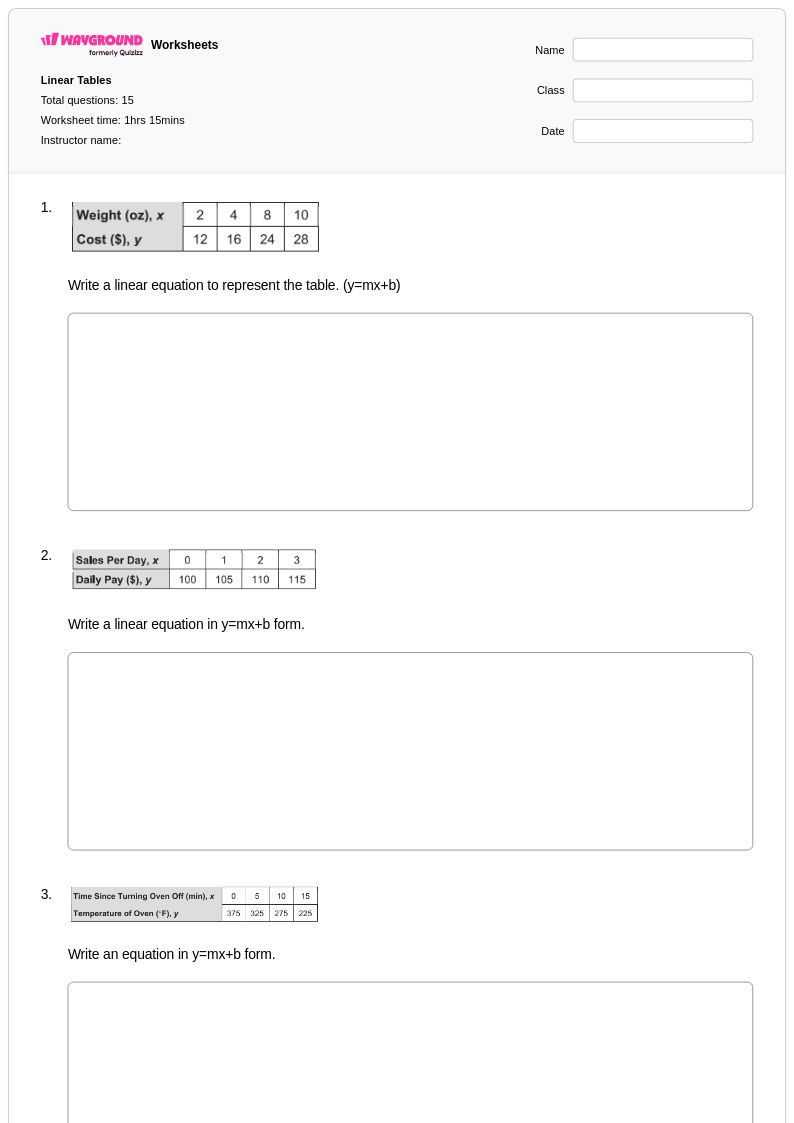
15 Q
8th - 9th
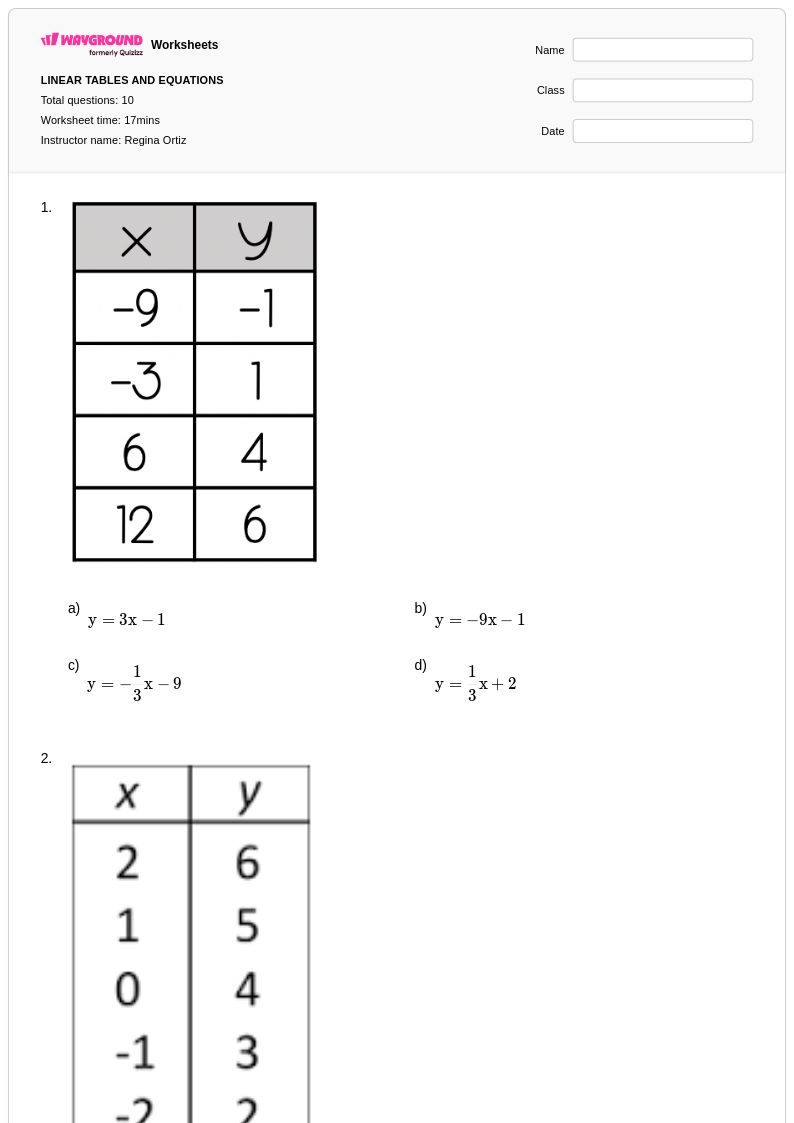
10 Q
9th
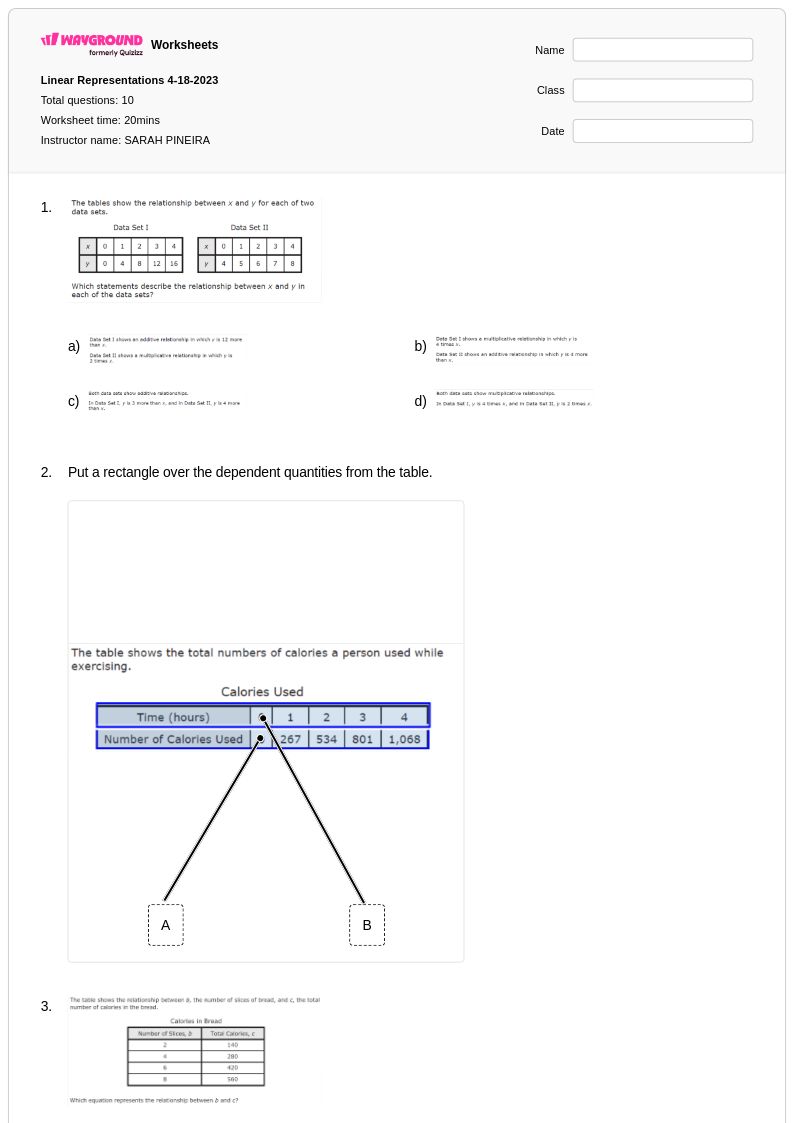
10 Q
6th
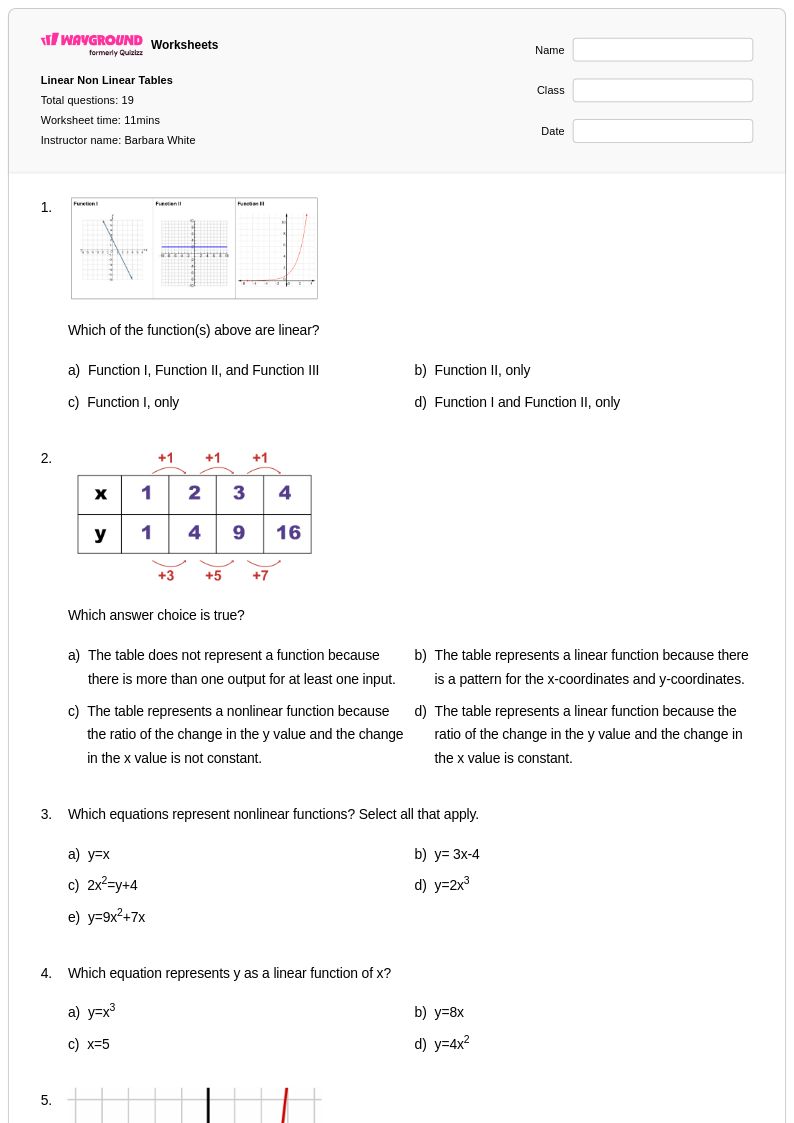
19 Q
8th
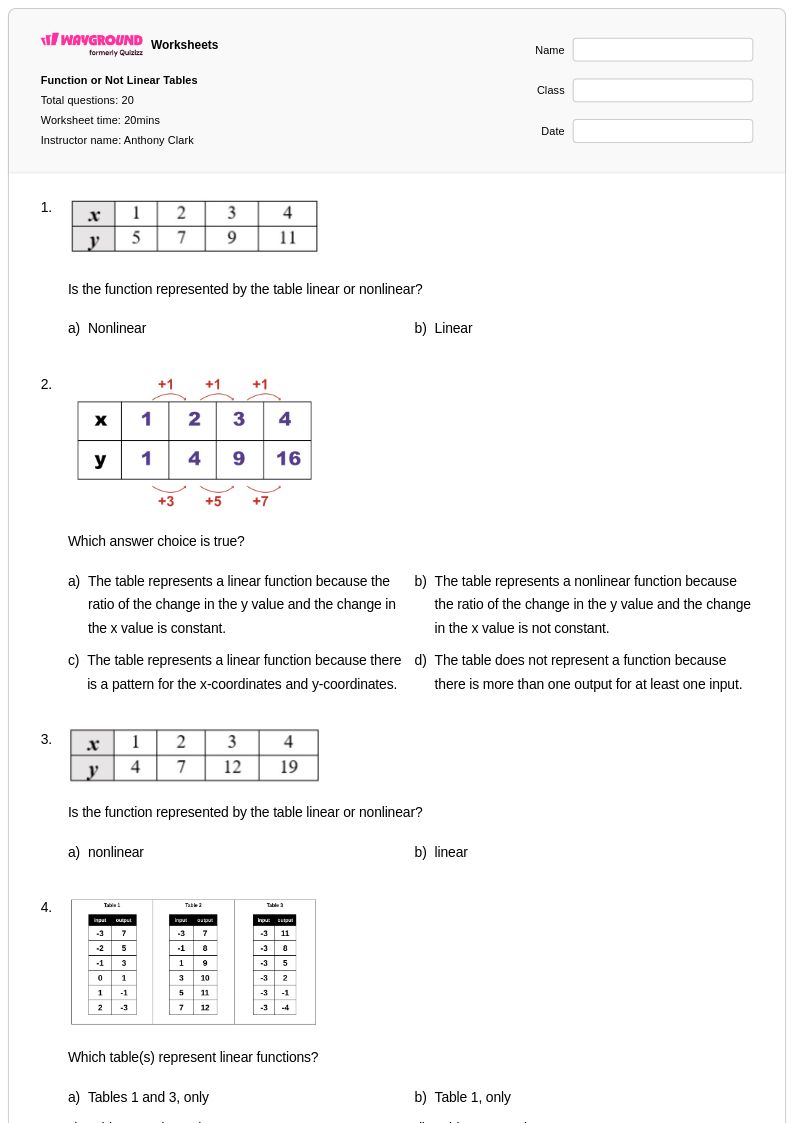
20 Q
8th - Uni
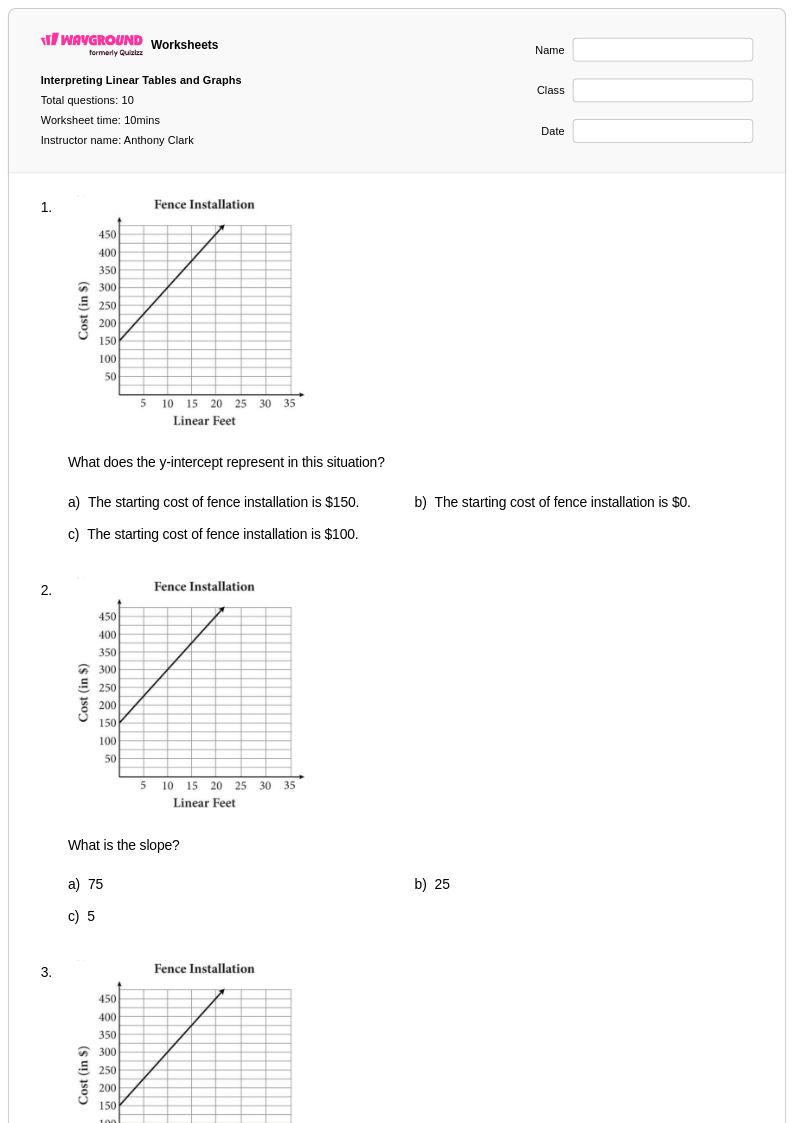
10 Q
8th - Uni
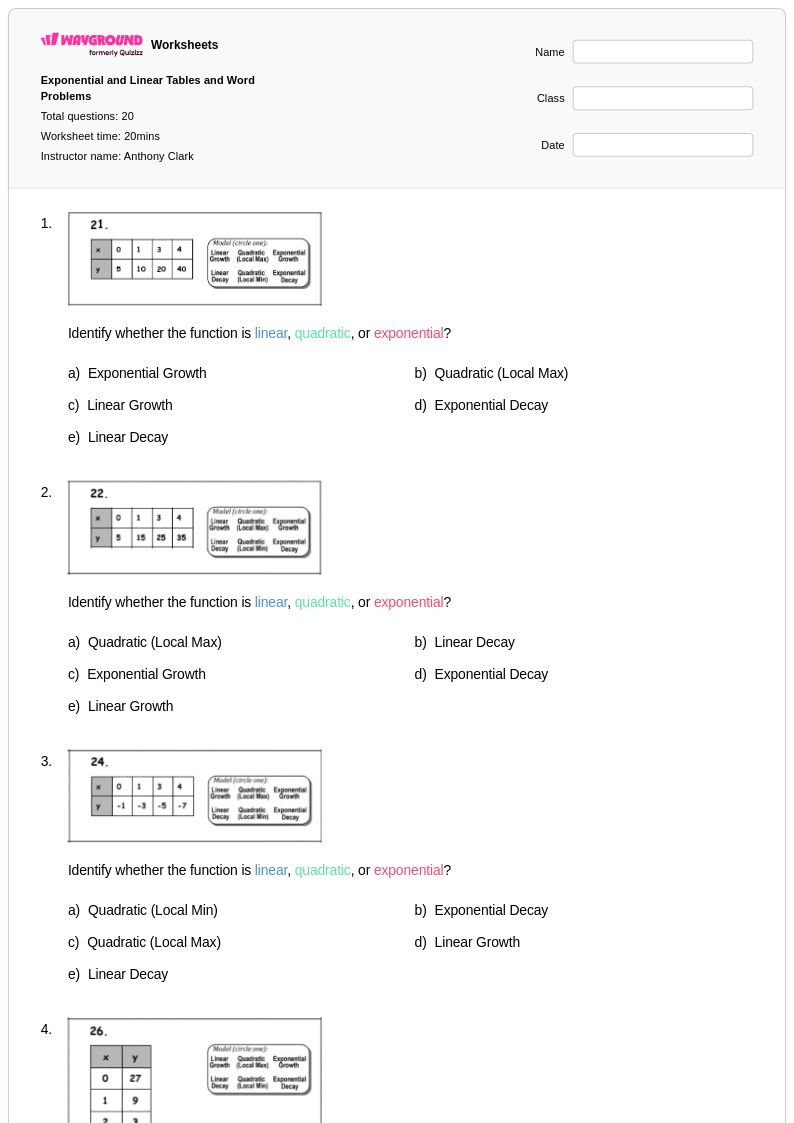
20 Q
9th - Uni
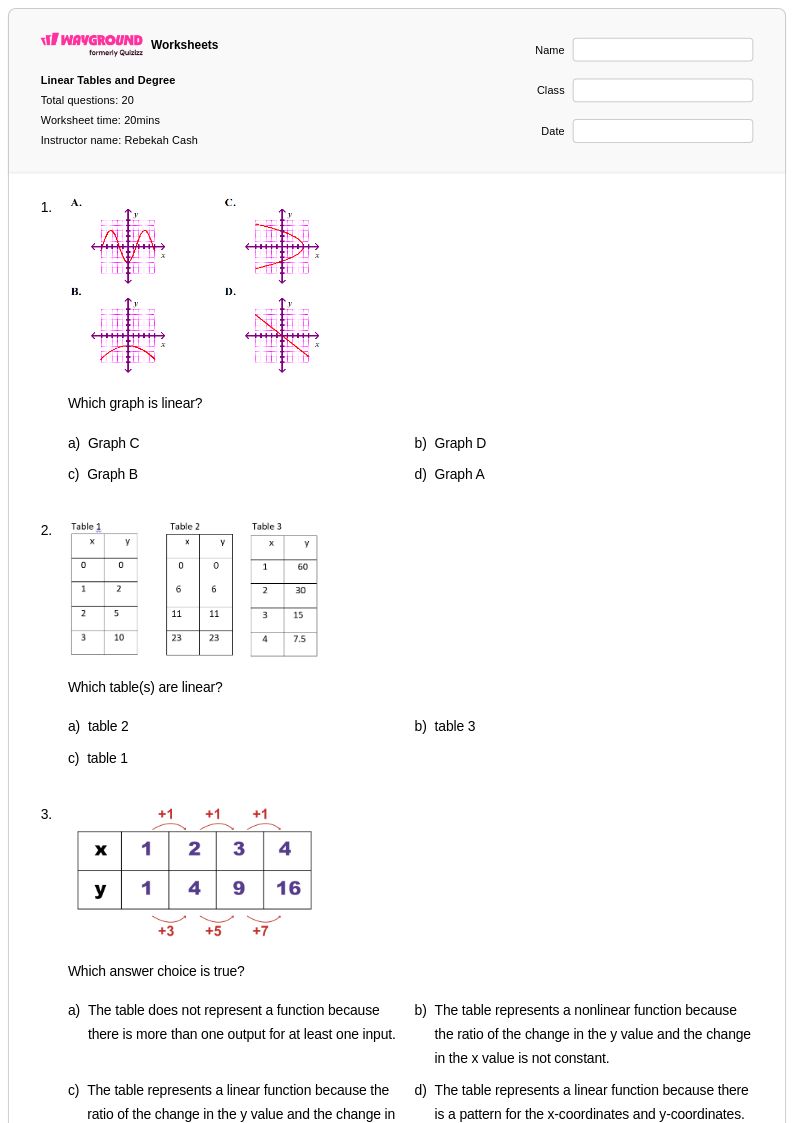
20 Q
9th - 12th
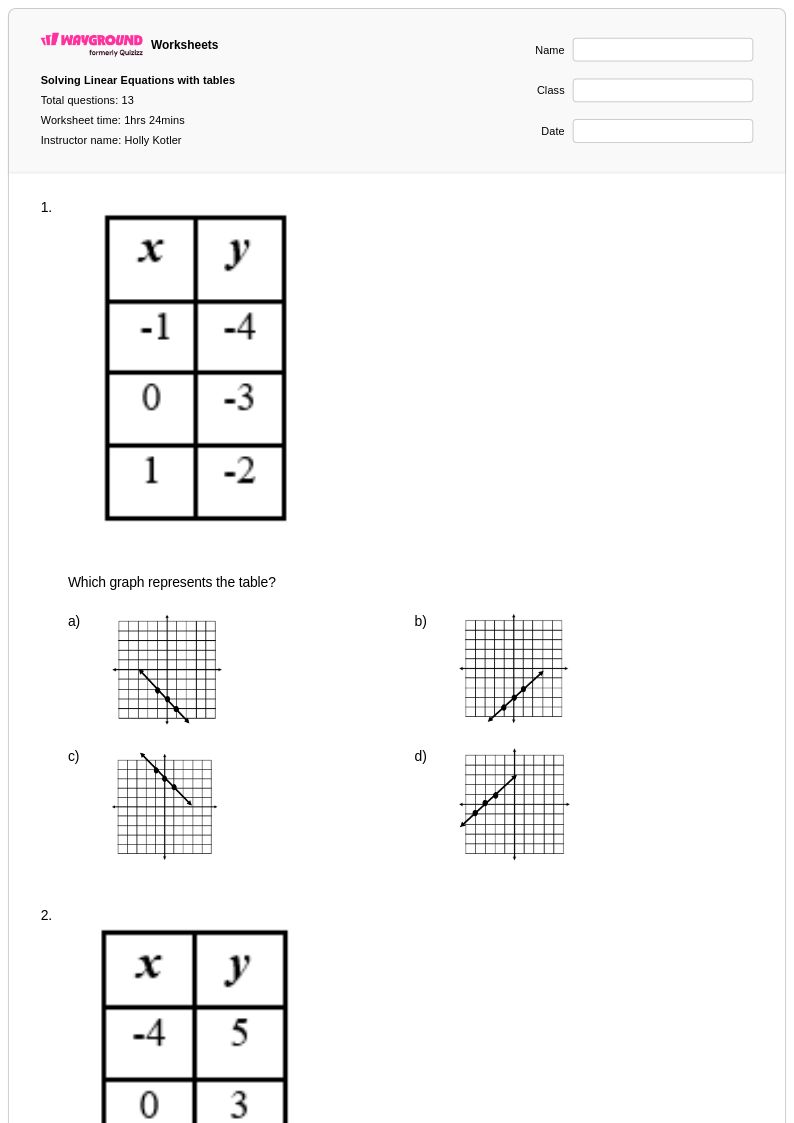
13 Q
6th - 8th
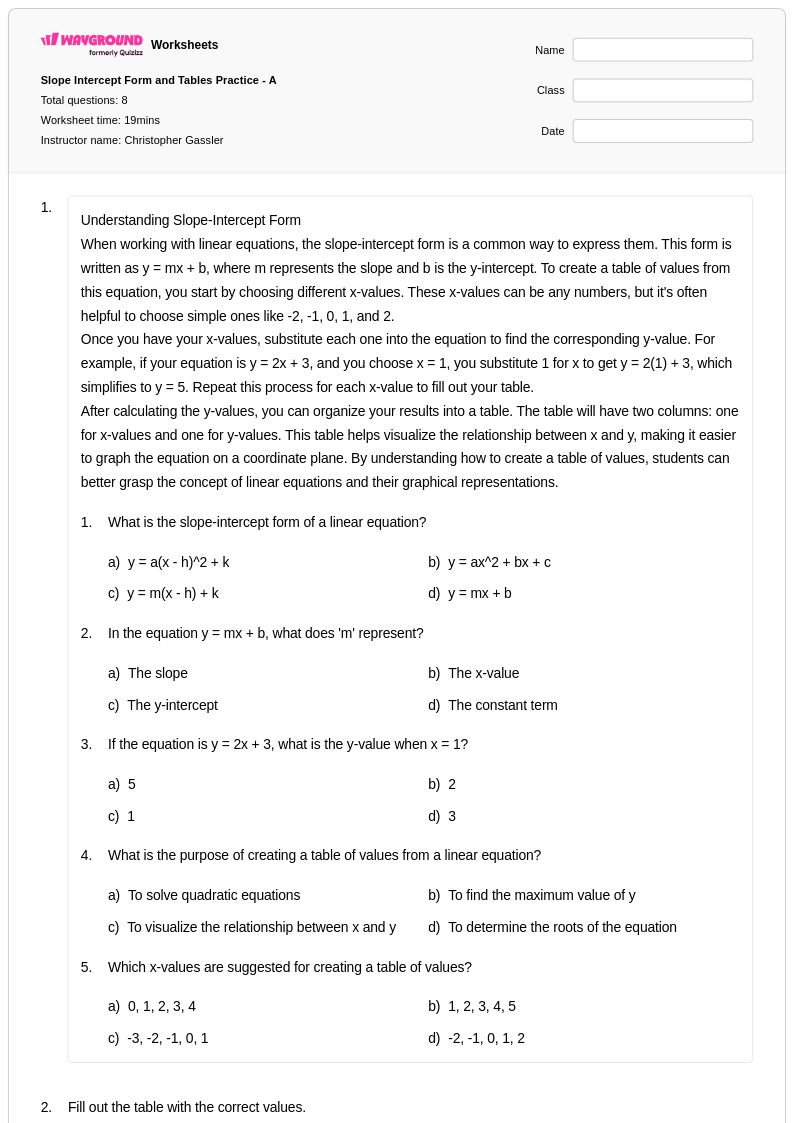
13 Q
9th
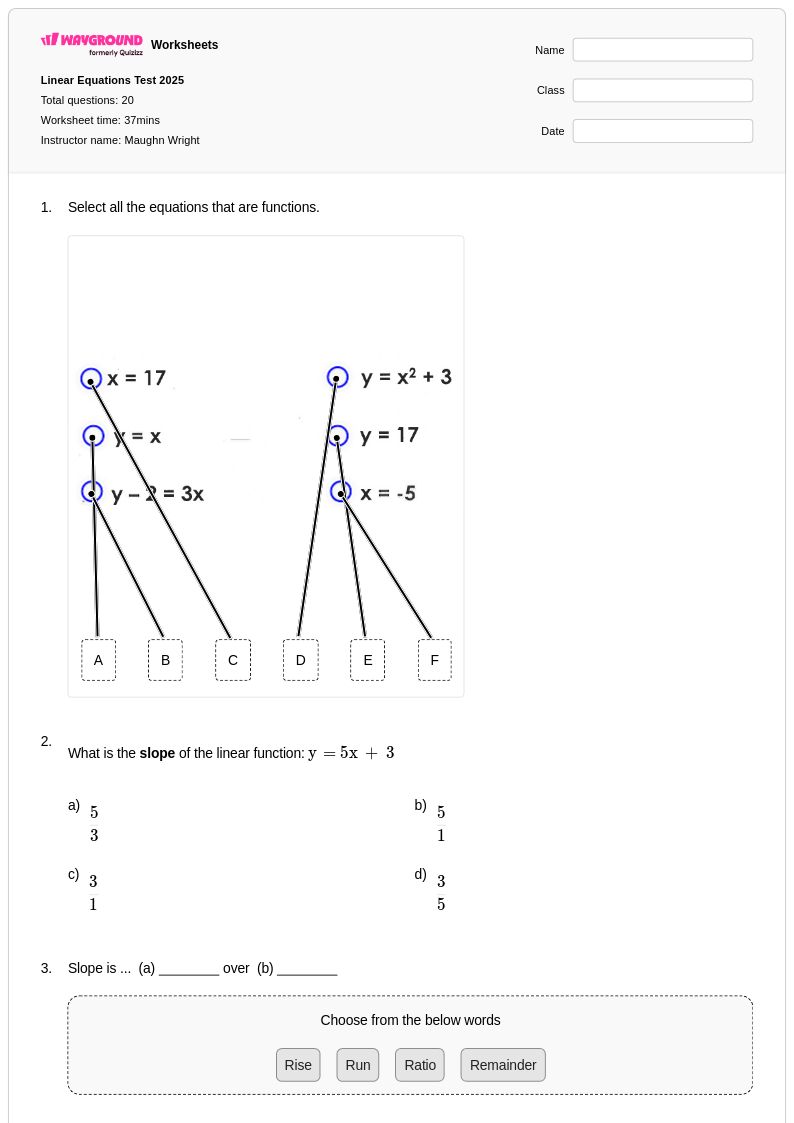
20 Q
8th
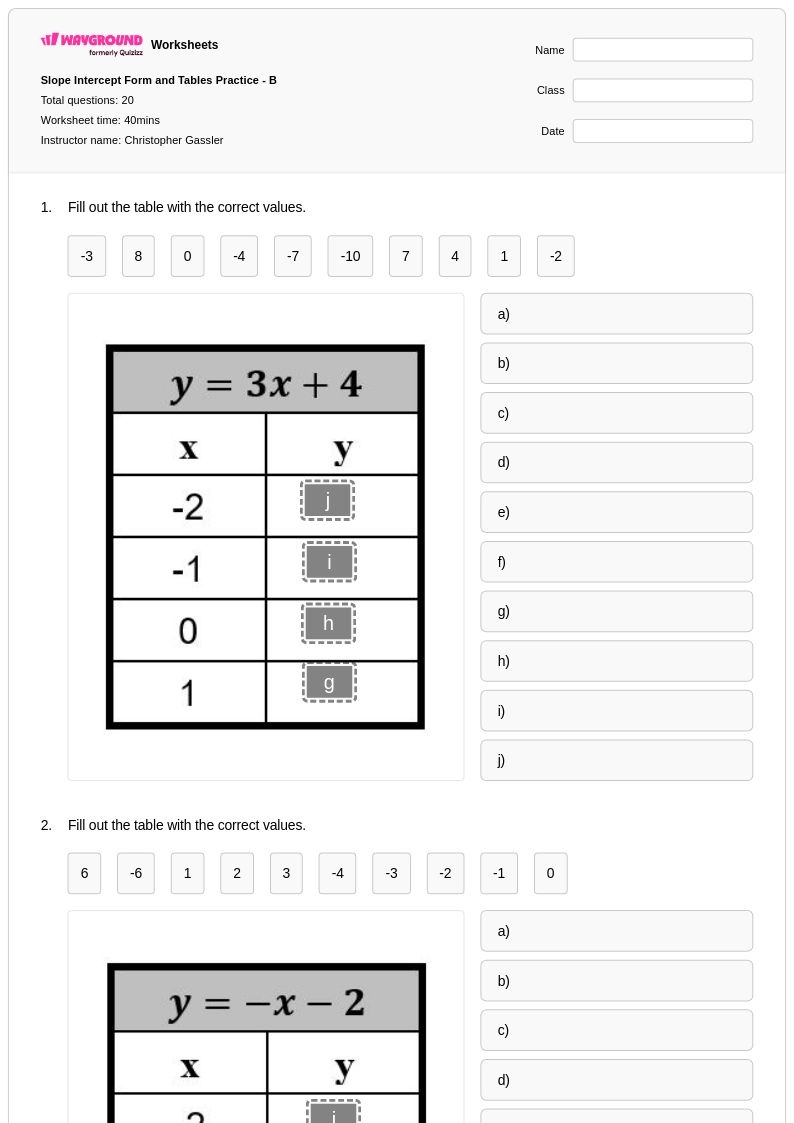
20 Q
9th
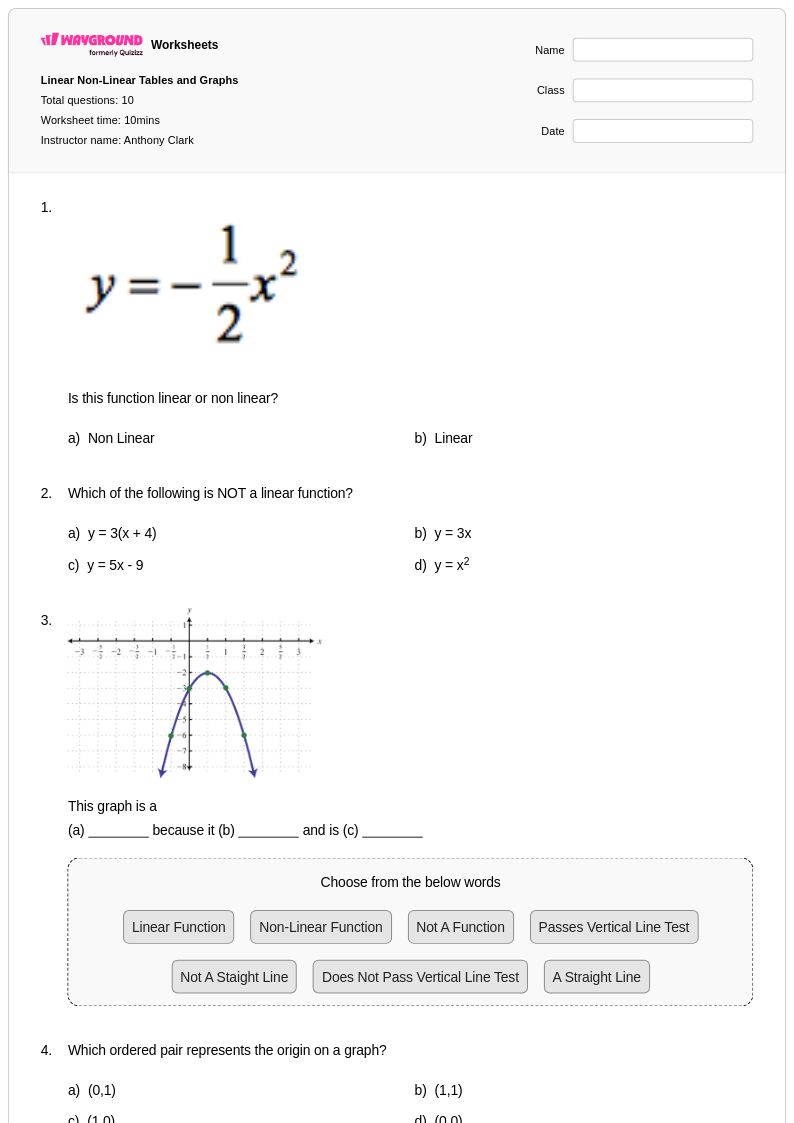
10 Q
8th - Uni
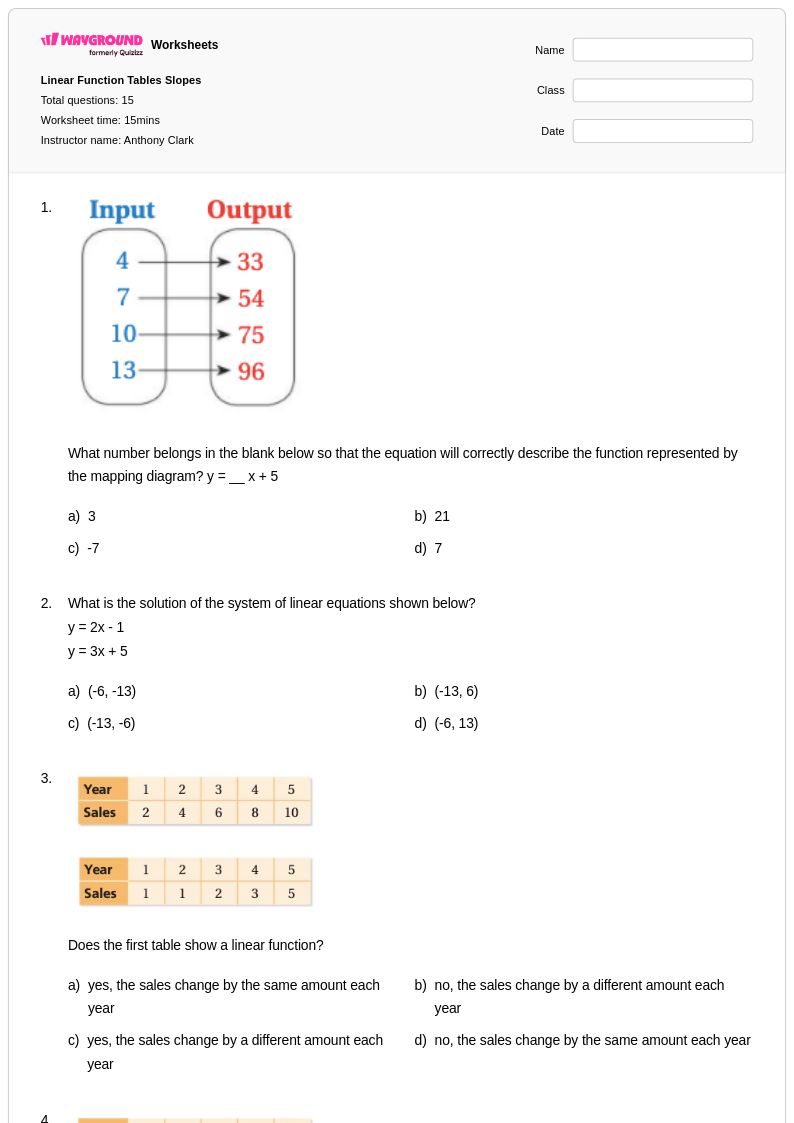
15 Q
8th - Uni
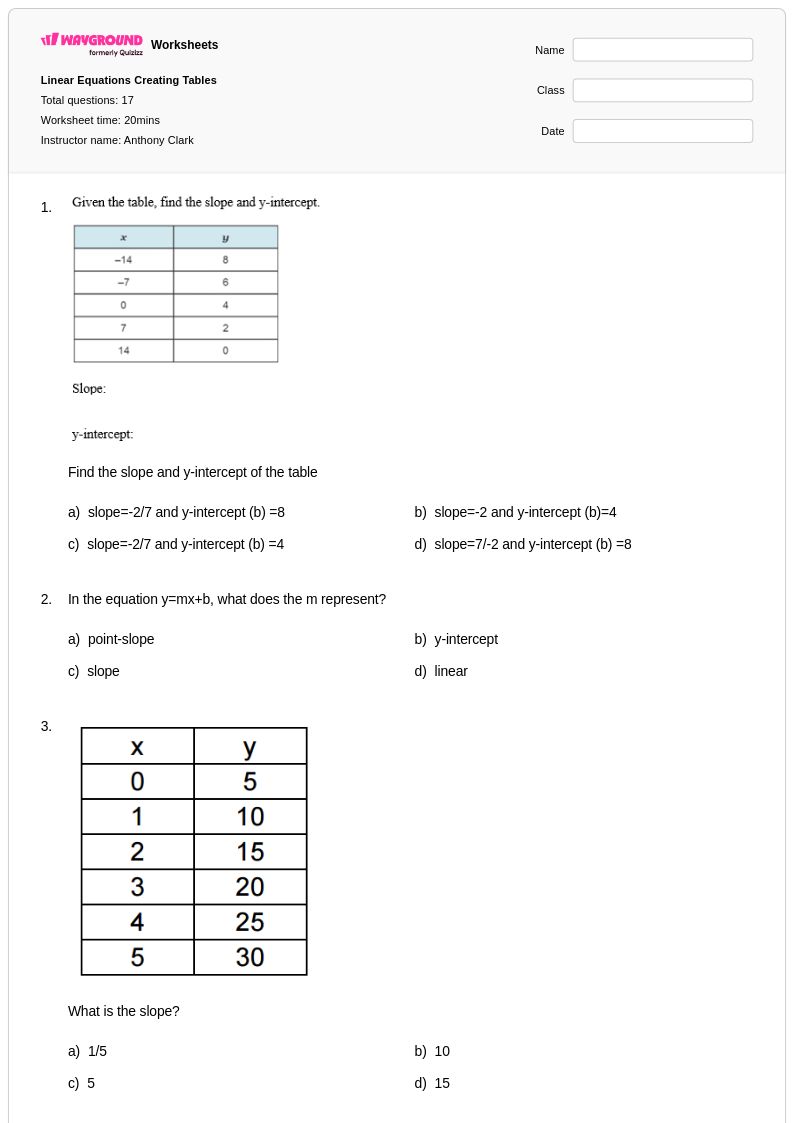
20 Q
9th - Uni
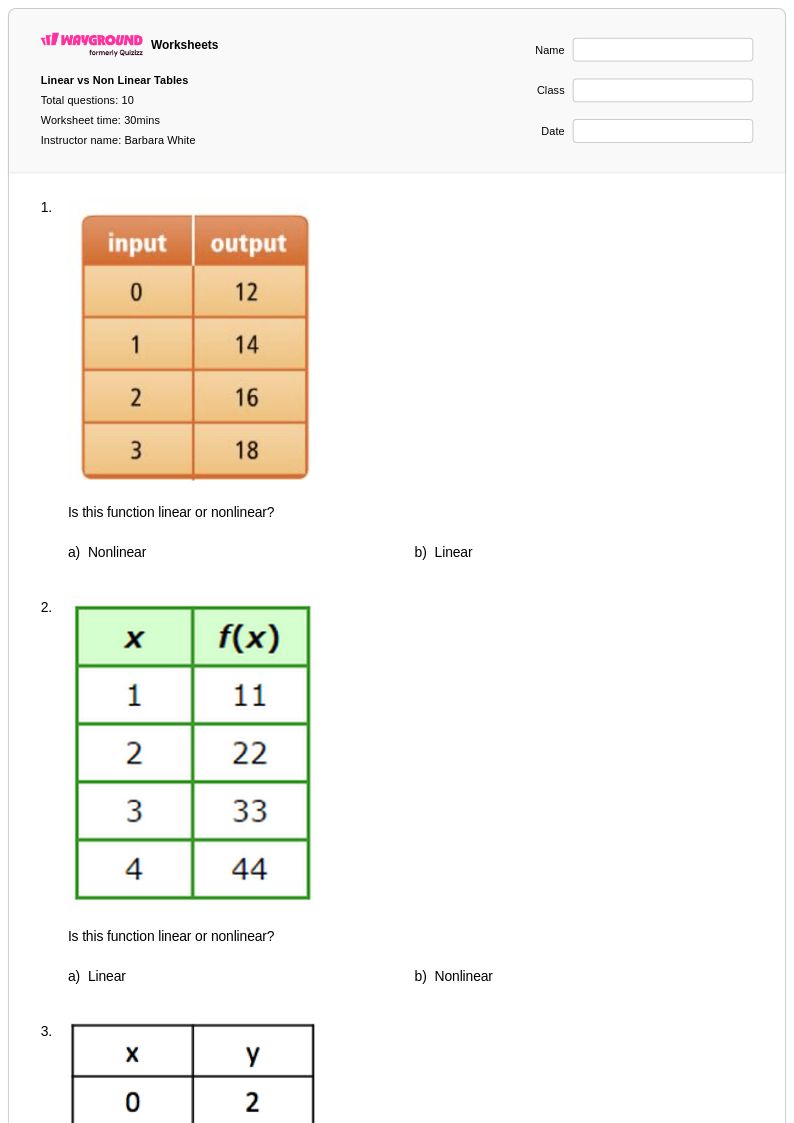
10 Q
8th
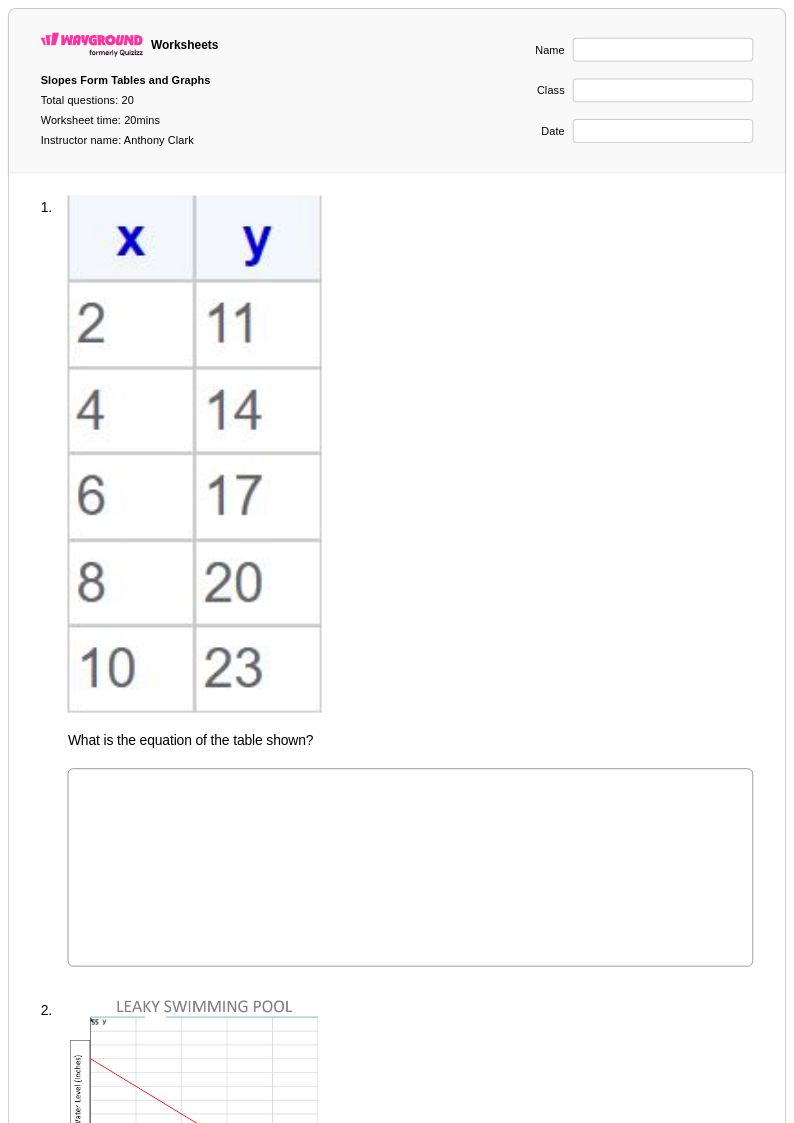
20 Q
8th - Uni
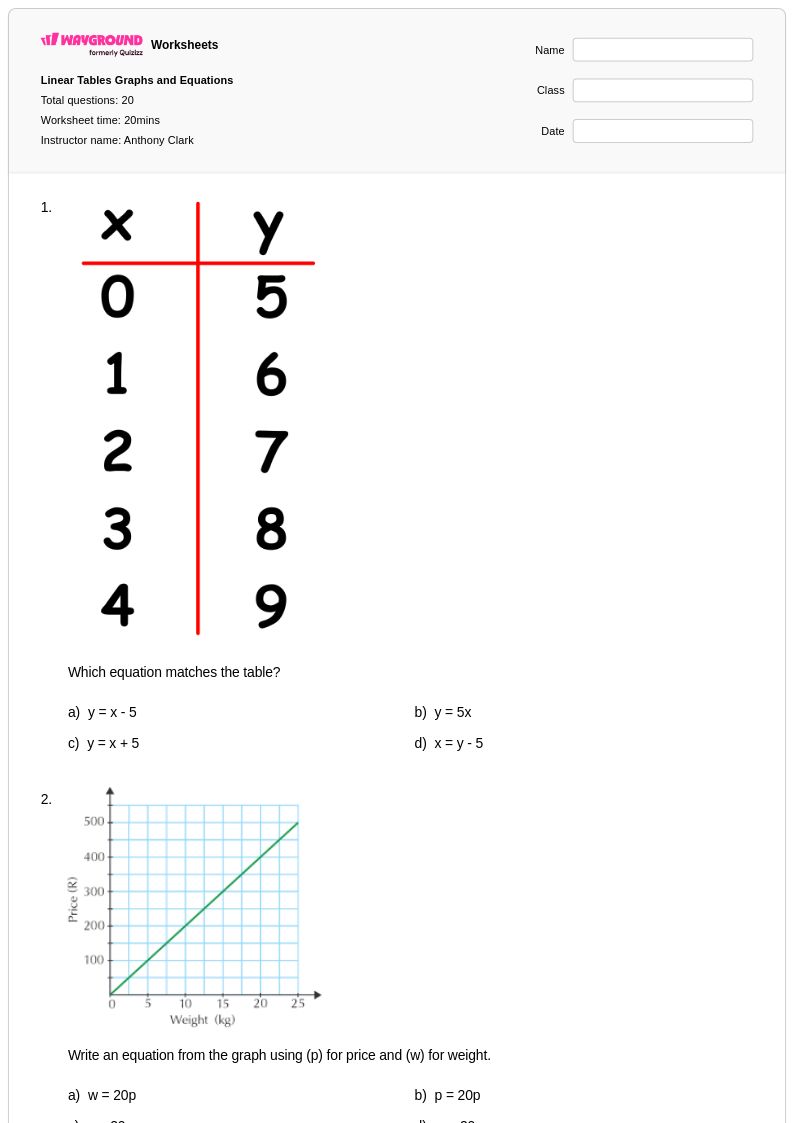
20 Q
8th - Uni
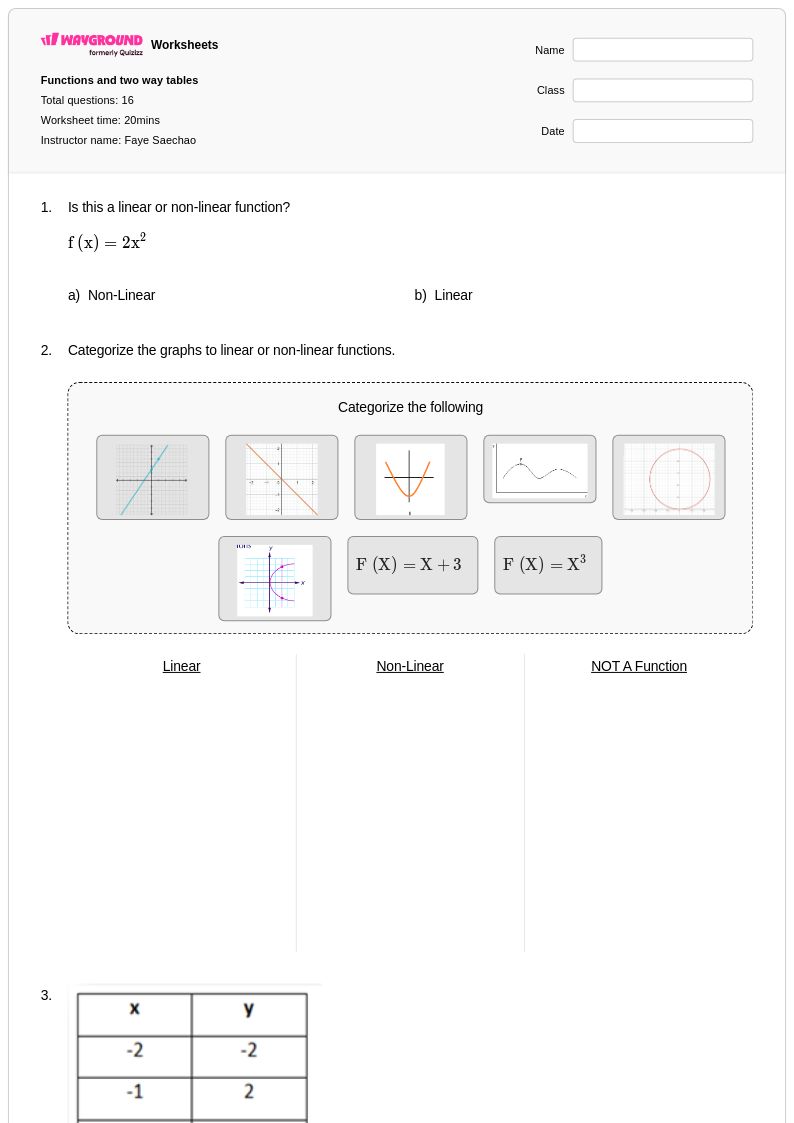
16 Q
8th
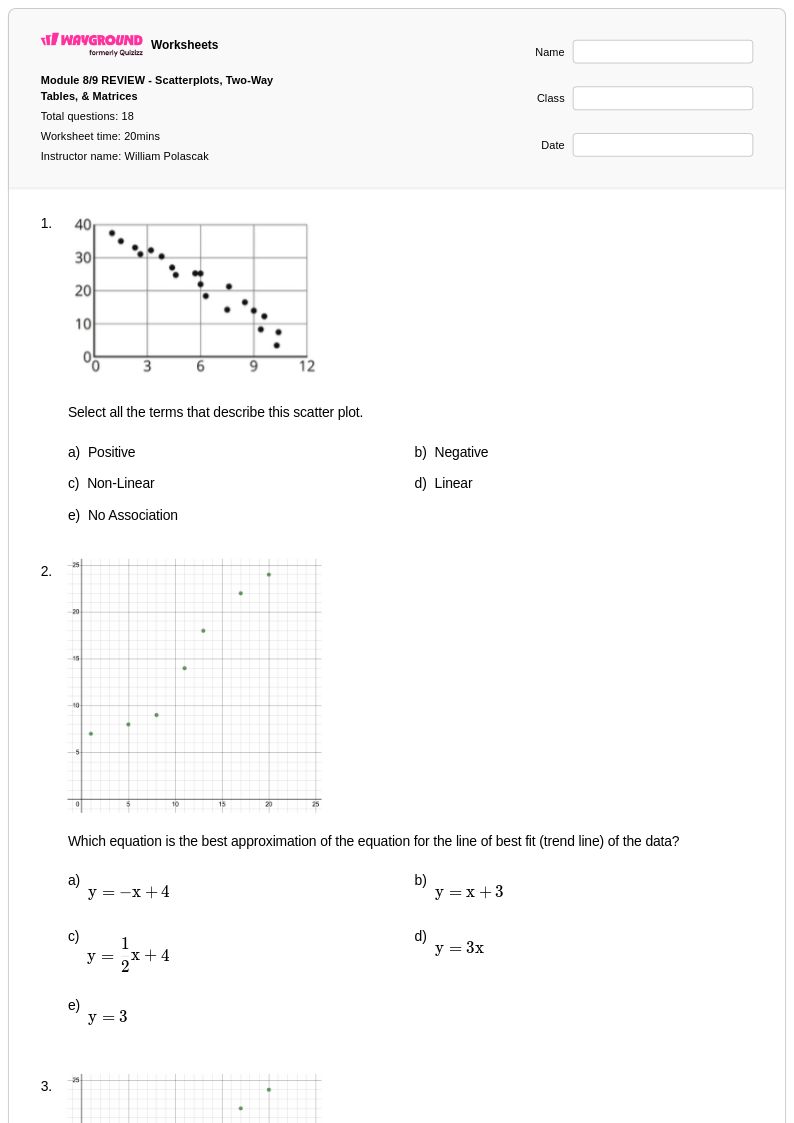
18 Q
8th
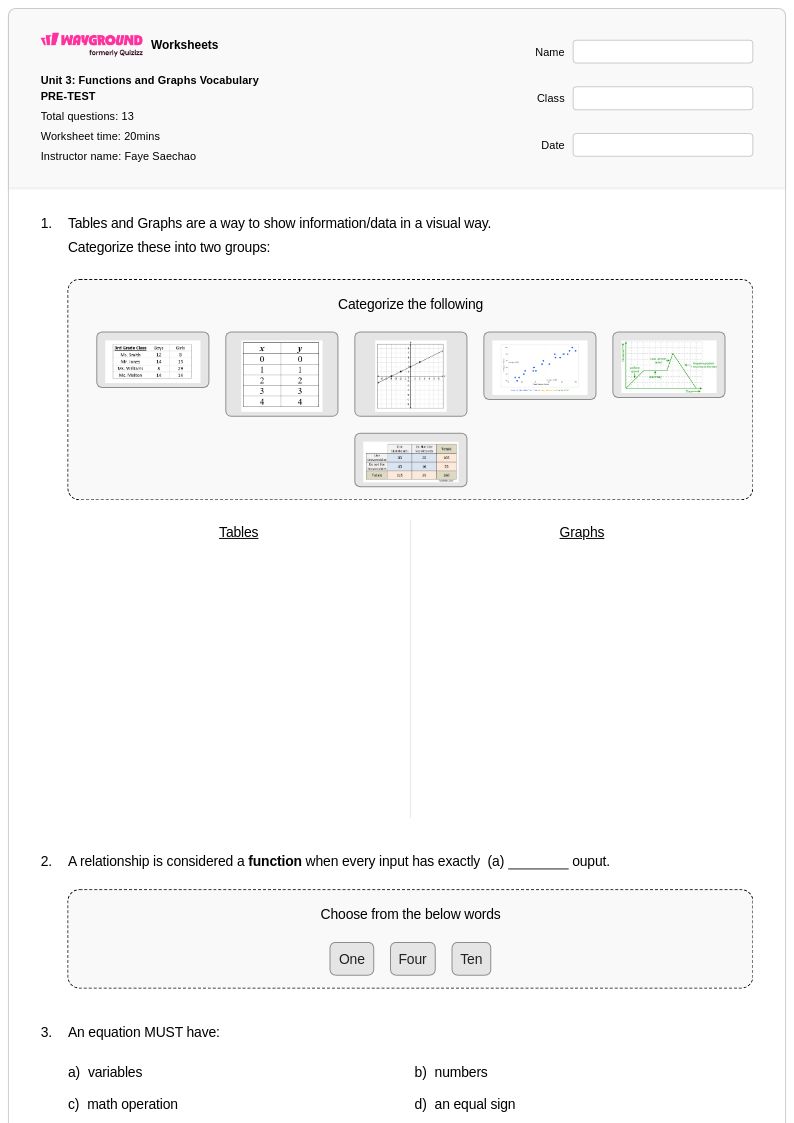
13 Q
8th
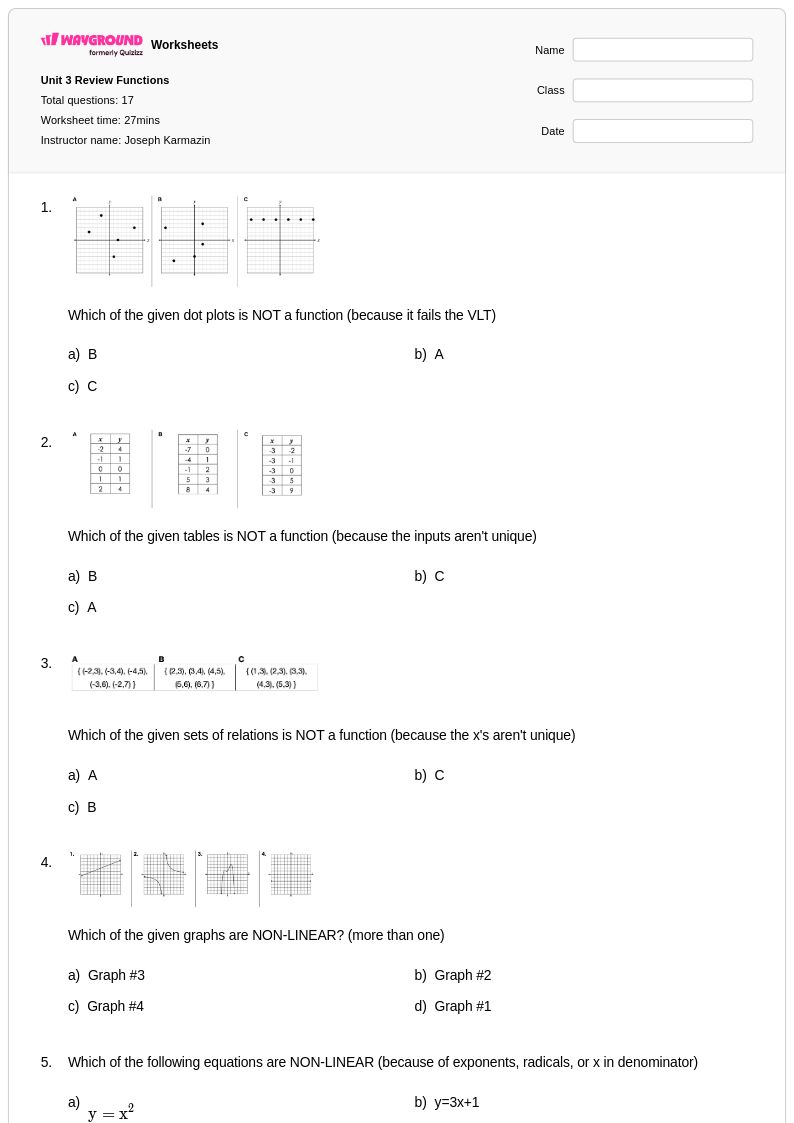
17 Q
8th
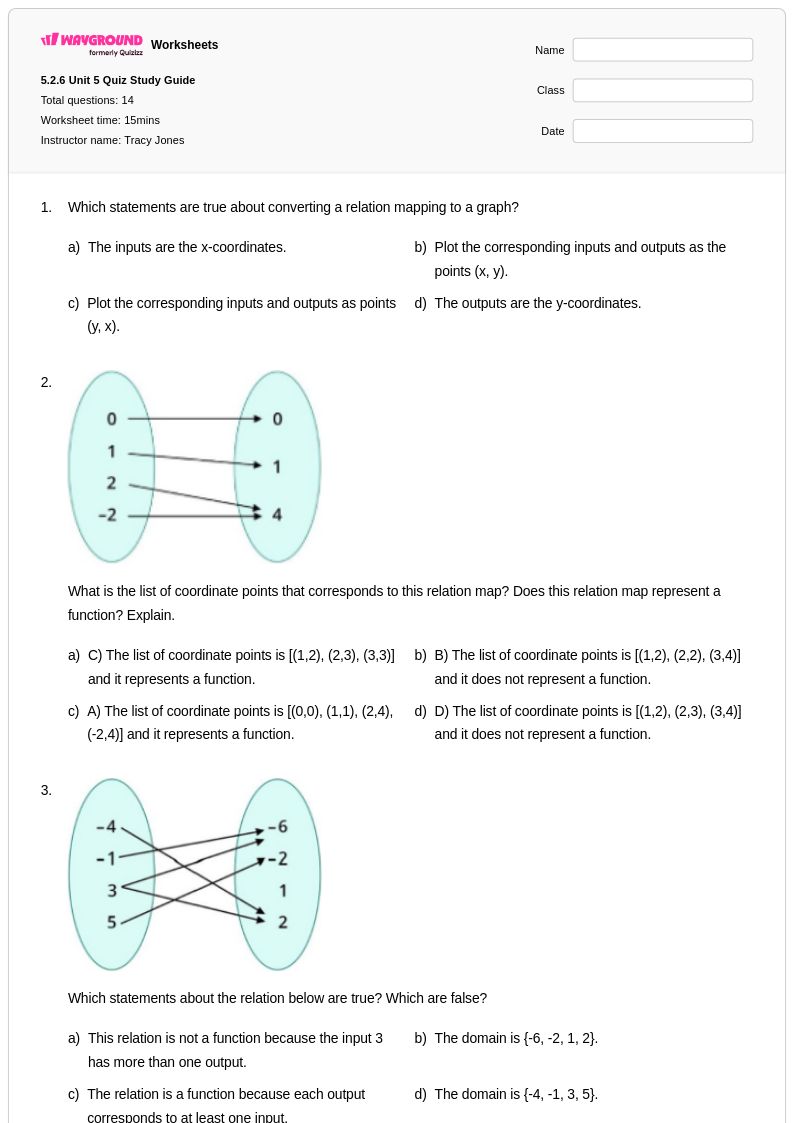
14 Q
9th
Explore Worksheets by Subjects
Explore printable Linear Tables worksheets
Linear tables worksheets available through Wayground (formerly Quizizz) provide comprehensive practice for students learning to identify, create, and analyze patterns in algebraic relationships. These carefully designed resources help students master the fundamental skill of recognizing how input and output values relate through constant rates of change, building essential foundations for understanding linear functions and equations. Each worksheet collection includes varied practice problems that guide learners through interpreting data tables, calculating slopes from coordinate pairs, and determining whether relationships are truly linear. Teachers can access complete answer keys alongside these free printable resources, ensuring efficient grading and immediate feedback opportunities that support student comprehension.
Wayground's extensive library features millions of teacher-created linear tables worksheets that support educators in delivering targeted instruction across diverse learning needs. The platform's robust search and filtering capabilities allow teachers to quickly locate resources aligned with specific standards and skill levels, while built-in differentiation tools enable seamless customization for remediation or enrichment purposes. These worksheets are available in both printable PDF format and interactive digital versions, providing flexibility for classroom instruction, homework assignments, or independent practice sessions. The comprehensive collection empowers teachers to efficiently plan lessons that build algebraic reasoning skills, assess student understanding of linear relationships, and provide meaningful practice opportunities that strengthen mathematical foundations essential for advanced algebra concepts.
FAQs
How do I teach linear relationships using tables?
What exercises help students practice with linear tables?
What are common mistakes students make with linear tables?
How can I use this linear tables worksheet with my class?
How do linear tables fit into the middle school math curriculum?
How can I differentiate practice with linear tables for my students?