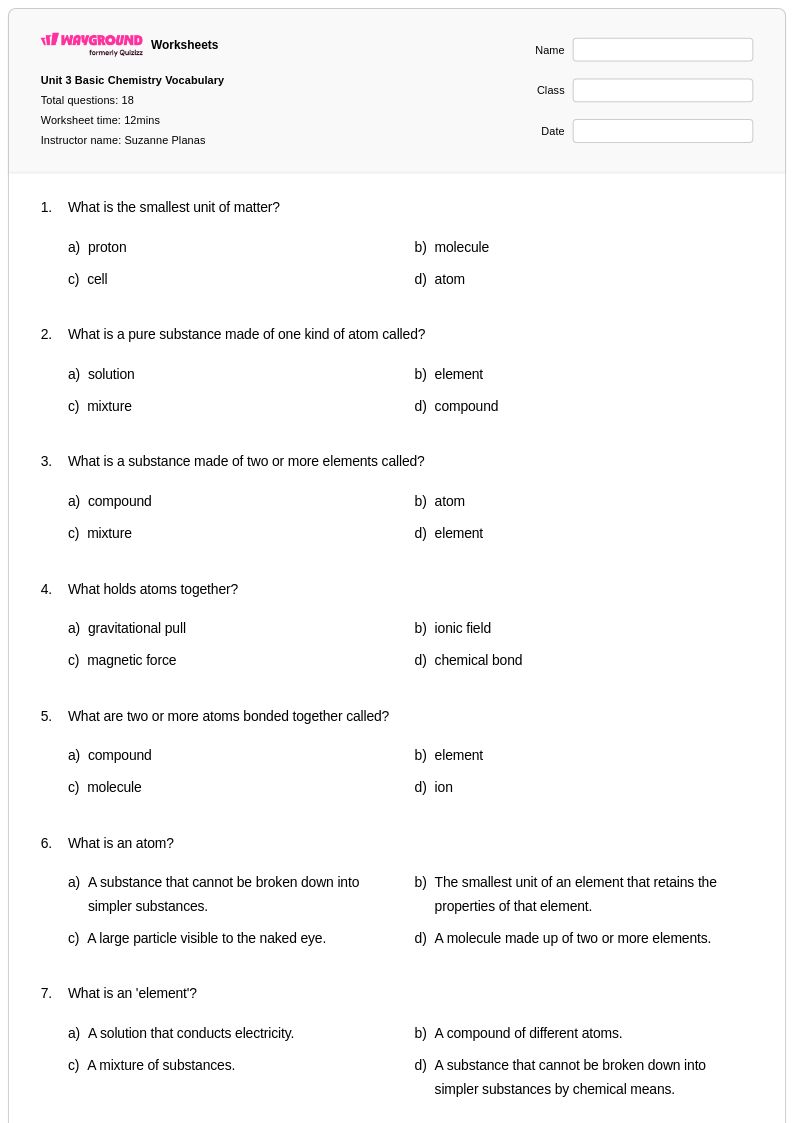
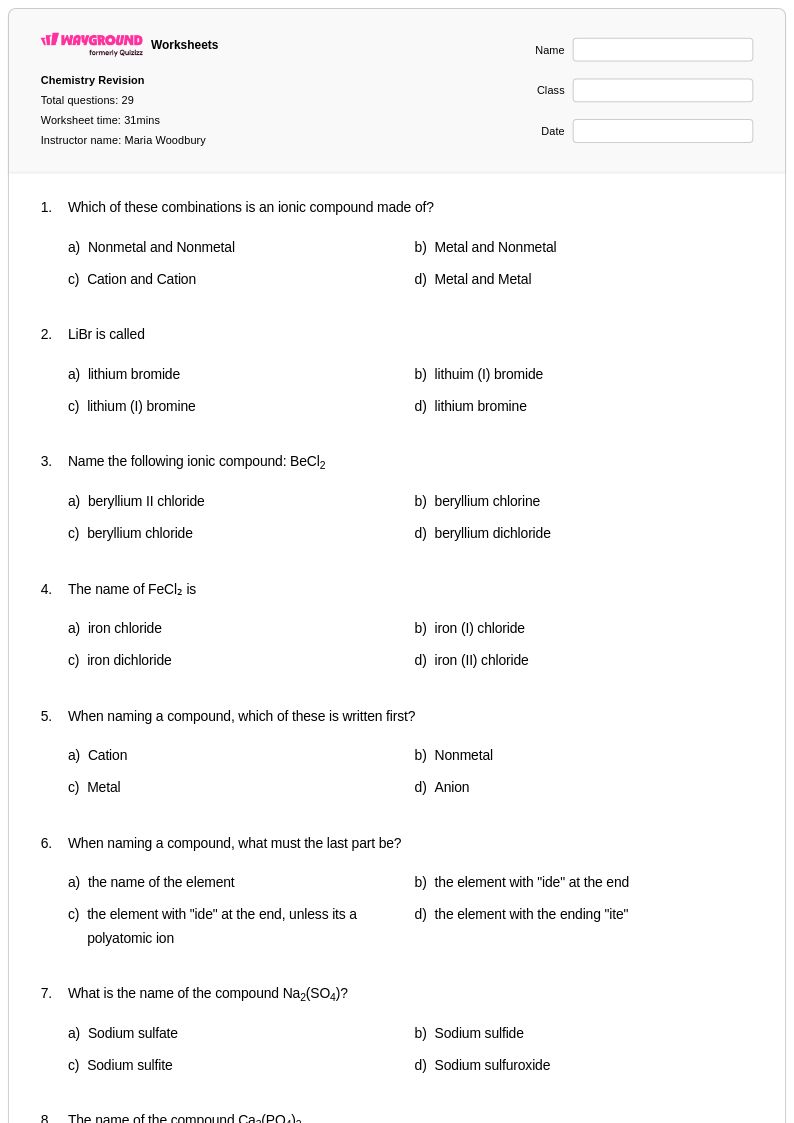
Free Printable Naming Binary Ionic Compounds Worksheets for Year 10
Year 10 students can master naming binary ionic compounds with Wayground's free worksheets and printables, featuring comprehensive practice problems and answer keys to build chemistry expertise.
Explore printable Naming Binary Ionic Compounds worksheets for Year 10
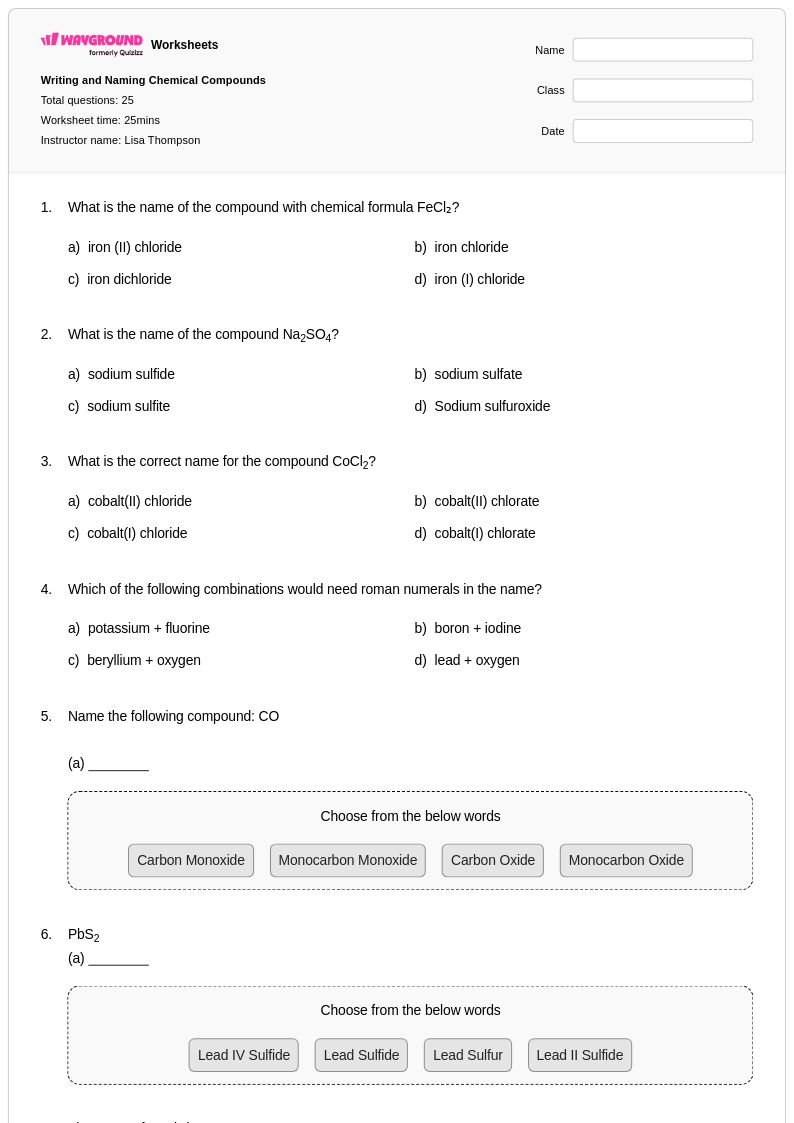
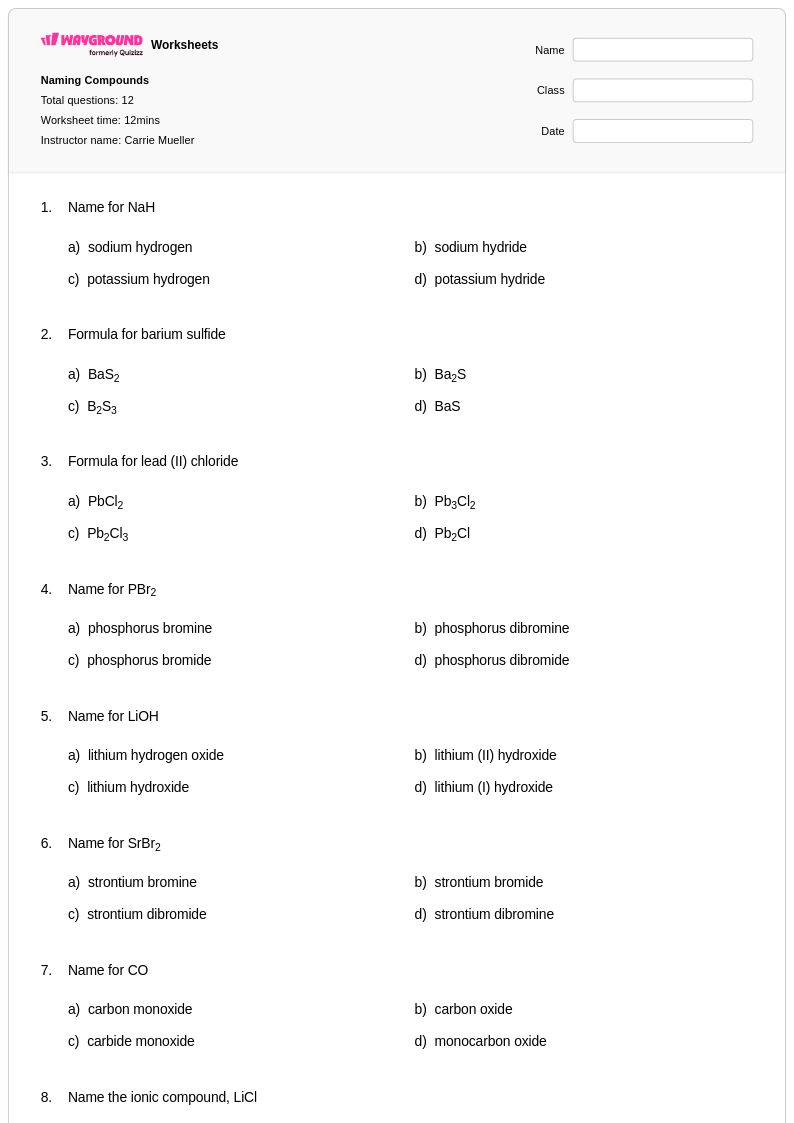
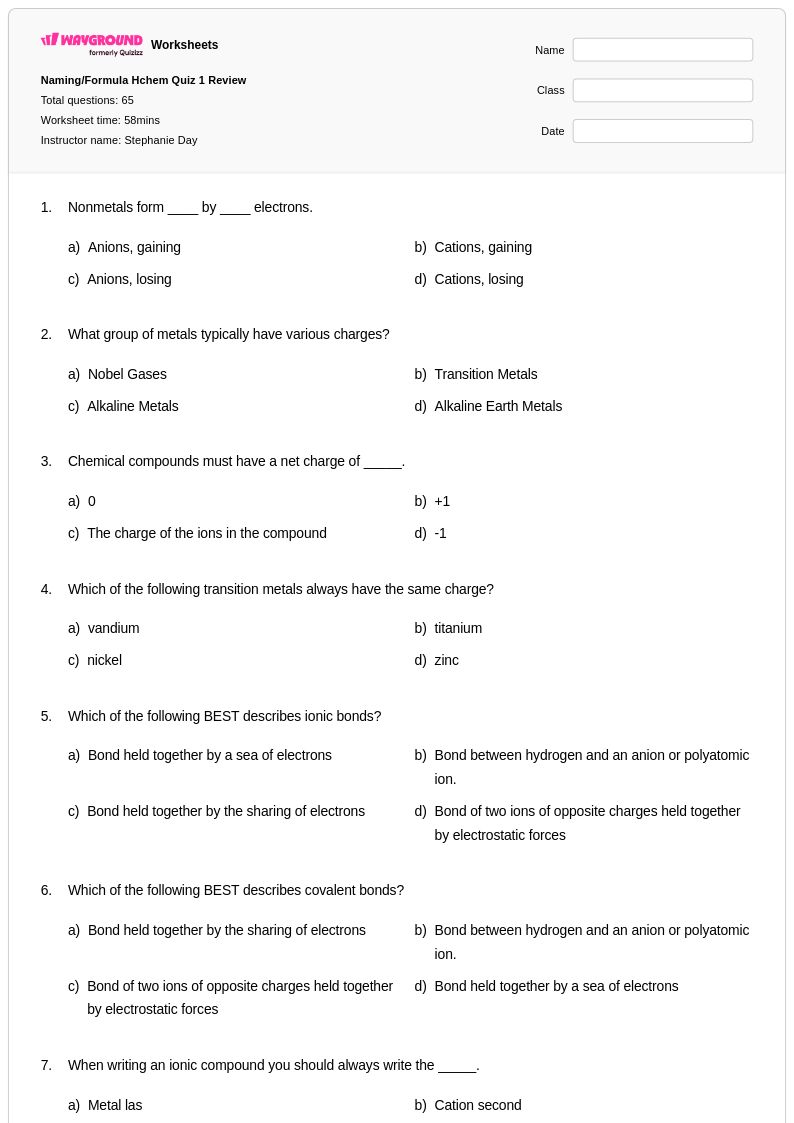
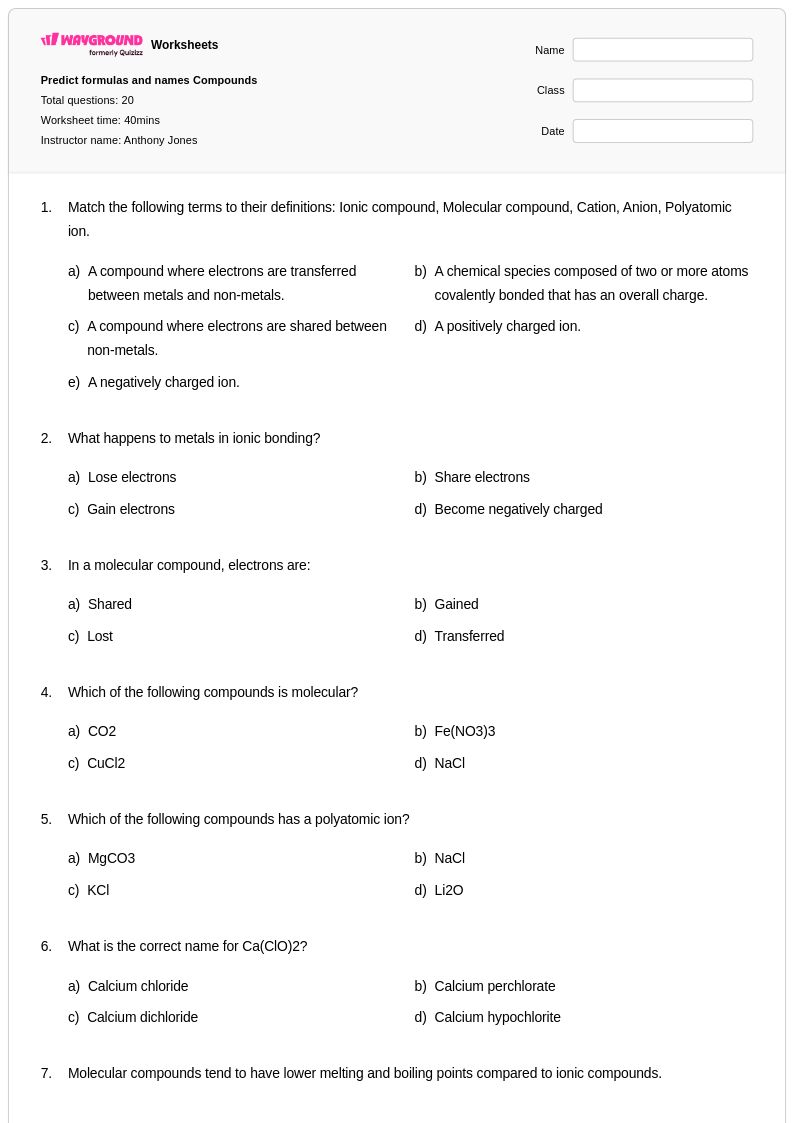
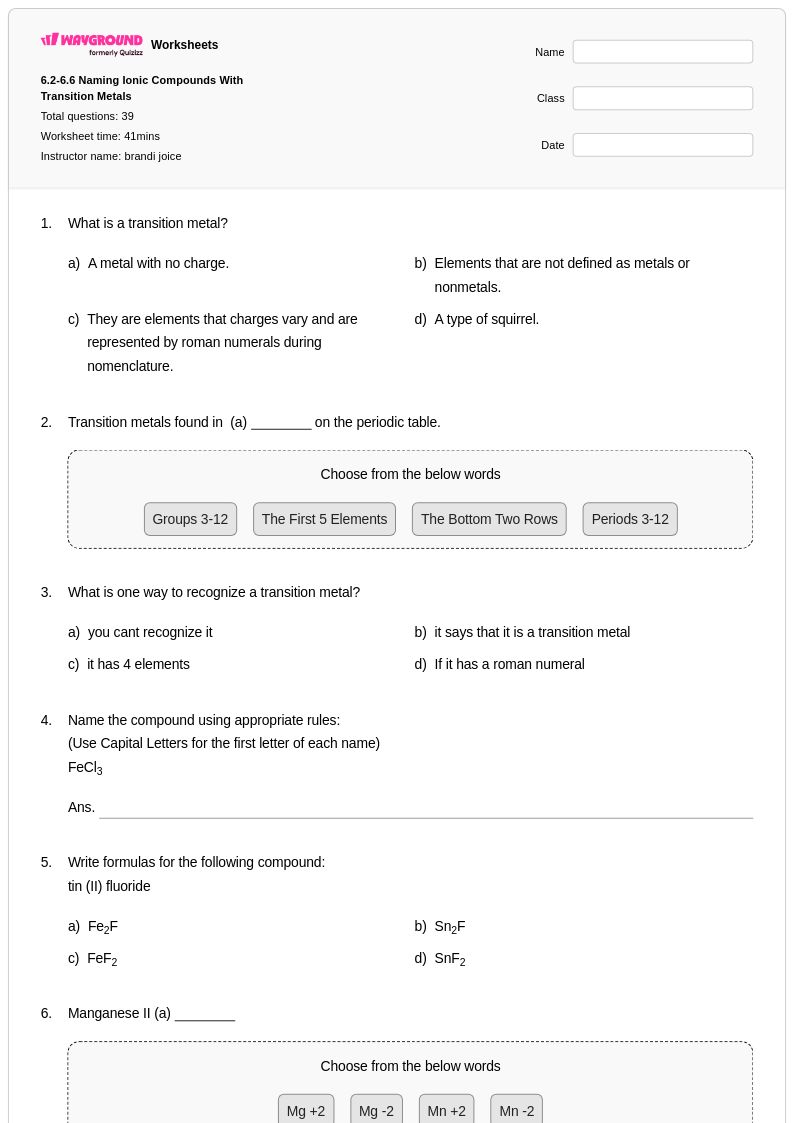
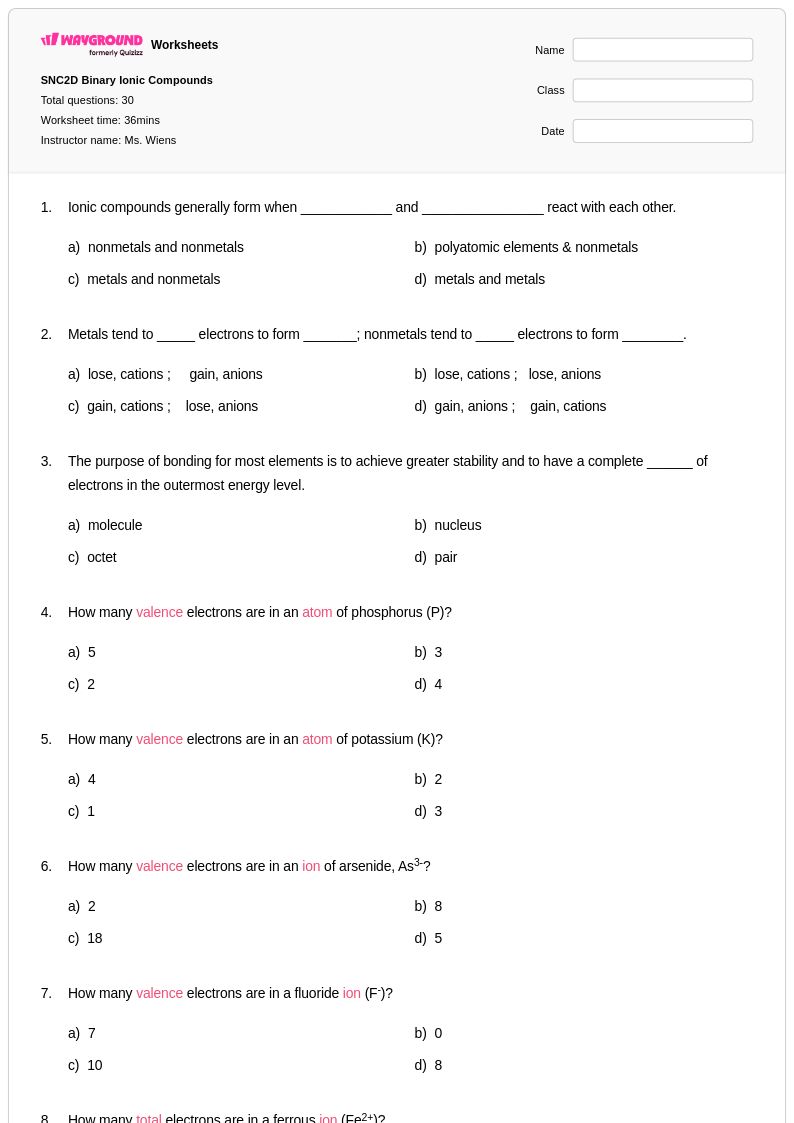
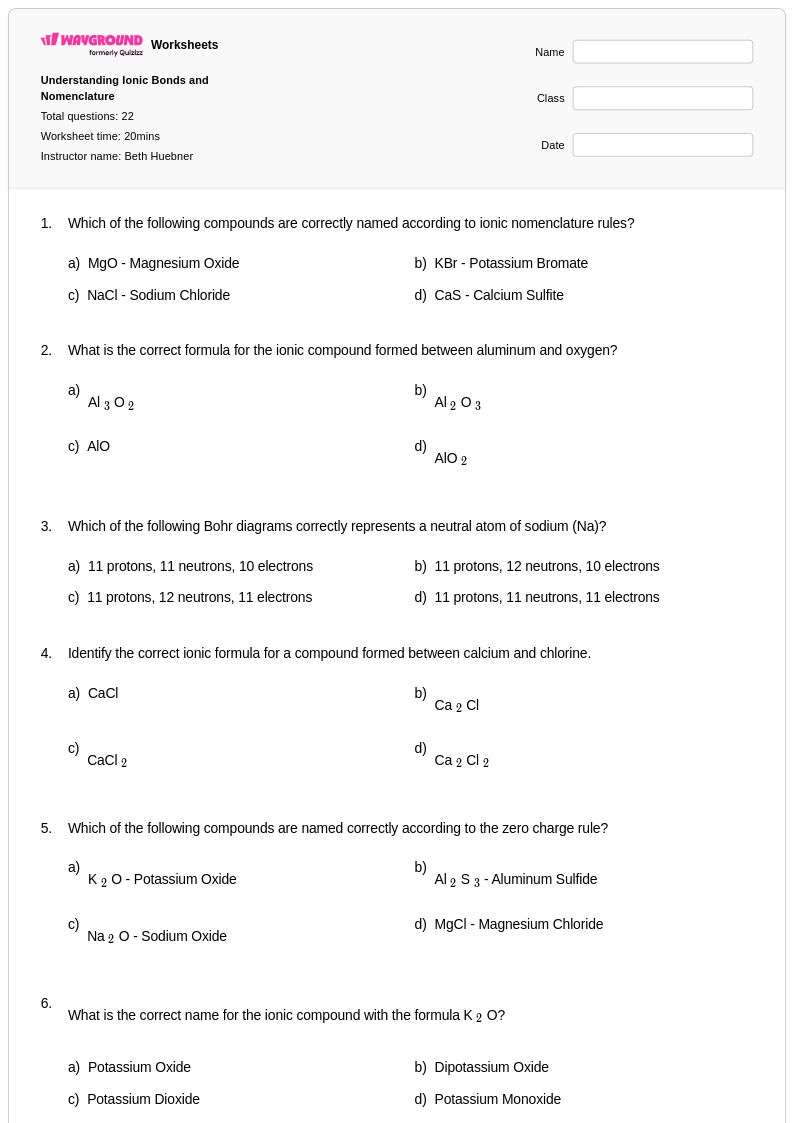
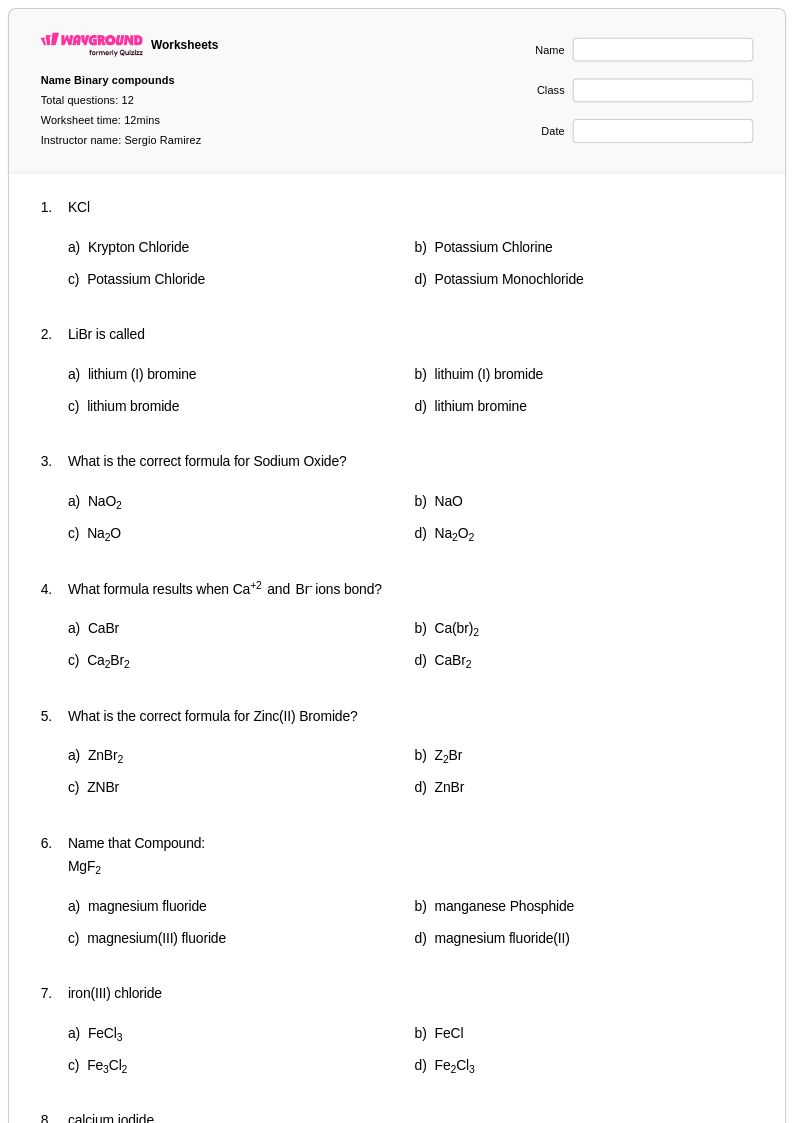
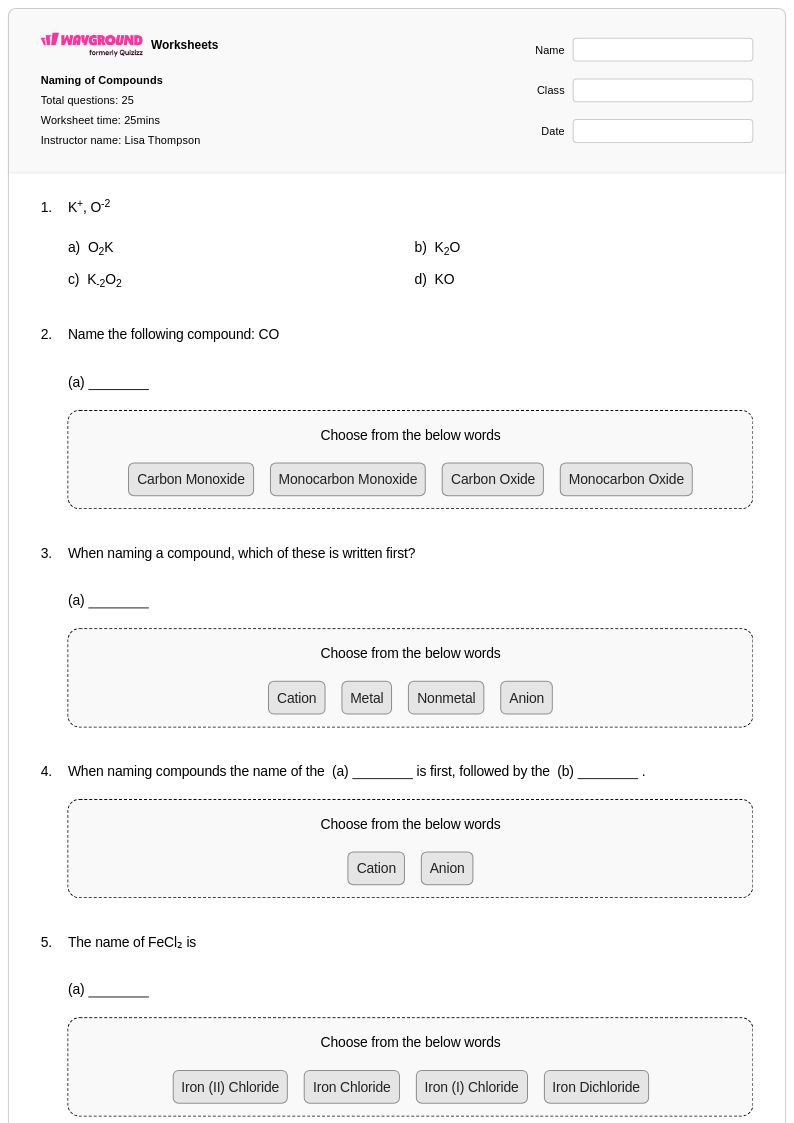
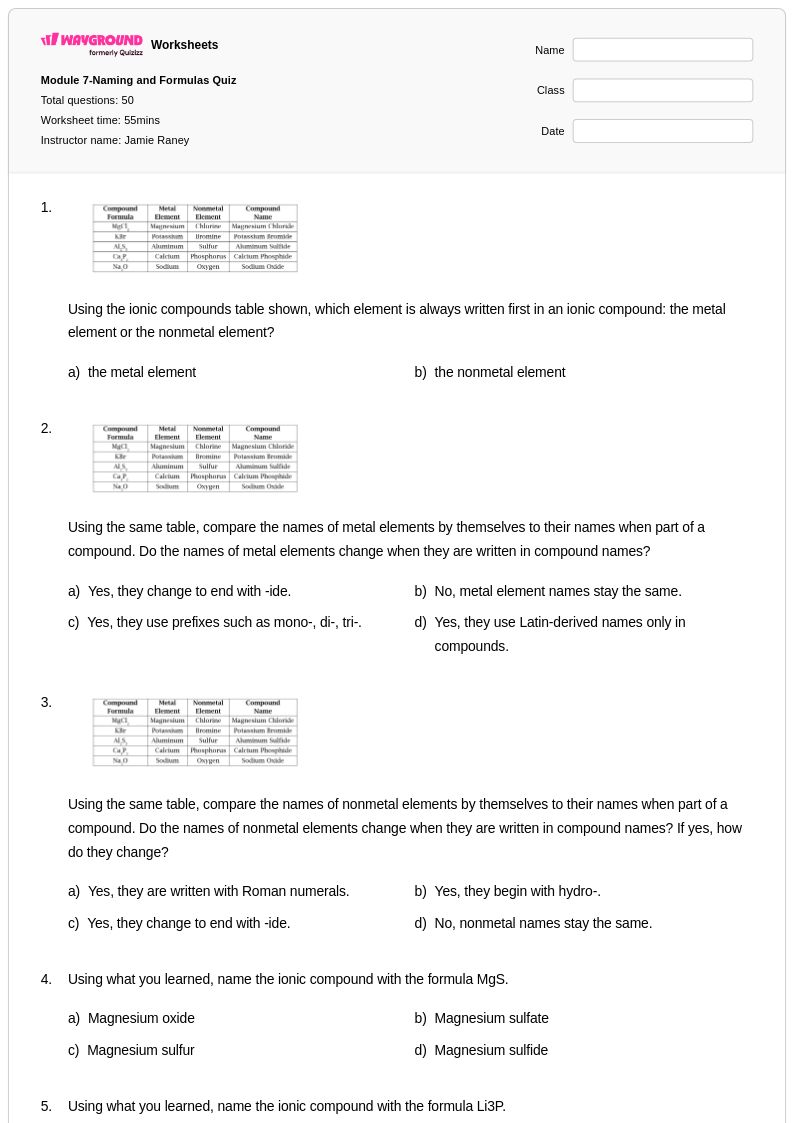
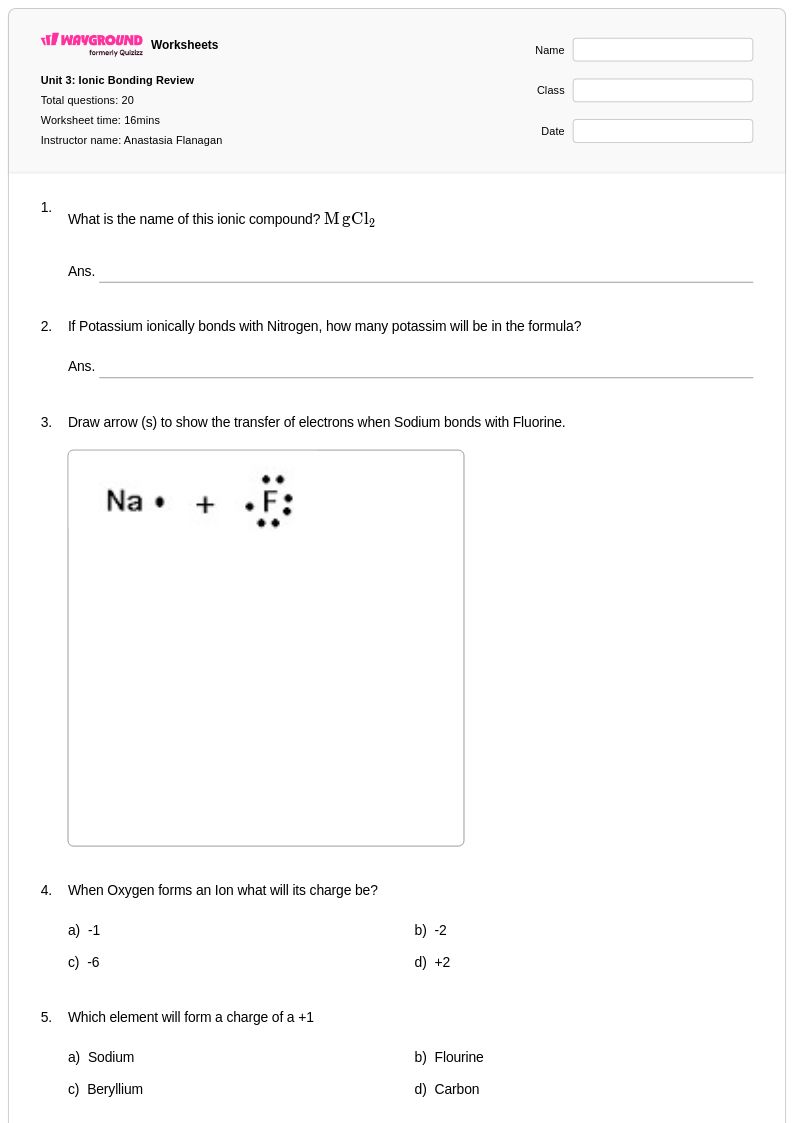
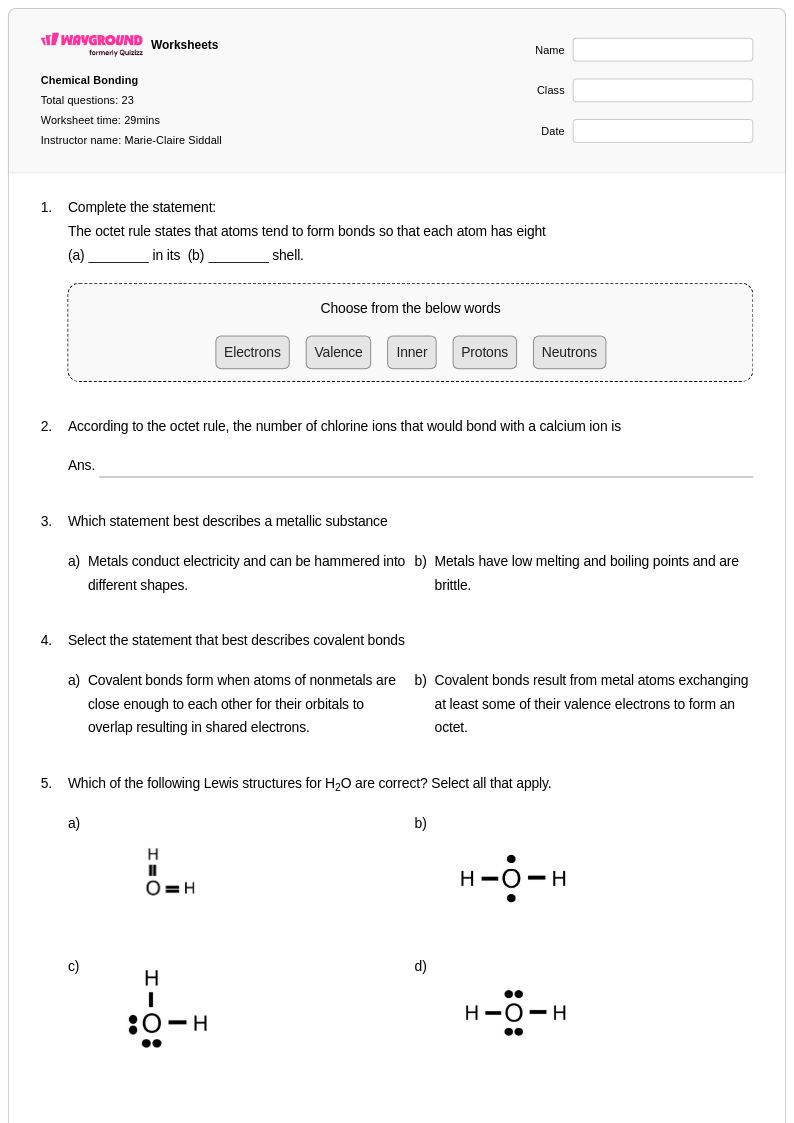
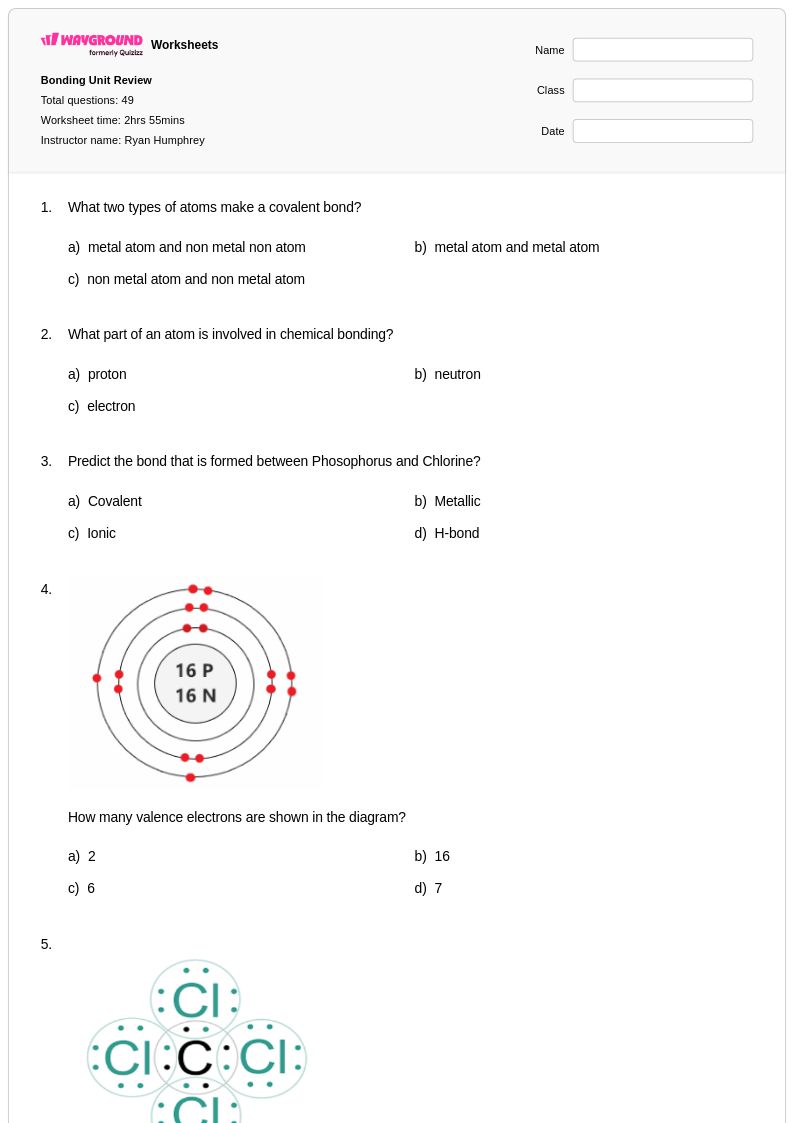
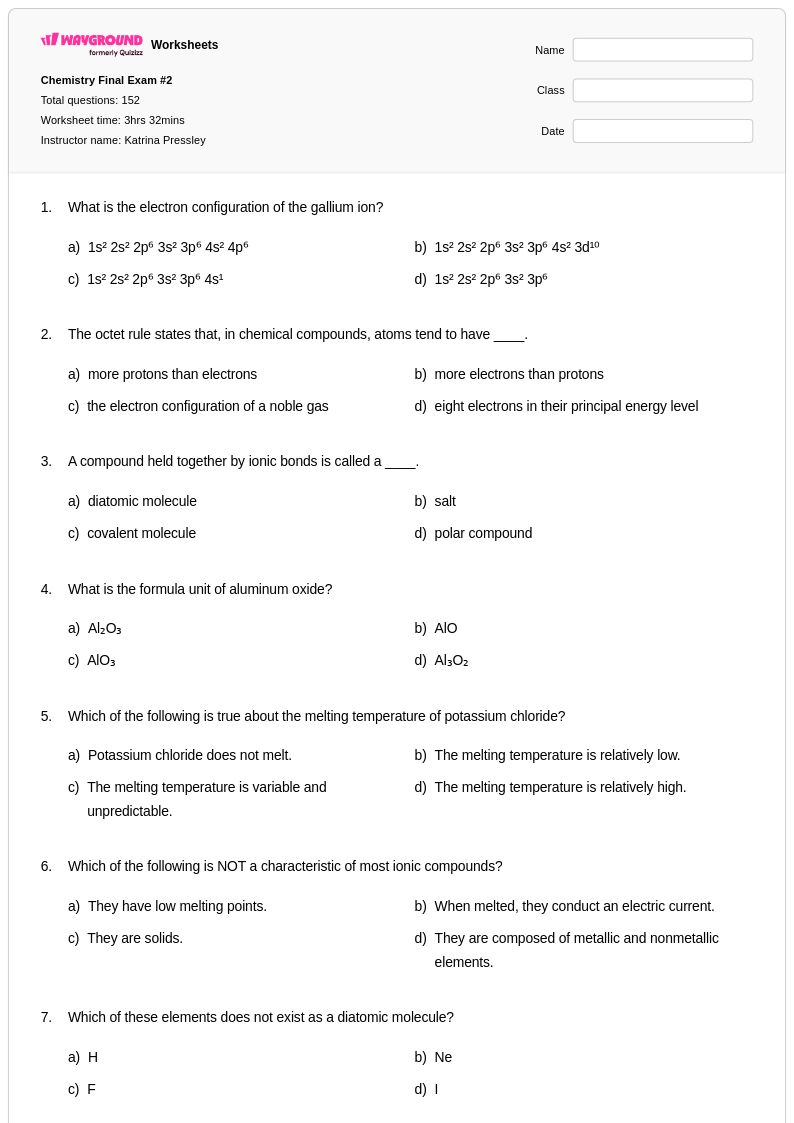
Naming binary ionic compounds represents a fundamental skill in Year 10 chemistry that bridges basic atomic theory with practical chemical communication. Wayground's comprehensive collection of worksheets focuses specifically on this critical subtopic, providing students with systematic practice in applying nomenclature rules for compounds formed between metals and nonmetals. These expertly designed resources strengthen essential skills including identifying ionic charges, recognizing polyatomic ions, and applying proper naming conventions using both common and systematic approaches. Each worksheet collection includes detailed answer keys and is available as free printables in convenient pdf format, ensuring students can work through practice problems independently while receiving immediate feedback on their understanding of ionic compound nomenclature.
Wayground, formerly Quizizz, empowers chemistry teachers with access to millions of teacher-created resources specifically designed for naming binary ionic compounds instruction. The platform's advanced search and filtering capabilities allow educators to quickly locate worksheets that align with specific curriculum standards and match their students' current skill levels. Teachers benefit from robust differentiation tools that enable customization of content difficulty, while the flexible format options include both printable pdf versions for traditional classroom use and digital formats for technology-integrated learning environments. These comprehensive features support effective lesson planning by providing ready-to-use materials for initial instruction, targeted remediation for struggling learners, enrichment activities for advanced students, and ongoing skill practice that reinforces proper ionic compound naming techniques throughout the chemistry curriculum.
FAQs
How do I teach students to name binary ionic compounds?
Start by establishing a clear two-step framework: identify the cation (metal) first, then name the anion (nonmetal) with an '-ide' suffix. Use a consistent visual organizer that separates the compound into its two ions before students attempt naming. Introduce monatomic ions before moving to polyatomic ions, and always connect nomenclature back to the periodic table so students understand why names follow the patterns they do.
What exercises help students practice naming binary ionic compounds?
Effective practice includes two-directional drills where students both name a given formula and write a formula from a given name, reinforcing the relationship between the two skills. Sorting activities that group compounds by ion type help students recognize patterns before they practice nomenclature in isolation. Progressively harder problem sets, starting with simple monatomic pairs like NaCl and advancing to compounds with transition metals requiring Roman numerals, build confidence systematically.
What mistakes do students commonly make when naming binary ionic compounds?
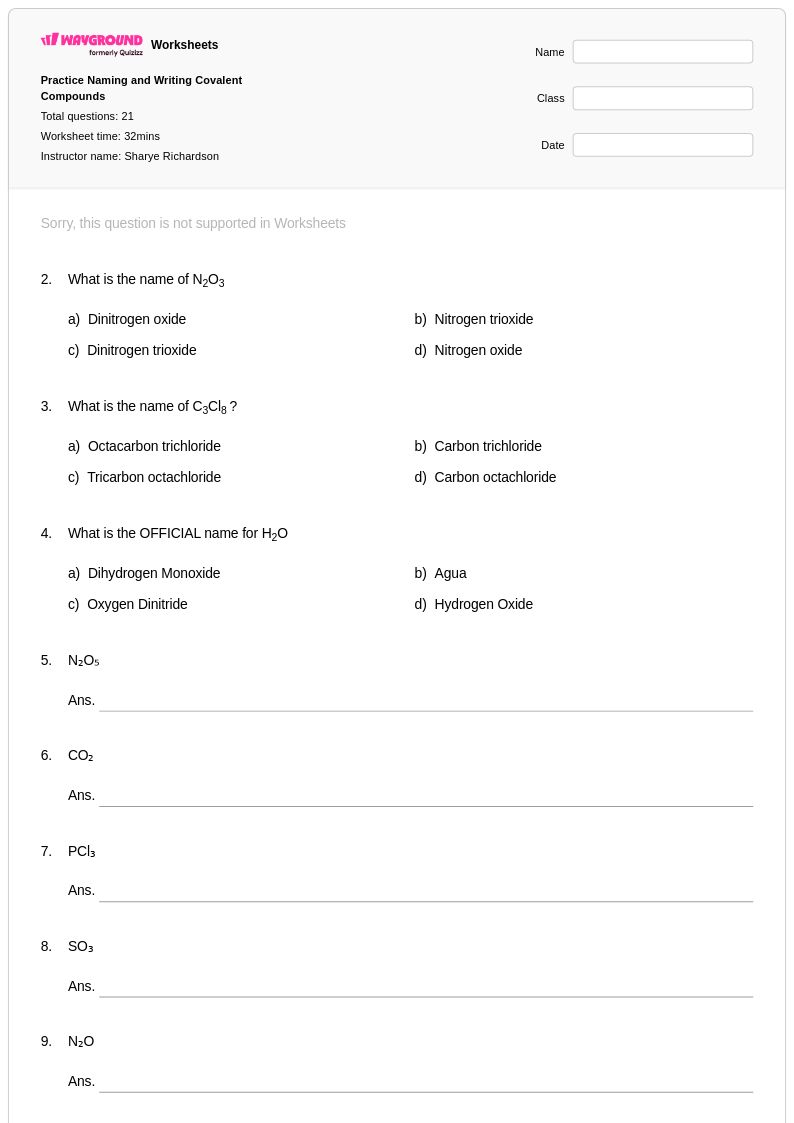
The most frequent error is applying the '-ide' suffix to the cation instead of the anion, which reveals a weak understanding of ion roles. Students also routinely forget to include Roman numerals for transition metals with variable charges, naming FeCl2 and FeCl3 identically. A third common misconception is confusing binary ionic compounds with binary molecular compounds, leading students to incorrectly use prefixes like 'di-' or 'tri-' when naming ionic substances.
How do I use Wayground's naming binary ionic compounds worksheets in my class?
Wayground's naming binary ionic compounds worksheets are available as printable PDFs for traditional classroom use and in digital formats for technology-integrated instruction, including the option to host them as a quiz directly on Wayground. Each worksheet includes an integrated answer key, making them equally effective for teacher-led practice, independent student work, or self-paced review. The variety of problem formats allows teachers to assign specific sheets based on where students are in the learning progression, from basic monatomic naming through more complex polyatomic combinations.
How do I differentiate naming binary ionic compounds instruction for students at different levels?
For struggling learners, limit initial practice to compounds formed by main-group metals with fixed charges before introducing transition metals, and provide ion reference charts as a scaffold. Advanced students can be challenged with reverse-engineering tasks, writing formulas from names and balancing charges without assistance. On Wayground, teachers can apply accommodations such as reduced answer choices for students who need support, and read-aloud functionality for students with reading-related needs, all configurable per individual student without disrupting the rest of the class.
How do I assess whether students have mastered binary ionic compound nomenclature?
A reliable mastery check includes a mixed set of items where students must name compounds from formulas, write formulas from names, and identify errors in incorrectly named compounds. Including at least two or three transition metal compounds in any assessment reveals whether students have internalized the Roman numeral convention. If students can self-correct a purposely mislabeled compound and explain why it is wrong, that is a strong indicator of genuine conceptual understanding rather than rote memorization.