
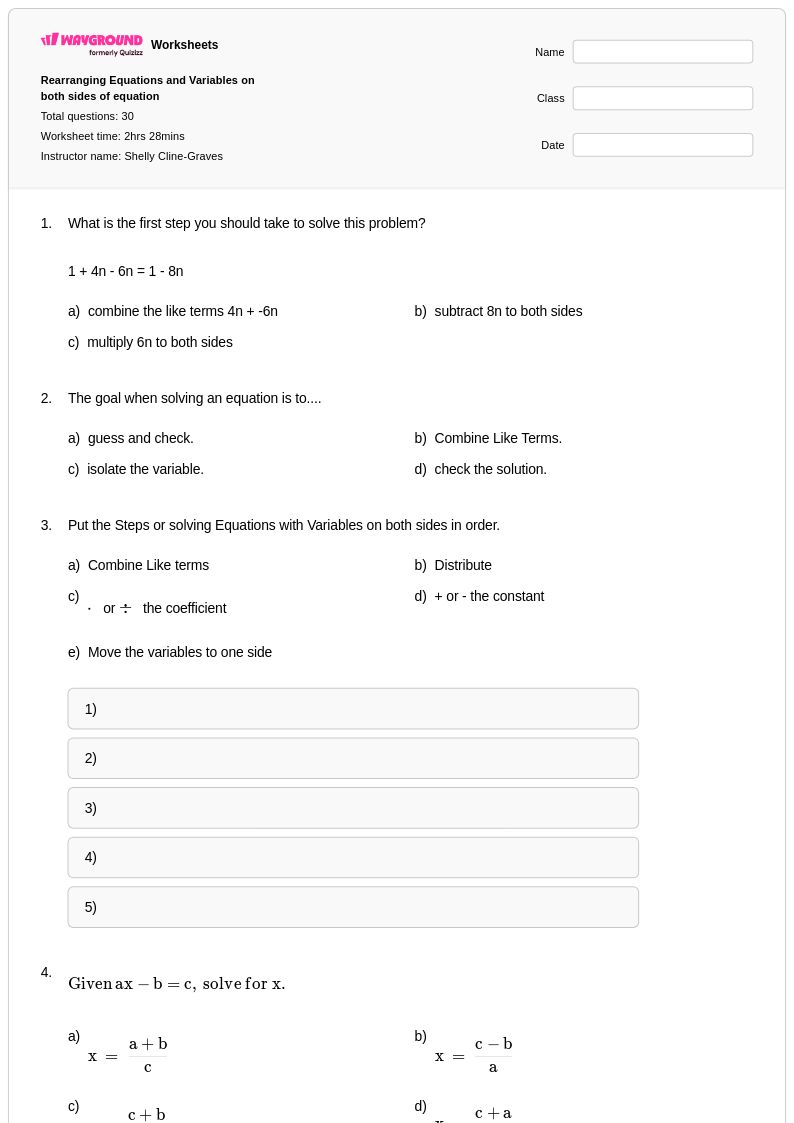
30 Q
9th
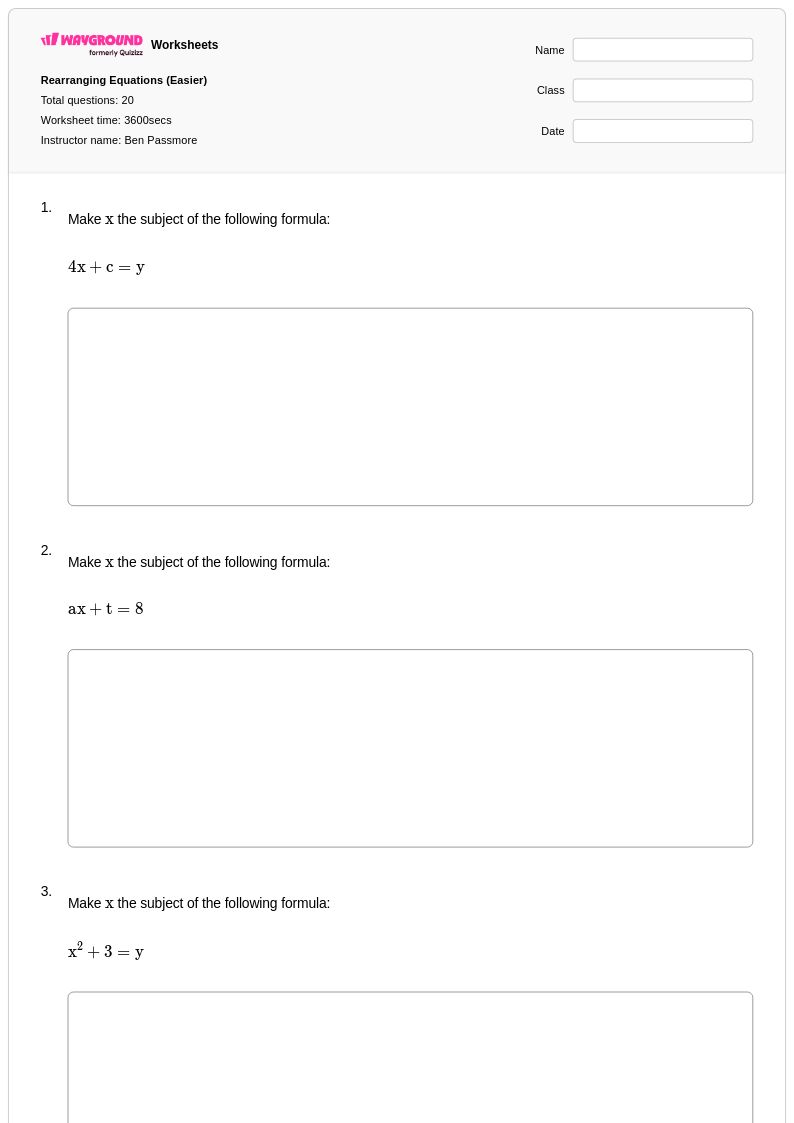
20 Q
6th - 8th
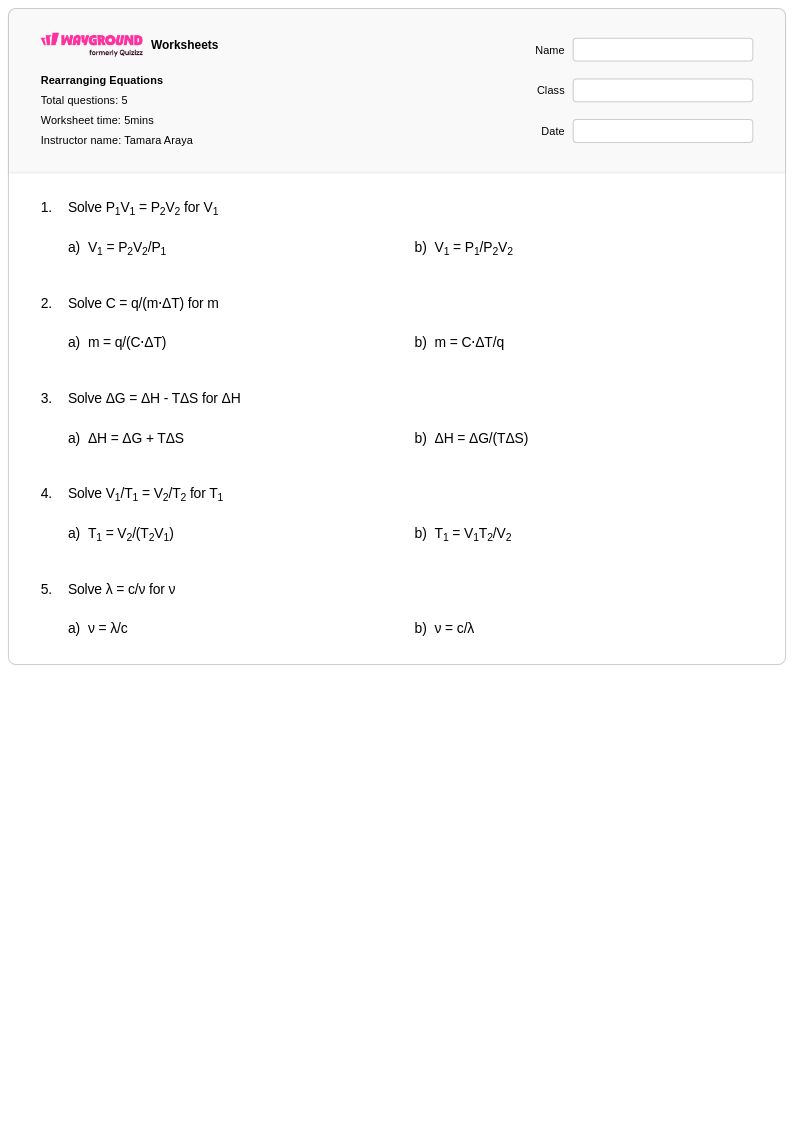
5 Q
9th - 12th
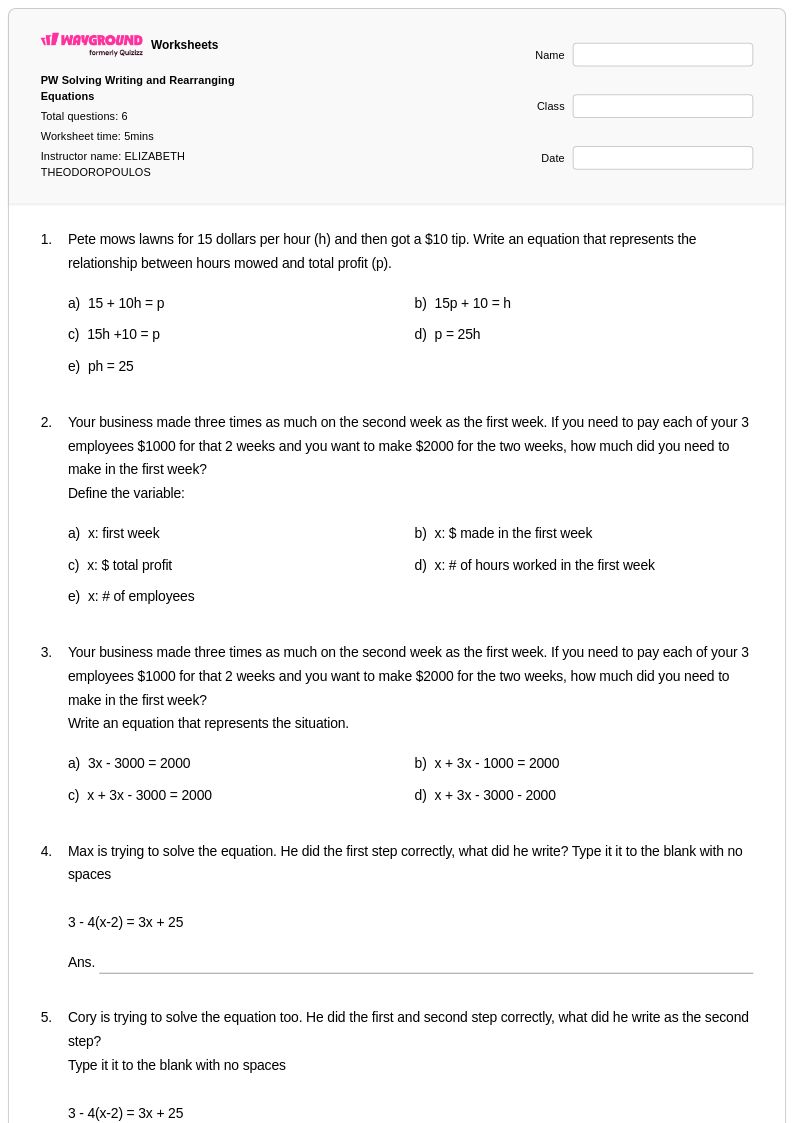
6 Q
11th
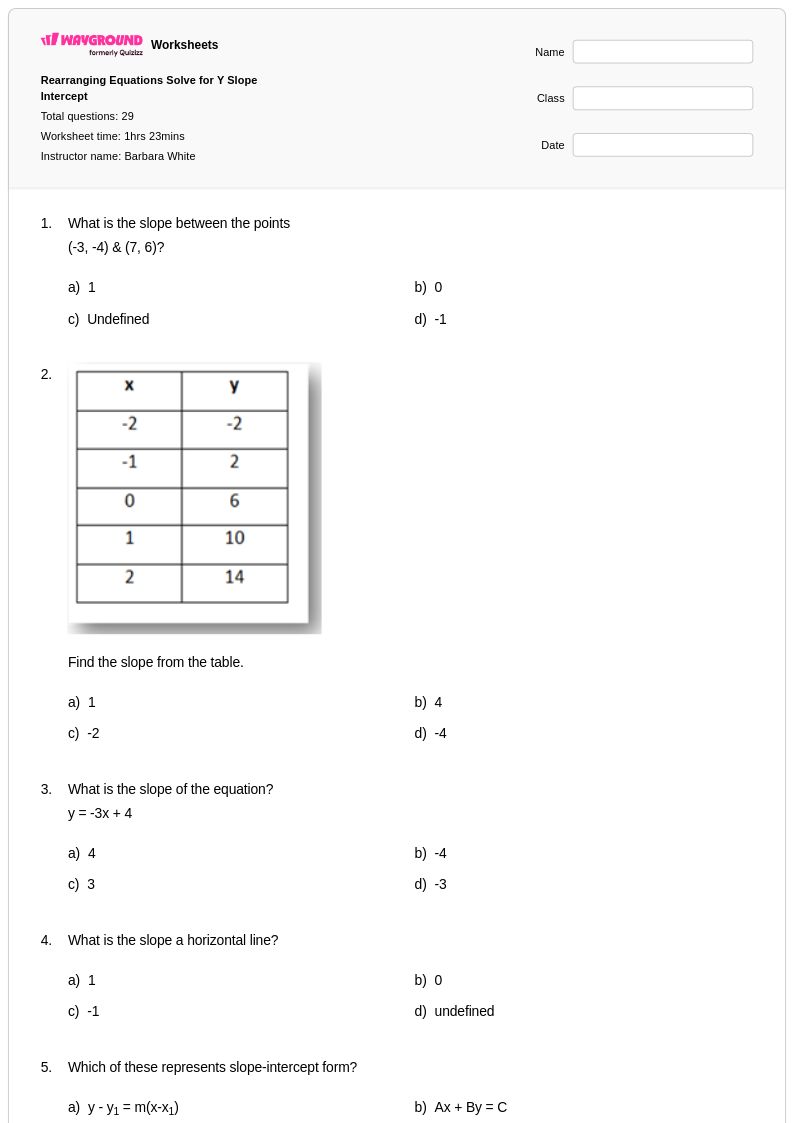
29 Q
8th
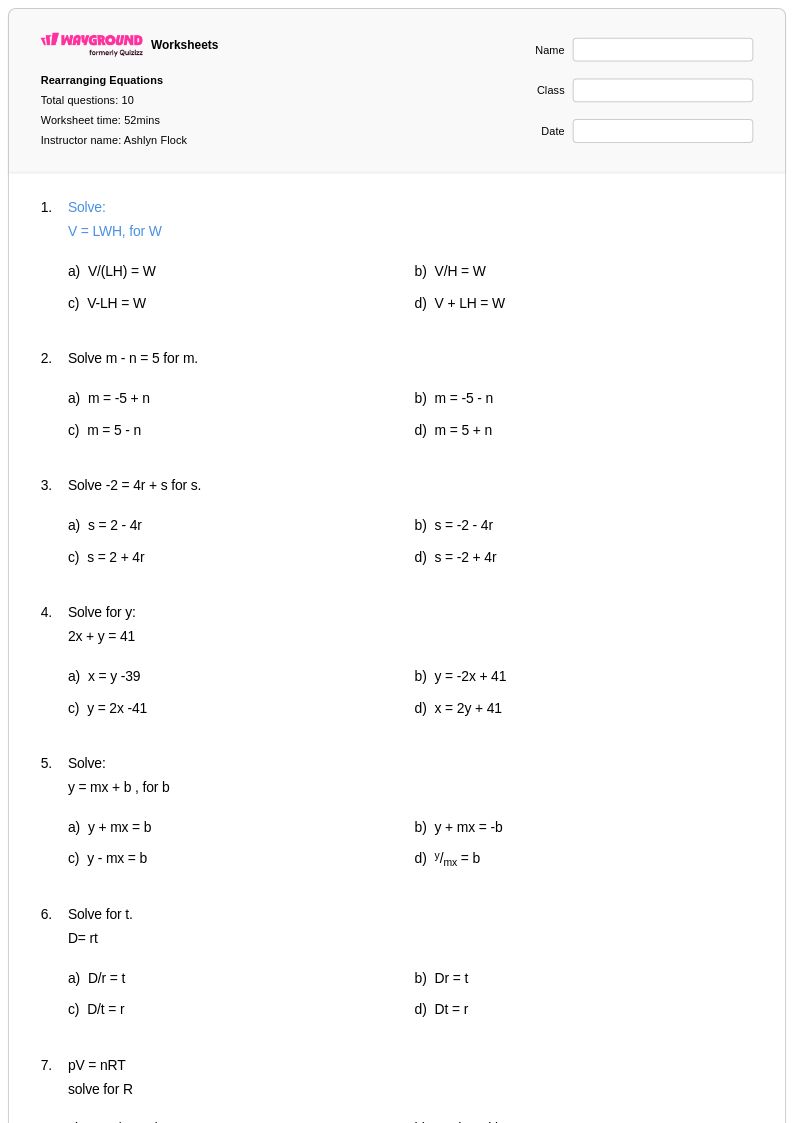
10 Q
8th
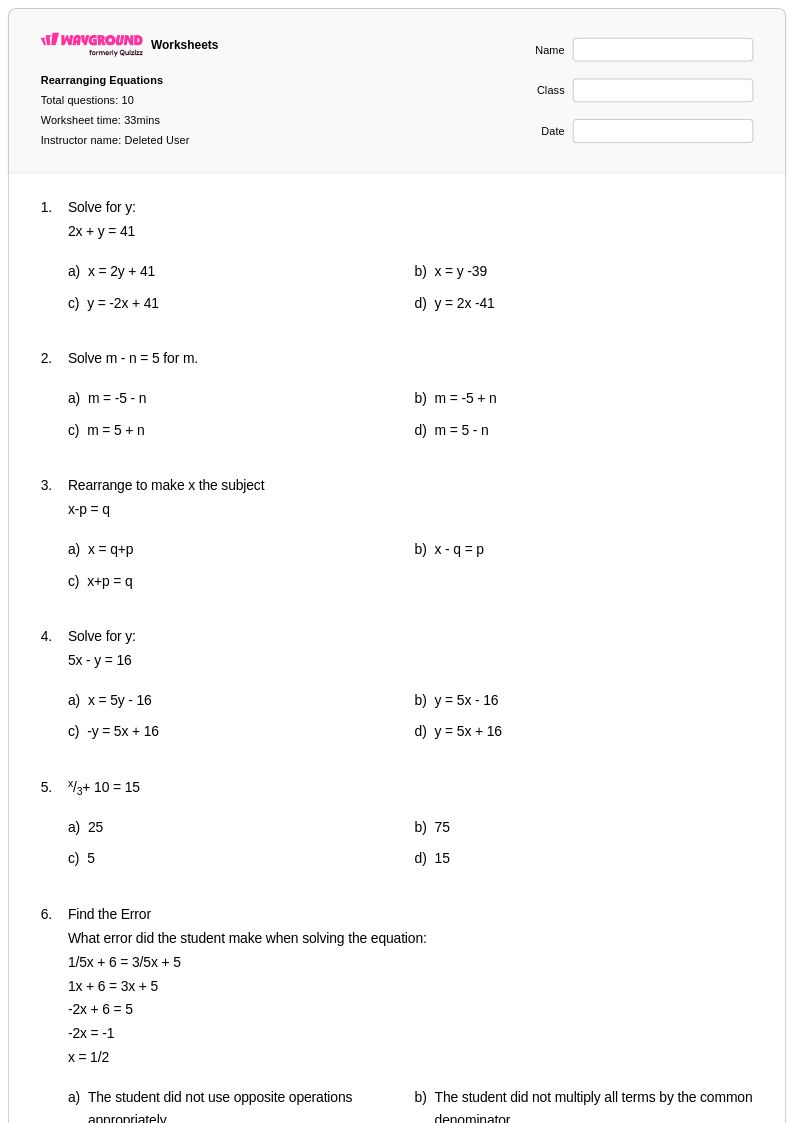
10 Q
1st
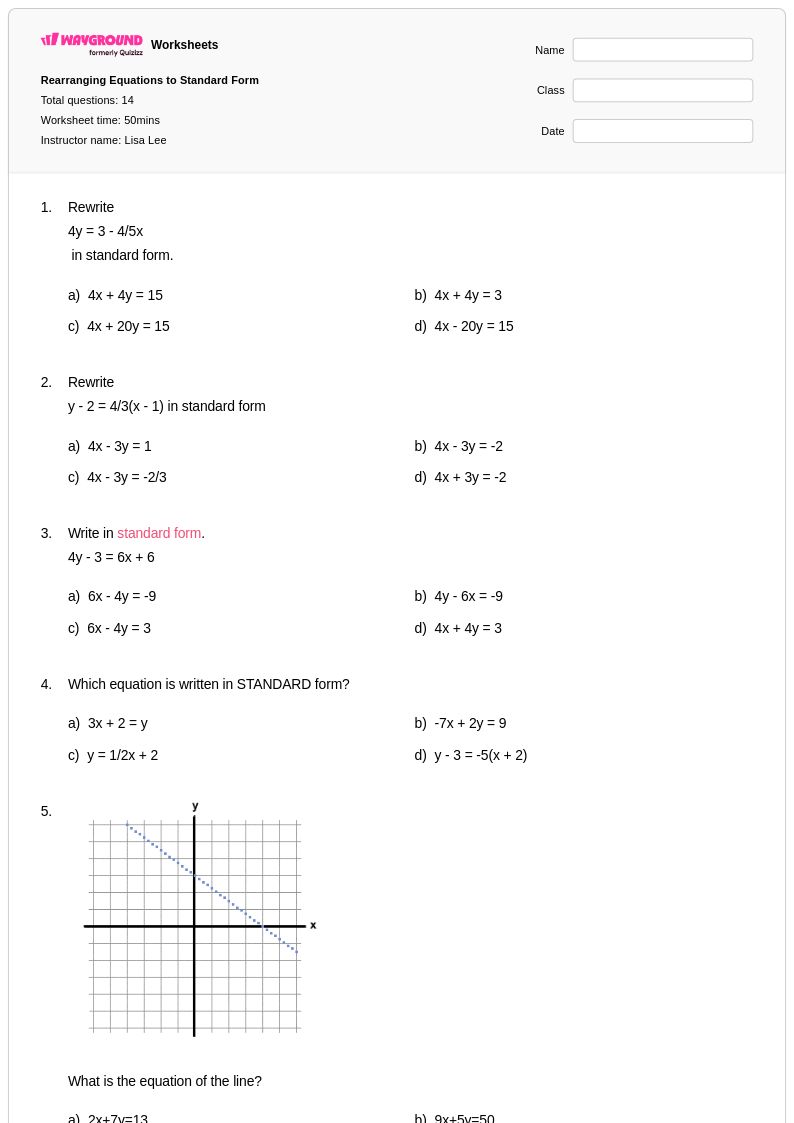
14 Q
7th - 9th
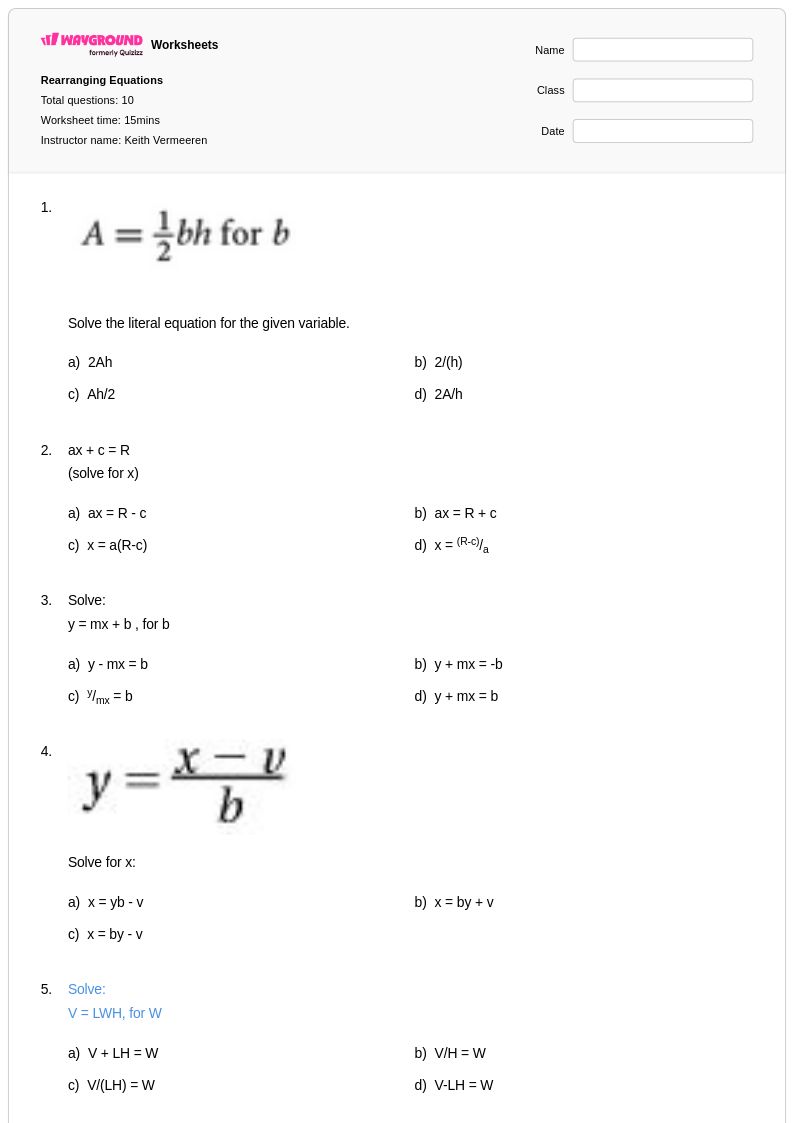
10 Q
9th - 12th
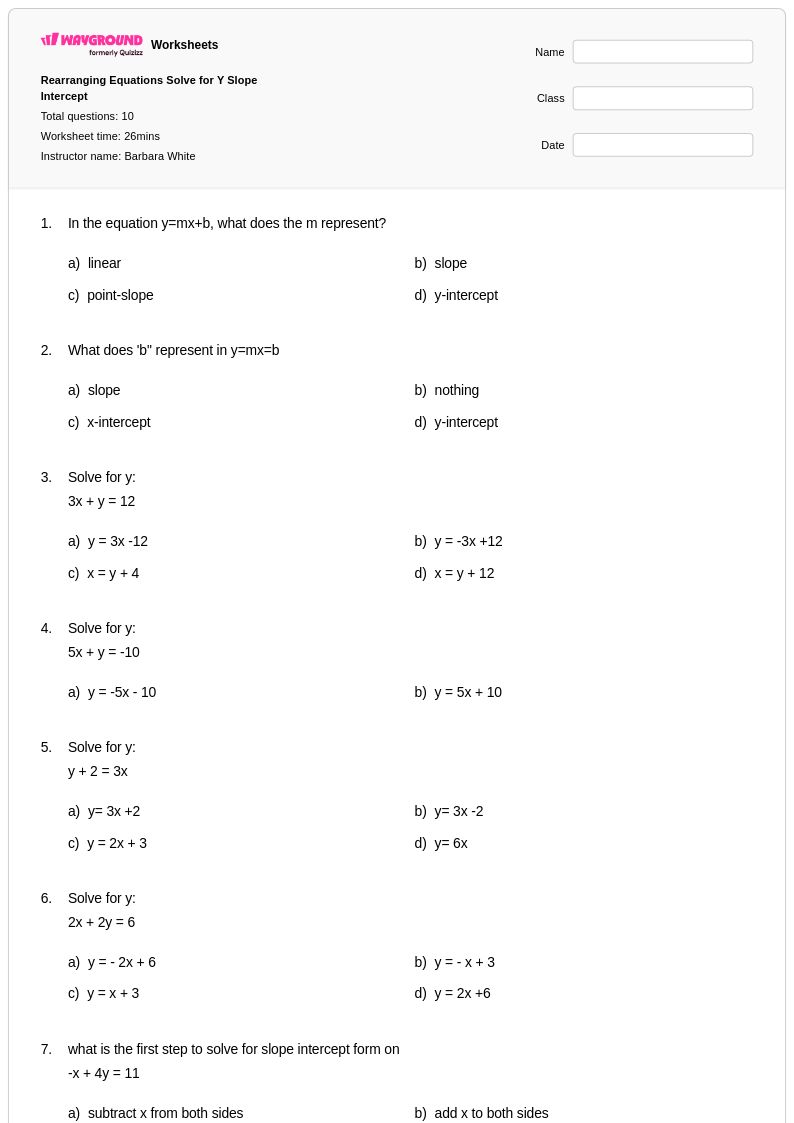
10 Q
9th - 11th
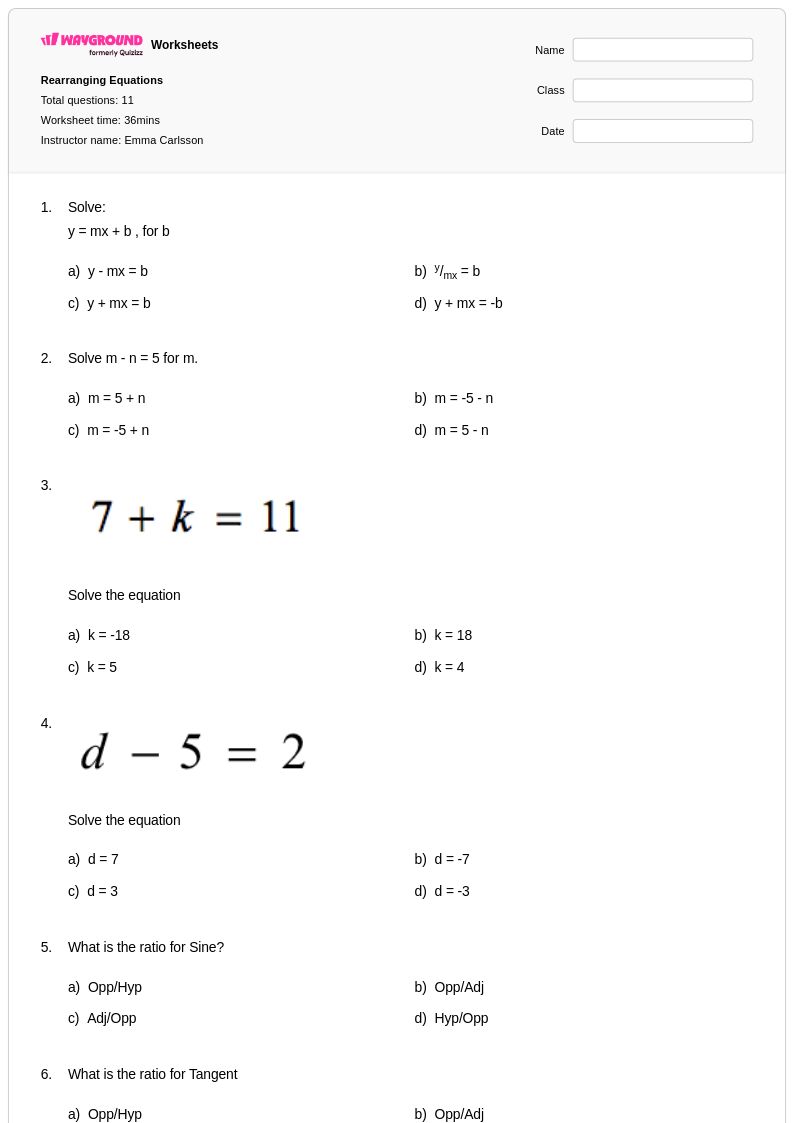
11 Q
9th
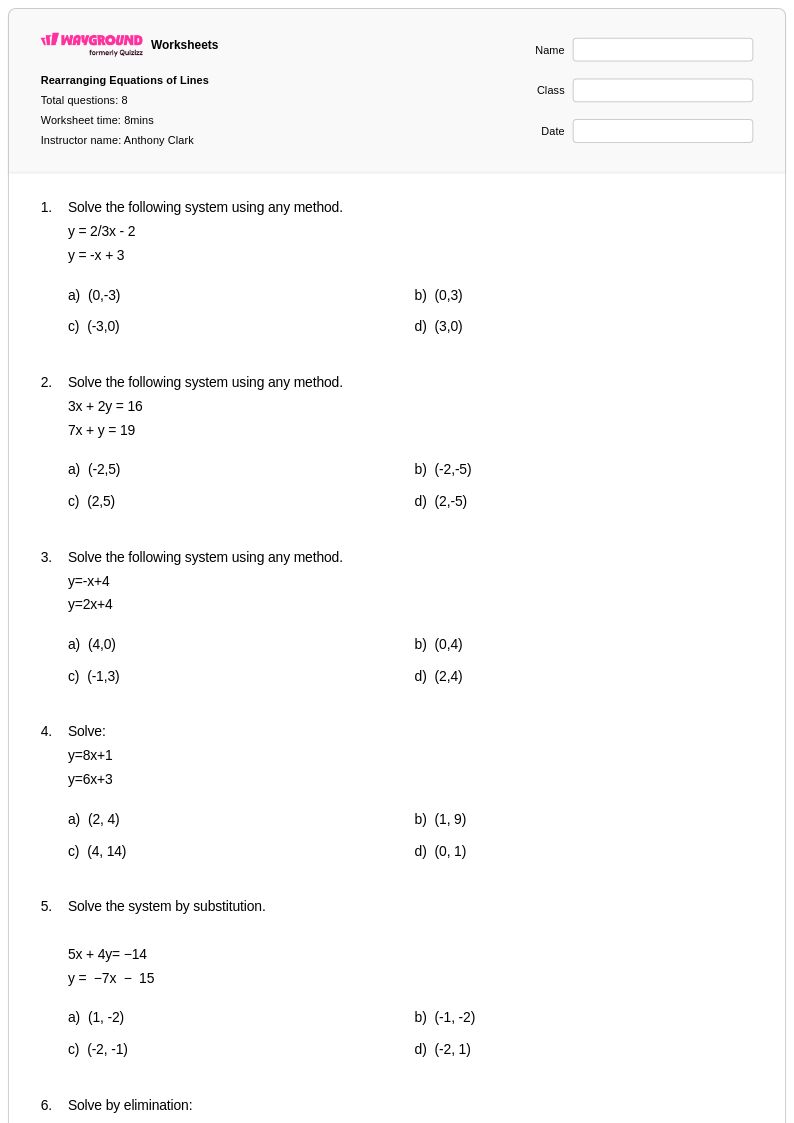
8 Q
9th - Uni
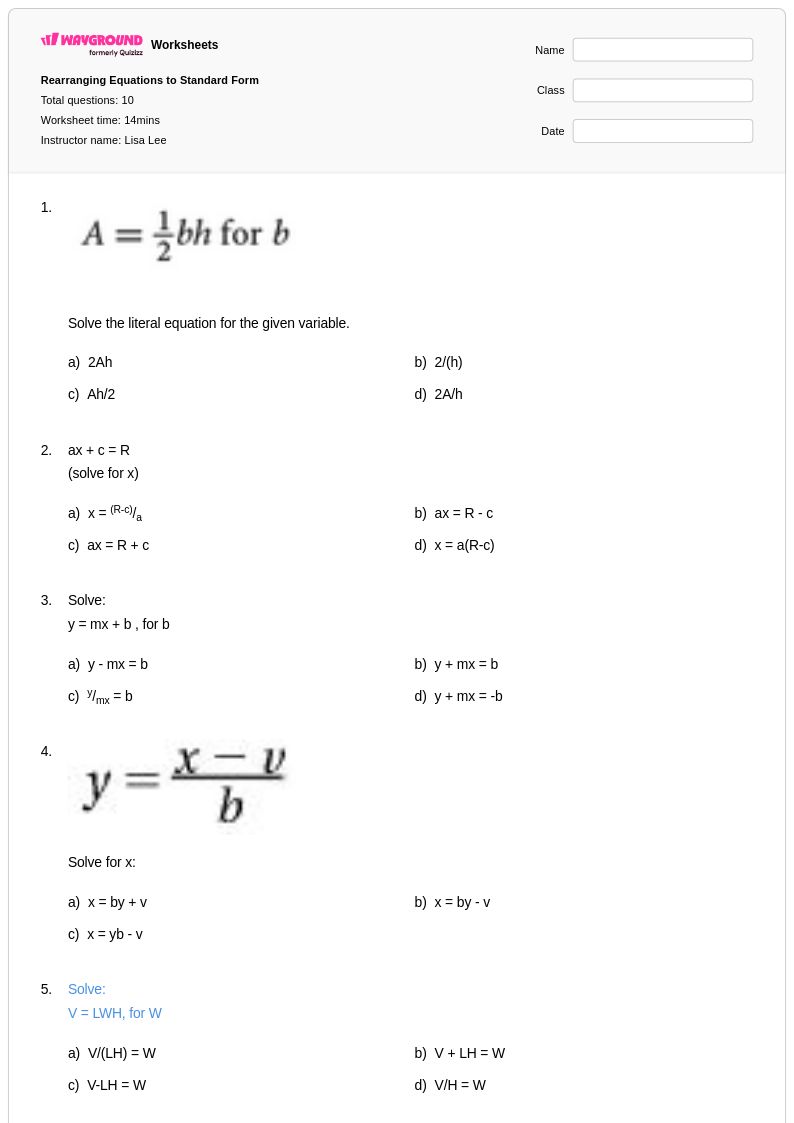
10 Q
9th - 12th
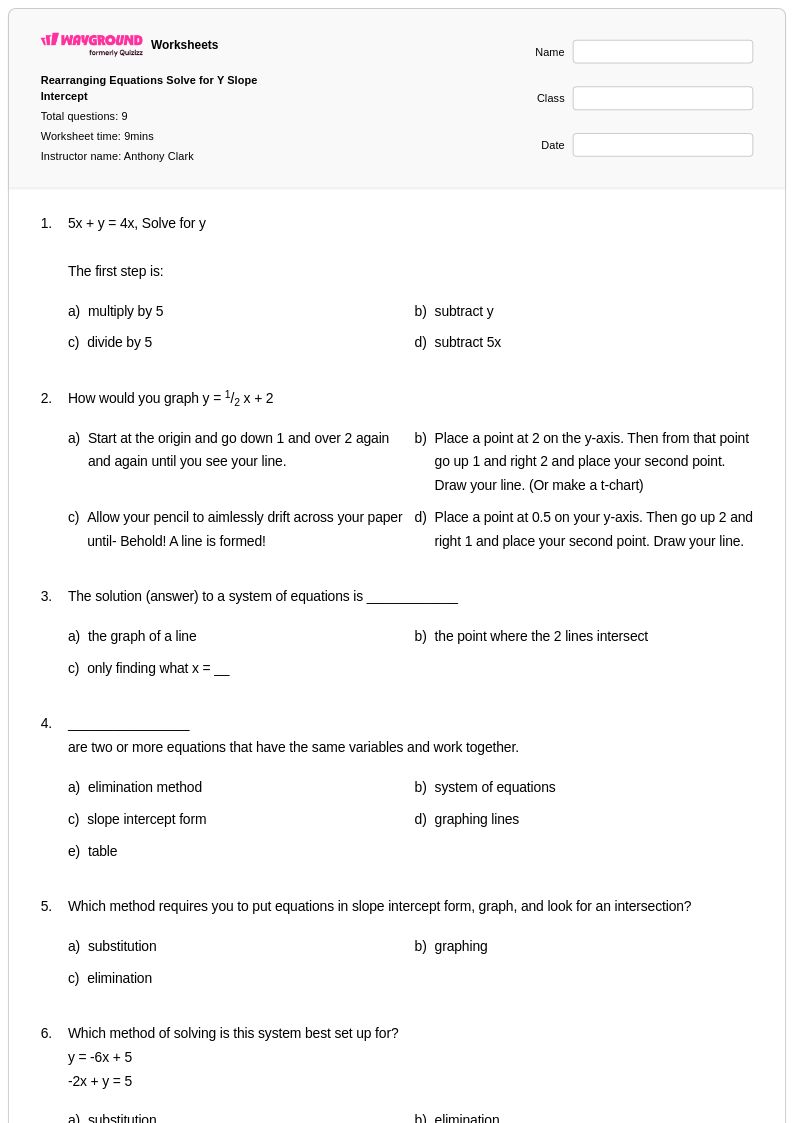
9 Q
9th - Uni
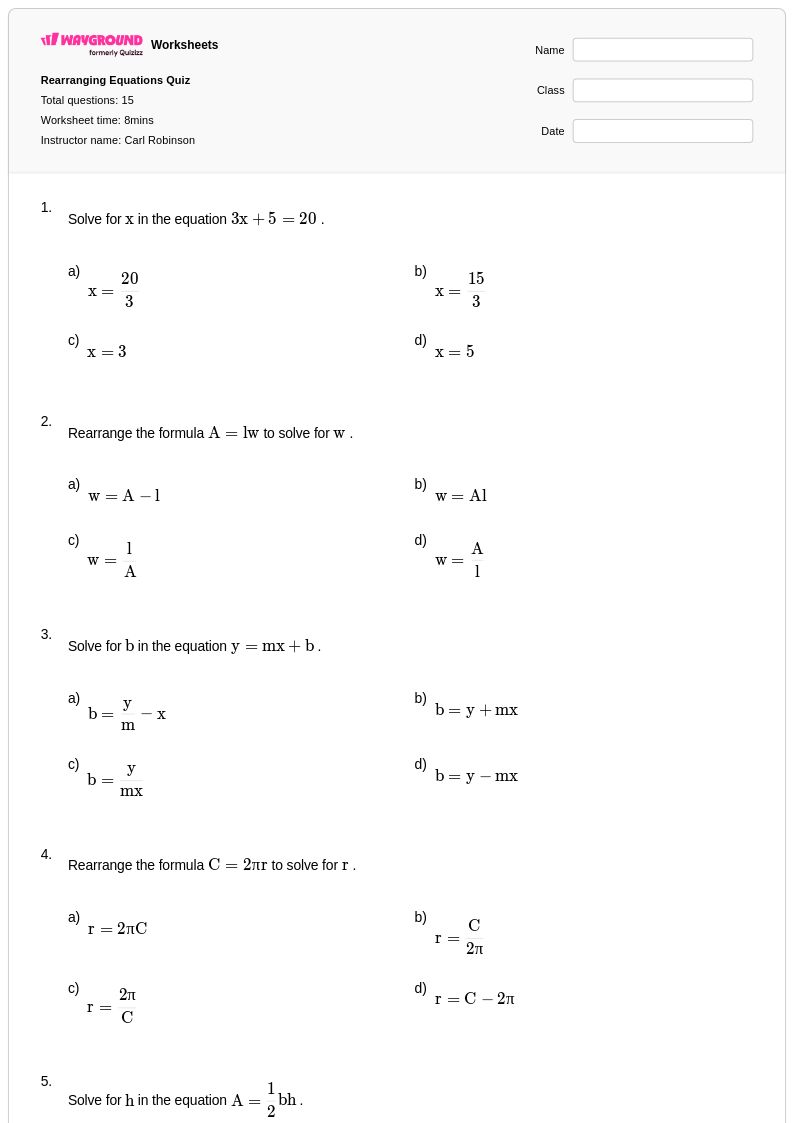
15 Q
9th
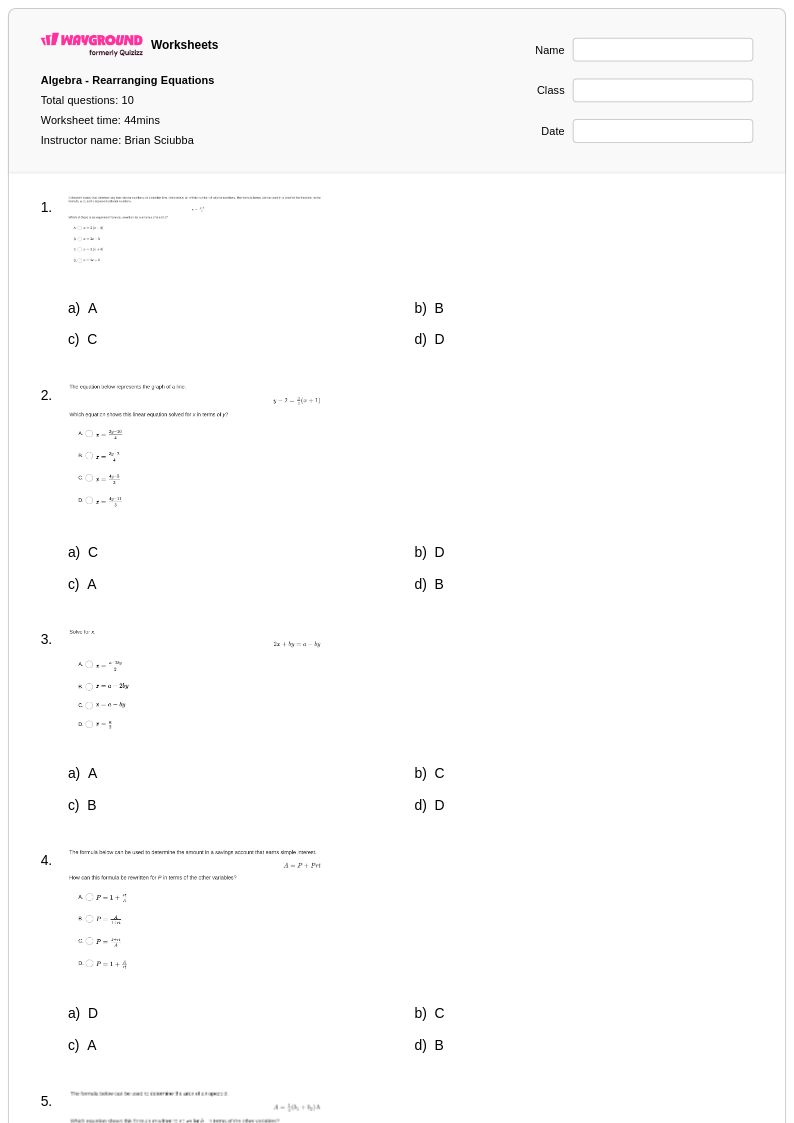
10 Q
9th
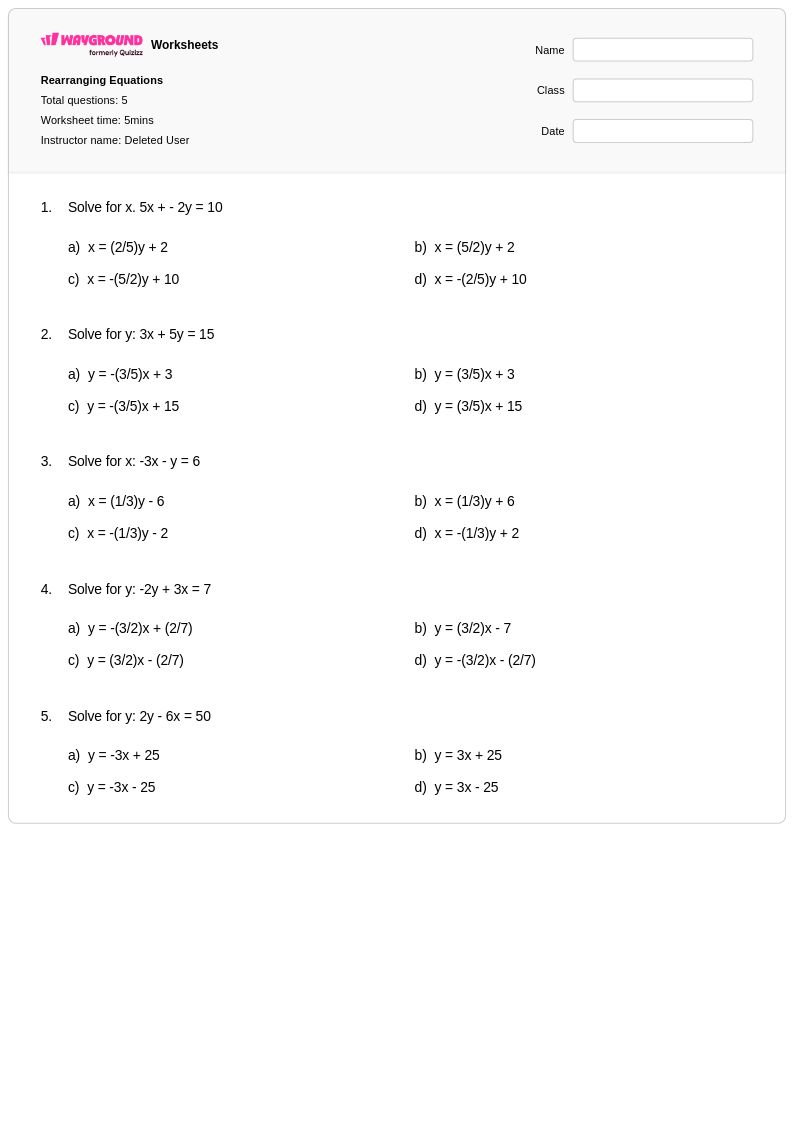
5 Q
8th
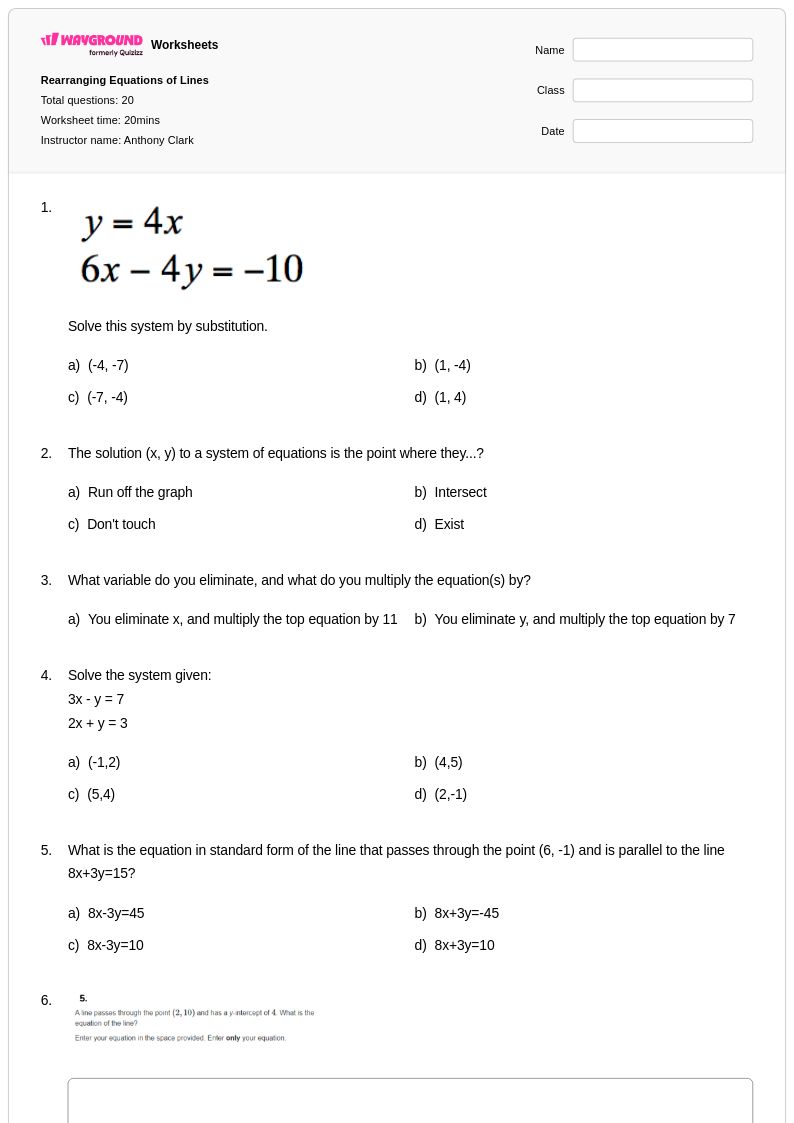
20 Q
9th - Uni
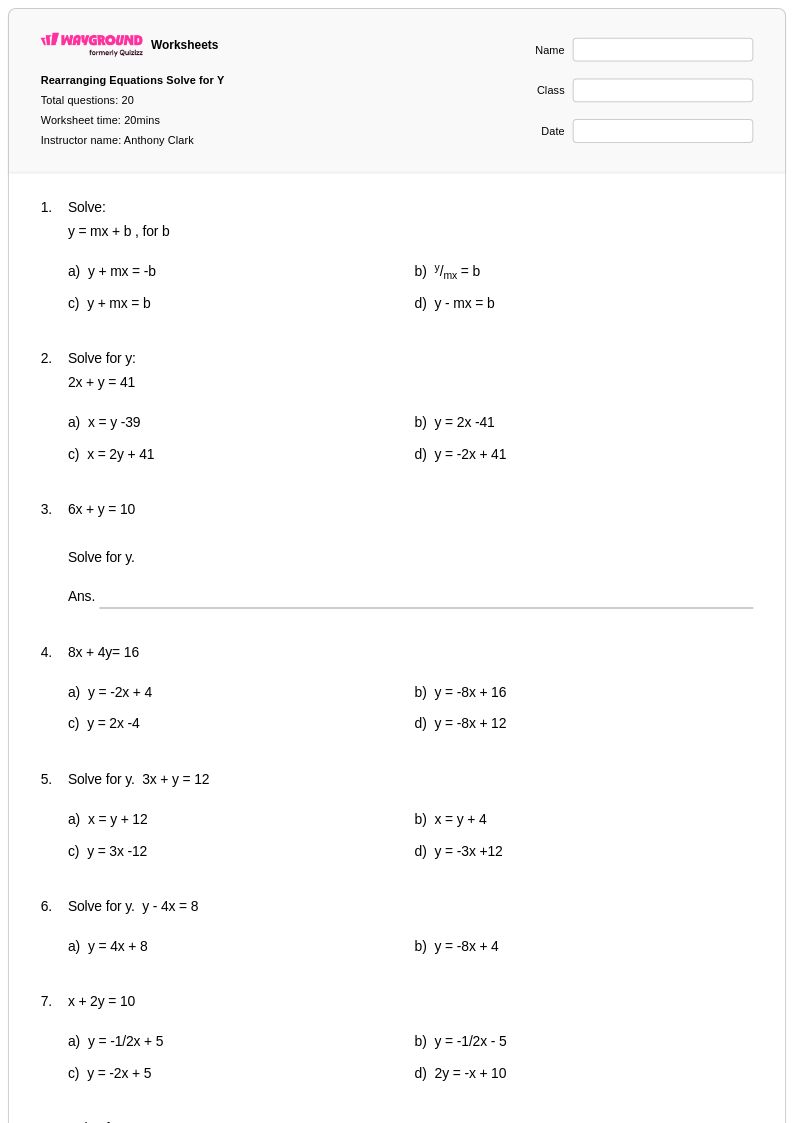
20 Q
9th - Uni
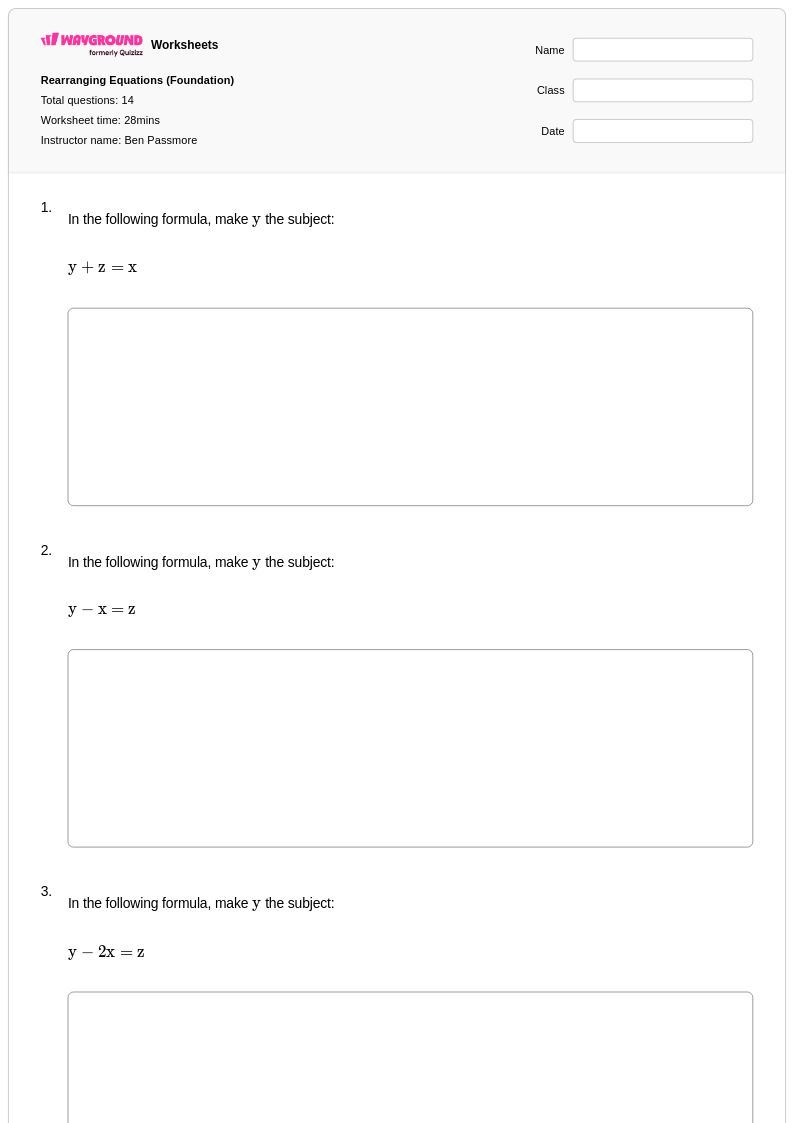
14 Q
6th
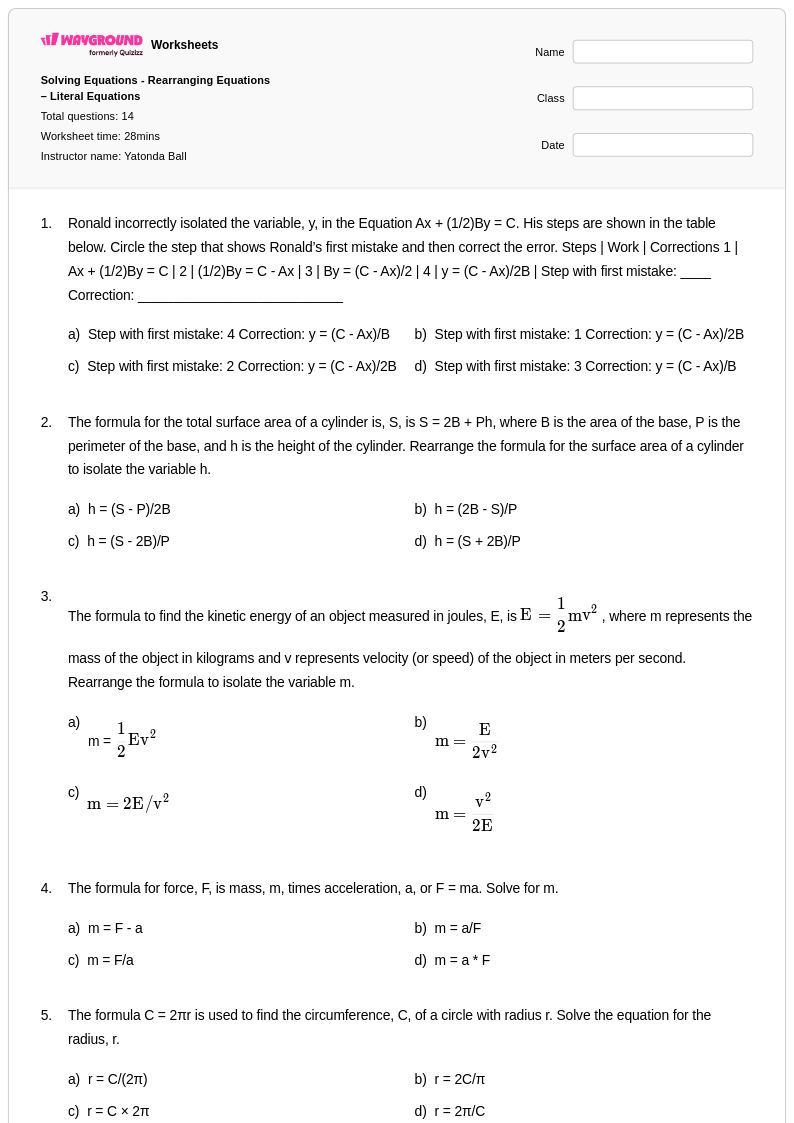
14 Q
4th - Uni
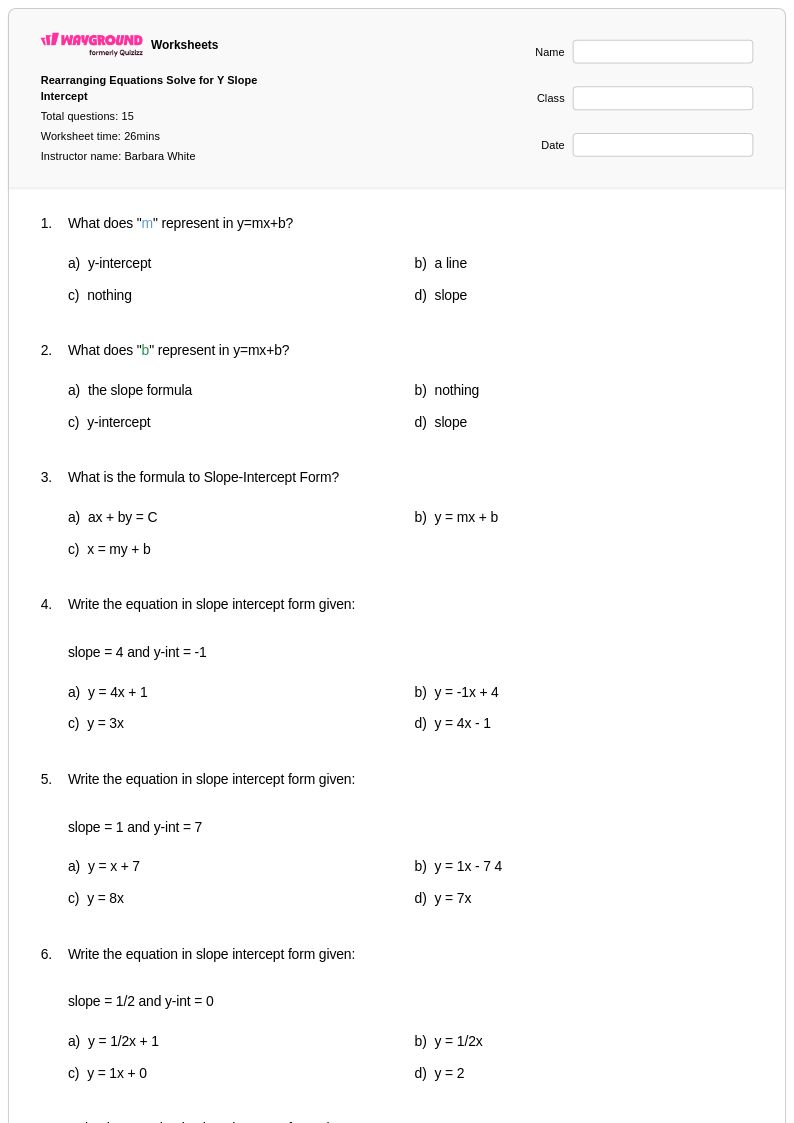
15 Q
7th - 12th
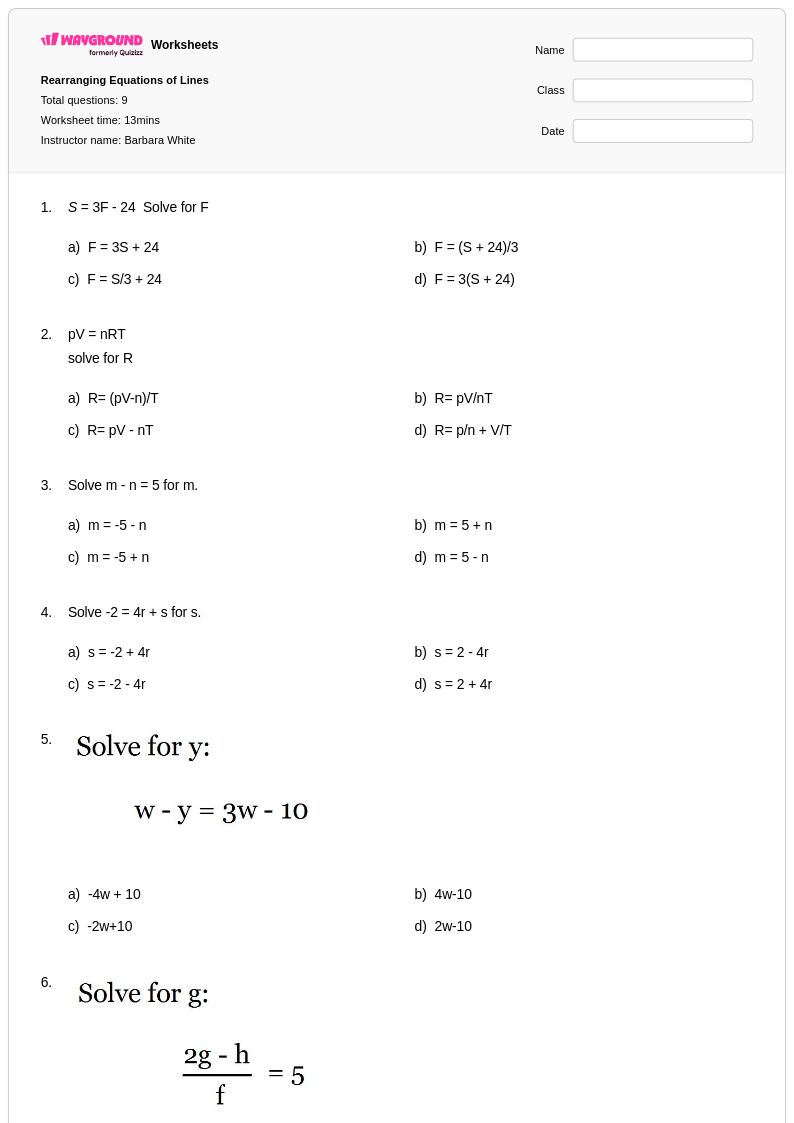
9 Q
7th - 10th
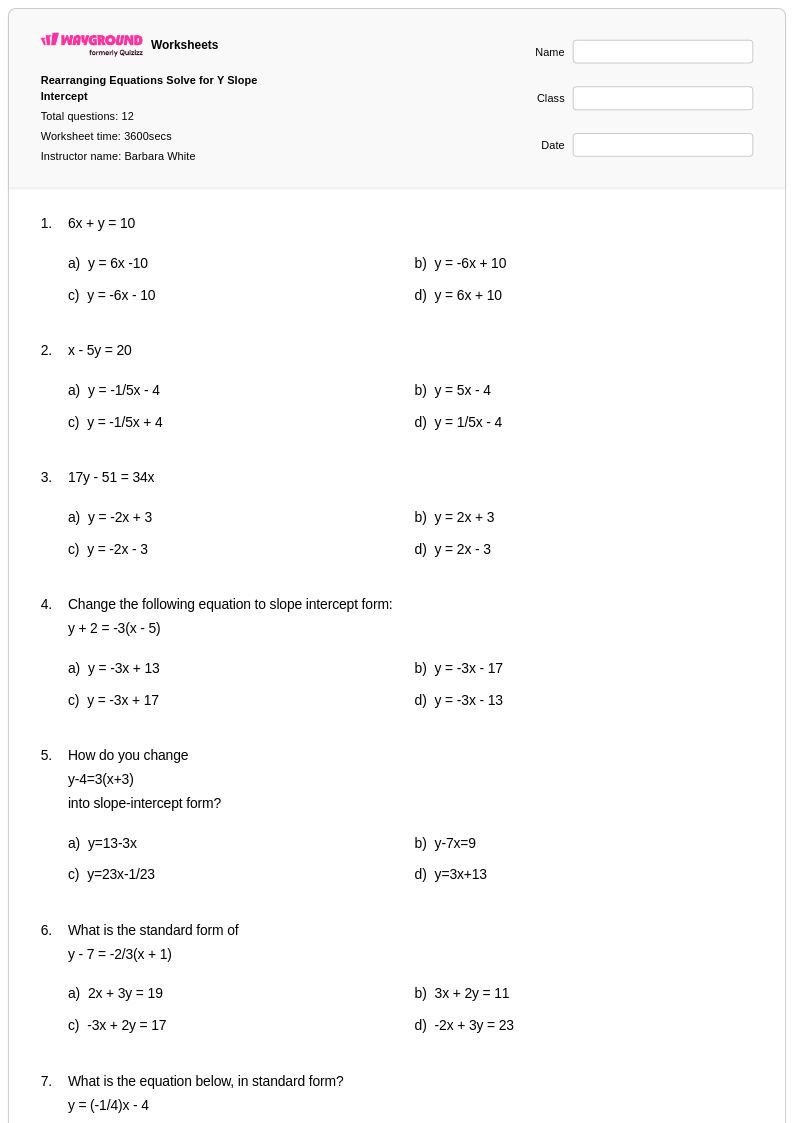
12 Q
9th
Explore Worksheets by Subjects
Explore printable Rearranging Equations worksheets
Rearranging equations worksheets available through Wayground (formerly Quizizz) provide comprehensive practice opportunities for students to master the fundamental algebraic skill of isolating variables and manipulating mathematical expressions. These expertly designed resources focus on developing students' ability to systematically move terms across the equals sign, apply inverse operations, and solve for unknown variables in linear and multi-step equations. The worksheets strengthen critical problem-solving abilities including logical sequencing, operation recognition, and algebraic reasoning through carefully scaffolded practice problems that progress from basic one-step rearrangements to complex multi-variable scenarios. Each worksheet collection includes detailed answer keys and is available as free printables in convenient pdf format, making them accessible for both classroom instruction and independent study.
Wayground (formerly Quizizz) empowers educators with an extensive library of millions of teacher-created rearranging equations worksheets that streamline lesson planning and support differentiated instruction across diverse learning needs. The platform's robust search and filtering capabilities allow teachers to quickly locate resources aligned with specific curriculum standards and customize content difficulty levels to match individual student abilities. These versatile worksheet collections are available in both printable pdf formats for traditional paper-and-pencil work and digital formats for interactive online learning, providing maximum flexibility for various classroom environments. Teachers can efficiently implement these resources for targeted skill practice, remediation support for struggling learners, and enrichment challenges for advanced students, ensuring that all learners develop confidence and proficiency in manipulating algebraic equations through systematic, repeated practice.
FAQs
How do I teach rearranging equations?
What exercises help students practice rearranging equations?
What are common mistakes when rearranging equations?
How can I use this rearranging equations worksheet in my class?
How does rearranging equations fit into the math curriculum?
How can I differentiate this topic for my students?