
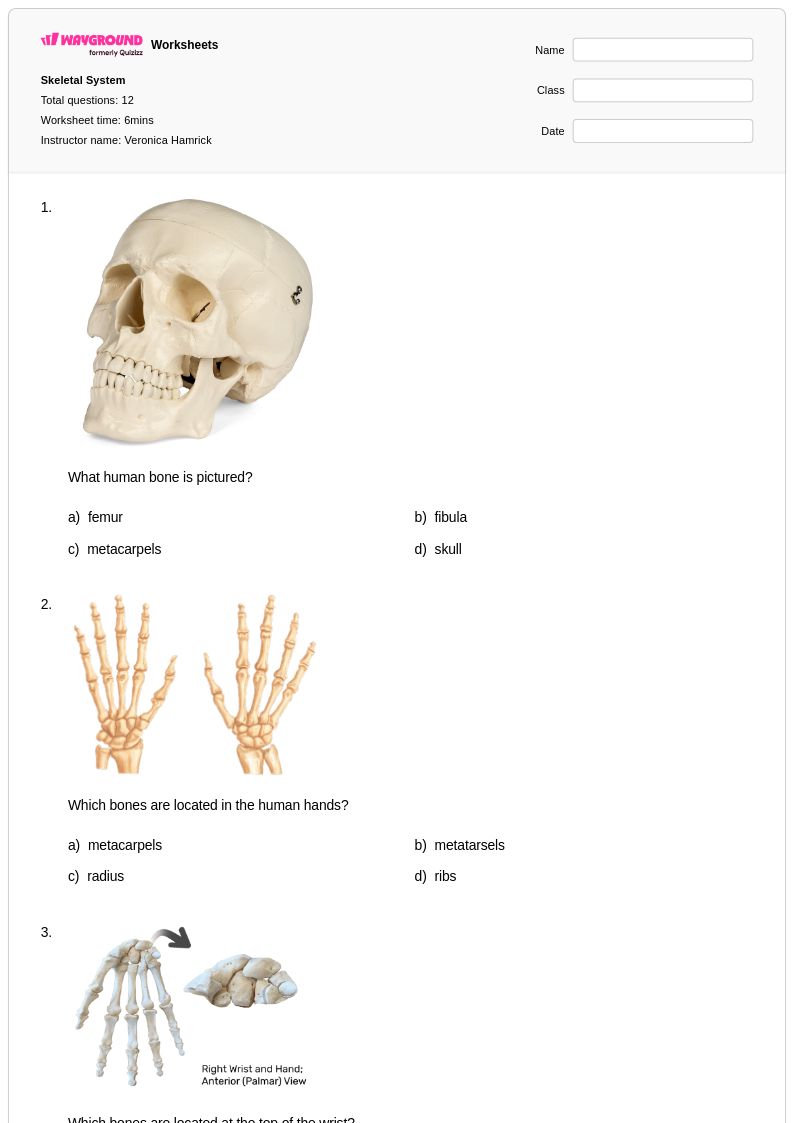
12 Q
6th - 8th
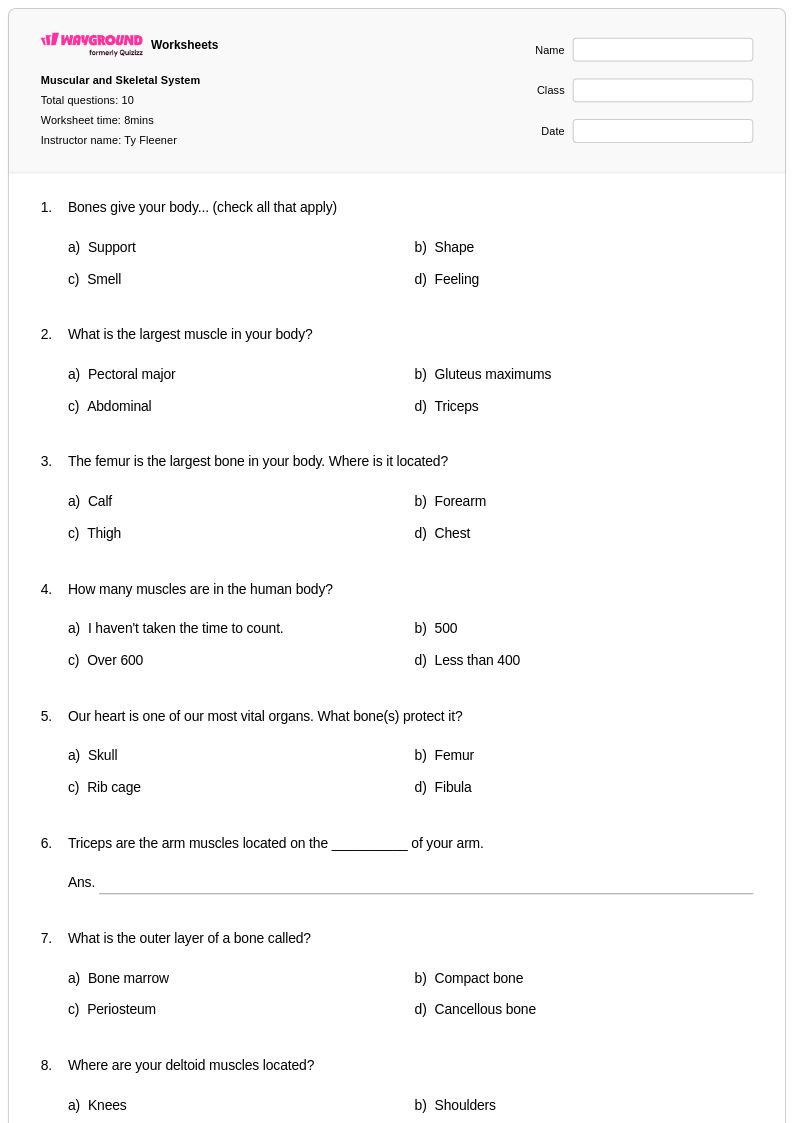
10 Q
5th - Uni
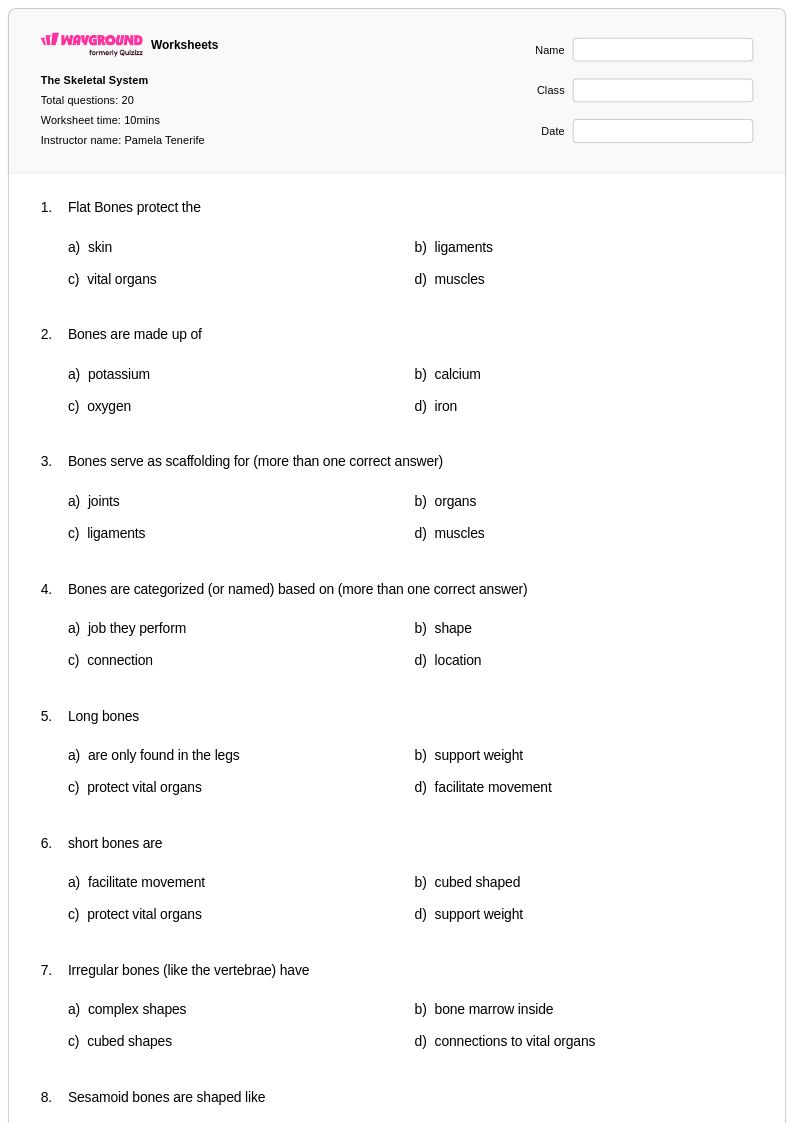
20 Q
6th
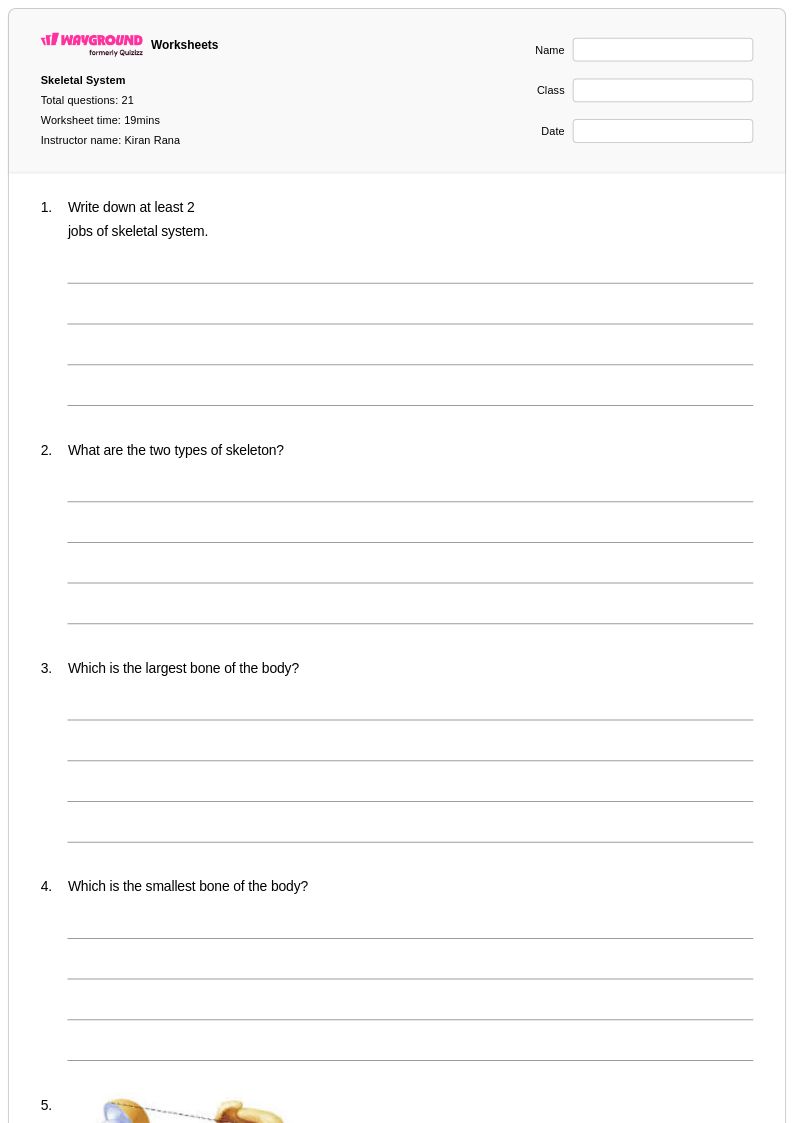
21 Q
6th
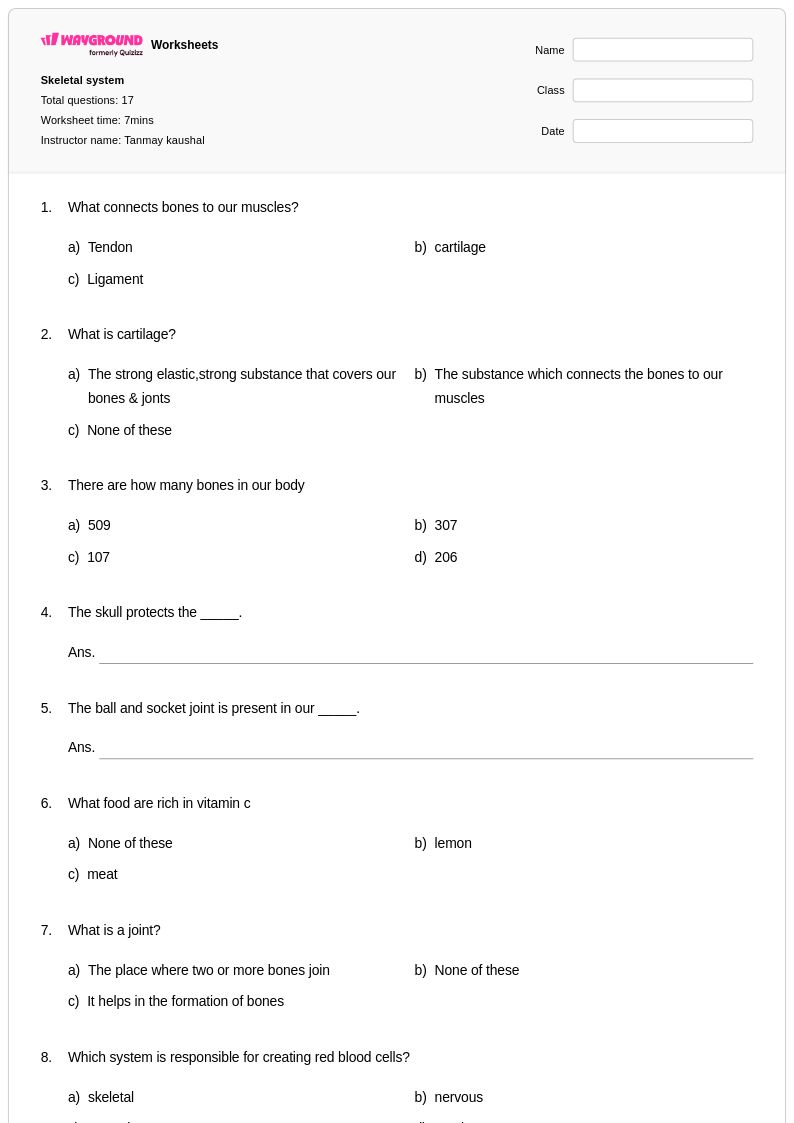
17 Q
4th - 7th
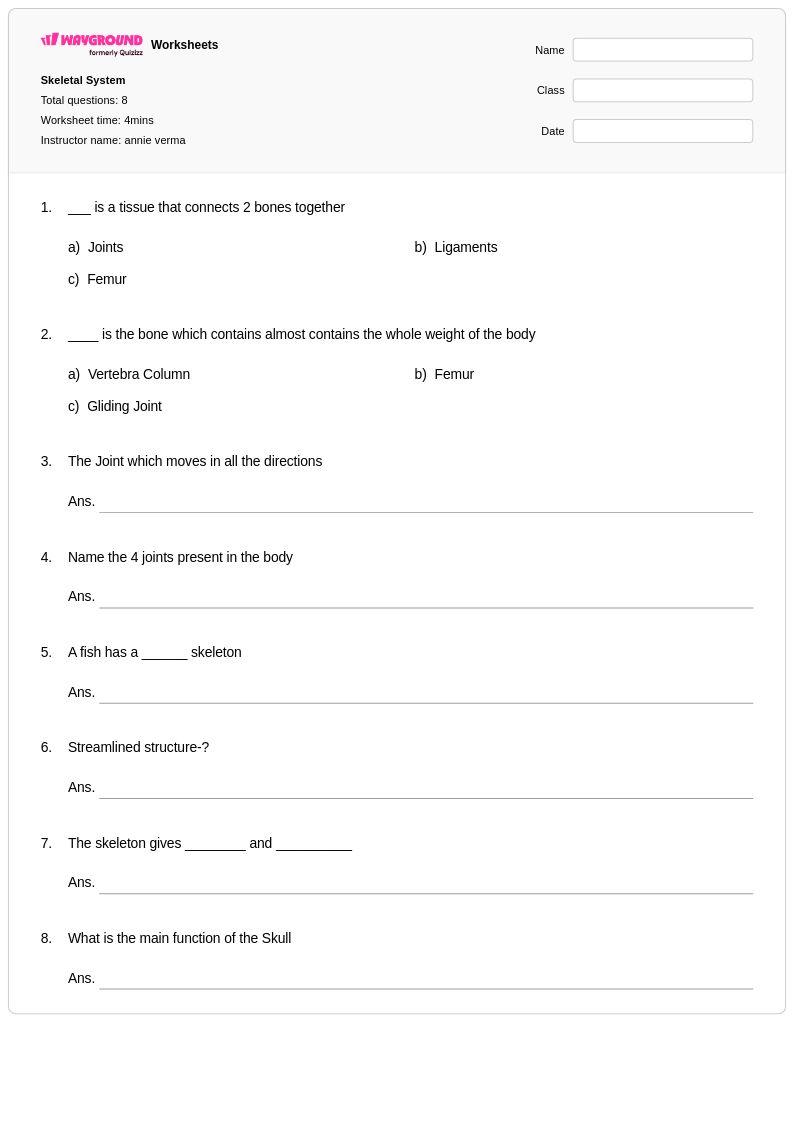
8 Q
6th
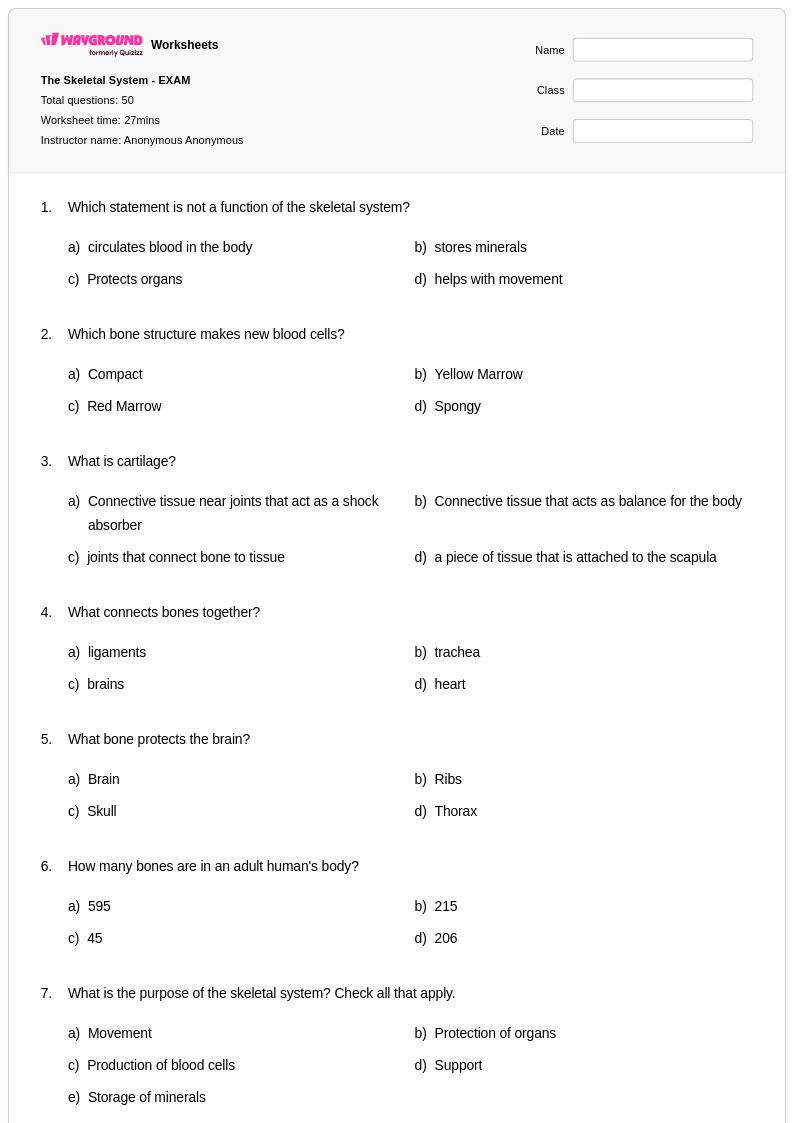
50 Q
6th - 8th
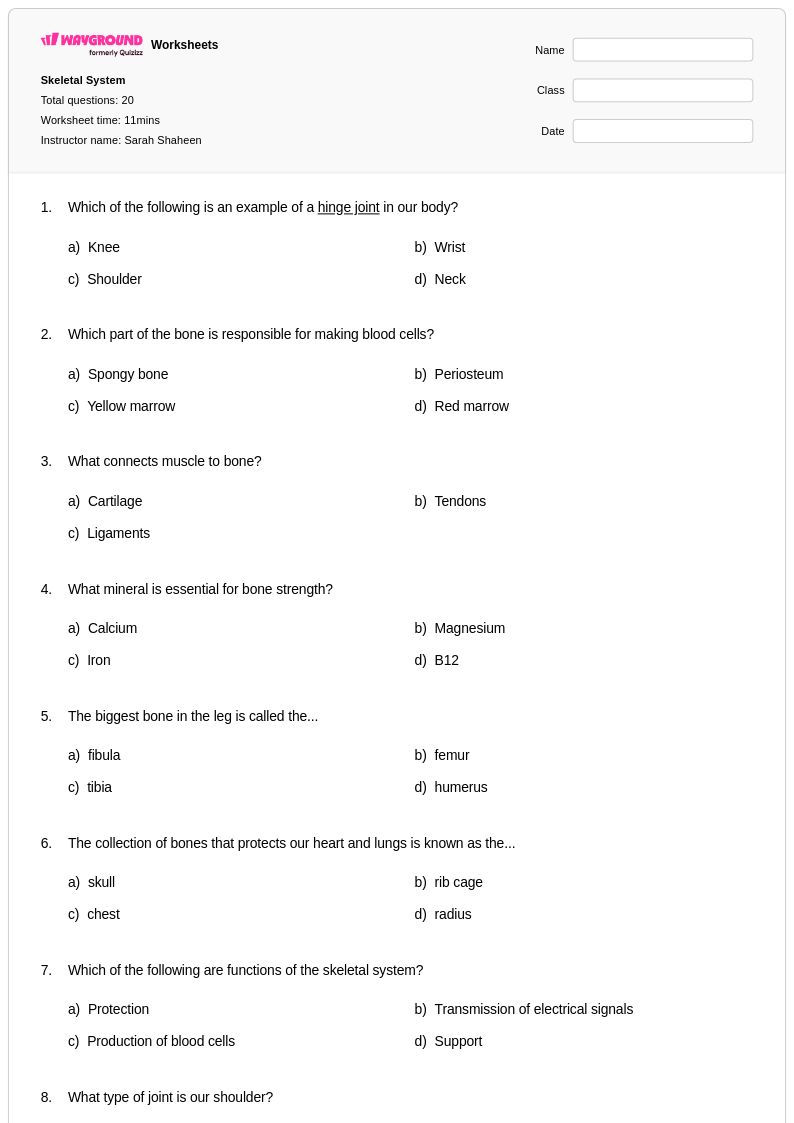
20 Q
6th - 8th
25 Q
6th
25 Q
6th - Uni
16 Q
6th - 10th
14 Q
6th
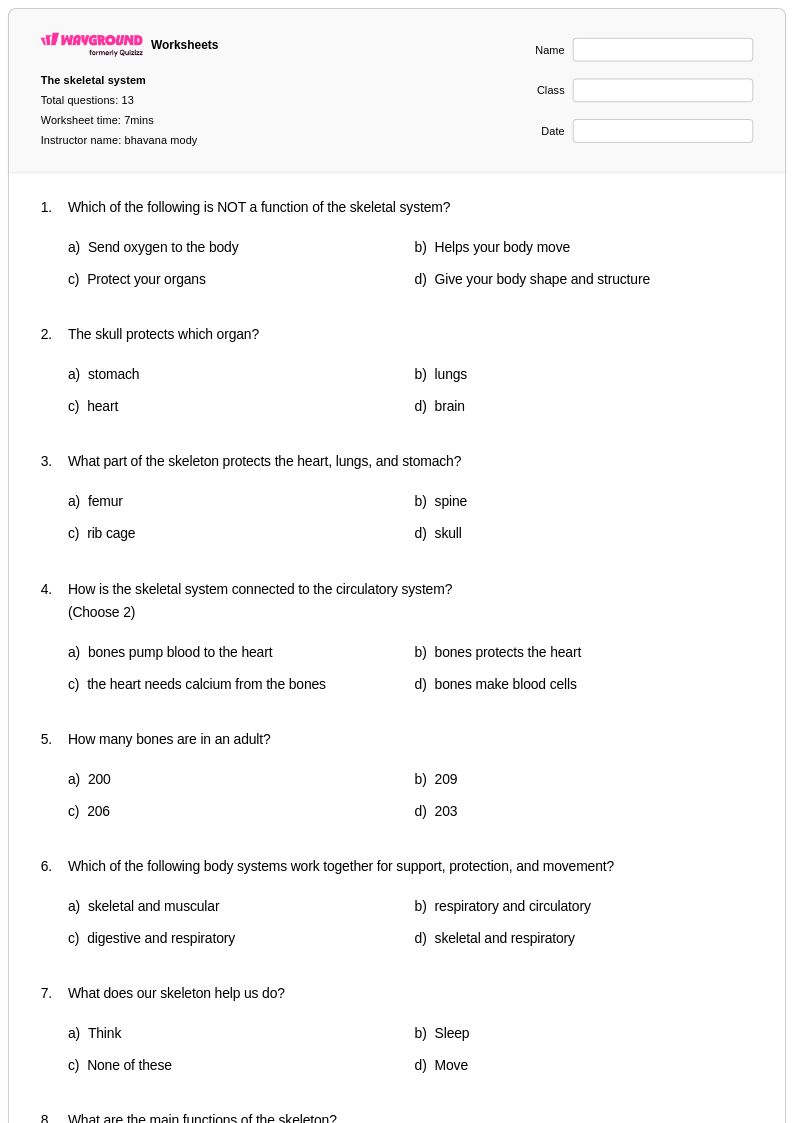
13 Q
6th
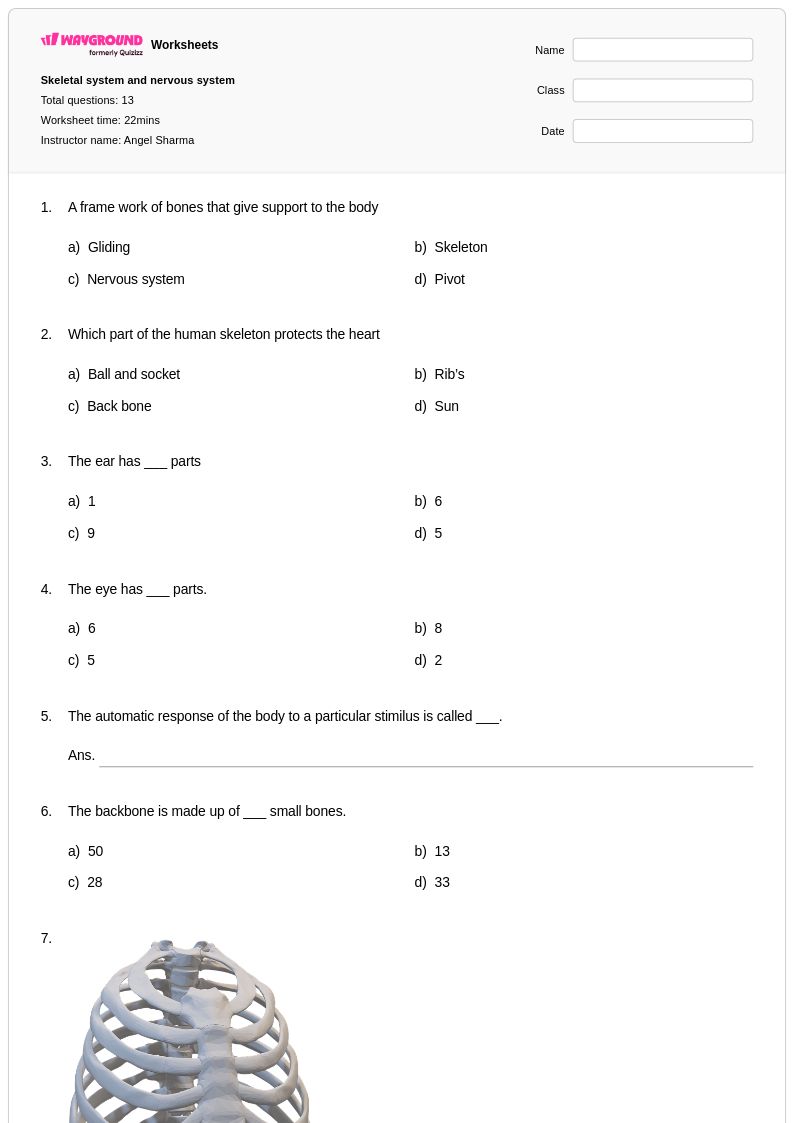
13 Q
5th - 6th
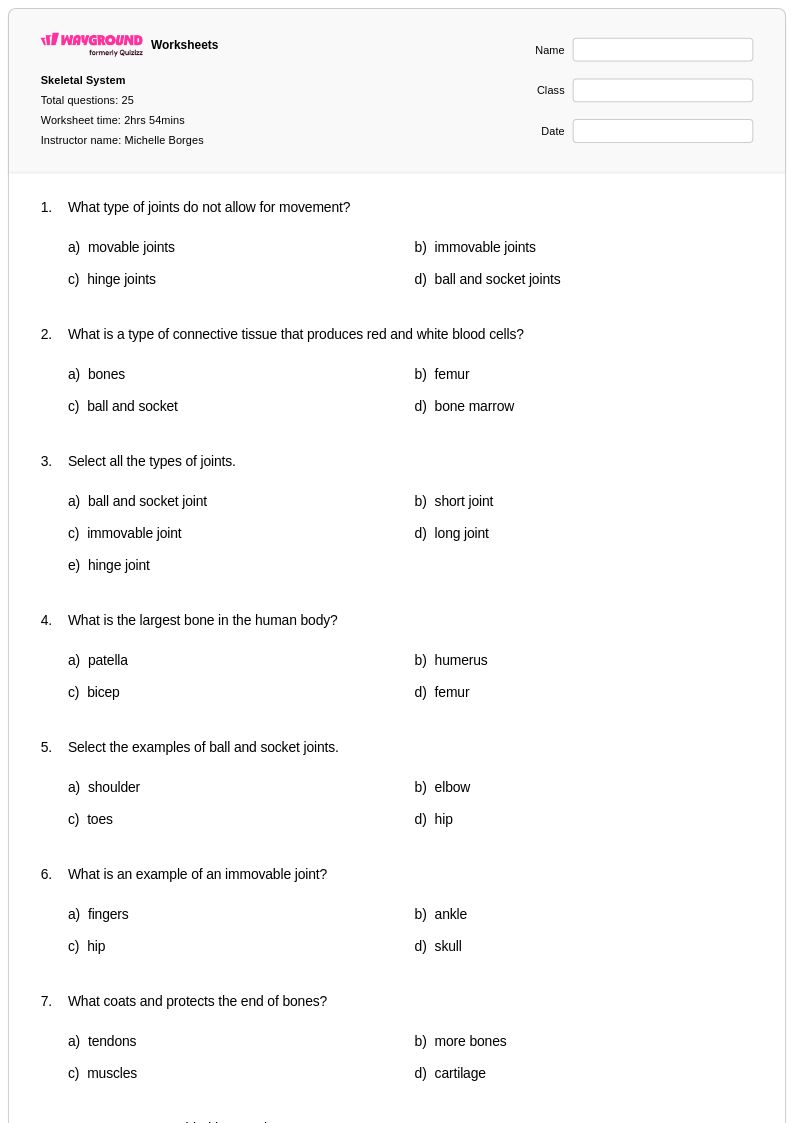
25 Q
6th
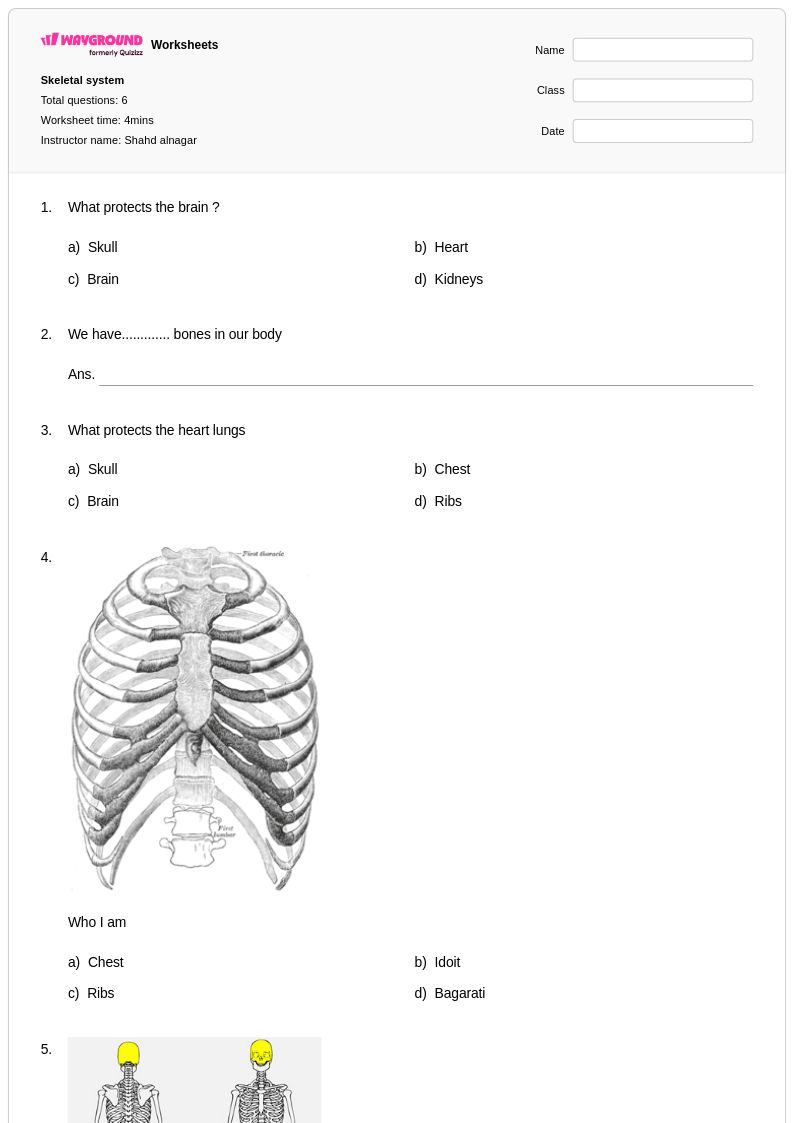
6 Q
KG - PD
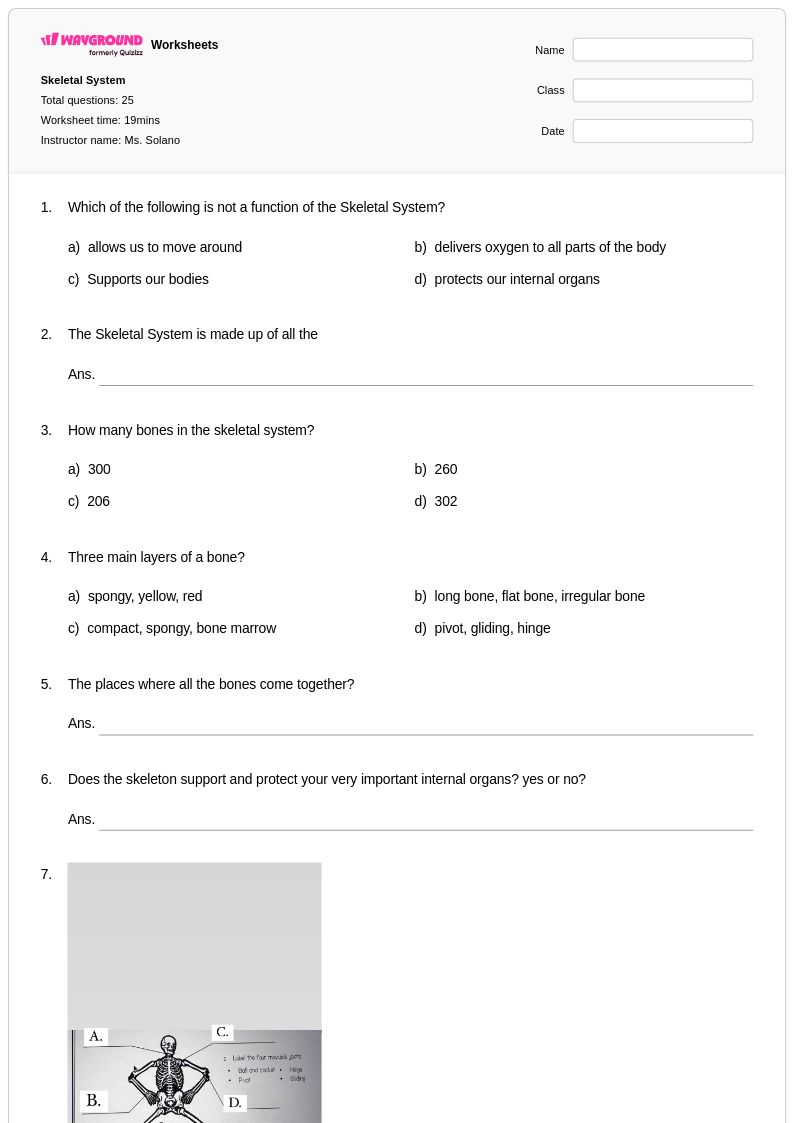
25 Q
6th
20 Q
6th - 7th
20 Q
3rd - 8th
15 Q
6th - 8th
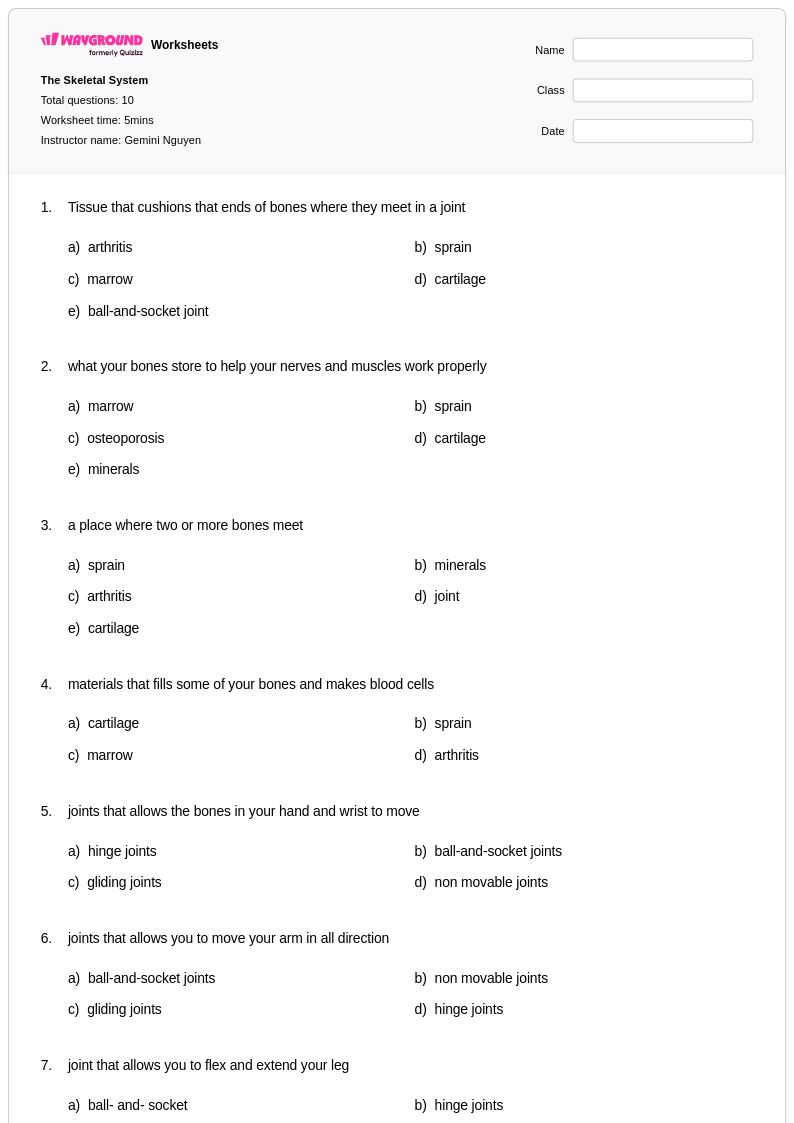
10 Q
6th - 7th
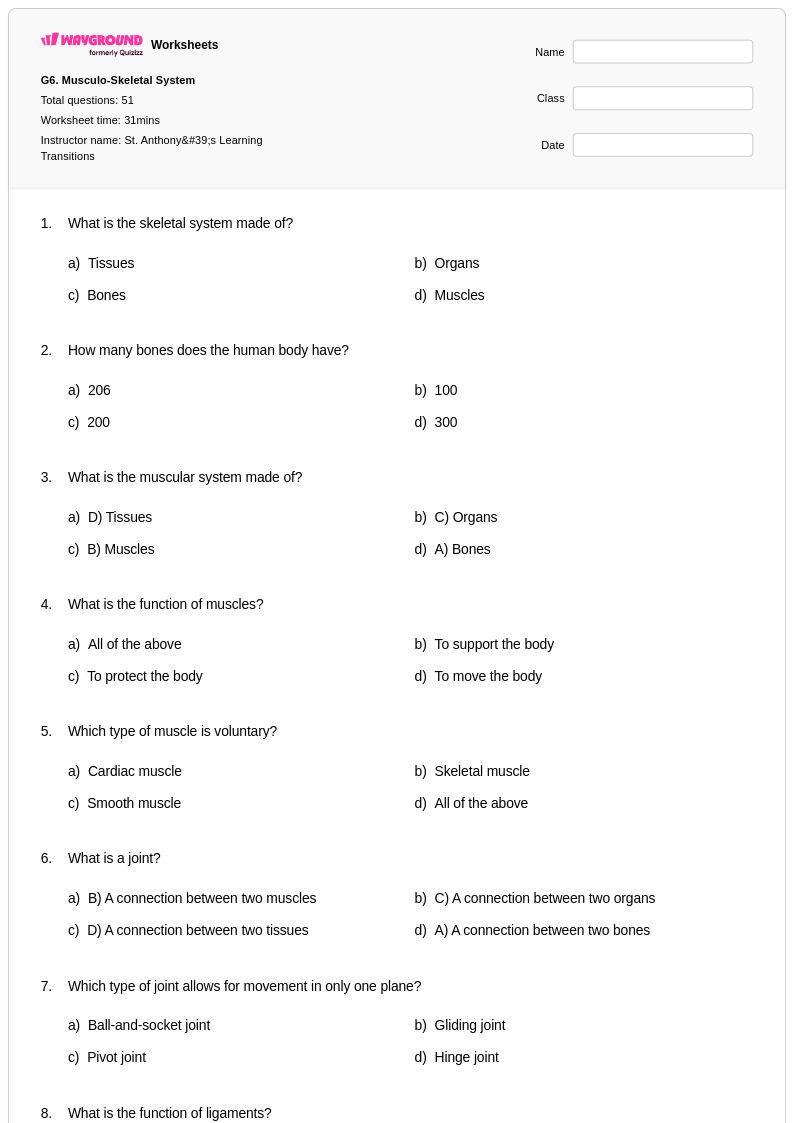
51 Q
6th
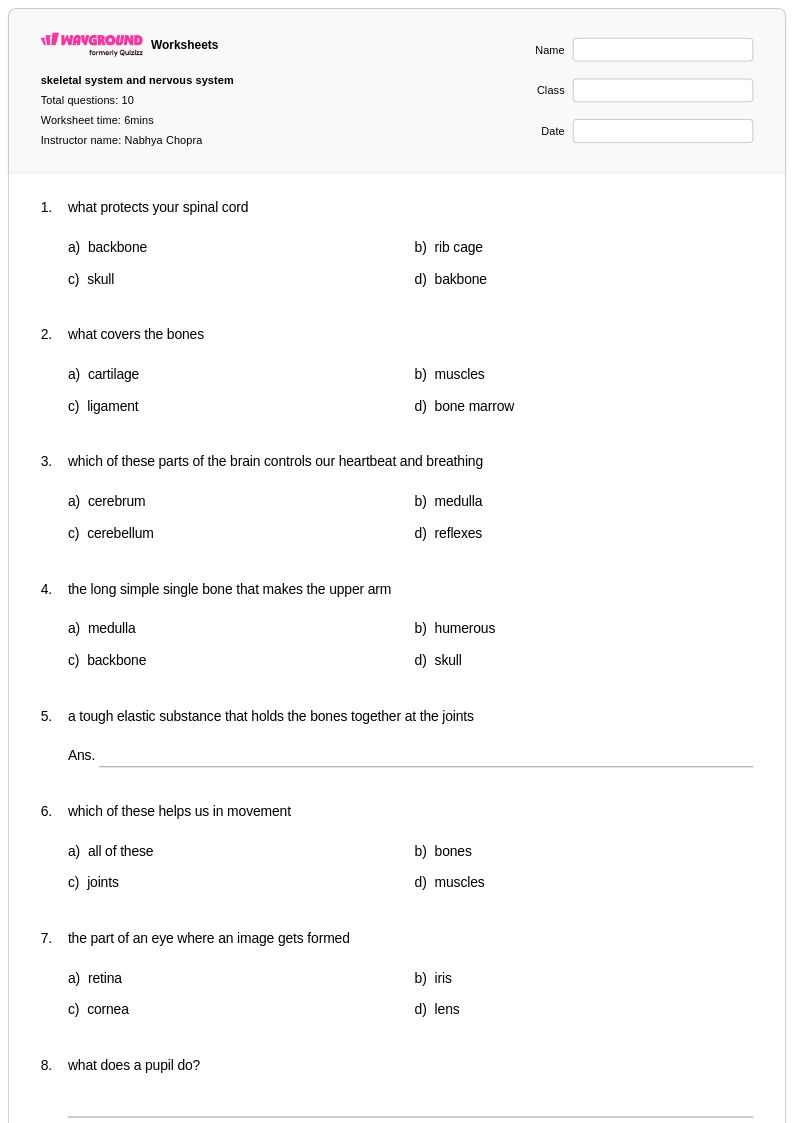
10 Q
5th - 7th
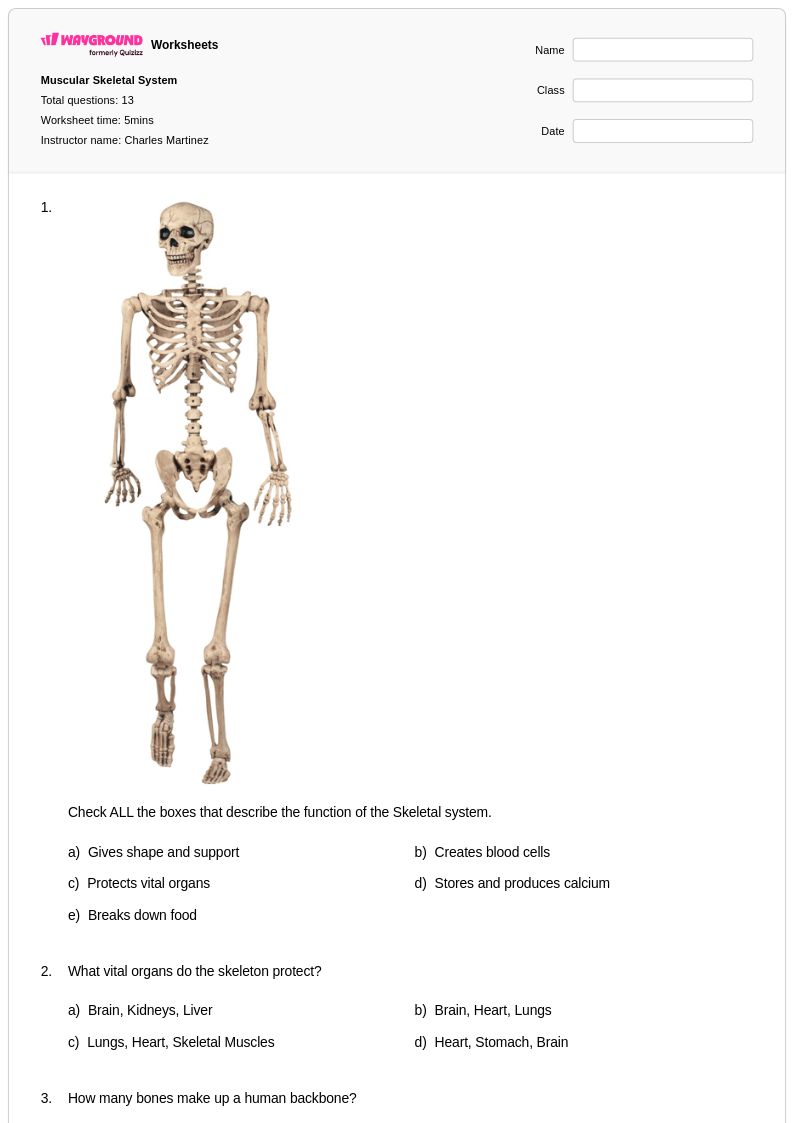
13 Q
6th
Explore Other Subject Worksheets for year 6
Explore printable Skeletal System worksheets for Year 6
Skeletal system worksheets for Year 6 students through Wayground (formerly Quizizz) provide comprehensive coverage of bone structure, function, and human anatomy fundamentals. These educational resources strengthen critical scientific literacy skills including anatomical identification, understanding bone composition and growth, analyzing the relationship between skeletal structure and movement, and exploring how the skeletal system protects vital organs. Students engage with diverse practice problems that cover bone types, joint classifications, calcium's role in bone health, and the skeletal system's interaction with muscles. Each worksheet collection includes detailed answer keys to support independent learning, and teachers can access both printable pdf versions and digital formats to accommodate different classroom needs. The free resources emphasize hands-on learning through labeling exercises, comparative anatomy studies, and real-world applications that connect skeletal health to nutrition and physical activity.
Wayground (formerly Quizizz) empowers educators with millions of teacher-created skeletal system resources that streamline lesson planning and enhance student engagement across diverse learning environments. The platform's robust search and filtering capabilities allow teachers to quickly locate worksheets aligned with specific educational standards, grade-appropriate content, and targeted skill development objectives. Differentiation tools enable customization of worksheet difficulty levels, supporting both remediation for struggling learners and enrichment opportunities for advanced students. Teachers can seamlessly transition between printable pdf formats for traditional classroom settings and interactive digital versions that provide immediate feedback and progress tracking. These flexible resources support systematic skill practice through scaffolded learning progressions, enable targeted intervention strategies, and facilitate comprehensive assessment of student understanding in skeletal system concepts, ultimately saving valuable preparation time while delivering high-quality educational content.
FAQs
How do I teach the skeletal system to students?
What are good activities for practicing skeletal system concepts?
What mistakes do students commonly make when learning the skeletal system?
How do I differentiate skeletal system instruction for students with different skill levels?
How can I use Wayground's skeletal system worksheets in my classroom?
How does the skeletal system connect to the muscular system, and how do I teach that connection?