
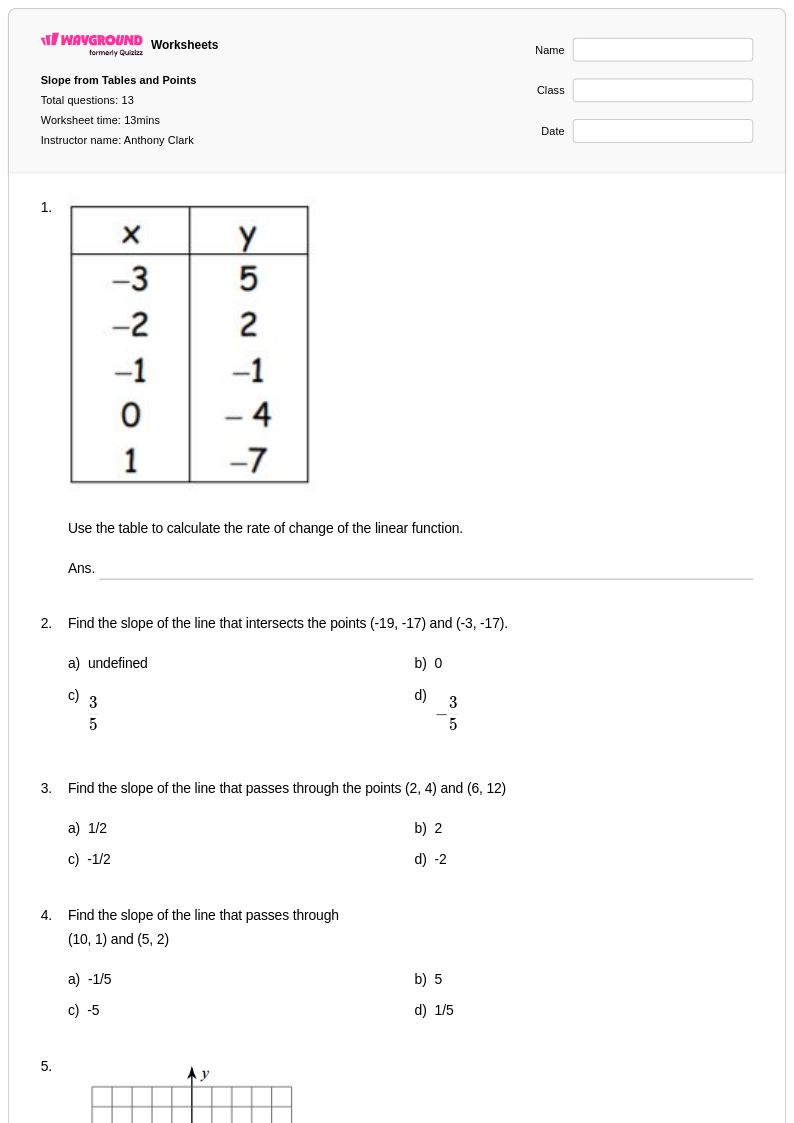
13 Q
8th - Uni
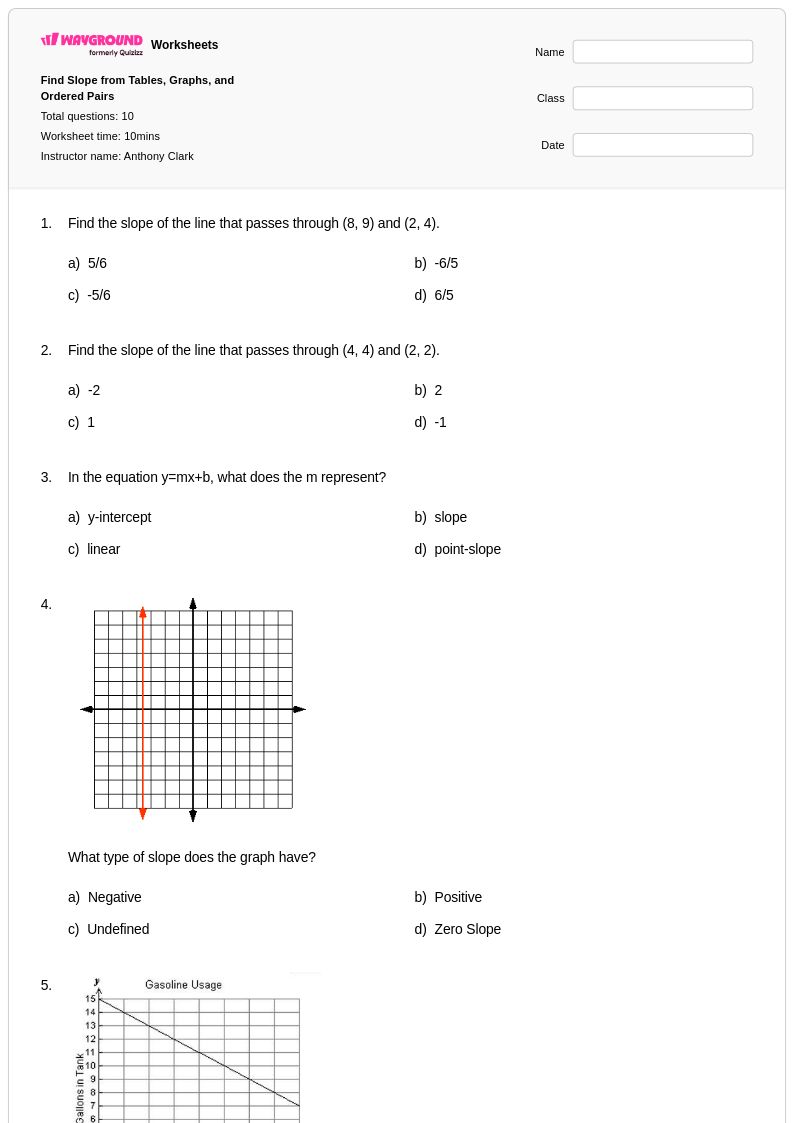
10 Q
8th - Uni
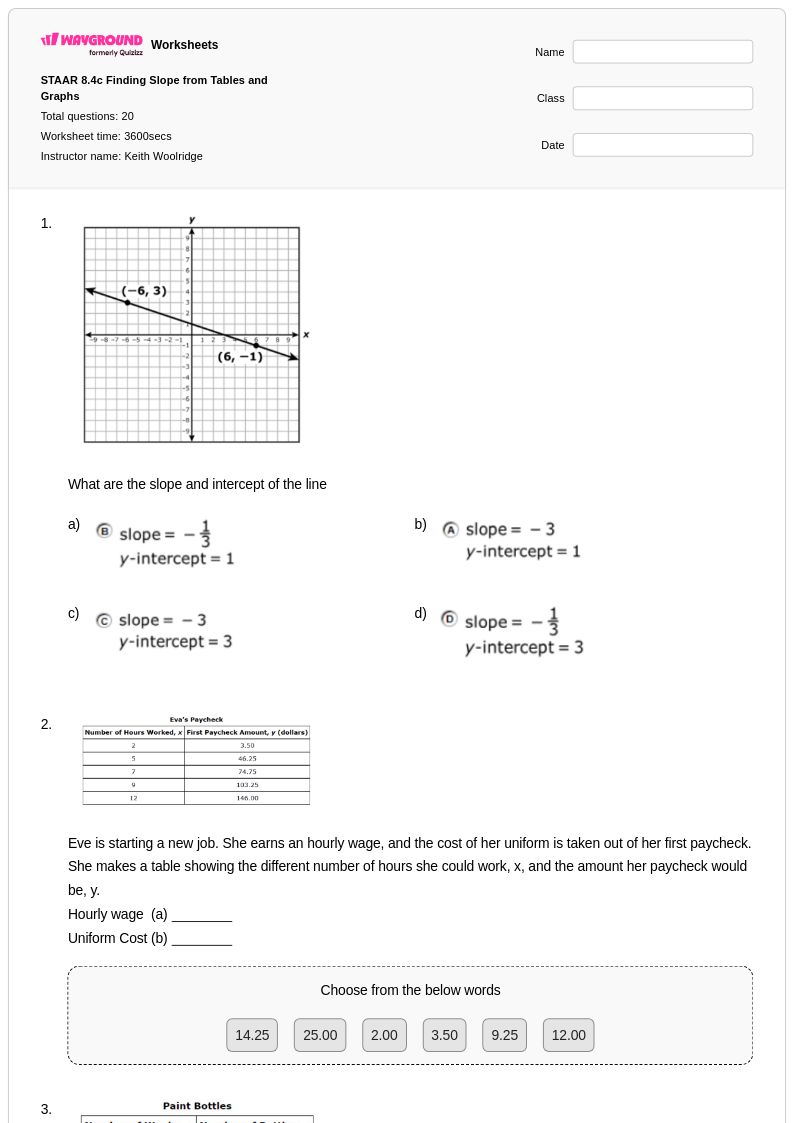
20 Q
8th
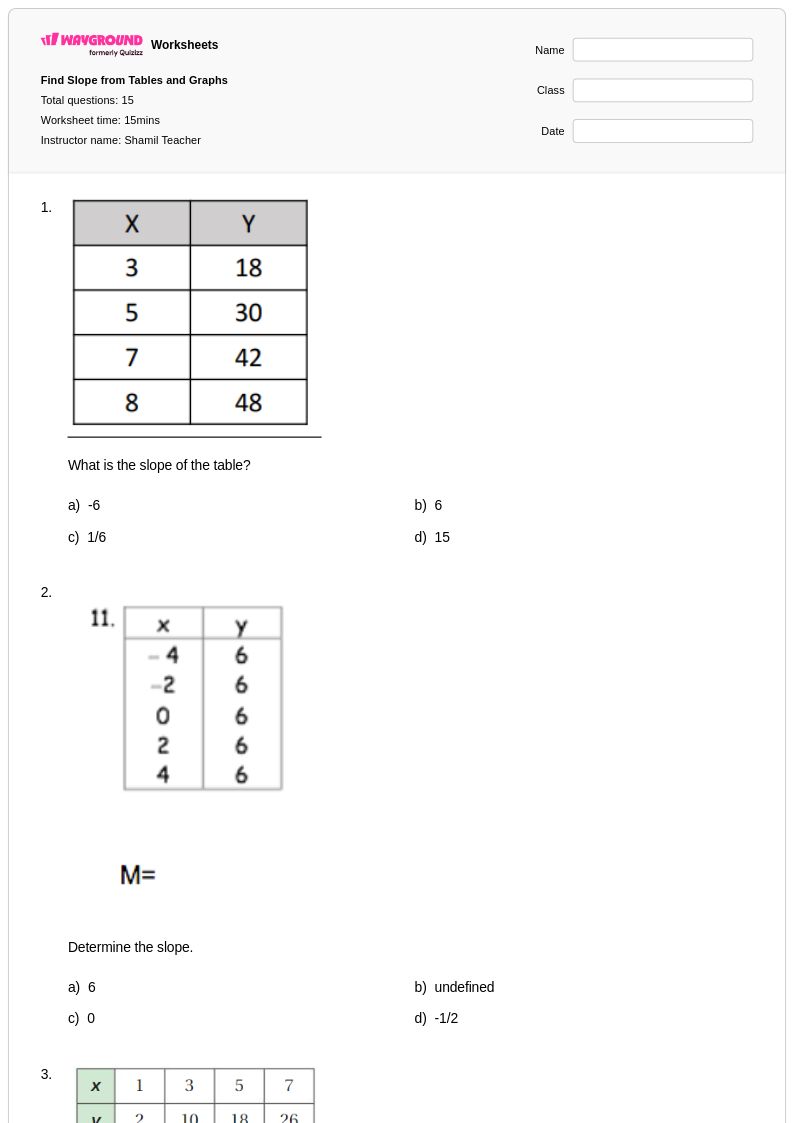
15 Q
8th - Uni
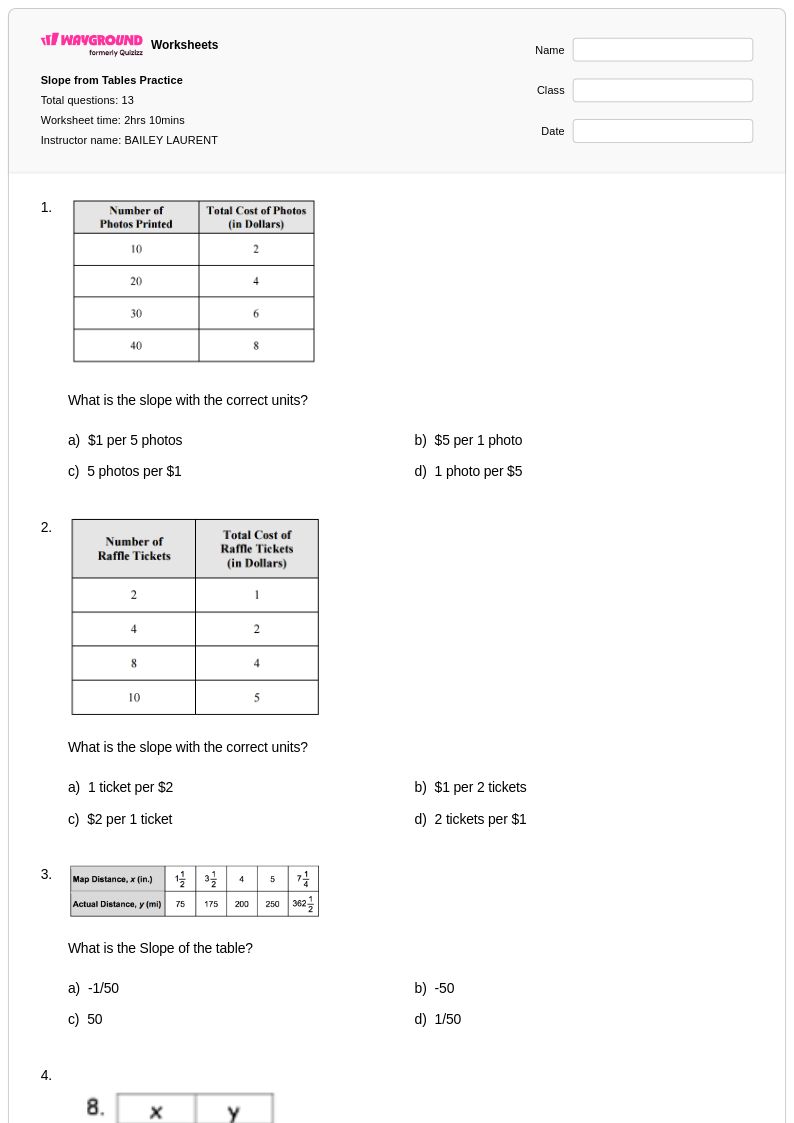
13 Q
8th
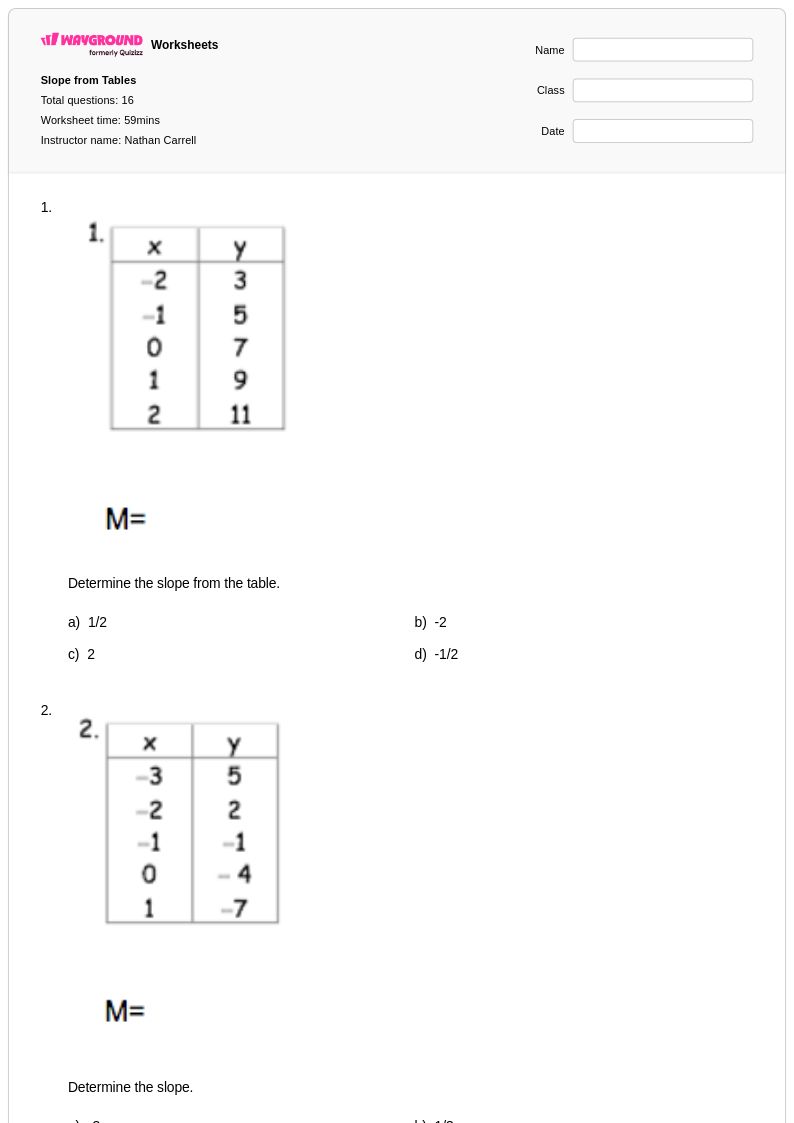
16 Q
9th
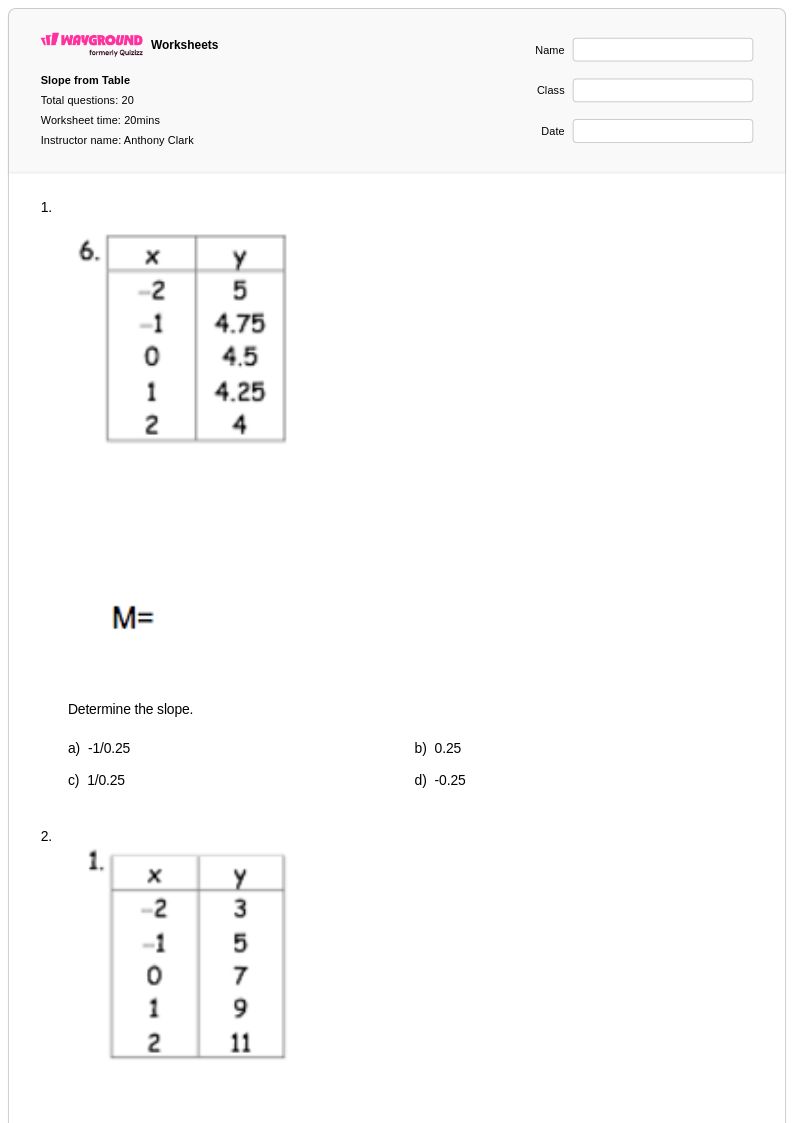
20 Q
8th - Uni
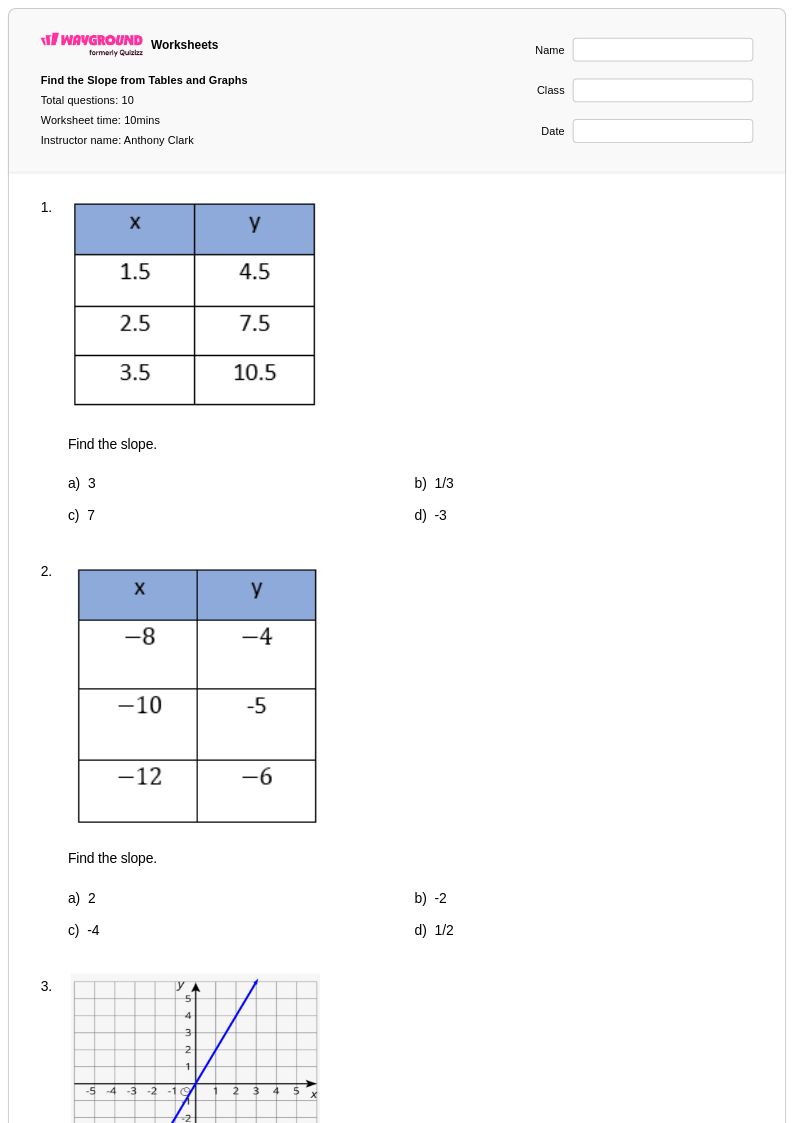
10 Q
8th - Uni
14 Q
8th - Uni
14 Q
9th - Uni
14 Q
8th - Uni
10 Q
9th
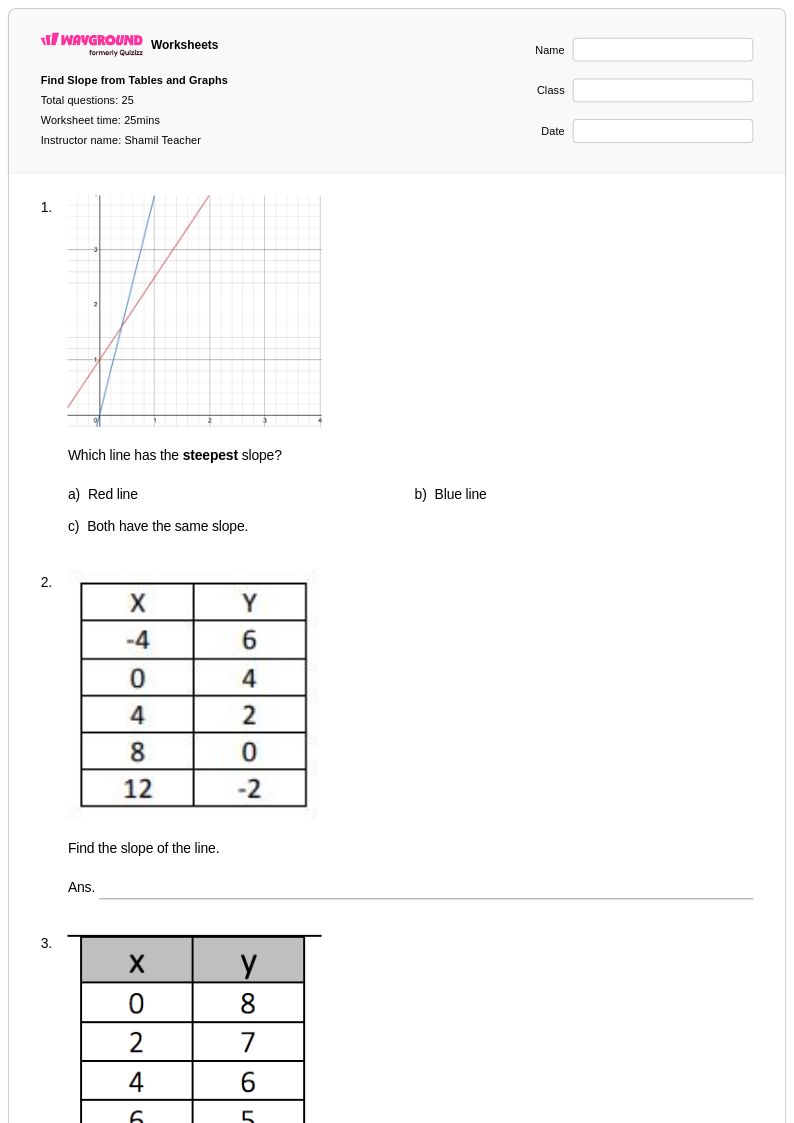
25 Q
8th - Uni
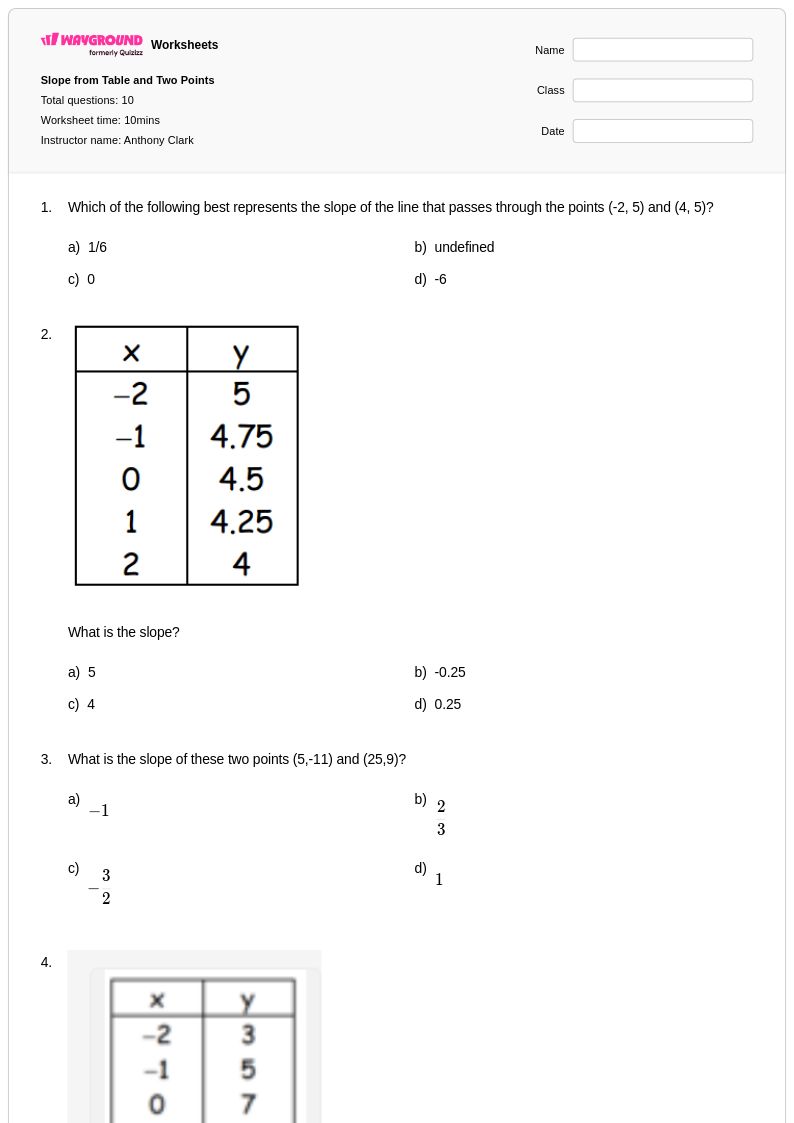
10 Q
8th - Uni
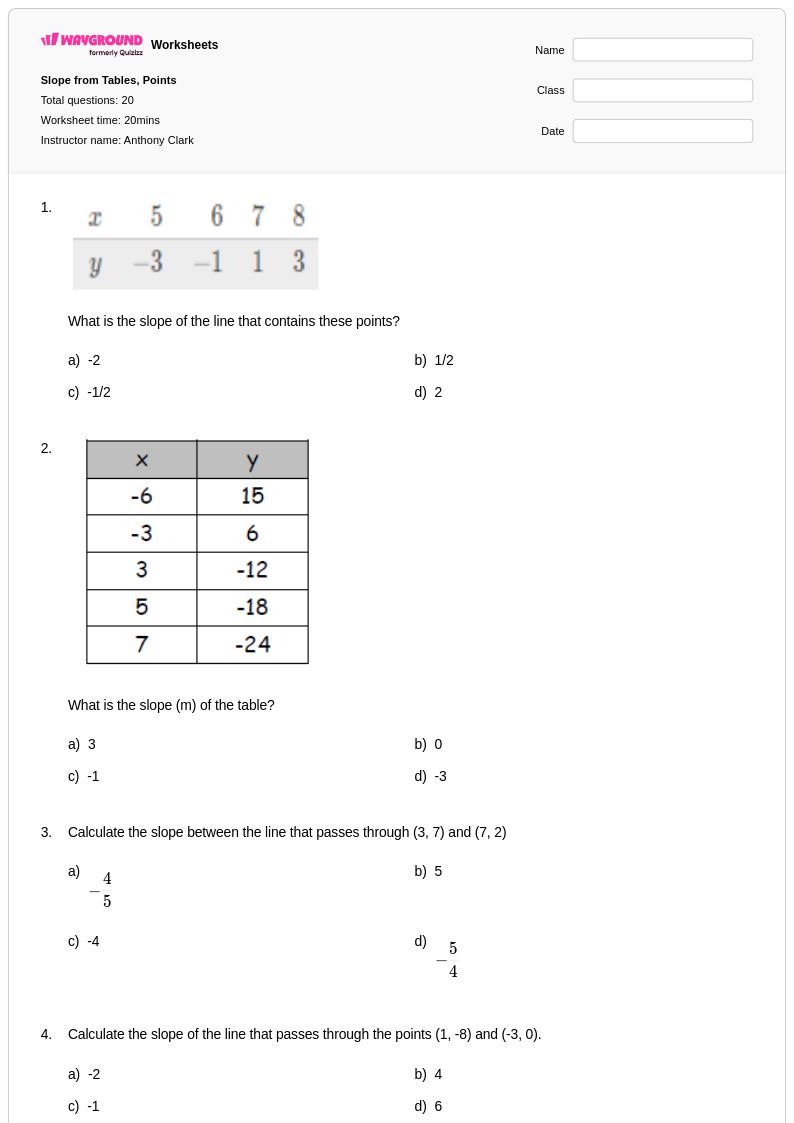
20 Q
8th - Uni
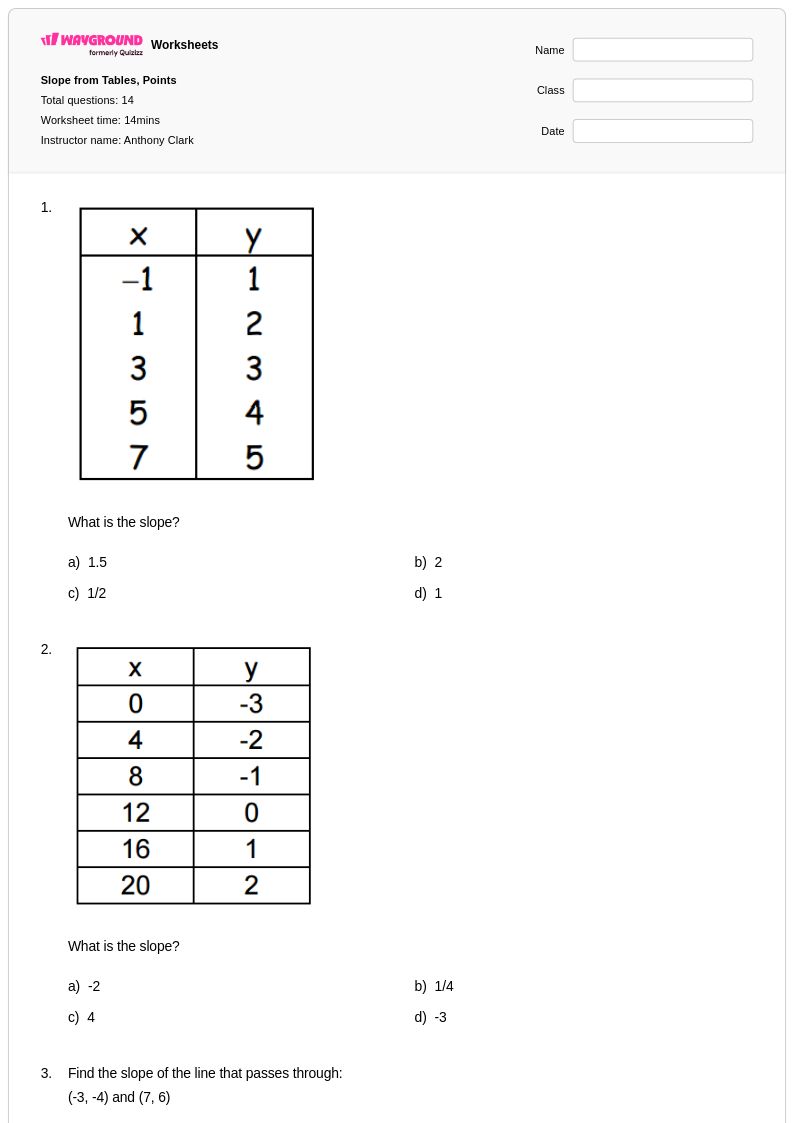
14 Q
8th - Uni
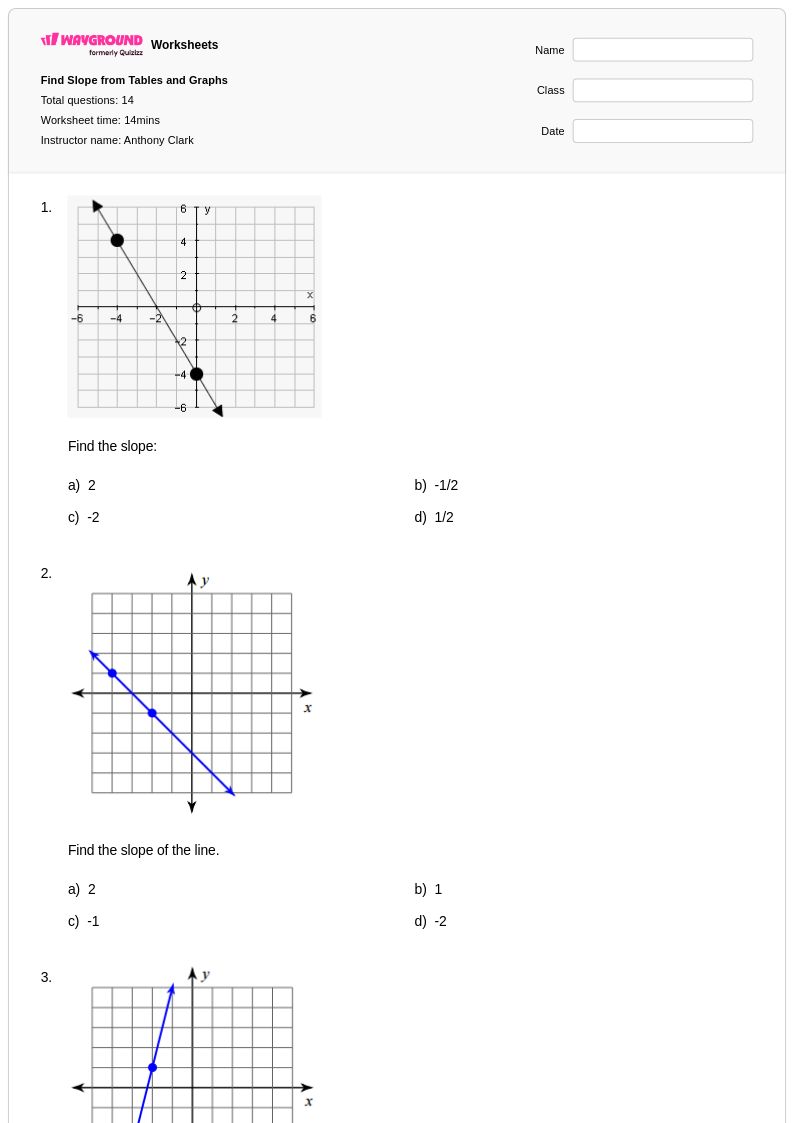
14 Q
8th - Uni
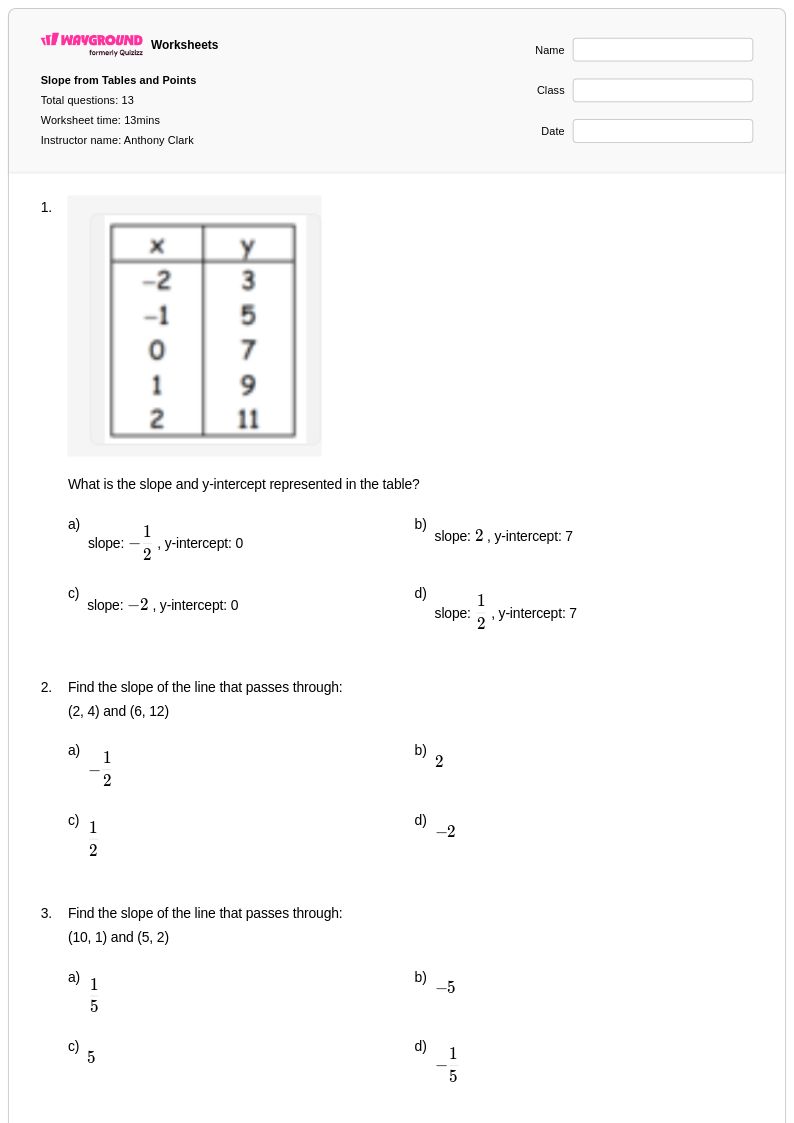
13 Q
8th - Uni
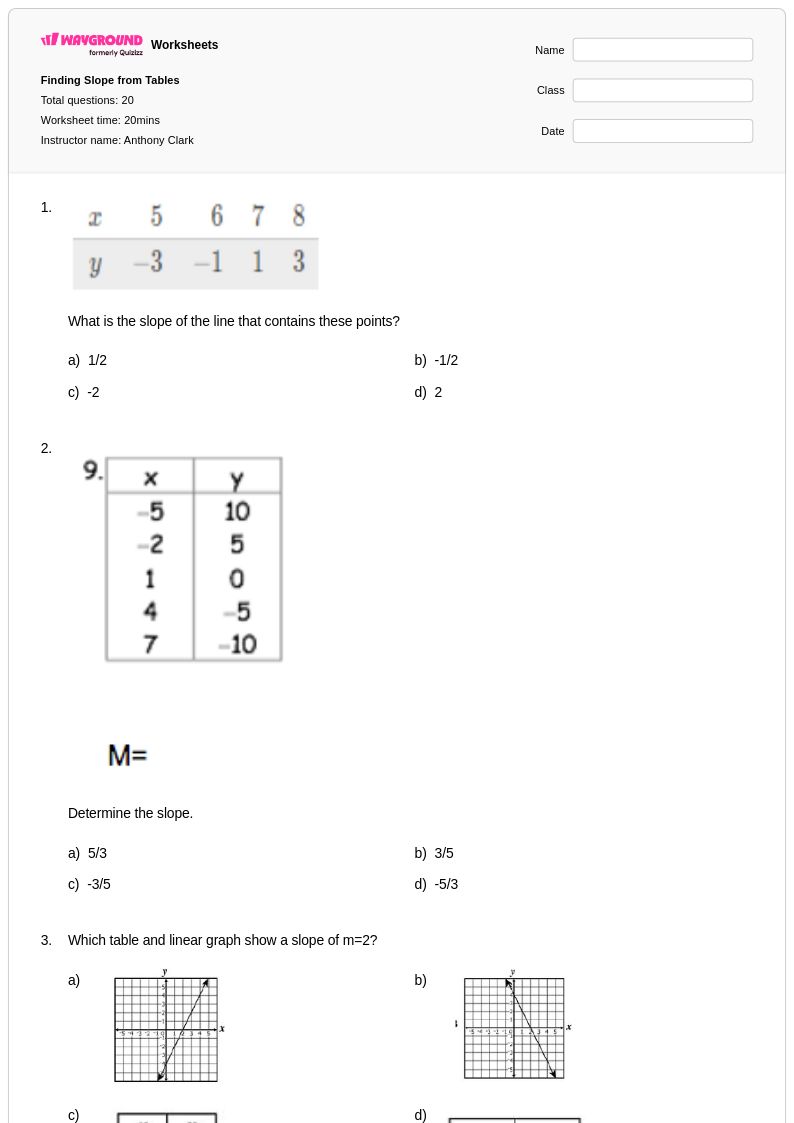
20 Q
8th - Uni
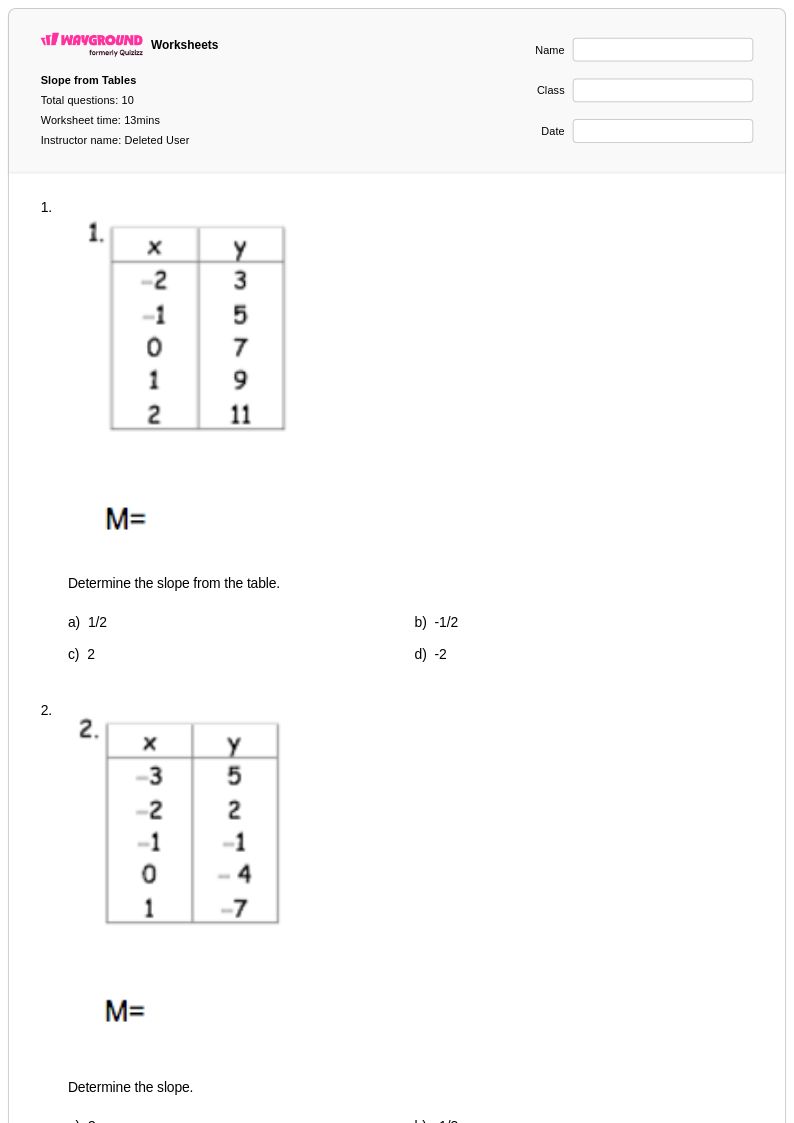
10 Q
7th - 8th
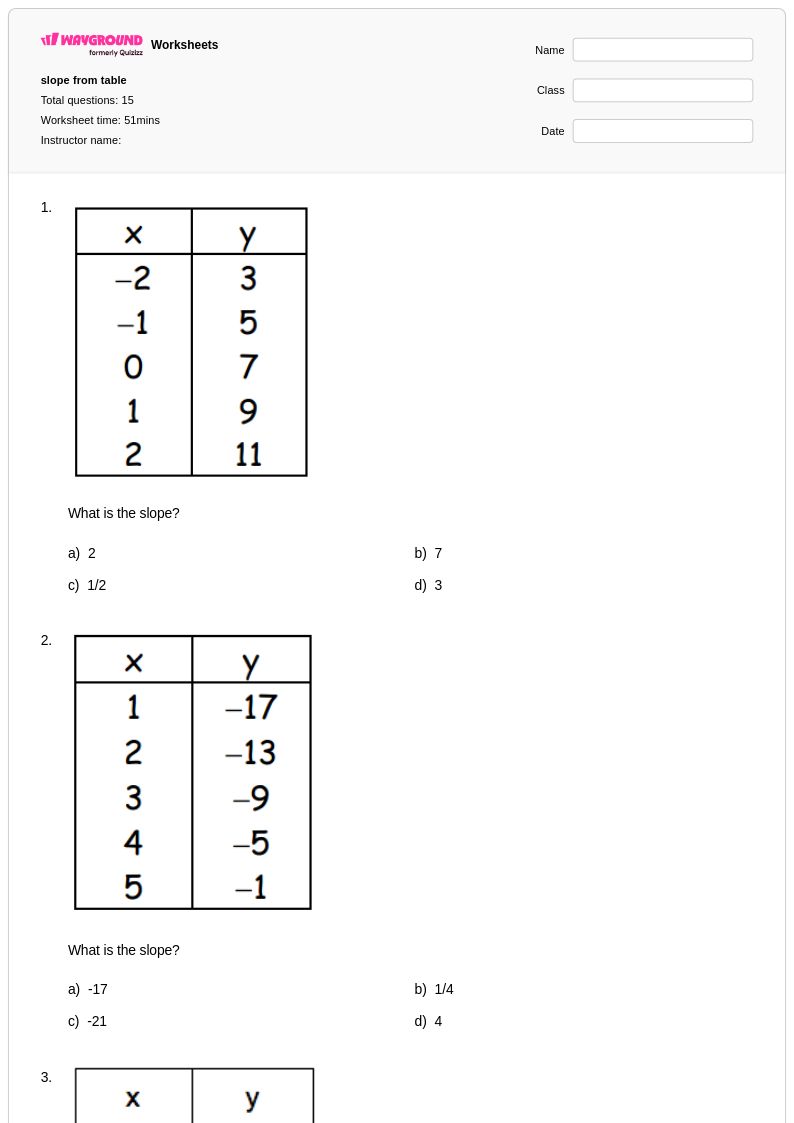
15 Q
7th
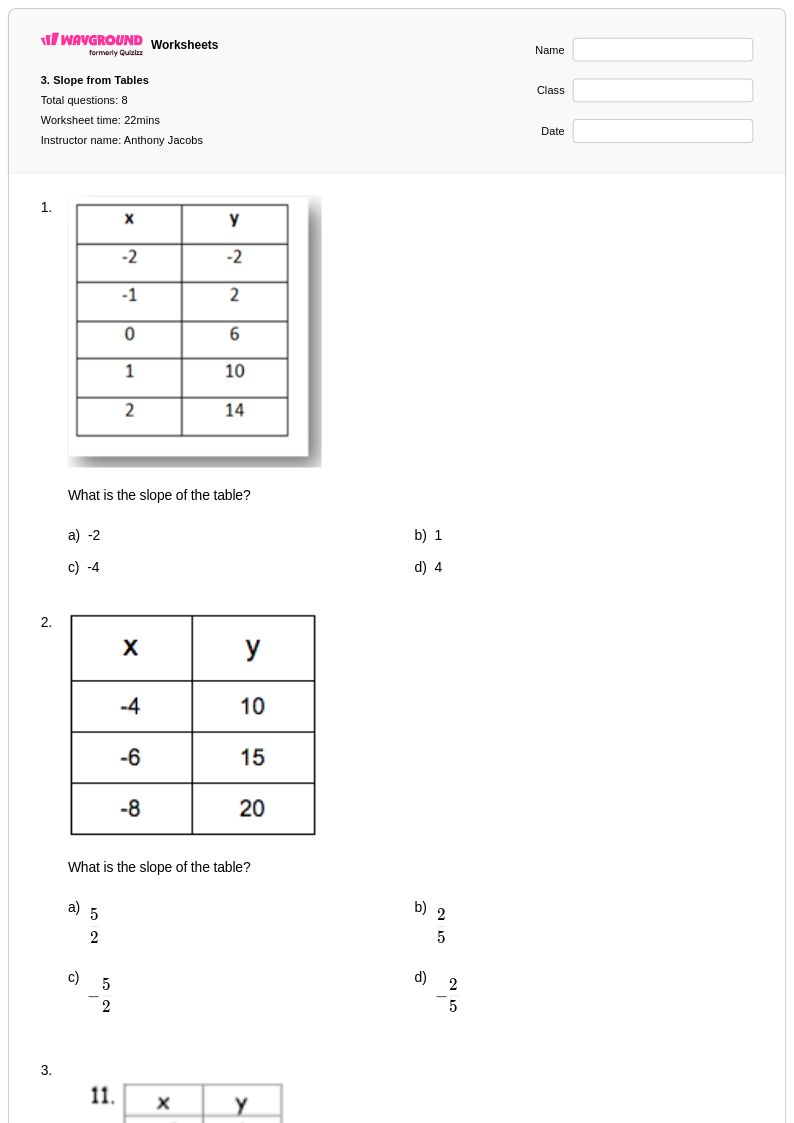
8 Q
7th - Uni
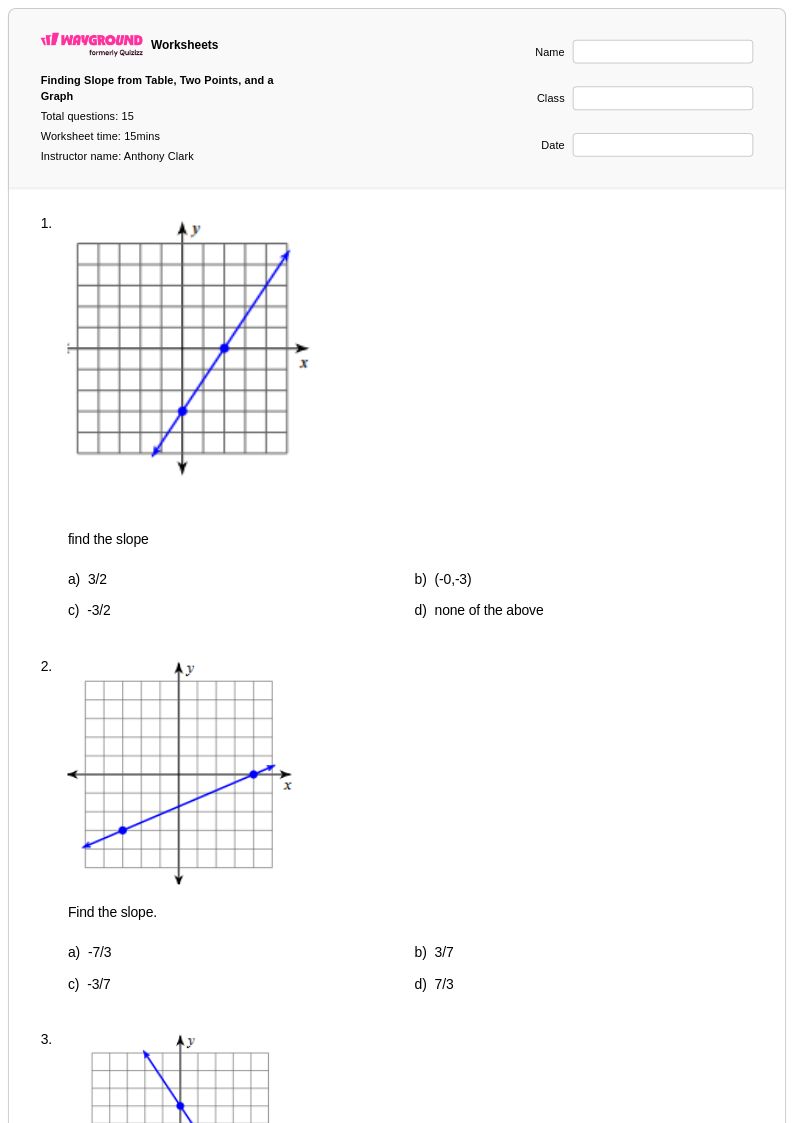
15 Q
8th - Uni
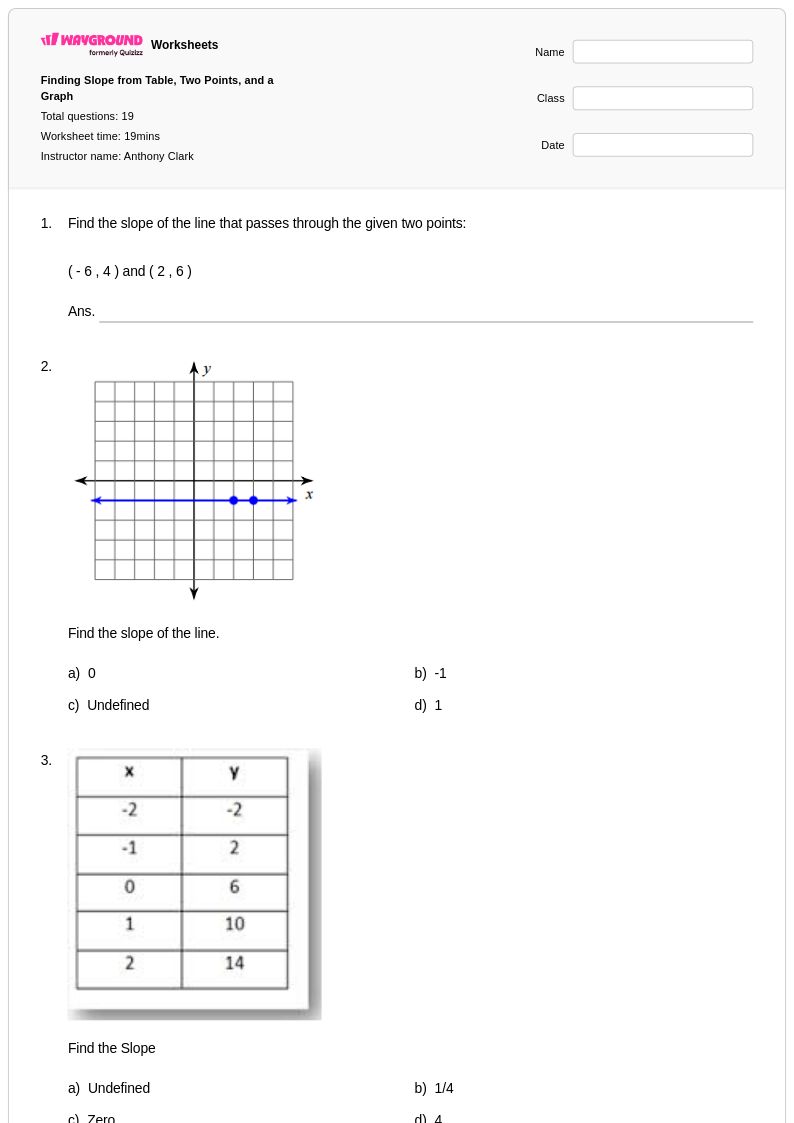
19 Q
8th - Uni
Explore Worksheets by Subjects
Explore printable Slope from Table worksheets
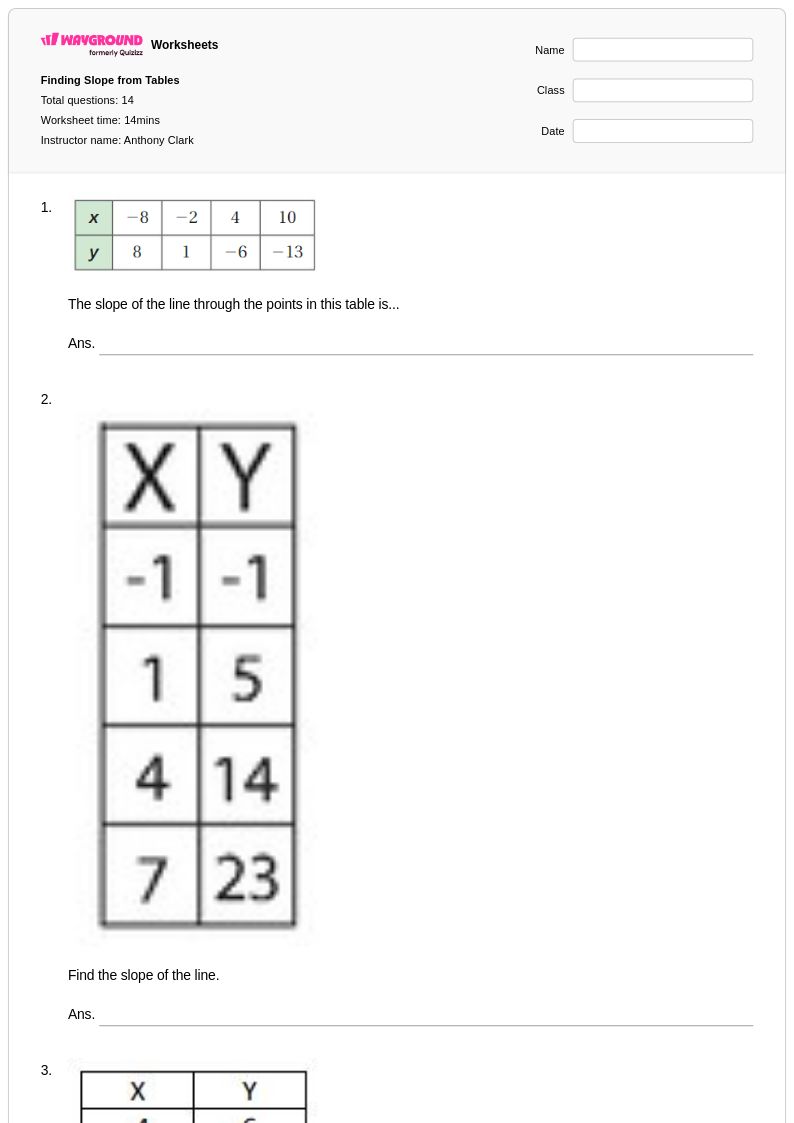
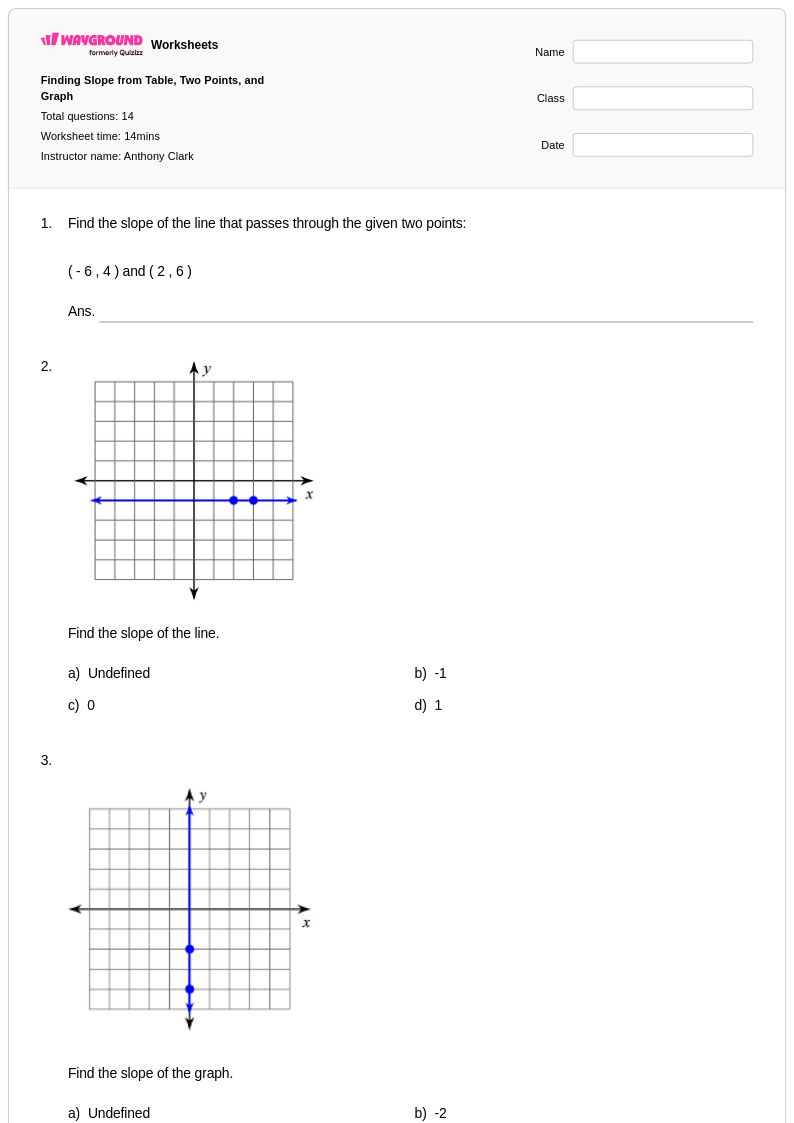
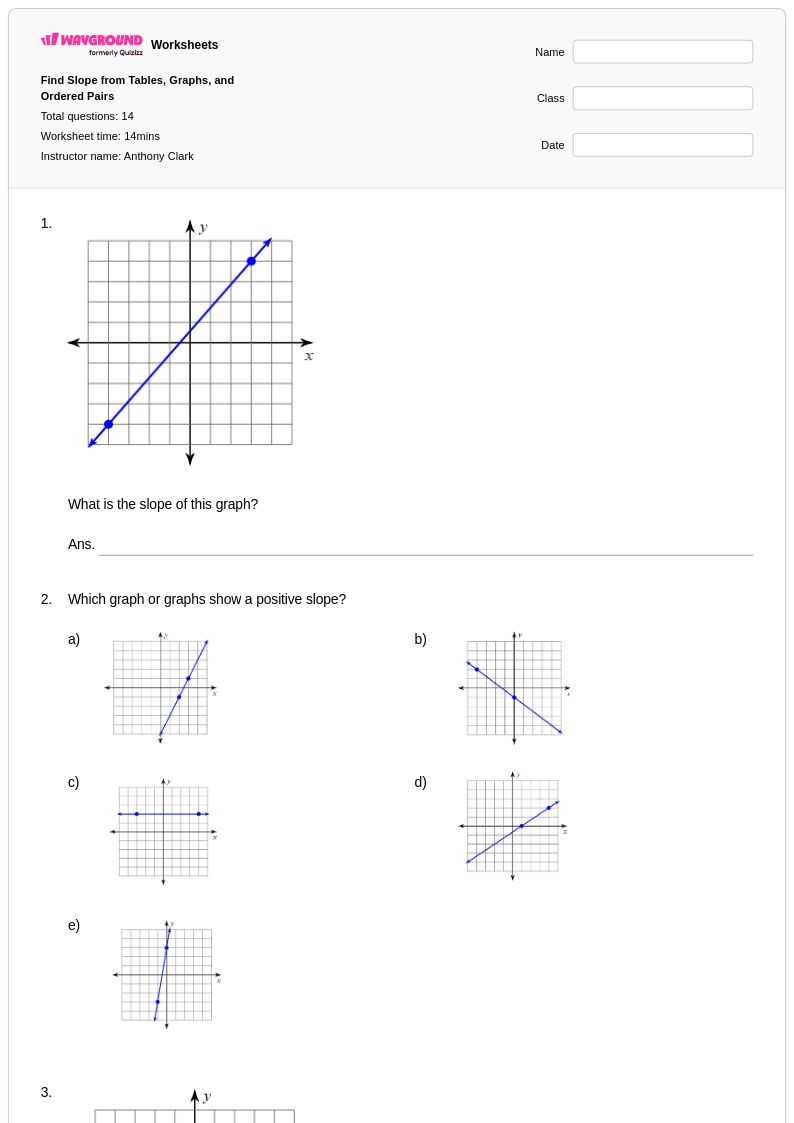
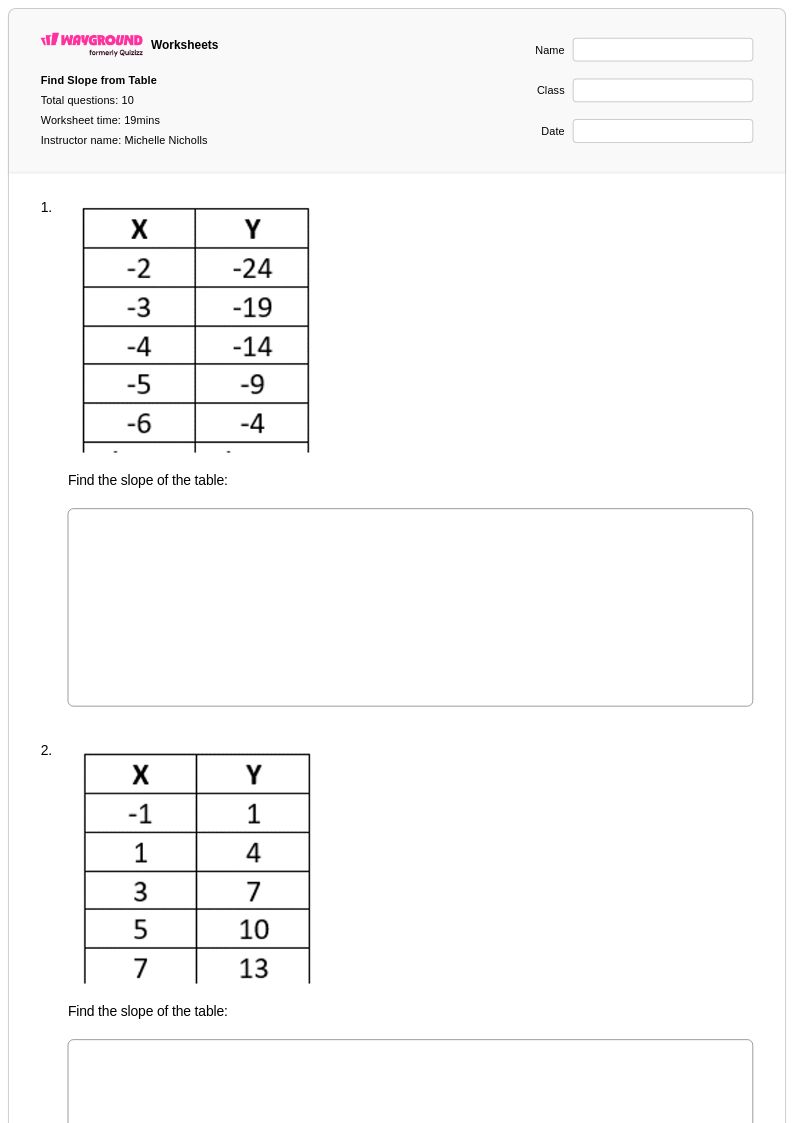
Slope from table worksheets available through Wayground (formerly Quizizz) provide students with essential practice in calculating the rate of change between two points using organized data sets. These comprehensive worksheets strengthen critical algebraic skills by requiring students to identify coordinate pairs from tables, apply the slope formula, and interpret the meaning of positive, negative, zero, and undefined slopes in various mathematical contexts. Each worksheet collection includes detailed answer keys that guide students through step-by-step solutions, while the free printable format allows for flexible classroom implementation and individual practice. The carefully structured practice problems progress from basic integer coordinates to more complex scenarios involving fractions and decimals, ensuring students develop both computational fluency and conceptual understanding of how slope represents constant rates of change in linear relationships.
Wayground (formerly Quizizz) empowers educators with millions of teacher-created resources specifically designed for slope from table instruction, featuring robust search and filtering capabilities that allow quick identification of materials aligned to specific curriculum standards and learning objectives. The platform's differentiation tools enable teachers to customize worksheets based on individual student needs, offering multiple difficulty levels and problem types within the same topic area. These slope from table resources are available in both printable pdf format and interactive digital versions, providing maximum flexibility for lesson planning, targeted remediation sessions, and enrichment activities. Teachers can efficiently organize their instruction around these comprehensive worksheet collections, using them to assess student progress, reinforce classroom learning, and provide additional skill practice that builds confidence in working with linear equations and graphing concepts.
FAQs
How do I teach students to find slope from a table?
What exercises help students practice calculating slope from a table?
What are common mistakes students make when finding slope from a table?
How can I use this slope from table worksheet?
How does finding slope from a table fit into the math curriculum?
How can I differentiate this topic for diverse learners?