Free Printable Actual Yield Worksheets for Class 11
Class 11 actual yield chemistry worksheets and printables help students master stoichiometric calculations, practice problems with theoretical versus actual yield comparisons, and include comprehensive answer keys for effective learning.
Explore printable Actual Yield worksheets for Class 11
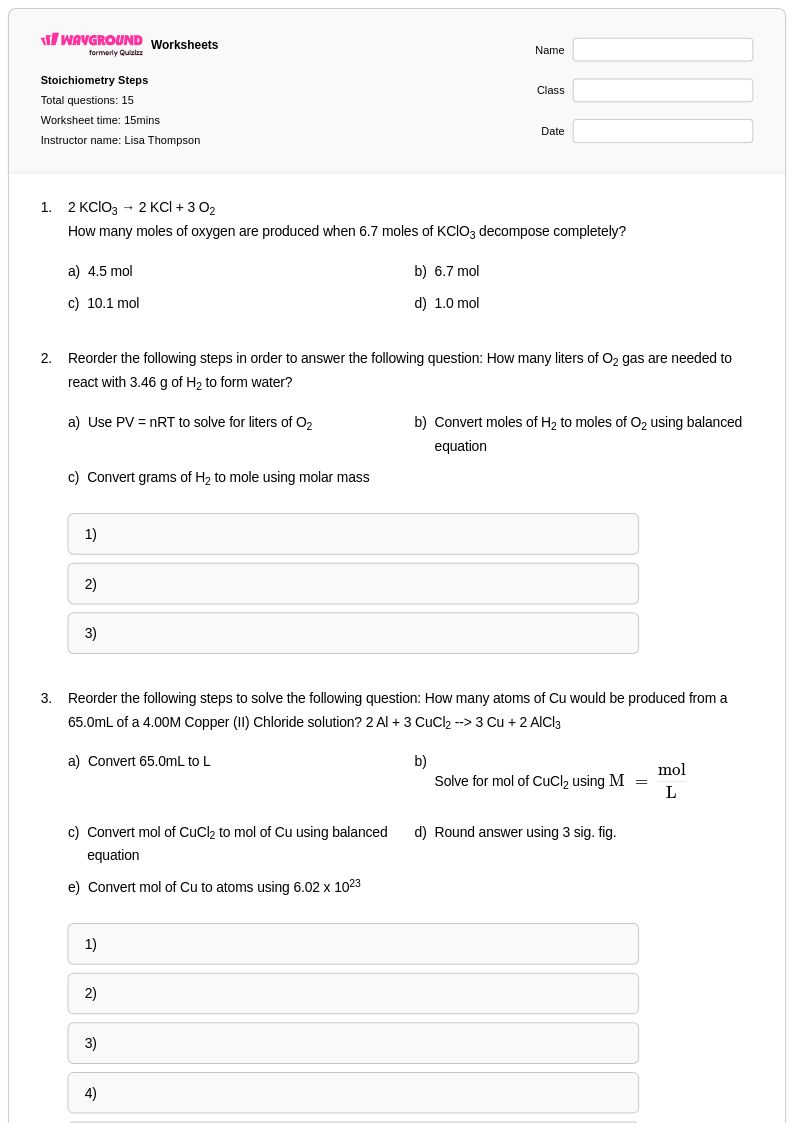
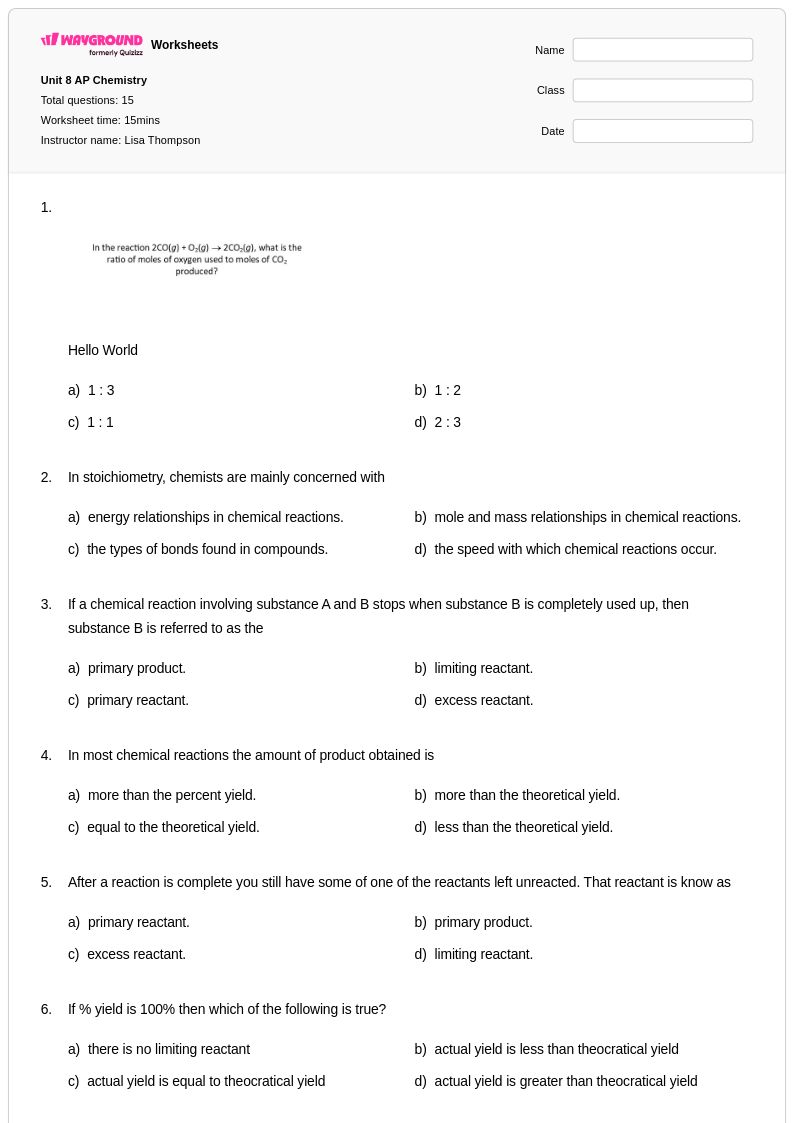
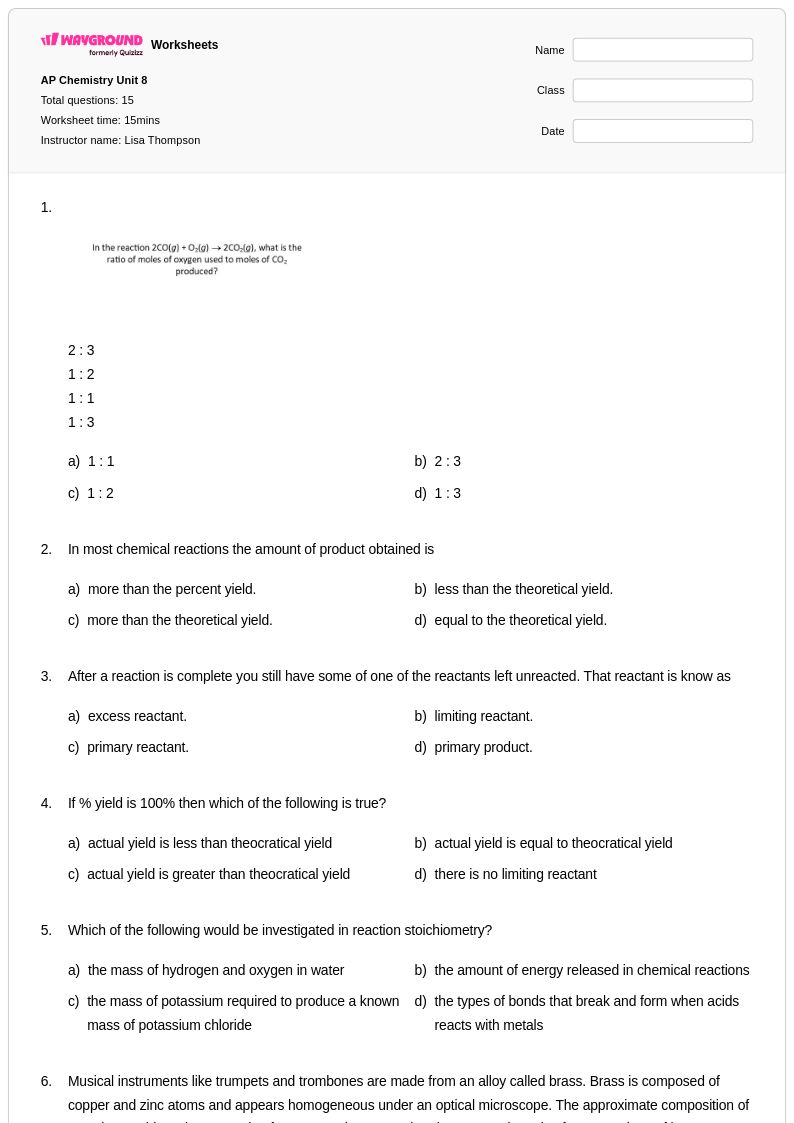
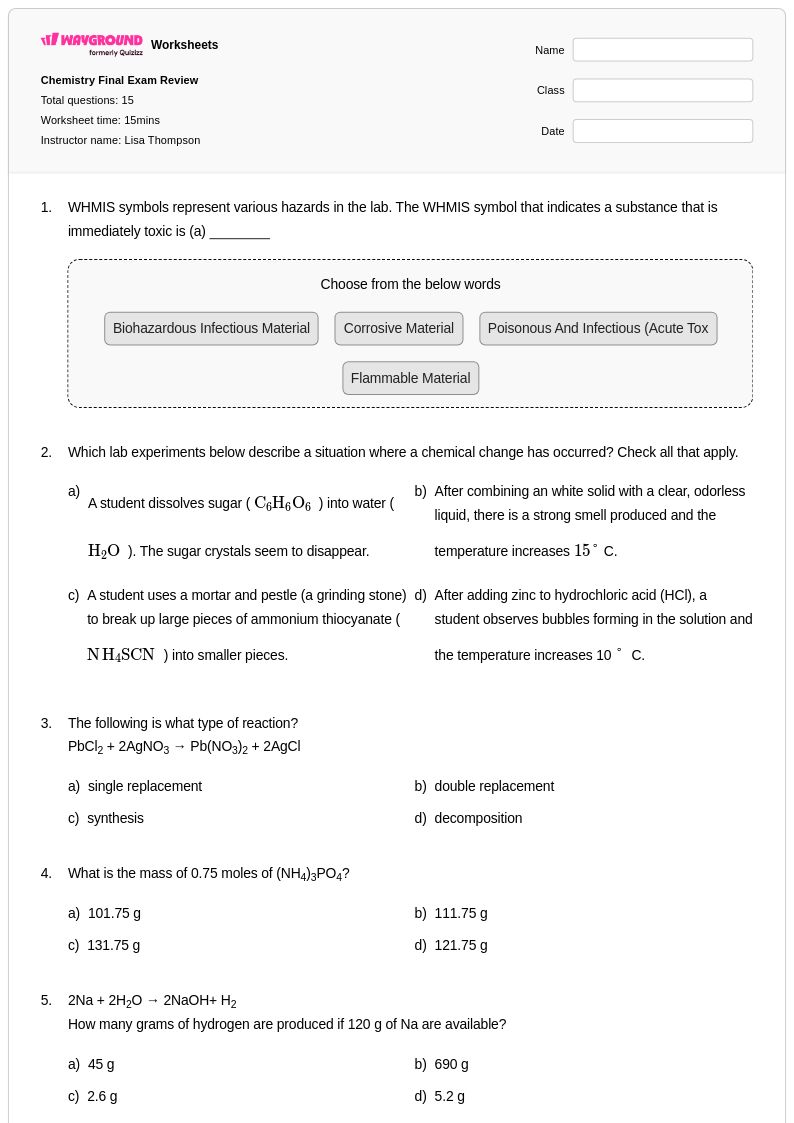
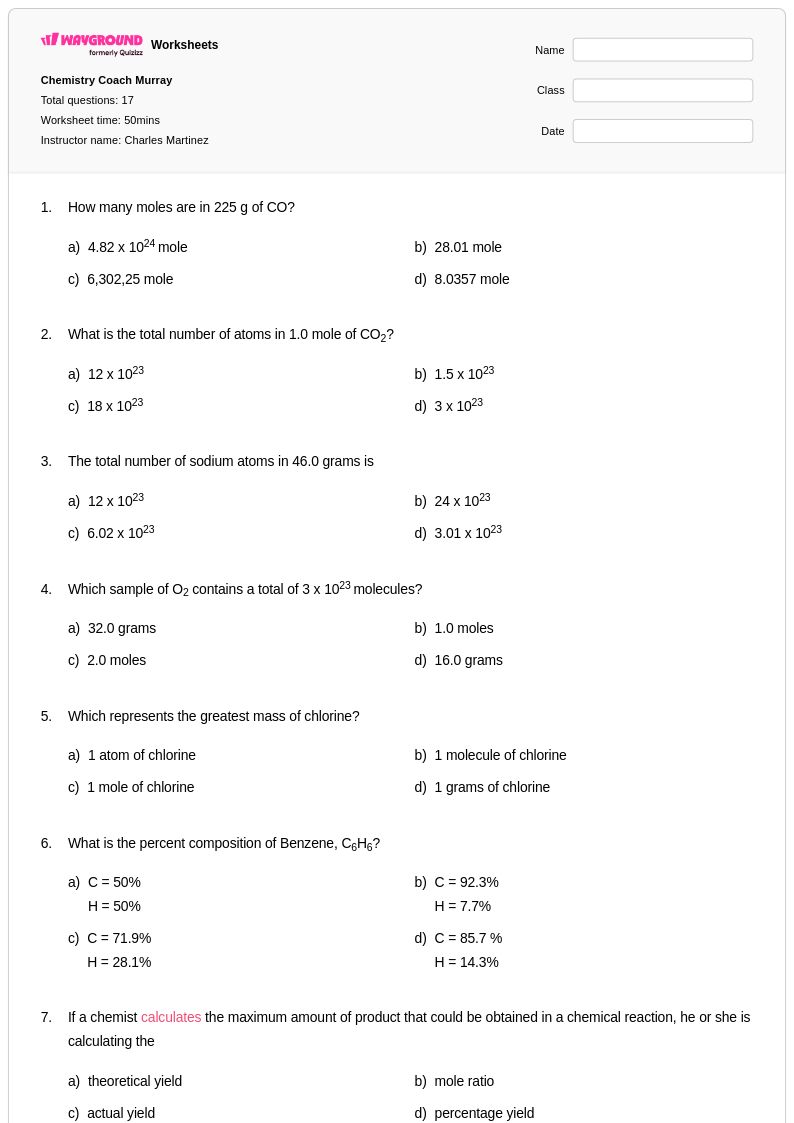
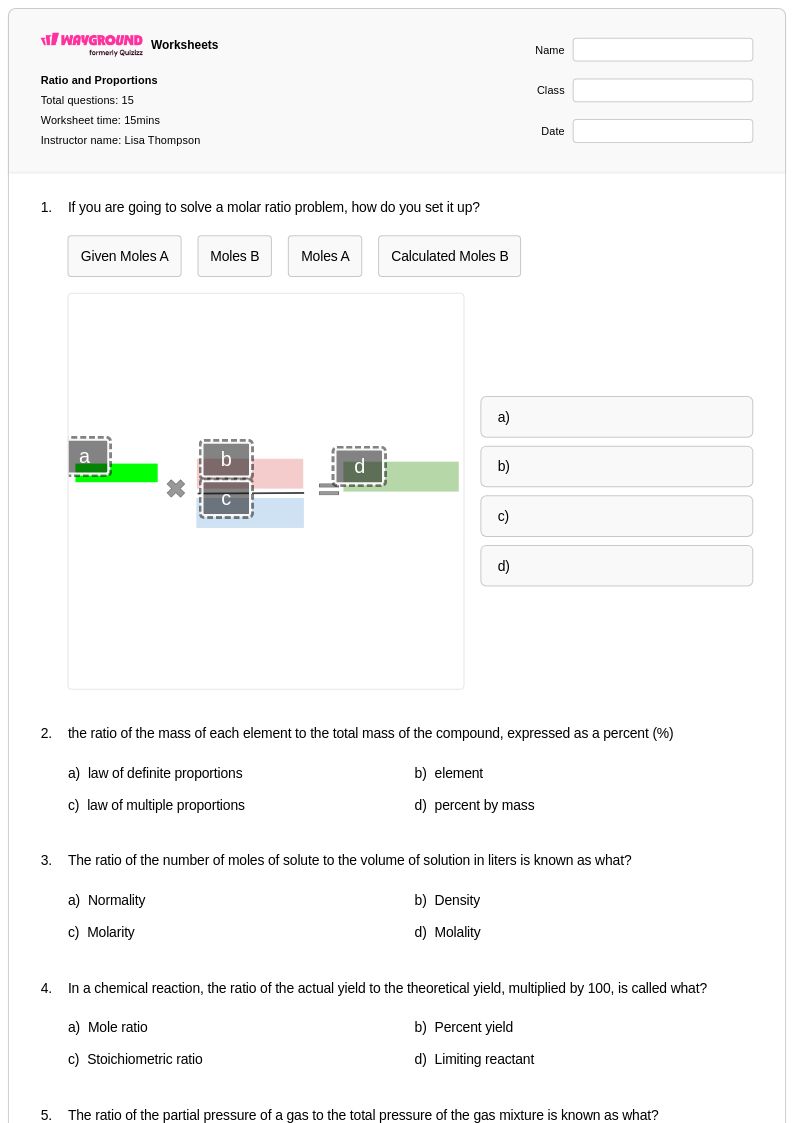
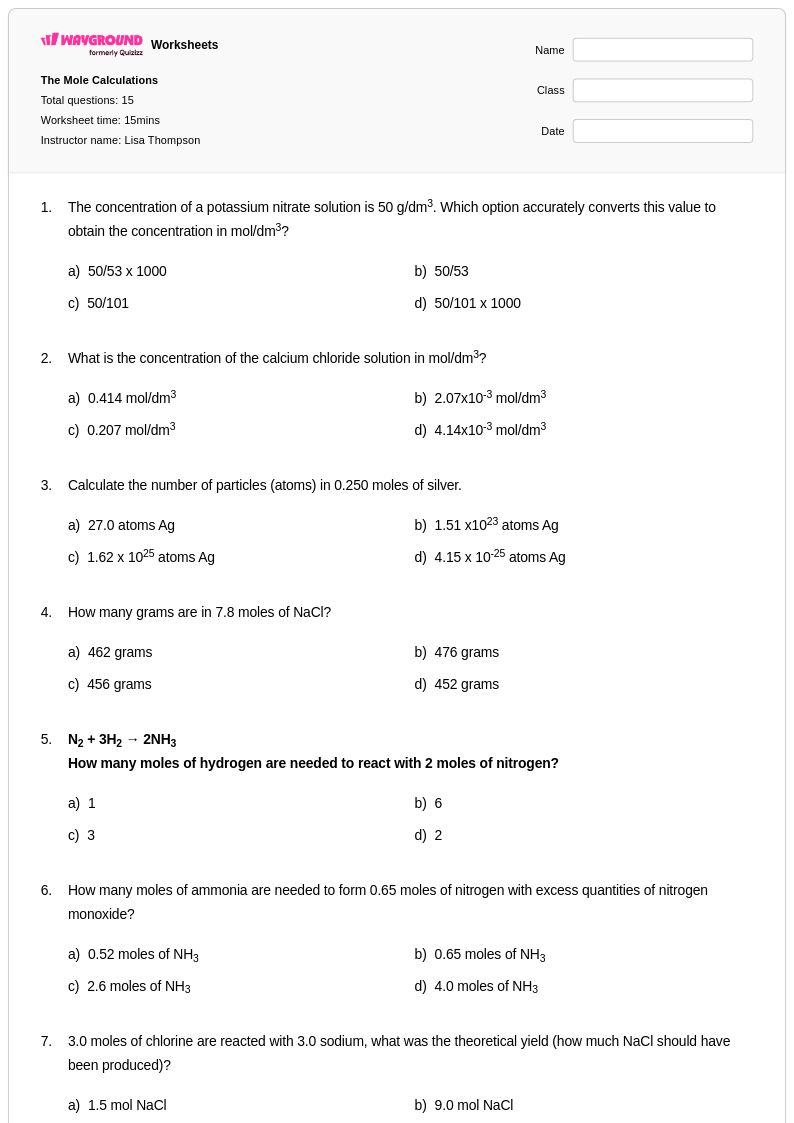
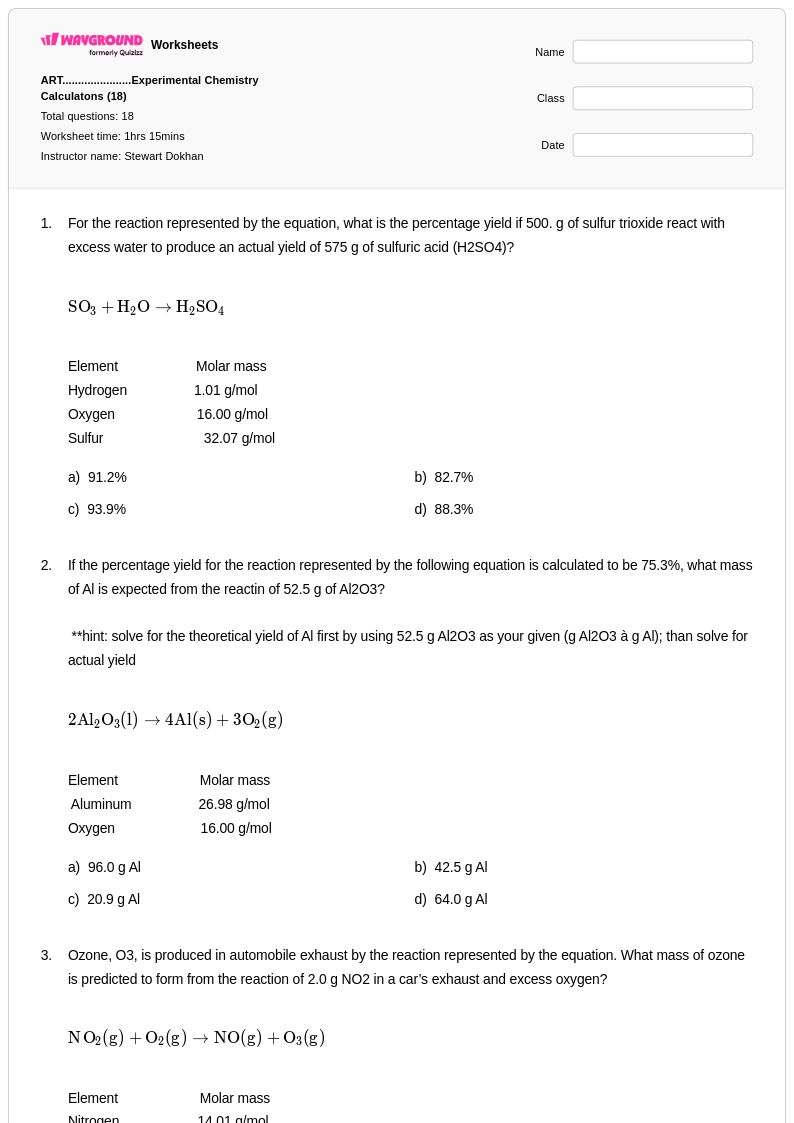
Actual yield worksheets for Class 11 chemistry students available through Wayground (formerly Quizizz) provide comprehensive practice in calculating the real-world amounts of products obtained from chemical reactions. These expertly designed worksheets strengthen students' abilities to determine percent yield, compare theoretical calculations with experimental results, and analyze factors that influence reaction efficiency in laboratory settings. Students develop critical analytical skills as they work through practice problems that mirror authentic laboratory scenarios, learning to account for incomplete reactions, side reactions, and experimental limitations. Each worksheet includes detailed answer keys and step-by-step solutions, making them valuable resources for both independent study and classroom instruction, with free printable options available in convenient pdf format for flexible learning environments.
Wayground (formerly Quizizz) empowers chemistry teachers with millions of teacher-created worksheet resources specifically designed for actual yield concepts and broader Class 11 chemistry curriculum standards. The platform's advanced search and filtering capabilities allow educators to quickly locate materials that align with specific learning objectives and state standards, while built-in differentiation tools enable customization for students with varying skill levels and learning needs. Teachers can seamlessly access both printable pdf versions and interactive digital formats, facilitating efficient lesson planning and providing multiple pathways for student engagement. These comprehensive worksheet collections support targeted remediation for struggling students, enrichment opportunities for advanced learners, and systematic skill practice that reinforces the mathematical precision required for stoichiometric calculations and experimental analysis in chemistry.
FAQs
How do I teach actual yield and percent yield to chemistry students?
Start by ensuring students have a solid foundation in mole conversions and stoichiometric ratios before introducing actual yield. Teach the concept by contrasting theoretical yield (the maximum possible product calculated from stoichiometry) with actual yield (the amount of product physically recovered in the lab). Emphasize that actual yield is always less than or equal to theoretical yield due to incomplete reactions, side reactions, and product loss during transfer or purification. Having students calculate percent yield from real or simulated lab data reinforces why efficiency matters in industrial and pharmaceutical chemistry.
What practice problems help students master actual yield calculations?
Effective practice should progress from straightforward actual yield determinations using given theoretical yields to multi-step problems that require students to first identify the limiting reagent, calculate theoretical yield, and then determine percent yield from a given actual yield. Problems that embed real-world contexts, such as industrial synthesis or pharmaceutical production, help students see why these calculations matter. Worksheets that include both percent yield and actual yield calculations in the same problem set reinforce how the two concepts are interconnected.
What mistakes do students commonly make when calculating actual yield and percent yield?
The most common error is confusing actual yield with theoretical yield, leading students to calculate a percent yield greater than 100%, which is a signal to revisit their setup. Students also frequently forget to identify the limiting reagent before calculating theoretical yield, which causes all downstream calculations to be incorrect. Another recurring mistake is mishandling unit conversions, particularly when masses are given in grams but molar masses require conversion to moles first. Emphasizing a step-by-step calculation framework helps students catch these errors before they compound.
How do I differentiate actual yield instruction for students at different ability levels?
For struggling students, begin with problems where the theoretical yield is provided so they can focus exclusively on the percent yield formula without the added complexity of stoichiometric setup. Advanced students should tackle problems requiring limiting reagent identification as a prerequisite step before any yield calculation. On Wayground, teachers can apply accommodations such as reduced answer choices to lower cognitive load for selected students, or enable Read Aloud so that problem text is read to students who need additional support, while the rest of the class receives standard settings.
How do I use Wayground's actual yield worksheets in my chemistry class?
Wayground's actual yield worksheets are available as printable PDFs for traditional classroom use and in digital formats for technology-integrated learning environments, giving teachers flexibility in how they assign practice. Teachers can also host these worksheets as a quiz directly on Wayground, enabling students to receive immediate feedback on multi-step stoichiometry problems. Each worksheet includes a complete answer key, which supports both independent student review and efficient teacher grading of complex percent yield and limiting reagent calculations.