Free Printable Autosomal Recessive Inheritance Worksheets for Class 9
Class 9 autosomal recessive inheritance worksheets from Wayground help students master genetic probability patterns through free printable PDFs featuring practice problems and complete answer keys.
Explore printable Autosomal Recessive Inheritance worksheets for Class 9
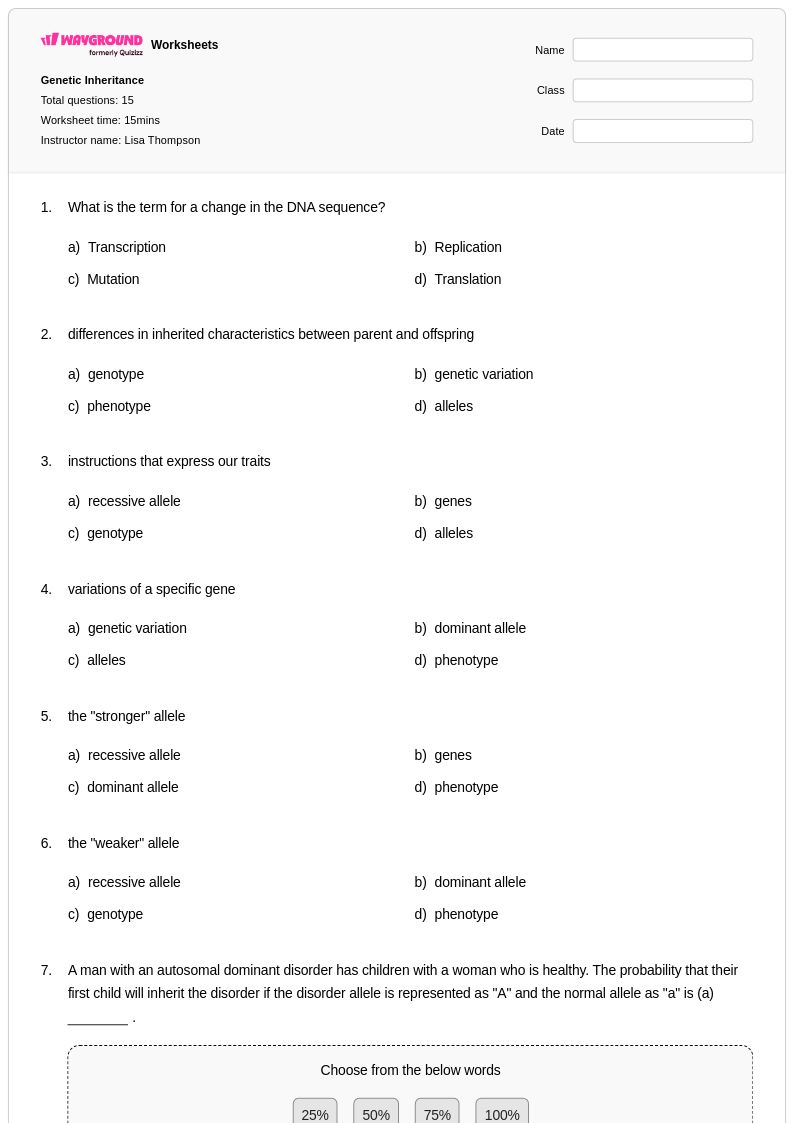
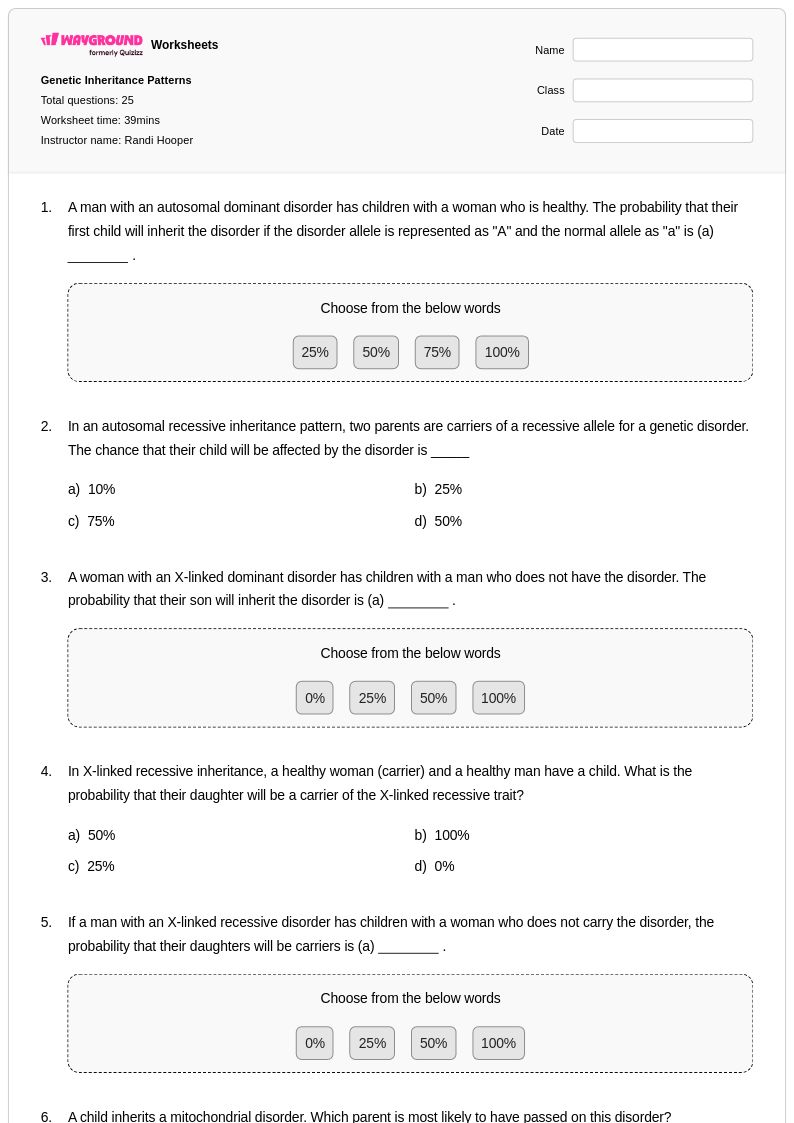
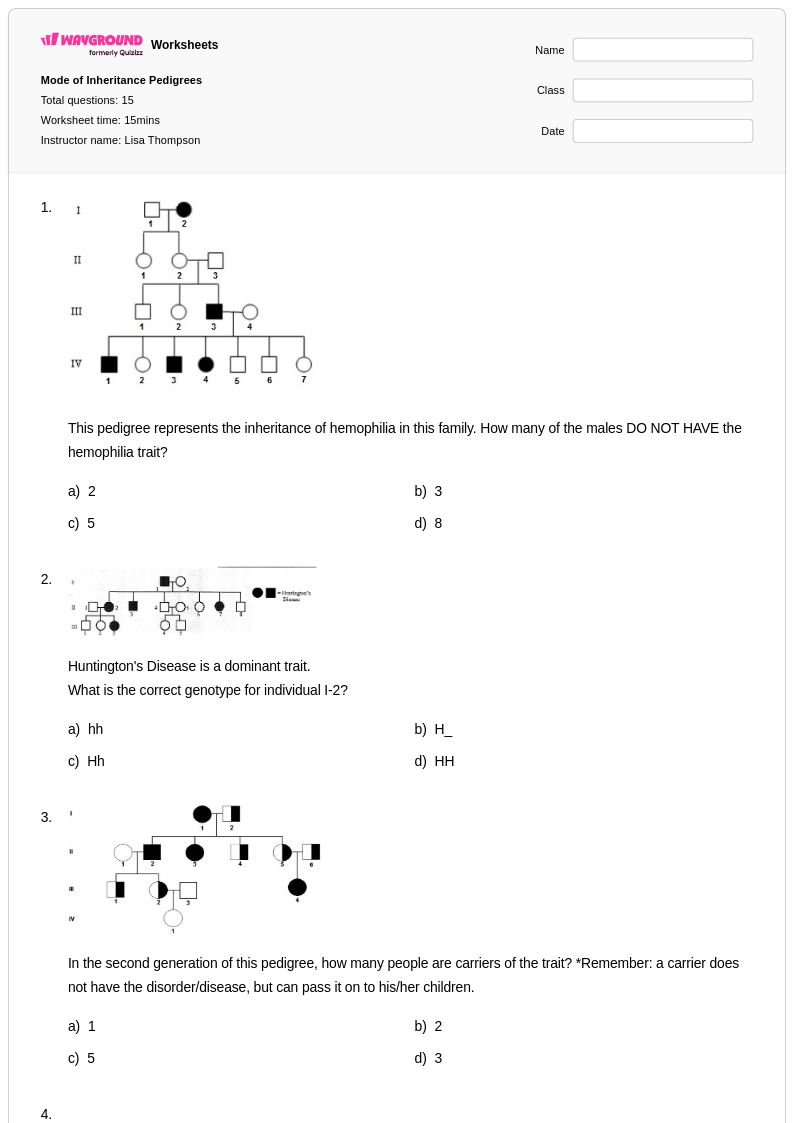
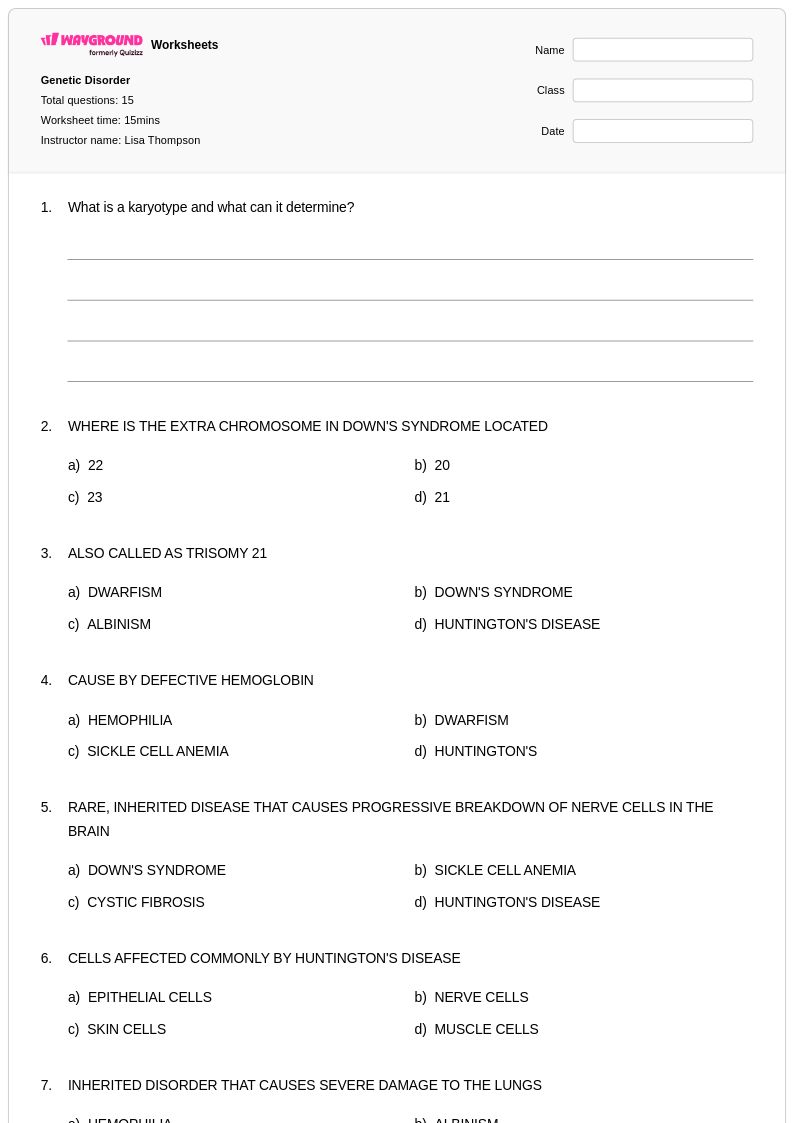
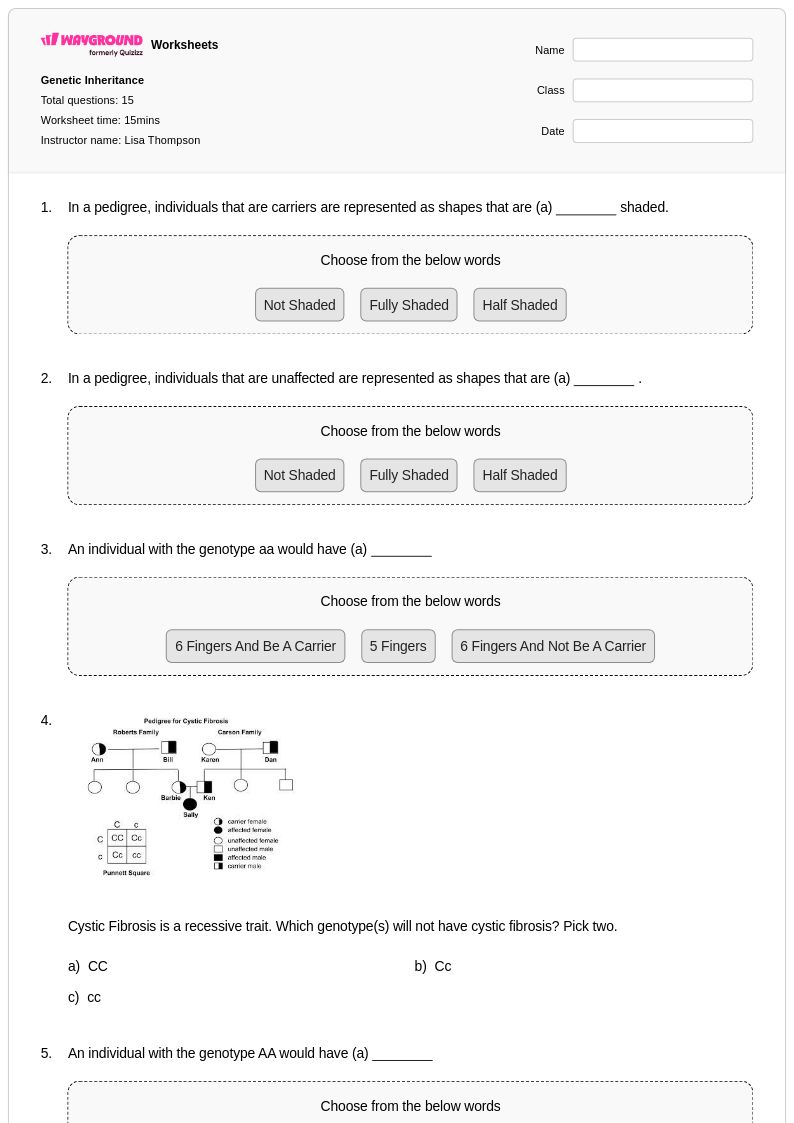
Autosomal recessive inheritance worksheets for Class 9 students available through Wayground (formerly Quizizz) provide comprehensive practice materials that help students master one of genetics' most fundamental concepts. These carefully designed resources strengthen critical thinking skills as students learn to analyze pedigree charts, predict offspring probabilities, and understand how recessive alleles are expressed only when present in homozygous conditions. The worksheet collections include detailed answer keys that guide students through complex genetic crosses, while printable pdf formats ensure accessibility for both classroom and home study. Students work through practice problems that cover carrier identification, risk assessment calculations, and real-world applications of autosomal recessive disorders, building the analytical foundation necessary for advanced genetics coursework.
Wayground (formerly Quizizz) supports science educators with an extensive library of millions of teacher-created resources specifically designed for autosomal recessive inheritance instruction at the Class 9 level. The platform's robust search and filtering capabilities allow teachers to quickly locate materials that align with specific curriculum standards and learning objectives, while differentiation tools enable customization for students with varying ability levels. These worksheets are available in both printable and digital formats, including downloadable pdf versions, making them ideal for diverse classroom environments and remote learning situations. Teachers can effectively use these resources for initial skill development, targeted remediation of misconceptions about genetic inheritance patterns, enrichment activities for advanced learners, and ongoing practice to reinforce complex genetic principles throughout the academic year.
FAQs
How do I teach autosomal recessive inheritance to my students?
Start by establishing the foundational distinction between dominant and recessive alleles before introducing the autosomal recessive model. Use Punnett squares to show why two copies of the recessive allele are required for a trait to be expressed, then layer in real-world examples like cystic fibrosis or sickle cell anemia to make the concept concrete. Pedigree analysis works well as a follow-up activity because it challenges students to apply carrier logic across multiple generations, reinforcing why two unaffected carrier parents can produce an affected child.
What are the most common mistakes students make with autosomal recessive inheritance?
The most frequent misconception is that carriers must show some version of the trait, which leads students to incorrectly label heterozygous individuals as affected. Students also routinely confuse genotype with phenotype, assuming that having one recessive allele is enough for the trait to appear. A third common error occurs during pedigree analysis when students fail to recognize that unaffected parents must both be carriers if they produce an affected offspring, particularly when the affected child appears in an otherwise unaffected family.
What practice problems are most effective for helping students understand autosomal recessive inheritance?
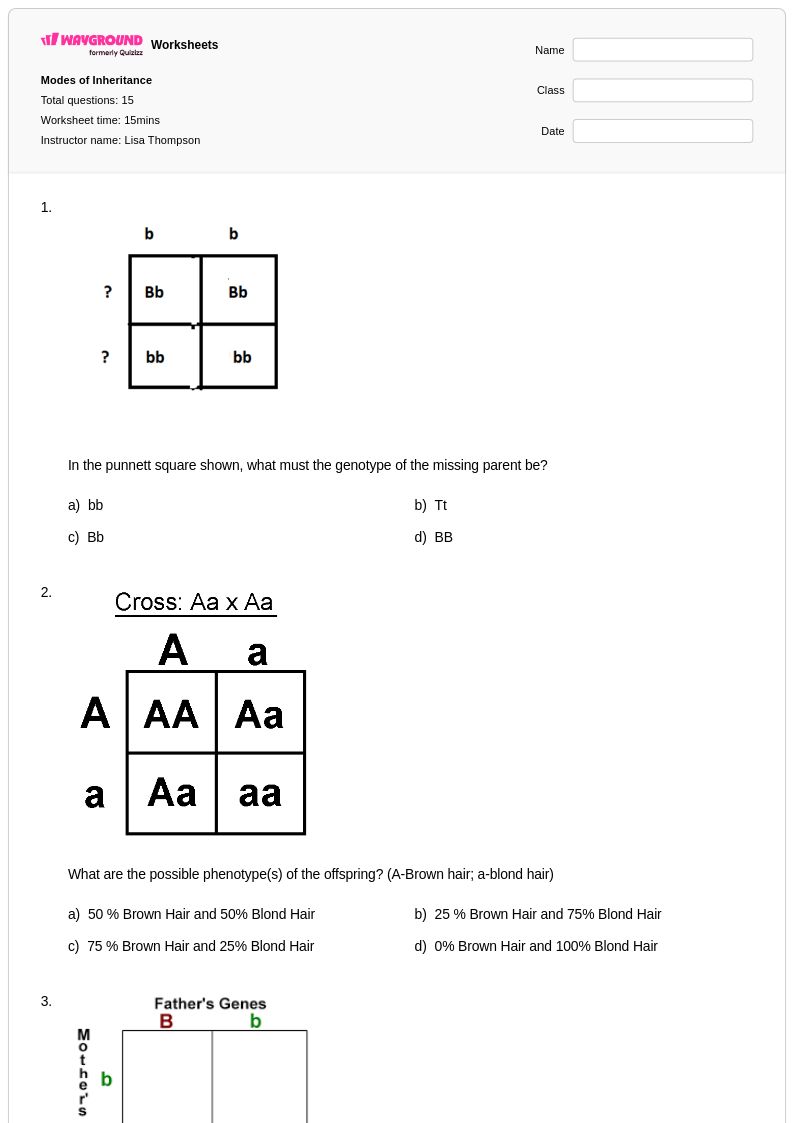
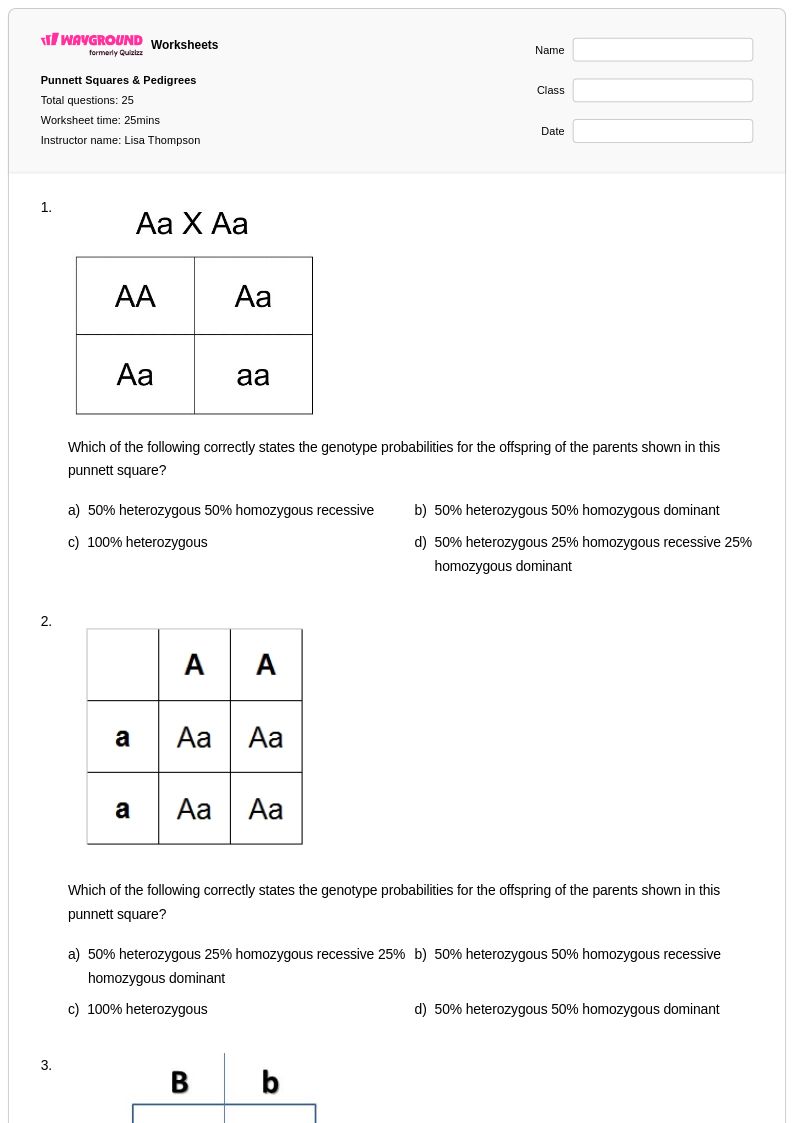
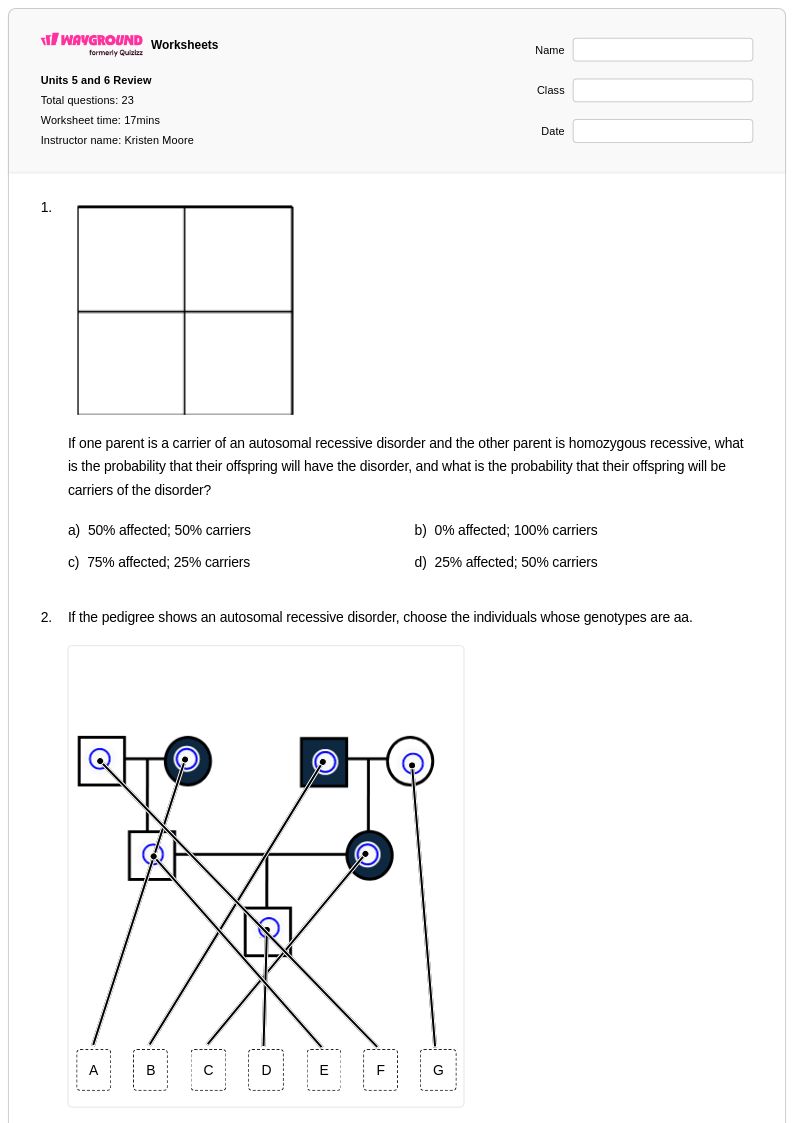
Punnett square crosses involving carrier parents (Aa x Aa) are the essential starting point because they generate the classic 1:2:1 genotype ratio and require students to distinguish affected, carrier, and homozygous dominant outcomes. Probability calculation problems that ask students to determine the likelihood of an affected child given parental genotypes reinforce quantitative reasoning alongside conceptual understanding. Multi-generational pedigree problems are the most rigorous practice type, as they require students to work backward from phenotypes to infer genotypes for individuals who may not be directly tested.
How do I help students differentiate between carriers and affected individuals in autosomal recessive inheritance?
Emphasize that carriers are heterozygous (Aa) and phenotypically normal because one functional dominant allele is sufficient to produce the protein or trait. Affected individuals are homozygous recessive (aa) and lack any functional dominant allele. Using real conditions like cystic fibrosis as a reference helps students understand why carriers do not experience symptoms while still being capable of passing the recessive allele to offspring. Consistent practice labeling pedigree individuals with genotype notation reinforces this distinction across varied problem contexts.
How can I use Wayground's autosomal recessive inheritance worksheets in my classroom?
Wayground's autosomal recessive inheritance worksheets are available as free printable PDFs for traditional classroom use and in digital formats for technology-integrated environments, including the option to host them as an interactive quiz on Wayground. Printable versions work well for independent practice, lab activities, or homework assignments, while digital formats allow teachers to track student progress and adjust settings in real time. Wayground also supports student-level accommodations such as read aloud, extended time, and reduced answer choices, making it straightforward to differentiate for students with IEPs or varied readiness levels without disrupting the rest of the class.
How do I use pedigrees to identify autosomal recessive inheritance patterns?
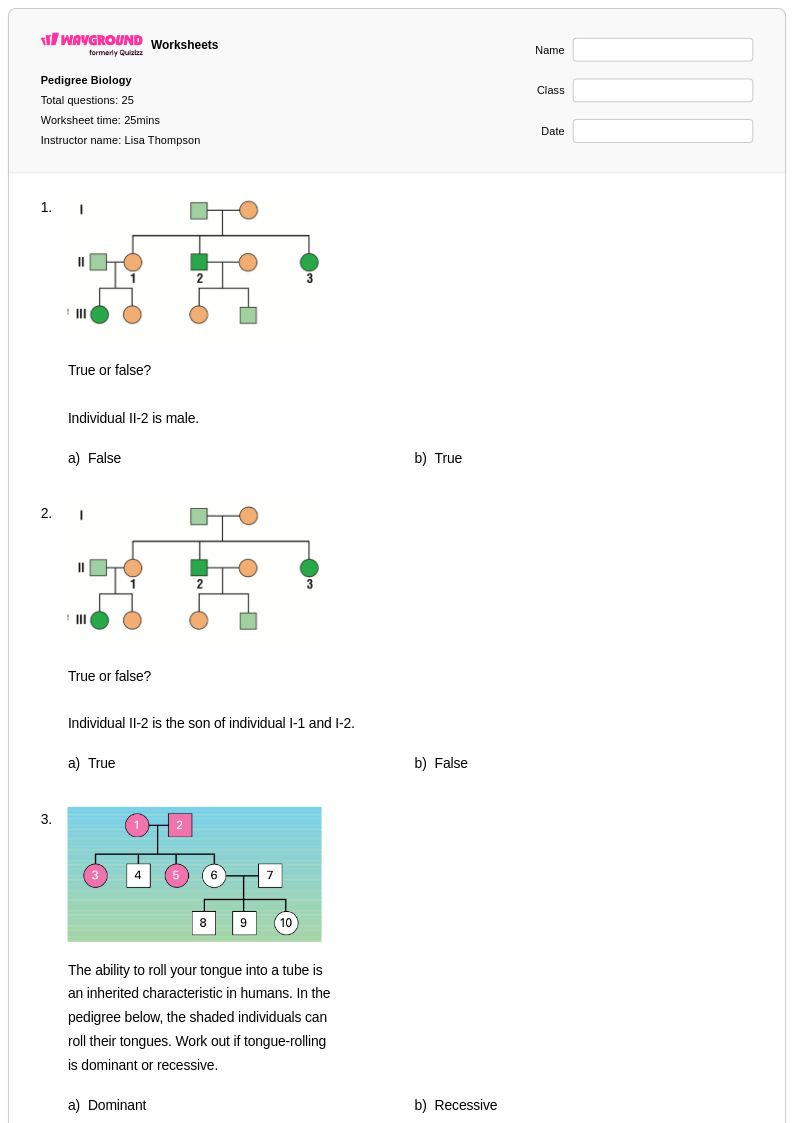
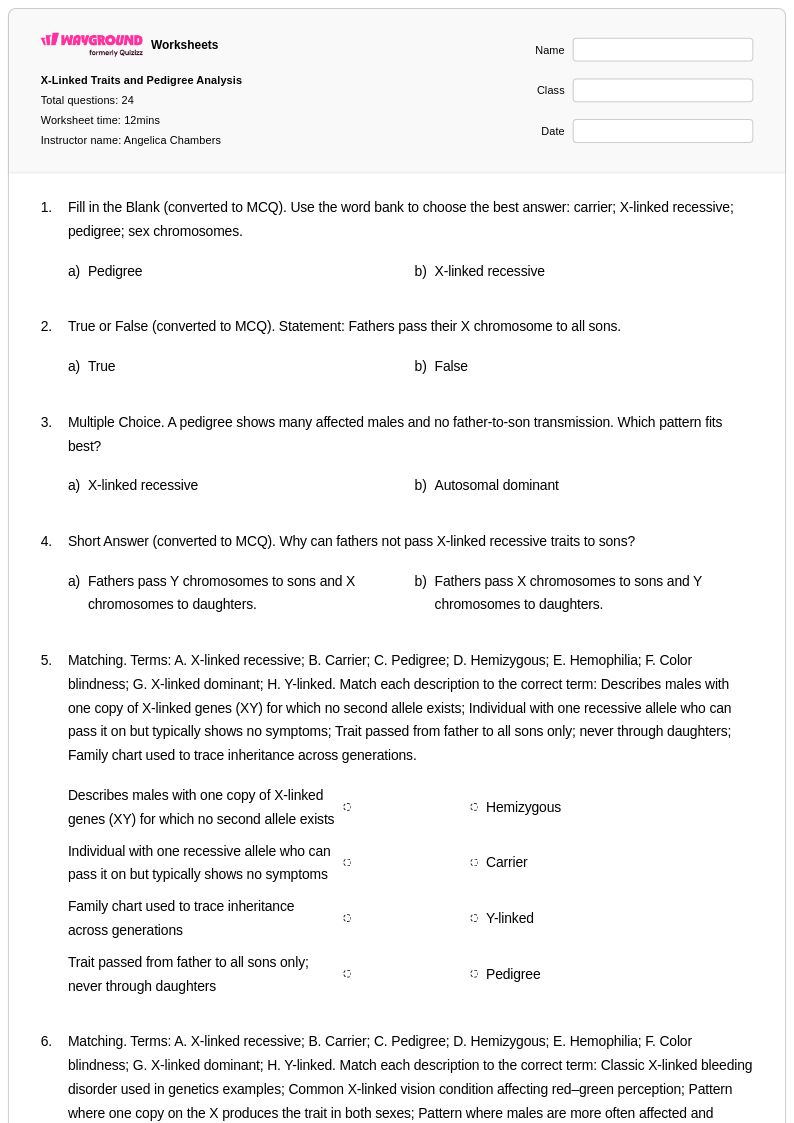
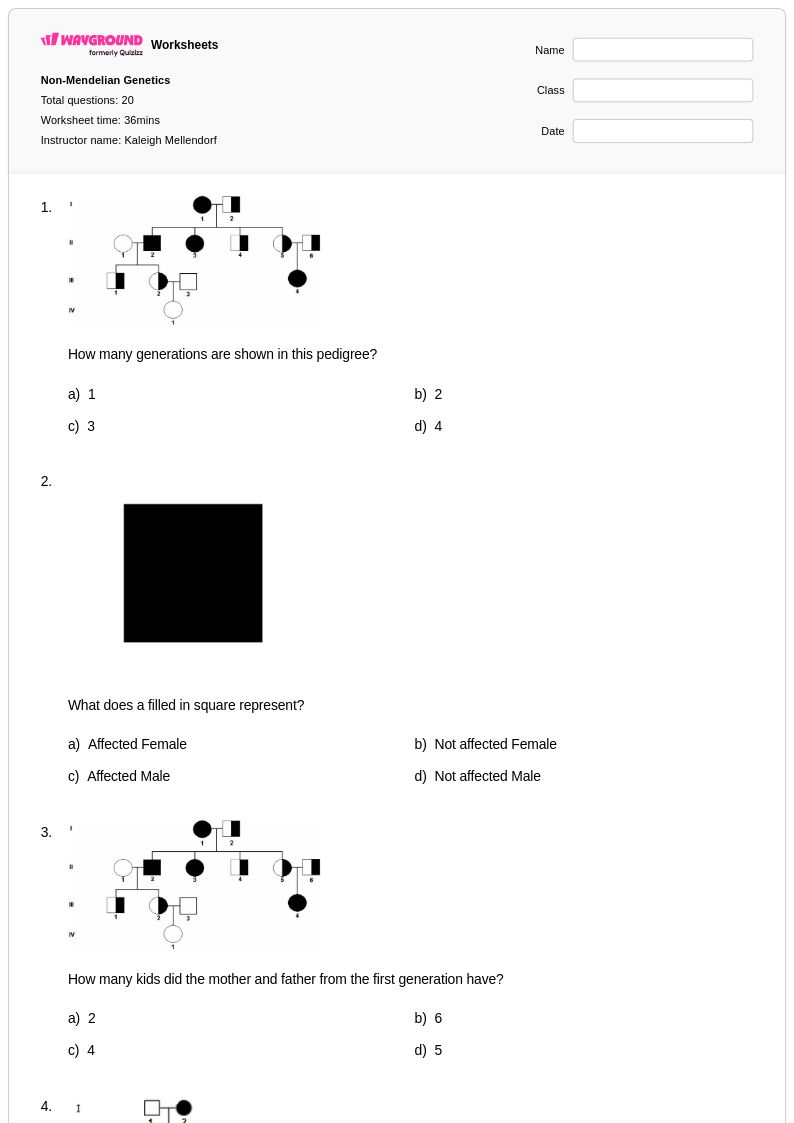
Look for affected individuals who appear in families where both parents are unaffected, which is the hallmark indicator of autosomal recessive inheritance. Both parents of an affected child must be obligate carriers (Aa), and the probability of each subsequent child being affected is 25%. Autosomal recessive patterns also appear equally across sexes, which helps distinguish them from X-linked recessive conditions that disproportionately affect males. When the same condition reappears after skipping one or more generations, that generational skipping is another strong diagnostic indicator of autosomal recessive transmission.