Free Printable Biodiversity and Conservation worksheets
Explore Wayground's comprehensive collection of biodiversity and conservation biology worksheets, featuring free printables and practice problems with answer keys to help students understand ecosystem diversity, species protection, and environmental stewardship concepts.
Explore printable Biodiversity and Conservation worksheets
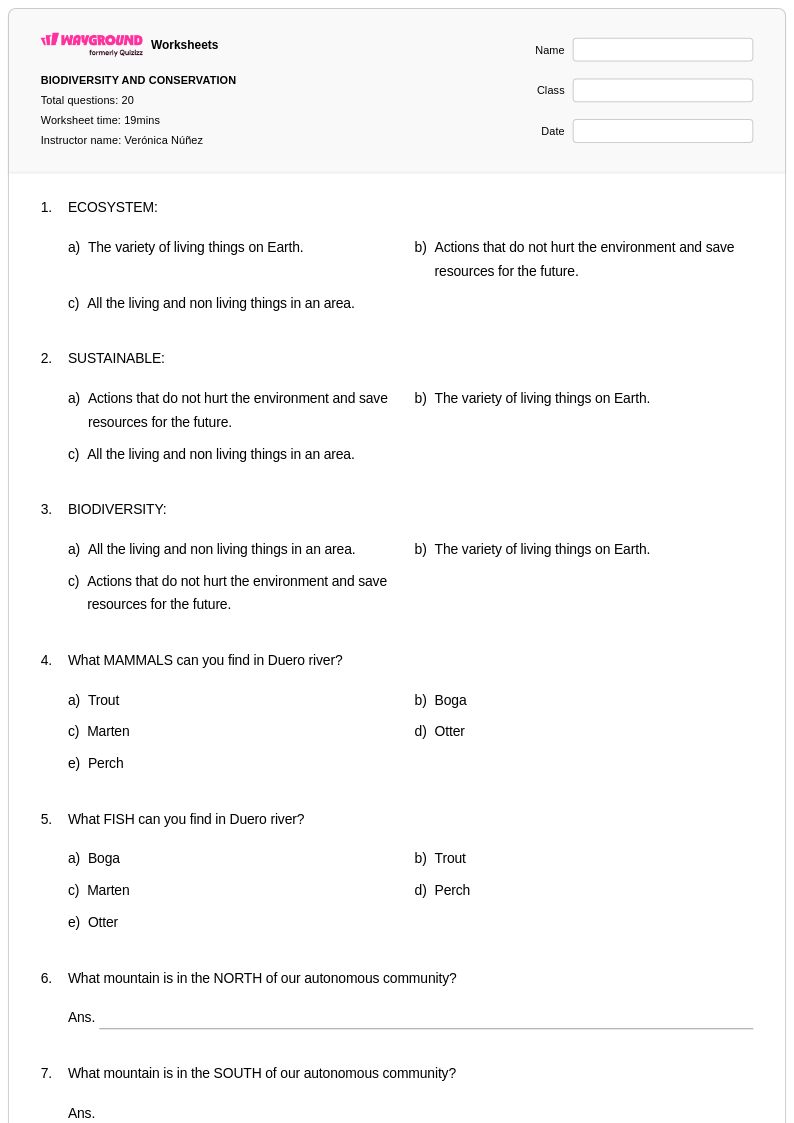
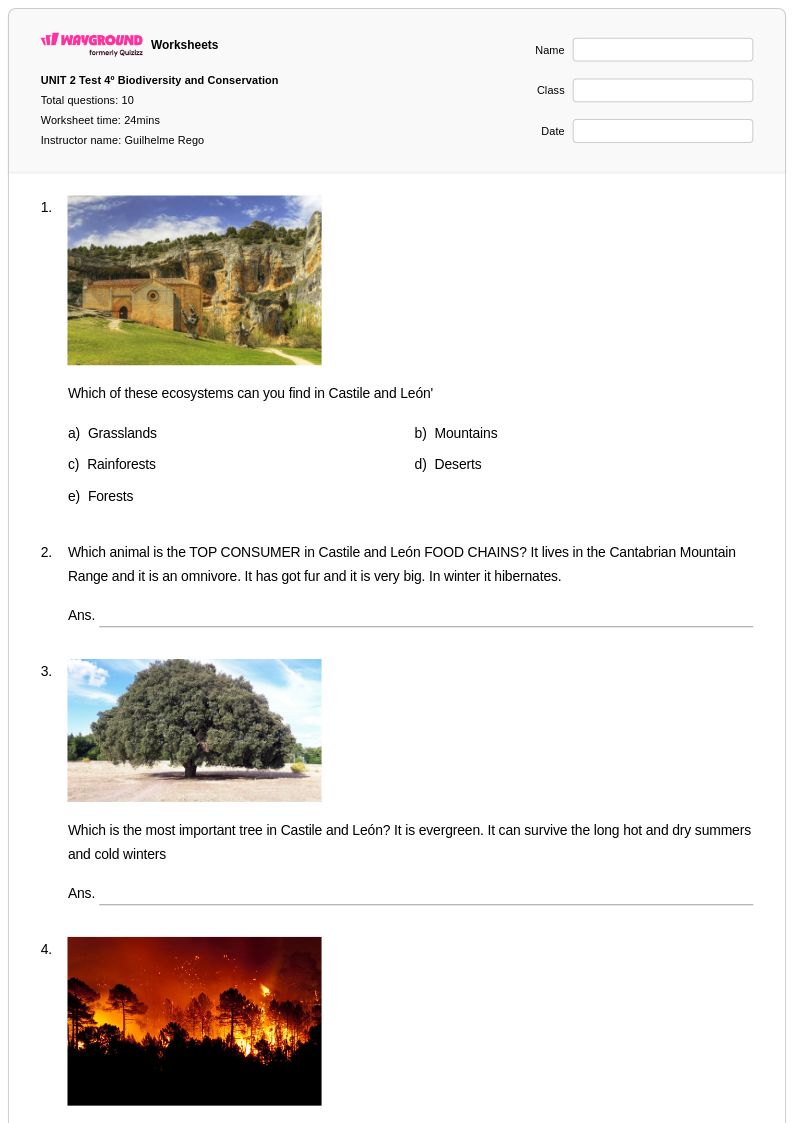
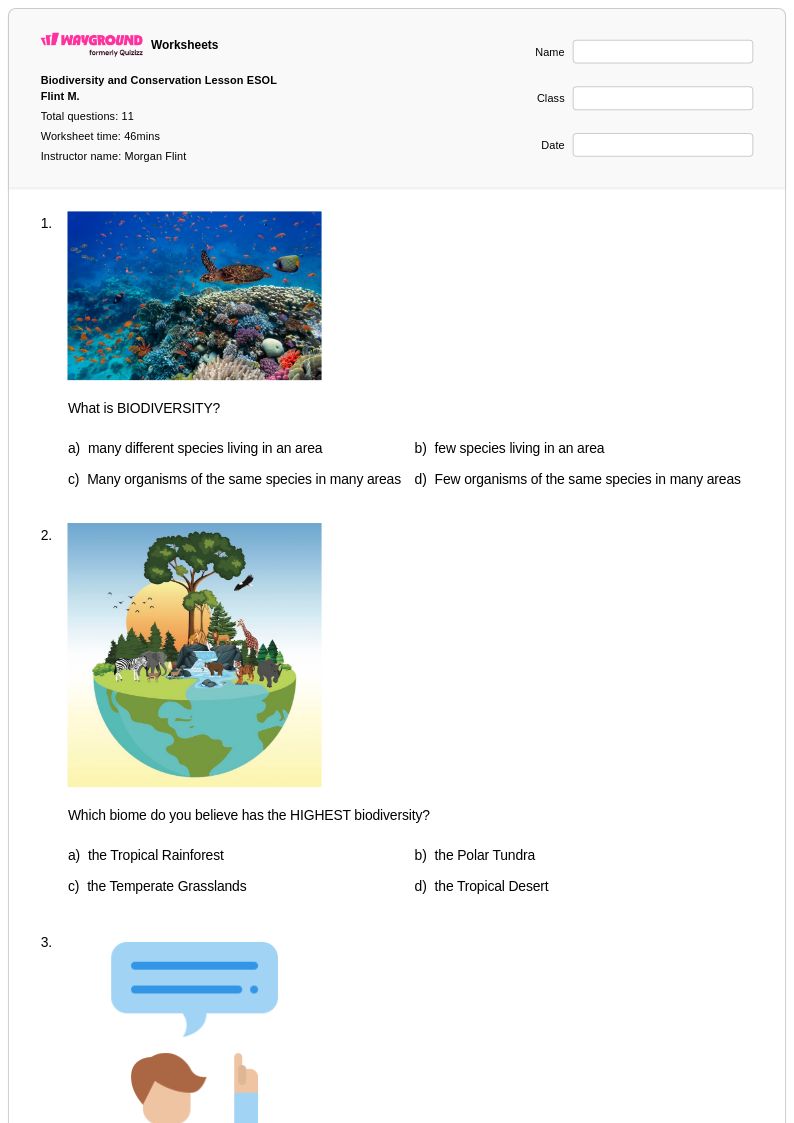
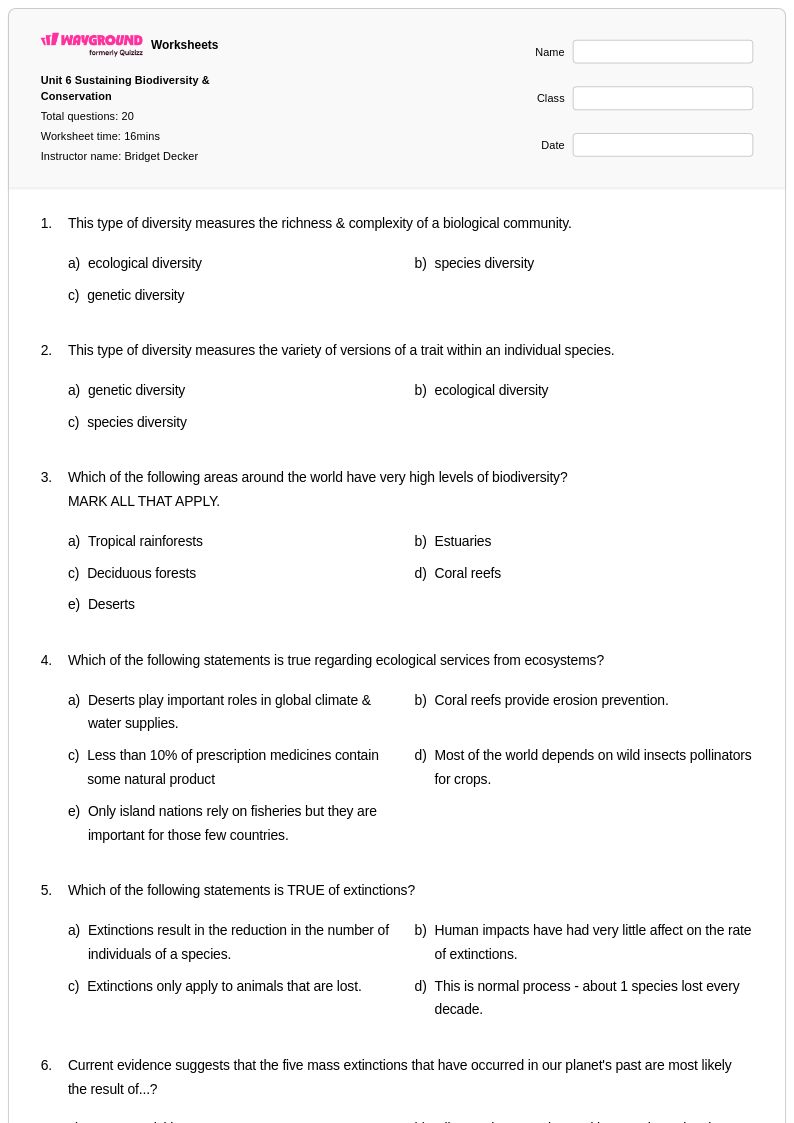
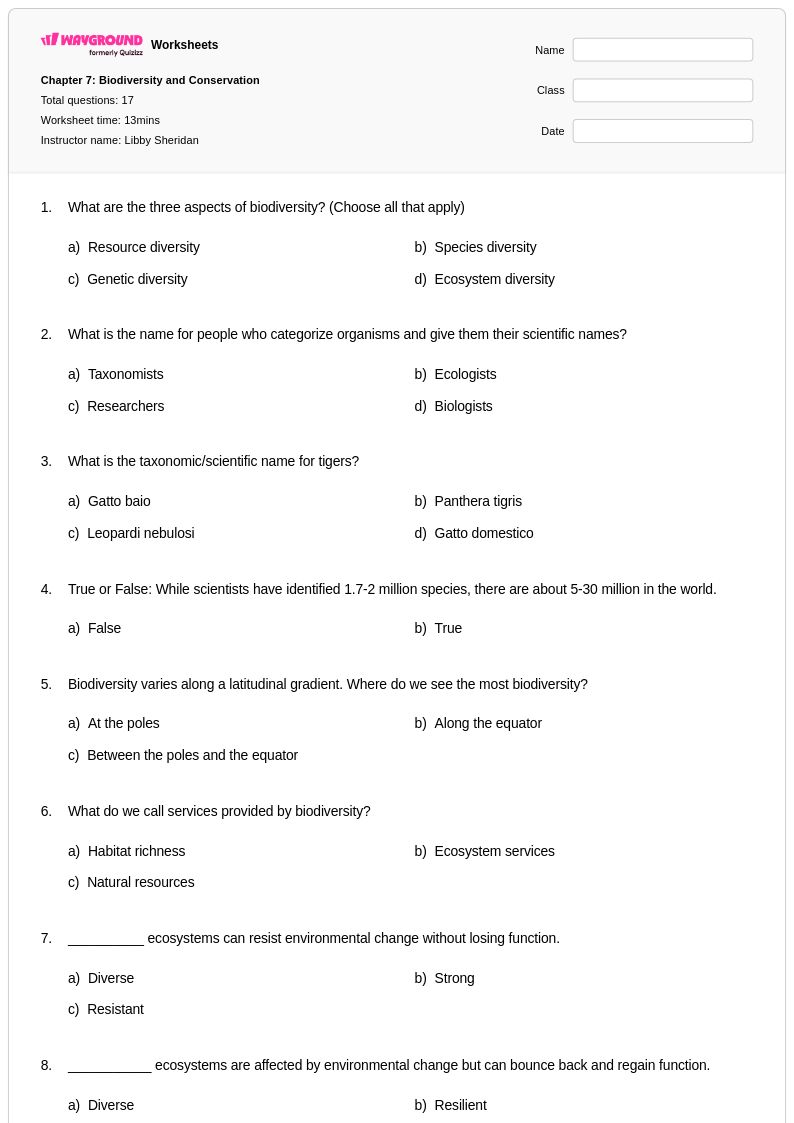
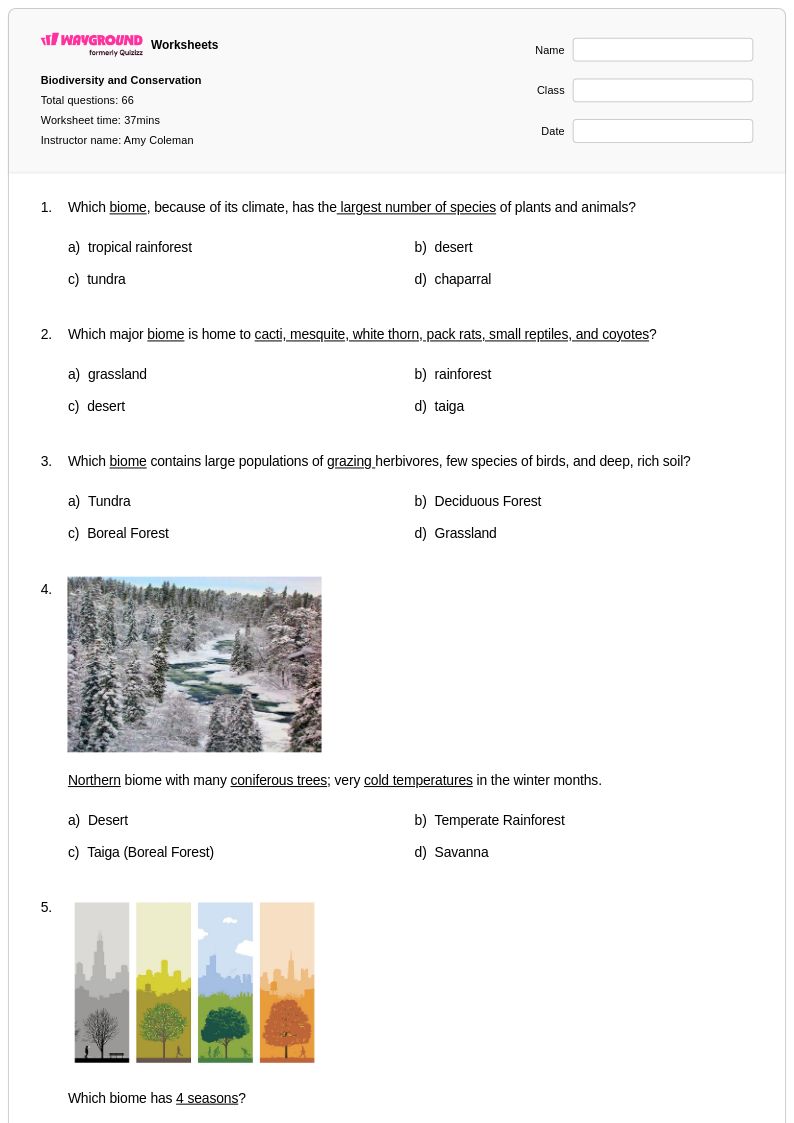
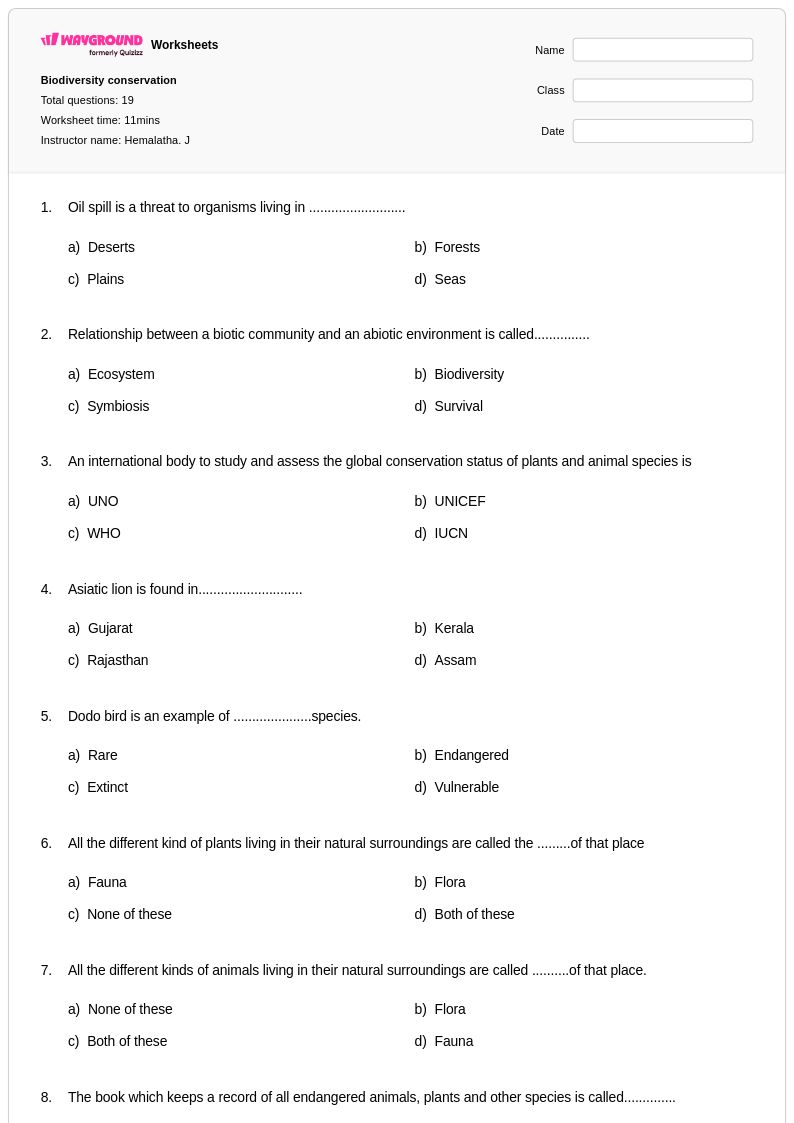
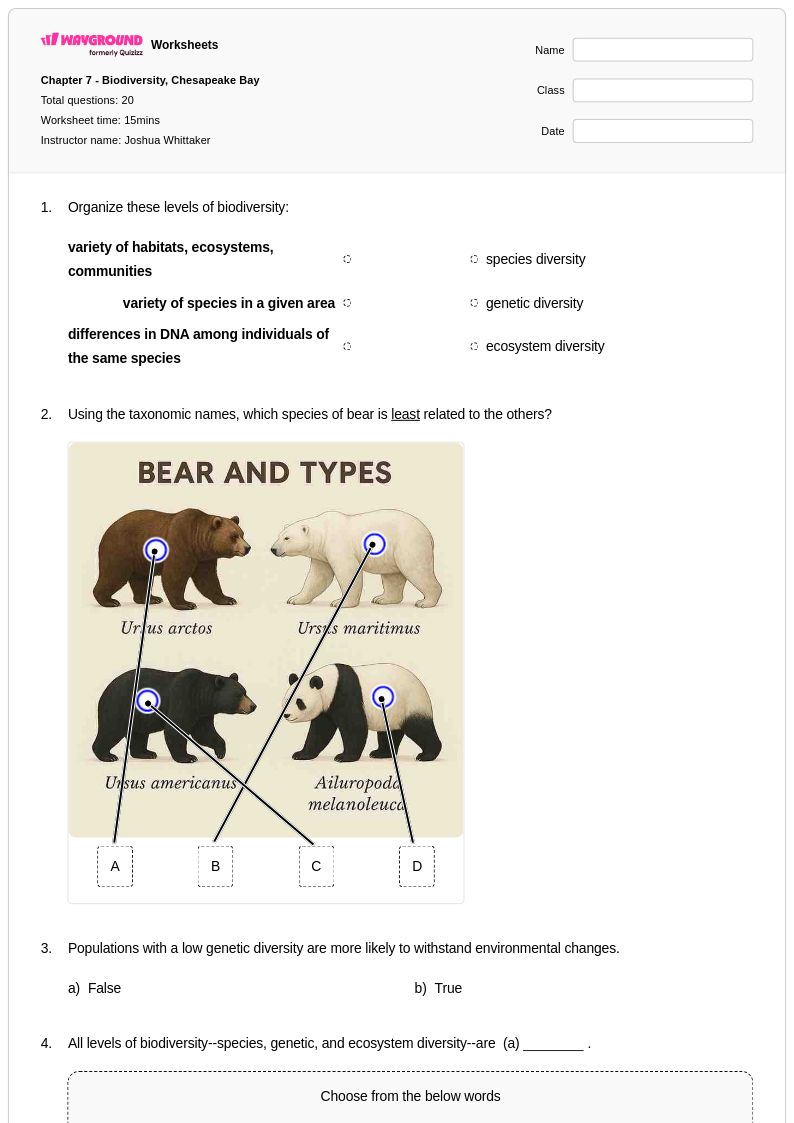
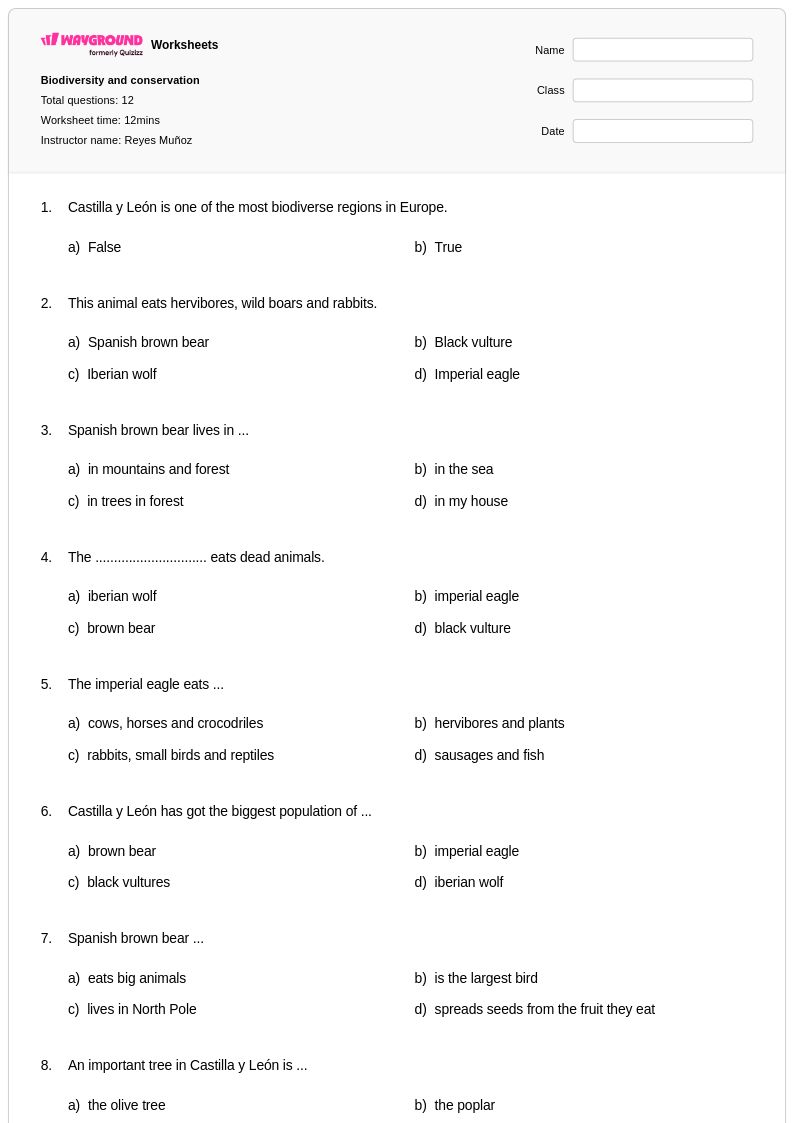
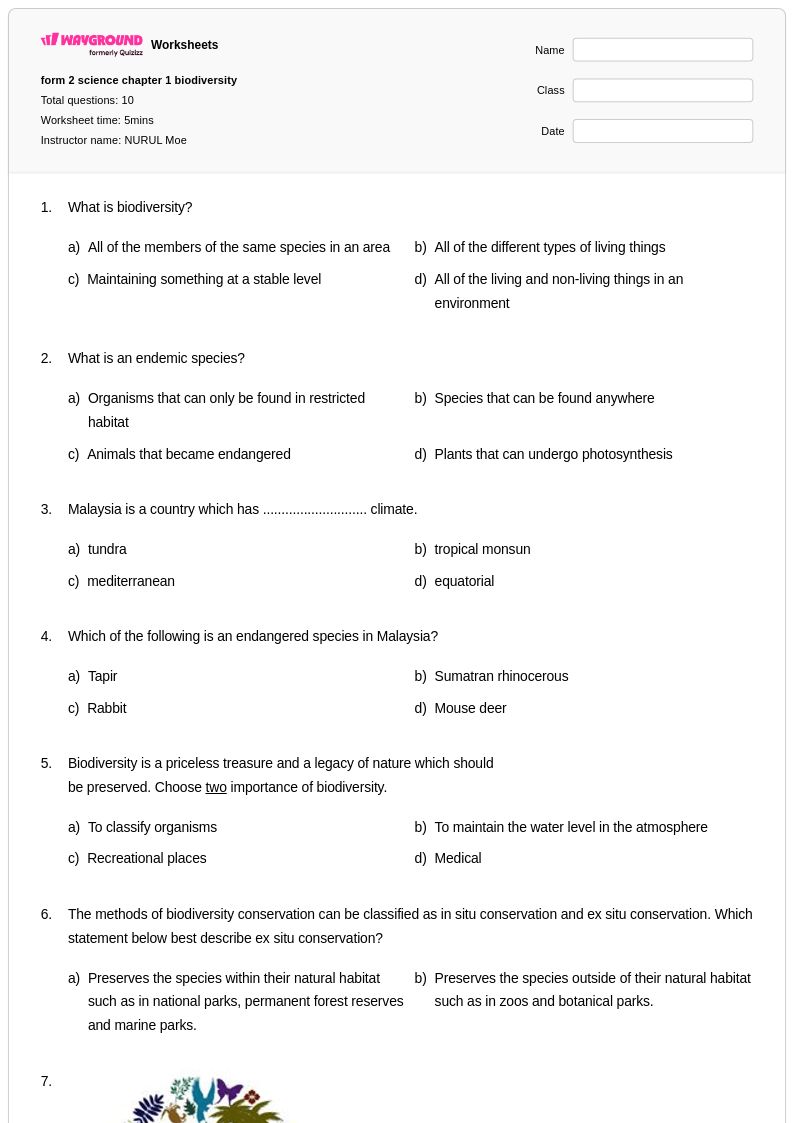
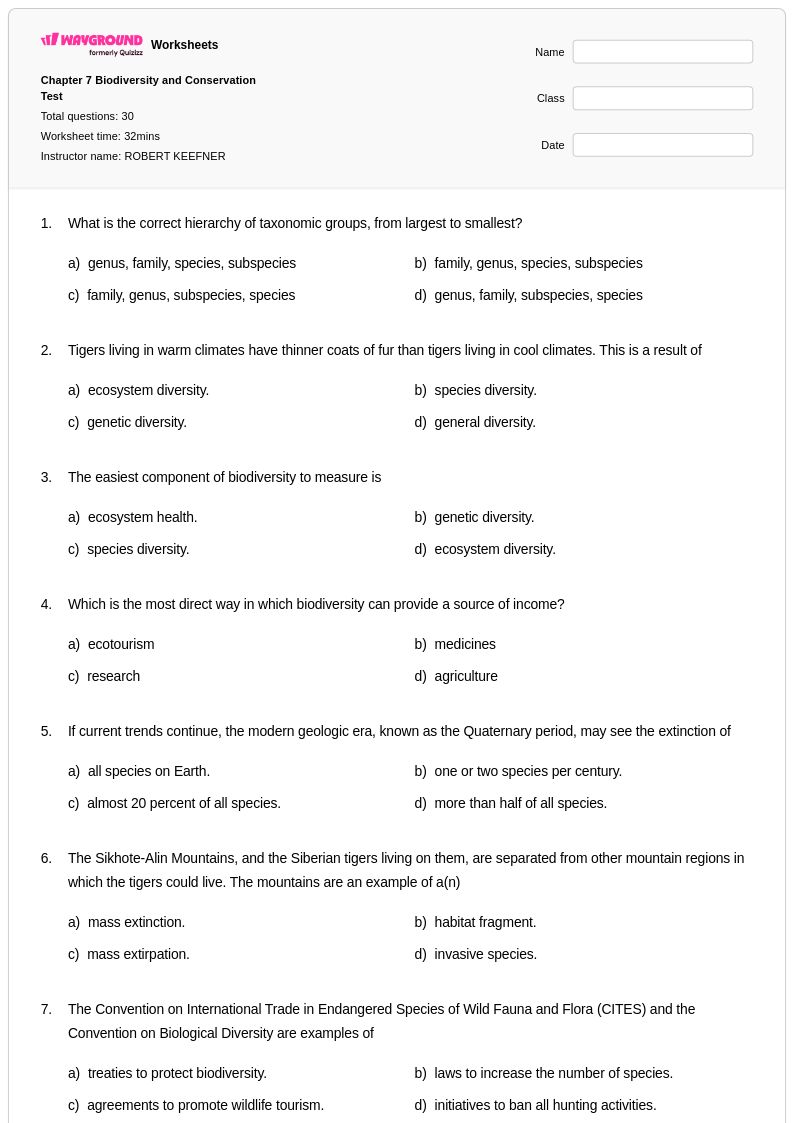
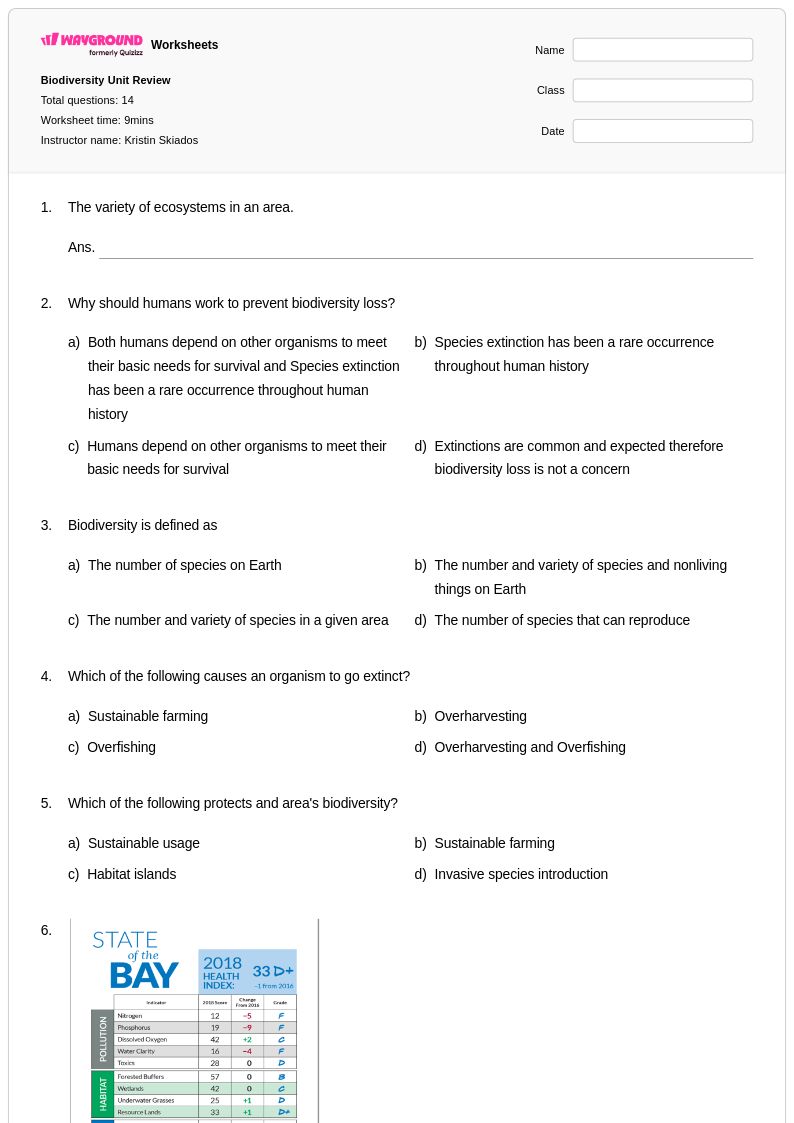
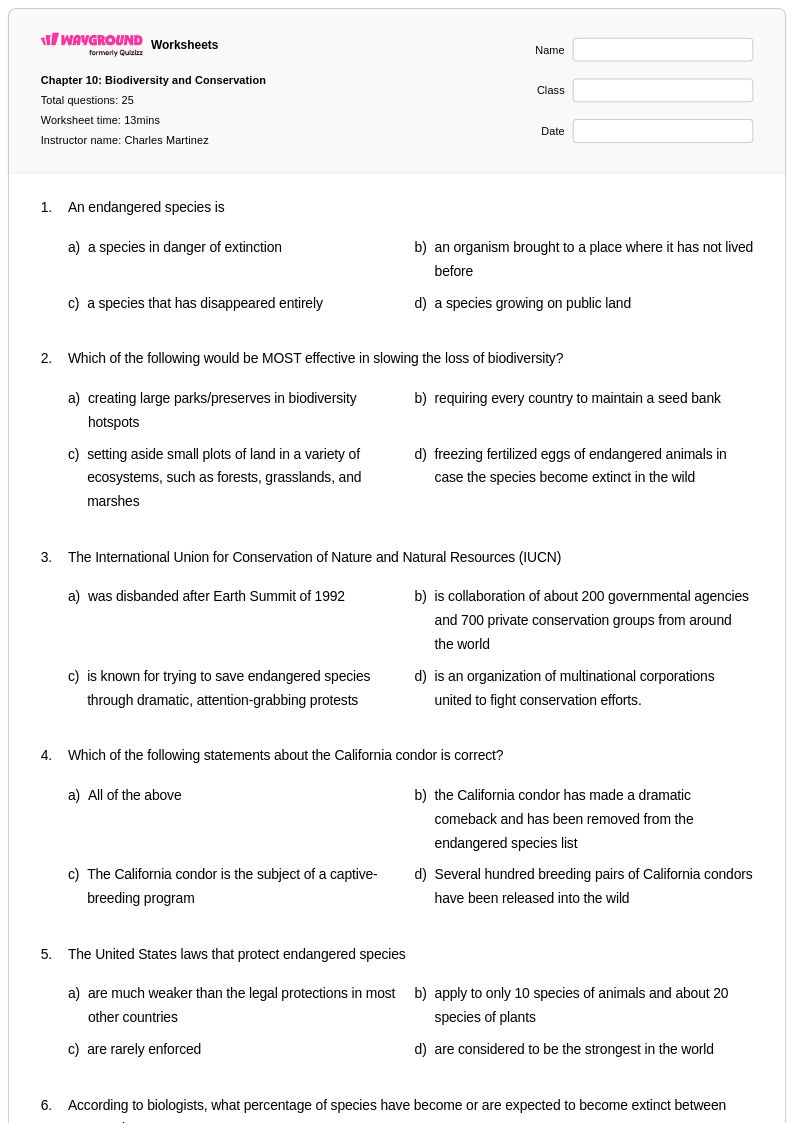
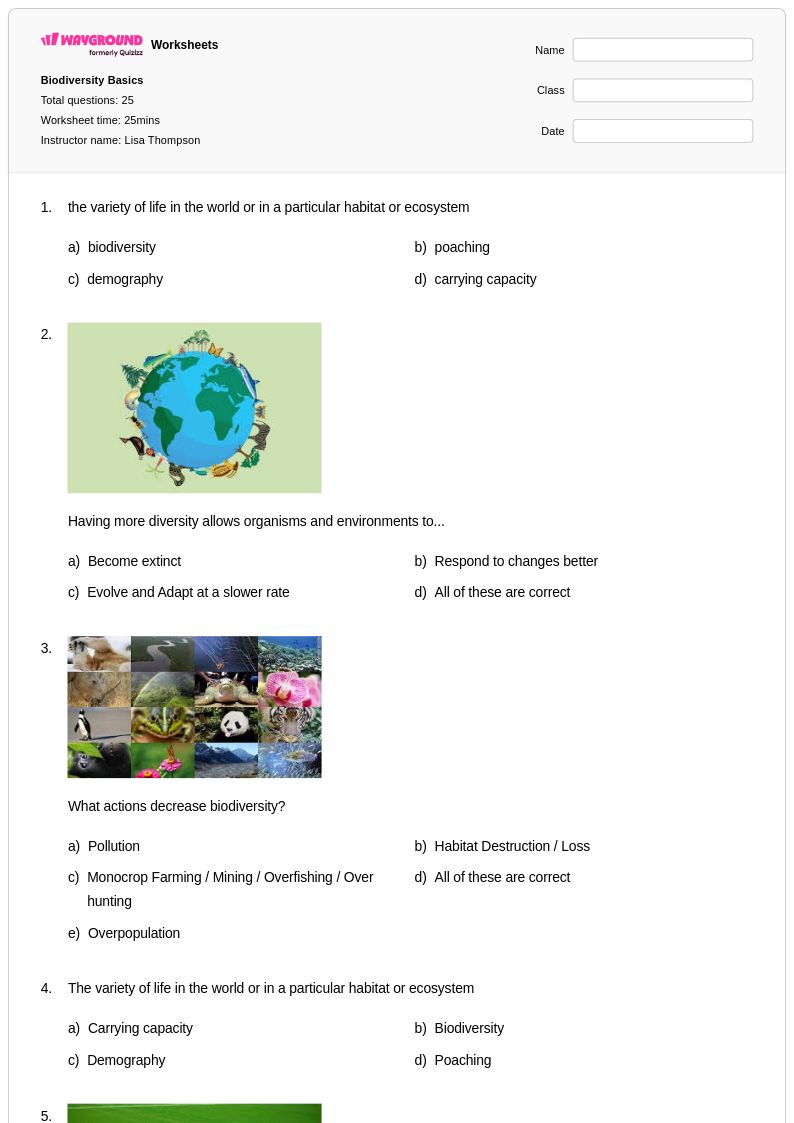
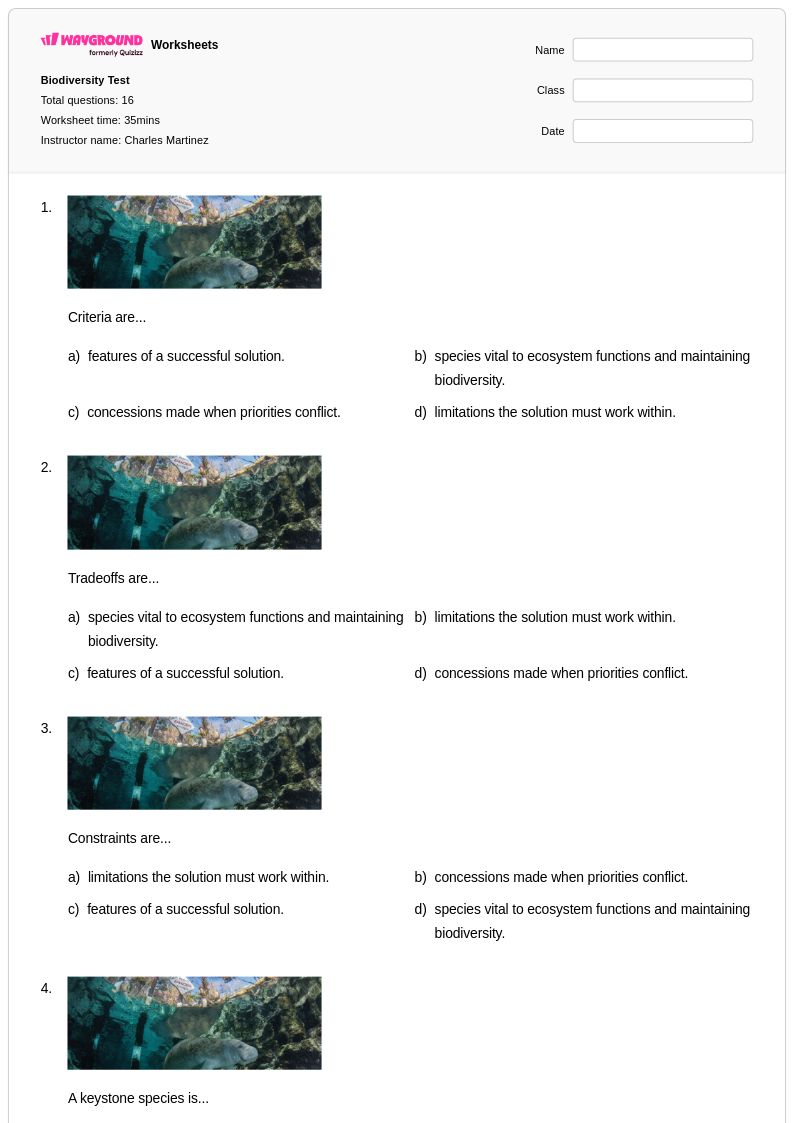
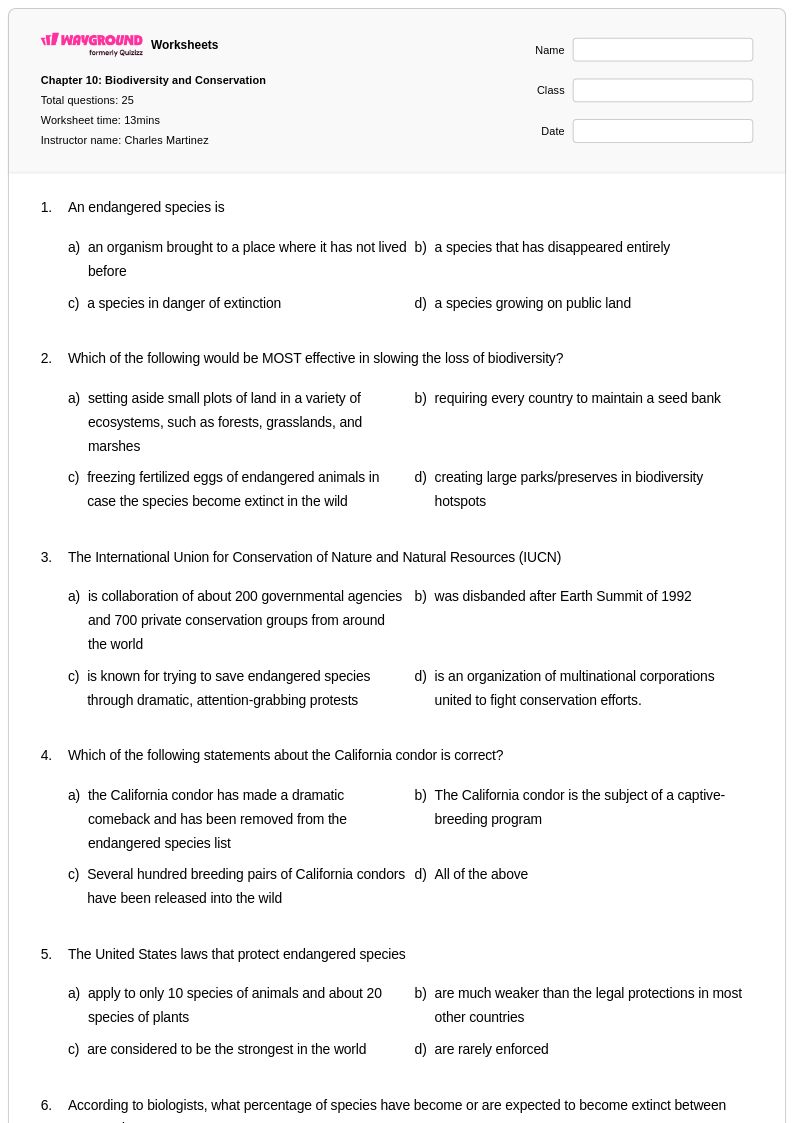
Biodiversity and Conservation worksheets available through Wayground (formerly Quizizz) provide comprehensive resources for exploring the intricate relationships between species diversity, ecosystem stability, and human conservation efforts. These expertly designed worksheets strengthen critical analytical skills by engaging students in practice problems that examine habitat preservation strategies, endangered species protection protocols, and the economic and ecological value of maintaining genetic diversity within populations. Students develop proficiency in interpreting biodiversity indices, analyzing conservation case studies, and evaluating the effectiveness of protected area networks through structured exercises that include detailed answer keys and free printable materials. The collection encompasses everything from basic species identification activities to complex ecosystem modeling scenarios, ensuring thorough coverage of conservation biology principles through accessible pdf formats and varied problem-solving approaches.
Wayground (formerly Quizizz) empowers educators with millions of teacher-created Biodiversity and Conservation resources that feature robust search and filtering capabilities aligned with current science education standards. Teachers can efficiently customize worksheets to match their specific curriculum needs, selecting from printable and digital formats including comprehensive pdf collections that support both in-class instruction and independent study. The platform's differentiation tools enable seamless adaptation of content complexity, allowing educators to provide targeted remediation for struggling students while offering enrichment opportunities for advanced learners through specialized conservation research projects and field study simulations. This extensive worksheet library facilitates strategic lesson planning by providing immediate access to standards-aligned materials that reinforce essential concepts in population ecology, habitat management, and sustainable resource utilization across diverse learning environments.
FAQs
How do I teach biodiversity and conservation to middle and high school students?
Effective biodiversity instruction begins with helping students understand the three levels of biodiversity: genetic, species, and ecosystem diversity. From there, teachers can build toward conservation concepts by grounding lessons in real-world case studies, such as habitat fragmentation or endangered species recovery programs. Connecting local ecosystems to global conservation challenges helps students see the relevance of the content and builds environmental stewardship over time.
What types of practice problems help students understand biodiversity concepts?
Students benefit most from exercises that require them to interpret biodiversity indices, compare species richness across ecosystems, and analyze the ecological and economic consequences of biodiversity loss. Conservation case studies, habitat preservation scenarios, and population ecology problems push students to apply their understanding rather than recall definitions. Structured problem sets that include answer keys allow students to self-correct and reinforce accurate reasoning.
What misconceptions do students commonly have about biodiversity and conservation?
A frequent misconception is that conservation is only about protecting charismatic megafauna like tigers or whales, when in fact genetic diversity within populations and the stability of entire ecosystems are equally critical. Students also tend to conflate species richness with ecosystem health, not accounting for species evenness or keystone species dynamics. Targeted exercises that distinguish between these concepts help students build more accurate mental models of how ecosystems function.
How can I assess whether students understand the relationship between biodiversity and ecosystem stability?
Effective assessment tasks include having students analyze how the removal of a keystone species affects trophic cascades, or evaluate the outcomes of conservation interventions in protected area networks. Error patterns to watch for include students assuming that more species always equals a more stable ecosystem without considering interaction complexity. Scenario-based problems that require students to justify their reasoning reveal deeper conceptual understanding than recall-based questions alone.
How do I use Wayground's biodiversity and conservation worksheets in my classroom?
Wayground's biodiversity and conservation worksheets are available as printable PDFs for traditional classroom use and in digital formats for technology-integrated learning environments, including the option to host them as a quiz directly on Wayground. Each worksheet includes a complete answer key, making them efficient for both guided instruction and independent practice. Teachers can also apply student-level accommodations such as read aloud, extended time, and reduced answer choices to support diverse learners without disrupting the rest of the class.
How do I differentiate biodiversity worksheets for students at different skill levels?
For students who need additional support, start with species identification activities and habitat-based scenarios before introducing complex topics like biodiversity indices or protected area network analysis. Advanced learners can be challenged with ecosystem modeling problems and conservation research projects that require synthesizing multiple data sources. On Wayground, teachers can apply individual accommodations such as reduced answer choices or read aloud to specific students, allowing the same worksheet to serve a range of learners simultaneously.