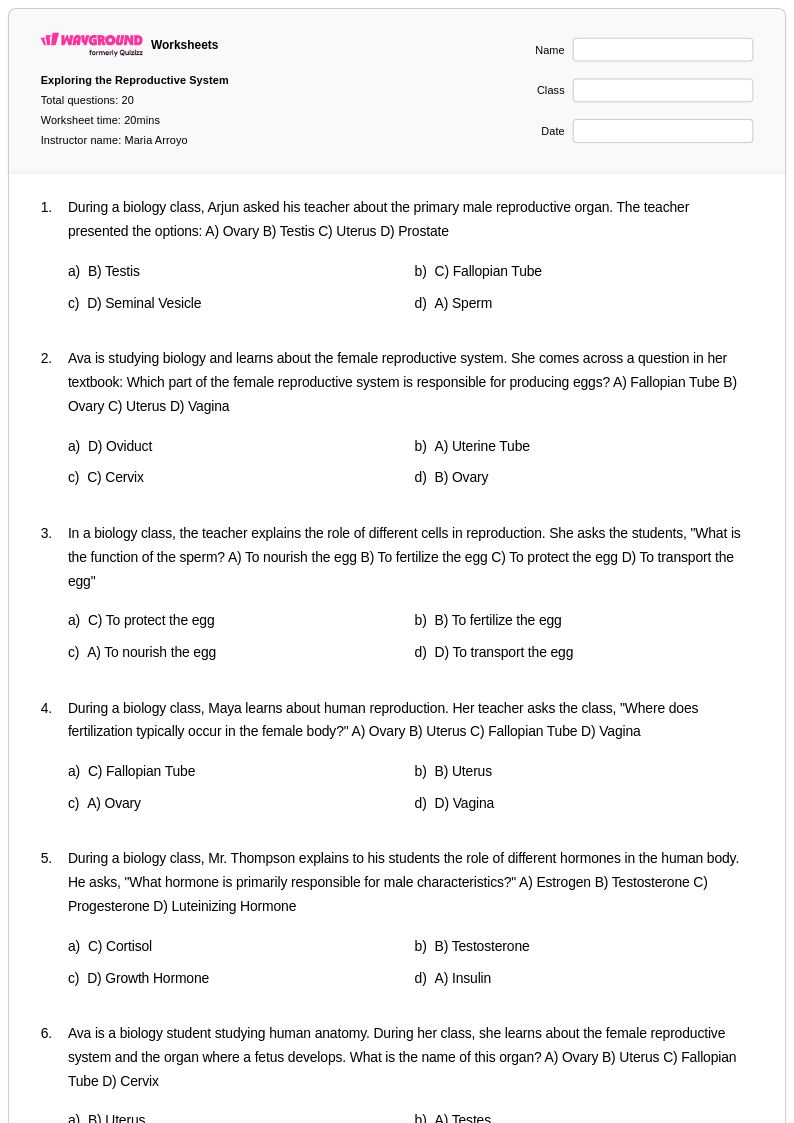
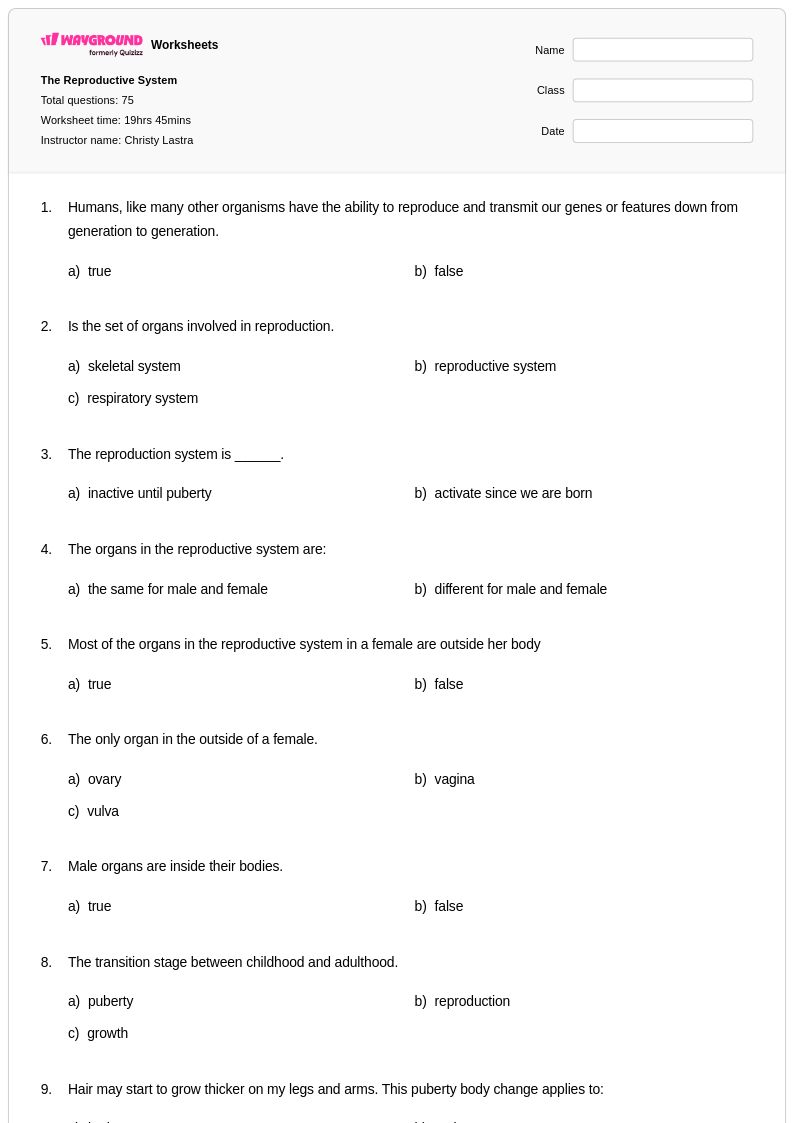
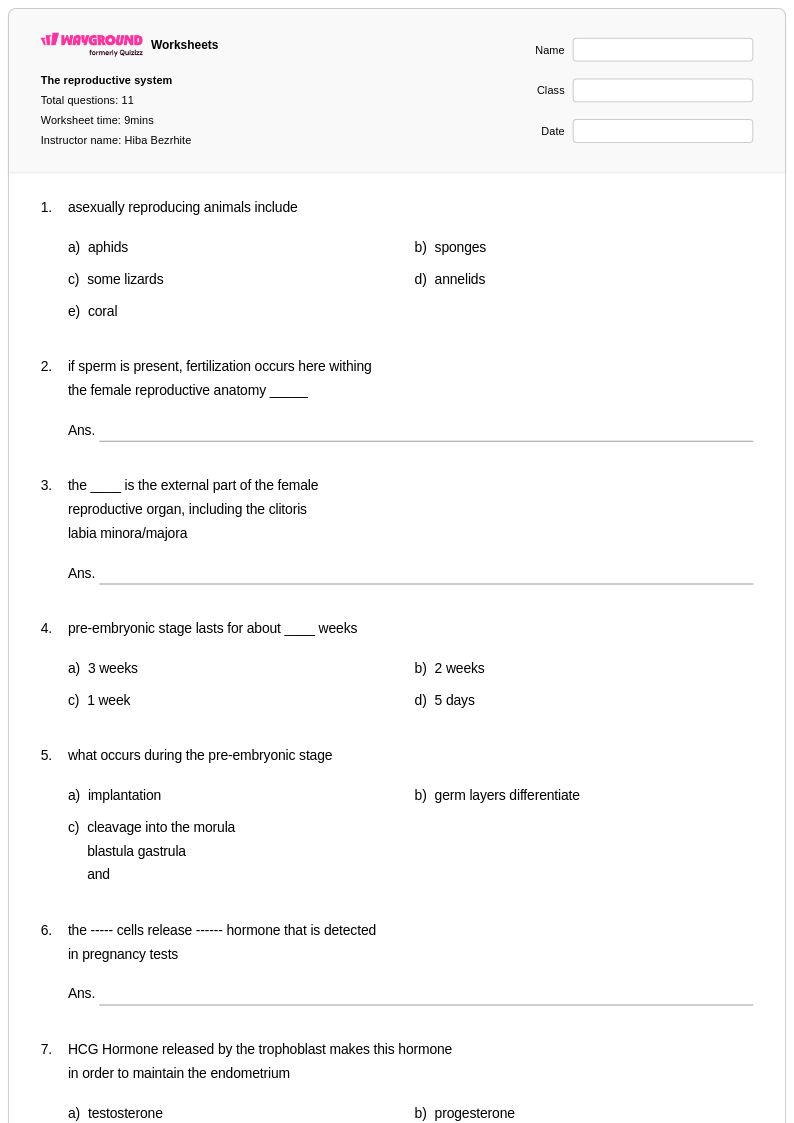
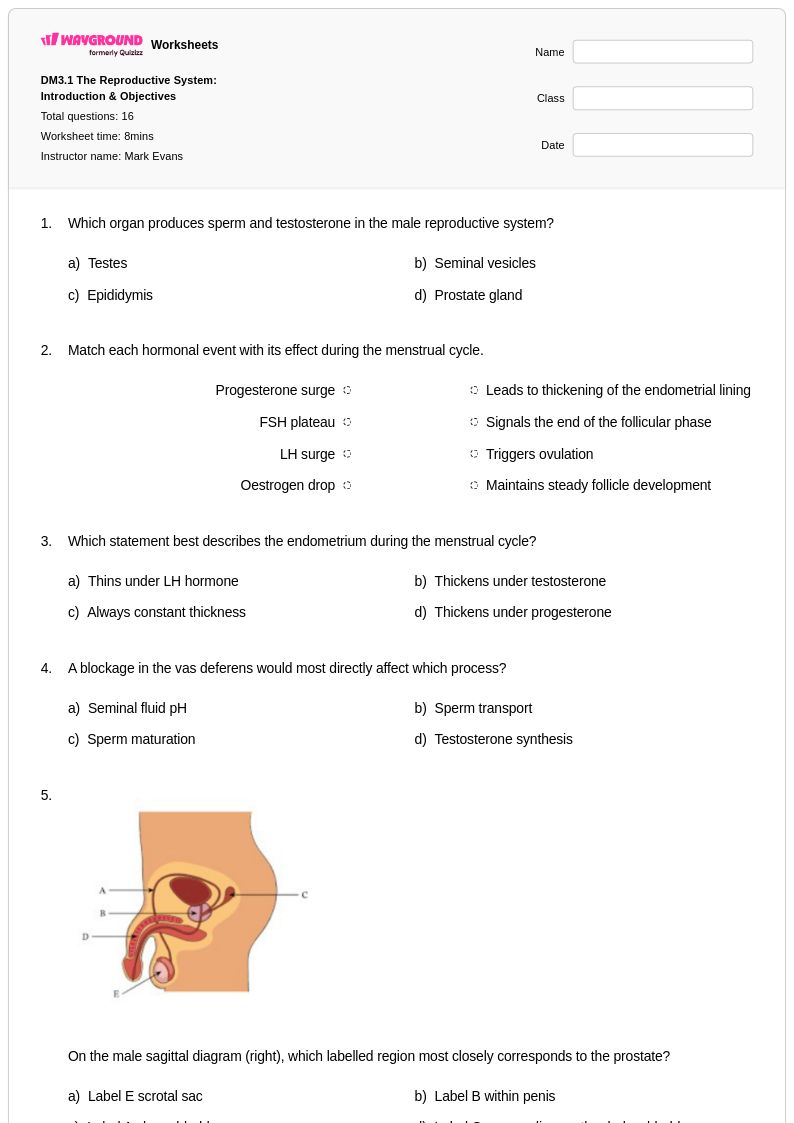
Explore Wayground's comprehensive collection of reproductive system worksheets and printables that help students master human biology through engaging practice problems, free PDF downloads, and detailed answer keys.
Explore printable The Reproductive System worksheets
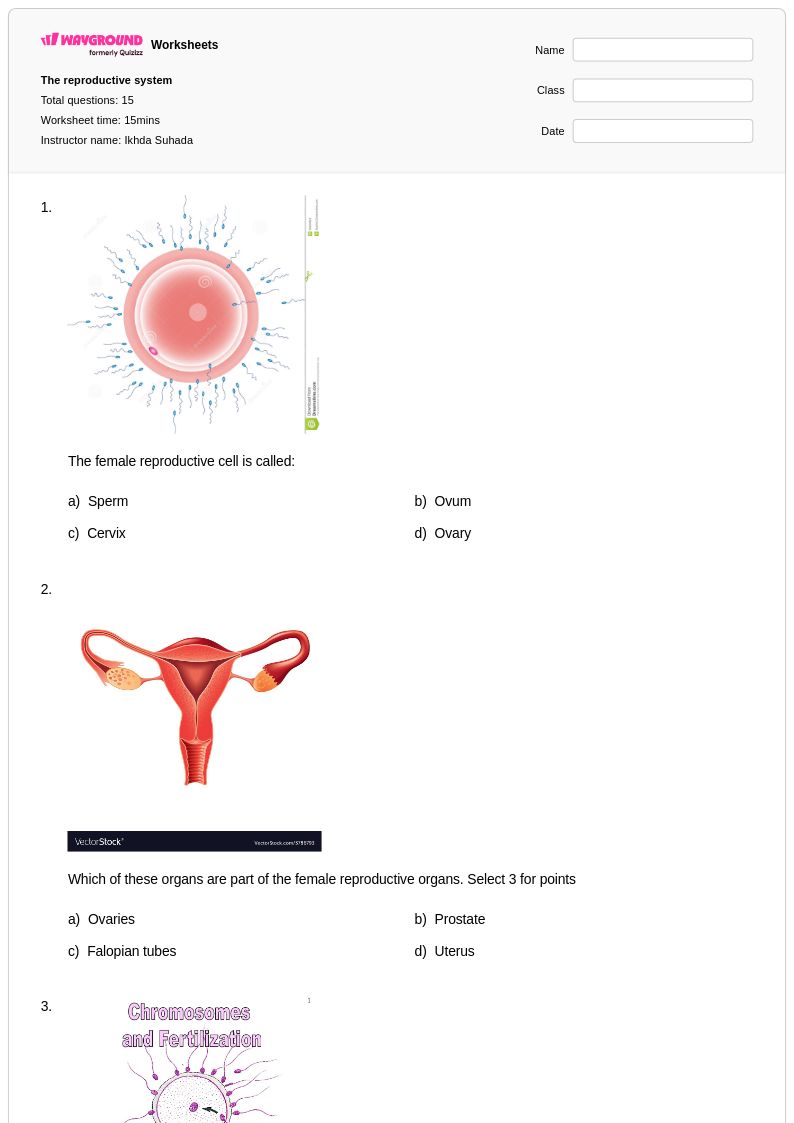
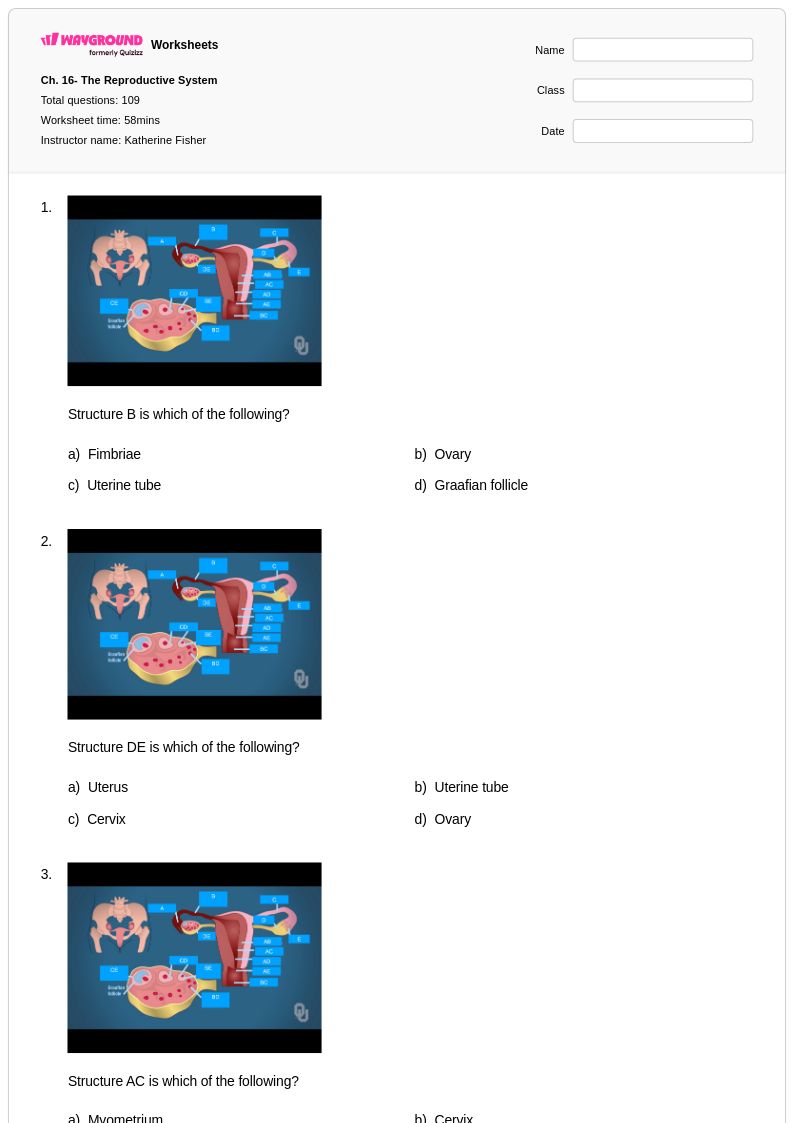
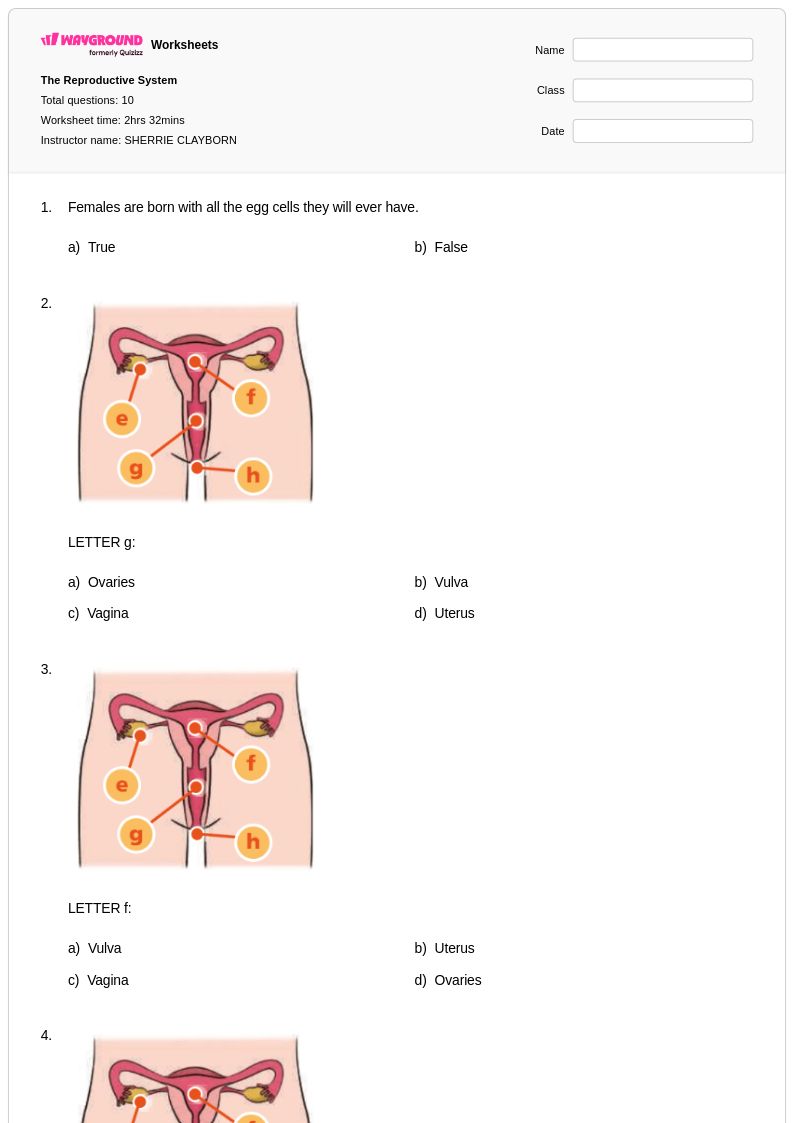
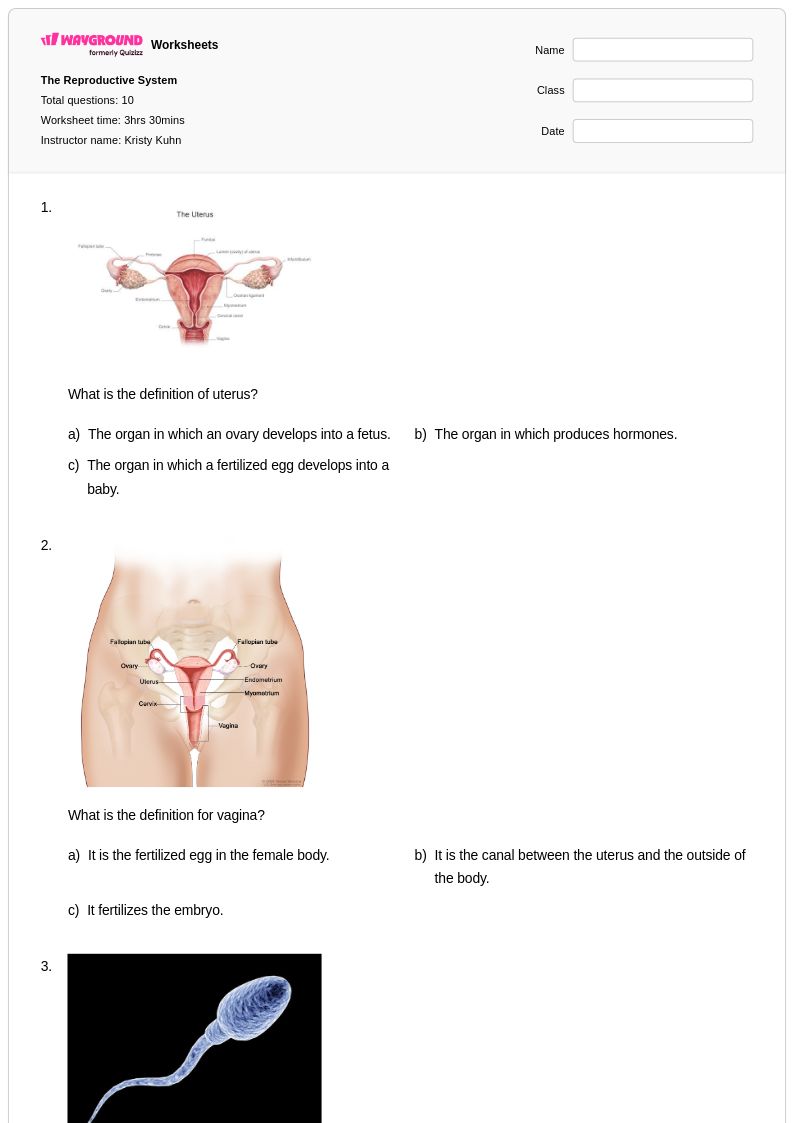
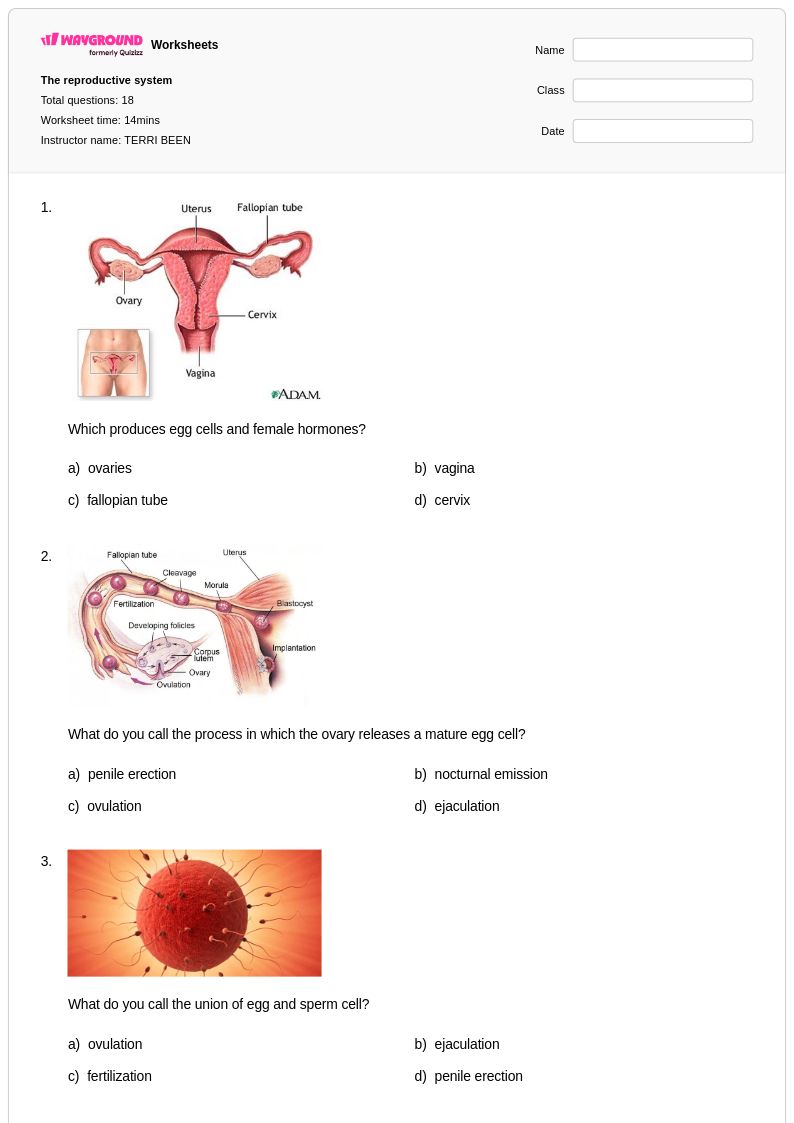
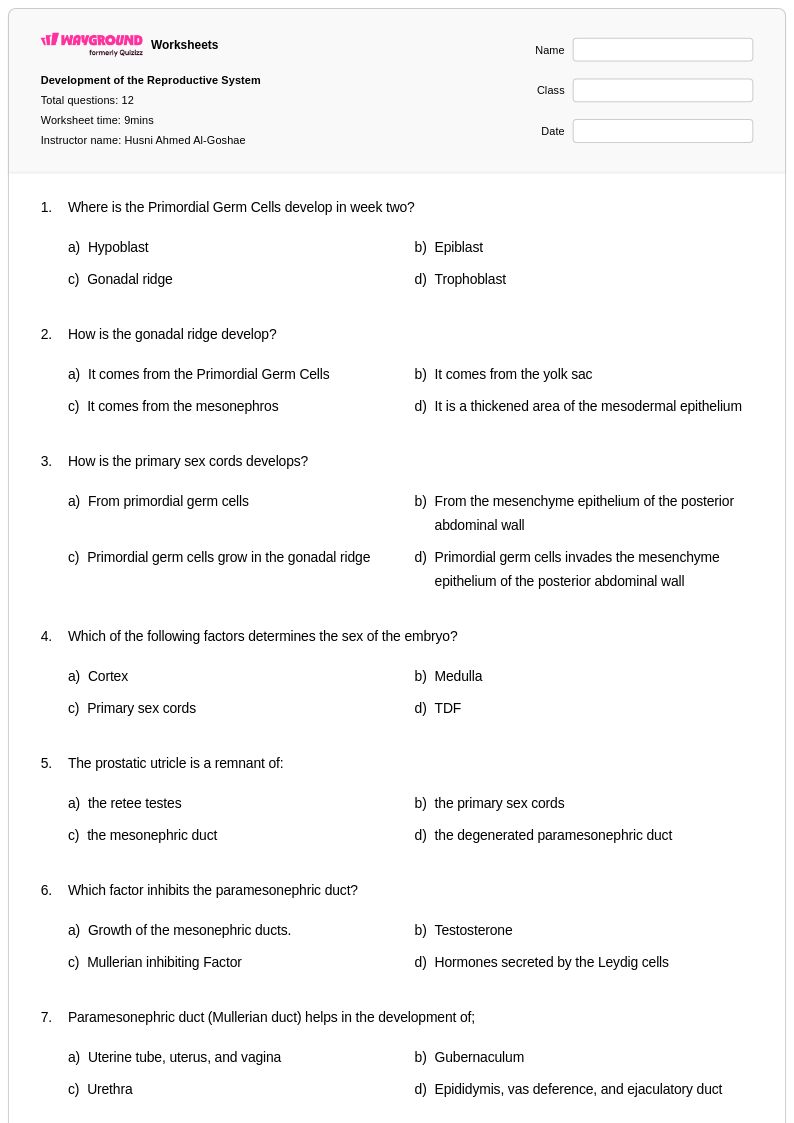
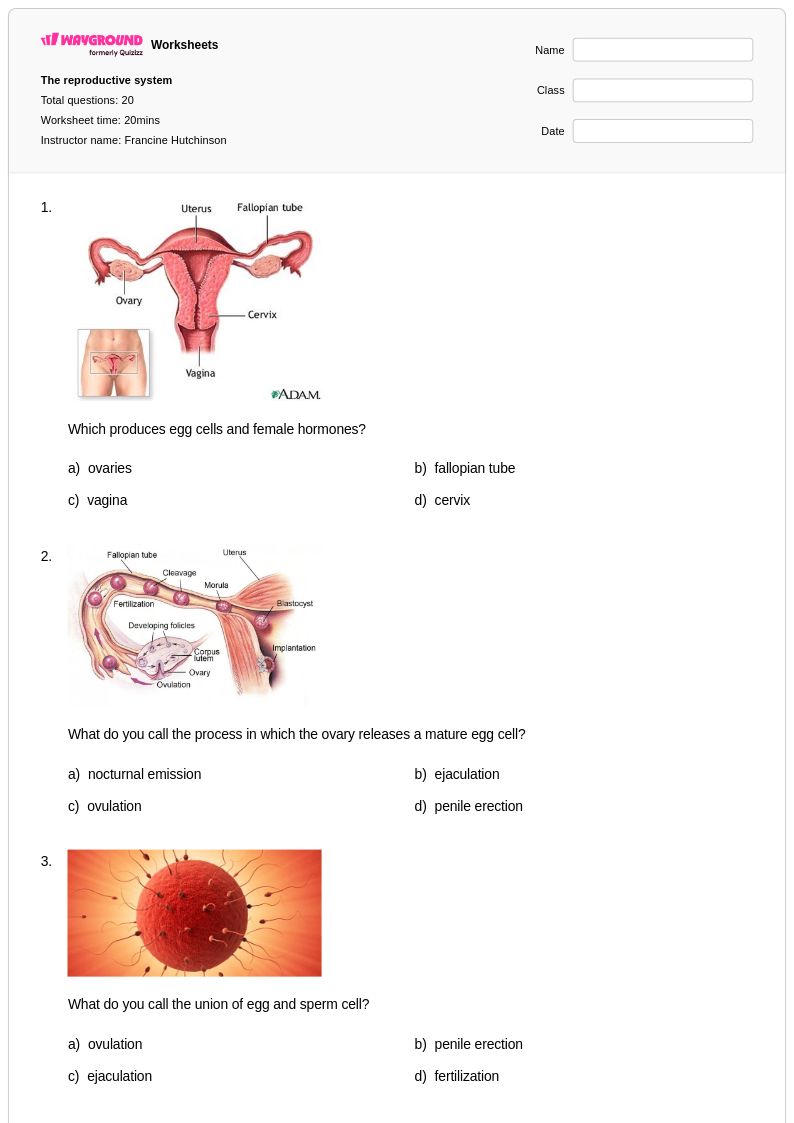
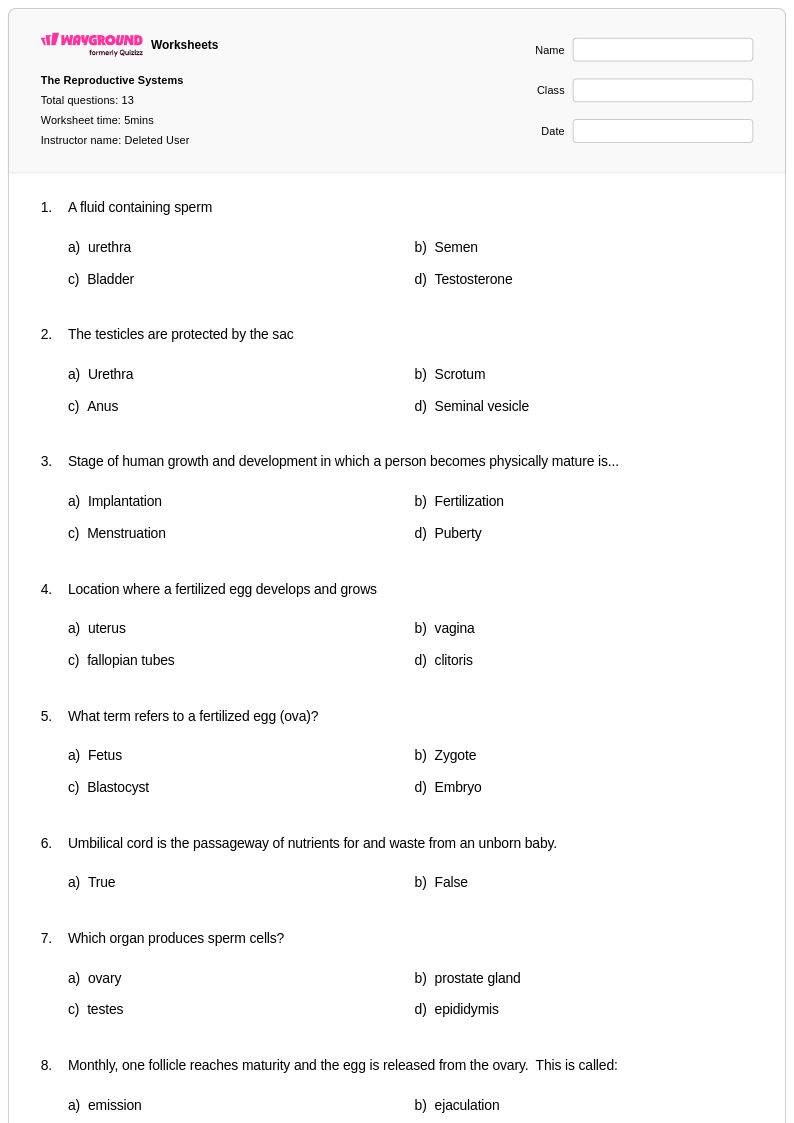
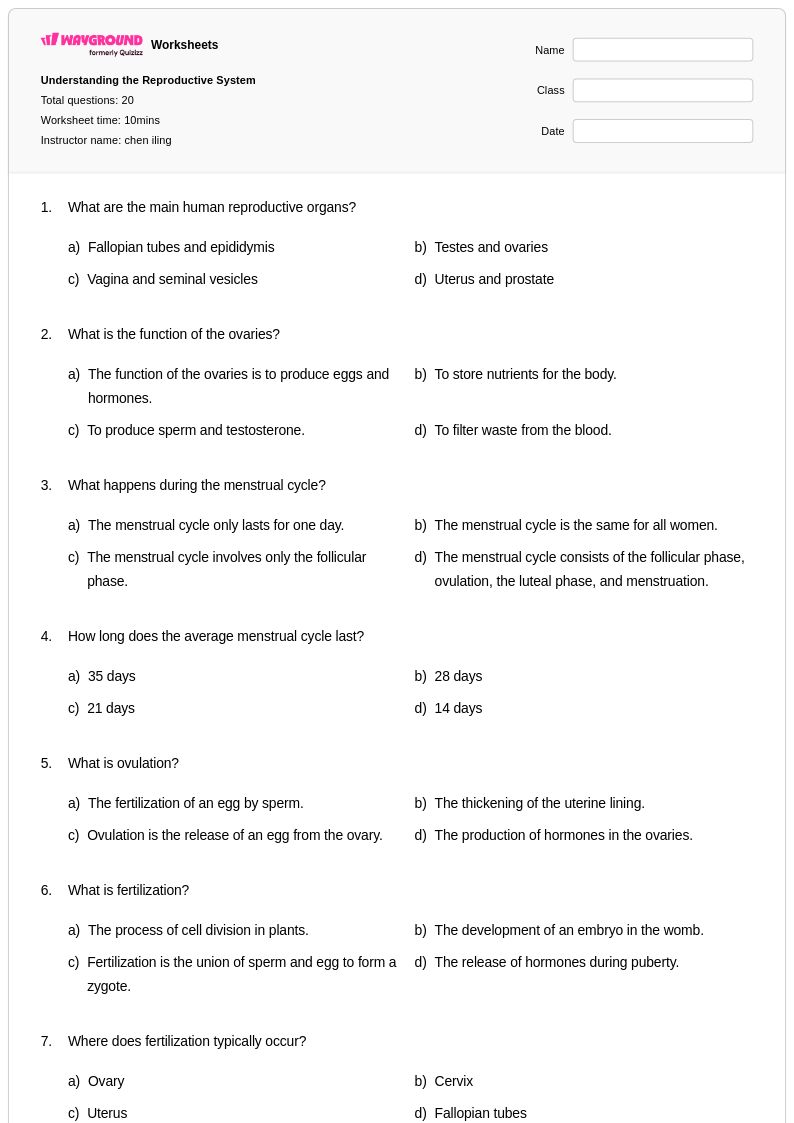
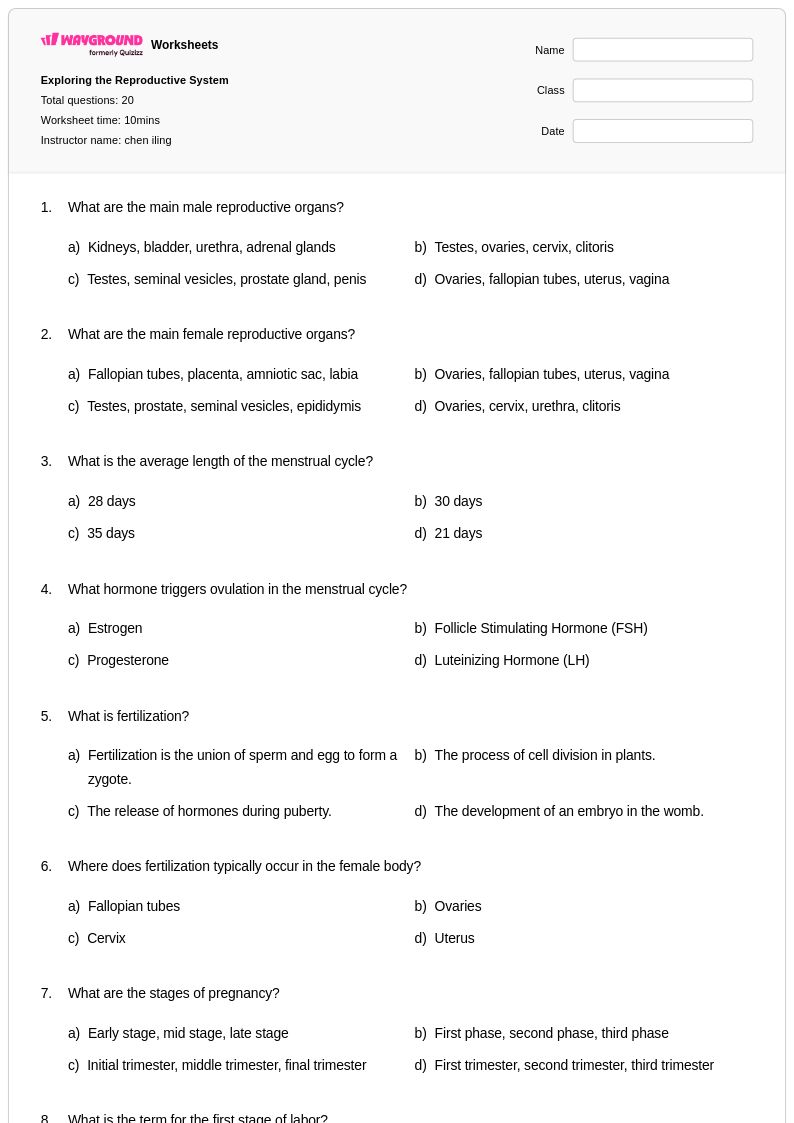
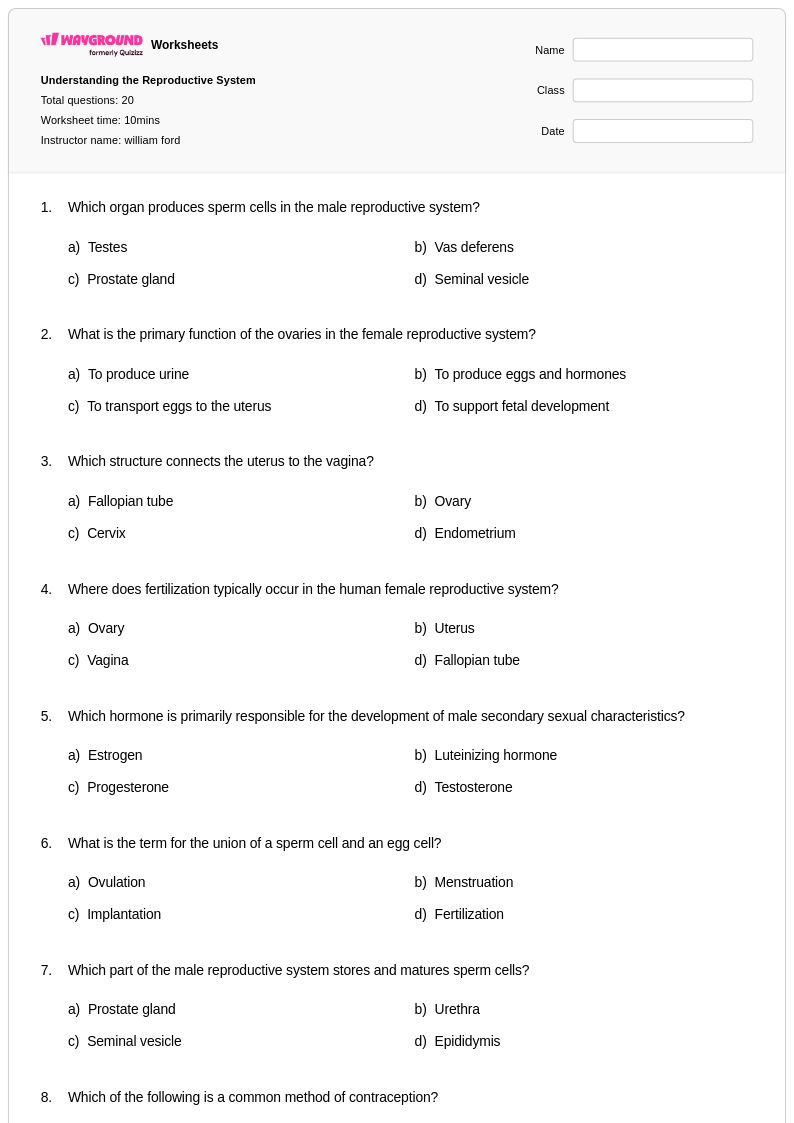
The reproductive system worksheets available through Wayground (formerly Quizizz) provide comprehensive educational resources that help students master the complex biological processes of human reproduction and development. These expertly designed materials cover essential concepts including reproductive anatomy, gametogenesis, fertilization, embryonic development, hormonal regulation, and reproductive health across various educational levels. Students engage with detailed diagrams, labeling exercises, process flowcharts, and analytical practice problems that reinforce understanding of reproductive structures and their functions. Each worksheet comes with a complete answer key and is available as a free printable pdf, allowing educators to seamlessly integrate these resources into their biology curriculum while providing students with immediate feedback on their comprehension of reproductive system concepts.
Wayground (formerly Quizizz) empowers biology teachers with access to millions of teacher-created reproductive system worksheets that support diverse instructional needs and learning objectives. The platform's robust search and filtering capabilities enable educators to quickly locate materials aligned with specific curriculum standards, whether focusing on basic anatomical structures or advanced reproductive physiology concepts. Teachers can easily customize worksheets to match their students' skill levels, utilizing differentiation tools that accommodate various learning styles and academic abilities. Available in both digital and printable pdf formats, these resources facilitate flexible lesson planning, targeted remediation for struggling students, and enrichment opportunities for advanced learners, while the extensive collection ensures that educators have access to high-quality practice materials that strengthen students' understanding of reproductive biology concepts.
FAQs
How do I teach the reproductive system in a biology class?
Teaching the reproductive system effectively begins with establishing a clear anatomical foundation before moving into physiological processes. Start with labeling activities for male and female reproductive structures, then progress to gametogenesis, fertilization, and embryonic development. Connecting hormonal regulation (such as the roles of FSH, LH, estrogen, and testosterone) to each stage helps students understand the system as an integrated whole rather than isolated parts. Using process flowcharts alongside diagram labeling gives students multiple entry points into the content.
What exercises help students practice reproductive system concepts?
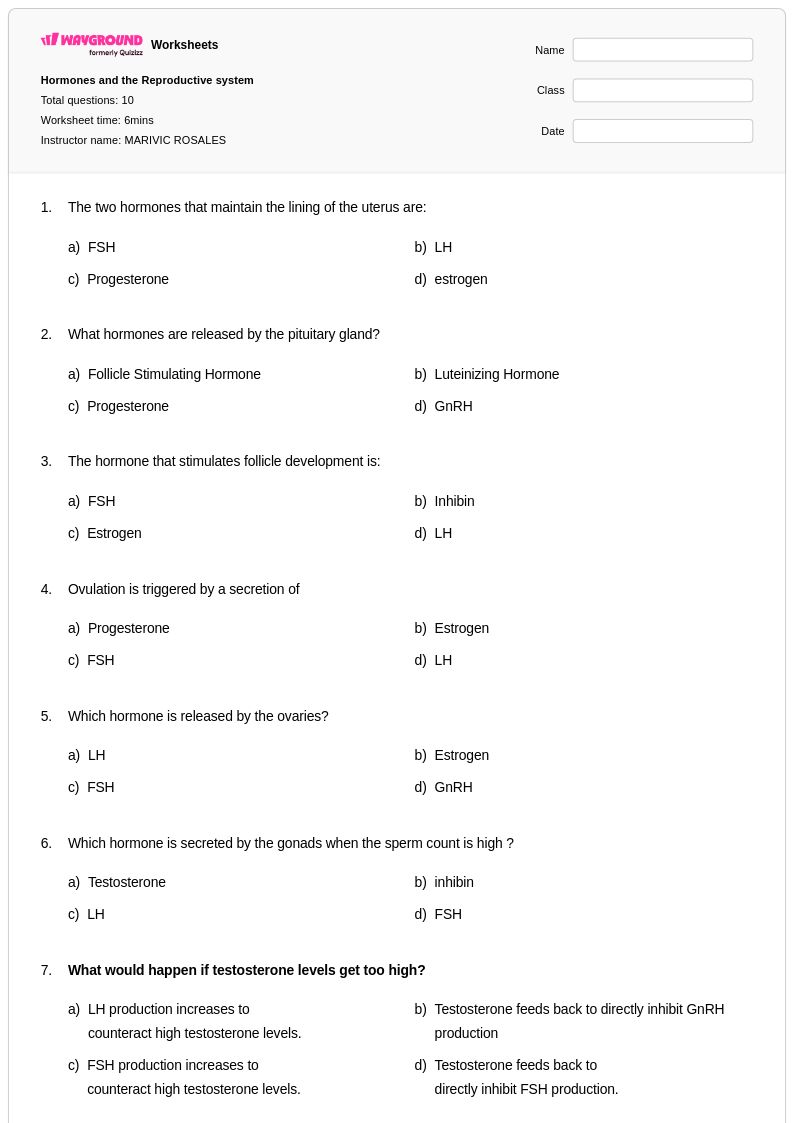
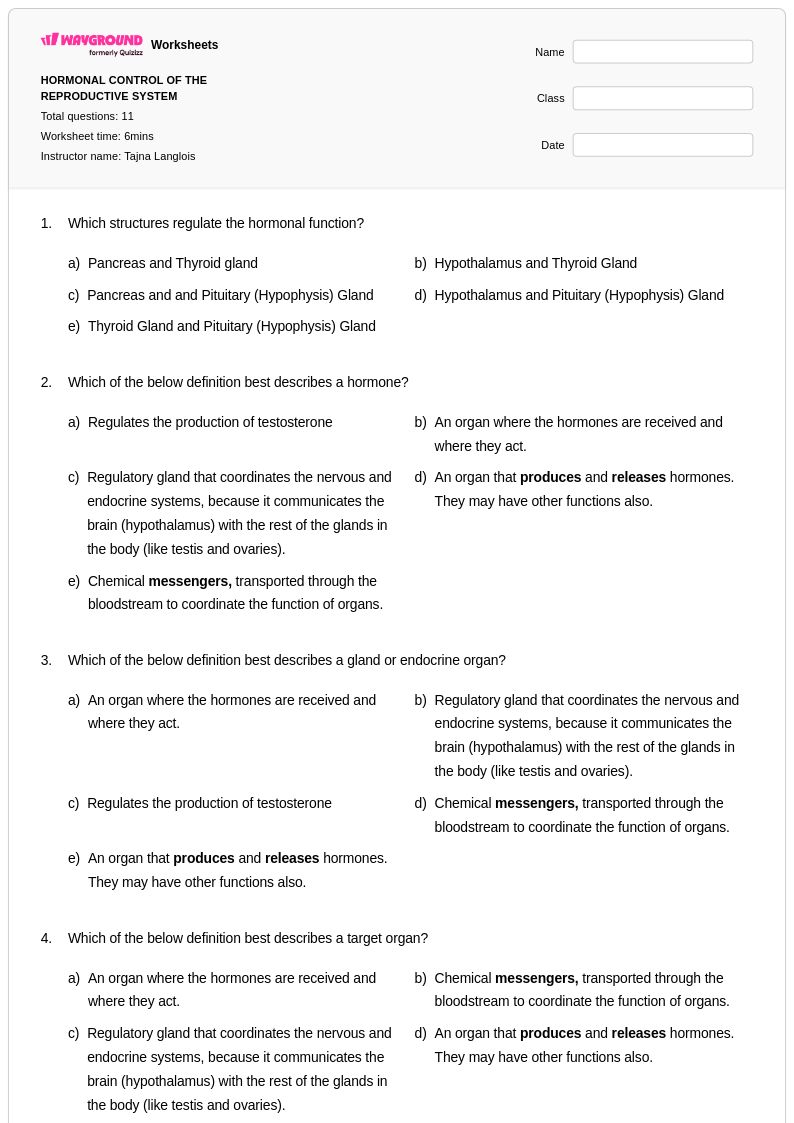
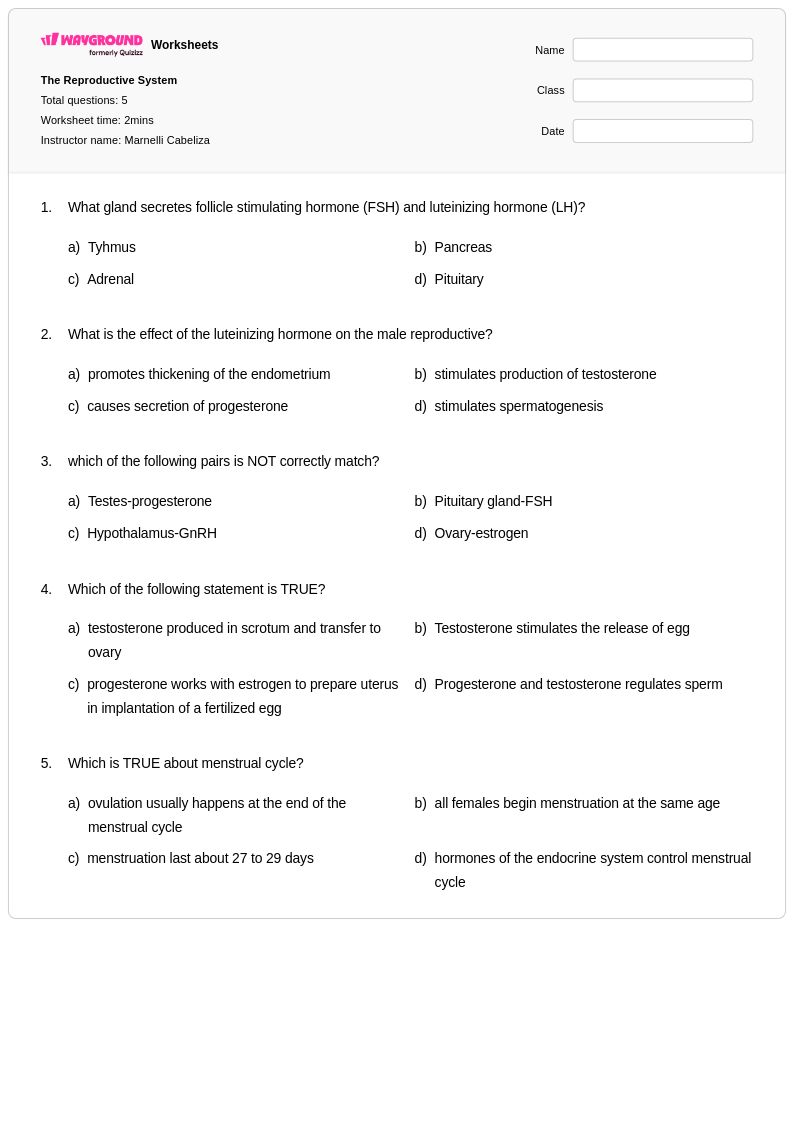
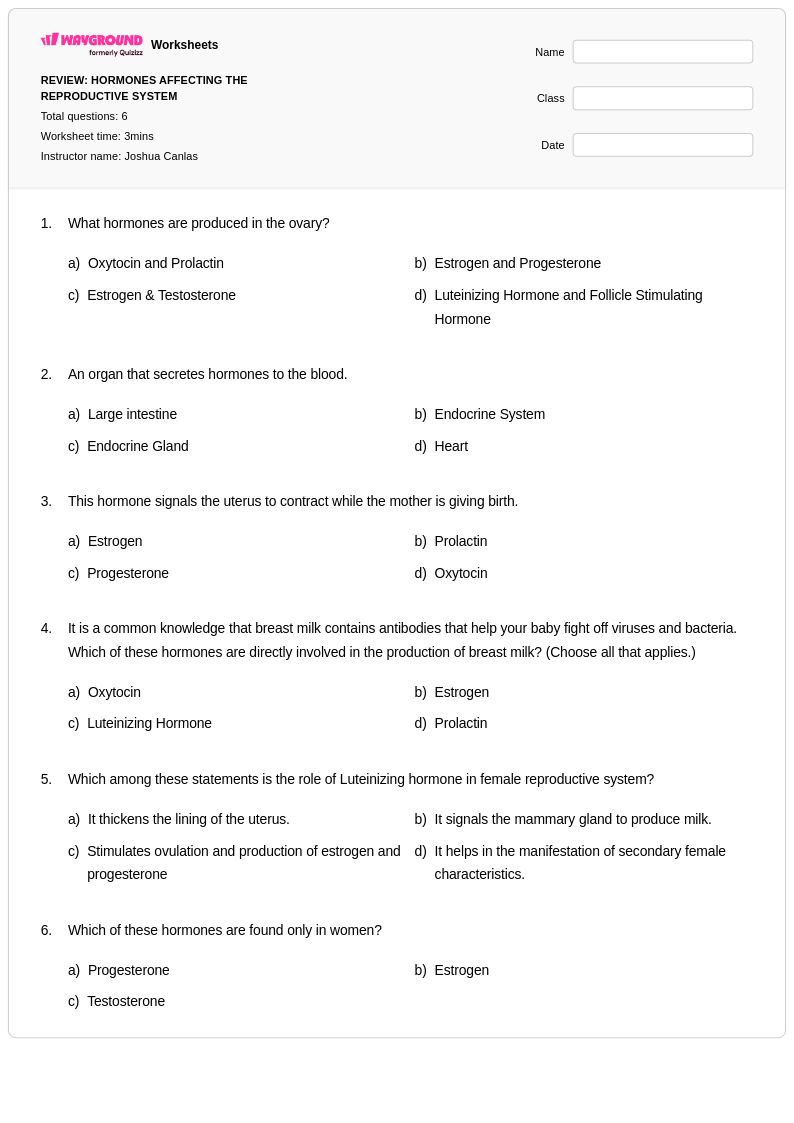
Labeling diagrams of reproductive anatomy, completing process flowcharts for gametogenesis and fertilization, and working through analytical questions about hormonal regulation are among the most effective practice formats for this topic. These exercise types require students to move beyond memorization and demonstrate understanding of how structures relate to function. Worksheet-based practice that combines visual identification with written explanation strengthens both recall and conceptual understanding of reproductive biology.
What are common misconceptions students have about the reproductive system?
Students frequently confuse the stages of meiosis with mitosis when studying gametogenesis, leading to errors in how they describe sperm and egg production. Another common mistake is treating fertilization and implantation as the same event rather than understanding the sequence and timing between them. Students also tend to oversimplify hormonal regulation, often missing the feedback loop mechanisms that govern the menstrual cycle and sperm production. Targeting these specific gaps with focused practice problems can significantly improve accuracy.
How can I differentiate reproductive system instruction for students at different levels?
For foundational learners, focus on anatomy identification and basic function before introducing process-level content like gametogenesis or hormonal feedback loops. Advanced students can engage with analytical problems that require them to explain what happens when hormonal regulation is disrupted or to compare reproductive strategies across species. On Wayground, teachers can apply accommodations such as reduced answer choices to lower cognitive load for students who need support, while using read-aloud features for students with reading accessibility needs, allowing the same worksheet to serve multiple learner profiles simultaneously.
How do I use Wayground's reproductive system worksheets in my classroom?
Wayground's reproductive system worksheets are available as printable PDFs for traditional classroom use and in digital formats for technology-integrated environments, making them flexible enough for in-person, hybrid, or remote instruction. Teachers can also host worksheets as a live quiz on Wayground, enabling real-time student response tracking. Each worksheet includes a complete answer key, so students can receive immediate feedback on their comprehension of reproductive anatomy, gametogenesis, fertilization, and related concepts.
How do I assess student understanding of the reproductive system?
Effective assessment of reproductive system knowledge should test both identification and application. Diagram labeling tasks reveal whether students have mastered anatomical structures, while process-based questions (such as tracing the path of a sperm cell or sequencing embryonic development stages) assess deeper understanding. Short analytical prompts about hormonal regulation, such as predicting the effect of an LH surge, are particularly useful for identifying whether students understand the system functionally rather than just memorizing terminology.