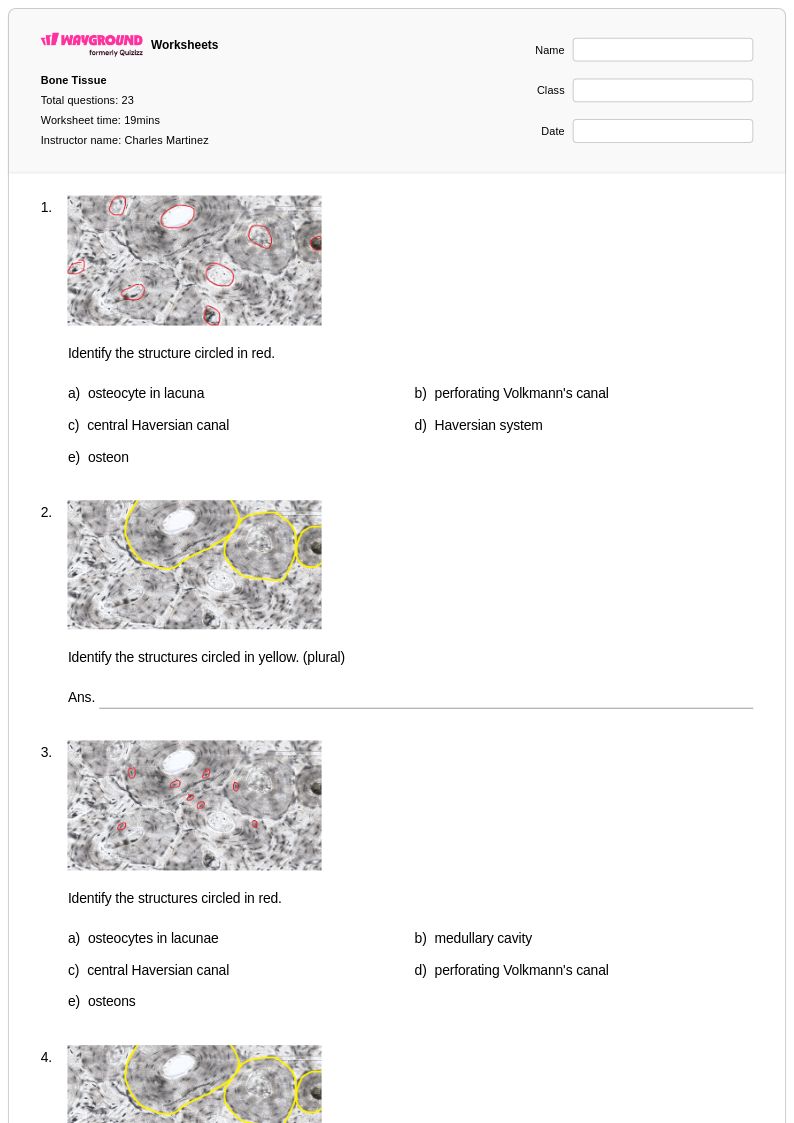
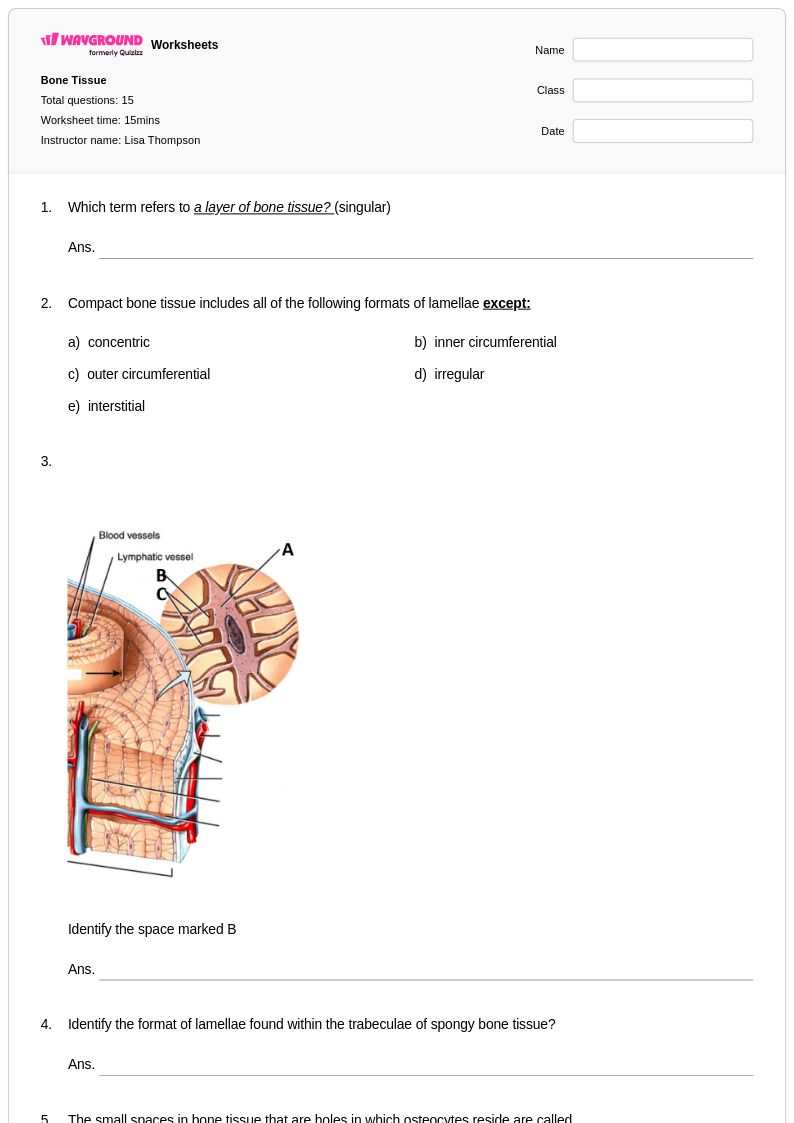
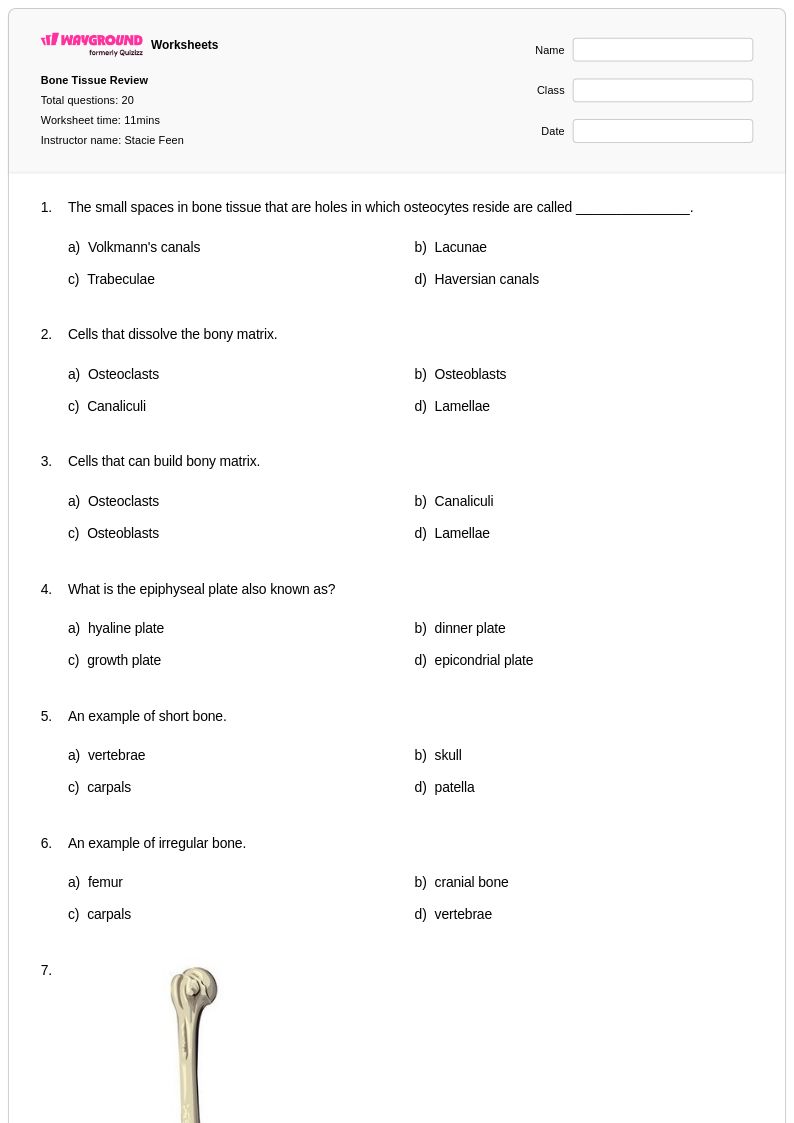
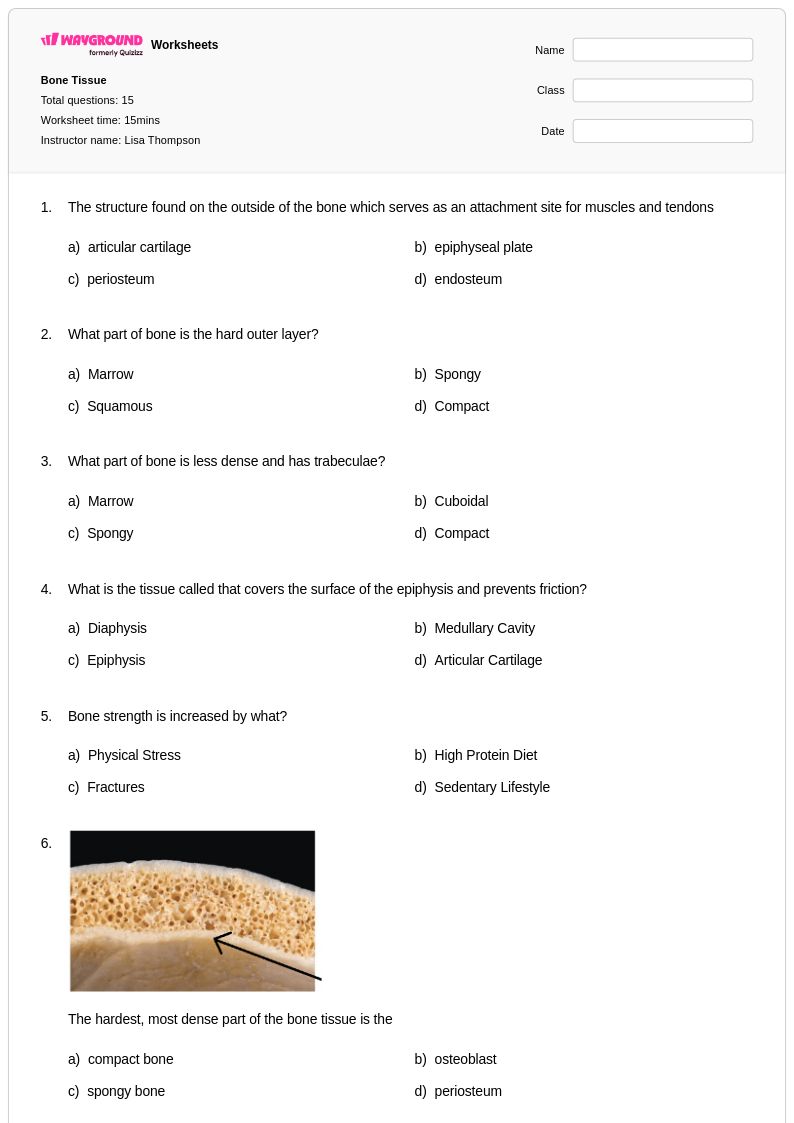
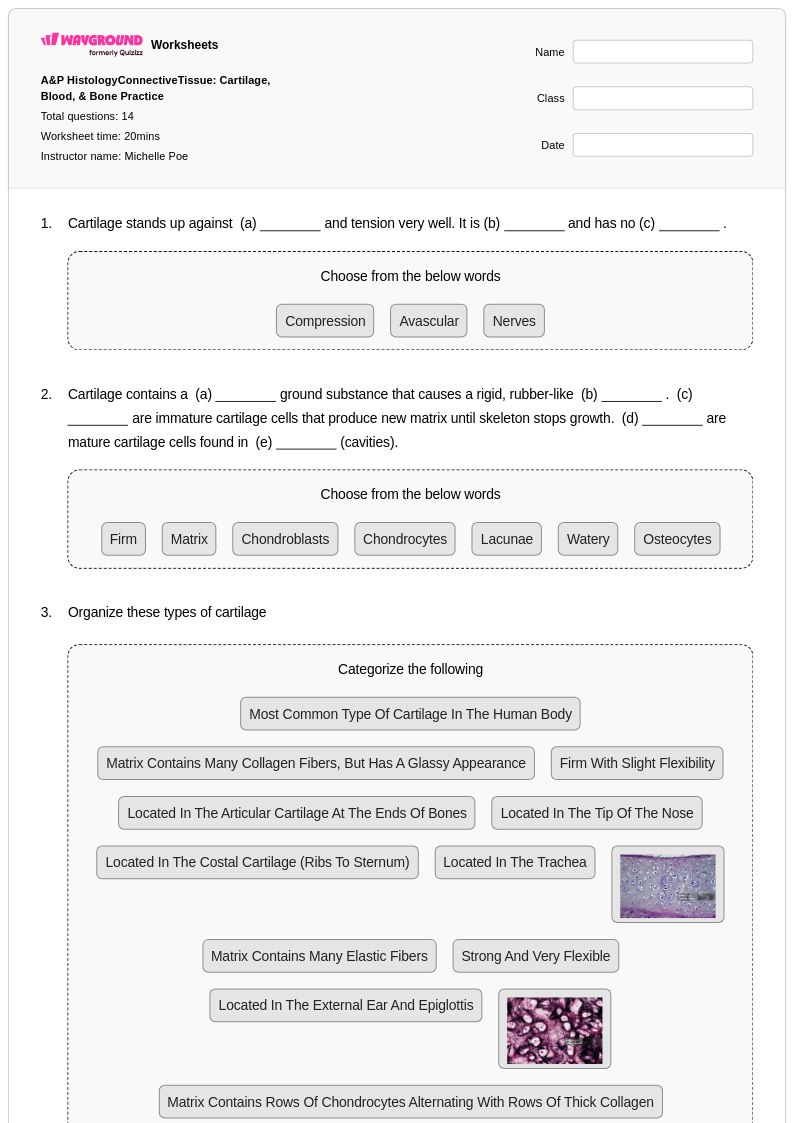
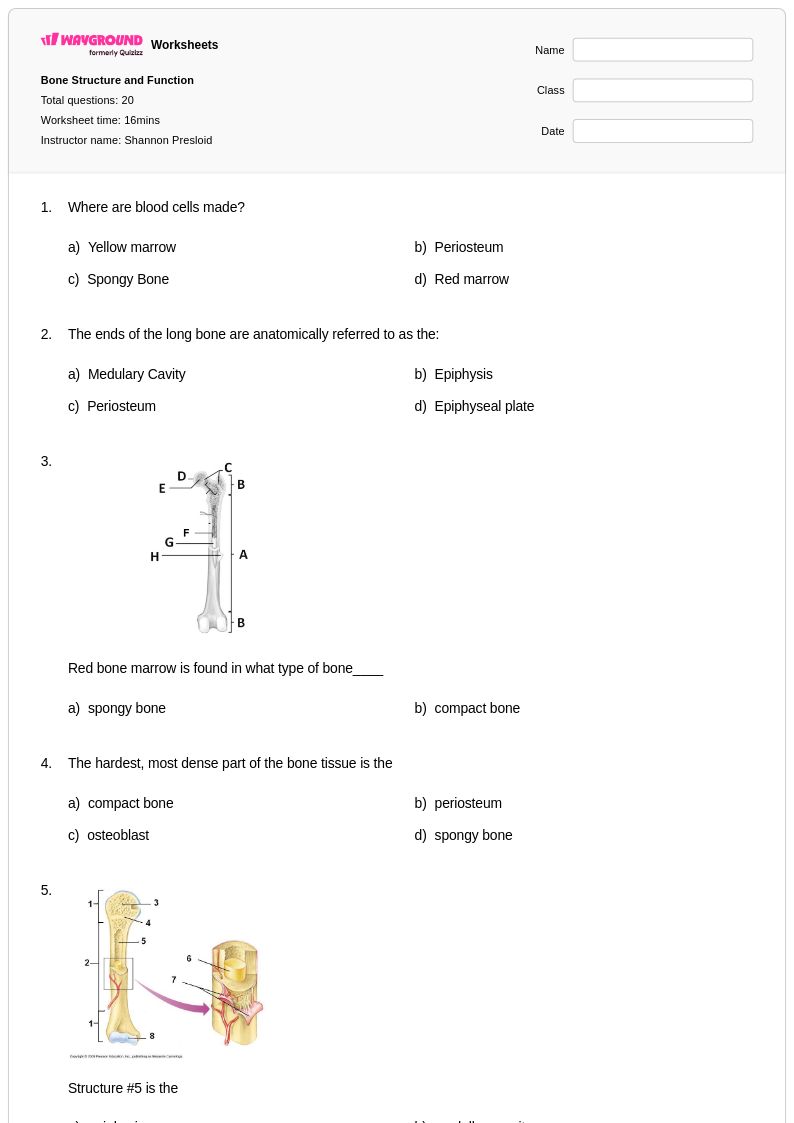
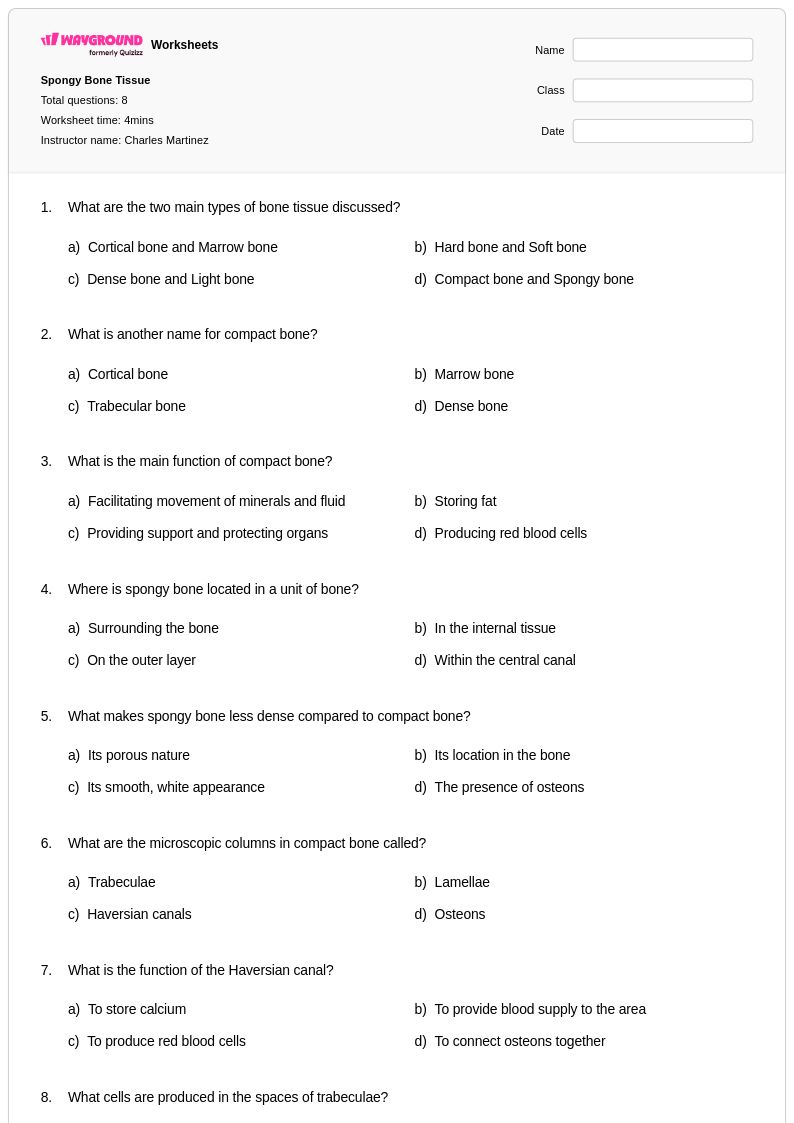
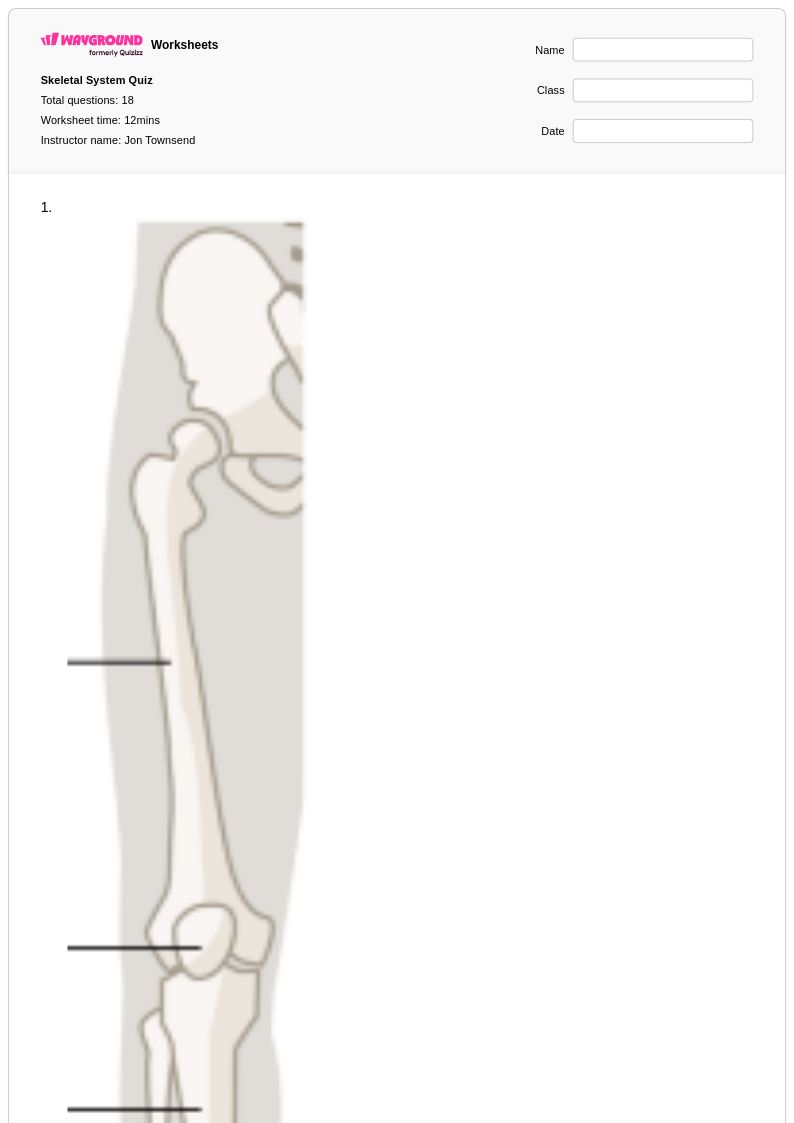
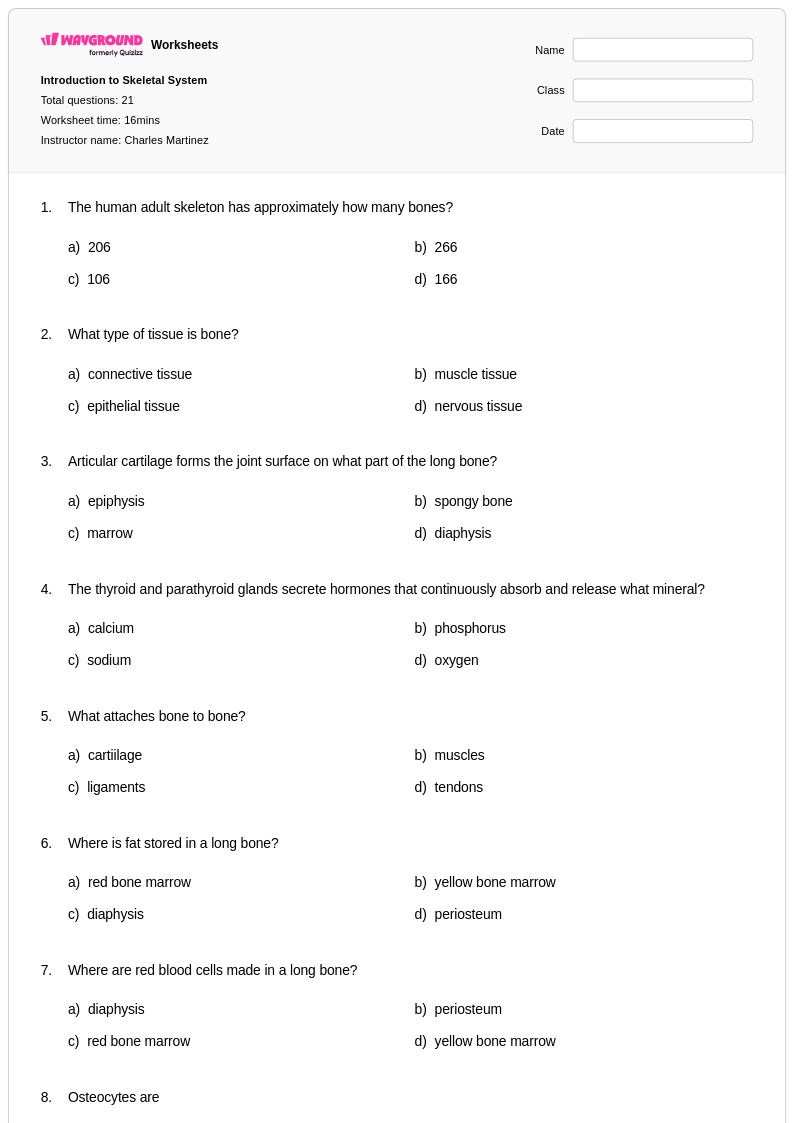
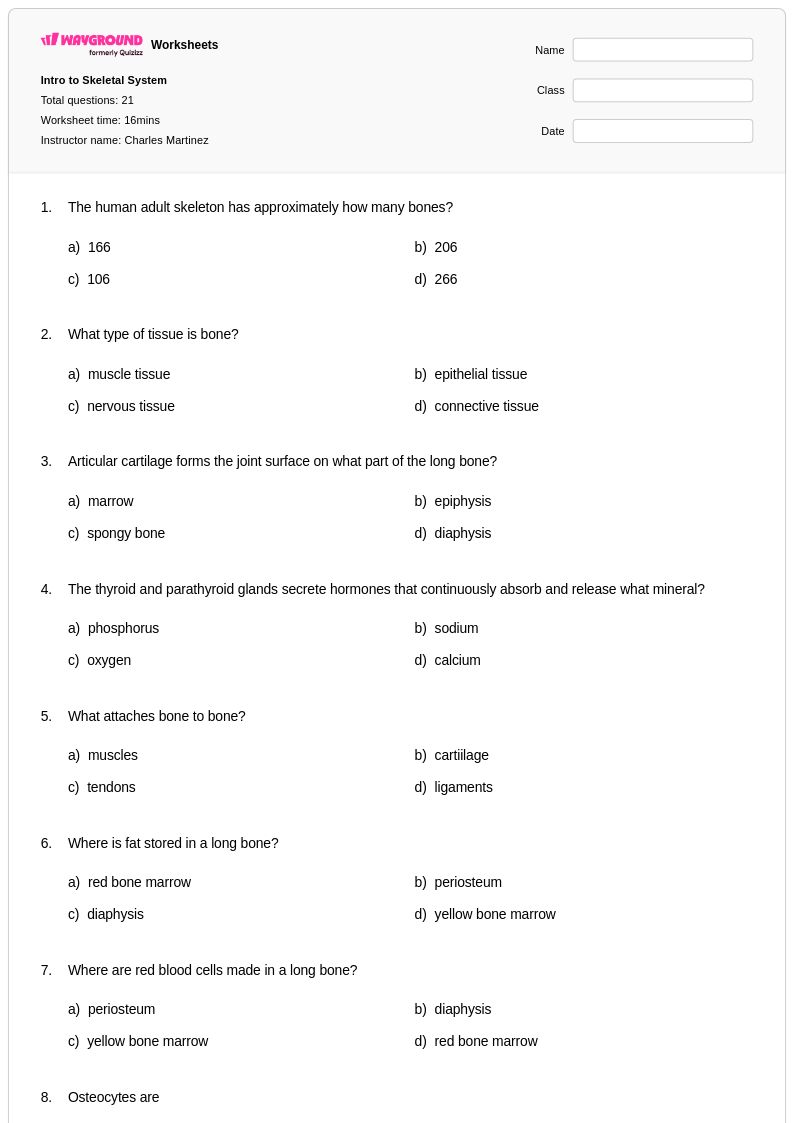
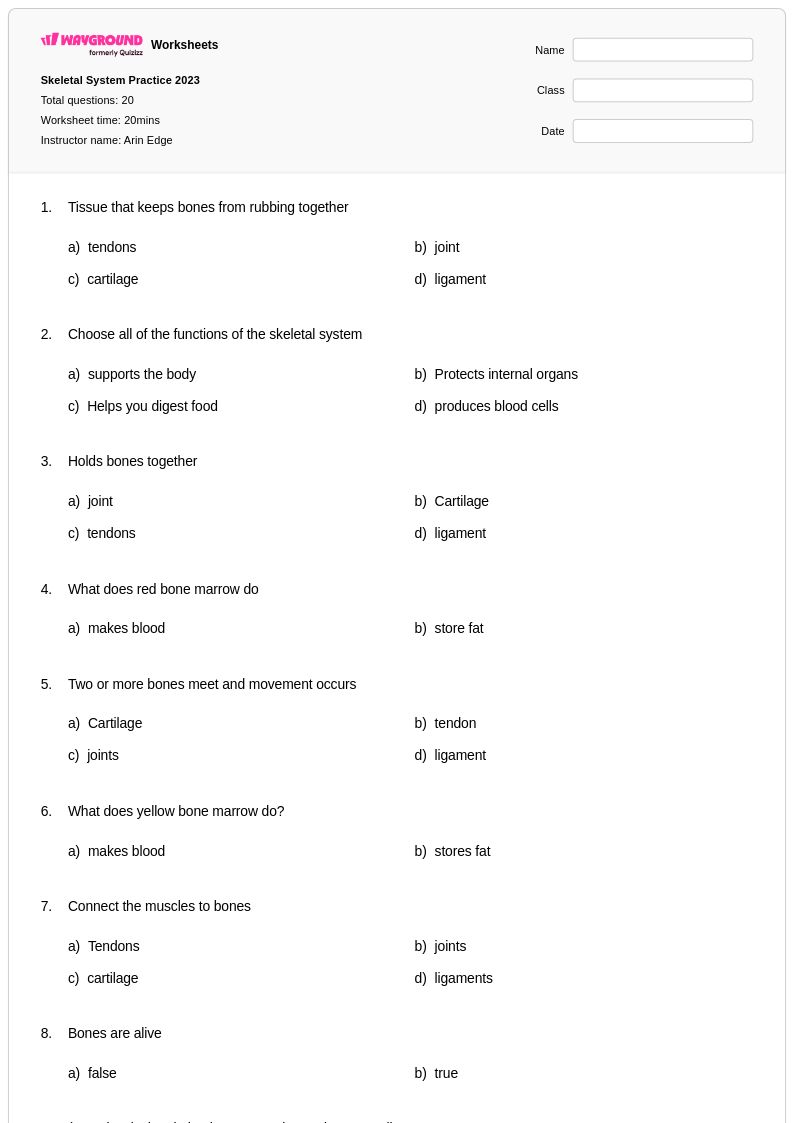
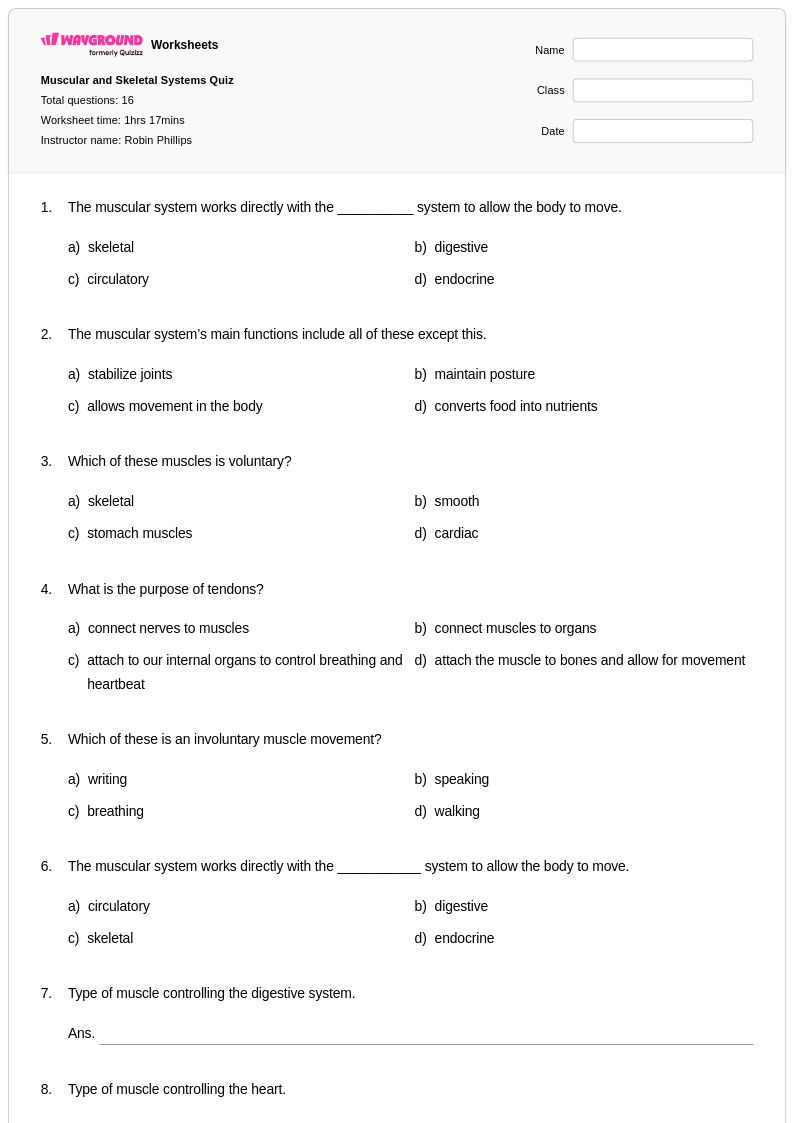
Explore Wayground's comprehensive collection of bone tissue worksheets featuring free printables and practice problems with answer keys to help students master the structure, function, and classification of skeletal system components.
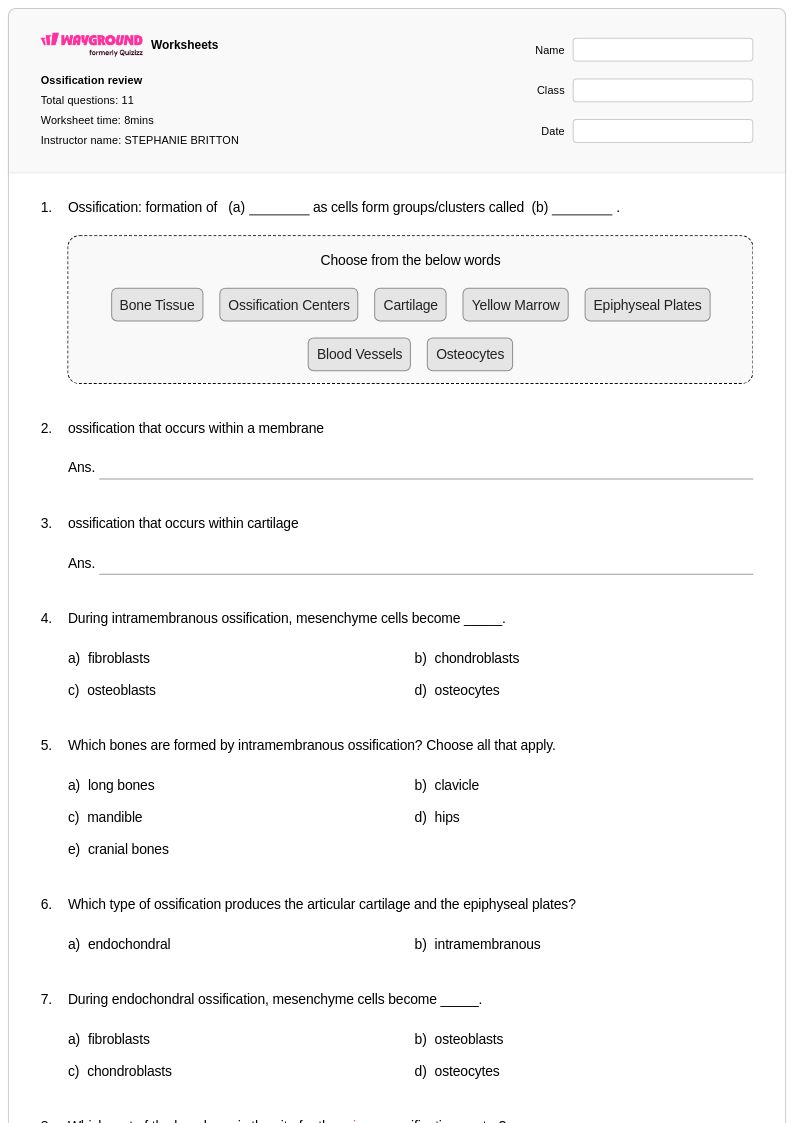
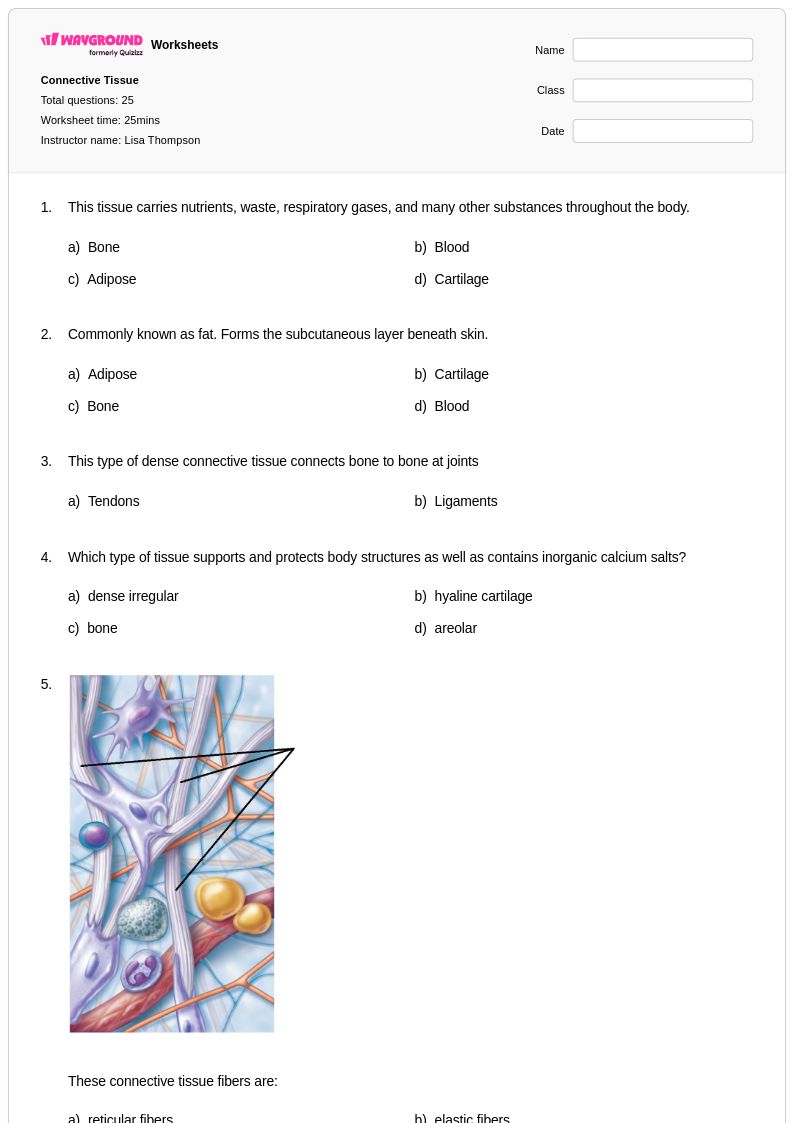
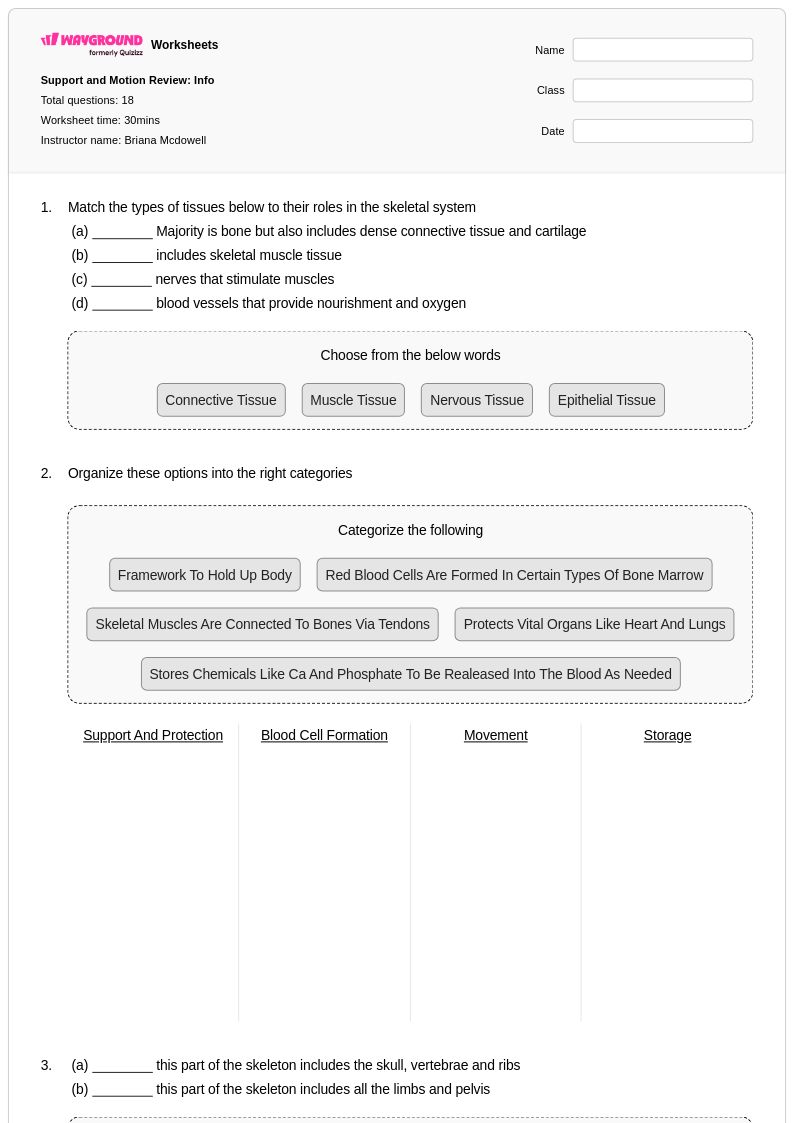
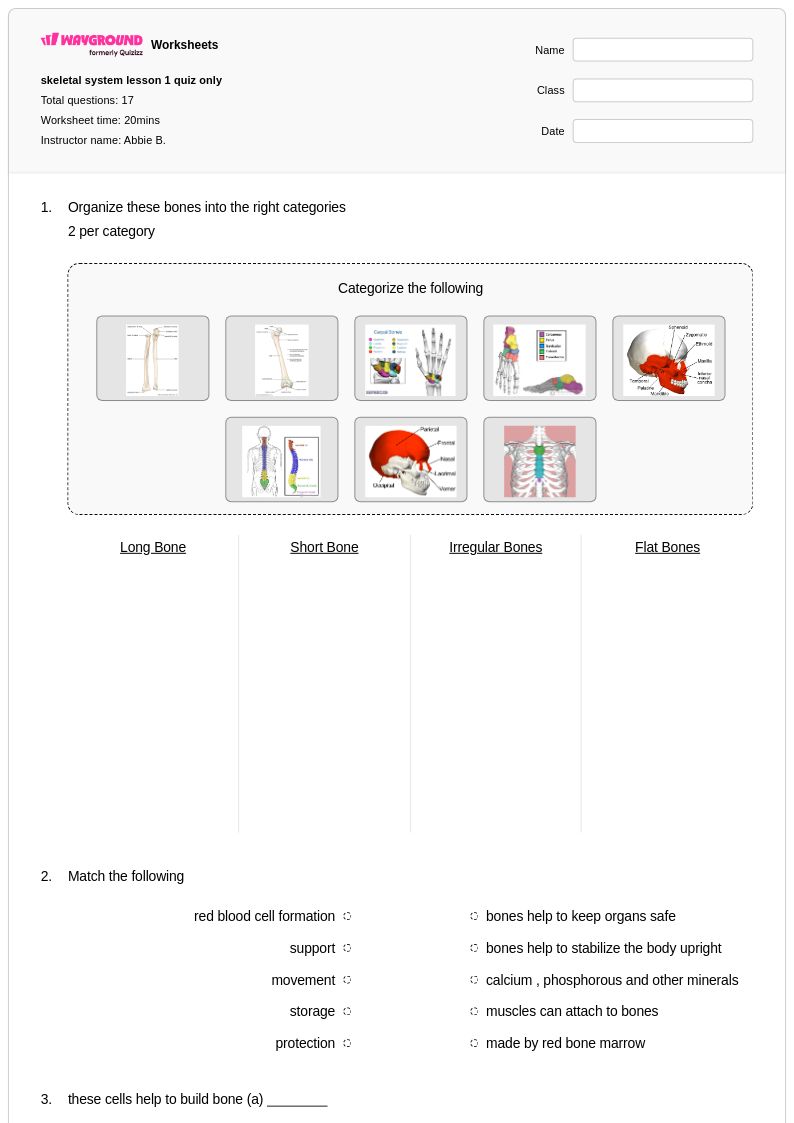
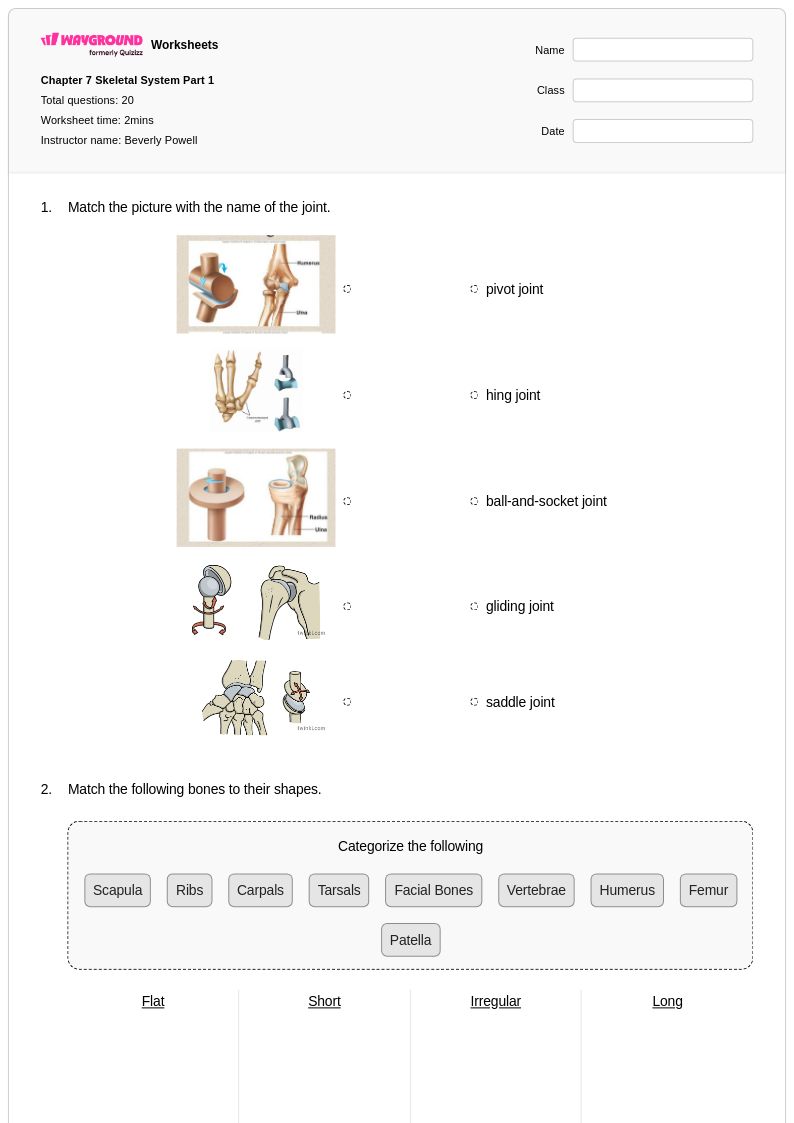
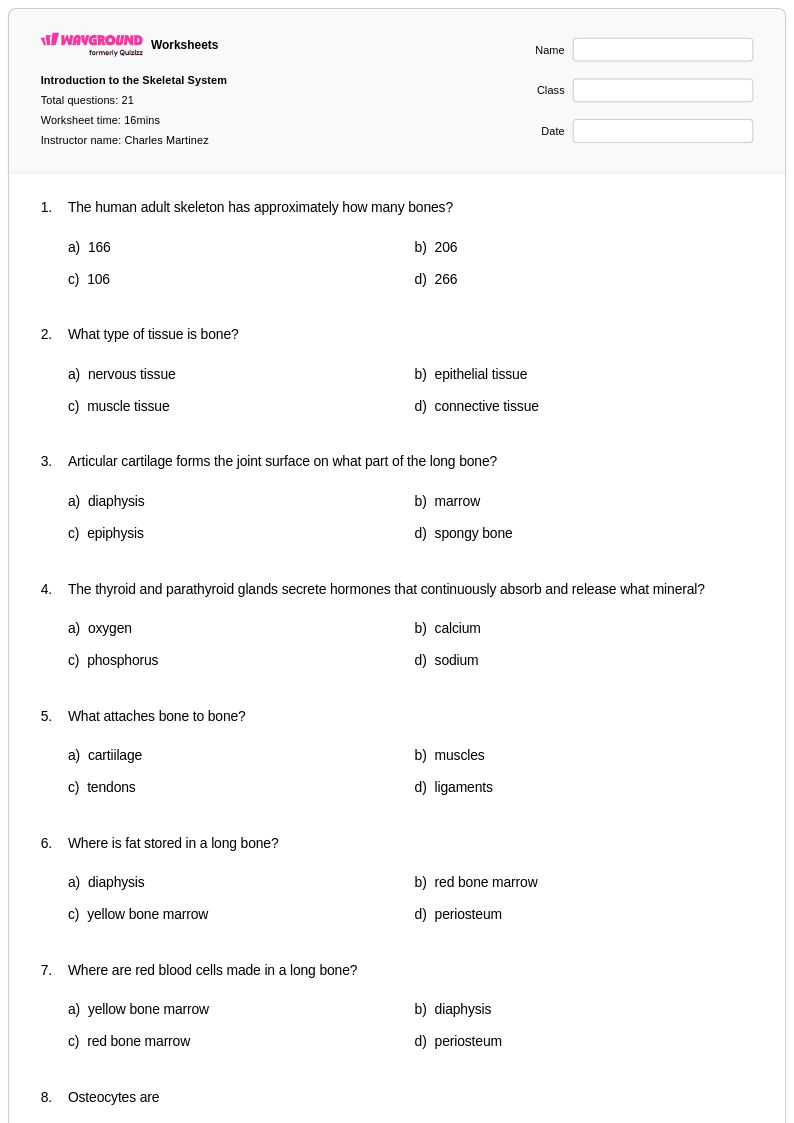
Bone tissue worksheets available through Wayground (formerly Quizizz) provide comprehensive coverage of this fundamental component of the skeletal system, enabling students to master the complex structure and function of osseous tissue. These expertly designed resources strengthen critical skills in identifying bone cell types including osteoblasts, osteocytes, and osteoclasts, while developing understanding of compact and spongy bone architecture, matrix composition, and bone remodeling processes. Students engage with detailed practice problems that explore the microscopic organization of osteons, lacunae, and canaliculi, alongside macroscopic bone classification and growth patterns. Each worksheet collection includes answer keys and is available as free printables in convenient pdf format, allowing educators to seamlessly integrate bone tissue studies into their curriculum while providing students with structured opportunities to reinforce their understanding of this vital connective tissue.
Wayground (formerly Quizizz) empowers teachers with millions of educator-created bone tissue resources that feature robust search and filtering capabilities, enabling quick access to materials aligned with specific learning standards and objectives. The platform's differentiation tools allow instructors to customize worksheets based on individual student needs, whether for remediation of basic bone structure concepts or enrichment activities exploring advanced topics like bone metabolism and pathophysiology. Teachers can access these comprehensive collections in both printable and digital formats, including downloadable pdfs that facilitate flexible lesson planning and accommodate diverse classroom environments. These extensive resources support systematic skill practice through varied question types and assessment formats, helping educators efficiently address learning gaps while building student confidence in understanding the intricate relationships between bone tissue composition, cellular activity, and overall skeletal system function.
FAQs
How do I teach bone tissue structure to my students?
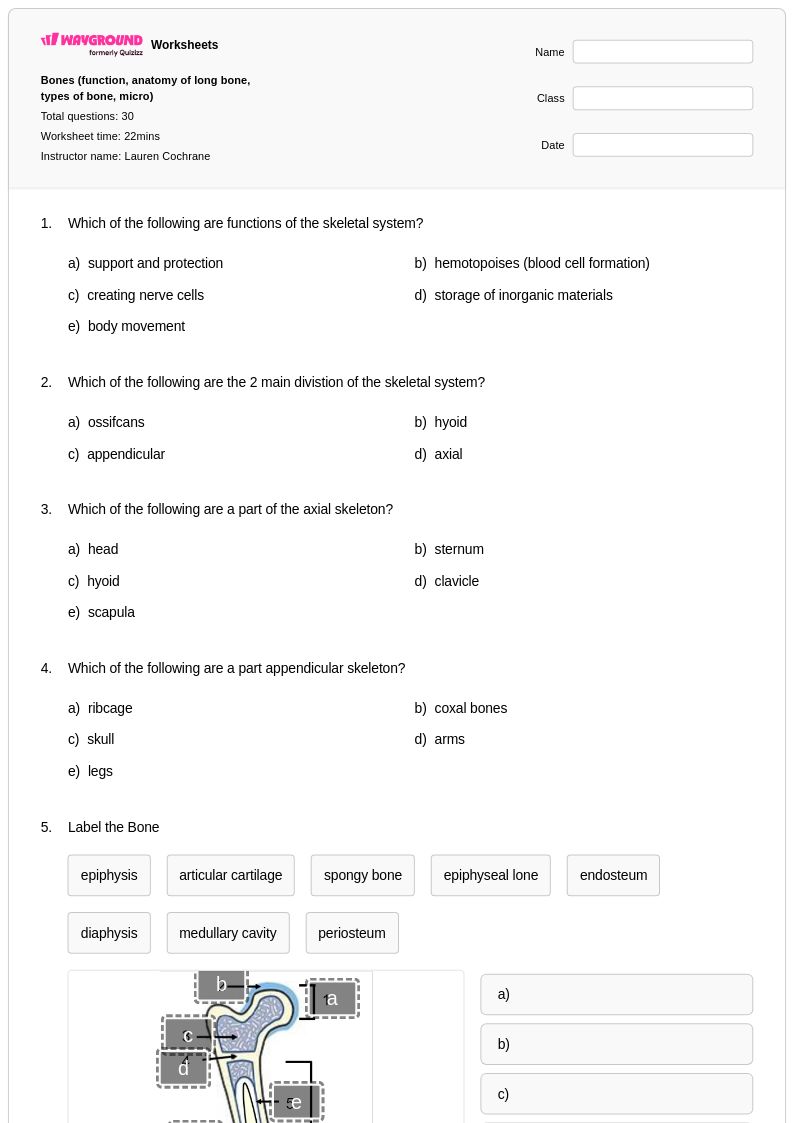
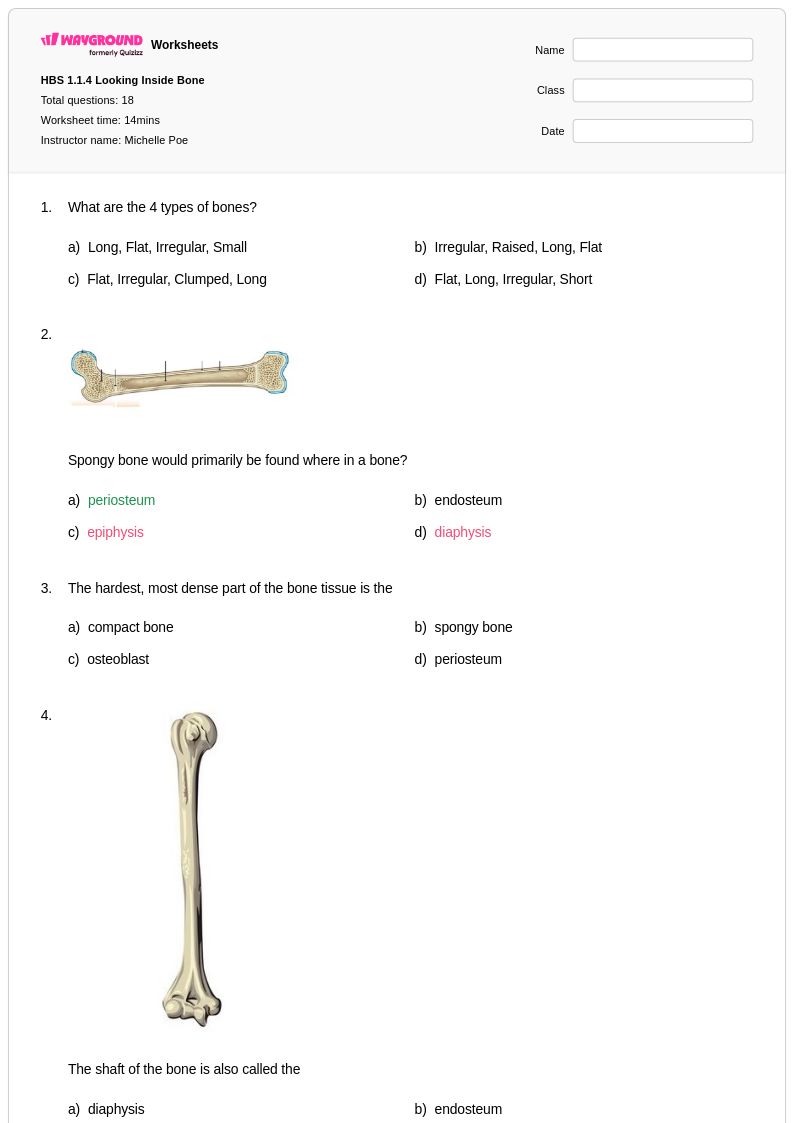
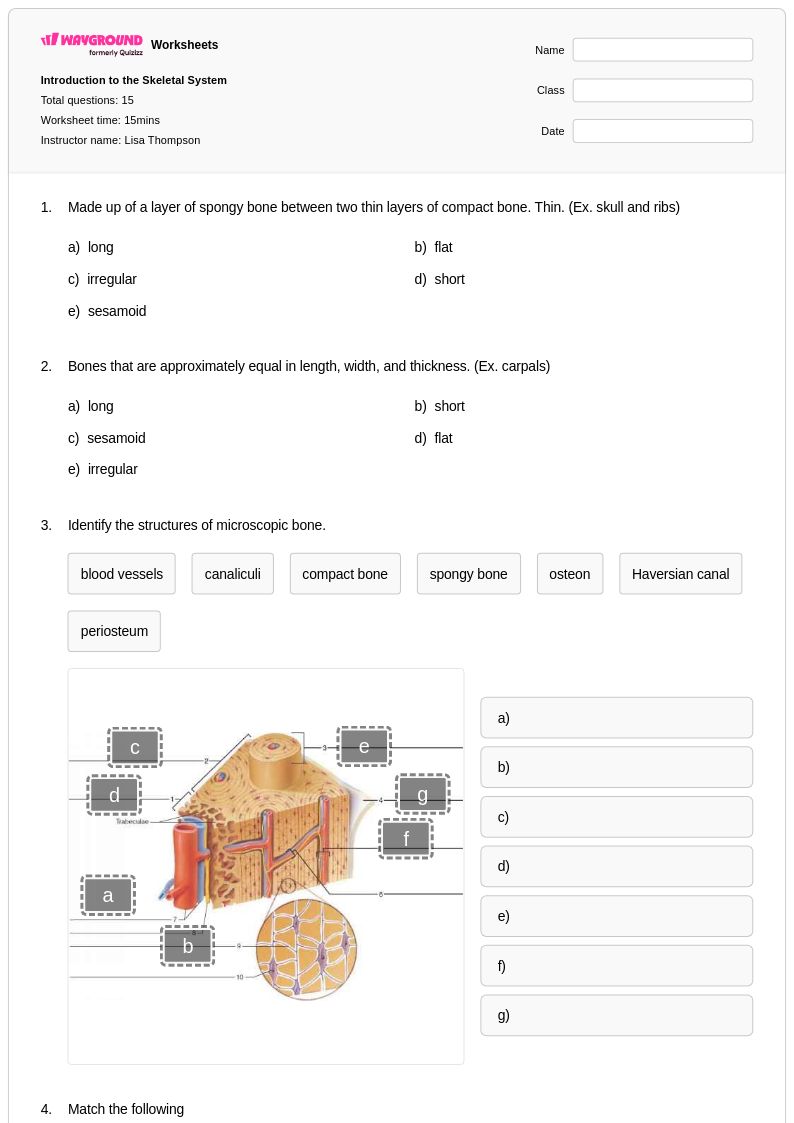
Start by distinguishing compact bone from spongy bone at the macroscopic level before moving into the microscopic organization of osteons, lamellae, lacunae, and canaliculi. Using labeled diagrams alongside direct instruction helps students visualize how the structural units of bone relate to function. Connecting each structural feature to its physiological role, such as how canaliculi allow osteocytes to communicate, gives students a framework for retention rather than rote memorization.
What exercises help students practice identifying bone cell types?
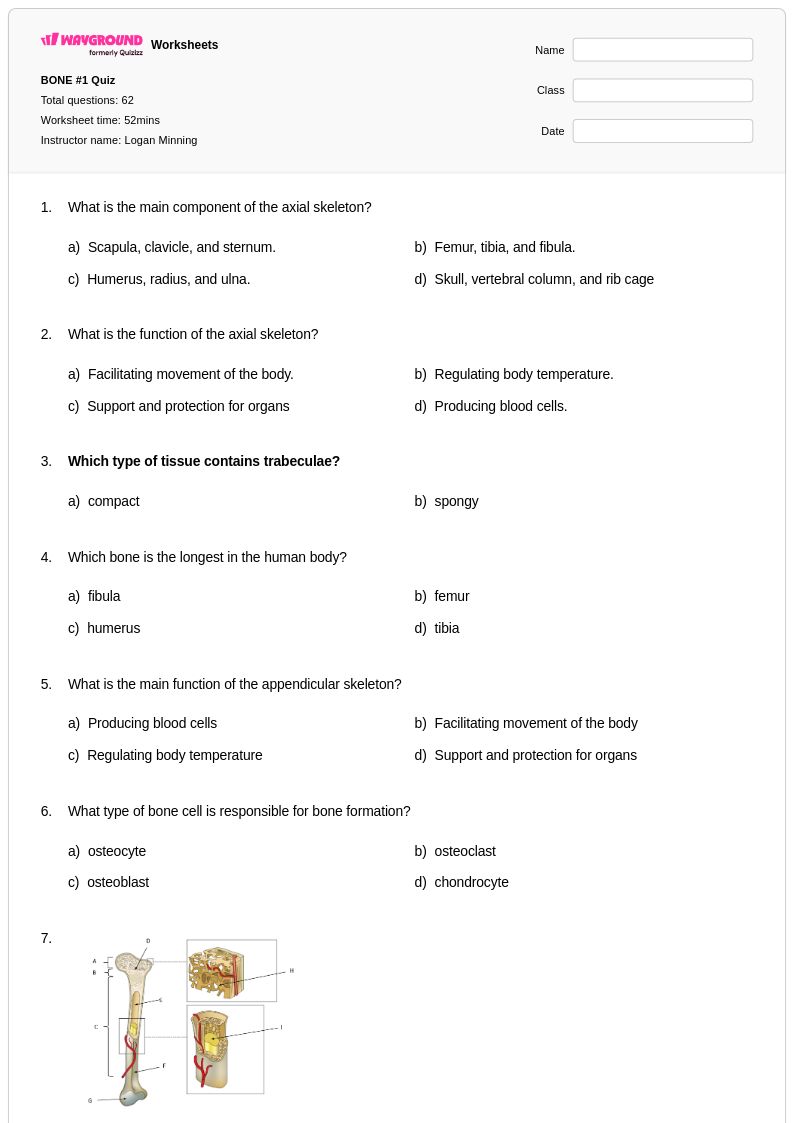
Practice problems that present cell descriptions or images and ask students to identify whether they depict osteoblasts, osteocytes, or osteoclasts are highly effective for reinforcing cell type distinctions. Exercises that require students to match each cell type to its specific function in bone formation, maintenance, or resorption deepen conceptual understanding beyond simple identification. Bone tissue worksheets that cycle through these cell types across multiple question formats help students internalize the differences through repeated, varied exposure.
What mistakes do students commonly make when learning about bone tissue?
One of the most common errors is conflating osteoblasts and osteoclasts, particularly mixing up which cell builds bone and which breaks it down. Students also frequently struggle to distinguish compact bone from spongy bone at the histological level, often describing spongy bone as simply 'soft' rather than understanding its trabecular architecture. Another persistent misconception is treating bone as inert rather than as a living, metabolically active connective tissue undergoing constant remodeling.
How do I help students understand the bone remodeling process?
Bone remodeling is best taught as a cycle with distinct phases: resorption by osteoclasts, reversal, and formation by osteoblasts. Using a sequencing activity where students arrange these phases in order, paired with an explanation of the hormonal signals involved, helps students see remodeling as a regulated process rather than random cellular activity. Emphasizing real-world contexts such as fracture repair or calcium homeostasis makes the concept more concrete and clinically relevant for students.
How can I use Wayground's bone tissue worksheets in my classroom?
Wayground's bone tissue worksheets are available as free printable PDFs for traditional classroom use and in digital formats for technology-integrated learning environments, giving teachers flexibility regardless of their setup. Digital worksheets can be hosted as a quiz directly on Wayground, allowing teachers to track student responses and identify gaps in understanding of topics like osteon structure or bone classification. Each worksheet includes a complete answer key, making them practical for independent practice, homework, or structured review sessions.
How do I differentiate bone tissue instruction for students at different levels?
For students who need foundational support, focus first on macroscopic bone classification and basic cell type identification before introducing microscopic structures like lacunae and canaliculi. More advanced students can be challenged with enrichment activities covering bone metabolism, calcium regulation, or pathophysiology such as osteoporosis. On Wayground, teachers can apply differentiation tools including reduced answer choices to lower cognitive load for students who need scaffolding, or extended time settings for students who require additional processing support, all configurable per student without disrupting the rest of the class.