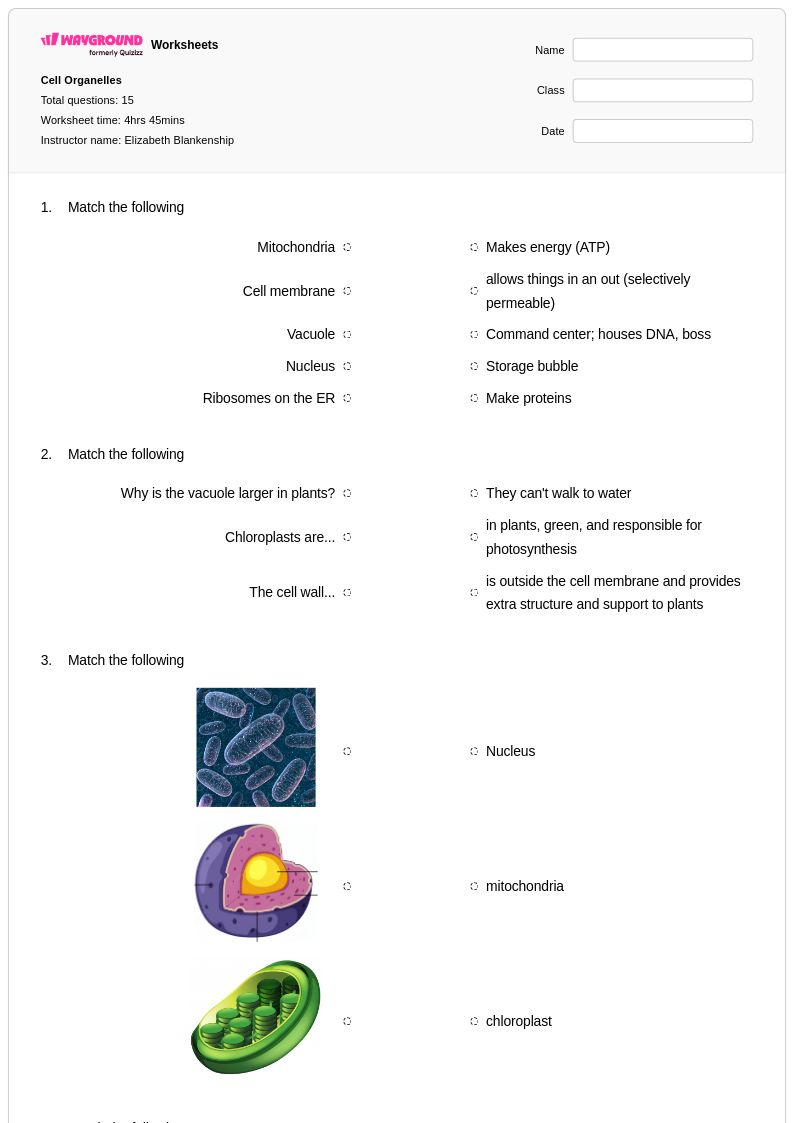
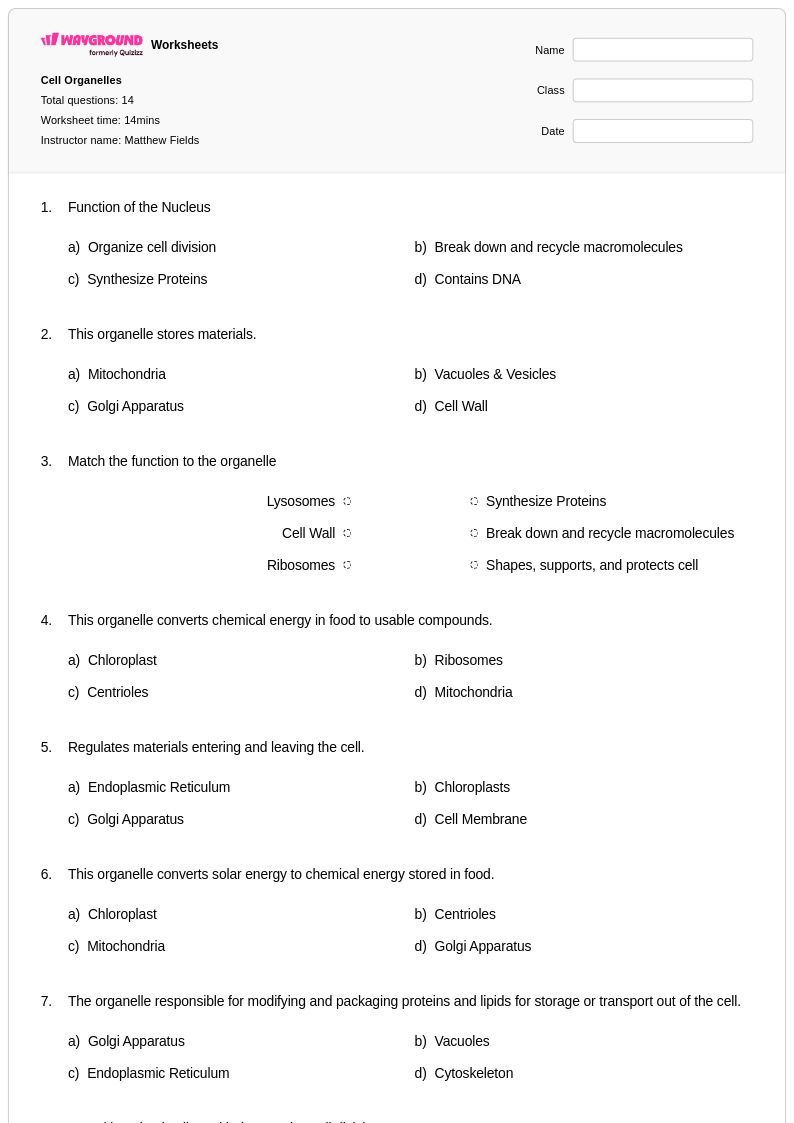
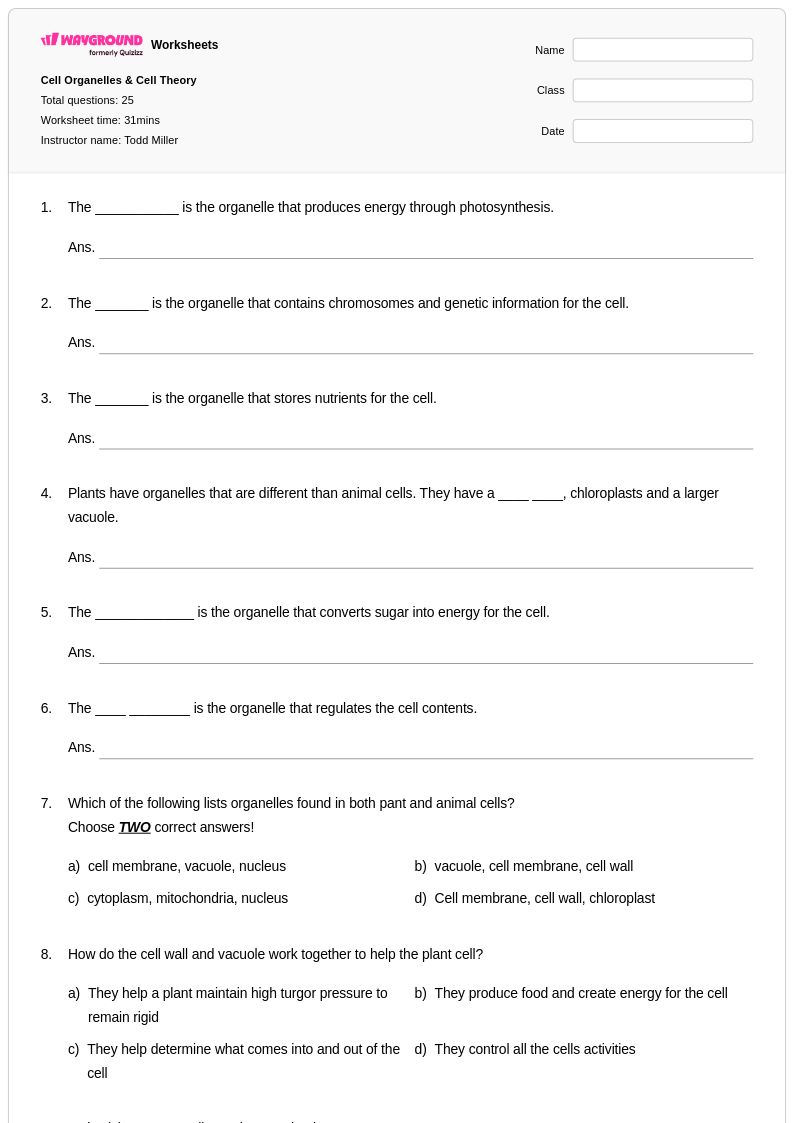
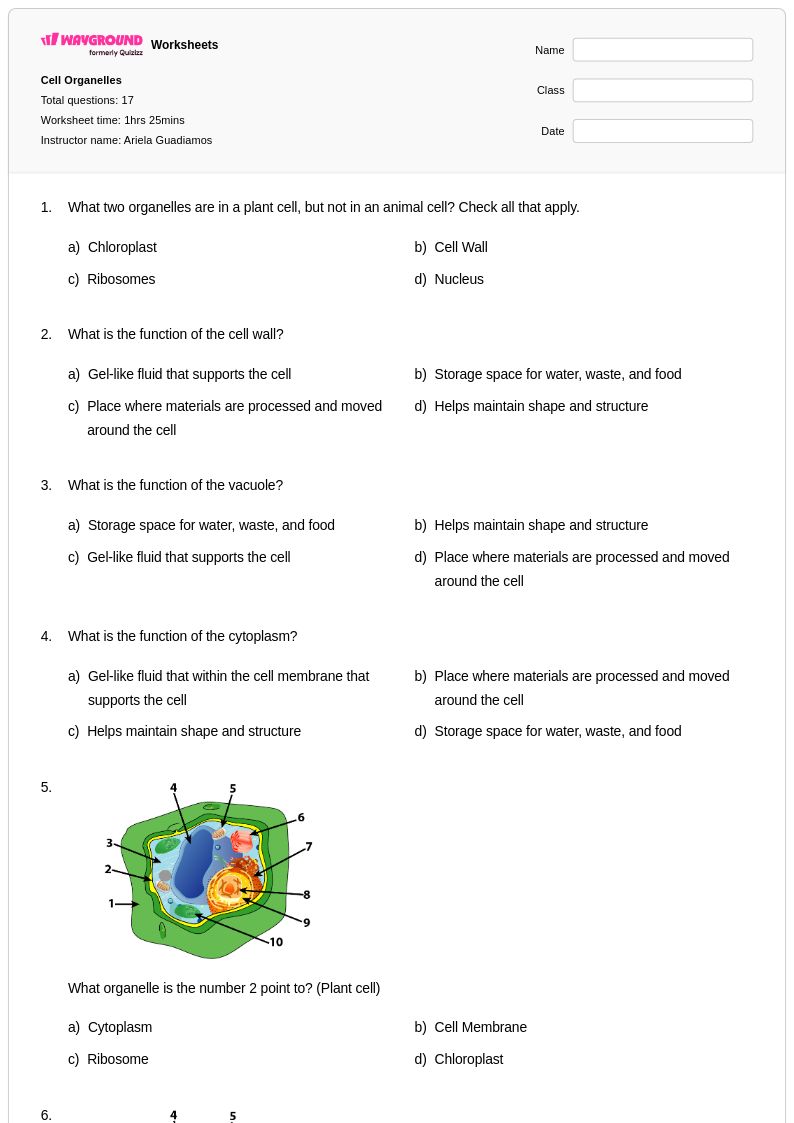
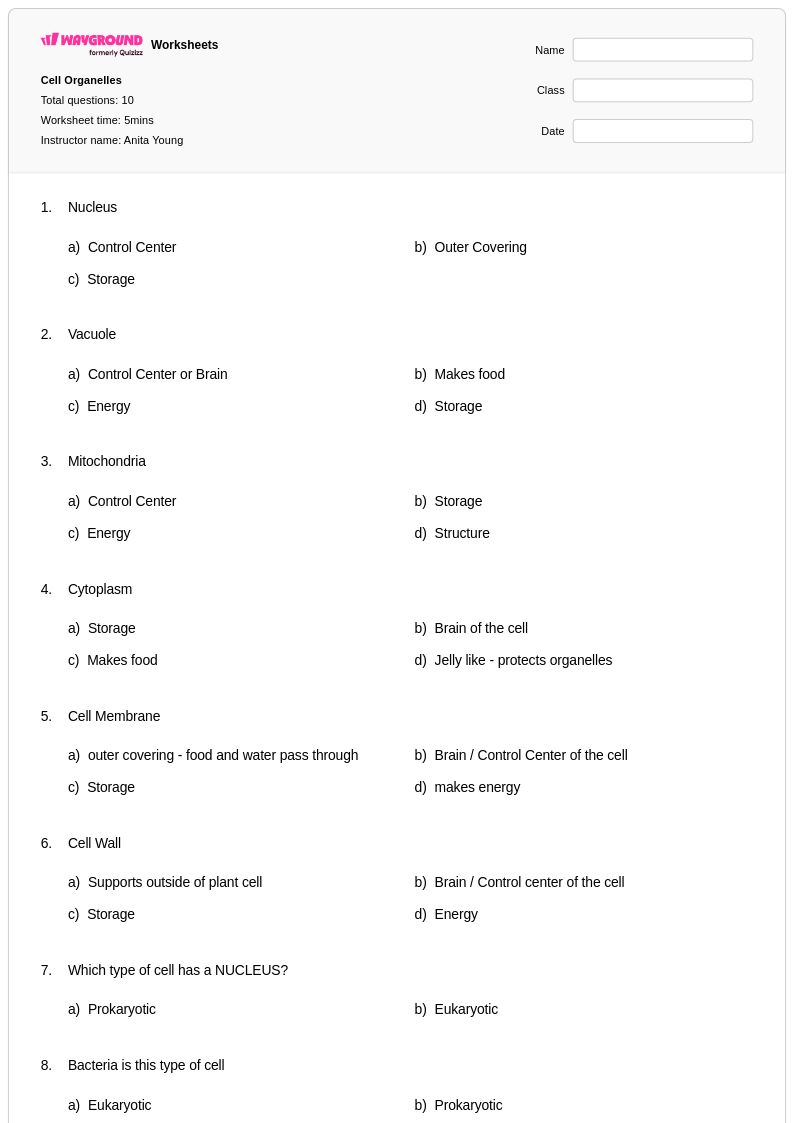
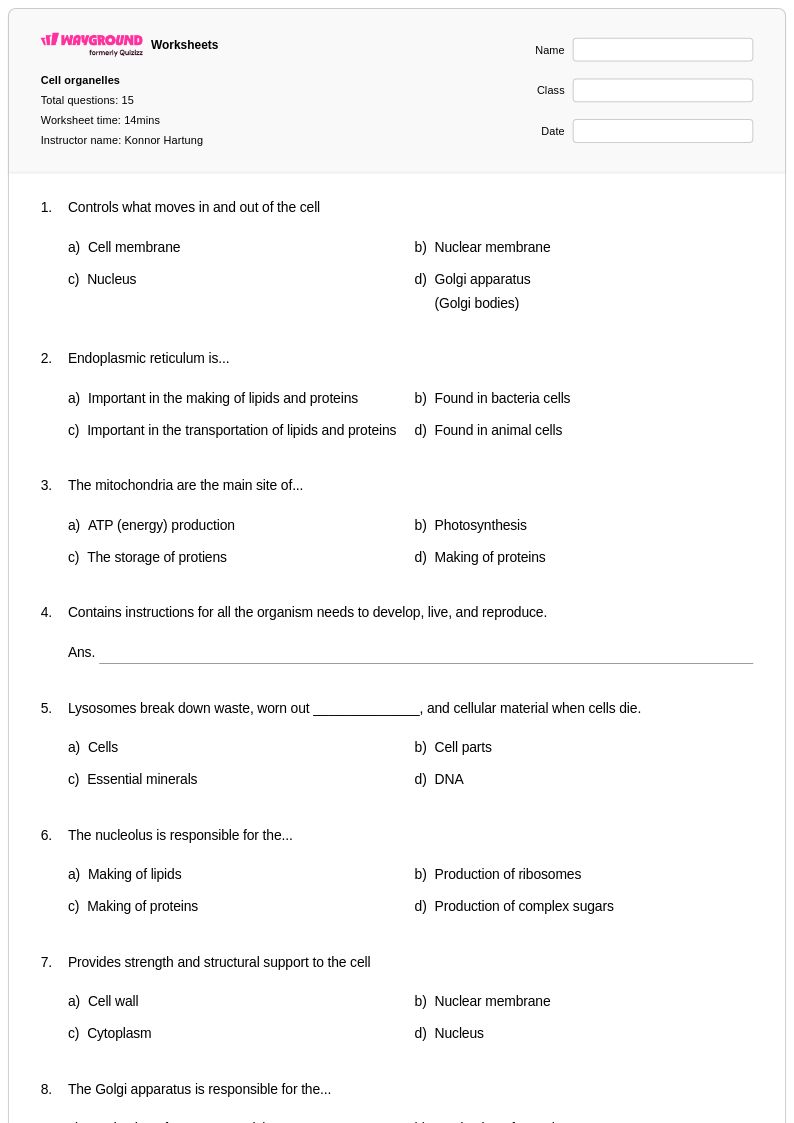
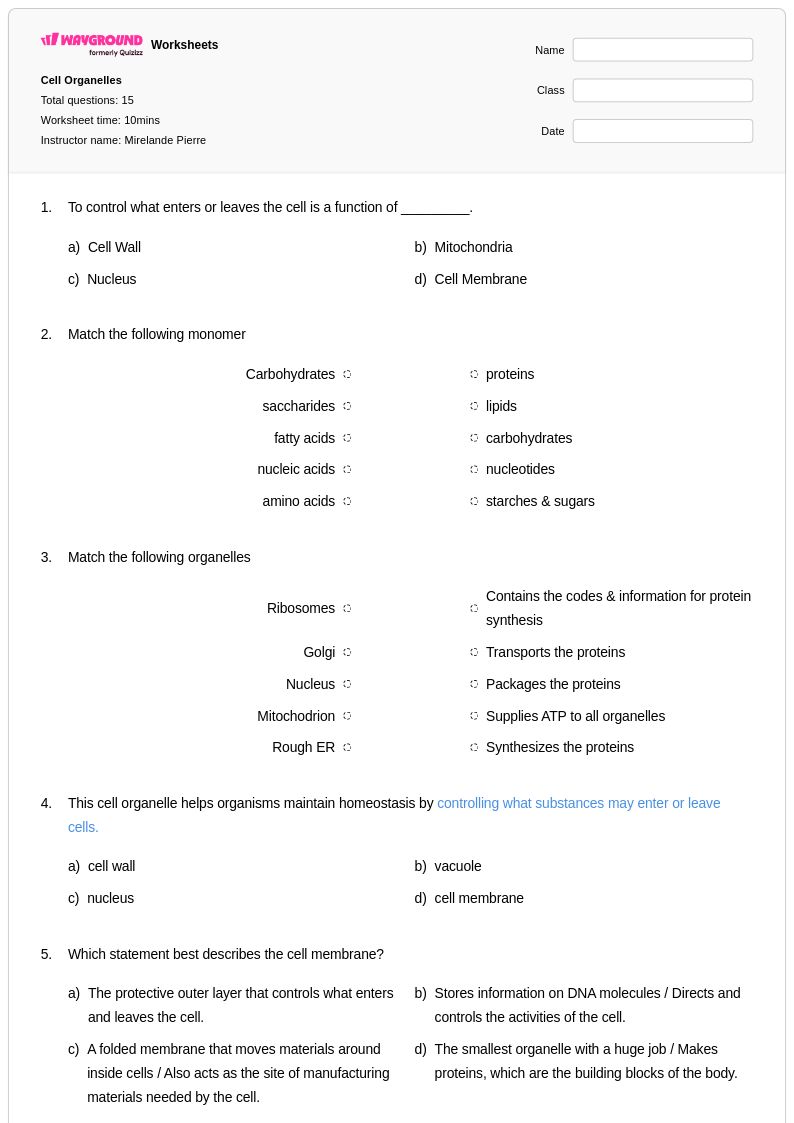
Explore Wayground's comprehensive collection of free cell organelles worksheets and printables that help students master the structure and function of cellular components through engaging practice problems and detailed answer keys.
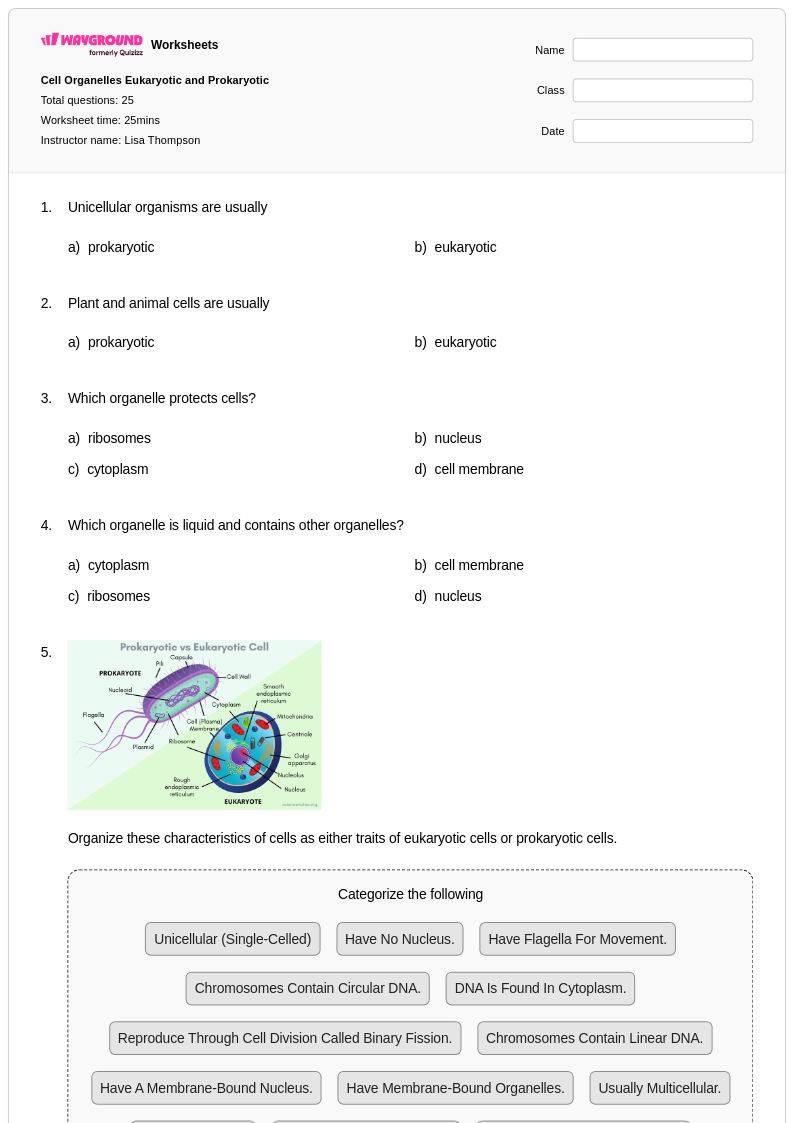
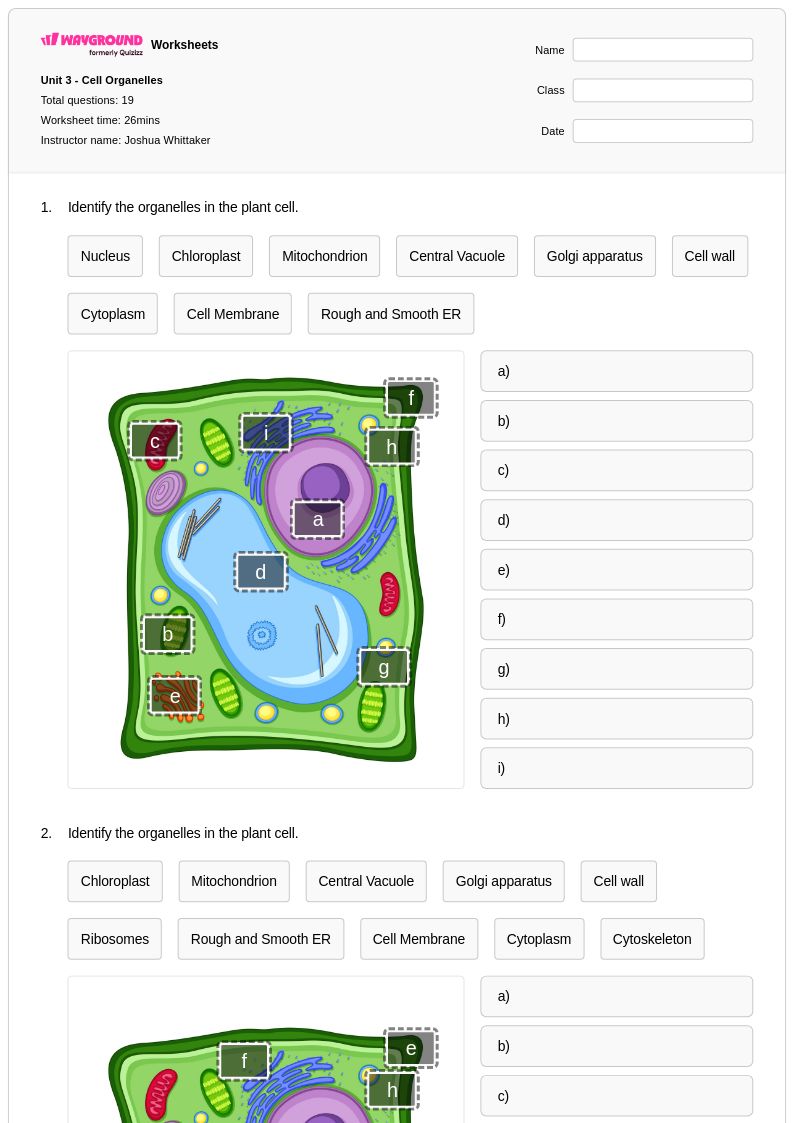
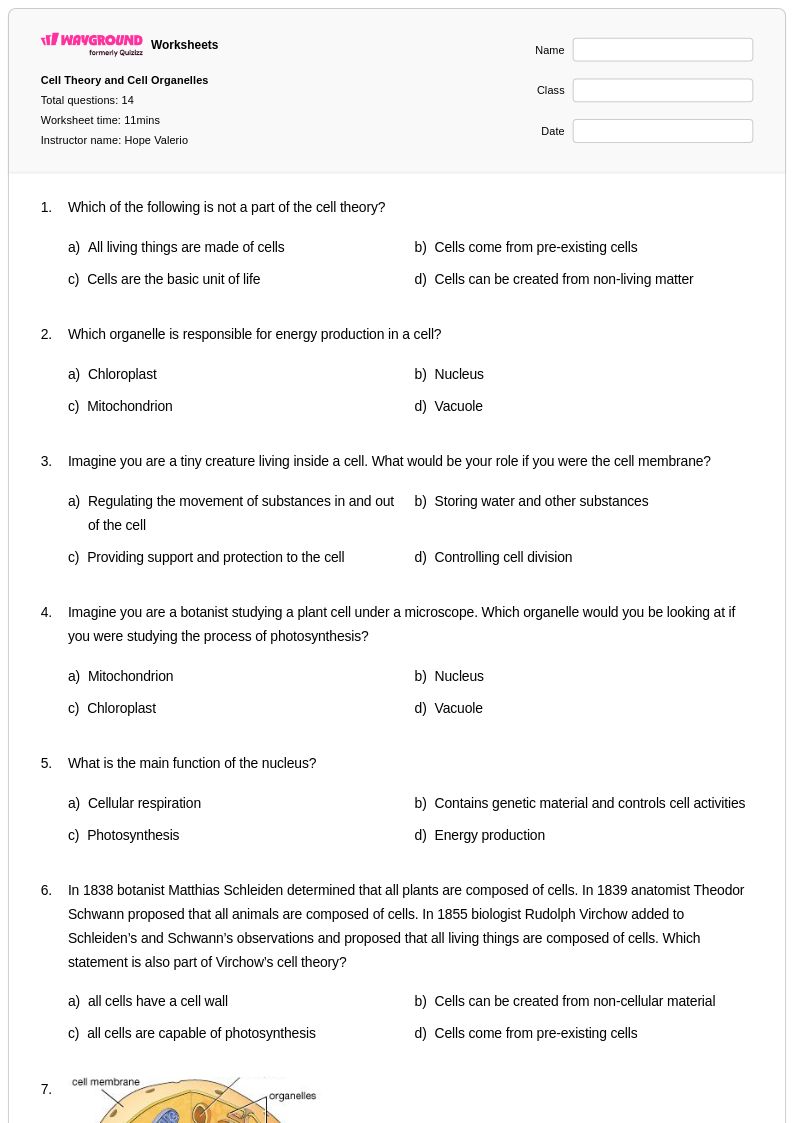
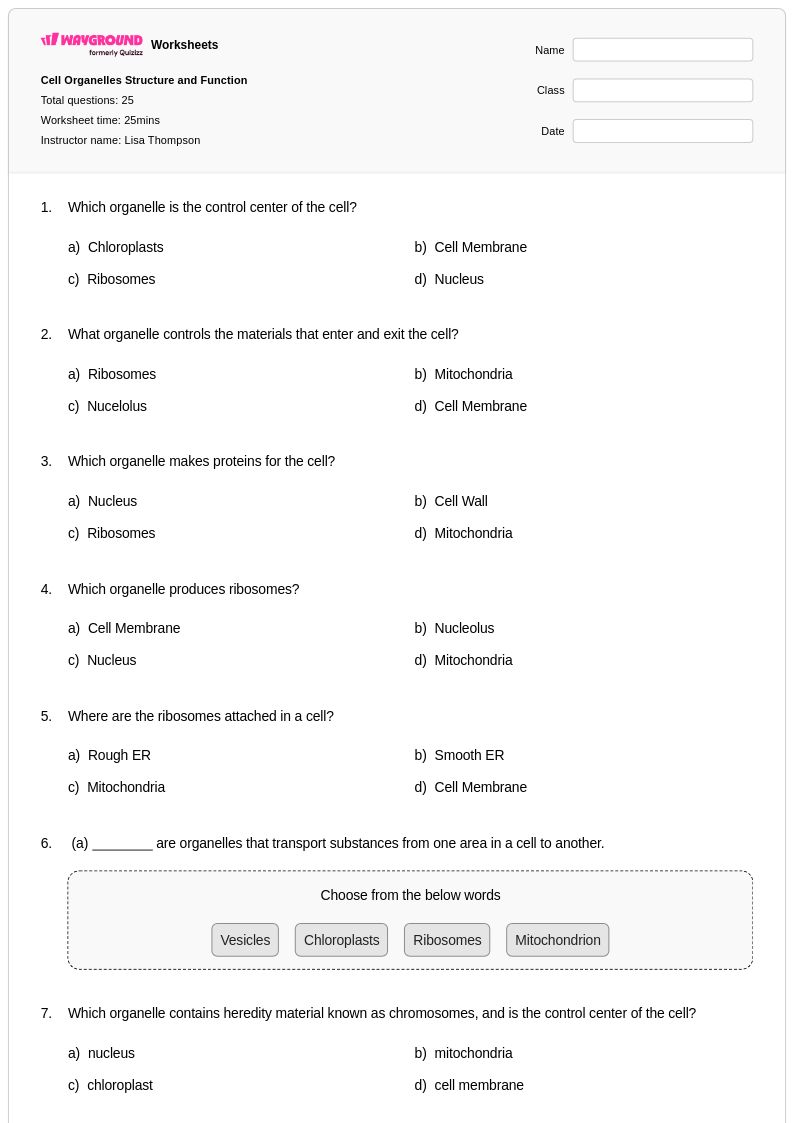
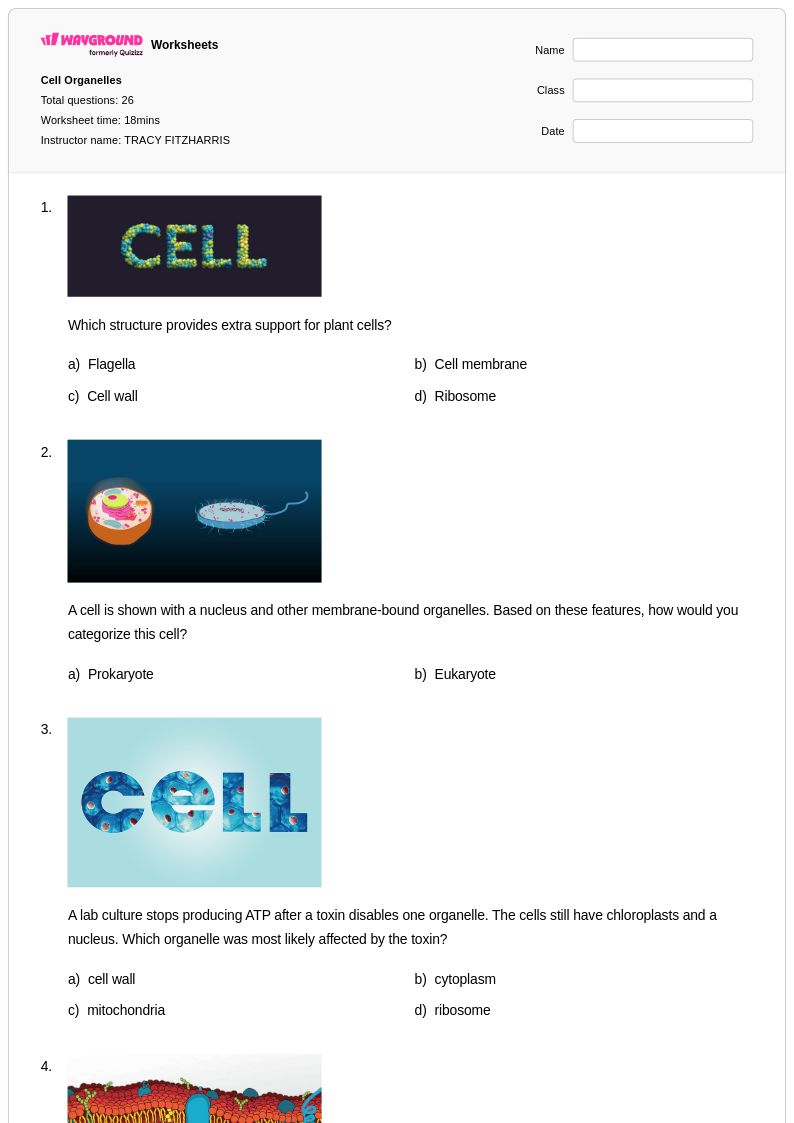
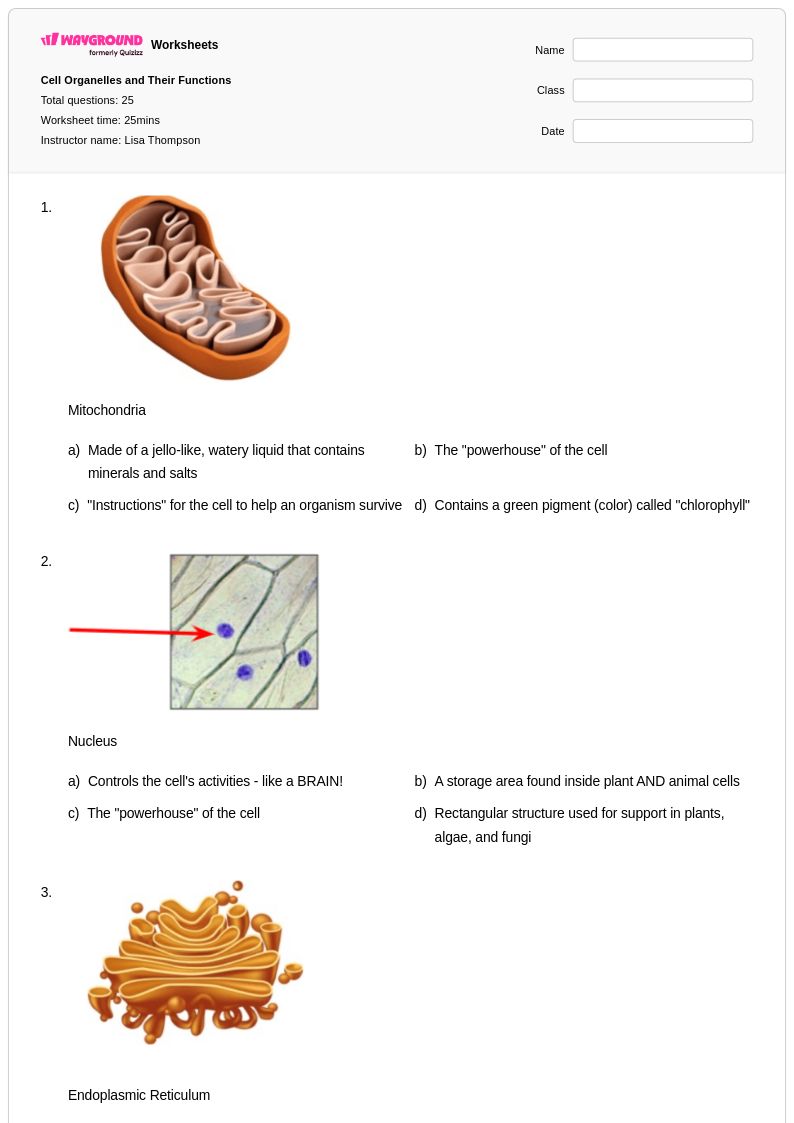
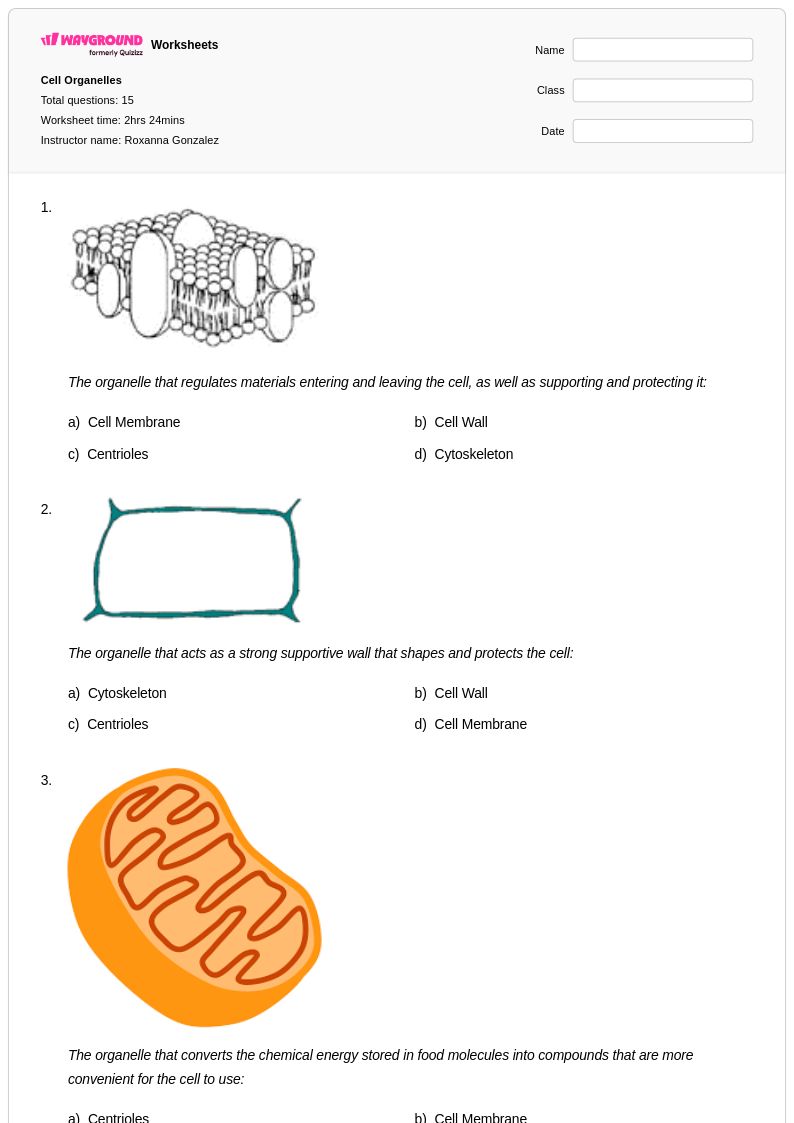
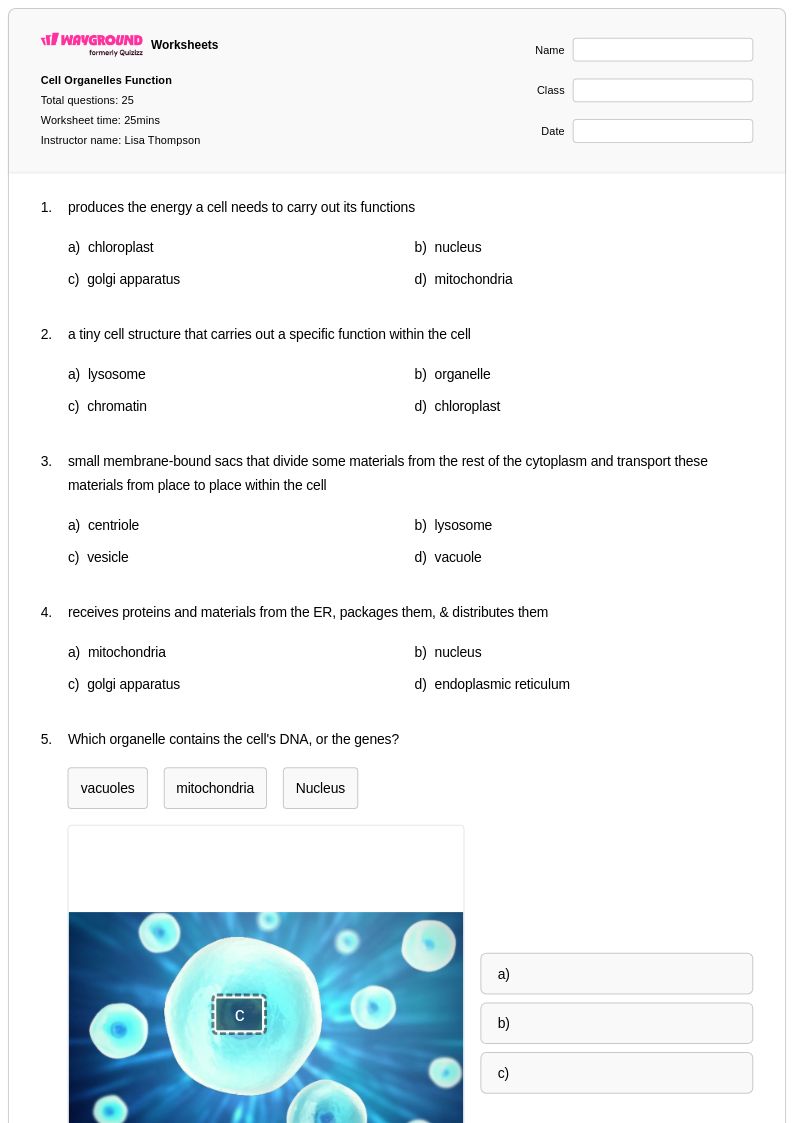
Cell organelles worksheets available through Wayground (formerly Quizizz) provide comprehensive practice materials that help students master the intricate structures and functions of cellular components. These expertly crafted resources strengthen essential biology skills including organelle identification, understanding membrane-bound versus non-membrane-bound structures, and analyzing the specialized roles of mitochondria, ribosomes, endoplasmic reticulum, Golgi apparatus, and other vital cellular machinery. Students benefit from diverse practice problems that challenge them to connect organelle structure to function, compare prokaryotic and eukaryotic cellular organization, and trace cellular processes across multiple organelles. Each worksheet includes detailed answer keys that support independent learning and self-assessment, with many resources available as free printables in convenient pdf format for classroom and home use.
Wayground (formerly Quizizz) empowers educators with an extensive collection of millions of teacher-created cell organelles worksheets that streamline lesson planning and enhance student outcomes. The platform's robust search and filtering capabilities allow teachers to quickly locate materials aligned with specific standards and learning objectives, while differentiation tools enable customization for diverse learner needs and ability levels. These flexible resources support targeted skill practice, remediation for struggling students, and enrichment opportunities for advanced learners through varied question formats and complexity levels. Teachers can seamlessly integrate both printable and digital formats into their instruction, accessing comprehensive pdf collections that facilitate immediate deployment in any classroom setting while maintaining the depth and rigor necessary for thorough understanding of cellular biology concepts.
FAQs
How do I teach cell organelles to middle or high school students?
Start by anchoring organelle instruction in function before structure — students retain organelle names more reliably when they first understand what each organelle does and why the cell needs it. Use analogies like the cell-as-city or cell-as-factory to build conceptual scaffolding, then layer in precise vocabulary for structures like the endoplasmic reticulum, Golgi apparatus, and mitochondria. Comparing prokaryotic and eukaryotic cell organization early on also helps students understand why membrane-bound organelles matter.
What are the most effective practice exercises for helping students learn organelle structure and function?
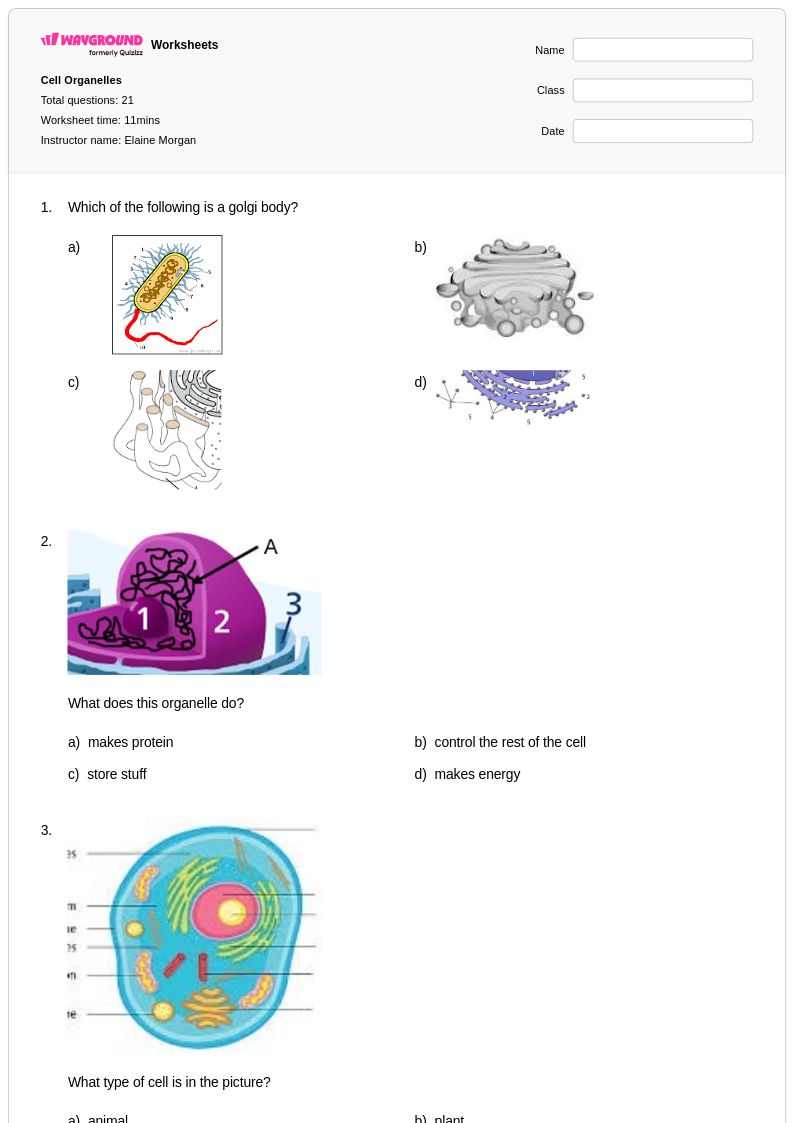
The most effective exercises require students to connect structure to function rather than simply match names to definitions. Practice problems that ask students to trace a cellular process — such as protein synthesis from ribosome to Golgi apparatus to cell membrane — build deeper understanding than rote identification alone. Labeling diagrams, comparing organelle roles across cell types, and answering scenario-based questions (e.g., 'Which organelle would be most abundant in a muscle cell, and why?') all strengthen durable learning.
What mistakes do students commonly make when learning about cell organelles?
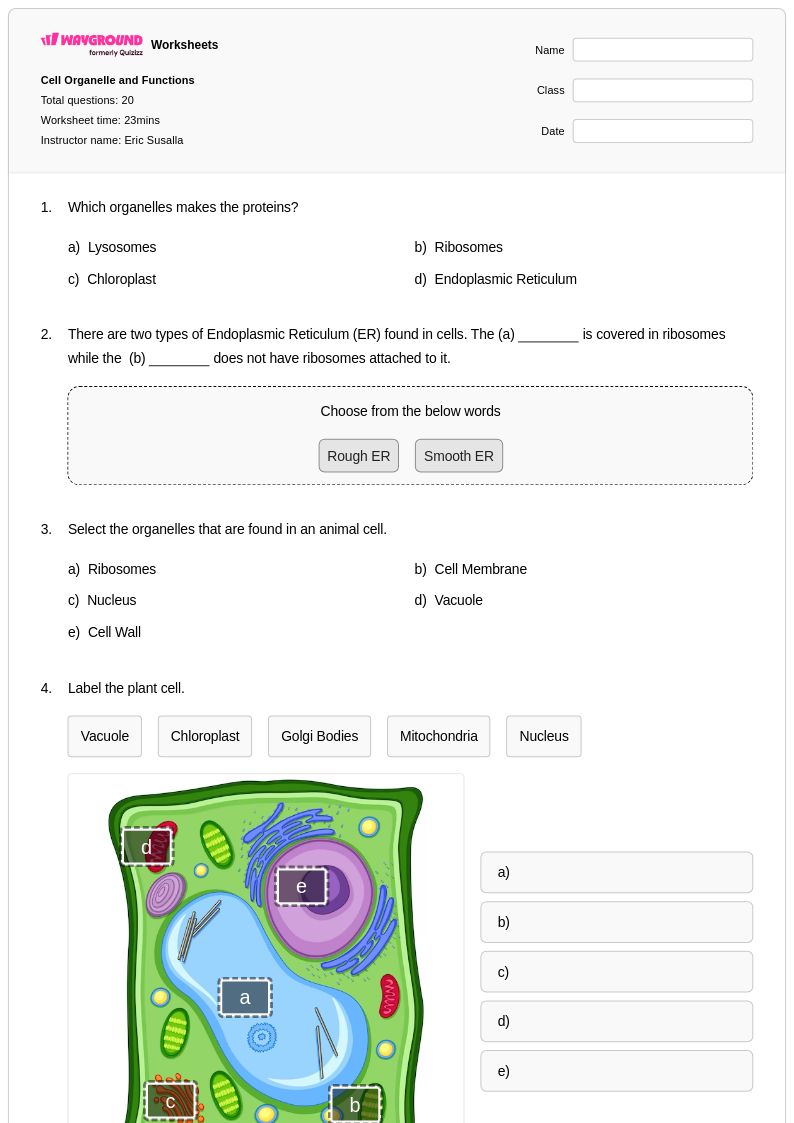
The most persistent misconception is confusing the roles of the rough and smooth endoplasmic reticulum — students often treat them as interchangeable rather than understanding that the rough ER is studded with ribosomes and specializes in protein processing, while the smooth ER handles lipid synthesis and detoxification. Students also frequently conflate the functions of the Golgi apparatus and the ER, or misattribute ATP production to the nucleus rather than the mitochondria. Another common error is assuming all cells contain the same organelles, which ignores the structural differences between prokaryotic and eukaryotic cells.
How do I help struggling students differentiate between membrane-bound and non-membrane-bound organelles?
Create a two-column sorting activity where students categorize organelles by membrane status before tackling function — the physical act of sorting builds the distinction kinesthetically. Emphasize that membrane-bound organelles (such as the mitochondria, nucleus, and vacuole) create compartmentalized environments that allow specialized chemical reactions to occur without interfering with the rest of the cell. For students who need additional support, Wayground allows teachers to enable reduced answer choices and read-aloud features for individual students, lowering cognitive load while keeping the core content intact.
How can I use cell organelles worksheets from Wayground in my classroom?
Wayground's cell organelles worksheets are available as printable PDFs for traditional classroom use and in digital formats for technology-integrated environments, giving teachers flexibility across in-person, hybrid, and remote settings. Teachers can also host worksheets directly as a quiz on Wayground, enabling real-time student response tracking. Each worksheet includes a detailed answer key, making them practical for independent practice, homework assignments, or guided review sessions without requiring additional teacher preparation.
How do I differentiate cell organelles instruction for students with different ability levels?
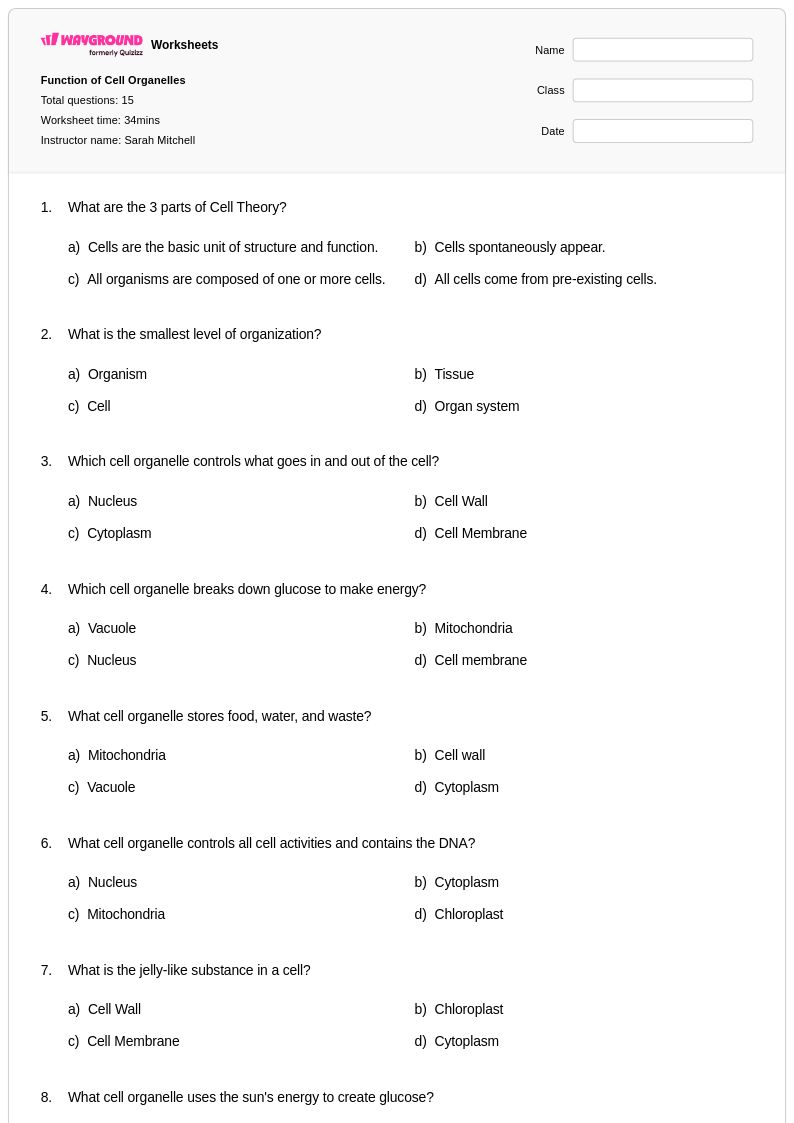
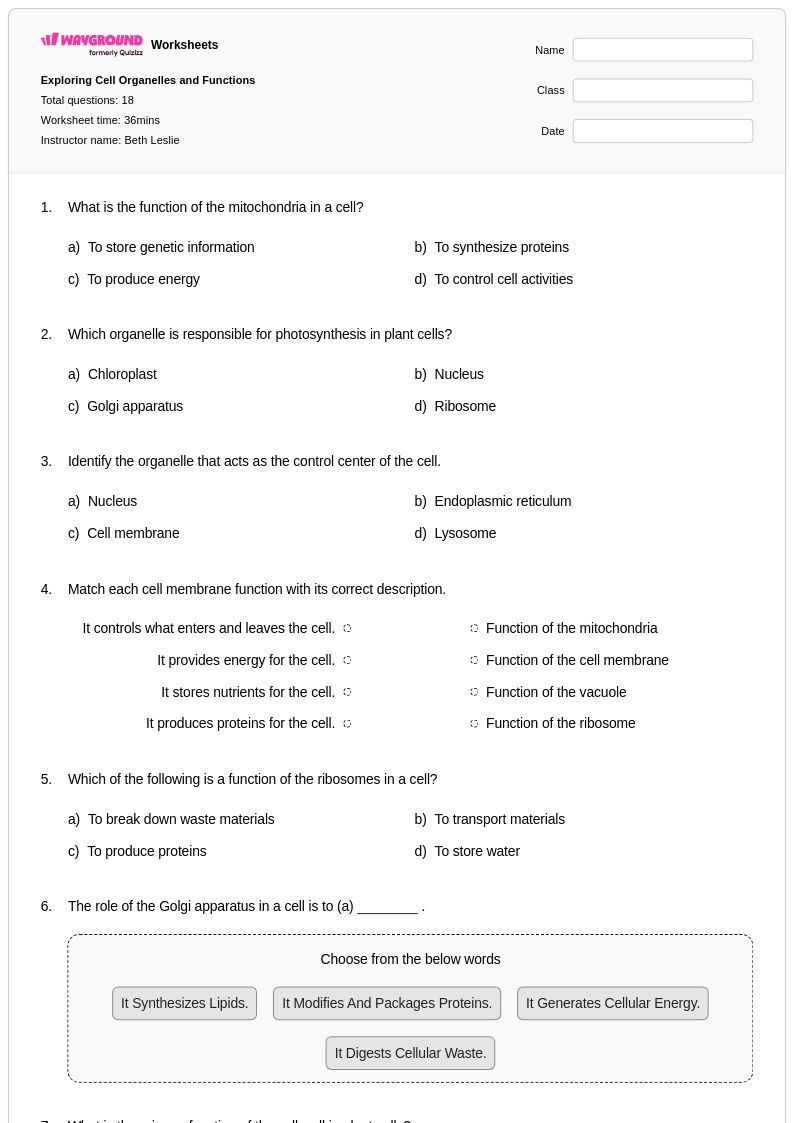
For foundational learners, focus on the five to six core organelles (nucleus, mitochondria, cell membrane, ribosome, vacuole, and chloroplast in plant cells) before expanding to the full organelle set. For advanced learners, extend practice to include organelle interplay in processes like the endomembrane system or cellular respiration. On Wayground, teachers can configure accommodations such as extended time, read aloud, and reduced answer choices on a per-student basis, allowing the same digital worksheet to serve diverse learners simultaneously without singling anyone out.