Explore Wayground's comprehensive collection of free blood sugar worksheets and printables that help students understand glucose regulation, diabetes, and metabolic processes through engaging practice problems with complete answer keys.
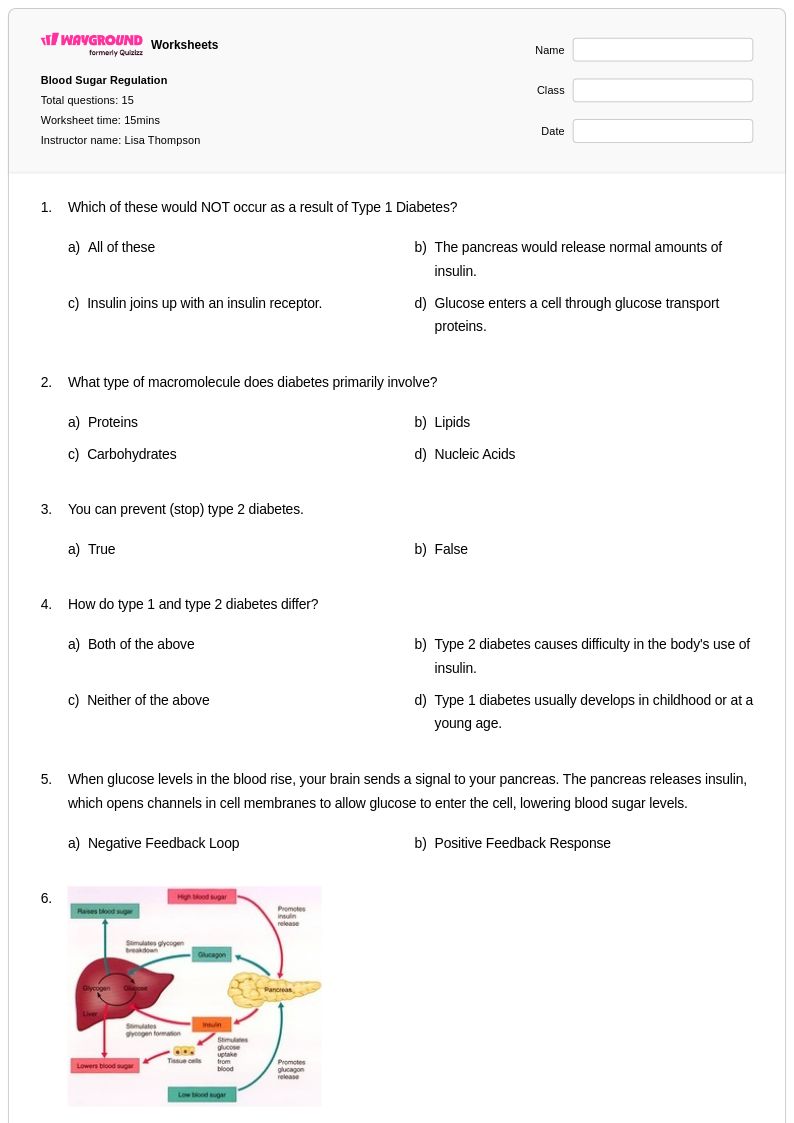
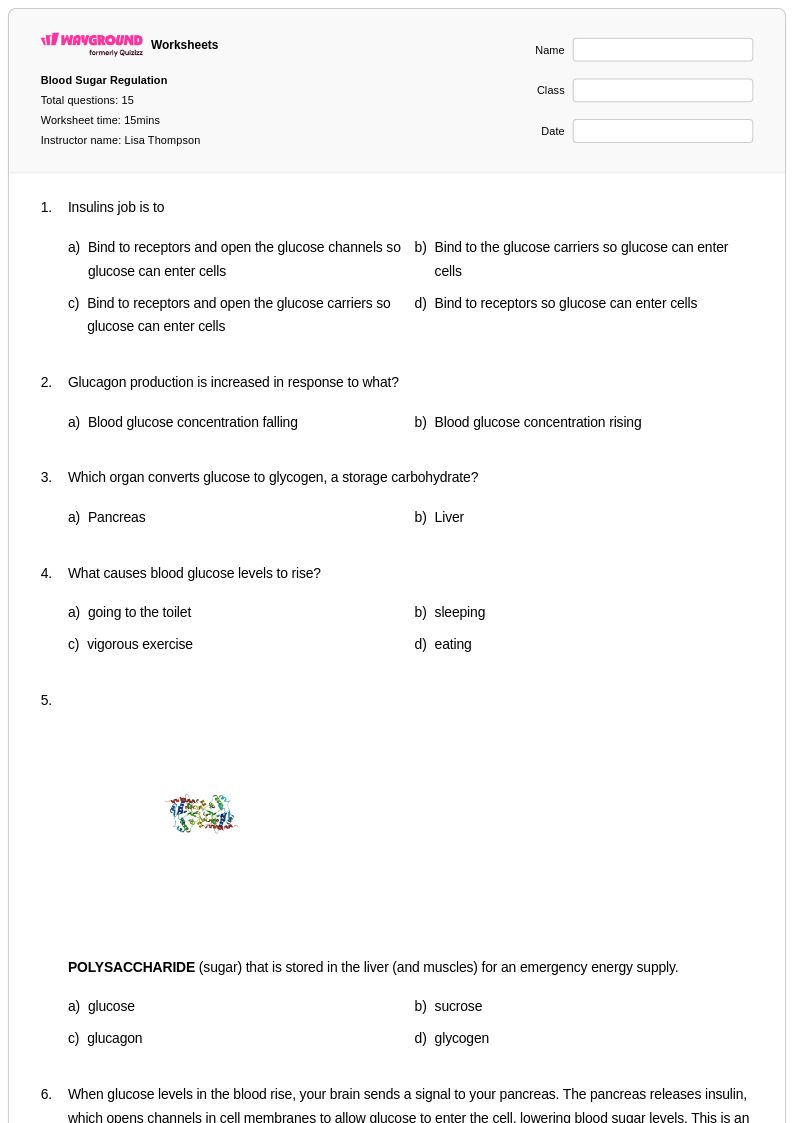
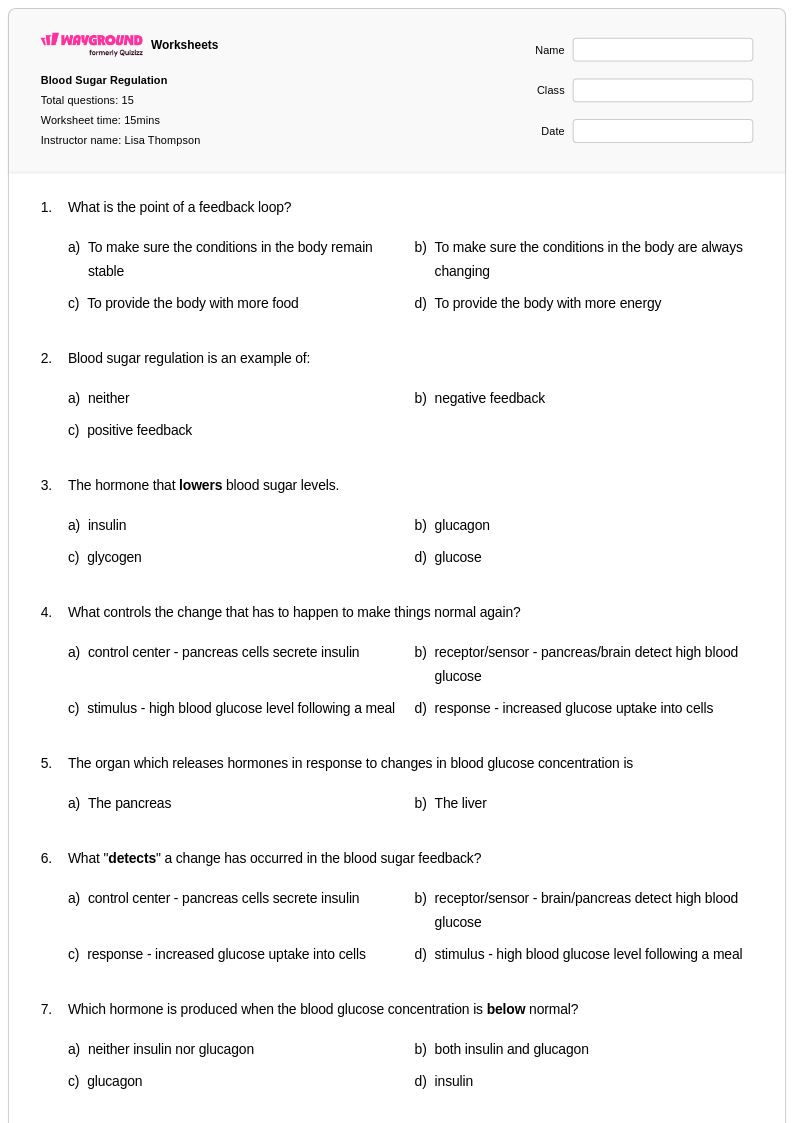
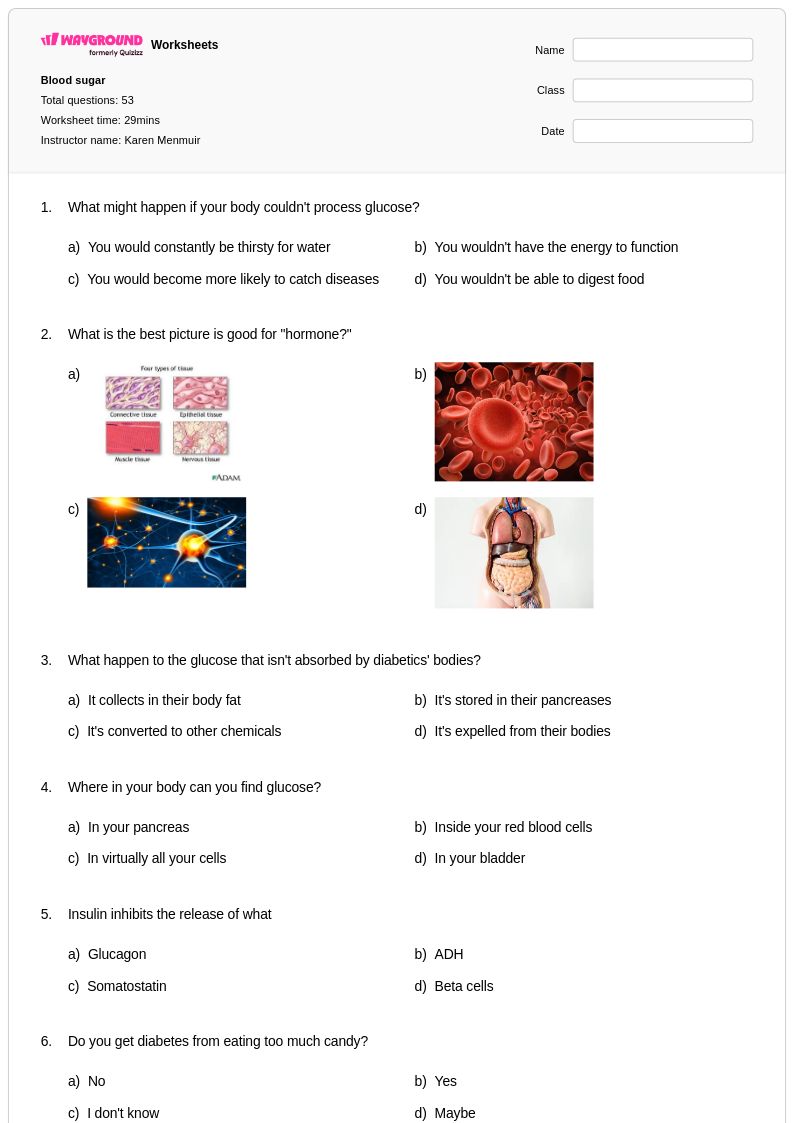
Blood sugar worksheets available through Wayground (formerly Quizizz) provide comprehensive educational resources that help students understand the complex mechanisms of glucose regulation in the human body. These expertly designed materials cover fundamental concepts including insulin and glucagon function, the role of the pancreas in maintaining homeostasis, and the physiological processes involved in blood glucose monitoring and control. Students develop critical thinking skills as they work through practice problems that explore how diet, exercise, and various medical conditions affect blood sugar levels, while teachers benefit from complete answer keys and free printable pdf formats that streamline classroom implementation and assessment.
Wayground (formerly Quizizz) empowers educators with an extensive collection of millions of teacher-created blood sugar worksheets that support diverse learning needs across multiple educational settings. The platform's robust search and filtering capabilities allow teachers to quickly locate materials aligned with specific curriculum standards, while built-in differentiation tools enable seamless customization for students requiring additional support or advanced challenges. Available in both printable and digital pdf formats, these versatile resources facilitate effective lesson planning, targeted remediation for struggling learners, and enrichment opportunities for advanced students, ensuring that all learners can master essential concepts related to glucose metabolism and endocrine system function through meaningful skill practice.
FAQs
How do I teach blood sugar regulation in a science or health class?
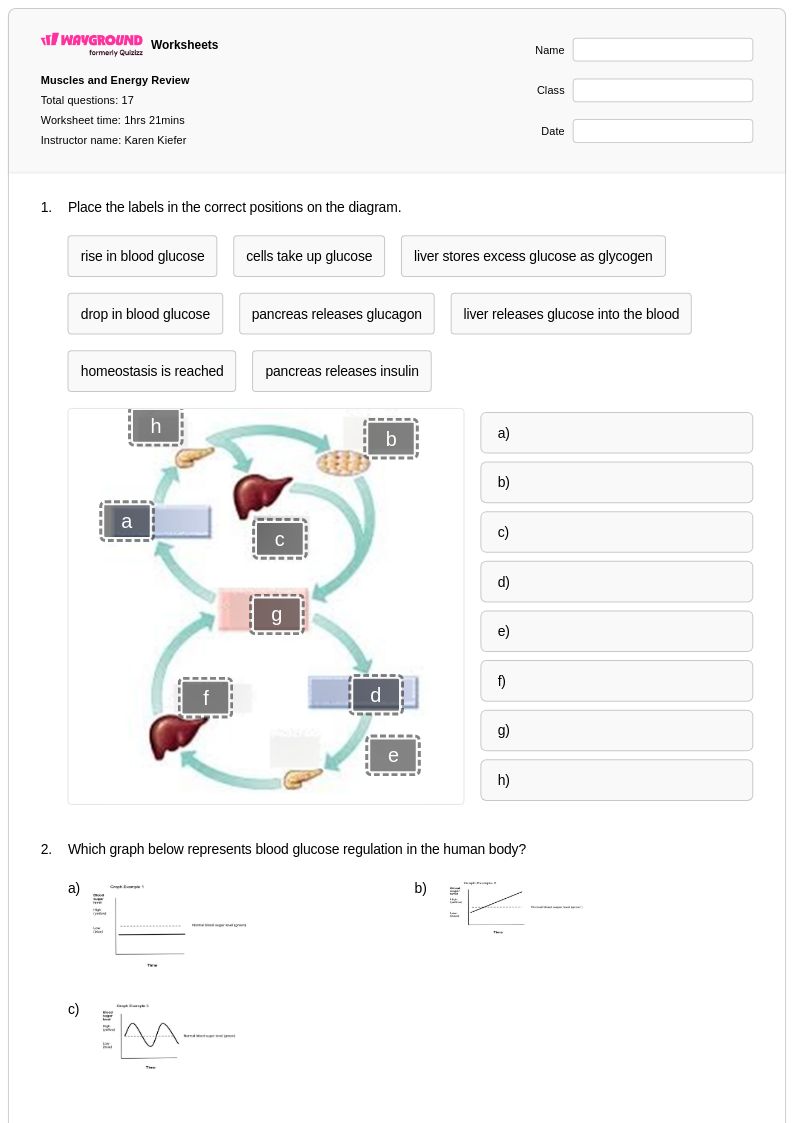
Start by grounding students in the feedback loop between blood glucose levels, insulin, and glucagon before introducing conditions like diabetes. Use diagrams of the pancreas and its role in homeostasis to make the physiology concrete. Connecting the content to real-world examples, such as how diet and exercise shift blood sugar levels, helps students see the relevance and retain the underlying mechanisms.
What types of practice problems help students understand glucose regulation?
Effective practice includes interpreting blood glucose graphs, tracing the hormonal response pathway from glucose spike to insulin release to cellular uptake, and comparing the roles of insulin versus glucagon. Scenario-based problems, such as analyzing how a meal high in refined carbohydrates affects blood sugar over time, build both procedural understanding and critical thinking about metabolic processes.
What common misconceptions do students have about blood sugar and insulin?
A frequent error is treating insulin as simply 'lowering sugar' without understanding it as a signaling molecule that facilitates glucose entry into cells. Students also commonly confuse insulin and glucagon, reversing which hormone responds to high versus low blood glucose. Another misconception is that only people with diabetes need to regulate blood sugar, which overlooks the continuous homeostatic process occurring in all humans.
How can I use blood sugar worksheets to support students with different learning needs?
On Wayground, teachers can apply individual accommodations such as Read Aloud for students who need audio support when working through complex physiological terminology, or Reduced Answer Choices to lower cognitive load for students who find multiple-choice questions overwhelming. Extended time can be configured per student for those who need more processing time with dense biology content. These settings are saved across sessions, so setup is a one-time investment that carries forward.
How do I use blood sugar worksheets from Wayground in my classroom?
Wayground's blood sugar worksheets are available as printable PDFs for traditional classroom use and in digital formats for technology-integrated instruction, making them flexible across in-person, hybrid, and remote settings. Teachers can also host them directly as a quiz on Wayground, which adds interactive functionality and makes student responses easy to review. All worksheets include complete answer keys, so grading and formative assessment are built in from the start.
What grade level or course is blood sugar content most appropriate for?
Blood sugar and glucose regulation is most commonly taught in high school biology, anatomy and physiology, and health science courses, where students have the foundational knowledge of cells and body systems needed to engage with endocrine feedback loops. The content also appears in middle school life science when covering basic body systems, though instruction at that level typically stays at a conceptual rather than mechanistic level.