Free Printable Brain Dissection Worksheets for Class 9
Explore Wayground's Class 9 brain dissection worksheets featuring comprehensive printables and practice problems that help students master neuroanatomy through hands-on learning activities with detailed answer keys.
Explore printable Brain Dissection worksheets for Class 9
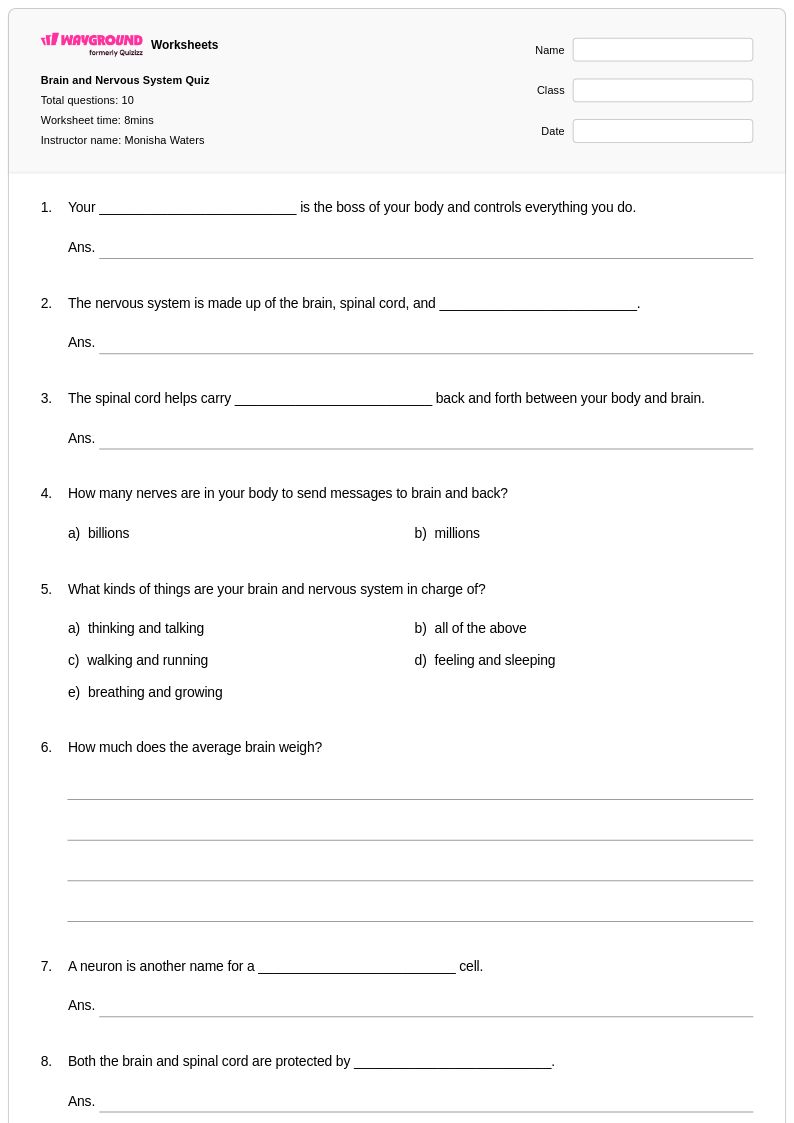
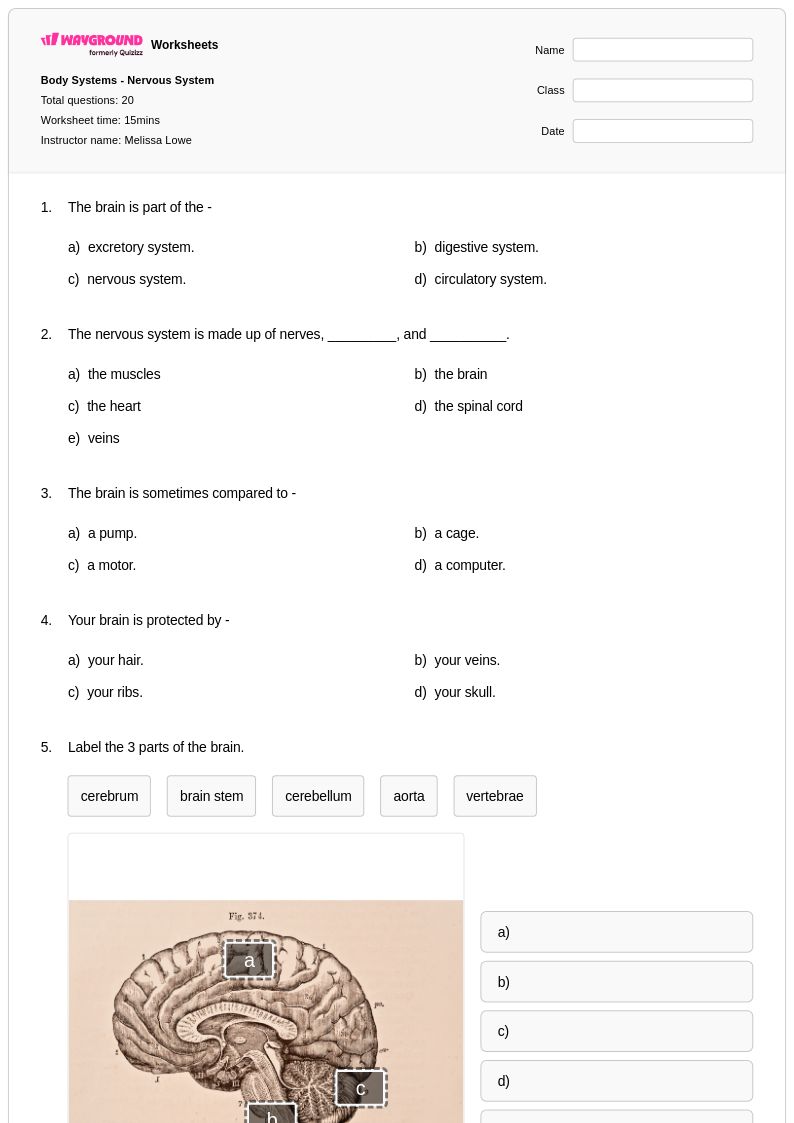
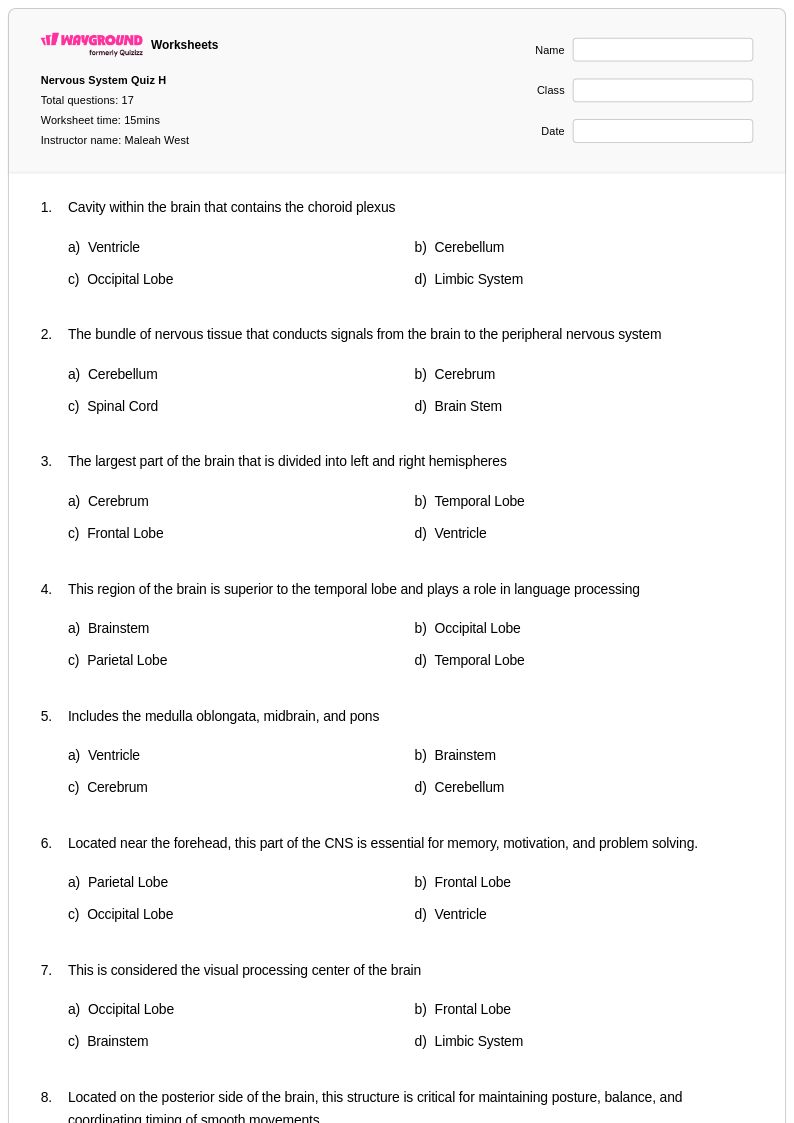
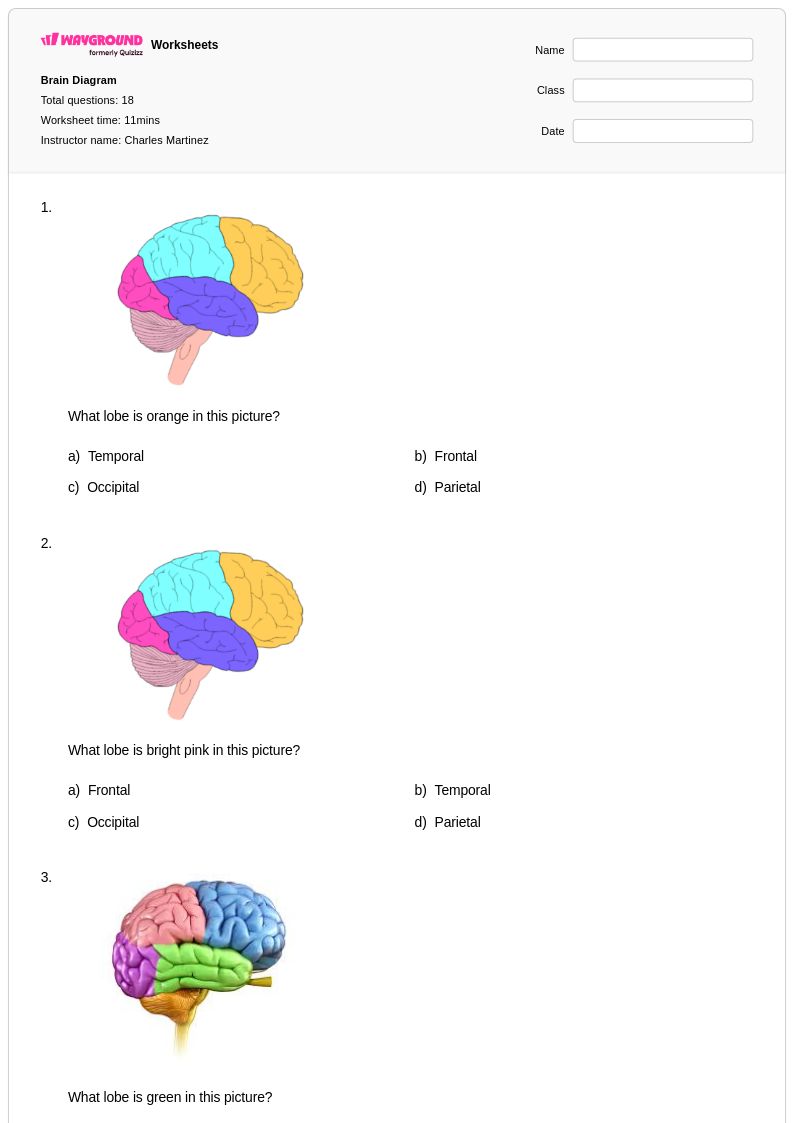
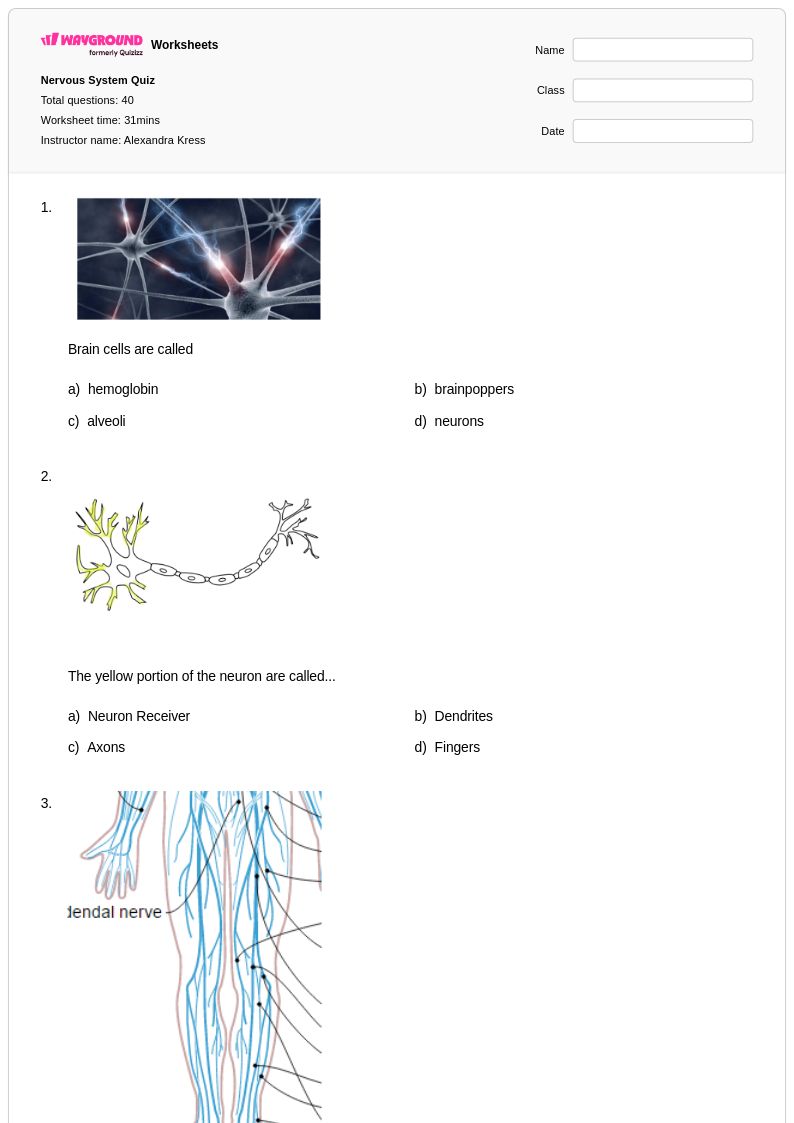
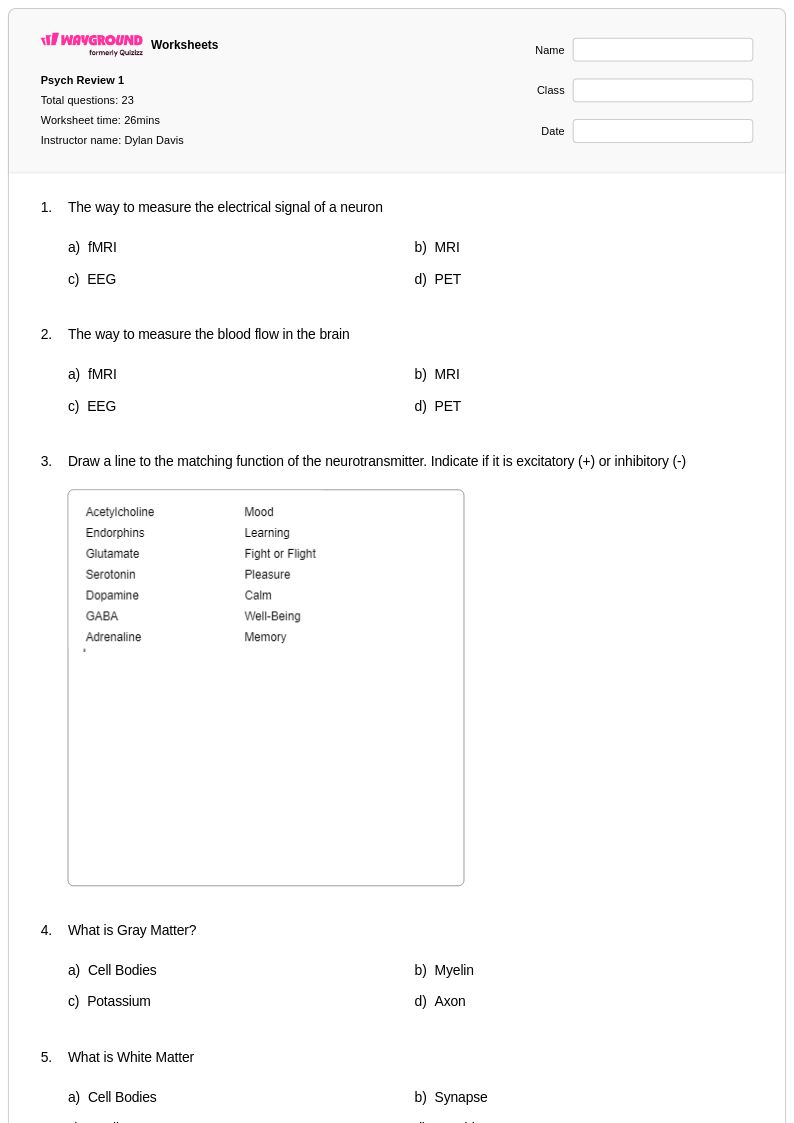
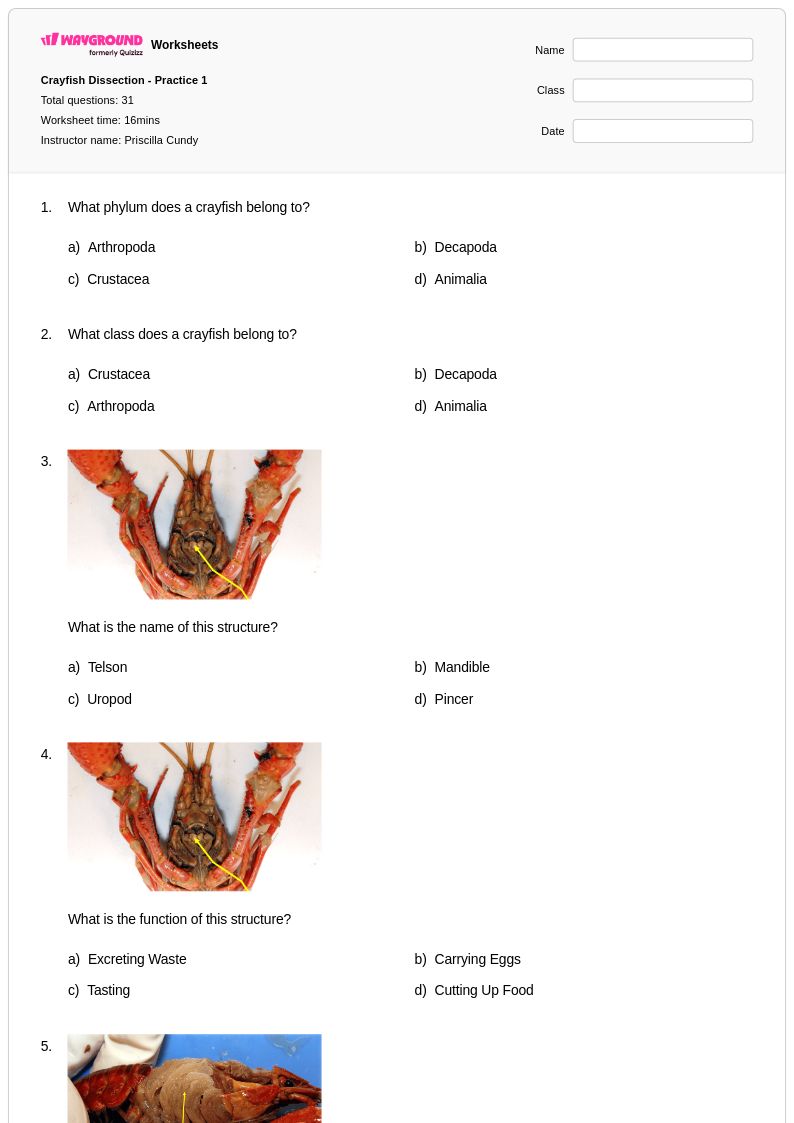
Brain dissection worksheets for Class 9 students available through Wayground (formerly Quizizz) provide comprehensive hands-on learning experiences that bridge theoretical neuroscience concepts with practical anatomical investigation. These educational resources guide students through systematic exploration of mammalian brain structures, emphasizing identification of key regions including the cerebrum, cerebellum, brainstem, and associated neural pathways. The worksheets strengthen critical scientific skills including observation, data collection, anatomical terminology mastery, and structure-function relationship analysis. Students engage with detailed practice problems that require them to correlate physical brain features with physiological processes, while accompanying answer keys ensure accurate learning progression. These free printable resources serve as essential pdf downloads that support laboratory preparation, post-dissection analysis, and comprehensive assessment of neuroanatomical understanding.
Wayground (formerly Quizizz) empowers educators with millions of teacher-created brain dissection worksheet collections that accommodate diverse Class 9 biology classroom needs and learning objectives. The platform's robust search and filtering capabilities enable instructors to locate resources aligned with specific curriculum standards while accessing differentiation tools that support varied student ability levels. Teachers can customize worksheets to emphasize particular neuroanatomical structures or modify complexity levels for remediation and enrichment purposes, with materials available in both printable pdf formats for traditional laboratory settings and digital versions for interactive learning environments. This flexibility streamlines lesson planning by providing immediate access to comprehensive skill practice materials that reinforce dissection procedures, anatomical identification exercises, and conceptual connections between brain structure and neural function, ultimately supporting effective formative and summative assessment strategies.
FAQs
How do I teach brain dissection in a biology class?
Effective brain dissection instruction typically follows a three-phase sequence: pre-lab preparation where students learn key structures using labeled diagrams, the dissection itself where students observe and identify regions in real time, and post-lab analysis where students connect observations to function. Using guided worksheets during each phase helps students build anatomical vocabulary and reinforces the relationship between structure and function in the cerebrum, cerebellum, brainstem, and associated neural pathways. Comparative anatomy activities that contrast mammalian brain structures can deepen conceptual understanding beyond simple identification.
What are good practice activities for students learning neuroanatomy through brain dissection?
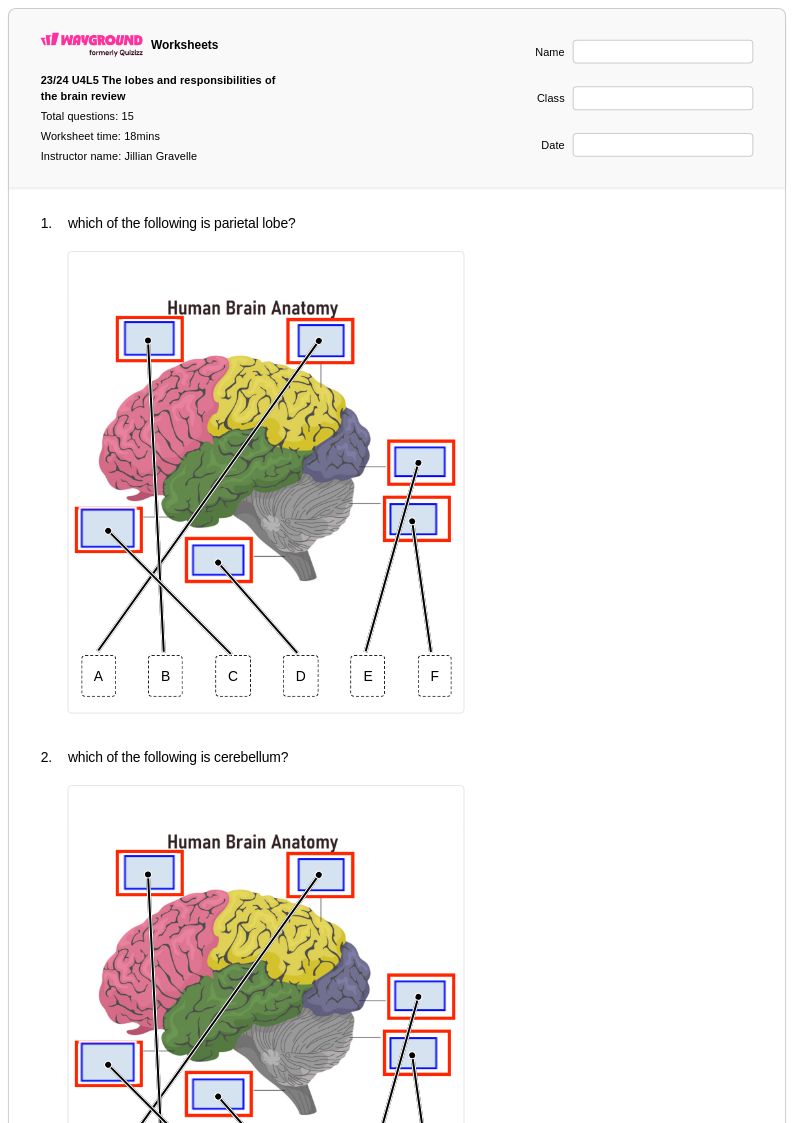
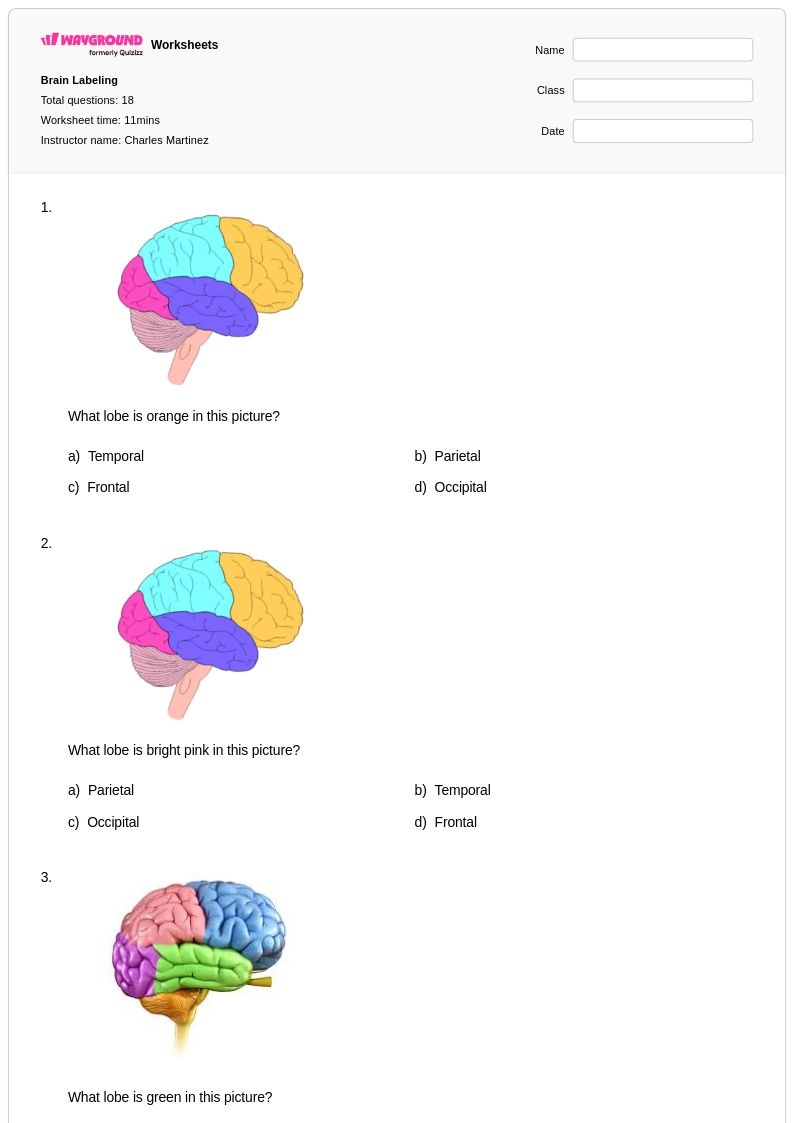
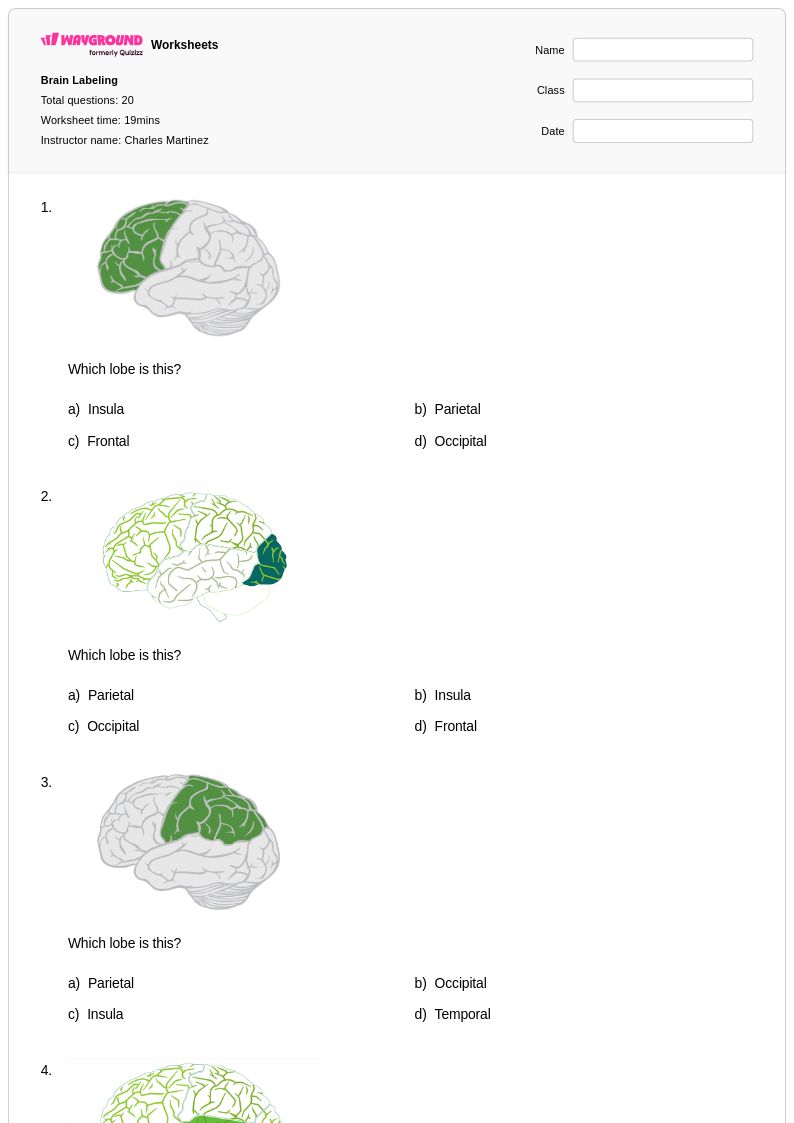
Labeling exercises that require students to identify and annotate key brain regions are among the most effective practice activities for neuroanatomy, as they build both visual recognition and terminology. Function-mapping activities, where students match structures like the cerebellum or brainstem to their physiological roles, reinforce comprehension beyond memorization. Comparative anatomy studies that ask students to contrast structures across species add an analytical layer that supports higher-order thinking.
What mistakes do students commonly make when learning brain anatomy?
One of the most frequent errors is confusing the cerebrum and cerebellum, both in name and function, particularly when students are introduced to multiple brain regions simultaneously. Students also commonly misidentify the brainstem's role, underestimating its involvement in autonomic functions like breathing and heart rate. On dissection worksheets, errors often arise when students attempt to label structures from memory rather than cross-referencing diagrams, which is why step-by-step procedural worksheets with embedded reference images are especially useful.
How can I differentiate brain dissection worksheets for students with different learning needs?
For students who need additional support, simplified labeling diagrams with fewer structures and word banks reduce cognitive load while keeping the learning objective intact. More advanced students benefit from open-ended function-mapping tasks or comparative anatomy prompts that require analysis rather than identification alone. On Wayground, teachers can apply accommodations such as reduced answer choices, read-aloud support, and extended time to individual students without affecting the rest of the class, making it straightforward to support diverse learners within a single assignment.
How do I use Wayground's brain dissection worksheets in my classroom?
Wayground's brain dissection worksheets are available as printable PDFs for traditional lab settings and in digital formats for technology-integrated classrooms, and teachers can also host them as a quiz directly on the Wayground platform. The worksheets include complete answer keys, which makes them practical for both guided instruction and independent student review. They can be deployed across the dissection unit as pre-lab preparation, in-lab reference guides, or post-dissection assessment tools depending on where students are in the learning sequence.