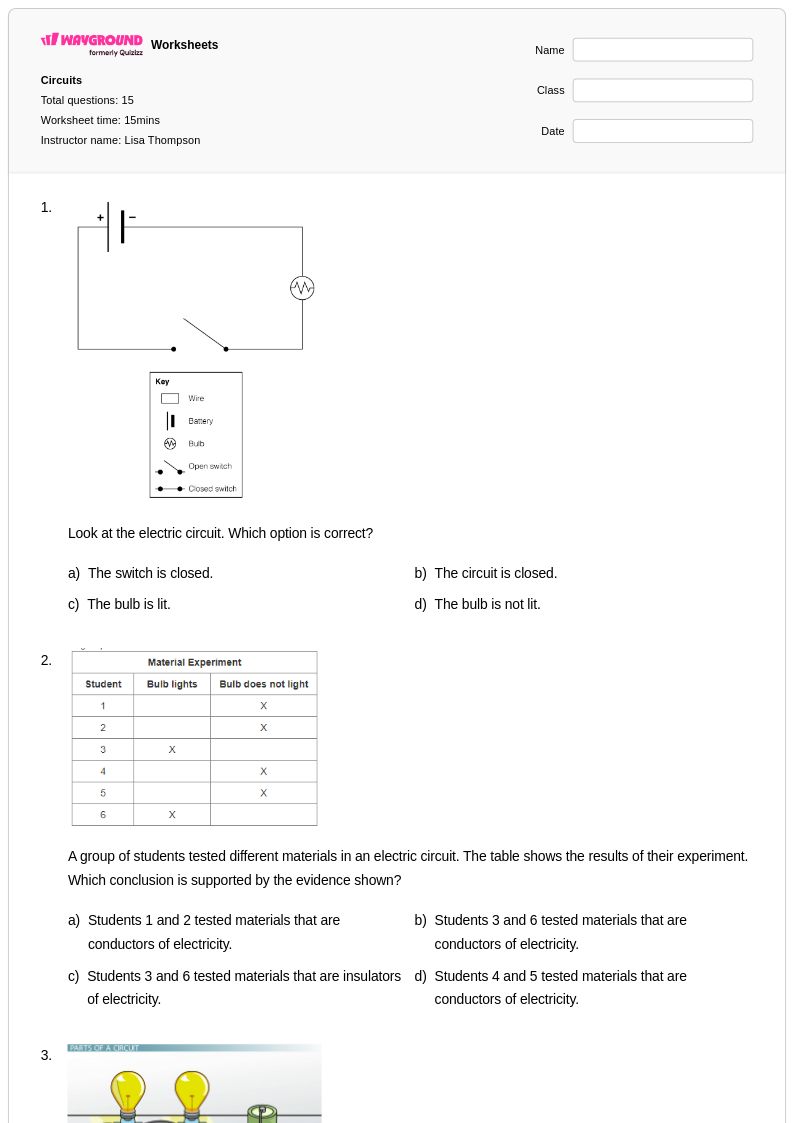
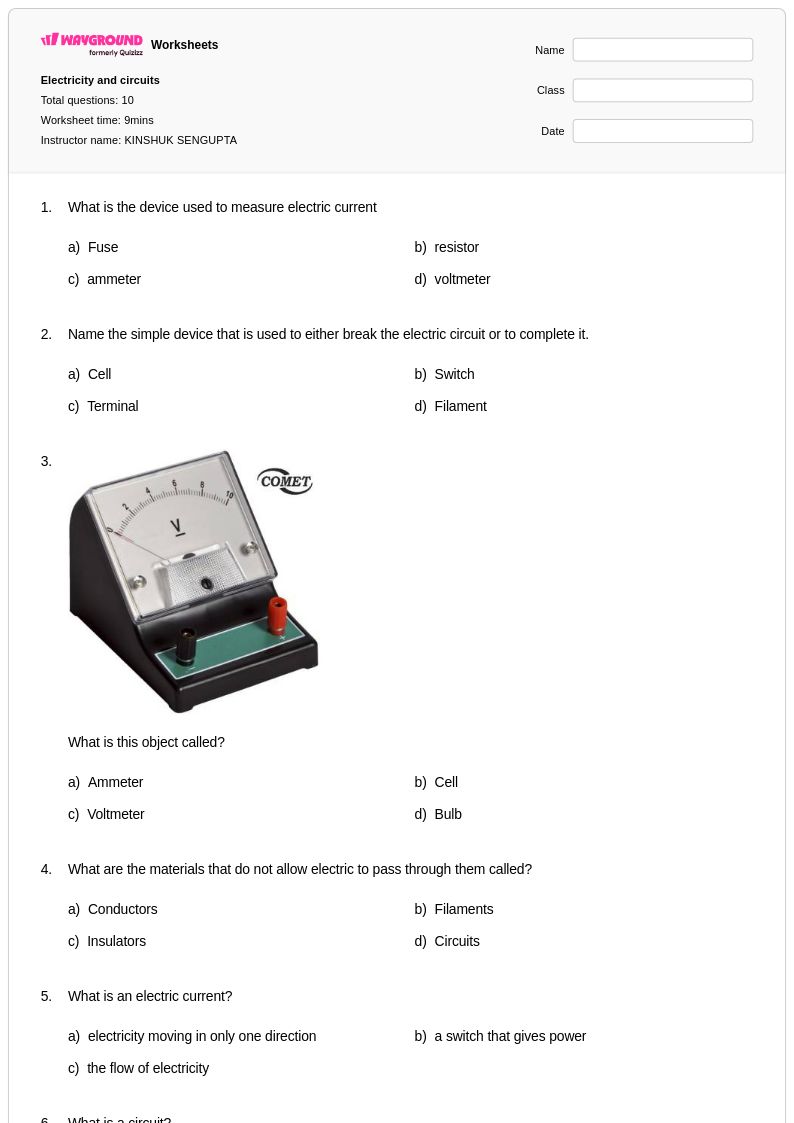
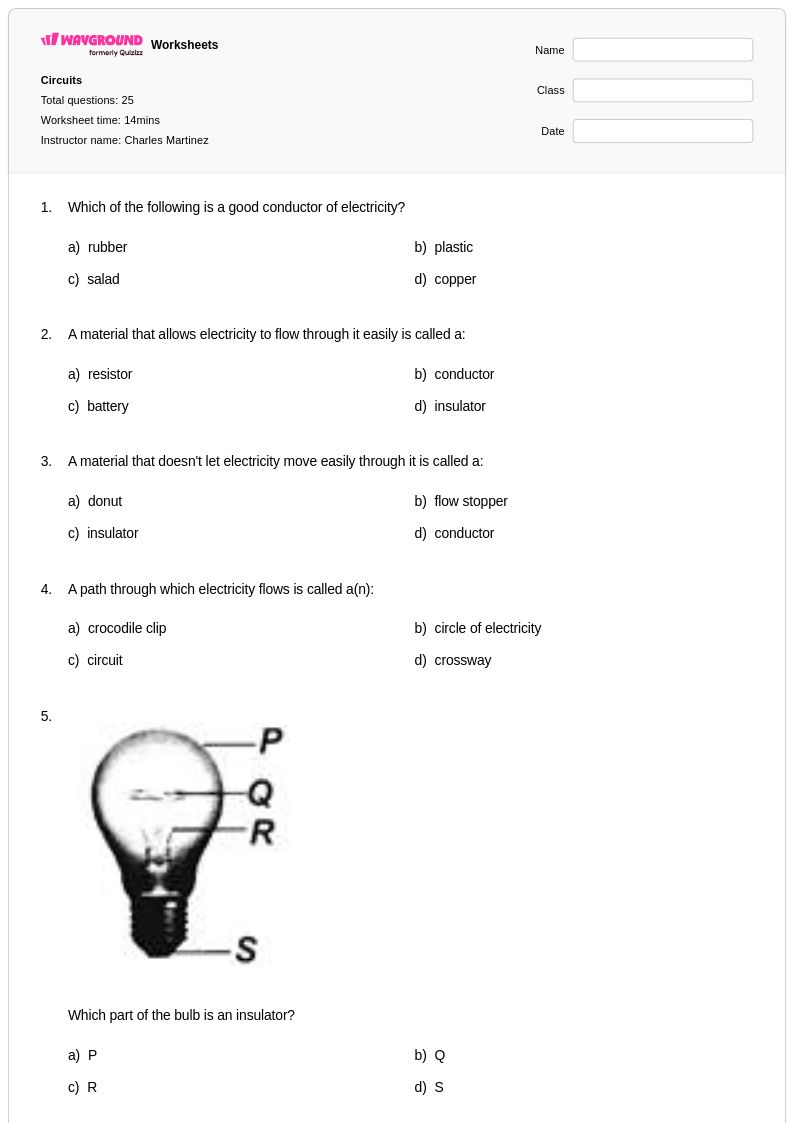
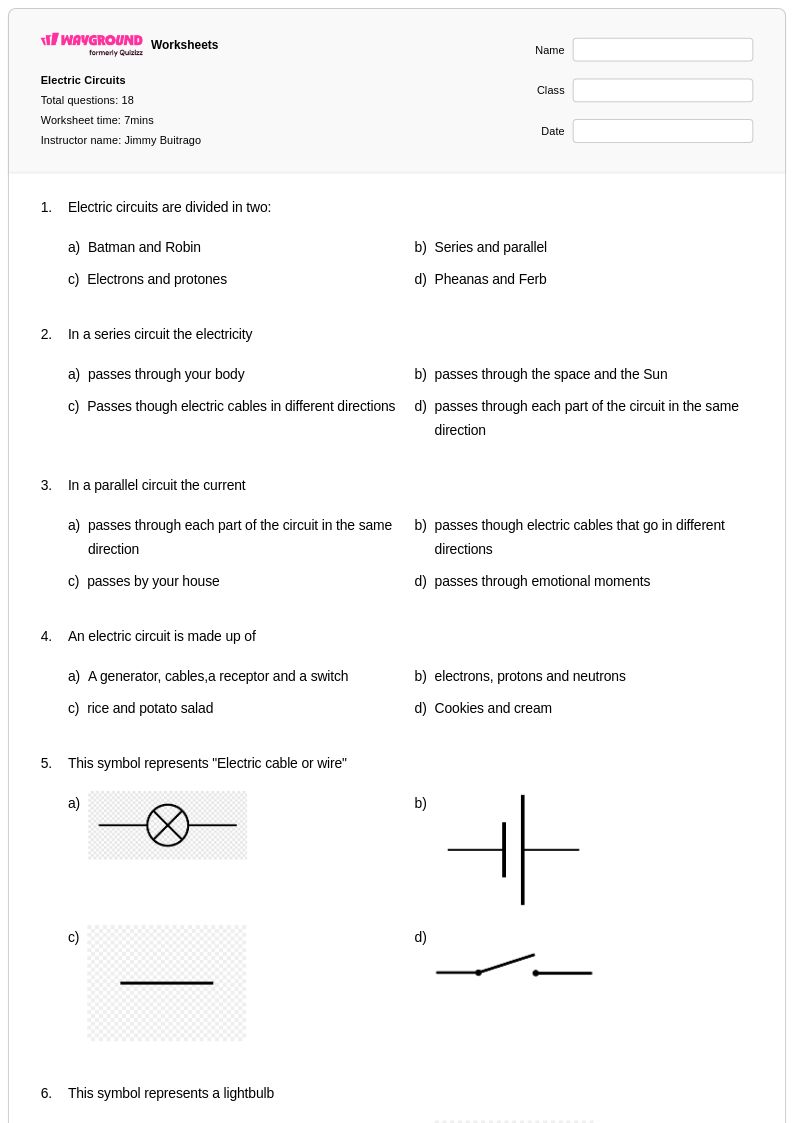
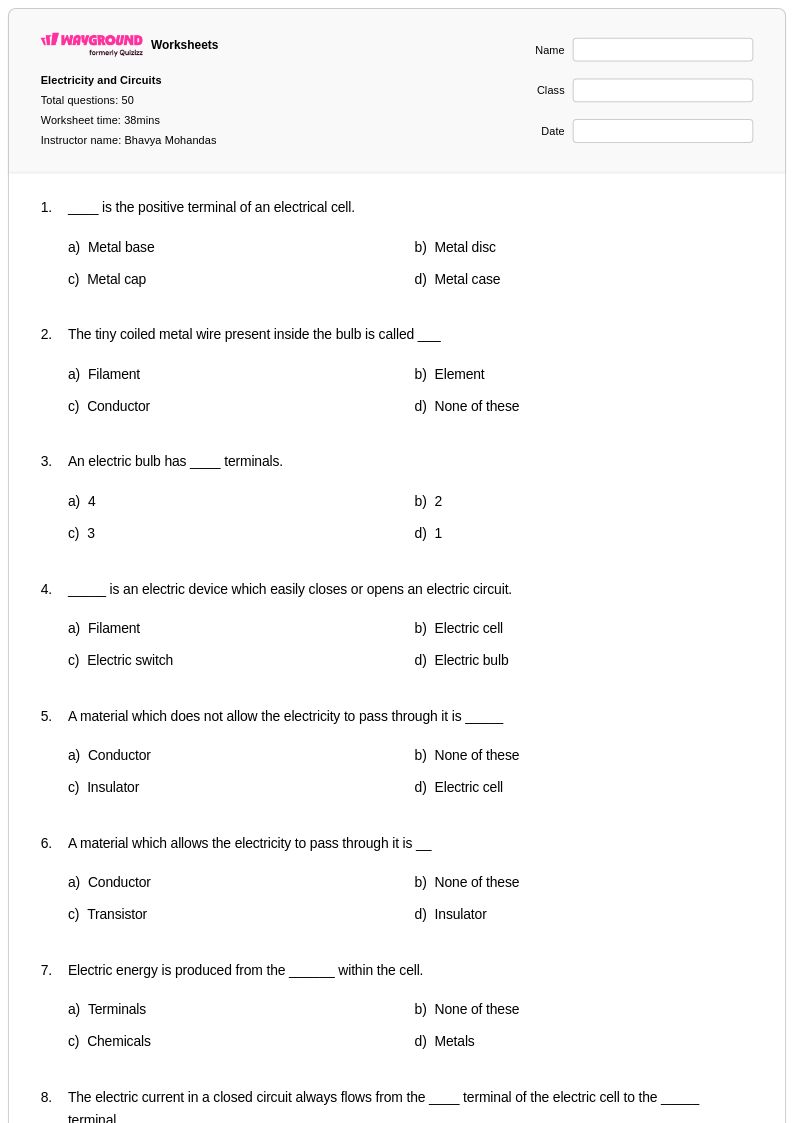
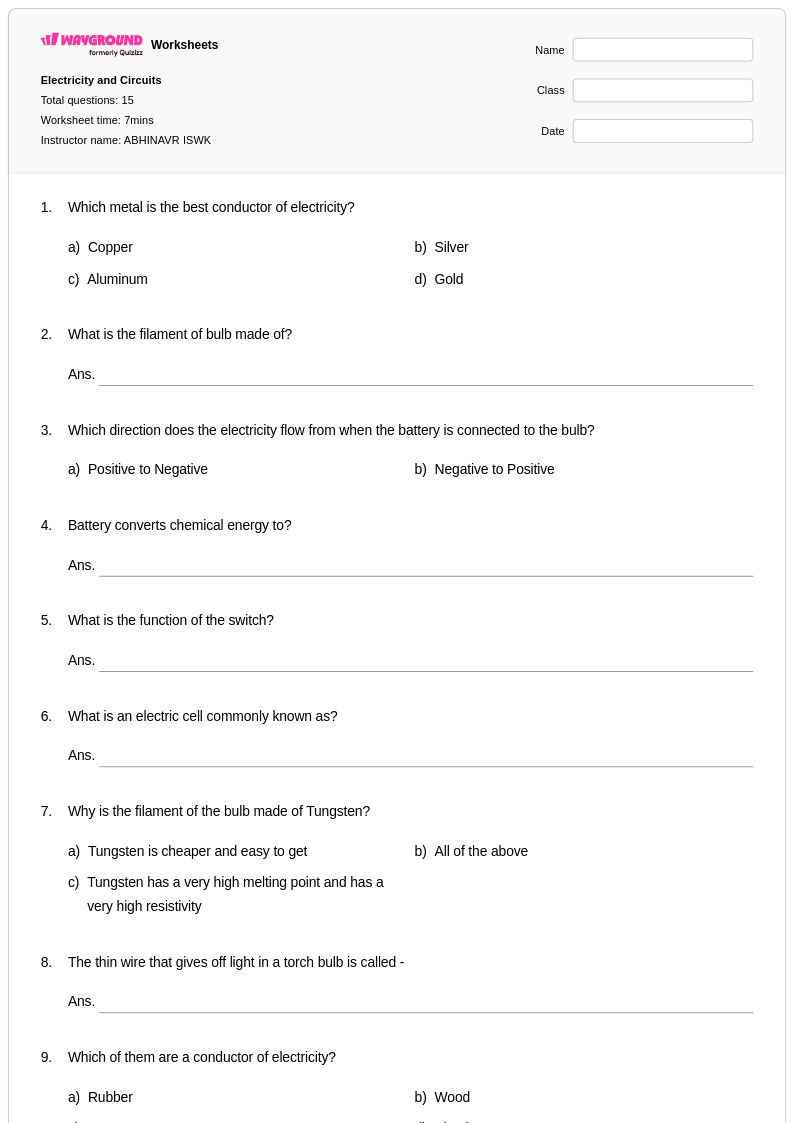
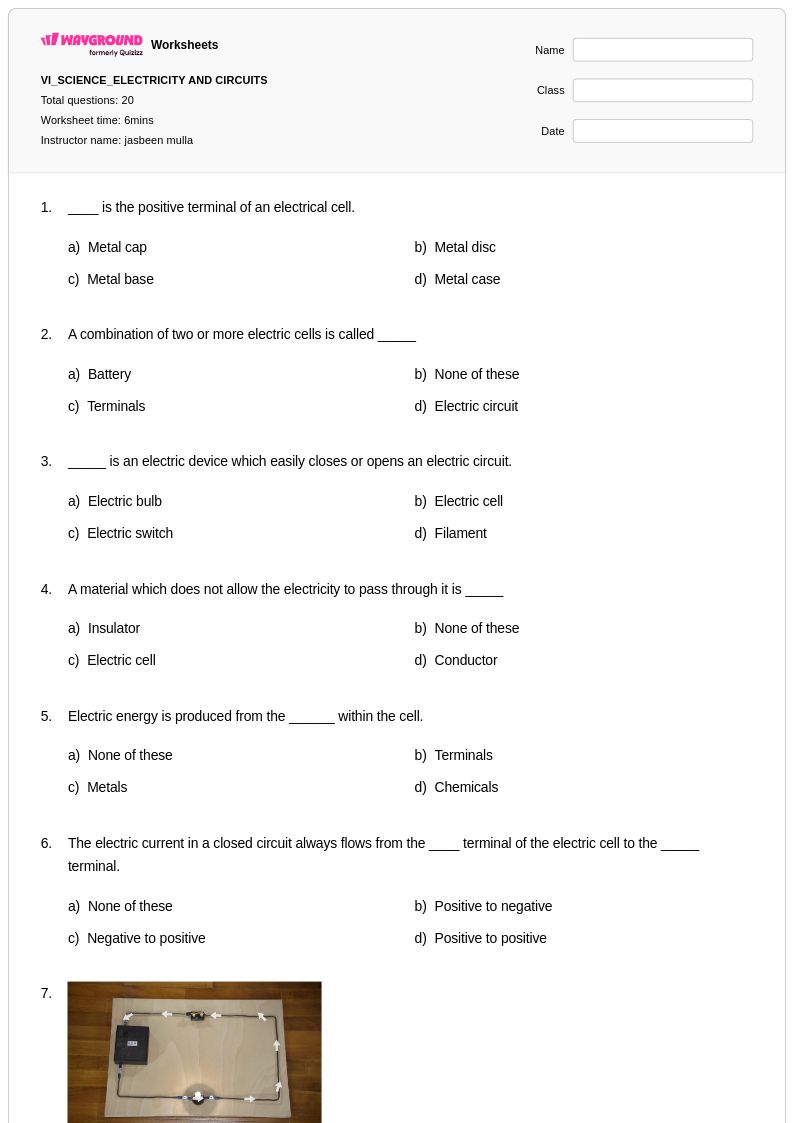
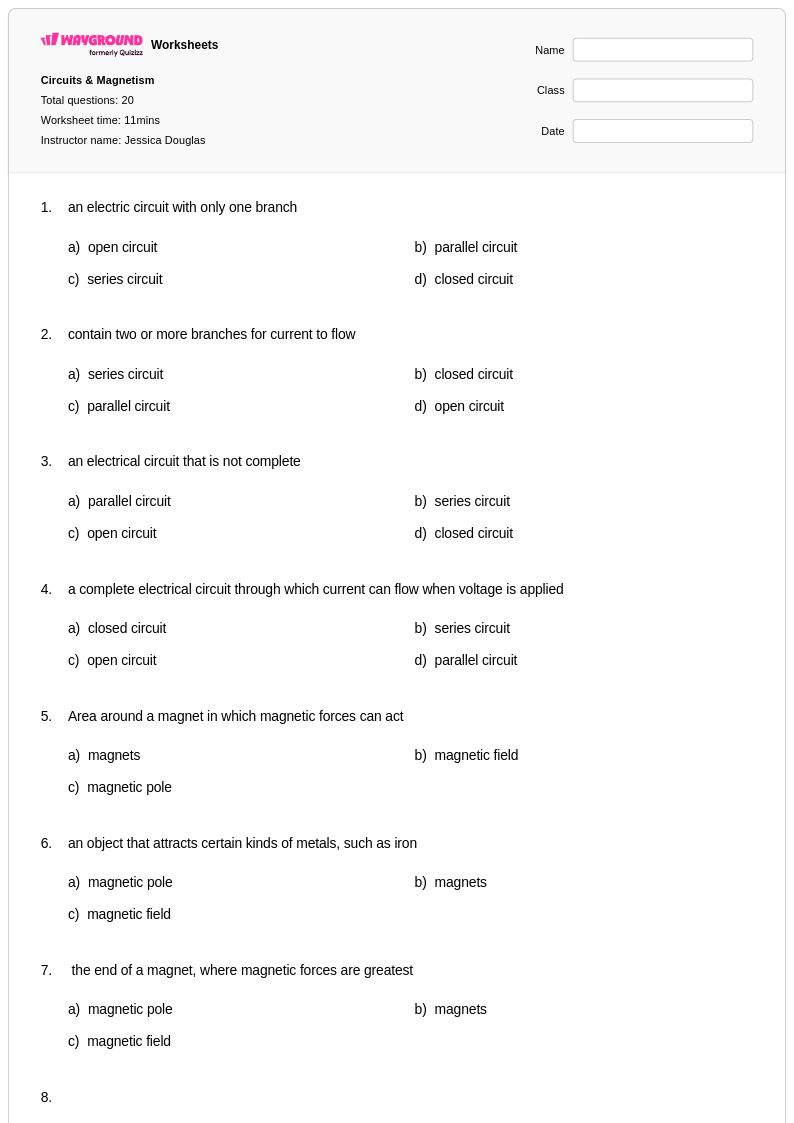
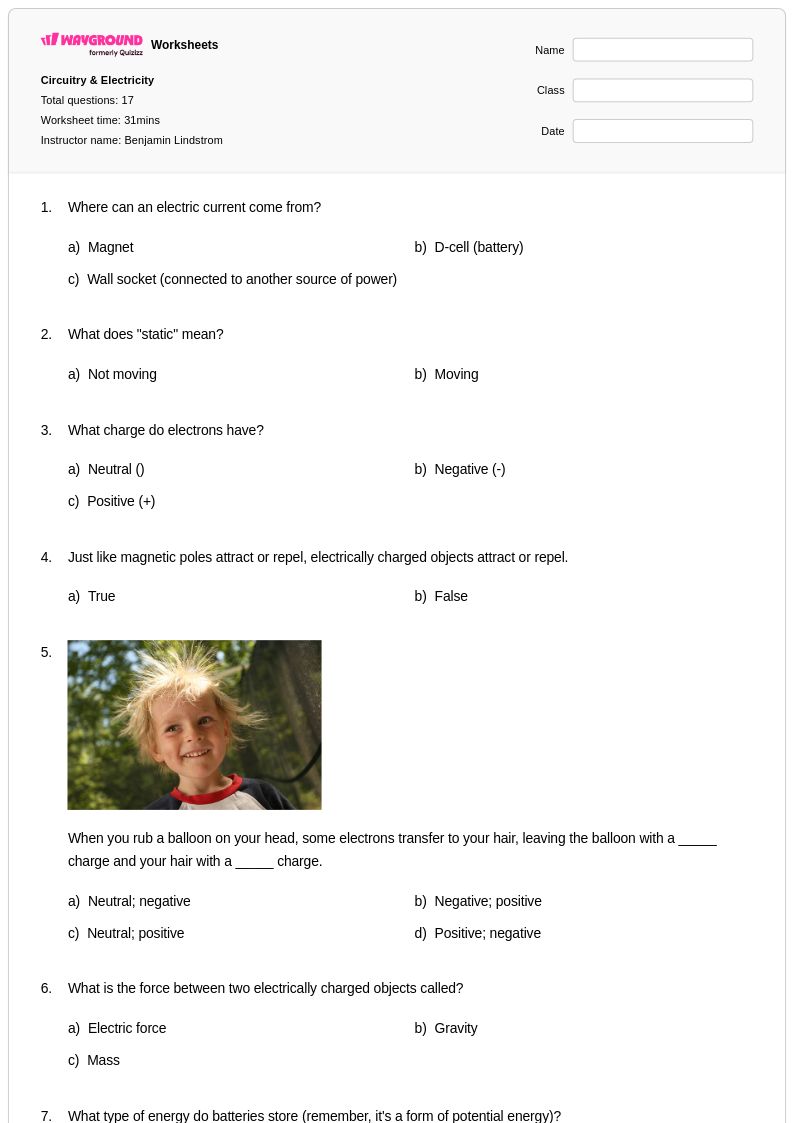
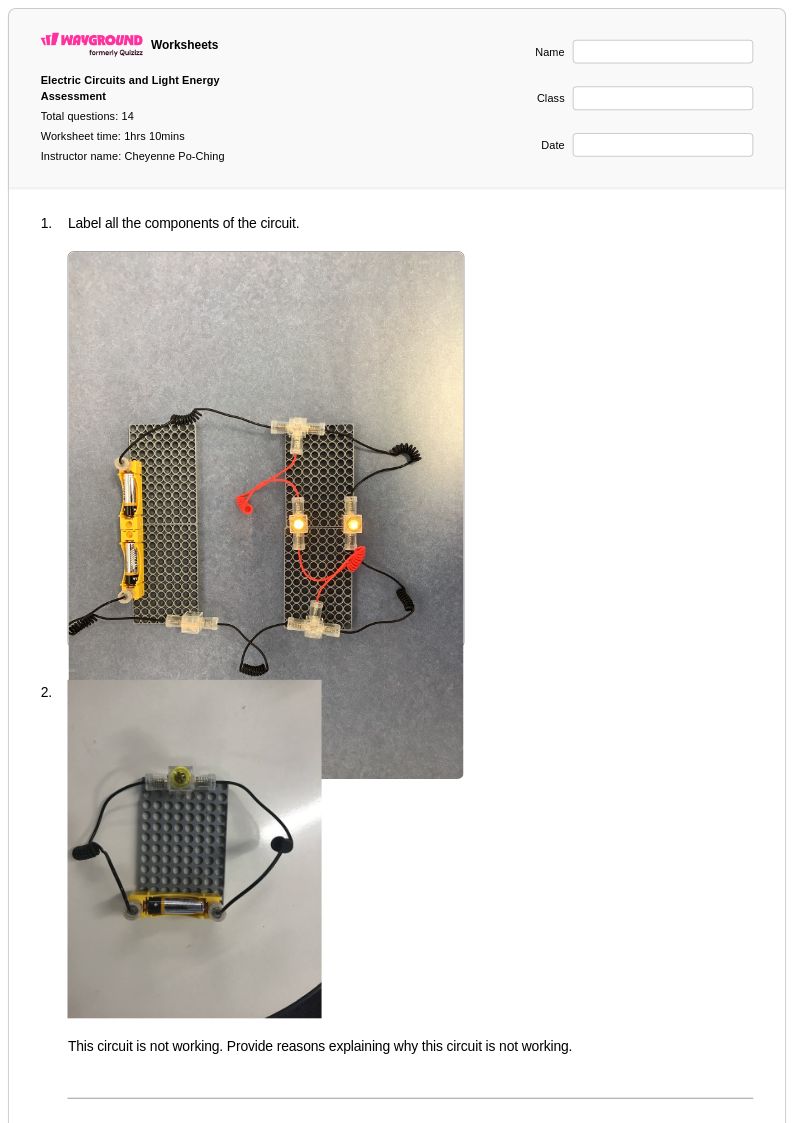
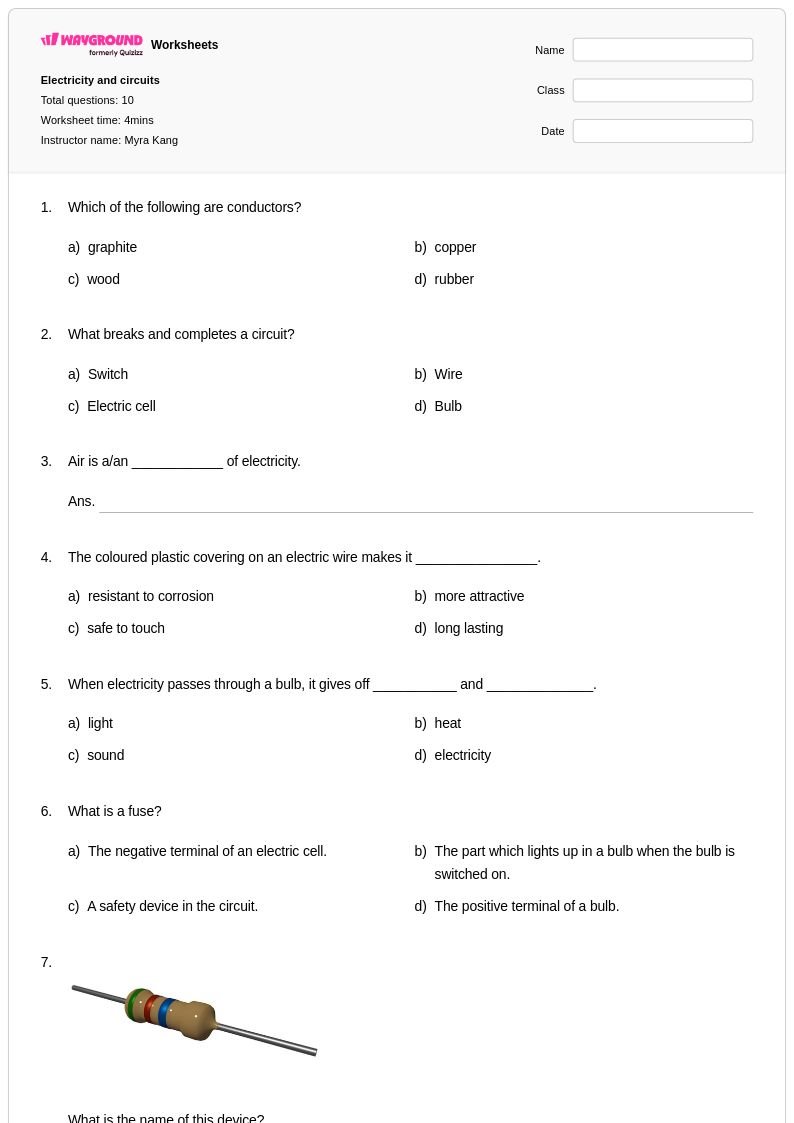
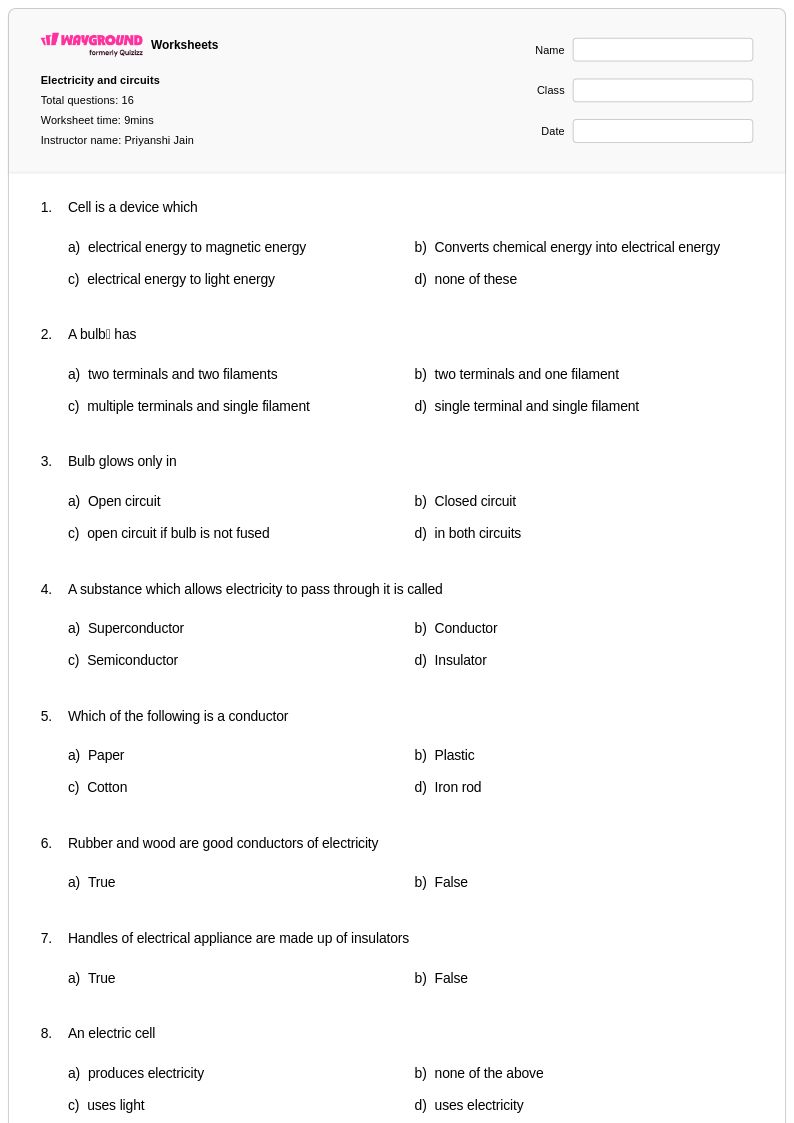
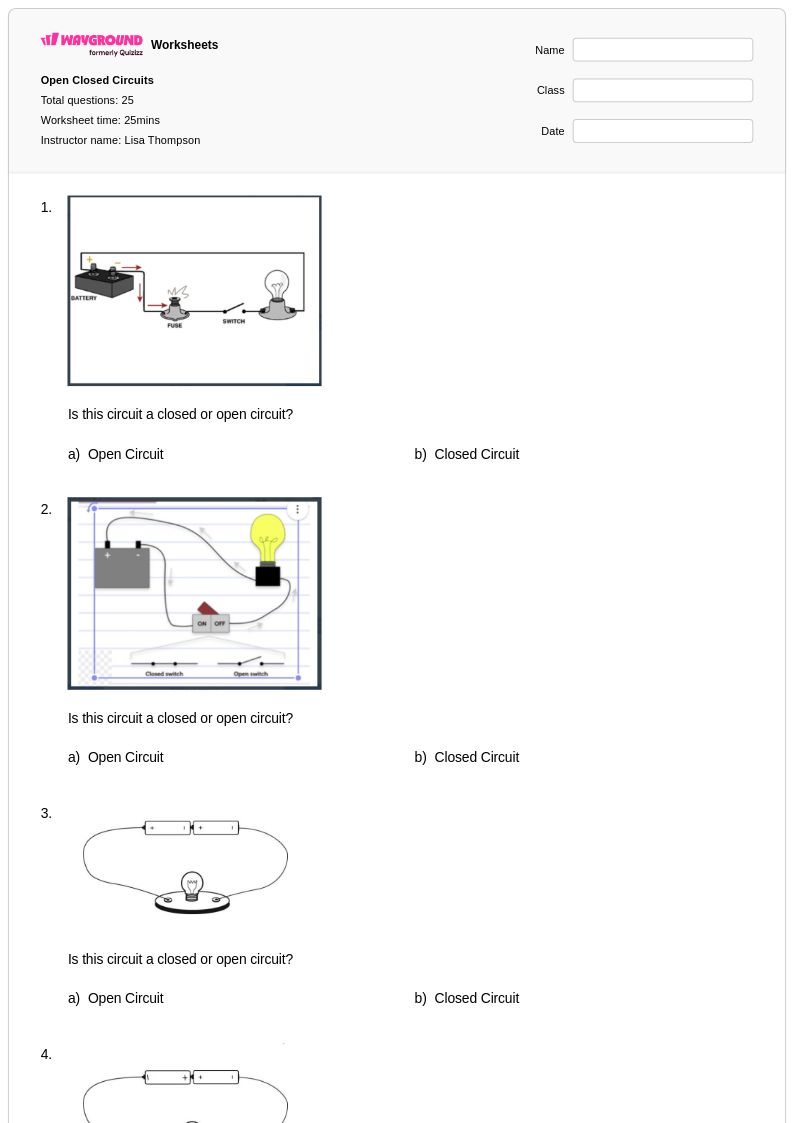
Free Class 6 circuits worksheets and printables help students master electrical connections, current flow, and circuit diagrams through engaging practice problems with comprehensive answer keys available as downloadable PDFs.
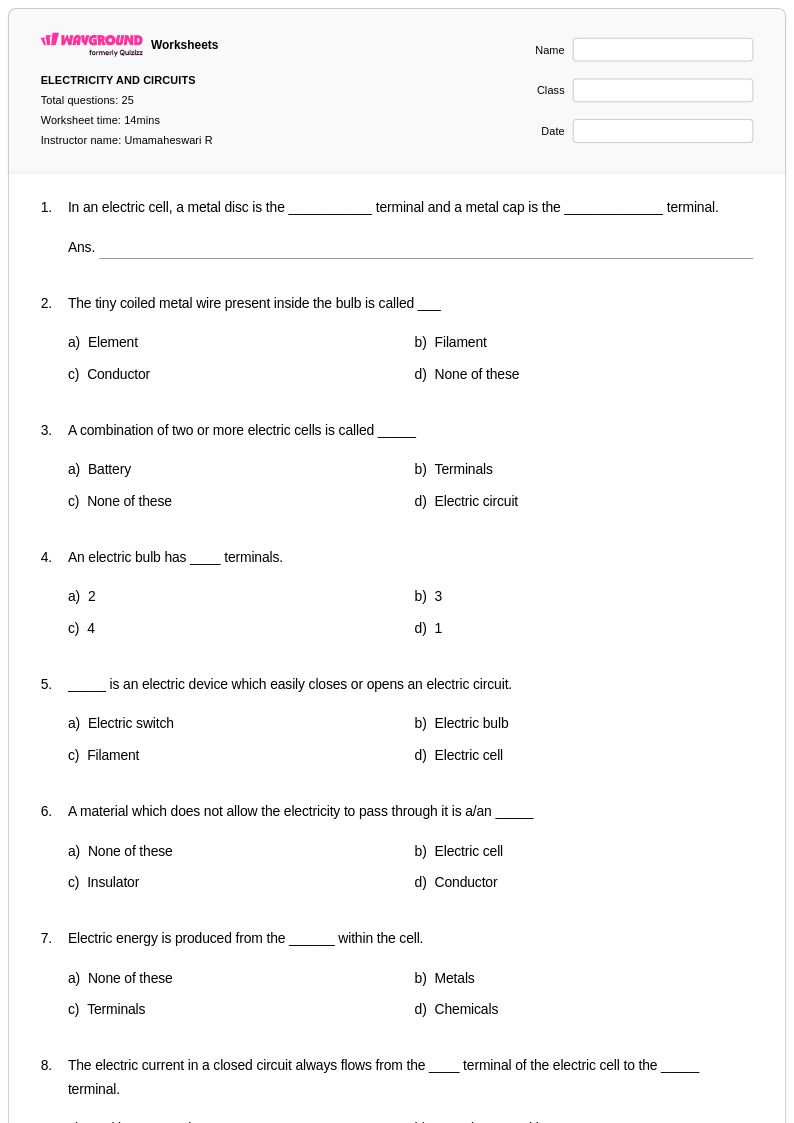
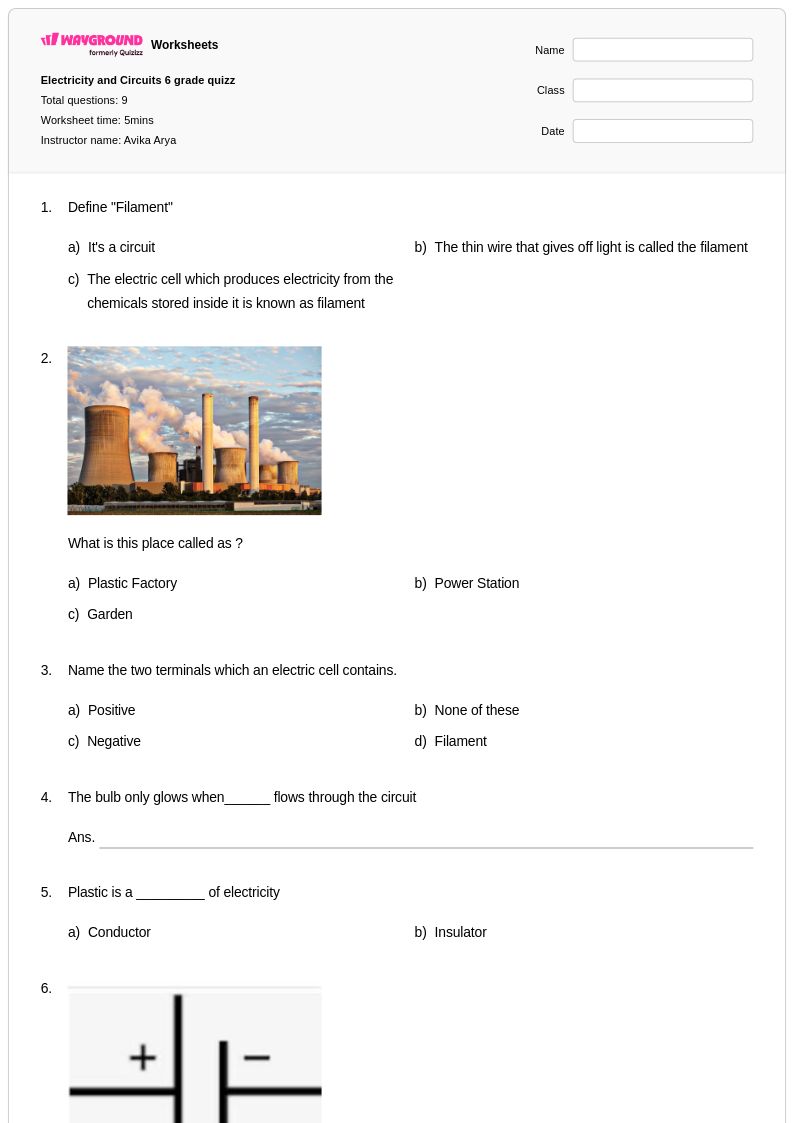
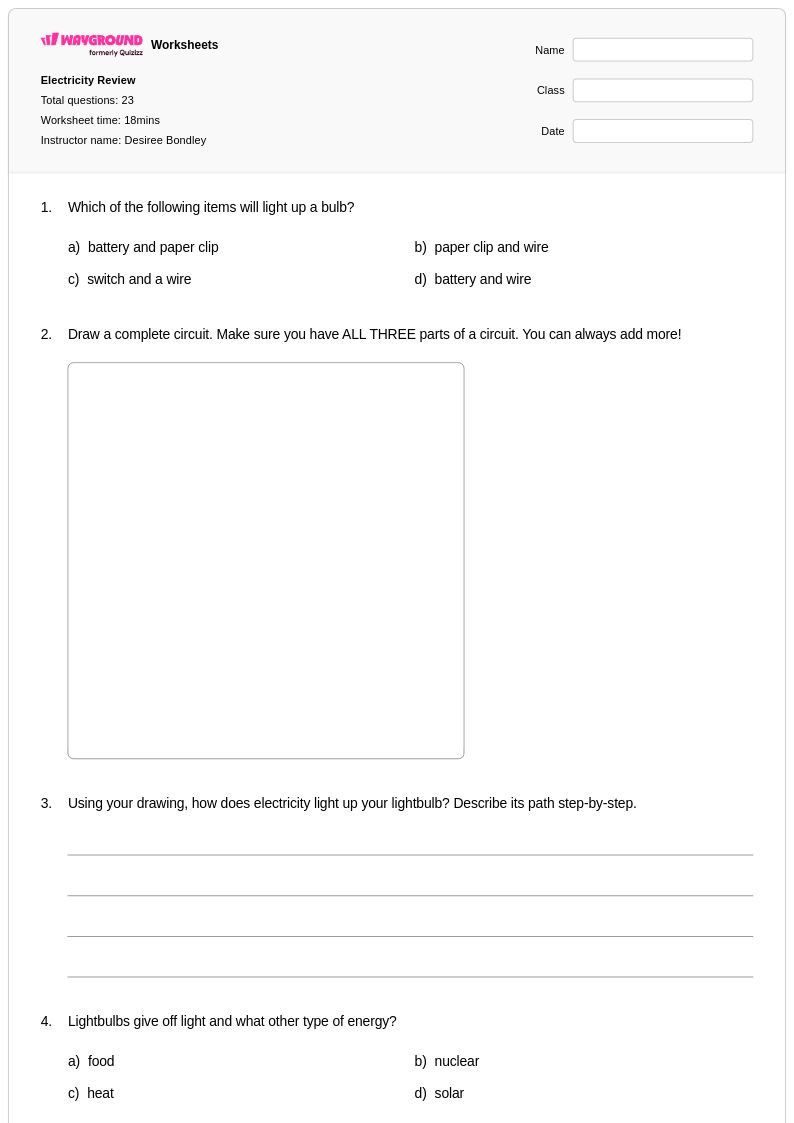
Class 6 circuits worksheets available through Wayground (formerly Quizizz) provide comprehensive coverage of fundamental electrical concepts that form the foundation of physics education at the middle school level. These educational resources focus on developing students' understanding of series and parallel circuits, current flow, voltage, resistance, and basic circuit components such as batteries, switches, and light bulbs. The practice problems within these worksheets strengthen critical thinking skills as students analyze circuit diagrams, predict outcomes, and solve for unknown values using Ohm's law in simplified formats appropriate for sixth-grade learners. Each worksheet includes detailed answer keys that support both independent study and classroom instruction, with free printable pdf formats making these resources accessible for homework assignments, lab activities, and assessment preparation.
Wayground's extensive collection of teacher-created circuit worksheets draws from millions of educational resources, offering educators powerful search and filtering capabilities to locate materials that align with specific learning objectives and curriculum standards. The platform's differentiation tools enable teachers to customize worksheets based on individual student needs, whether providing additional scaffolding for struggling learners or offering enrichment activities for advanced students ready to explore more complex circuit configurations. These versatile resources are available in both printable and digital formats, including downloadable pdfs that facilitate seamless integration into lesson planning, remediation sessions, and skill practice activities. The robust filtering system allows educators to quickly identify worksheets that target specific circuit concepts, ensuring efficient preparation time while maintaining high-quality instruction that builds students' conceptual understanding of electrical systems and scientific reasoning abilities.
FAQs
How do I teach series and parallel circuits to students?
Start with component identification and single-loop series circuits before advancing to parallel branch analysis and combination circuit problems. Use circuit diagrams to help students visualize how current flows through each configuration, and explicitly contrast how voltage and current behave differently in series versus parallel arrangements. Building complexity gradually reduces cognitive overload and reinforces Ohm's Law application at each stage.
What exercises help students practice calculating resistance in circuits?
Effective practice sequences begin with Ohm's Law calculations in simple series circuits, where total resistance is additive, then progress to parallel circuits requiring the reciprocal formula, and finally to combination circuits that require both methods in a single problem. Worksheets that show step-by-step worked examples alongside independent practice problems help students build procedural fluency before tackling multi-step problems.
What are the most common mistakes students make with circuits?
The most persistent misconception is that current is consumed by resistors rather than conserved throughout the circuit. Students also frequently misapply the reciprocal formula when calculating equivalent resistance in parallel circuits, often adding resistances directly instead. Targeted practice that requires students to explicitly state current values at multiple points in a circuit can help surface and correct both errors.
How do I differentiate circuits worksheets for students at different skill levels?
Differentiation in circuits instruction works best when scaffolded by problem complexity: beginners work on component identification and single-variable Ohm's Law problems, while advanced students tackle multi-loop combination circuit analysis. On Wayground, teachers can apply accommodations such as reduced answer choices or read-aloud support for individual students, and filter resources by grade and topic to match the right worksheet to each learner's level.
How do I use Wayground's circuits worksheets in my classroom?
Wayground's circuits worksheets are available as downloadable, printable PDFs for traditional classroom use and in digital formats for technology-integrated learning environments, including interactive quizzes hosted directly on Wayground. Teachers can use the searchable resource library filtered by grade and topic to find worksheets aligned to specific standards, and all worksheets include detailed answer keys with step-by-step solutions for efficient grading and student feedback.
How do I help students read and draw circuit diagrams correctly?
Begin by teaching standardized circuit symbols for each component, such as resistors, switches, power sources, and loads, before asking students to interpret or draw full diagrams. Practice should move from labeling pre-drawn diagrams to sketching simple series circuits from written descriptions, and then to drawing parallel and combination circuits from problem specifications. Consistent use of schematic conventions early on prevents diagram-reading errors that compound in later, more complex problems.