Free Printable Developmental Biology Worksheets for Class 9
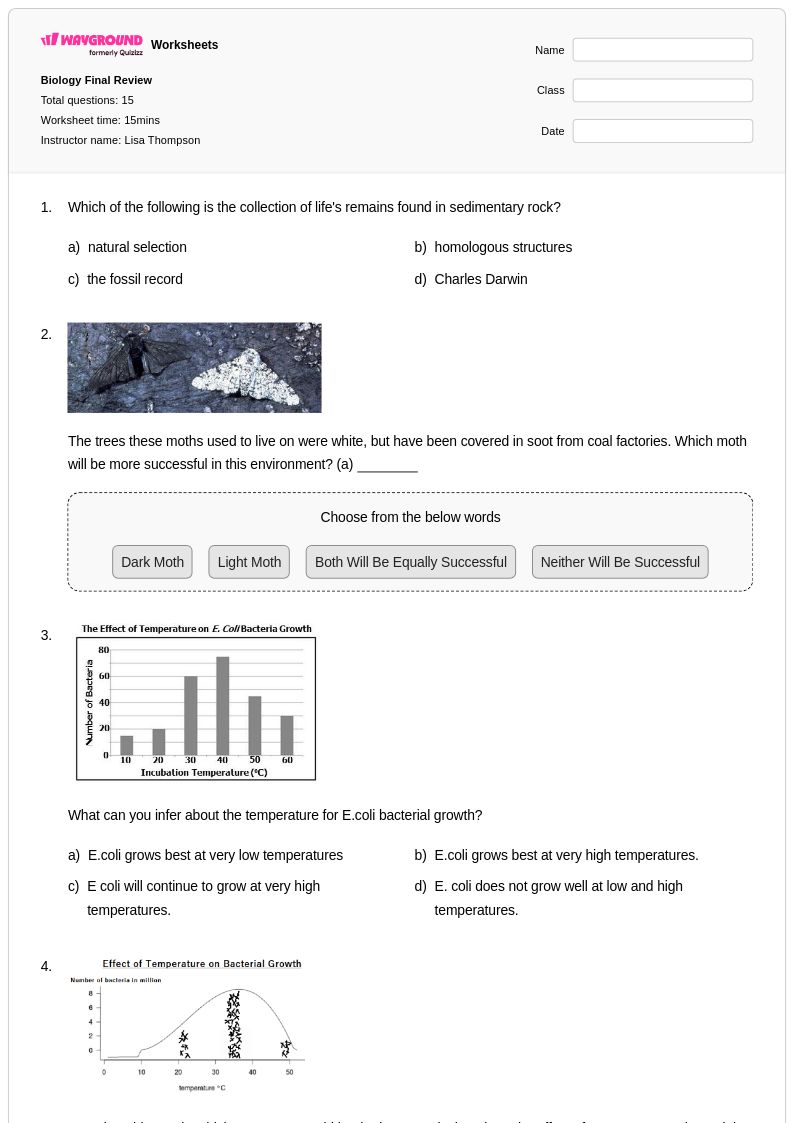
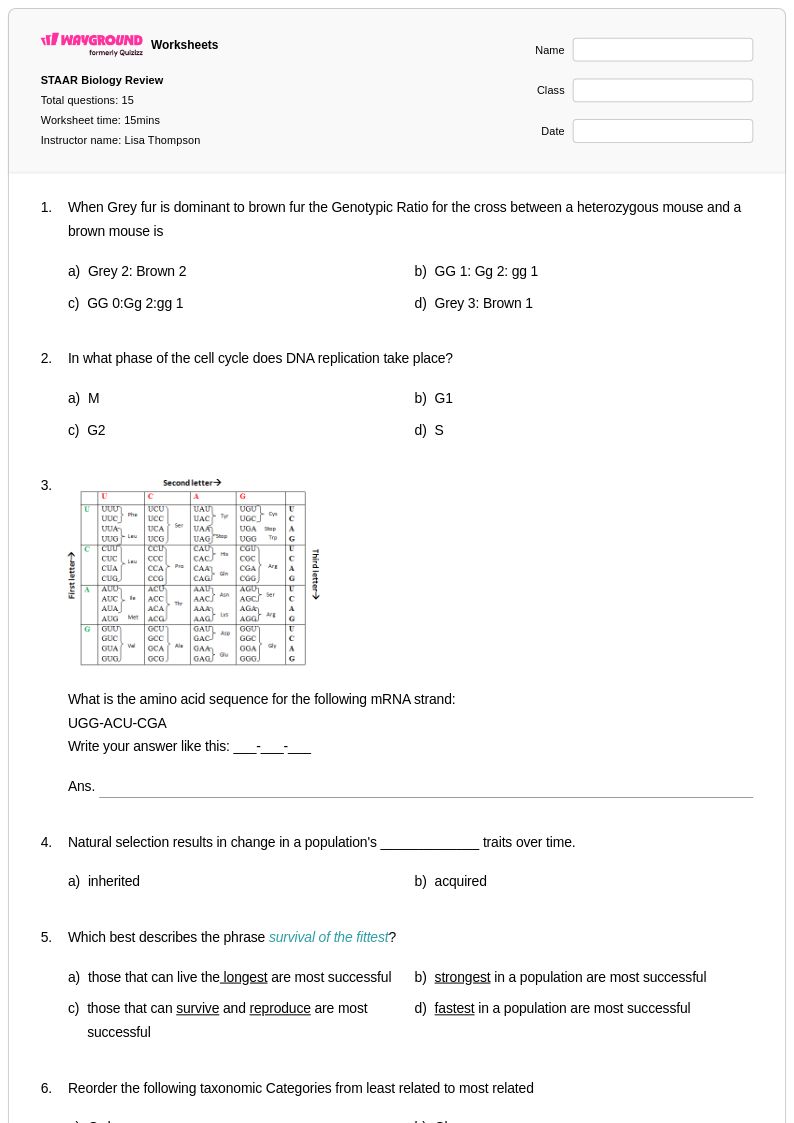
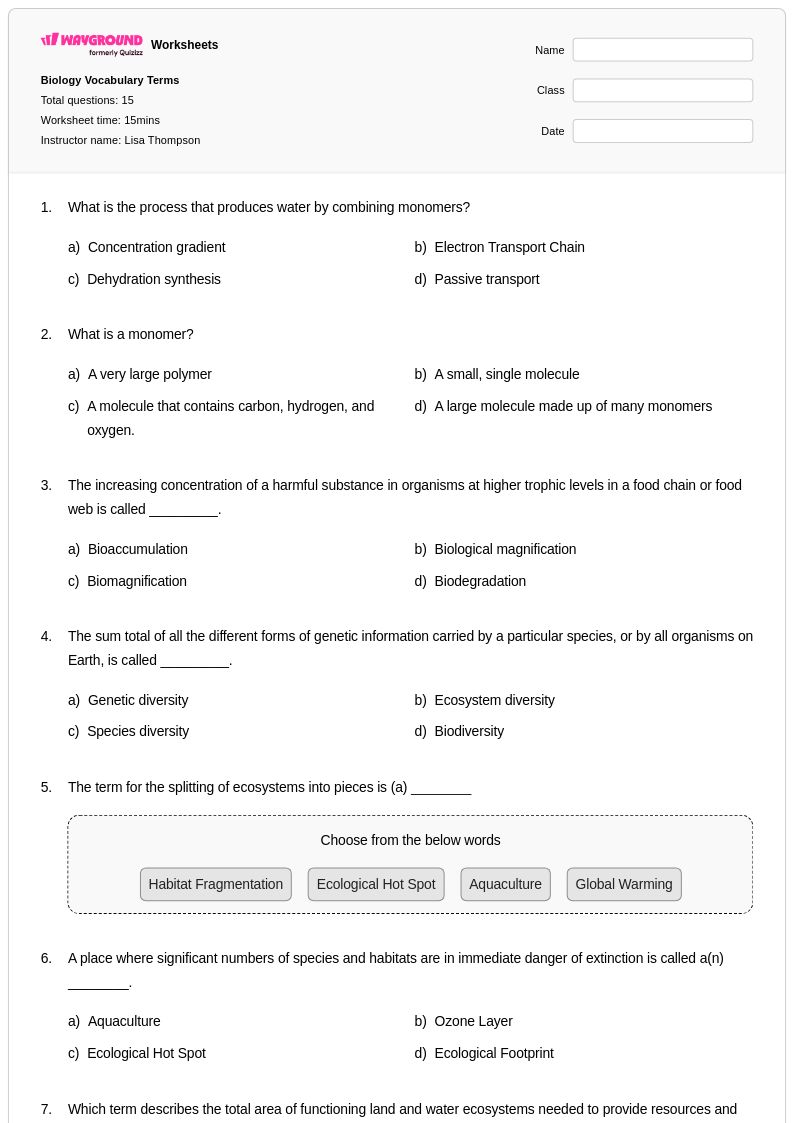
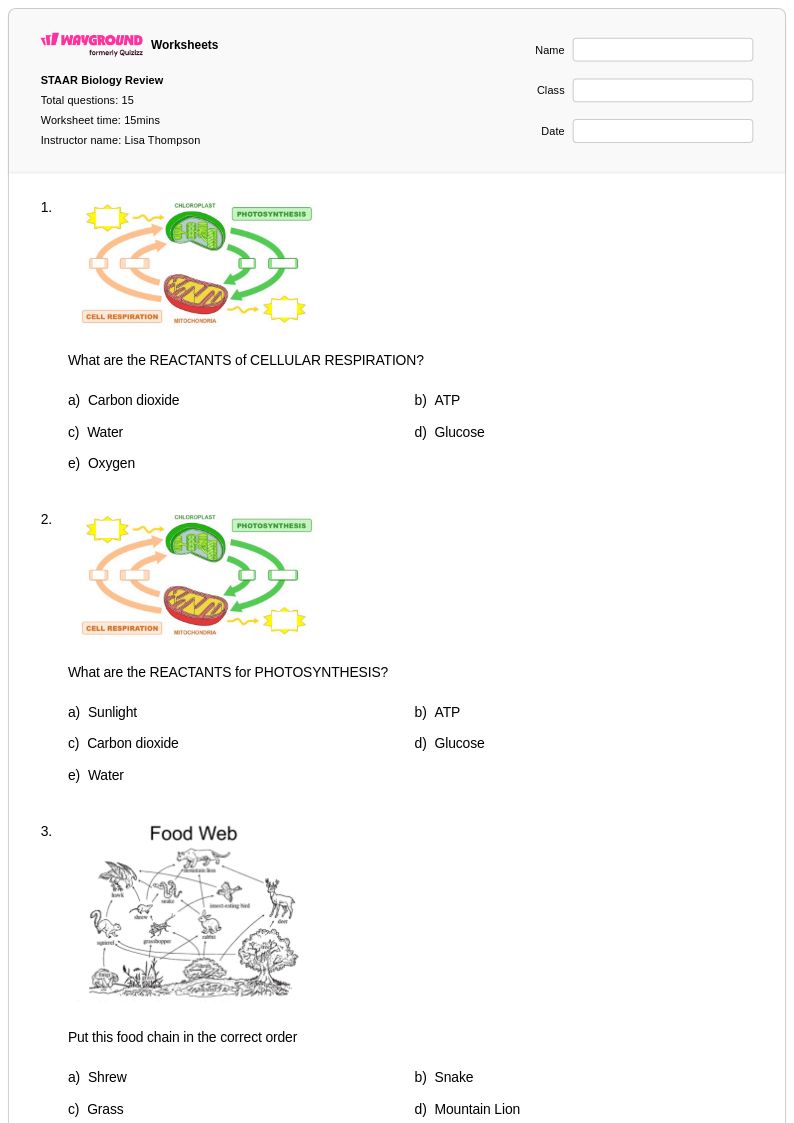
Class 9 Developmental Biology worksheets from Wayground offer comprehensive printables and practice problems that help students master embryonic development, cell differentiation, and growth processes with detailed answer keys and free PDF resources.
Explore printable Developmental Biology worksheets for Class 9
Developmental biology worksheets for Class 9 students available through Wayground (formerly Quizizz) provide comprehensive coverage of how organisms grow, develop, and change throughout their life cycles. These expertly designed resources strengthen students' understanding of critical concepts including embryonic development, cellular differentiation, growth patterns, metamorphosis, and reproductive cycles across various species. The practice problems guide students through complex developmental processes, from fertilization and early embryogenesis to organ formation and maturation, while building analytical skills essential for advanced biological studies. Each worksheet includes detailed answer keys that support both independent learning and classroom instruction, with free printable materials offering flexible access to high-quality developmental biology content that aligns with Class 9 curriculum standards.
Wayground (formerly Quizizz) empowers educators with millions of teacher-created developmental biology resources that streamline lesson planning and enhance student outcomes. The platform's robust search and filtering capabilities allow teachers to quickly locate worksheets targeting specific developmental concepts, grade-appropriate complexity levels, and curriculum alignment requirements. Advanced differentiation tools enable customization of content difficulty and format, supporting both remediation for struggling learners and enrichment opportunities for advanced students. Teachers can access materials in both printable pdf formats for traditional classroom use and digital versions for interactive learning environments, facilitating seamless integration into diverse instructional approaches. This comprehensive resource collection supports systematic skill practice in developmental biology while providing the flexibility educators need to address varied learning styles and academic goals within their Class 9 science programs.
FAQs
How do I teach developmental biology in a way students actually understand?
Developmental biology is best taught by anchoring abstract molecular mechanisms to visible outcomes students can reason about, such as connecting gene expression changes to observable differences in embryonic structure. Start with the fertilization-to-maturity arc as a narrative framework, then layer in specific processes like embryogenesis, morphogenesis, and cell fate determination as chapters within that story. Using model organisms like Drosophila or Xenopus gives students concrete, well-documented cases to analyze rather than working from generalities alone.
What practice exercises help students understand cell differentiation and developmental pathways?
Exercises that ask students to trace a cell's fate from a pluripotent state through commitment and differentiation are particularly effective for building conceptual understanding. Practice problems that require interpreting experimental data, such as knock-out phenotypes or fate-mapping results, push students to connect molecular mechanisms to observable changes. Analyzing developmental pathways across multiple model organisms also reinforces that core mechanisms are conserved, which deepens transfer of understanding.
What misconceptions do students commonly have about embryonic development?
A frequent misconception is that cell differentiation involves gaining new genetic material rather than selectively expressing existing genes. Students also often conflate cell division with development, not recognizing that morphogenesis and tissue patterning require coordinated signaling and movement, not just proliferation. Another common error is treating developmental stages as discrete and universal rather than understanding that timing and sequence can vary across species.
How can I use developmental biology worksheets to support both remediation and advanced learners?
Developmental biology worksheets can be tiered by cognitive demand: foundational problems focused on labeling embryonic structures or sequencing developmental stages suit students who need remediation, while data interpretation problems requiring analysis of experimental outcomes challenge advanced learners. Wayground's differentiation tools allow teachers to modify content complexity for individual students, and accommodation features like Read Aloud and reduced answer choices can be applied per student without disrupting the rest of the class. This makes a single worksheet collection workable across a range of readiness levels within the same lesson.
How do I use Wayground's developmental biology worksheets in my classroom?
Wayground's developmental biology worksheets are available as printable PDFs for traditional classroom and homework use, and in digital formats for technology-integrated environments, including the option to host them as a quiz directly on Wayground. Each worksheet includes a detailed answer key, supporting independent student work and efficient teacher review. The platform's search and filtering tools let you locate resources by topic, such as embryogenesis or morphogenesis, and its standards alignment features help match worksheets to your specific curriculum requirements.
How do I assess whether students truly understand morphogenesis versus just memorizing terms?
True understanding of morphogenesis shows when students can explain why disrupting a signaling pathway produces a specific structural abnormality, not just name the pathway. Assessment tasks that present novel experimental scenarios, such as describing the expected phenotype of a gene knock-down in a model organism, reveal whether students have internalized the logic of developmental mechanisms. Multiple-choice questions with plausible distractors built around common misconceptions, such as confusing cell migration with cell proliferation, are especially useful for surfacing surface-level understanding.