Free Printable Division Facts Worksheets for Class 5
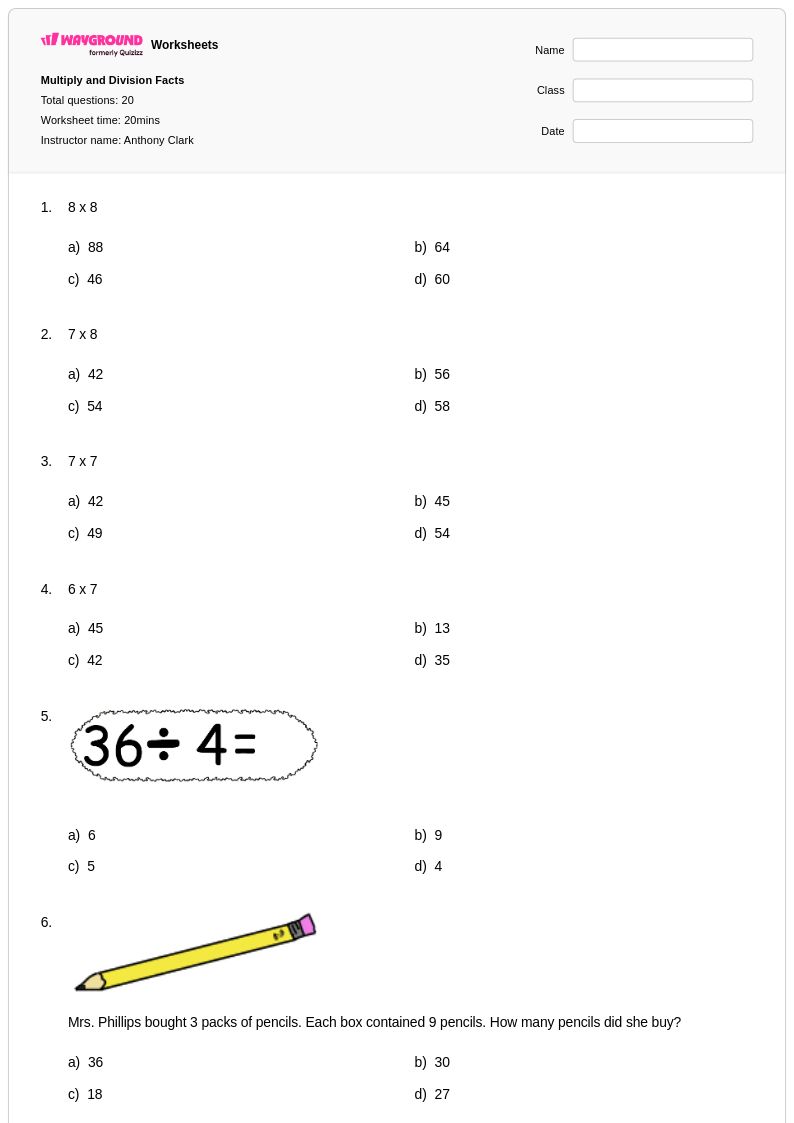
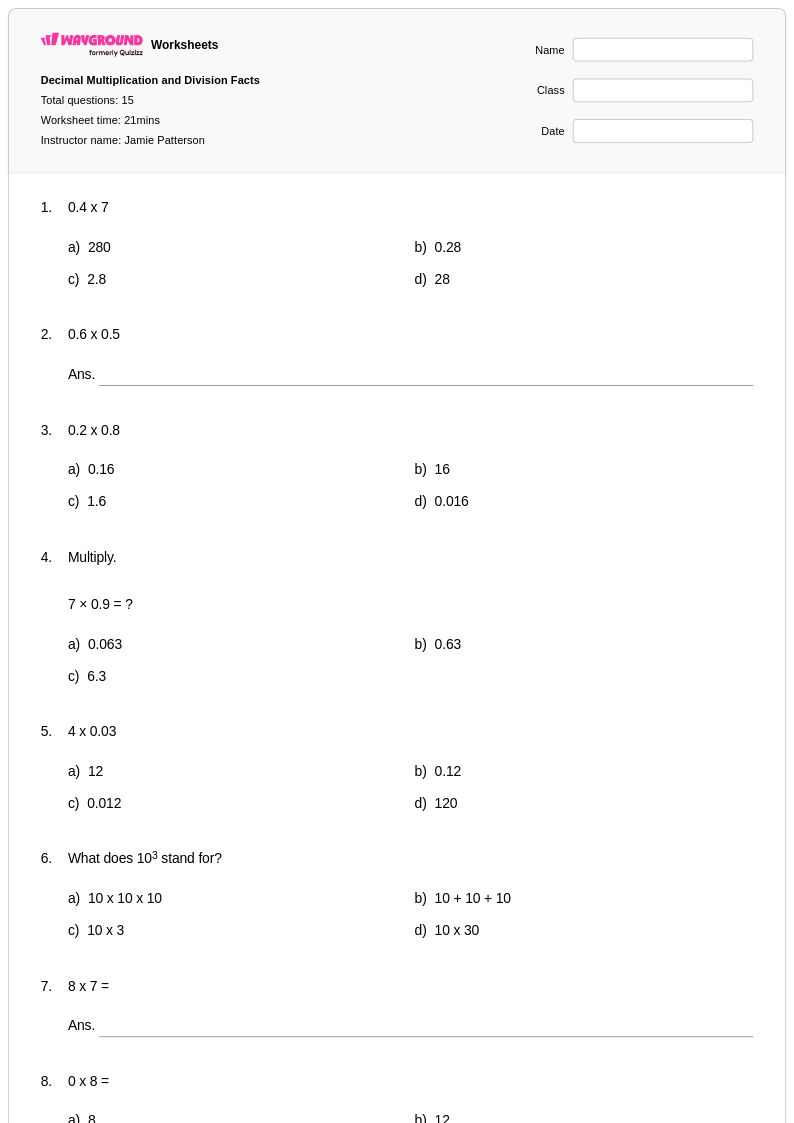
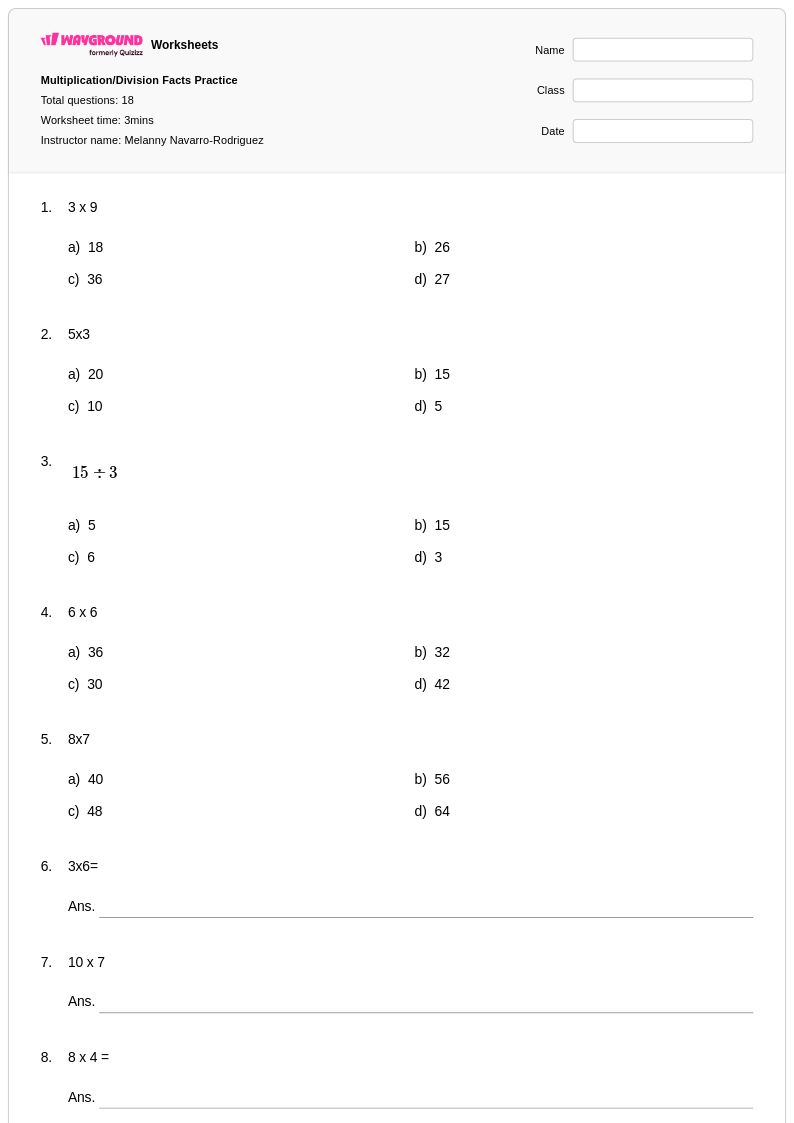
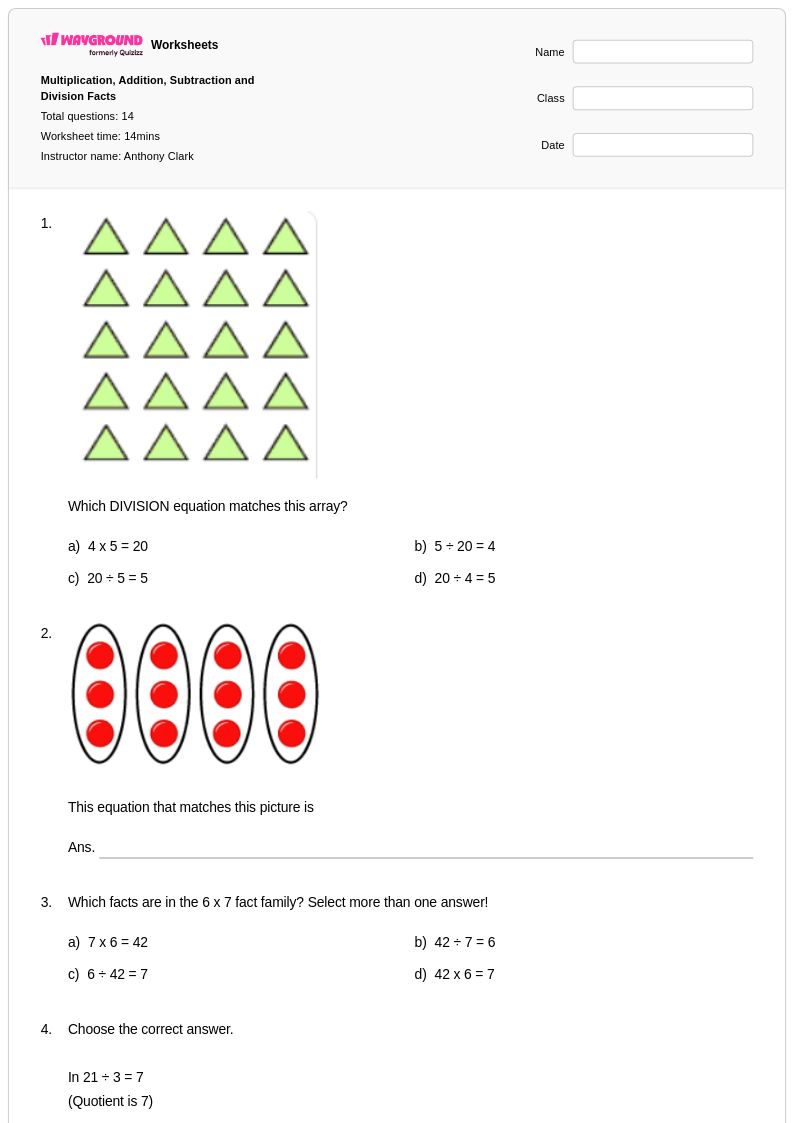
Master Class 5 division facts with Wayground's comprehensive collection of free worksheets, printables, and practice problems designed to build fluency and confidence in essential division skills.
Explore printable Division Facts worksheets for Class 5
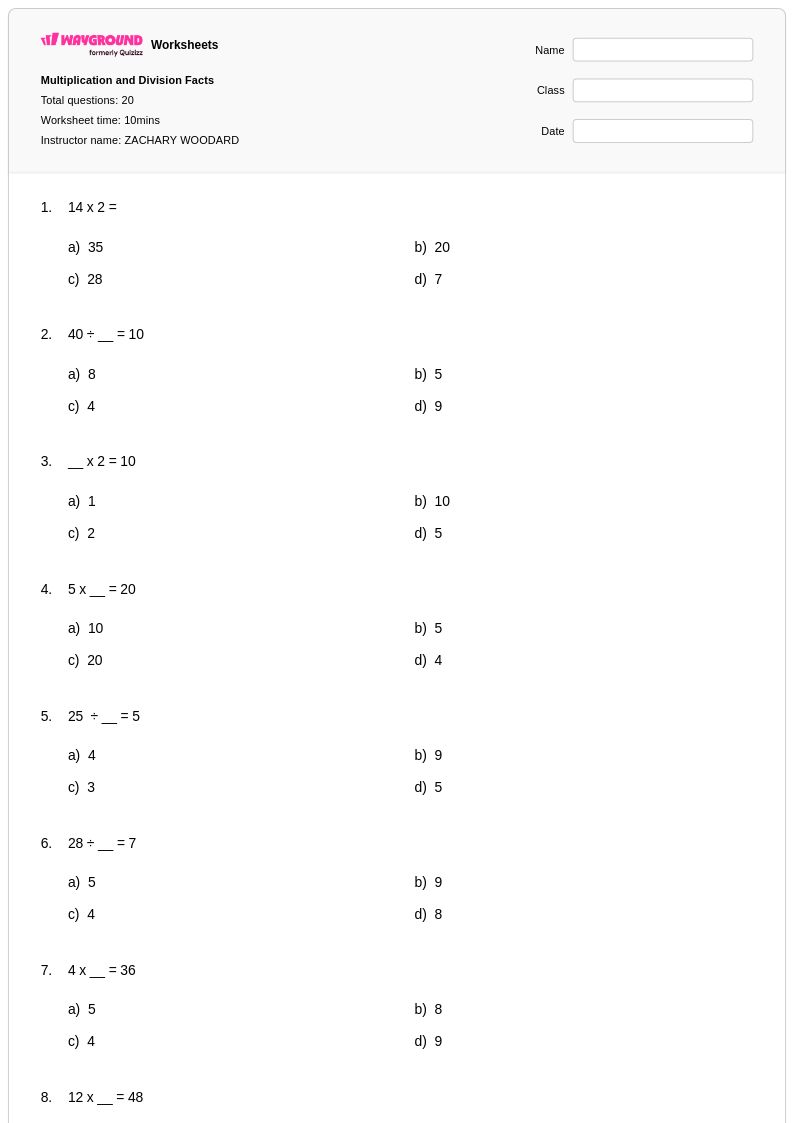
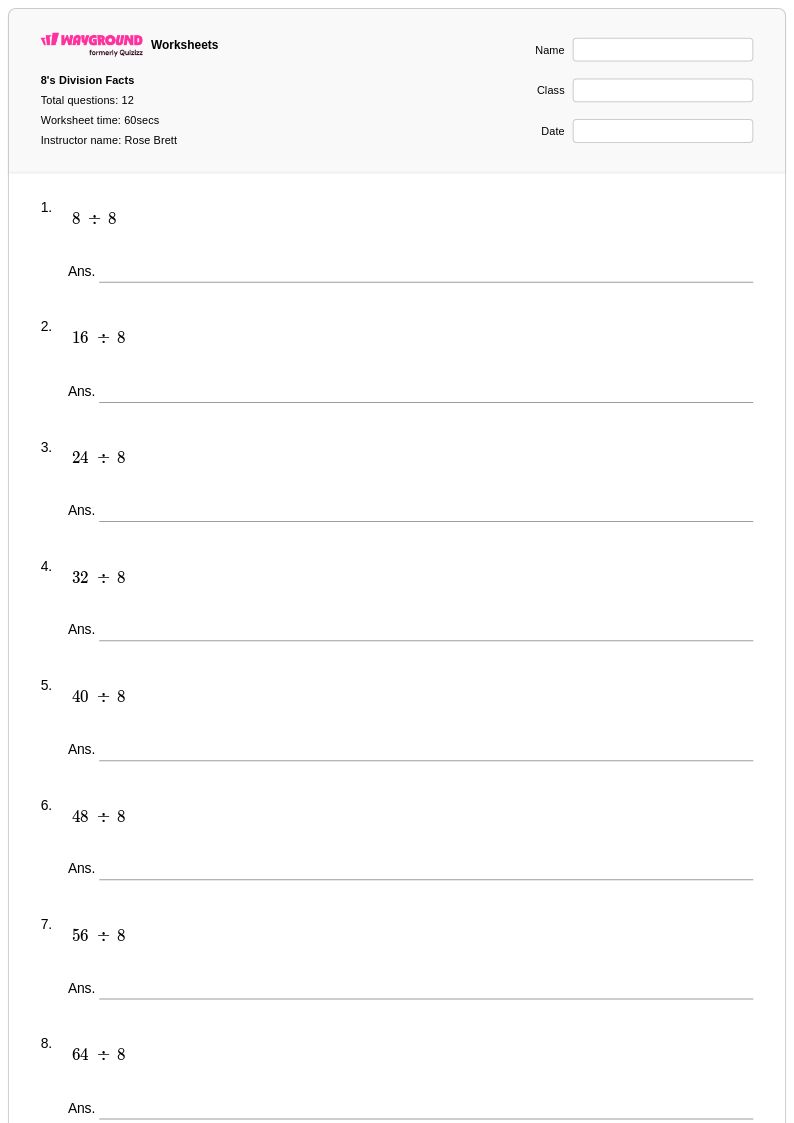
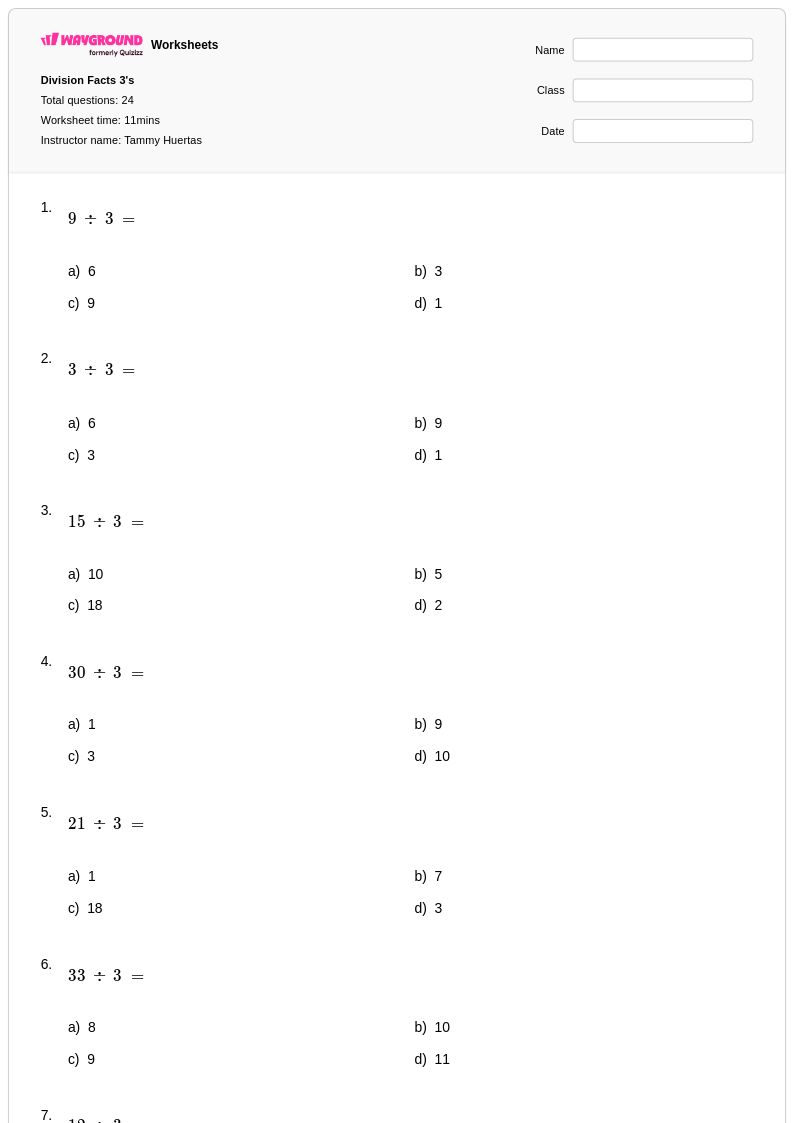
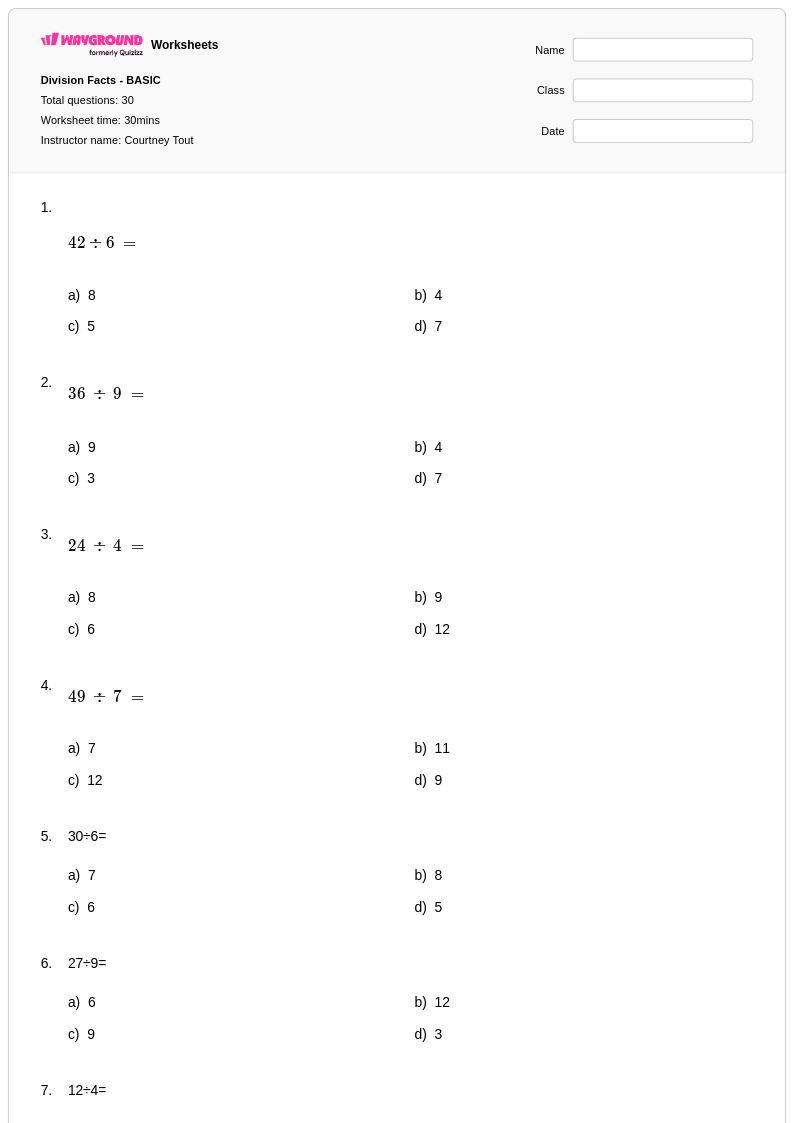
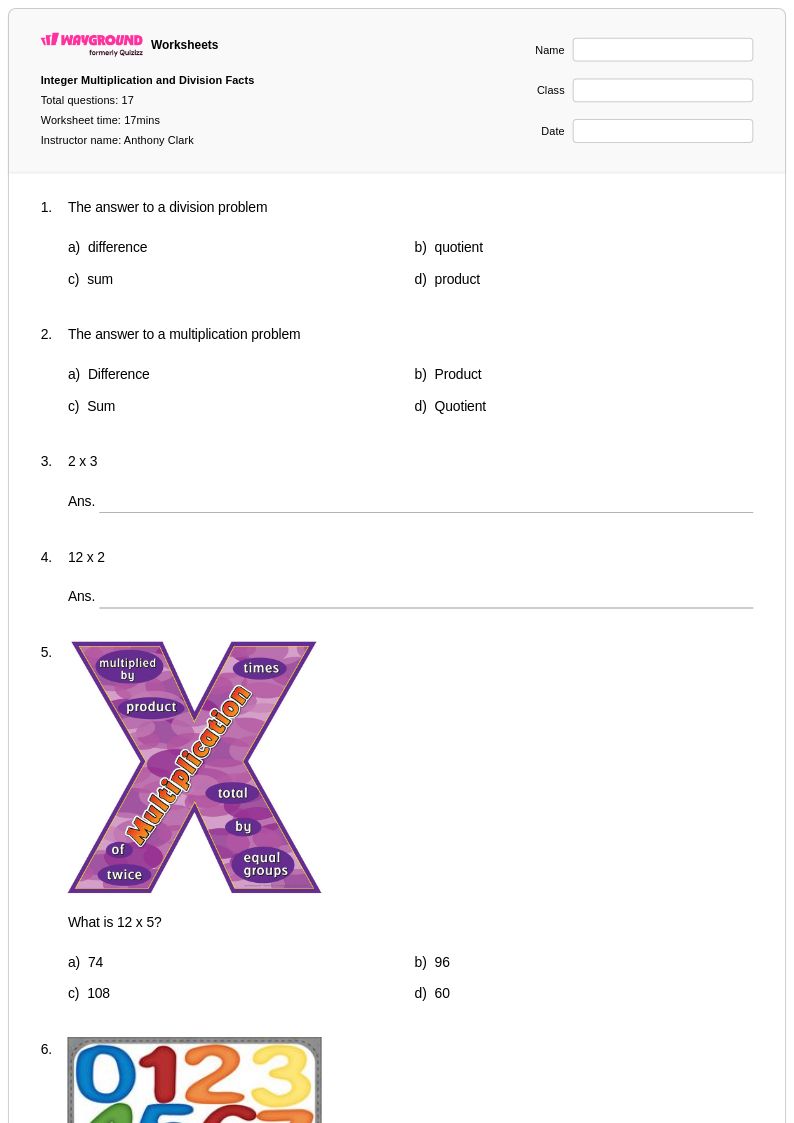
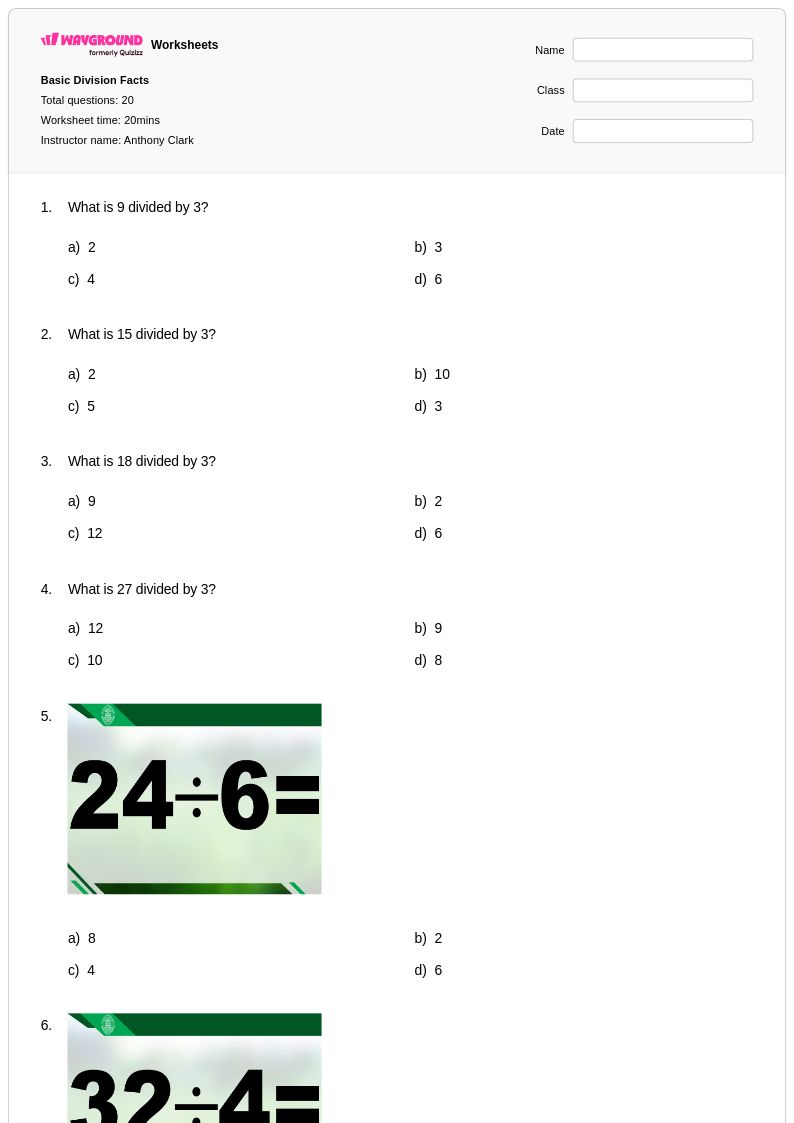
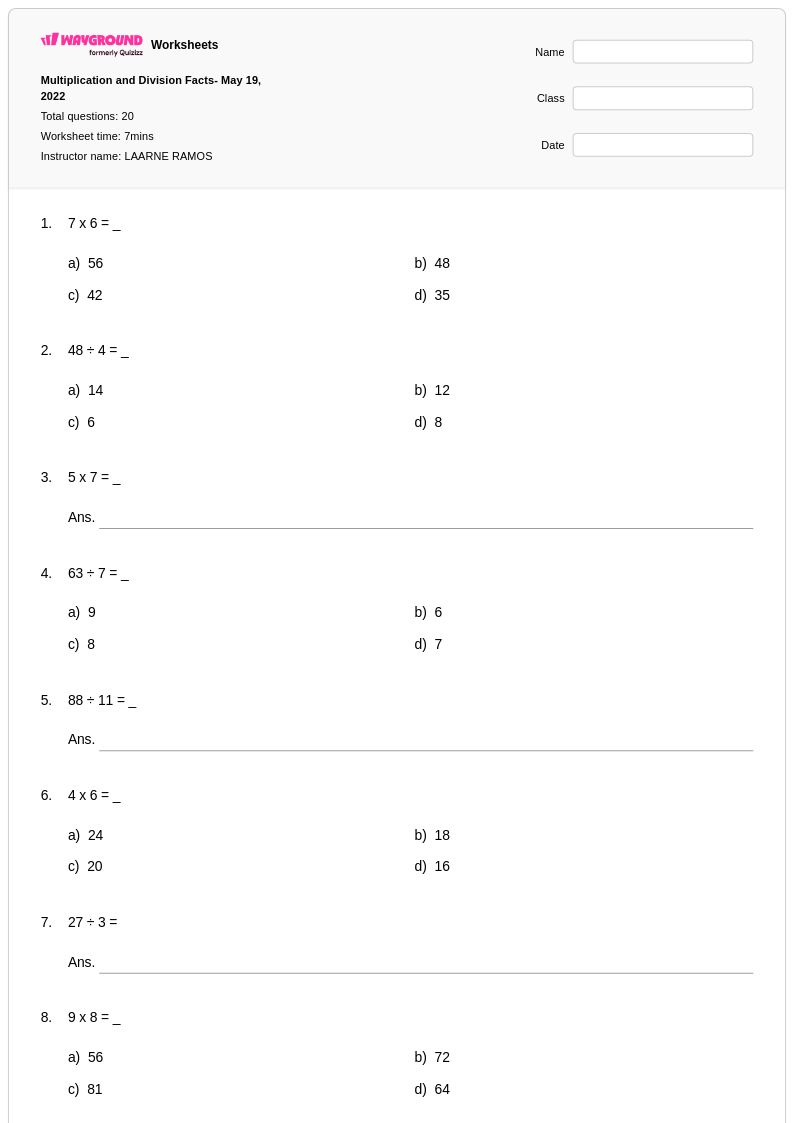
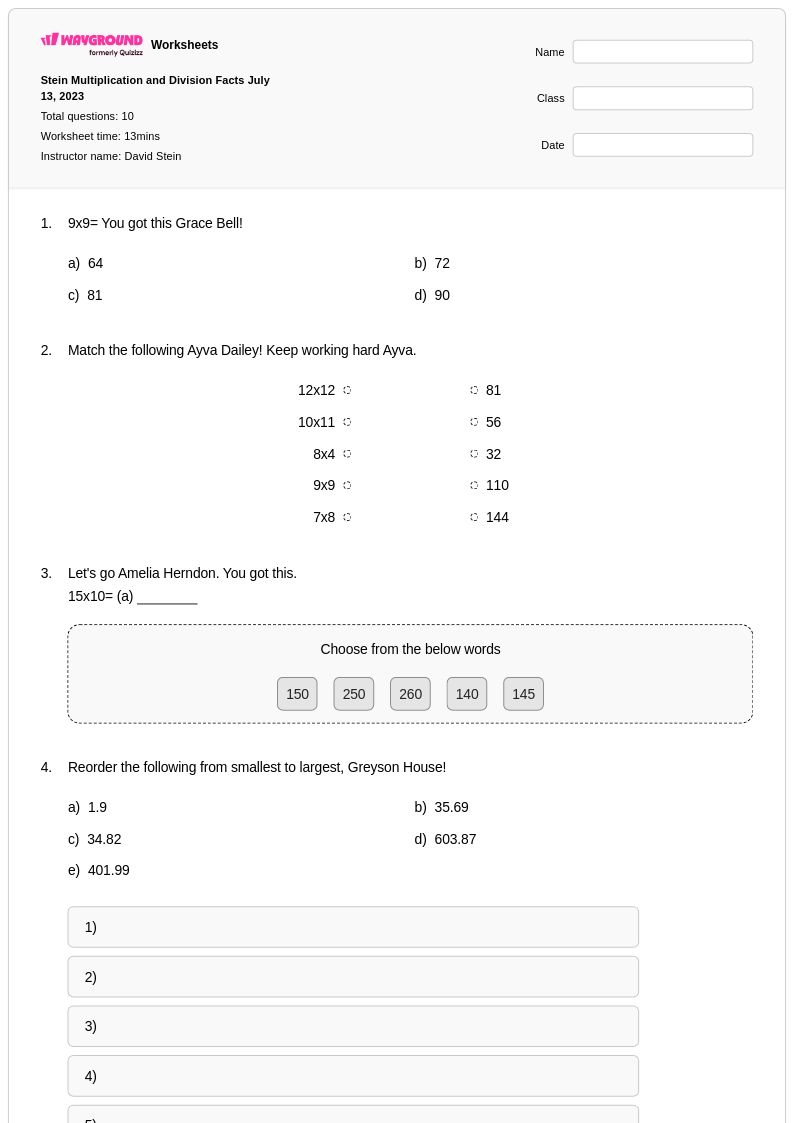
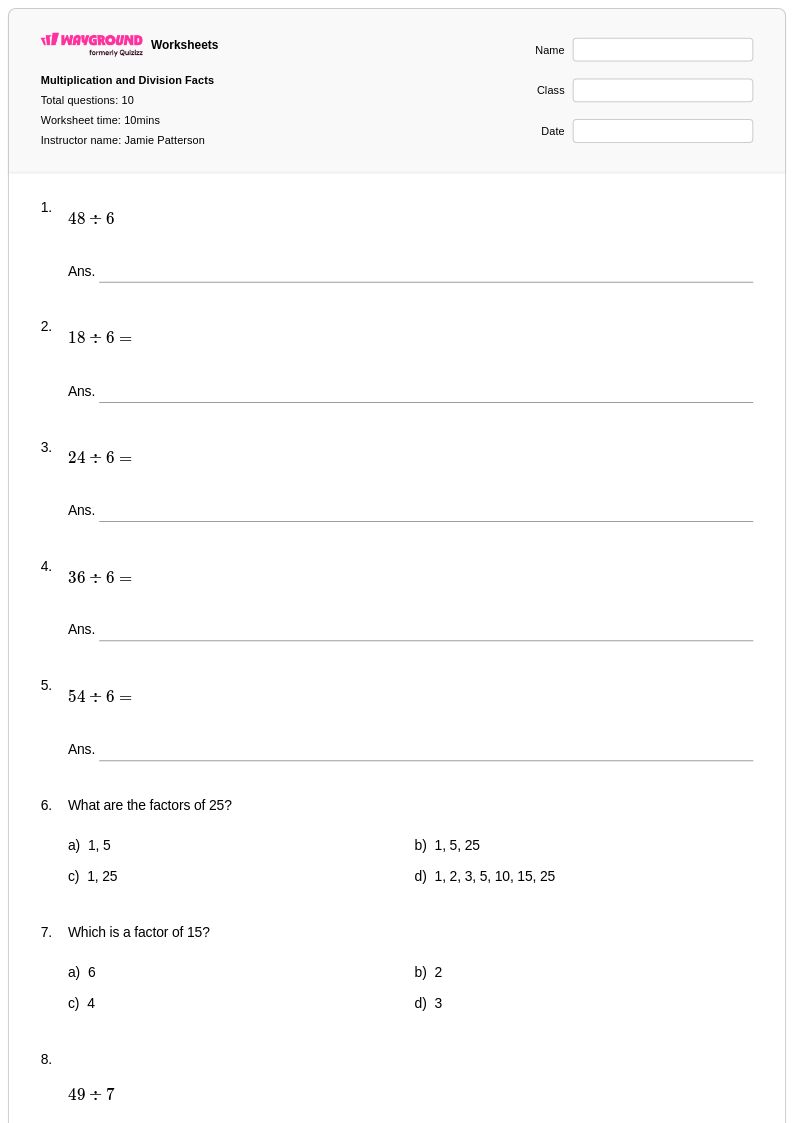
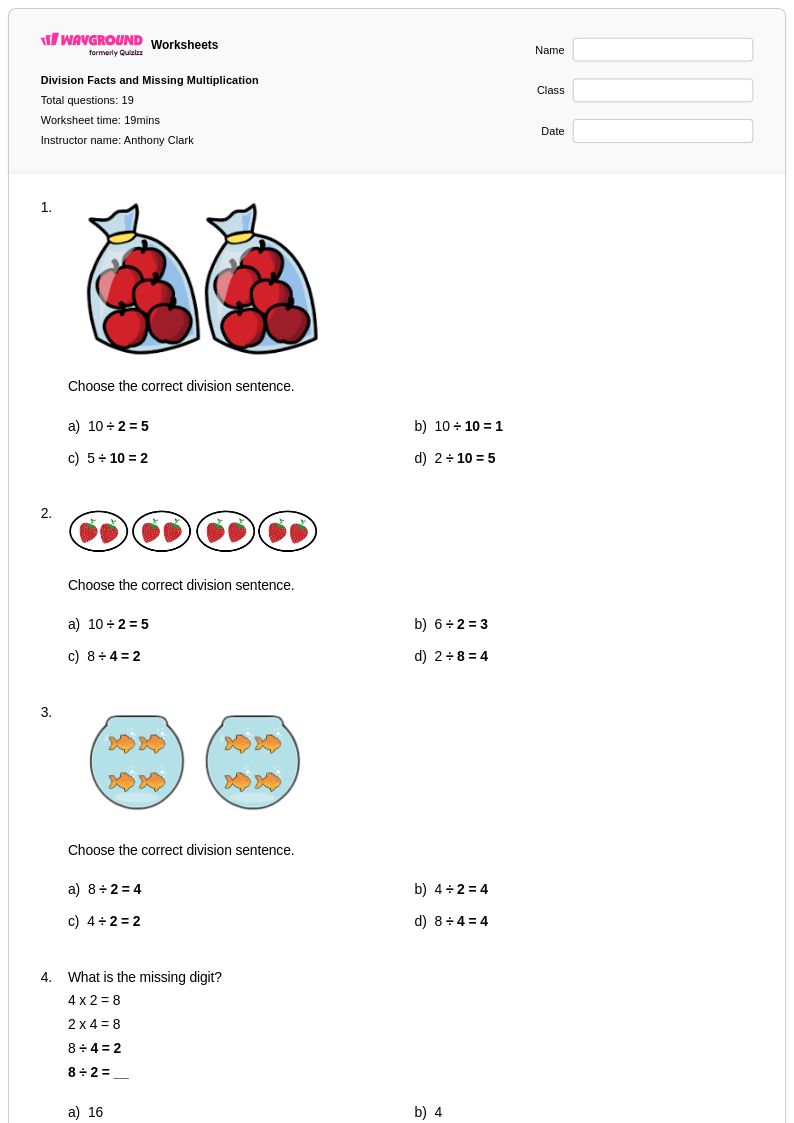
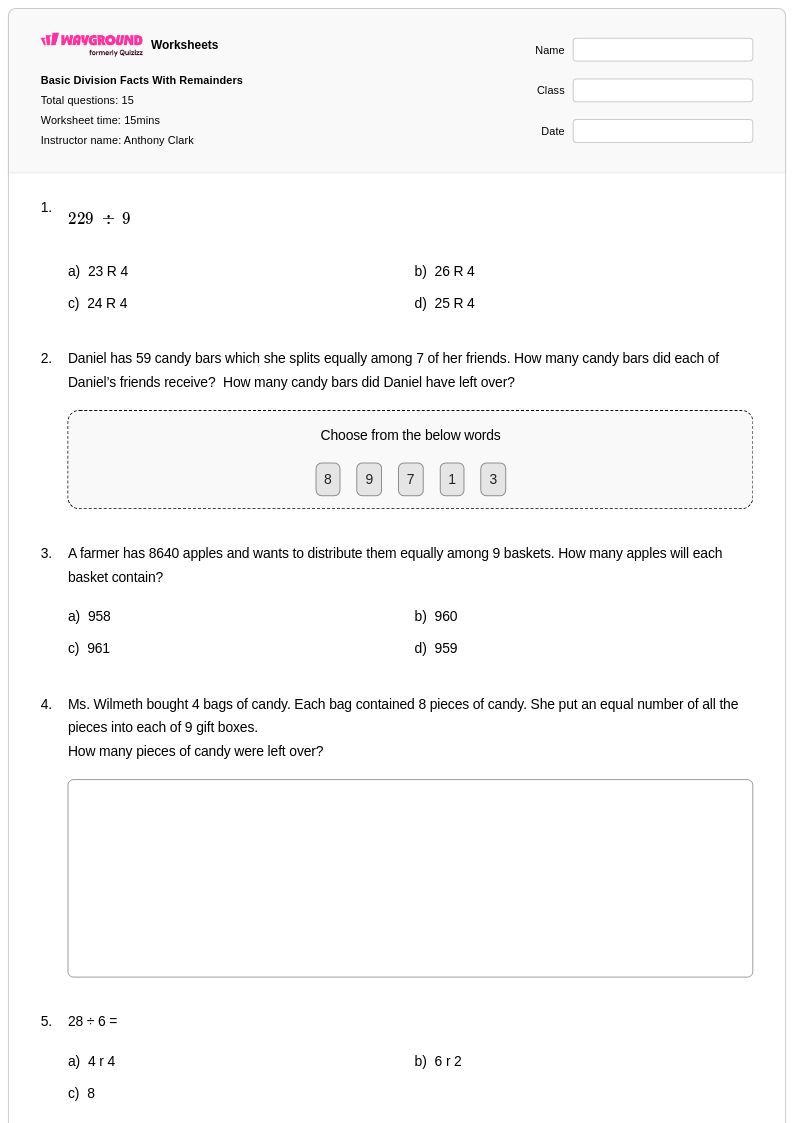
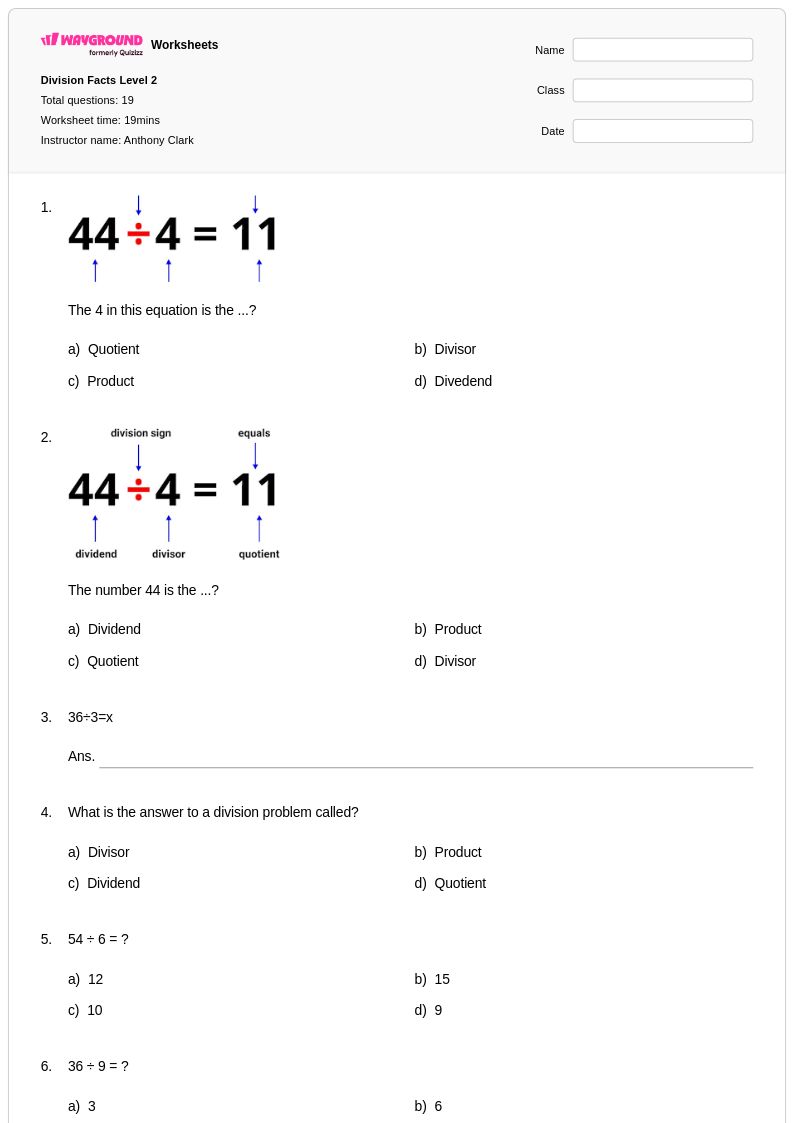
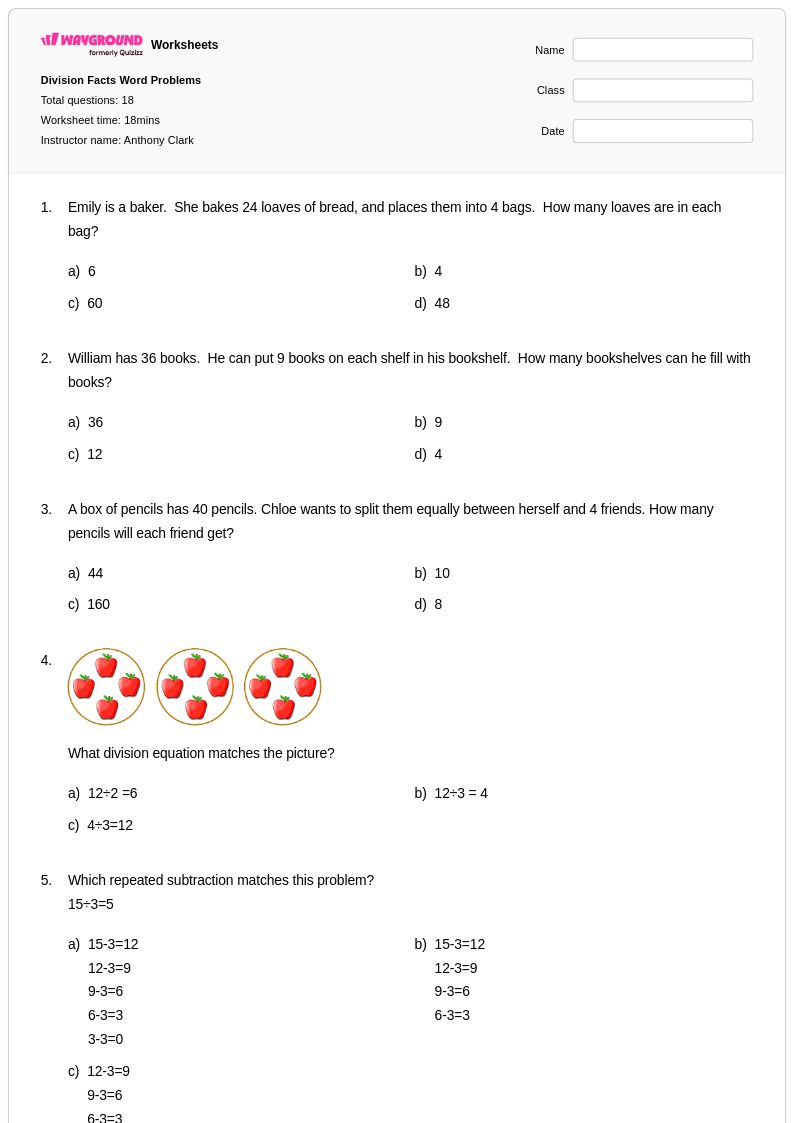
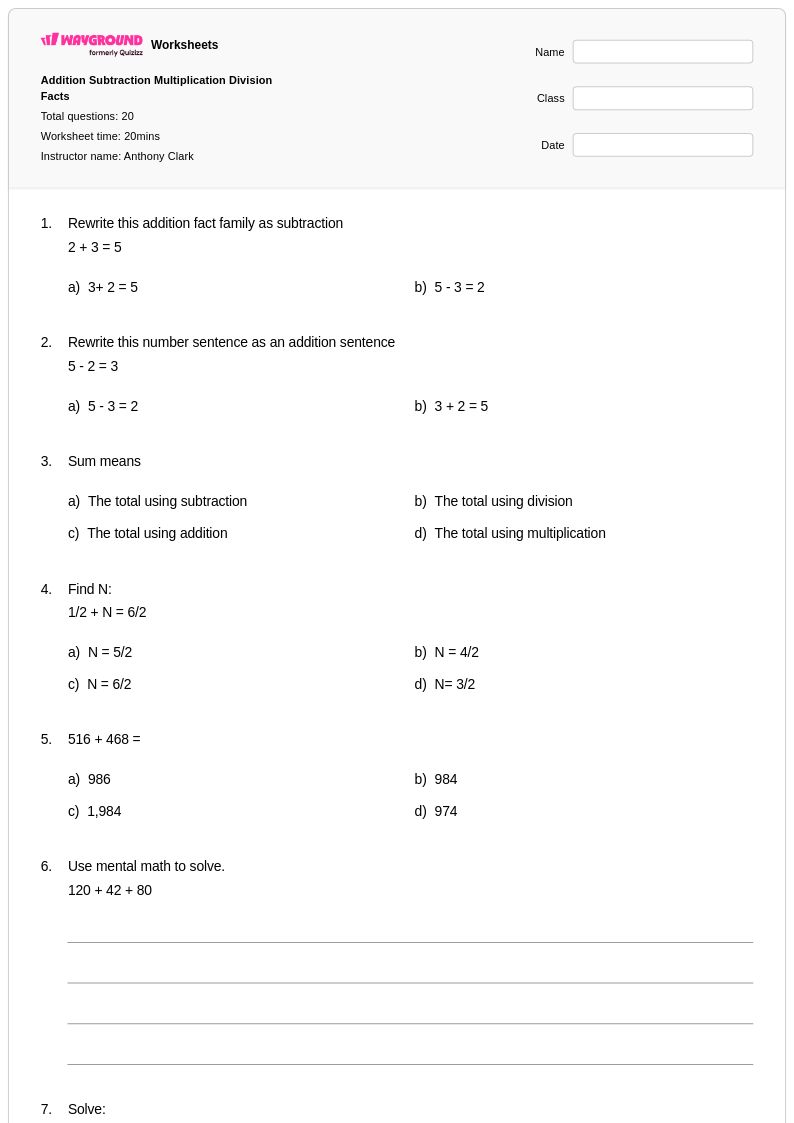
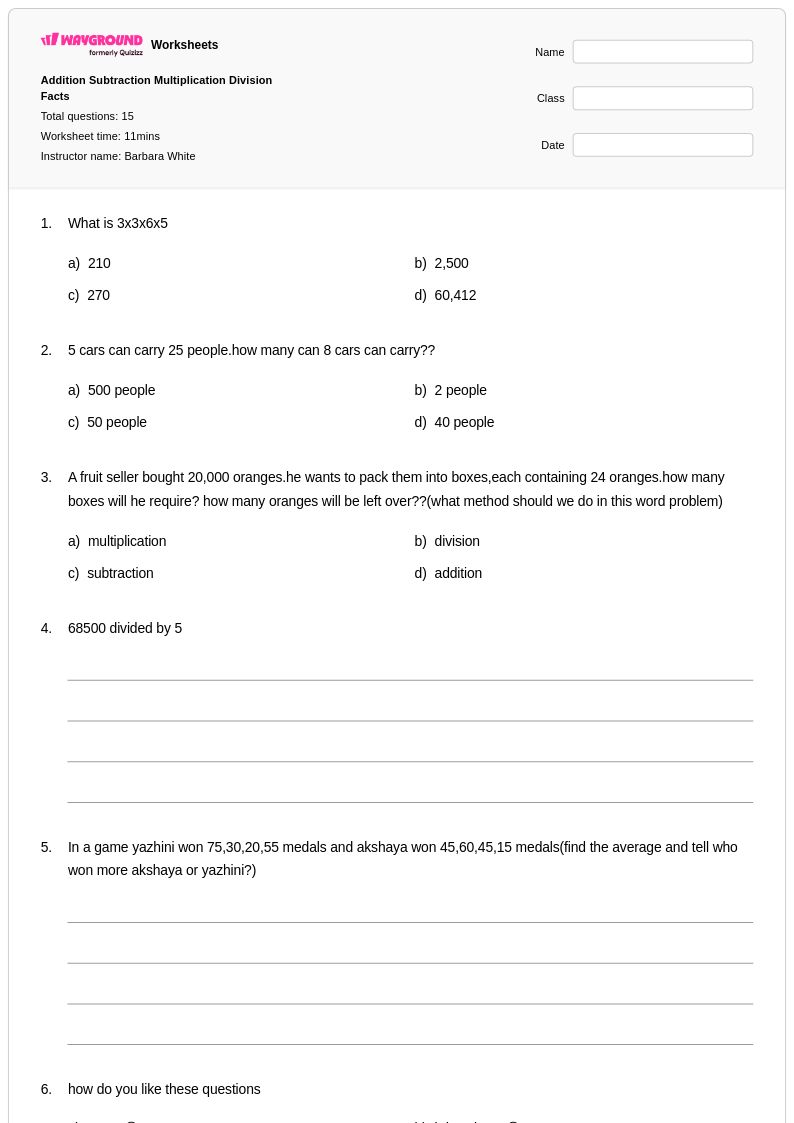
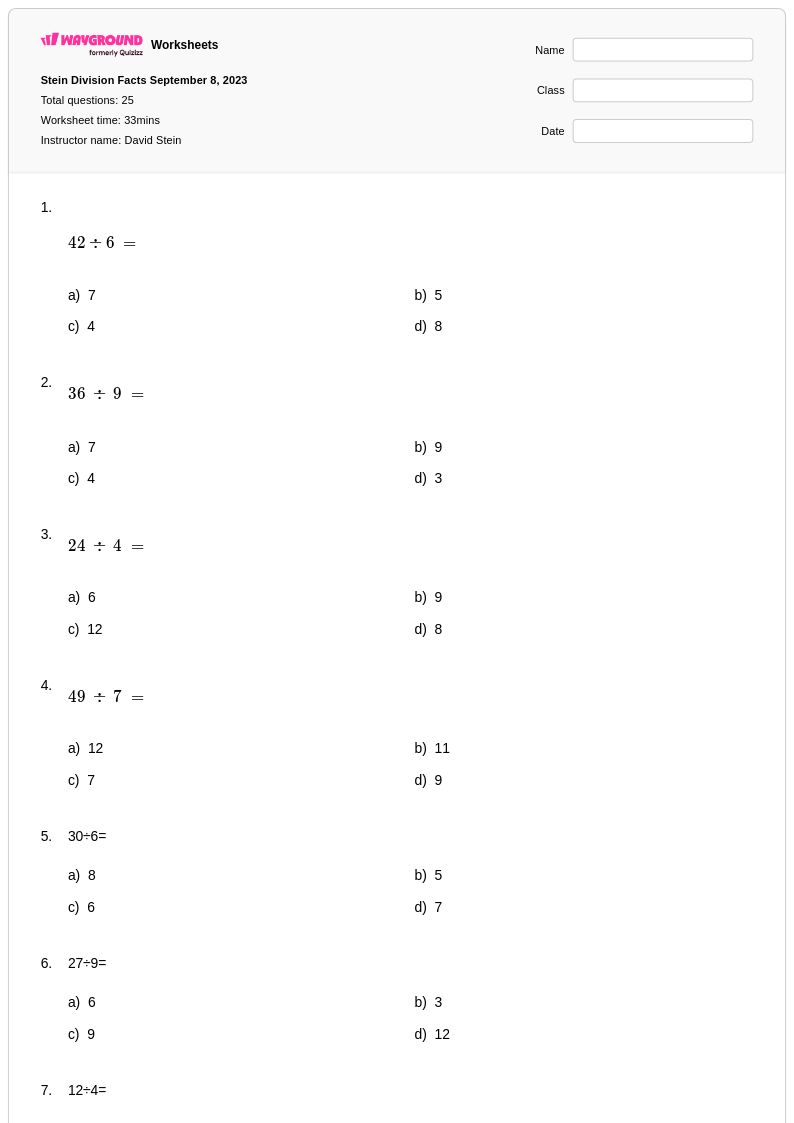
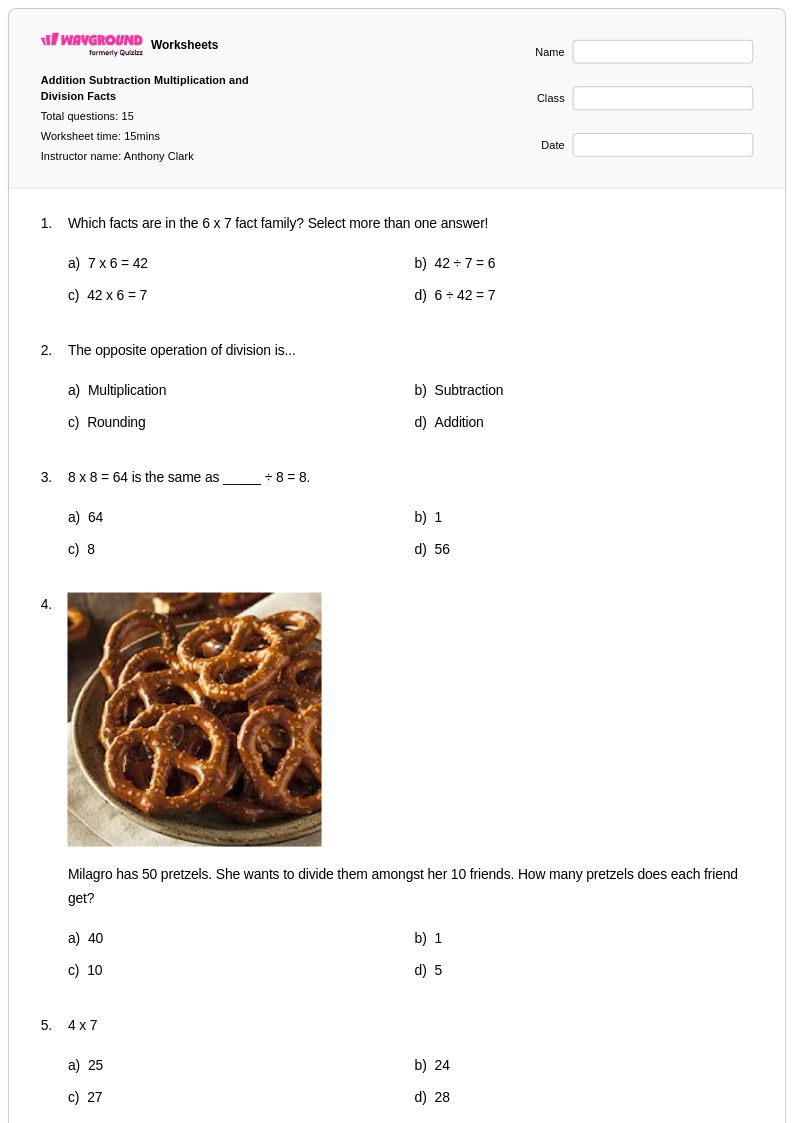
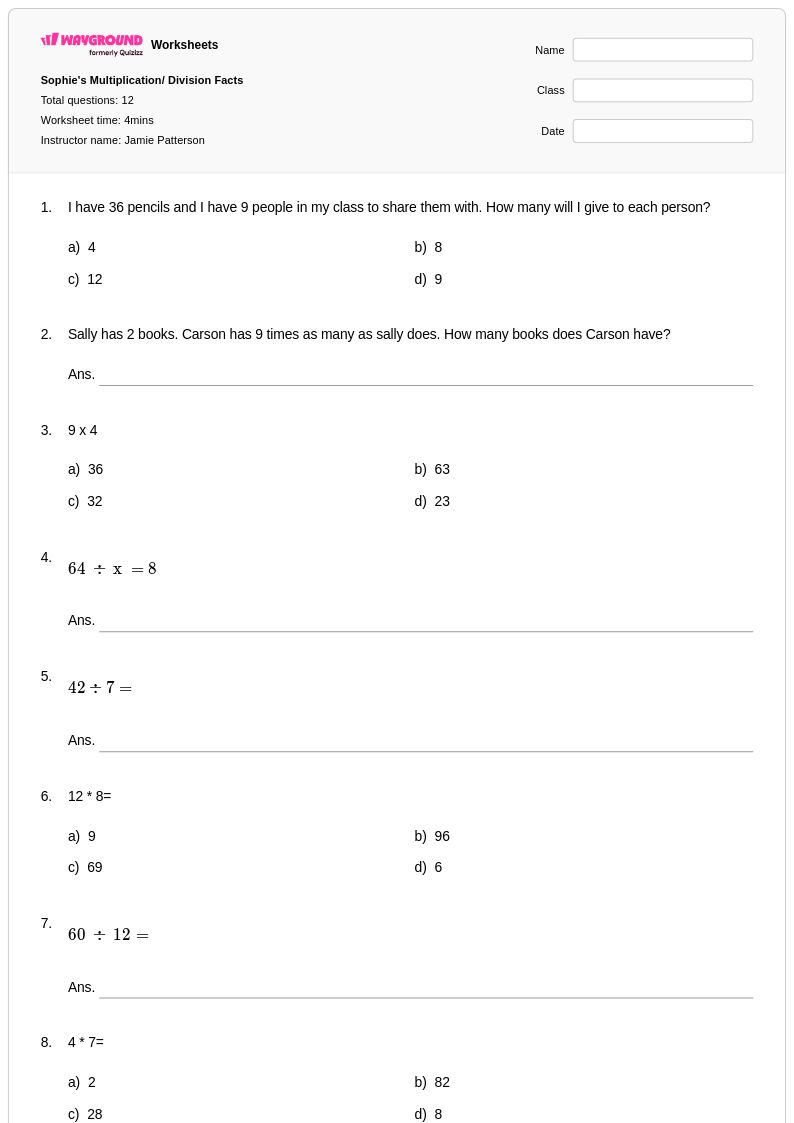
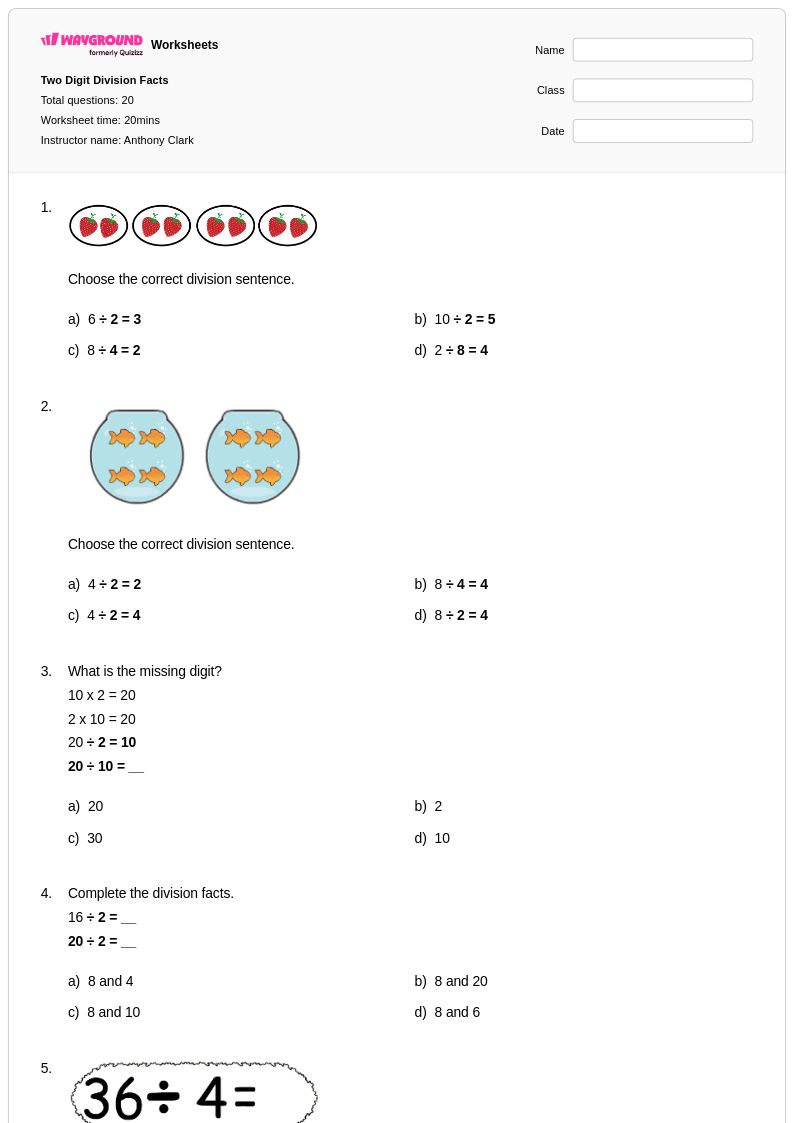
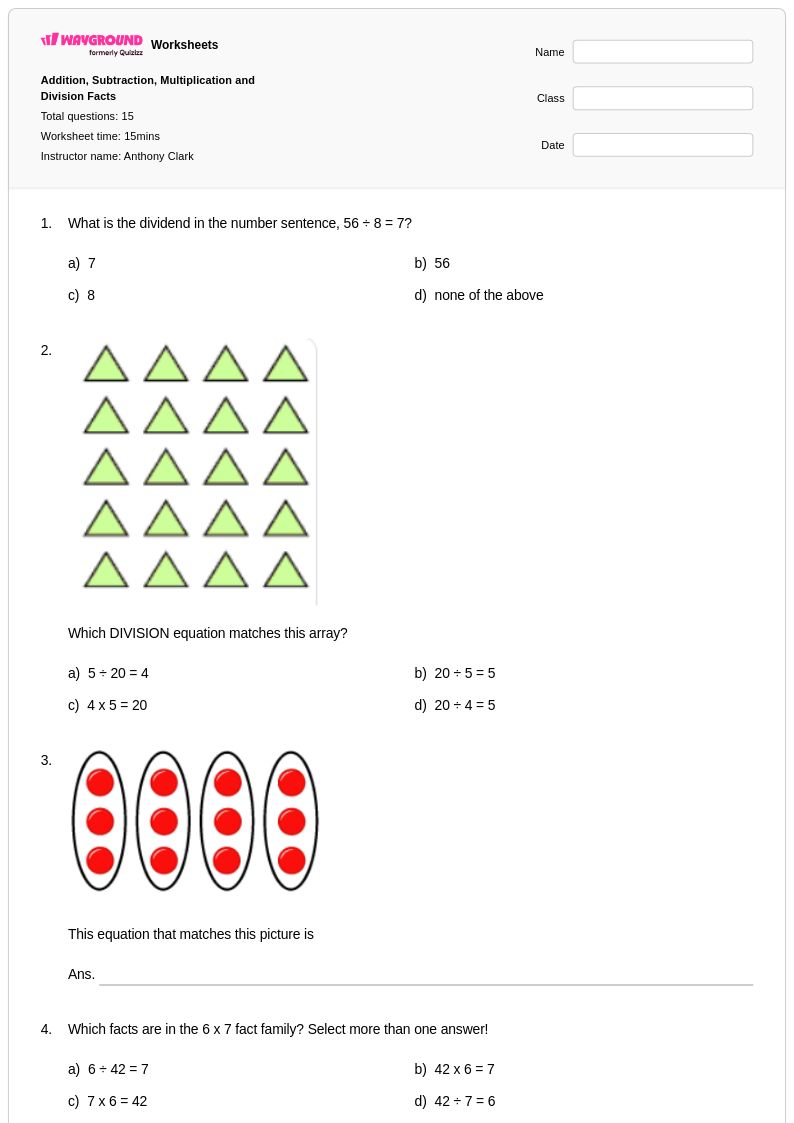
Division facts form the cornerstone of mathematical fluency for Class 5 students, serving as essential building blocks for more advanced mathematical concepts. Wayground's comprehensive collection of division facts worksheets provides targeted practice that helps students master fundamental division relationships through systematic repetition and application. These carefully designed printables focus on developing automatic recall of basic division facts, enabling students to solve problems efficiently without relying on time-consuming calculation methods. Each worksheet includes a complete answer key and offers varied practice problems that reinforce the inverse relationship between multiplication and division, while building the computational confidence students need for success in fractions, decimals, and multi-step problem solving. Available as free pdf downloads, these resources ensure that teachers can provide consistent practice opportunities that strengthen mathematical foundations.
Wayground's extensive platform, built from the foundation of Quizizz, empowers educators with millions of teacher-created division facts resources that can be easily customized to meet diverse classroom needs. The robust search and filtering capabilities allow teachers to quickly locate worksheets aligned with specific standards and skill levels, while built-in differentiation tools enable seamless adaptation for students requiring additional support or enrichment challenges. These division facts collections are available in both printable and digital formats, providing flexibility for traditional classroom instruction, homework assignments, or technology-integrated learning environments. Teachers can efficiently plan targeted intervention sessions, create remediation packets, or design enrichment activities that challenge advanced learners, all while maintaining focus on the critical skill development that ensures students achieve automaticity with essential division facts before progressing to more complex mathematical concepts.
FAQs
Why are 5th graders still practicing division facts?
Grade 5 is when division facts get applied constantly — dividing fractions, converting decimals, and multi-step word problems all require instant recall. A student who has to stop and calculate 63 ÷ 9 mid-problem loses the thread of what they were actually solving. Fluency practice at this grade isn't remediation for most students; it's maintenance that keeps fact recall sharp under the heavier cognitive load of fifth-grade math.
What exercises help 5th graders practice division facts?
Mixed-divisor timed drills and missing-dividend problems (__ ÷ 8 = 9) are the most efficient formats at this grade because they demand retrieval rather than recognition. You can also embed fact practice into fraction work — simplifying 56/8 or finding equivalent fractions naturally exercises the same recall without feeling like a separate drill.
What division fact mistakes do 5th graders still make?
The usual suspects are facts with 7, 8, and 9 as divisors — these are the last to become automatic for most students. A subtler issue at Grade 5 is students who know their facts in isolation but slow down when the same fact appears inside a multi-step problem. That hesitation is worth addressing directly, because fraction and decimal work in Grade 5 puts facts in exactly that embedded context.
How do I use Wayground's Grade 5 division facts worksheets?
Host the worksheet as a digital quiz on Wayground for instant results, or print the PDF for a paper drill — both formats include a complete answer key. Paper practice is a good fit for schools managing screen time, and the Wayground for Teachers app lets you scan student submissions to grade them without re-entering anything manually.
How do division facts connect to the 5th grade Common Core math progression?
Common Core treats division fact fluency as a Grade 3 benchmark, but Grade 5 is where that fluency gets stress-tested. Dividing fractions (for example, understanding why 3/4 ÷ 1/8 = 6) depends on recognizing the underlying division relationship quickly. Decimal division and multi-step problem solving add the same demand. Students who arrive in Grade 5 without solid fact recall hit a wall not in division itself, but in every topic that uses division as a tool.
How can I differentiate division facts practice for 5th graders at different levels?
For students still building automaticity, Wayground's reduced answer choices accommodation narrows the options per question, making retrieval less overwhelming while they close the gap. For the worksheet layout, adjusting font size or applying wider line spacing can help students who lose their place in dense drill formats. Students who are already fluent can be pushed with missing-dividend problems or timed challenges rather than standard quotient drills.