Free Printable Experimental Probability worksheets
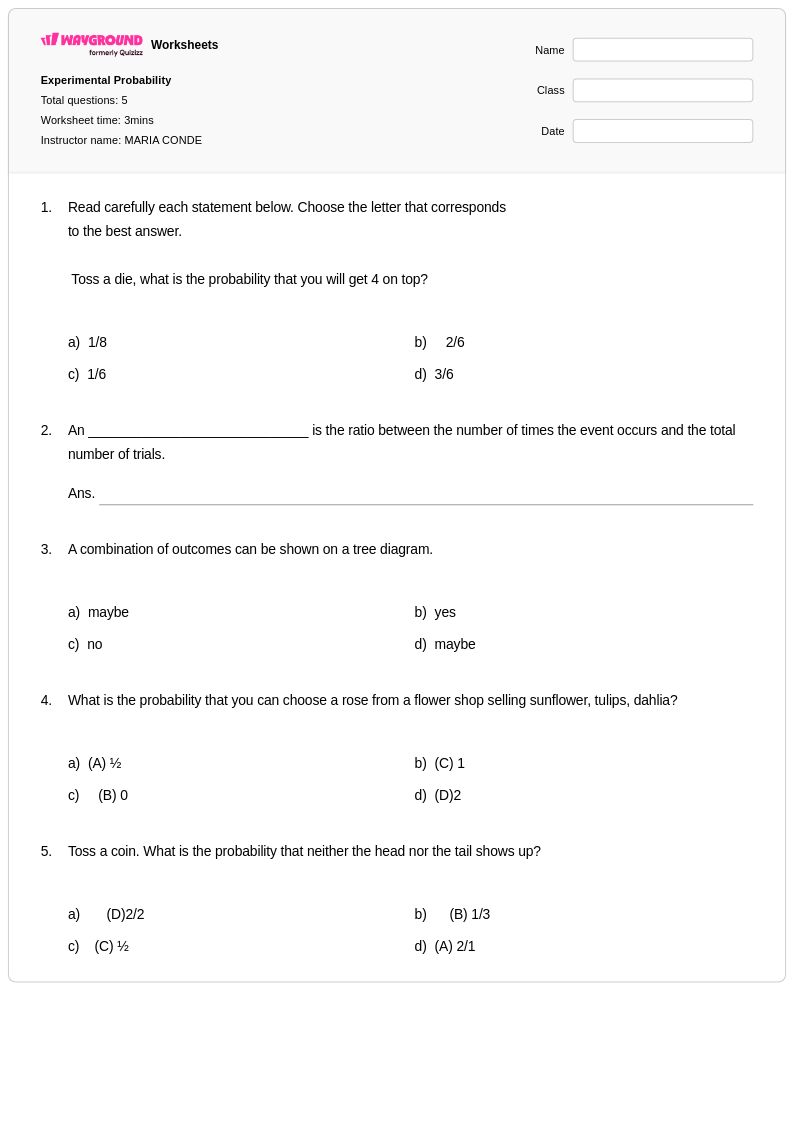
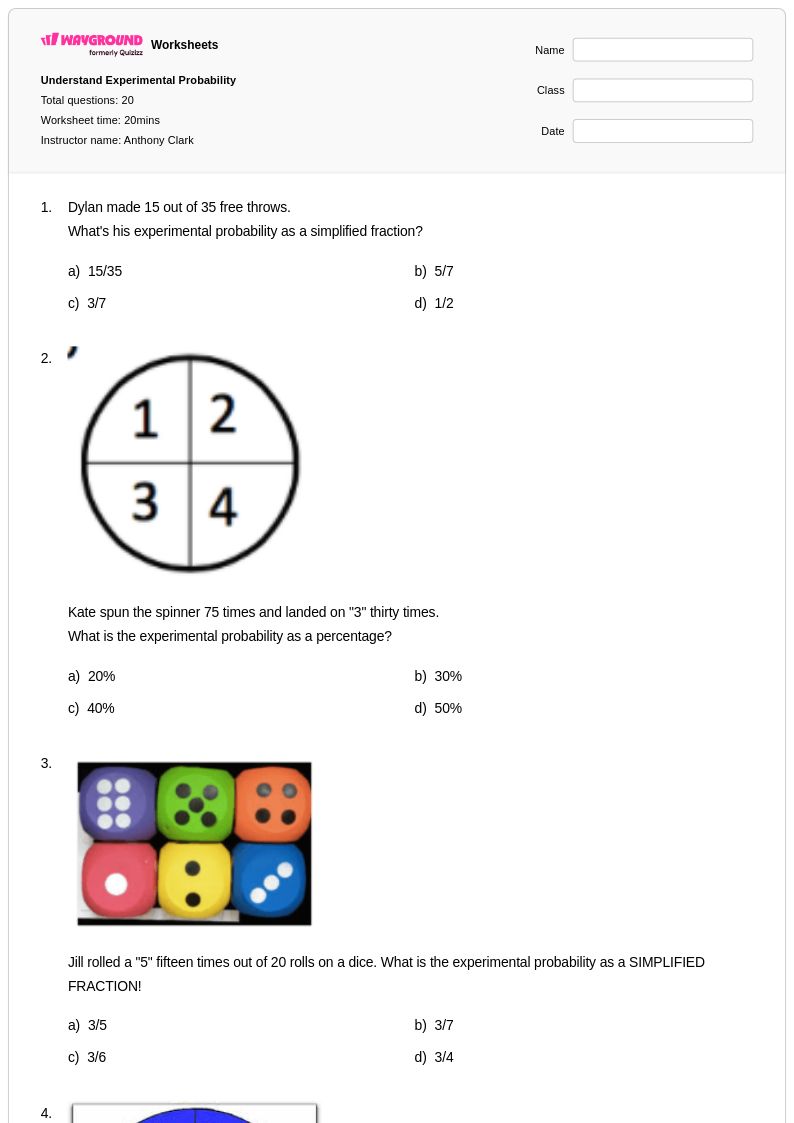
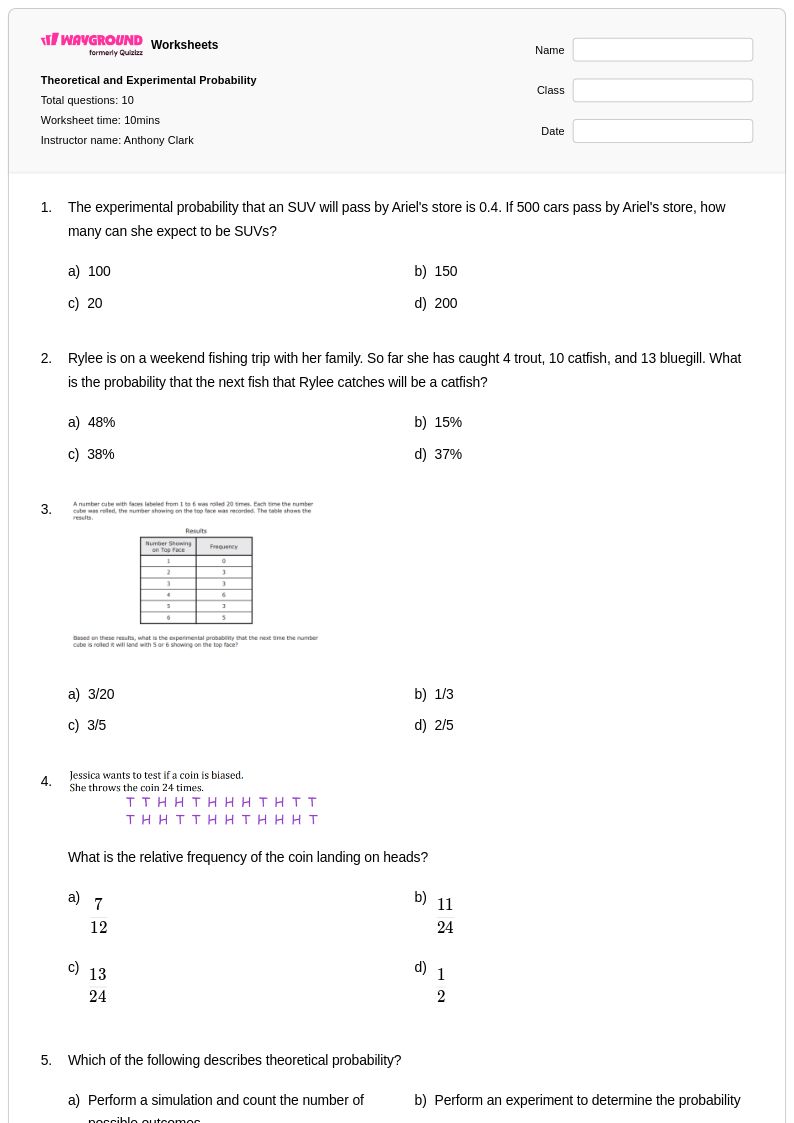
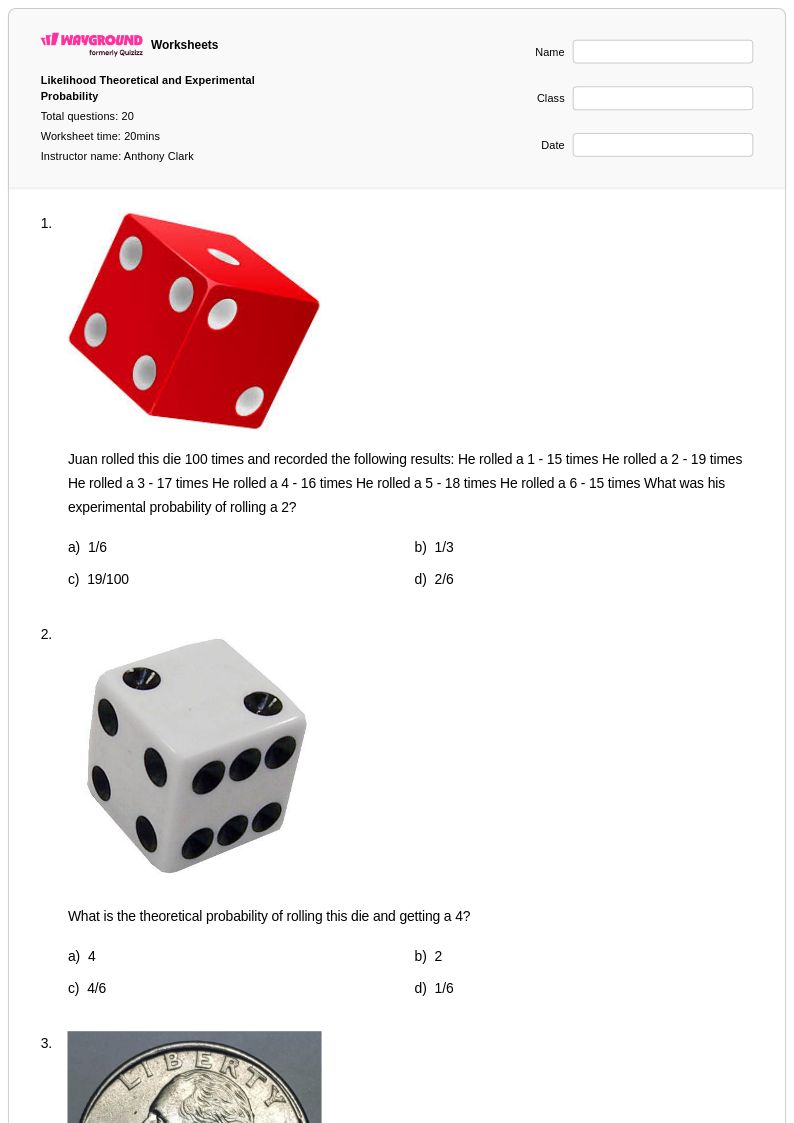
Enhance students' understanding of experimental probability with Wayground's comprehensive collection of free worksheets, featuring engaging practice problems, printable PDFs, and detailed answer keys to master data collection and probability analysis.
Explore printable Experimental Probability worksheets
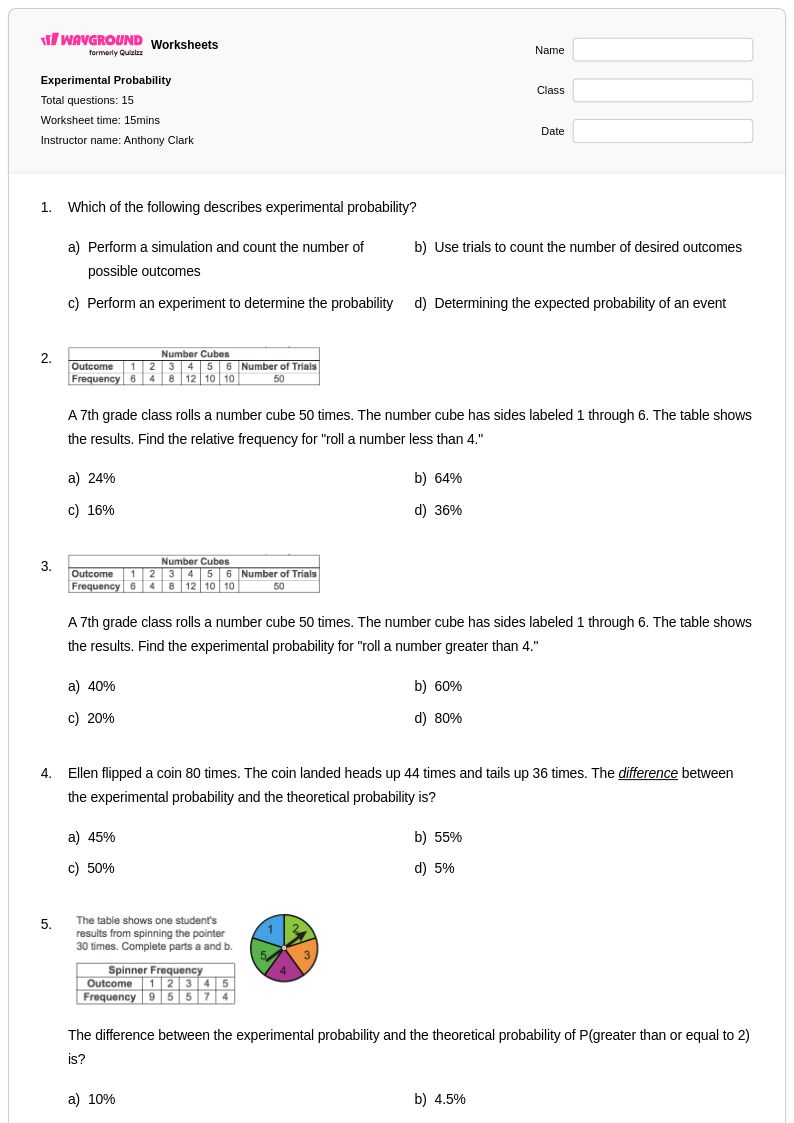
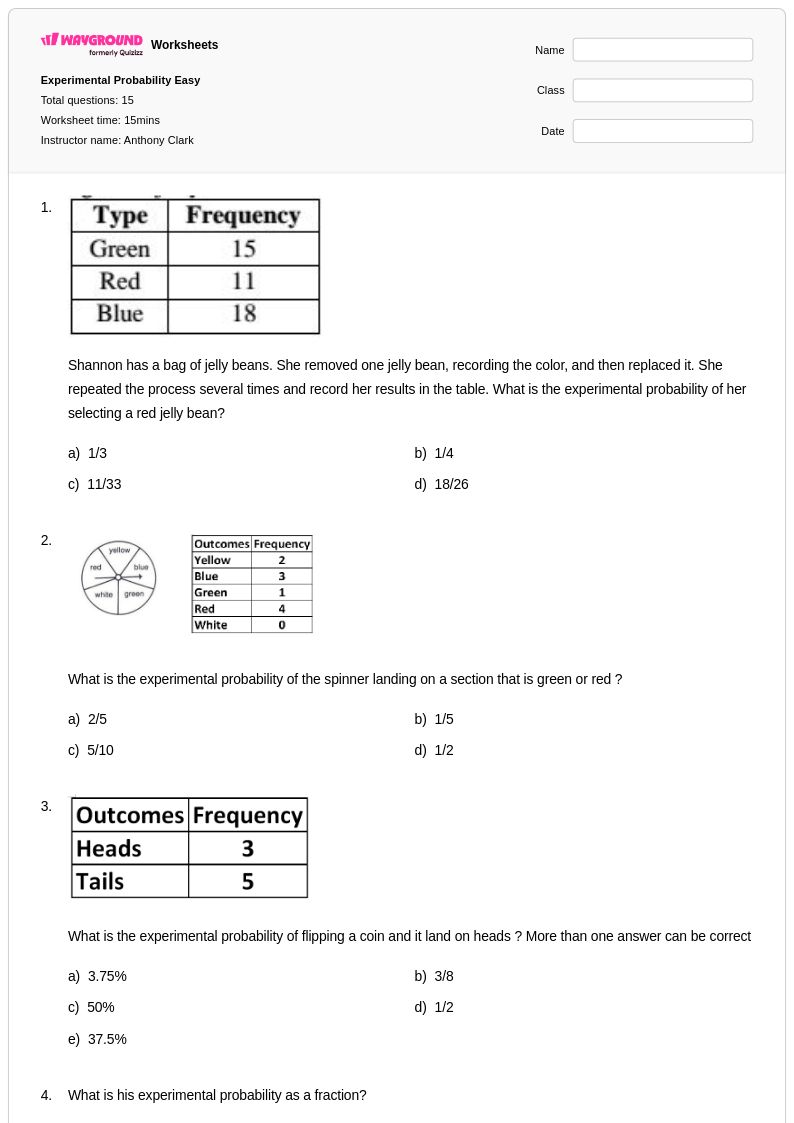
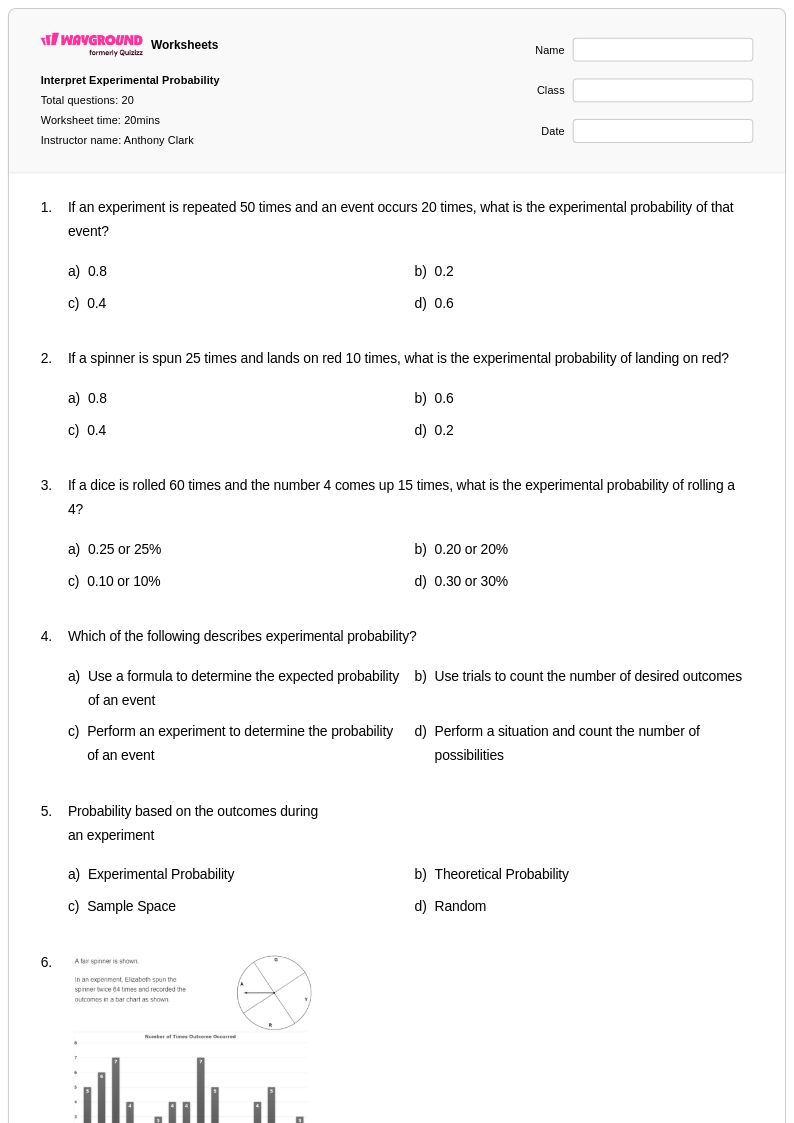
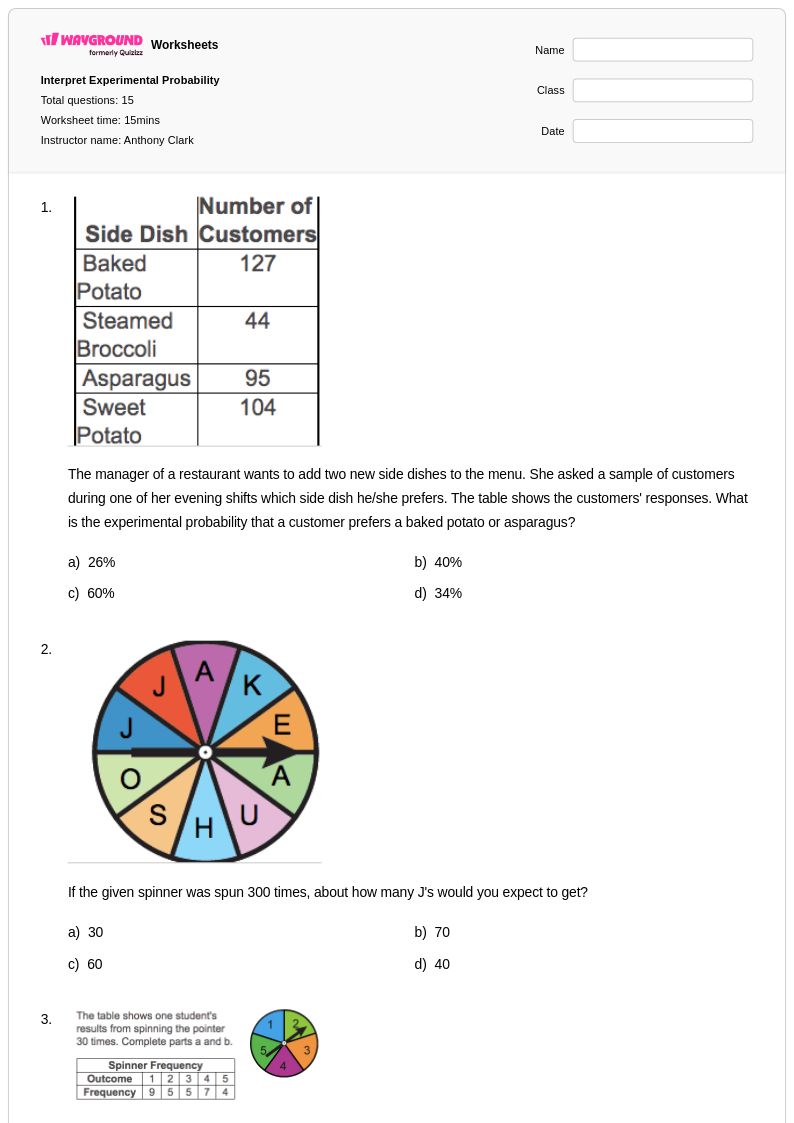
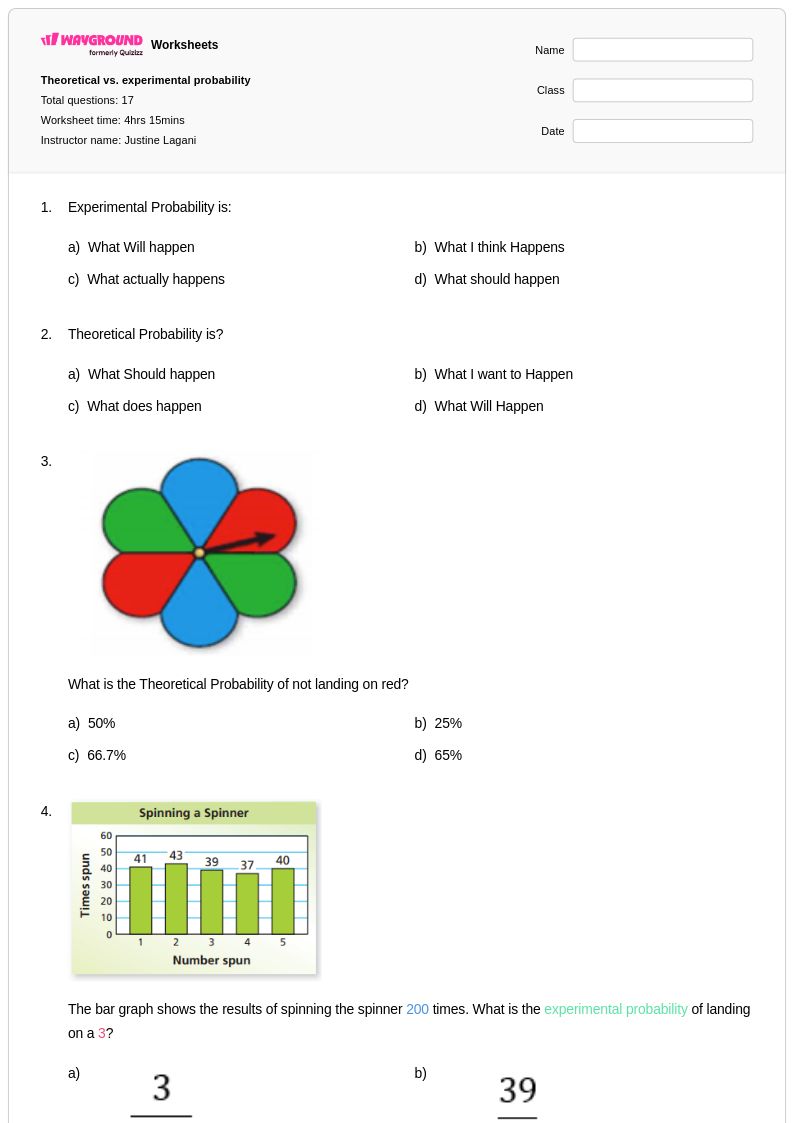
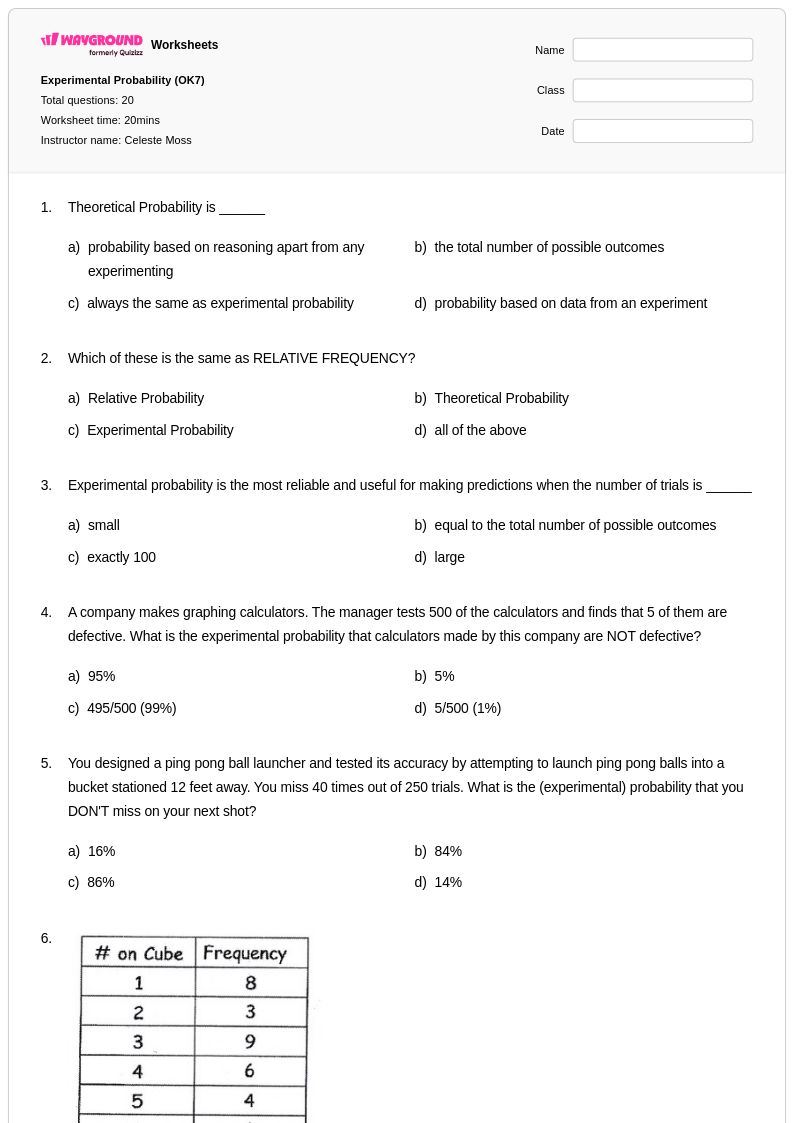
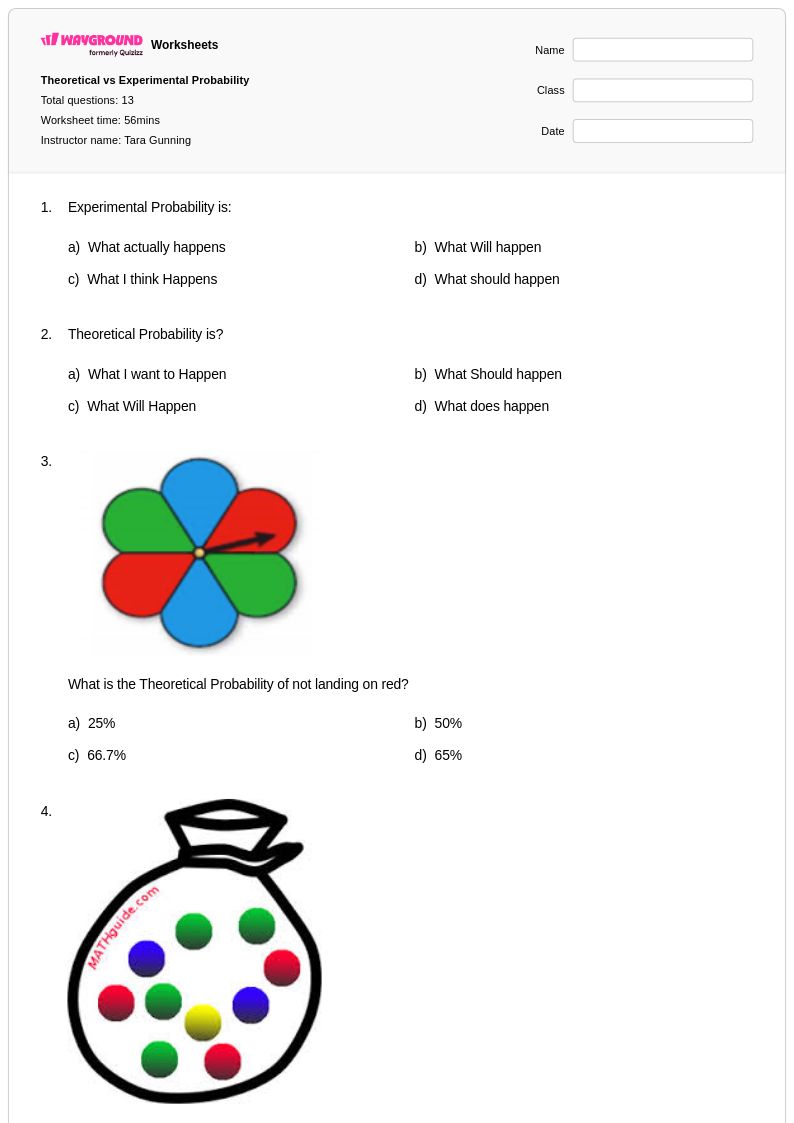
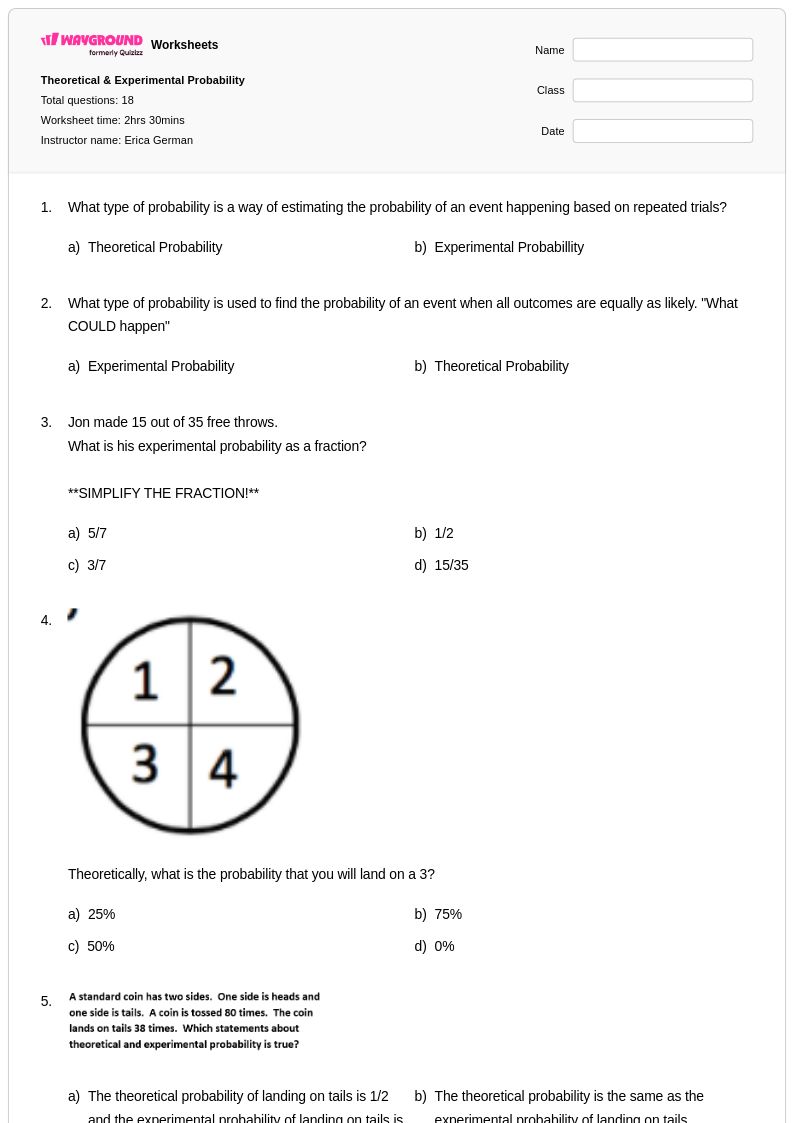
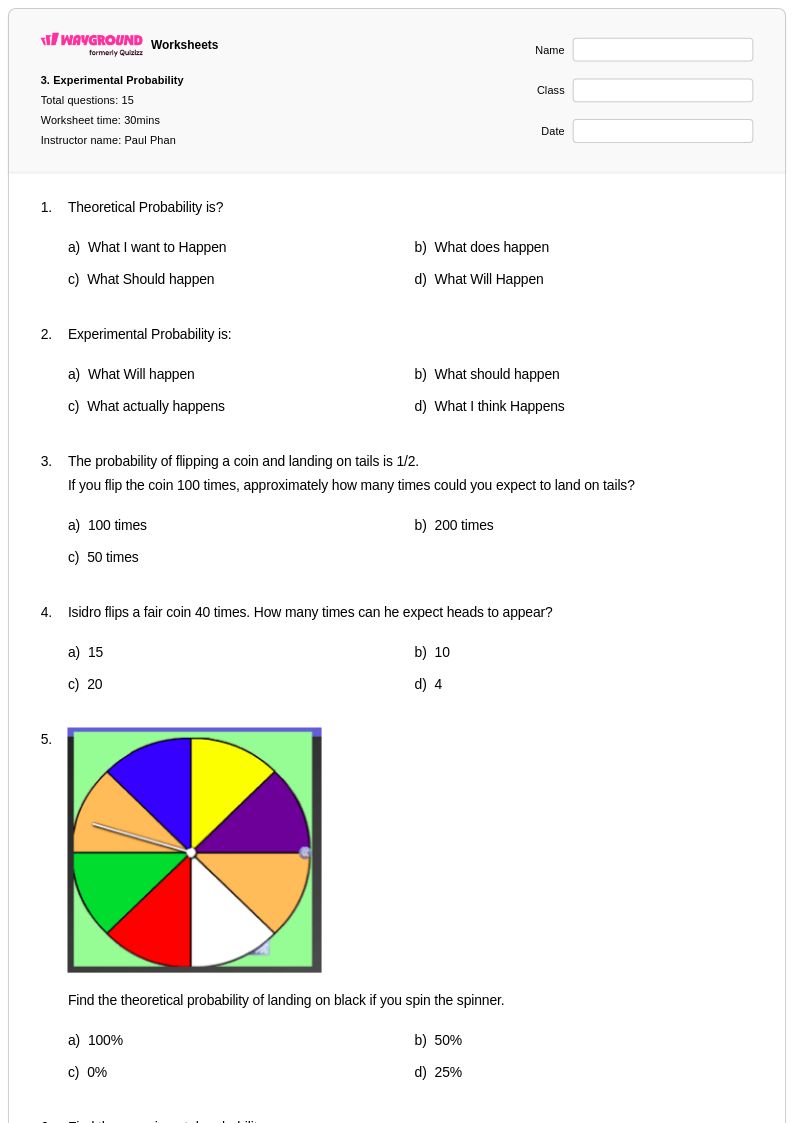
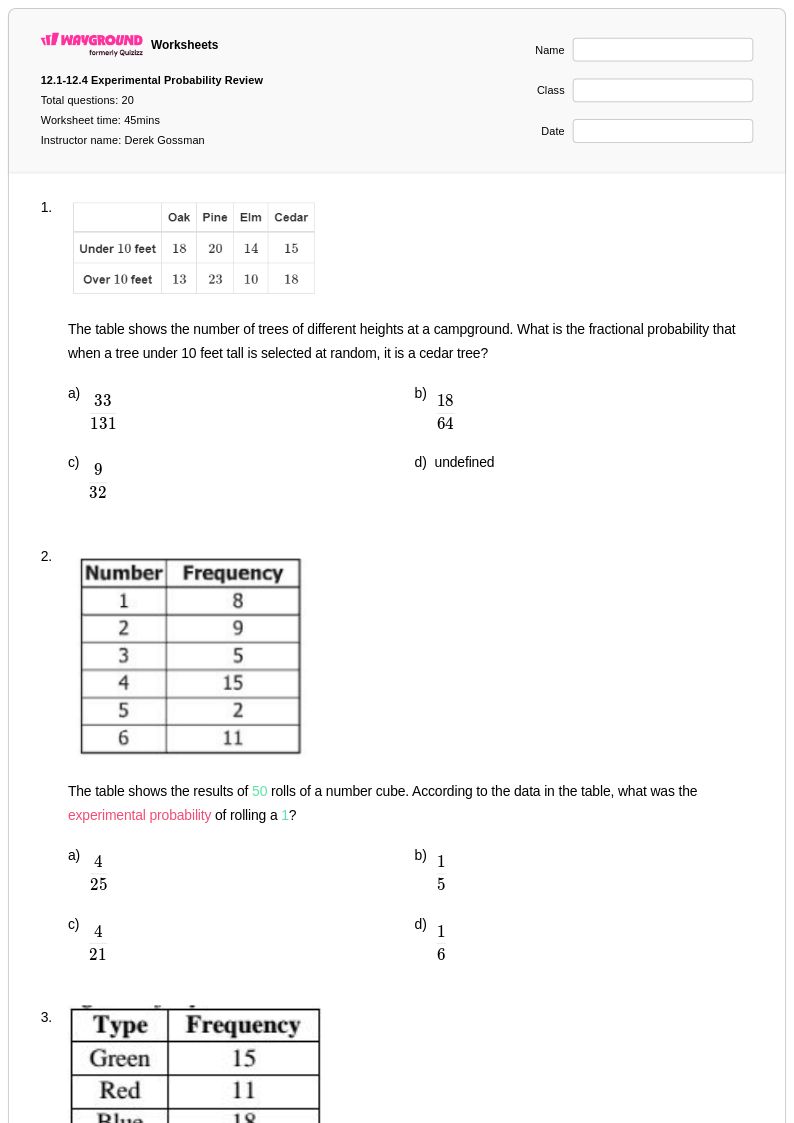
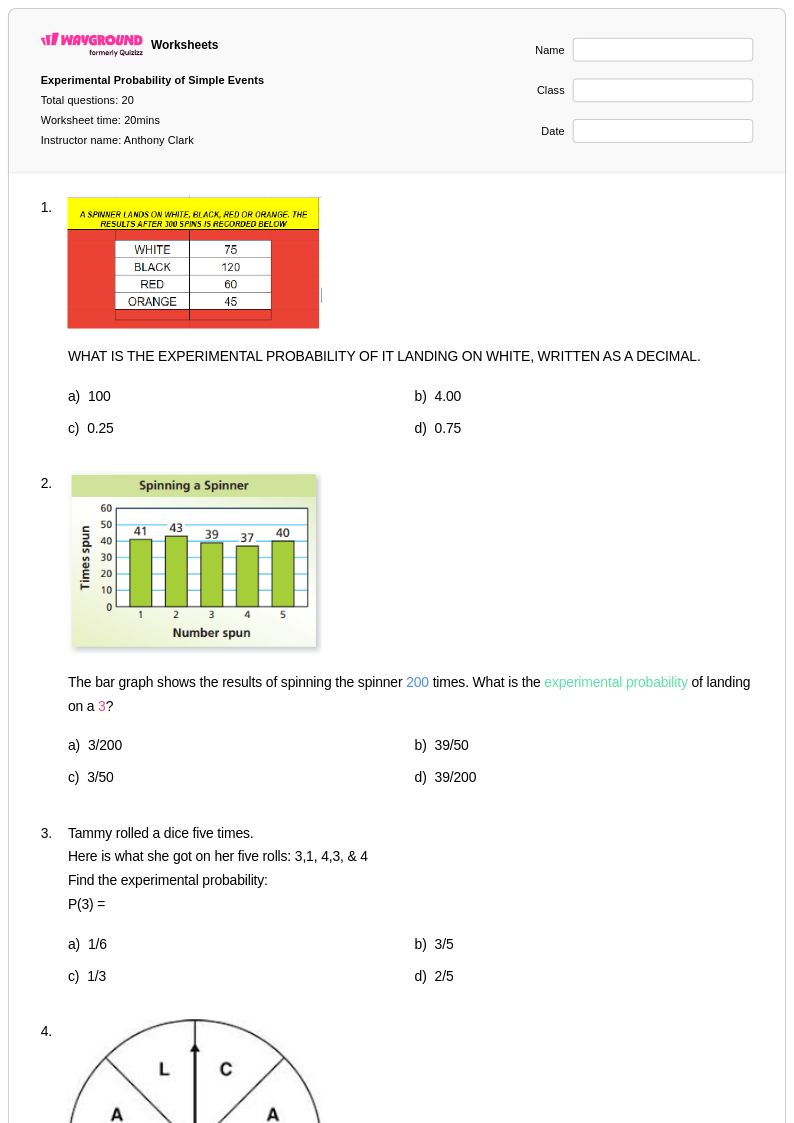
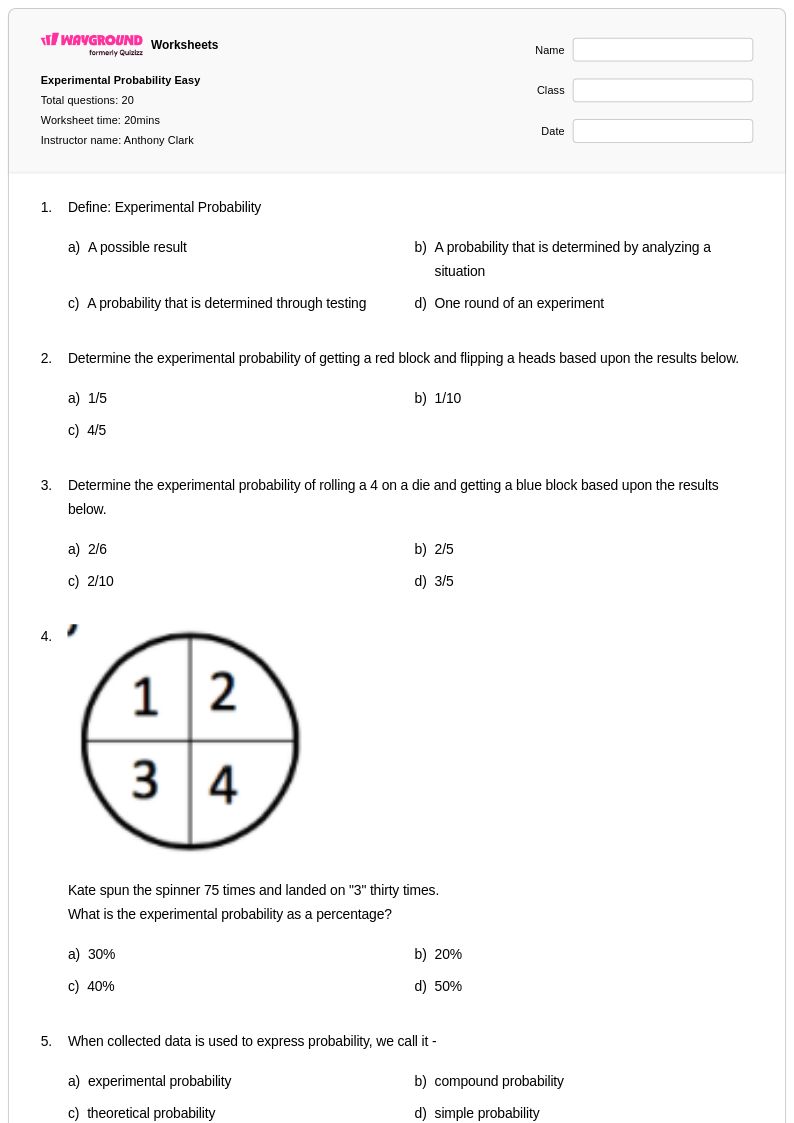
Experimental probability worksheets available through Wayground (formerly Quizizz) provide students with essential hands-on experience in collecting, analyzing, and interpreting data from real-world trials and simulations. These comprehensive resources strengthen critical mathematical thinking skills by guiding learners through the process of conducting experiments, recording outcomes, and calculating probability based on actual results rather than theoretical predictions. Students work with practice problems involving coin flips, dice rolls, spinner activities, and other probability experiments that help them understand how experimental results may differ from theoretical expectations. Each worksheet collection includes detailed answer keys and step-by-step solutions, with materials available as free printables in convenient pdf format that teachers can easily distribute for classroom activities or homework assignments.
Wayground (formerly Quizizz) supports mathematics educators with millions of teacher-created experimental probability resources that can be seamlessly integrated into any curriculum through advanced search and filtering capabilities. The platform's robust collection allows teachers to quickly locate worksheets aligned with specific learning standards while utilizing differentiation tools to meet diverse student needs across all ability levels. Flexible customization options enable educators to modify existing materials or create new experimental probability activities, with resources available in both printable pdf formats for traditional classroom use and interactive digital versions for technology-enhanced learning environments. These versatile tools streamline lesson planning while providing targeted options for skill practice, remediation support for struggling learners, and enrichment opportunities for advanced students ready to explore more complex probability concepts.
FAQs
How do I teach experimental probability?
Start with a physical experiment students can run themselves — coin flips or dice rolls work well — and have them record every outcome before any calculation happens. Once they have real data, ask two questions: what did you expect, and what did you actually get? That gap between theoretical and experimental probability is the core concept. From there, increase the number of trials and let students watch their experimental results inch closer to the theoretical value. The pattern makes the law of large numbers tangible without naming it.
What exercises help students practice experimental probability?
The most effective practice problems ask students to do three things in sequence: run or read about a trial, record outcomes in a table, and then calculate the experimental probability as a ratio of favorable outcomes to total trials. Coin flips, dice rolls, spinner activities, and drawing colored objects from a bag all work well because the setup is simple and the math stays in focus. Problems that then ask students to compare their result to the theoretical probability — and explain any difference — push the practice from procedural to conceptual.
What mistakes do students commonly make with experimental probability?
The most persistent error is treating experimental probability as fixed — students calculate a ratio from one set of trials and assume it will always match that value. They also frequently confuse experimental probability with theoretical probability, using the terms interchangeably when the distinction is the whole point. A third common mistake: writing the probability ratio upside down, putting total trials in the numerator instead of favorable outcomes. Catching that last one early saves a lot of confusion when students move into more complex probability work.
How do I use Wayground's experimental probability worksheets in my class?
Each worksheet includes a complete answer key, so you can assign it with confidence whether you're using it for guided practice, independent work, or homework. For digital delivery, you can host the worksheet as an interactive quiz on Wayground — students complete it on any device and results come back to you automatically. If you prefer paper, download the printable PDF and distribute it in class; you can then grade submissions using the Wayground for Teachers app, which lets you scan or capture student work for quick turnaround.
Is experimental probability aligned to Common Core standards?
Yes. Common Core addresses experimental probability primarily in the middle grades statistics and probability domain, where students are expected to understand that probability represents long-run relative frequency. The progression moves from listing sample spaces and predicting outcomes to actually running experiments, comparing experimental results to theoretical predictions, and recognizing that more trials produce results closer to the expected probability. Experimental probability worksheets sit squarely in that middle step — bridging prediction and data-based reasoning.
How can I differentiate experimental probability practice for mixed-ability classes?
For students who struggle with the ratio setup, Wayground's reduced answer choices accommodation lowers the cognitive load on multiple-choice questions so they can focus on the probability concept rather than the answer-selection process. The Read Aloud feature helps students who have difficulty parsing multi-step word problems independently. At the worksheet level, you can apply a larger font size or wider spacing for students who need a cleaner visual layout — and if you have English language learners in the room, Wayground can translate the worksheet without changing the math.
What grade level is experimental probability taught?
Experimental probability is introduced most formally in grades 6 and 7, where students begin running trials and comparing results to theoretical predictions. It deepens in grades 8 and 9 as students work with relative frequency, larger data sets, and more complex probability scenarios. Some foundational exposure — like recording outcomes from a coin flip — can appear as early as grade 4 or 5, but the explicit calculation and comparison work is a middle school focus.