Free Printable Organism Characteristics Worksheets for Class 2
Explore Class 2 organism characteristics through engaging biology worksheets and printables that help young students identify and classify living things while developing scientific observation skills with free PDF practice problems and answer keys.
Explore printable Organism Characteristics worksheets for Class 2
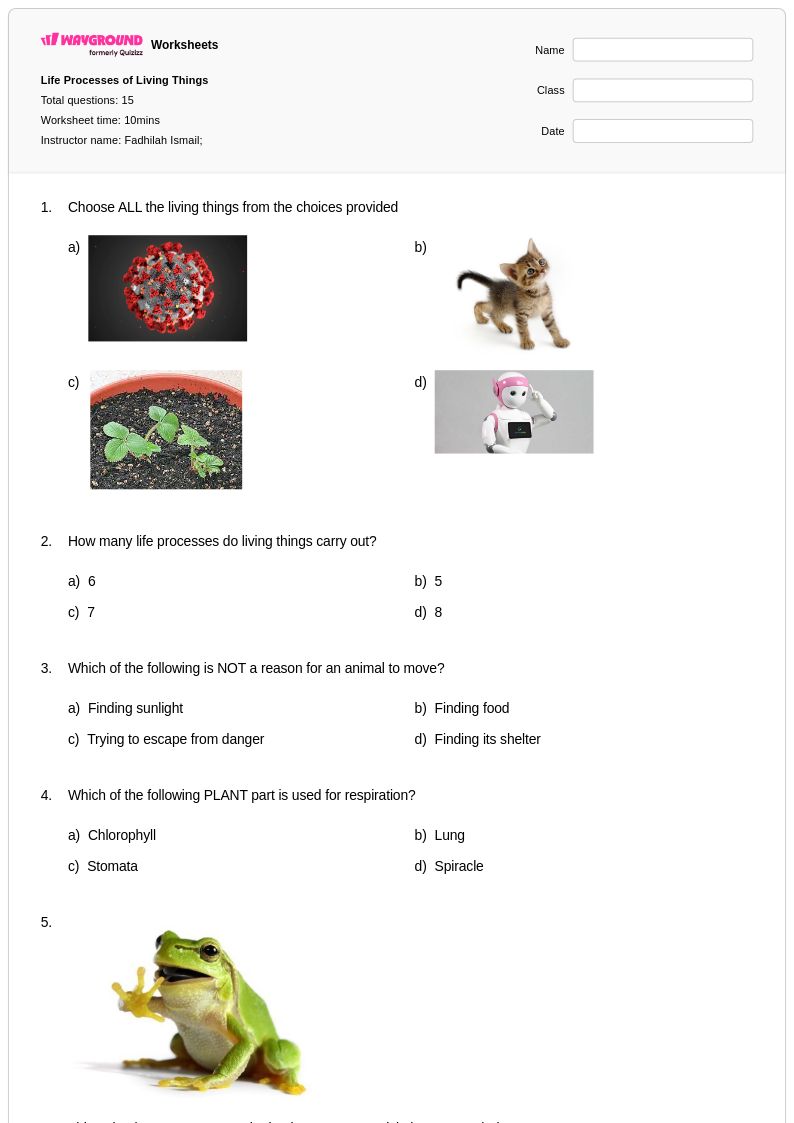
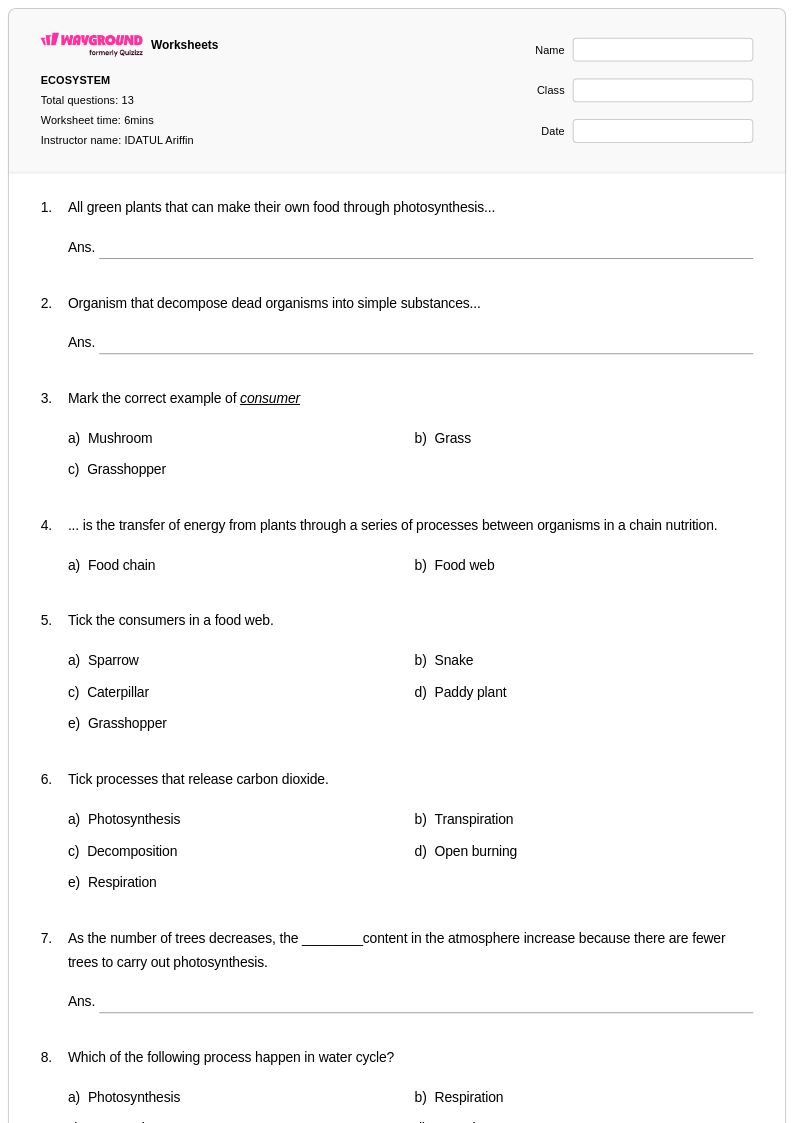
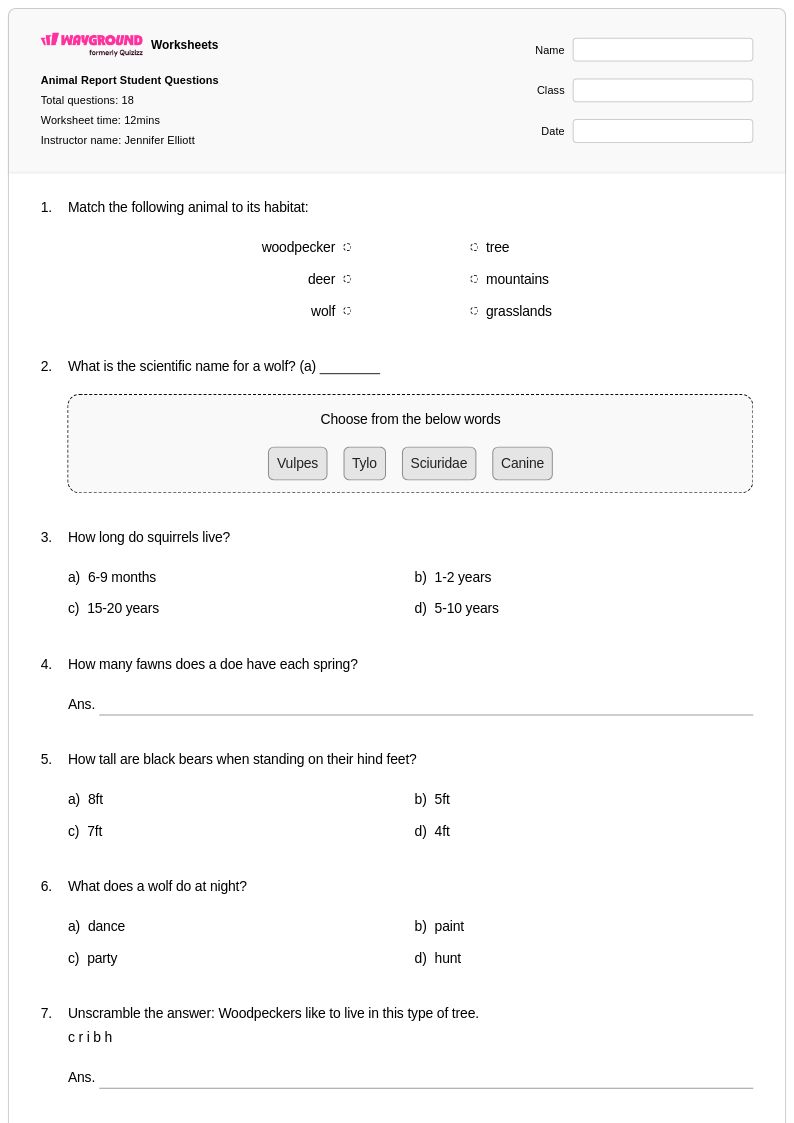
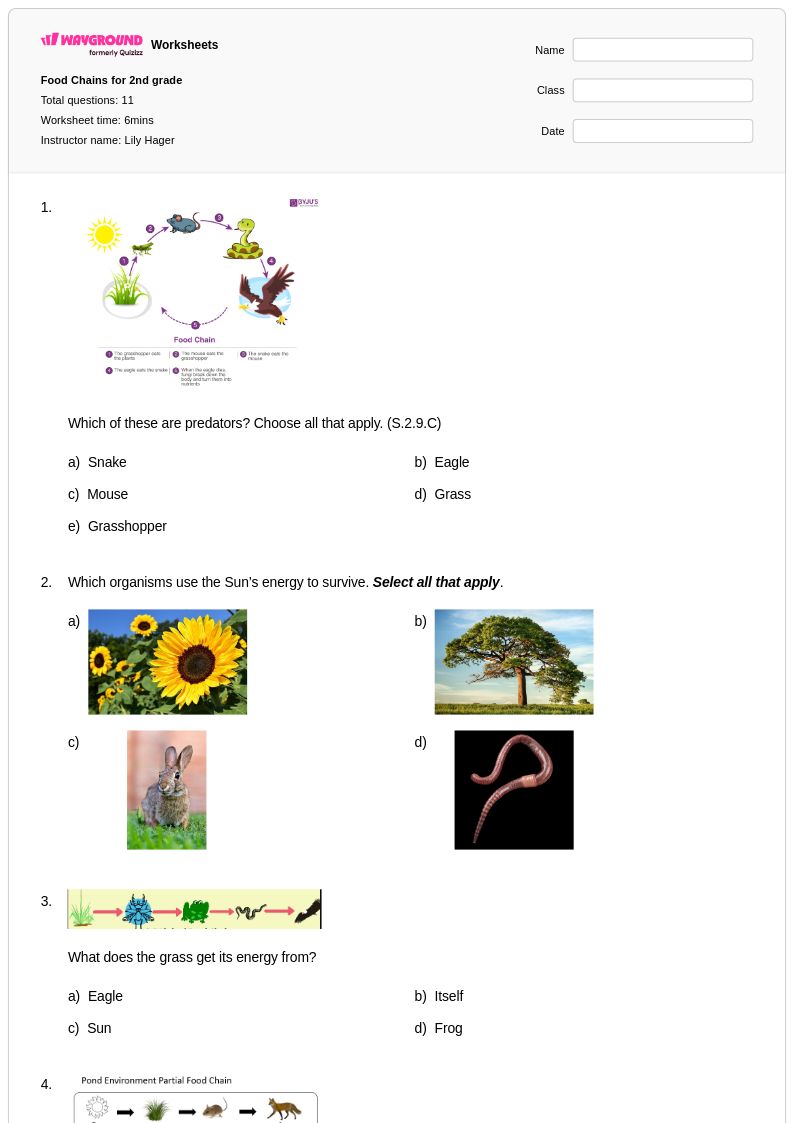
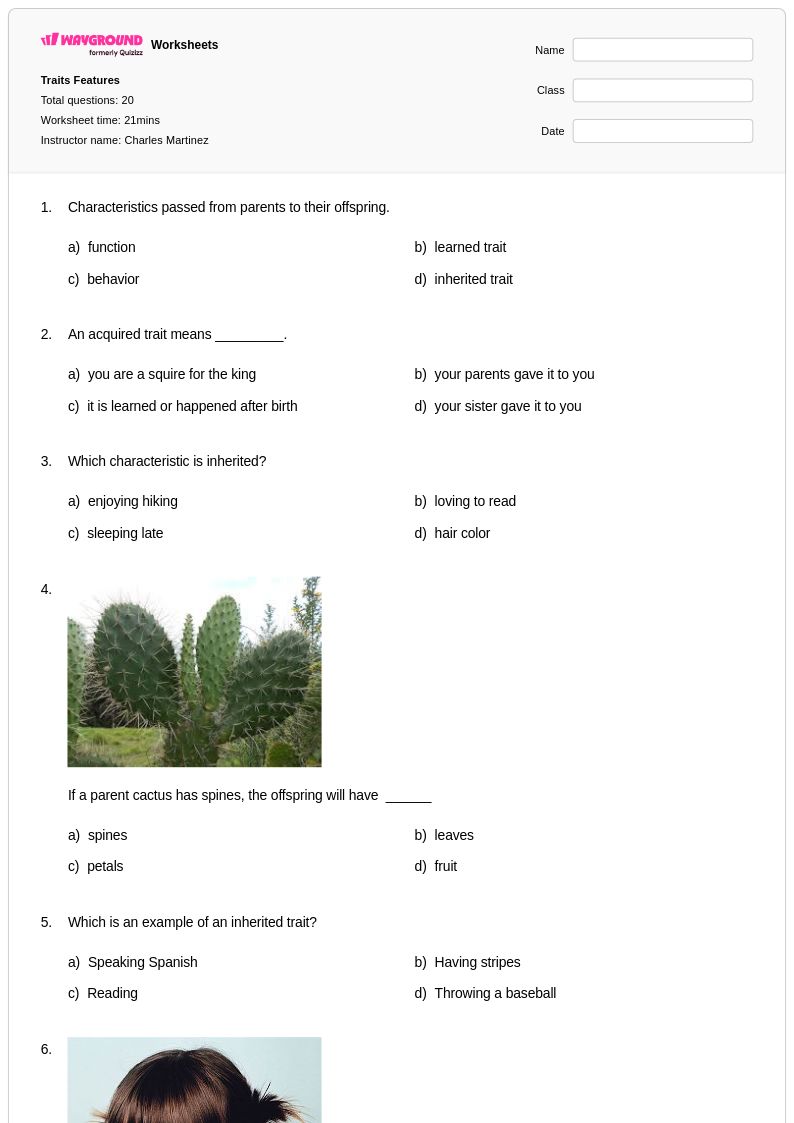
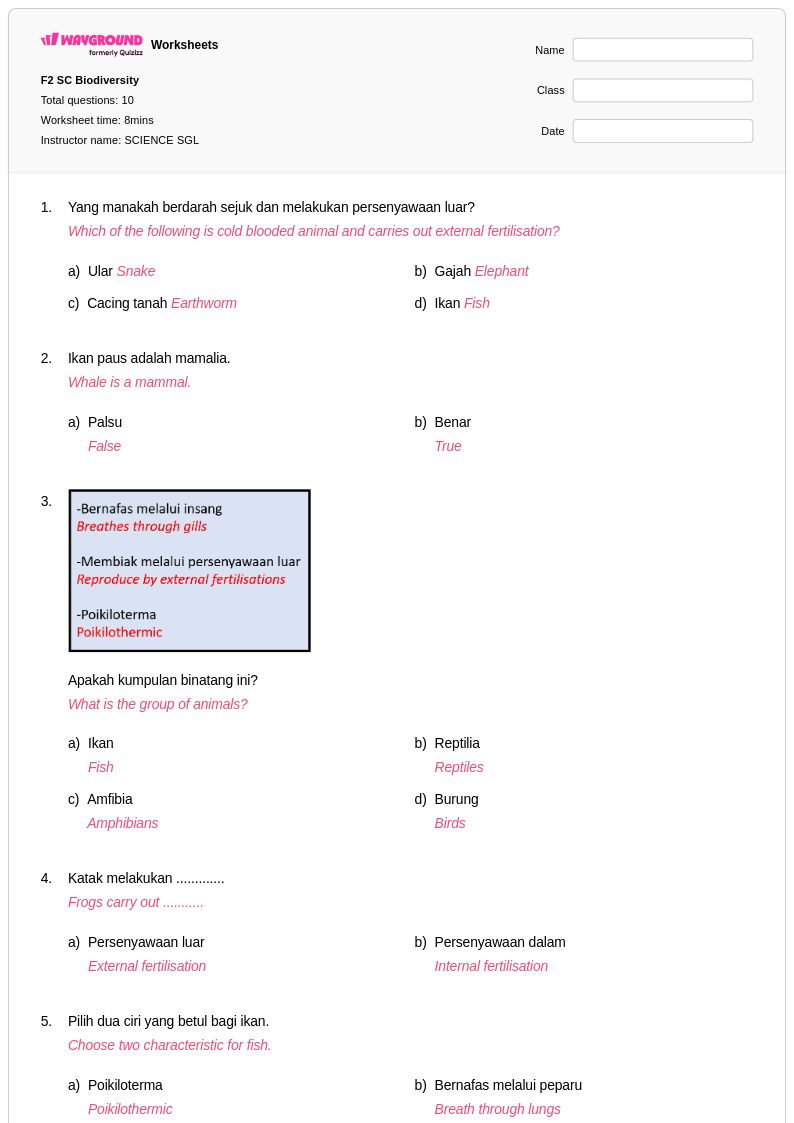
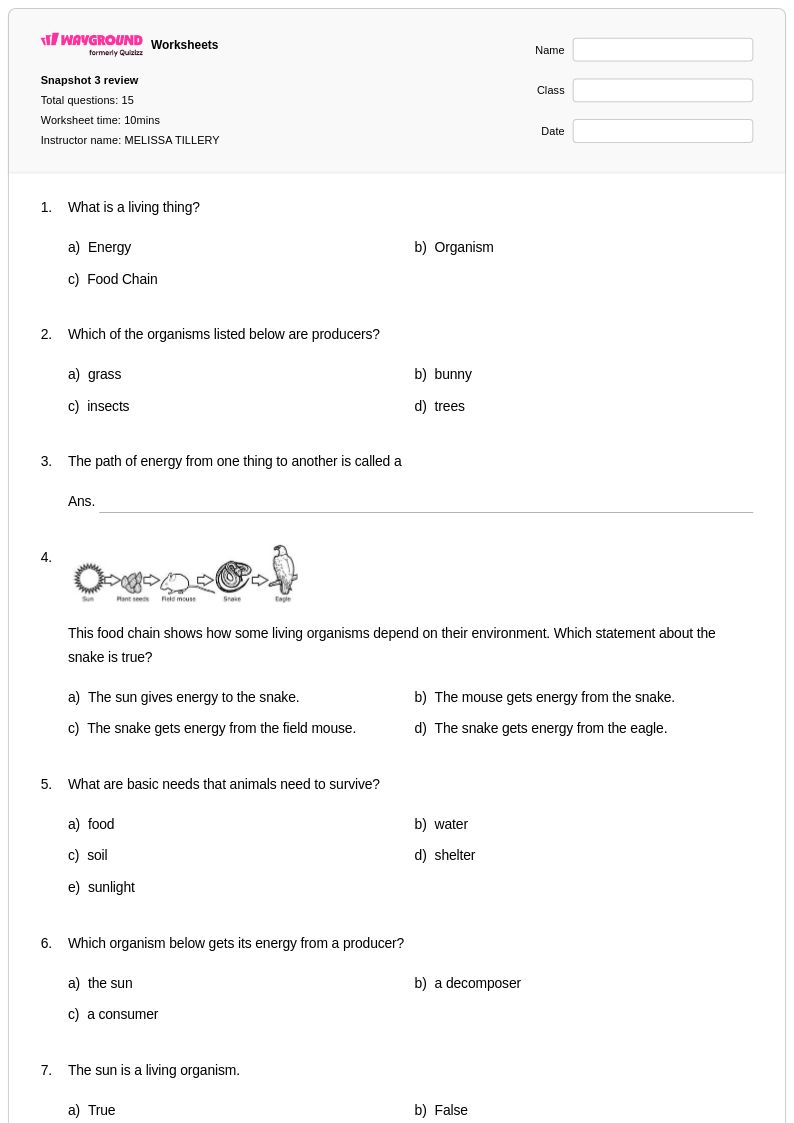
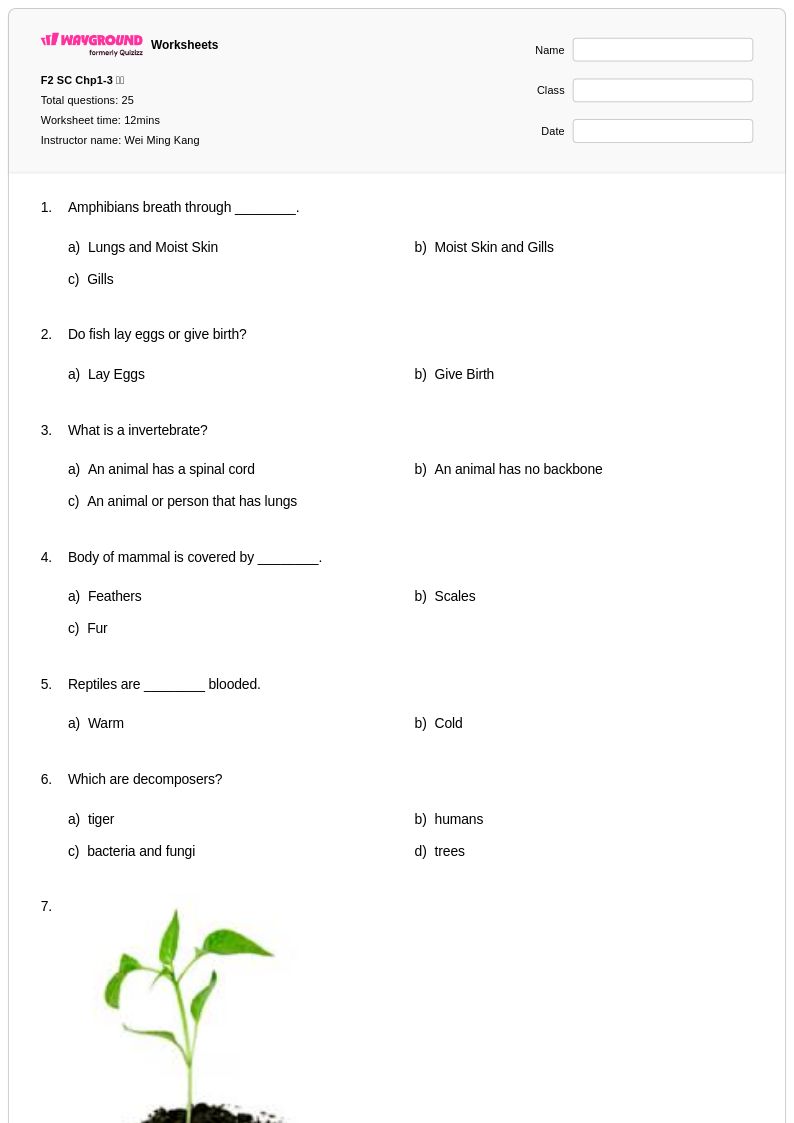
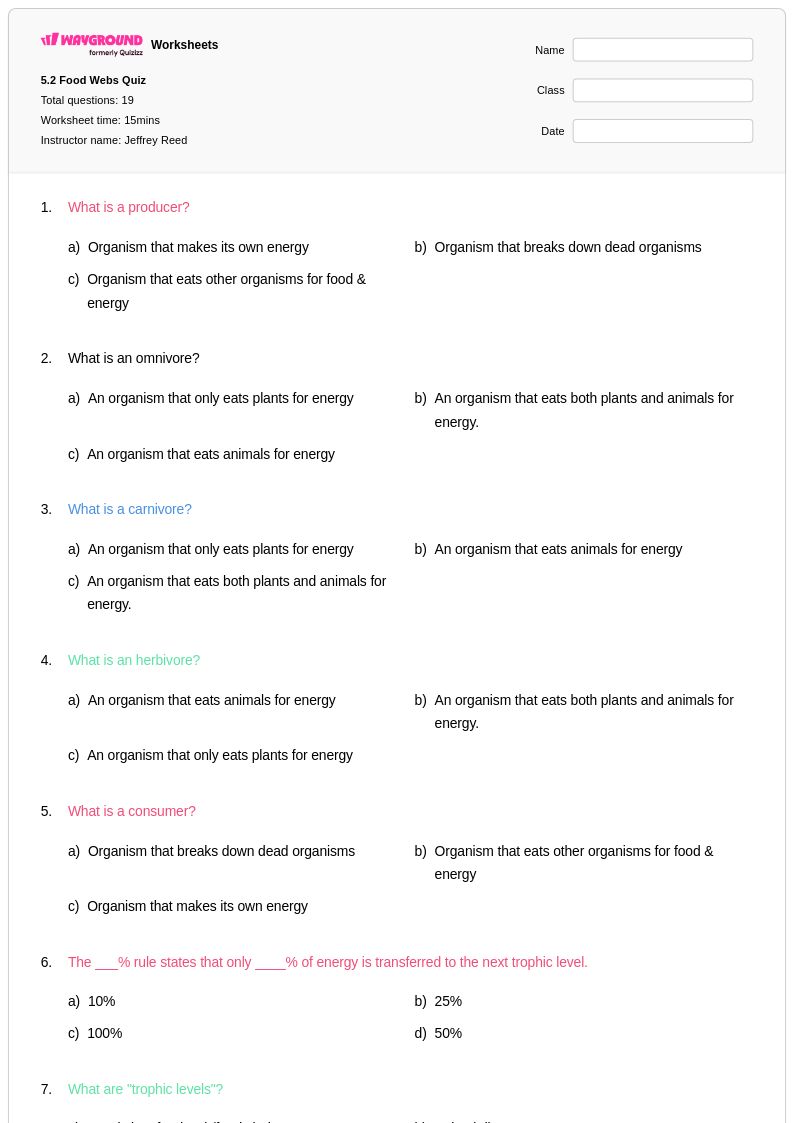
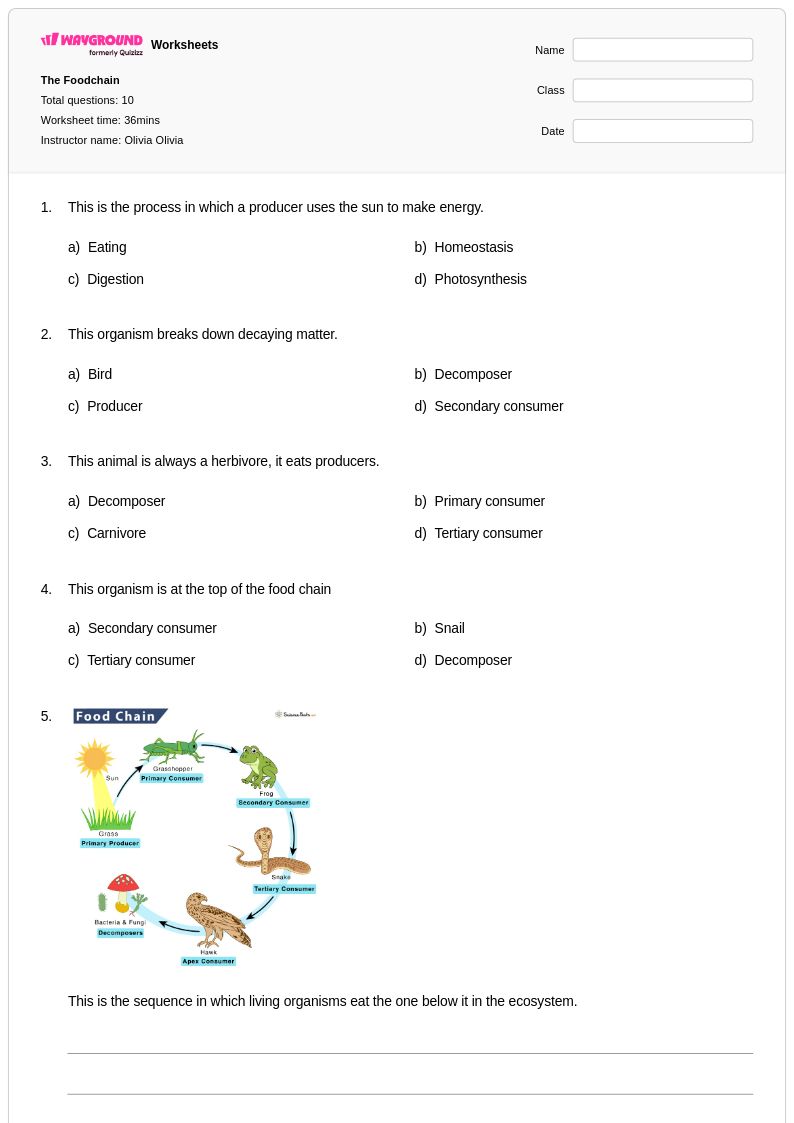
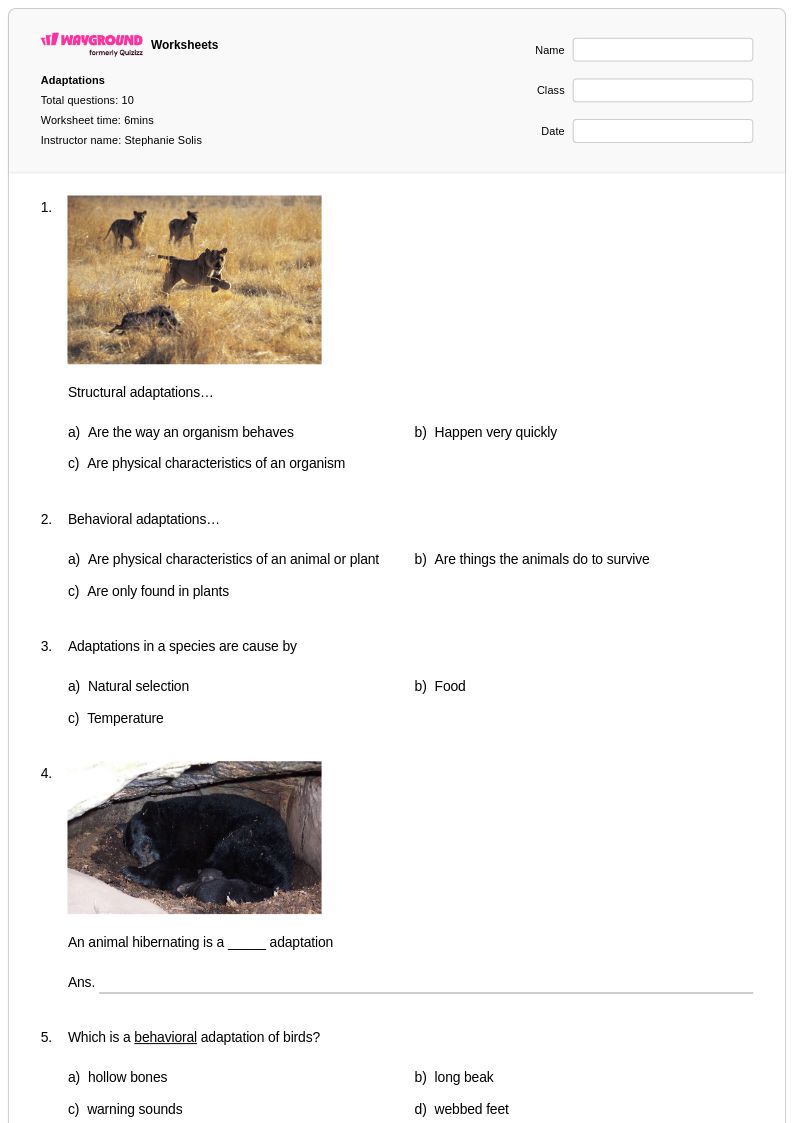
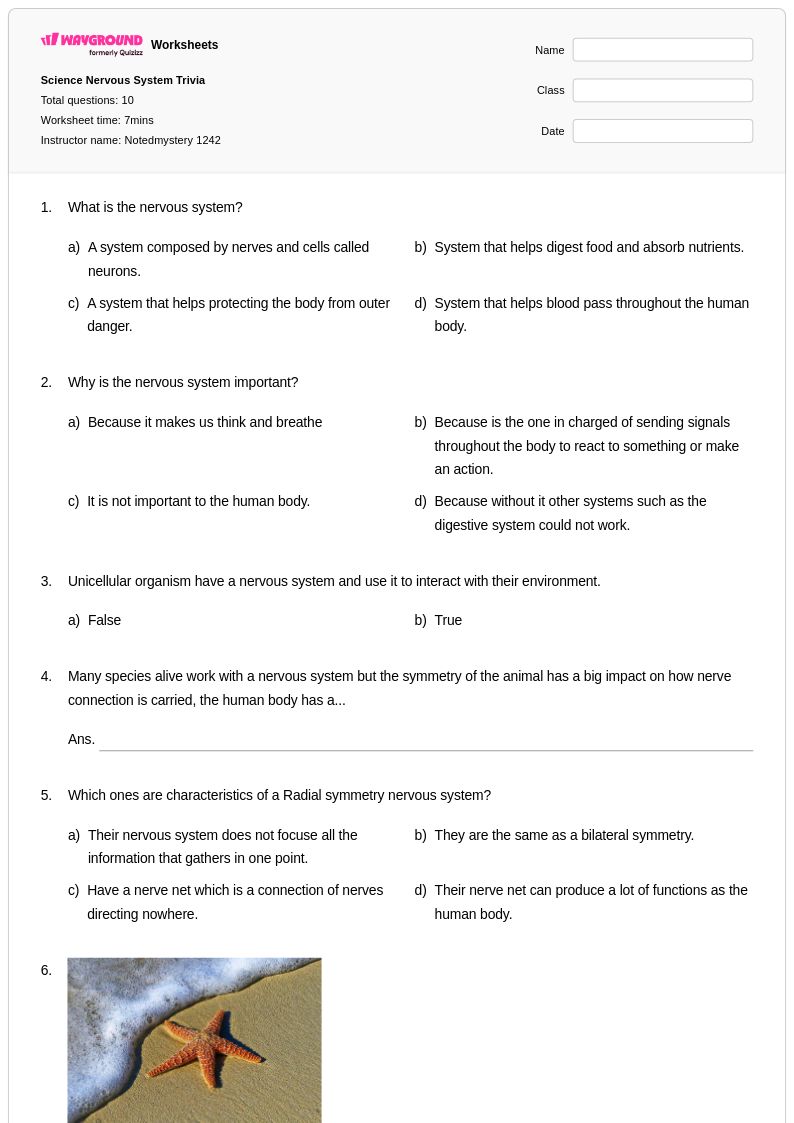
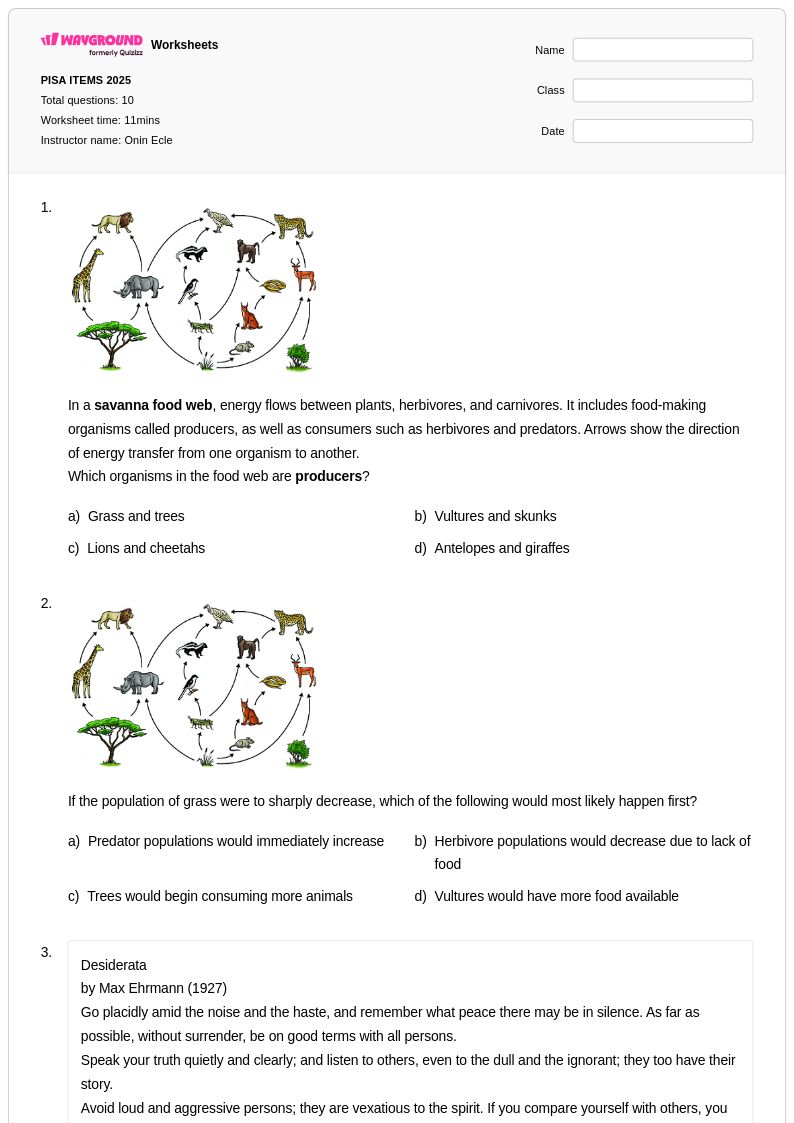
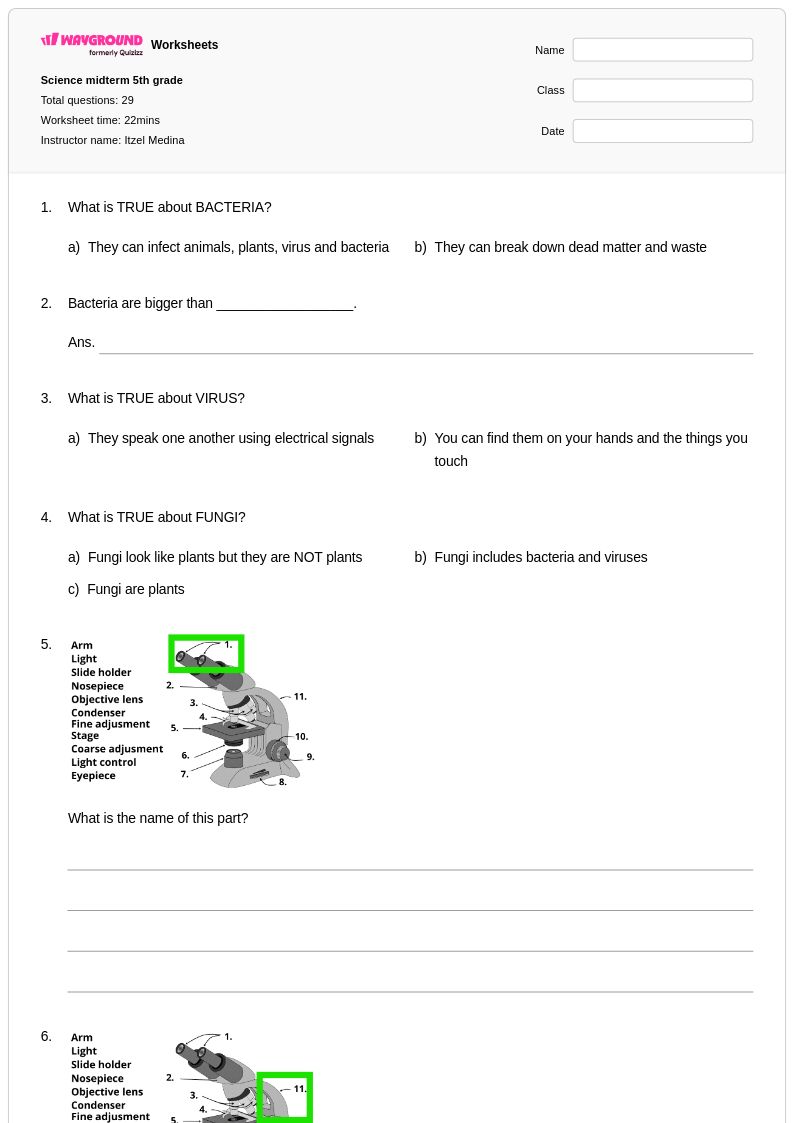
Organism characteristics worksheets for Class 2 through Wayground (formerly Quizizz) provide young learners with essential practice in identifying and understanding the fundamental traits that define living things. These carefully designed printables help students develop critical observation skills as they explore how animals and plants are classified based on their physical features, behaviors, and basic needs. The worksheets feature age-appropriate activities that guide second graders through comparing and contrasting different organisms, from recognizing whether creatures have fur, feathers, or scales to understanding how plants and animals obtain food and shelter. Each free resource includes comprehensive practice problems that reinforce key concepts, with answer keys provided to support both independent learning and teacher assessment of student progress in this foundational biology concept.
Wayground (formerly Quizizz) empowers educators with millions of teacher-created resources specifically focused on organism characteristics, offering robust search and filtering capabilities that allow instructors to quickly locate materials aligned with their curriculum standards and student needs. The platform's differentiation tools enable teachers to customize worksheets for varying ability levels within their Class 2 classrooms, ensuring that both struggling learners and advanced students can engage meaningfully with the content. Available in both printable pdf format and interactive digital versions, these resources seamlessly integrate into lesson planning while providing flexible options for remediation, enrichment, and targeted skill practice. Teachers can efficiently modify existing worksheets or combine multiple resources to create comprehensive learning experiences that support students' growing understanding of how scientists classify and study living organisms based on their observable characteristics.
FAQs
How do I teach organism characteristics to my students?
Start by grounding students in the seven characteristics shared by all living things: cellular organization, metabolism, homeostasis, growth, reproduction, response to stimuli, and adaptation. Use comparative examples across diverse species so students can see how these traits manifest differently in plants, animals, fungi, and microorganisms. Moving from concrete examples to classification activities helps students build conceptual understanding before they encounter abstract definitions.
What exercises help students practice identifying organism characteristics?
Structured observation and classification exercises are most effective for practicing organism characteristics. Students benefit from activities that ask them to analyze case studies or descriptions of unfamiliar organisms and identify which characteristics are present, rather than simply memorizing a list. Systematic comparison tasks, where students match structural or functional traits to the correct life process, reinforce both recall and analytical thinking.
What misconceptions do students commonly have about organism characteristics?
A common misconception is that all living things must move visibly or breathe in an obvious way, which leads students to misclassify organisms like plants, fungi, or dormant seeds as non-living. Students also frequently confuse growth with reproduction, treating them as interchangeable rather than as distinct characteristics. Targeted practice that isolates each characteristic and presents ambiguous or edge-case organisms is the most effective way to address these errors.
How can I differentiate organism characteristics instruction for students at different levels?
For struggling learners, reduce cognitive load by focusing on two or three characteristics at a time before introducing the full set, and use visual supports such as diagrams or annotated images. Advanced students can be challenged with extension tasks that ask them to evaluate whether viruses qualify as living things, applying the characteristics as analytical criteria rather than a checklist. On Wayground, teachers can apply accommodations such as reduced answer choices or read-aloud support to individual students without disrupting the rest of the class.
How do I use Wayground's organism characteristics worksheets in my classroom?
Wayground's organism characteristics worksheets are available as printable PDFs for traditional classroom use and in digital formats for technology-integrated learning environments. Teachers can also host worksheets as quizzes directly on Wayground, enabling real-time student responses and built-in feedback. This makes the same resource useful for direct instruction, independent practice, and formative assessment without requiring separate materials.
How do organism characteristics connect to broader biology standards?
Understanding organism characteristics is foundational to nearly every major area of biology, including ecology, genetics, evolution, and cell biology, because it establishes the criteria that define life itself. Most state and national science standards introduce these characteristics at the middle school level and revisit them with greater complexity in high school biology. Teachers can use organism characteristics as an anchor concept that students return to throughout the year when studying new biological systems.