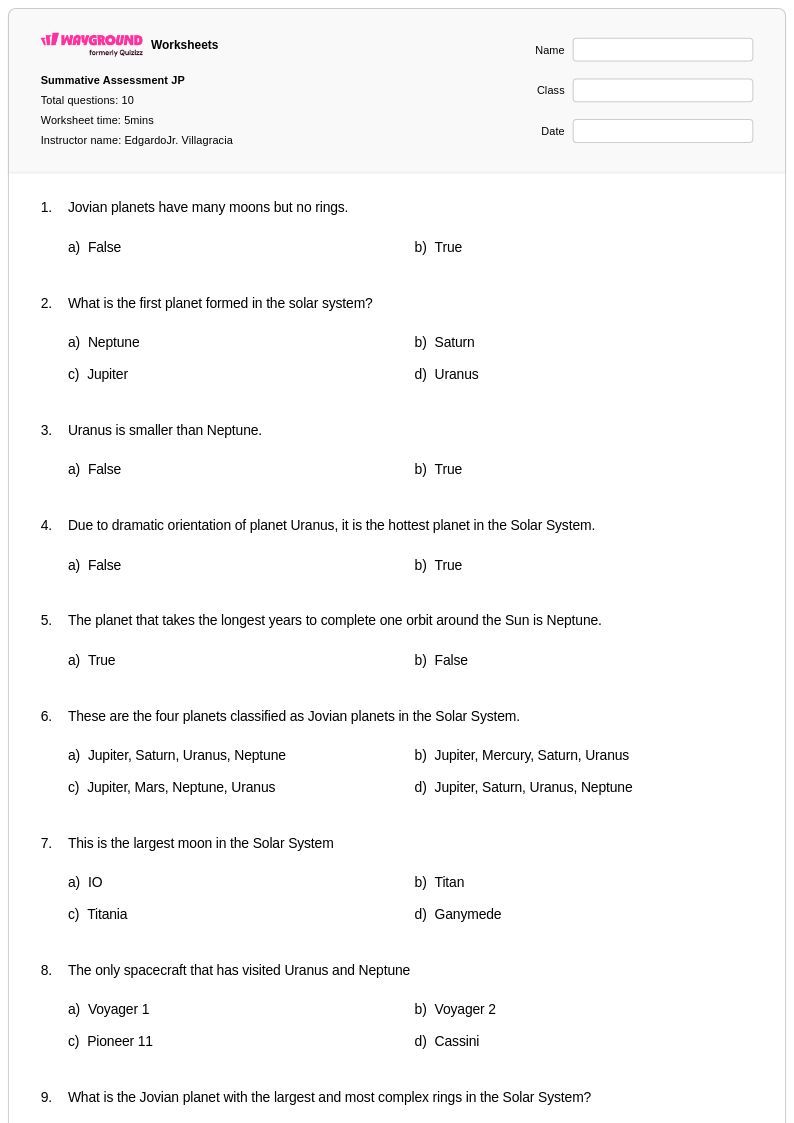
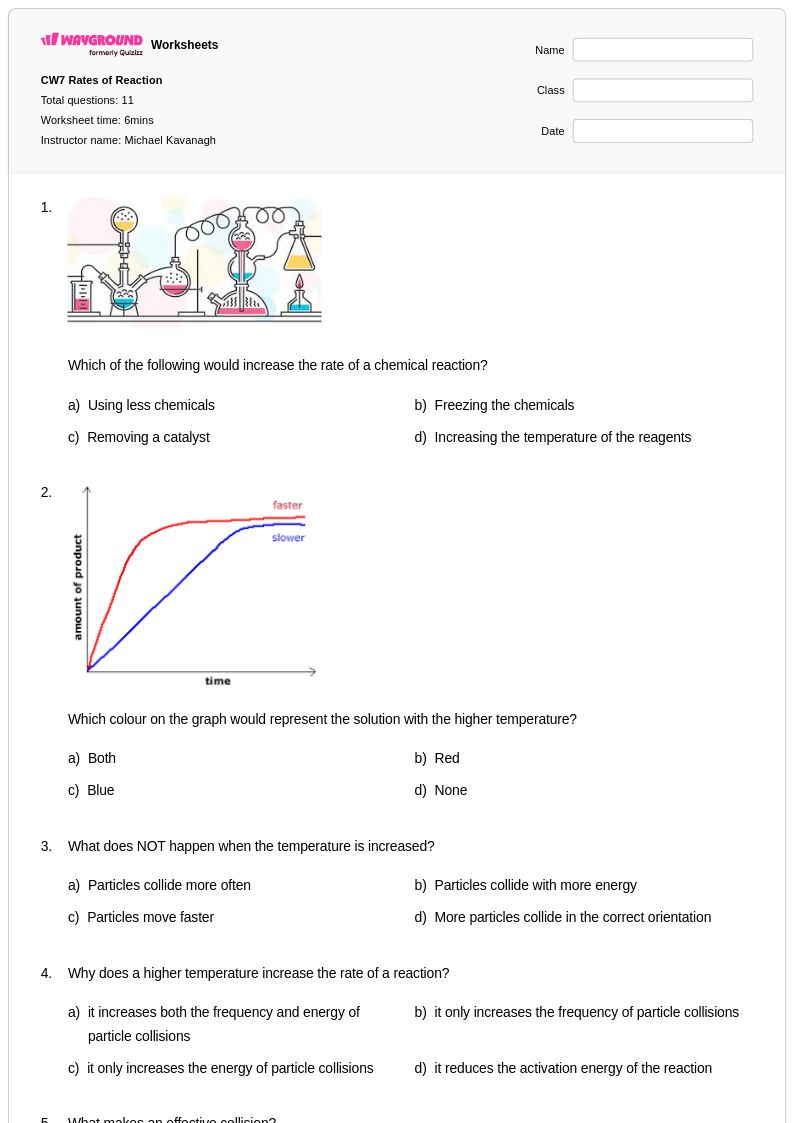
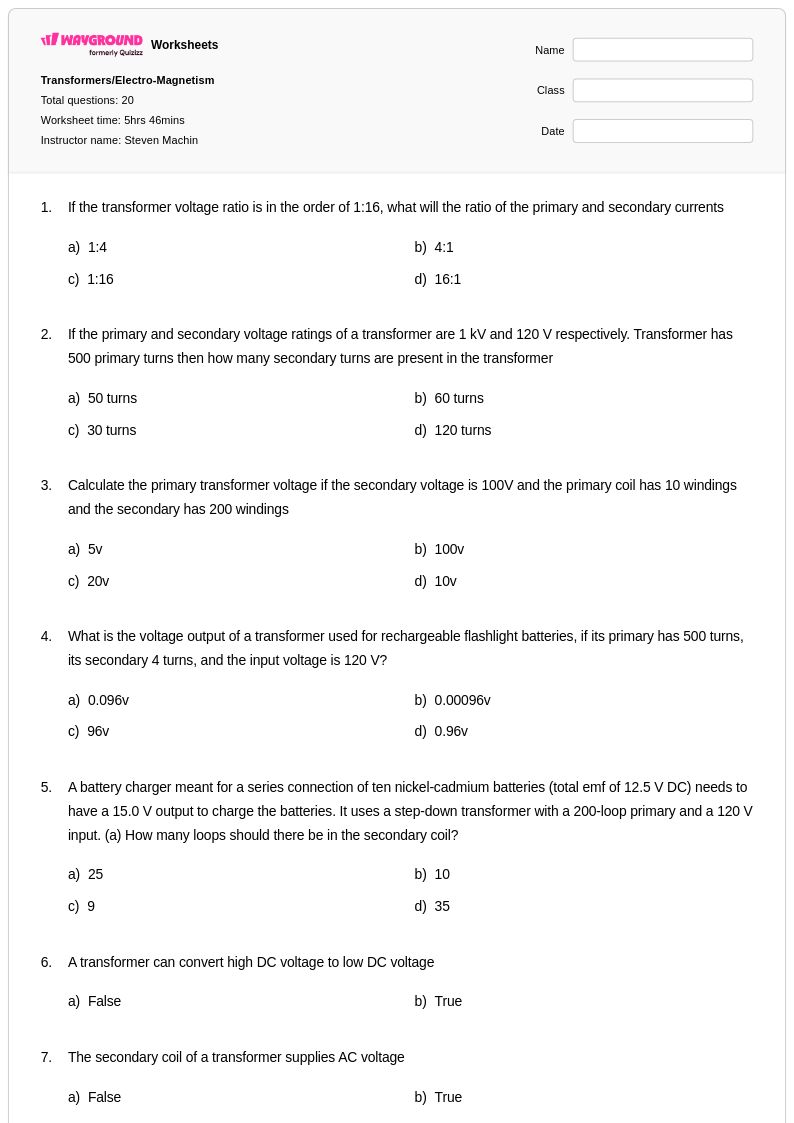
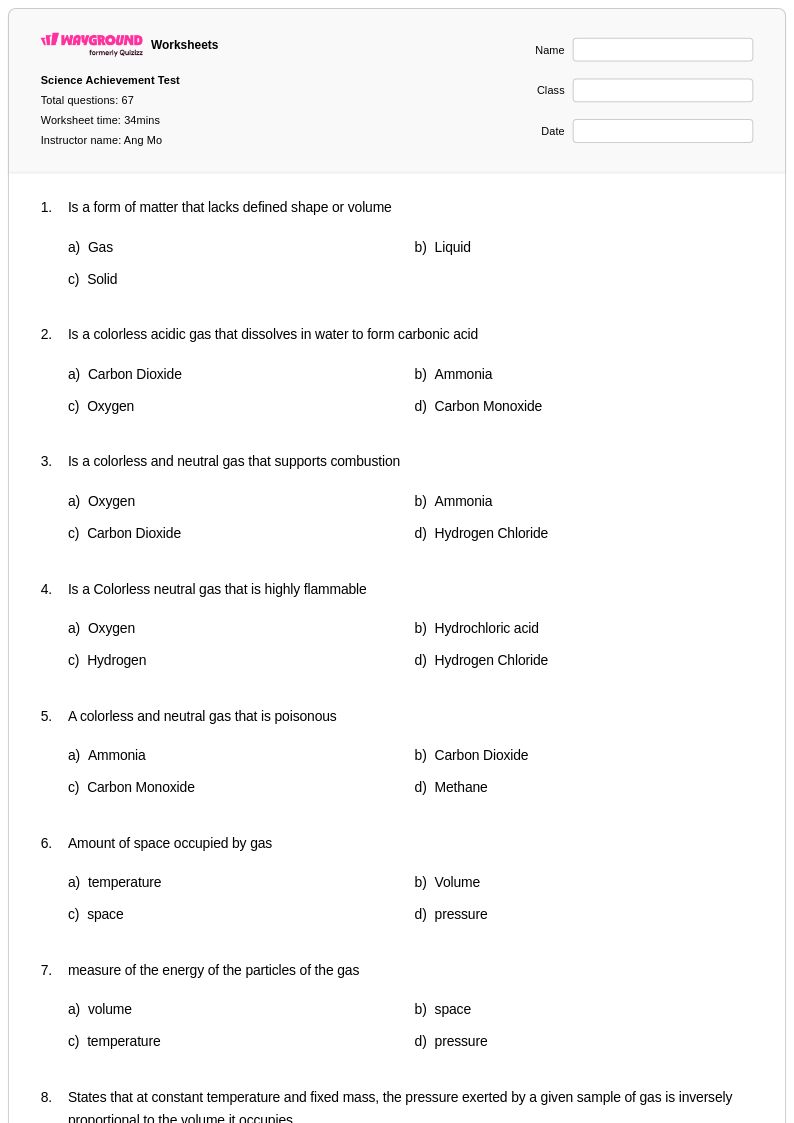
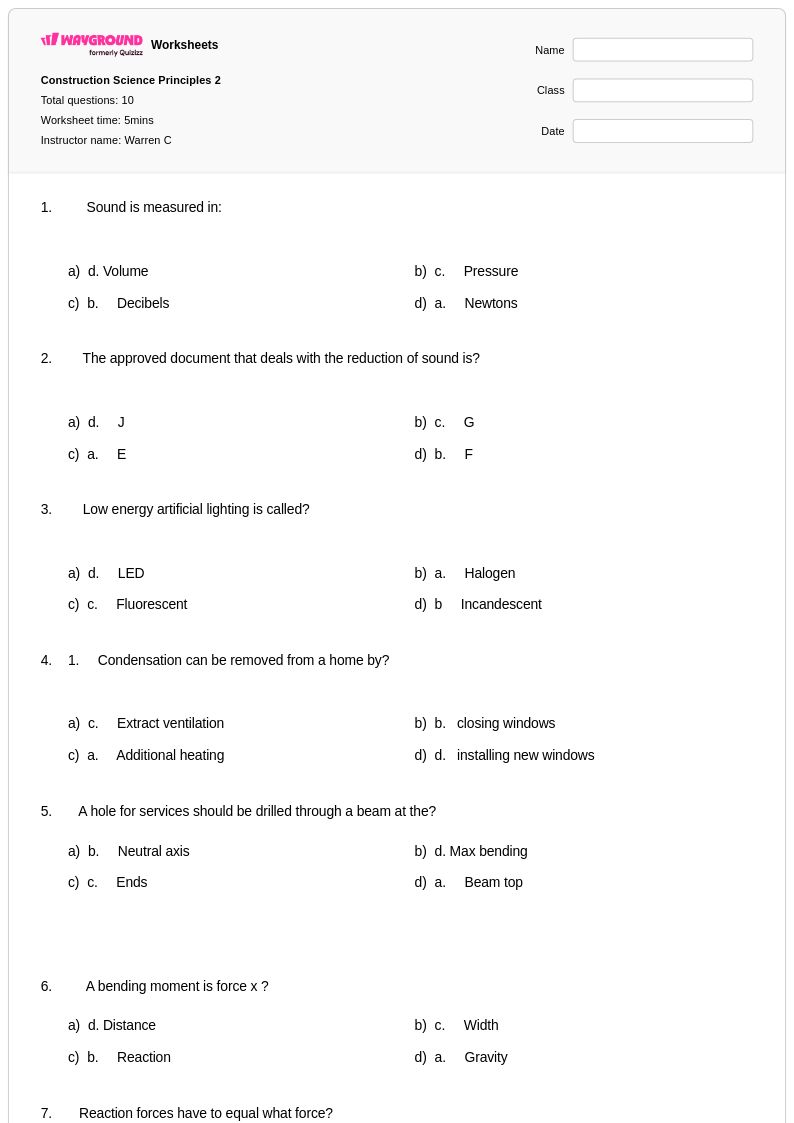
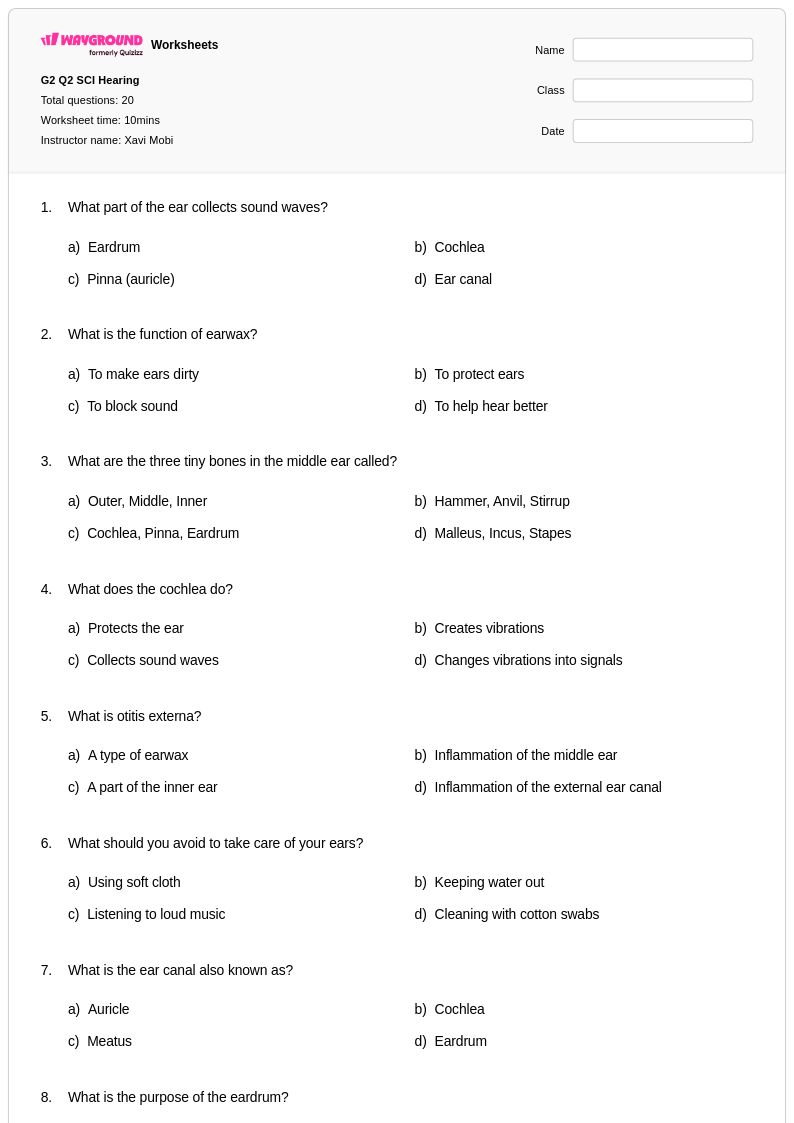
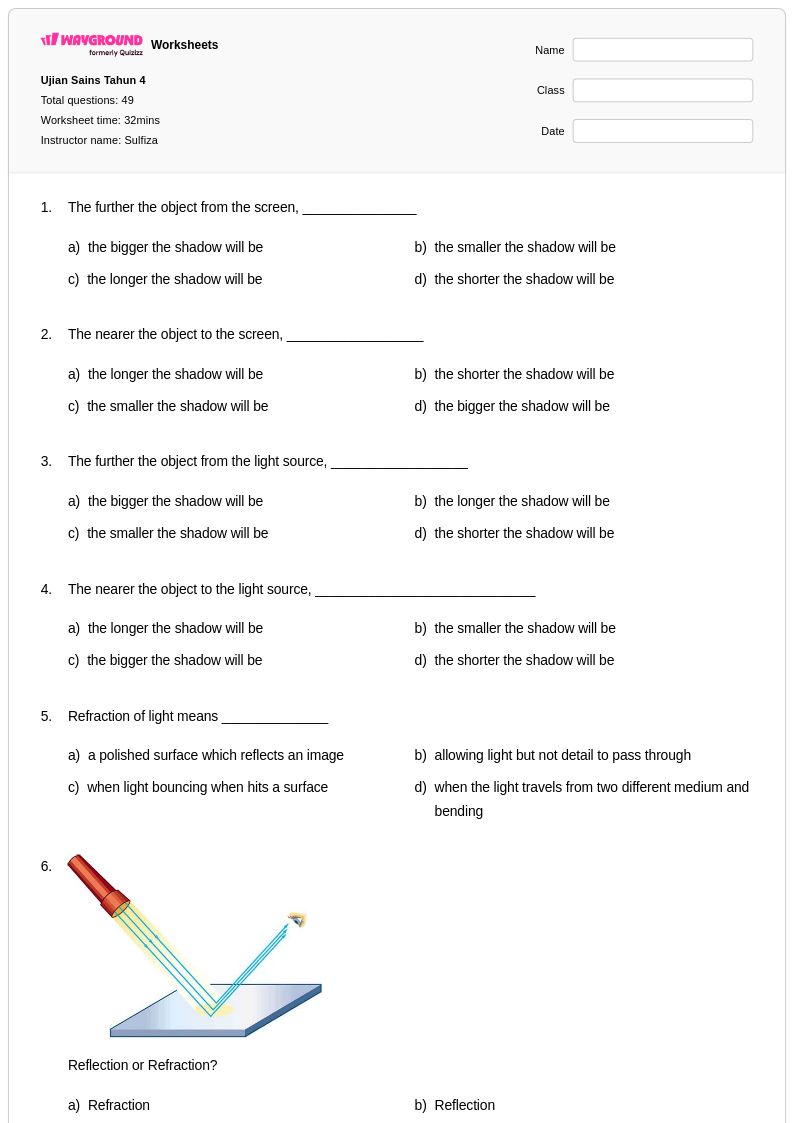
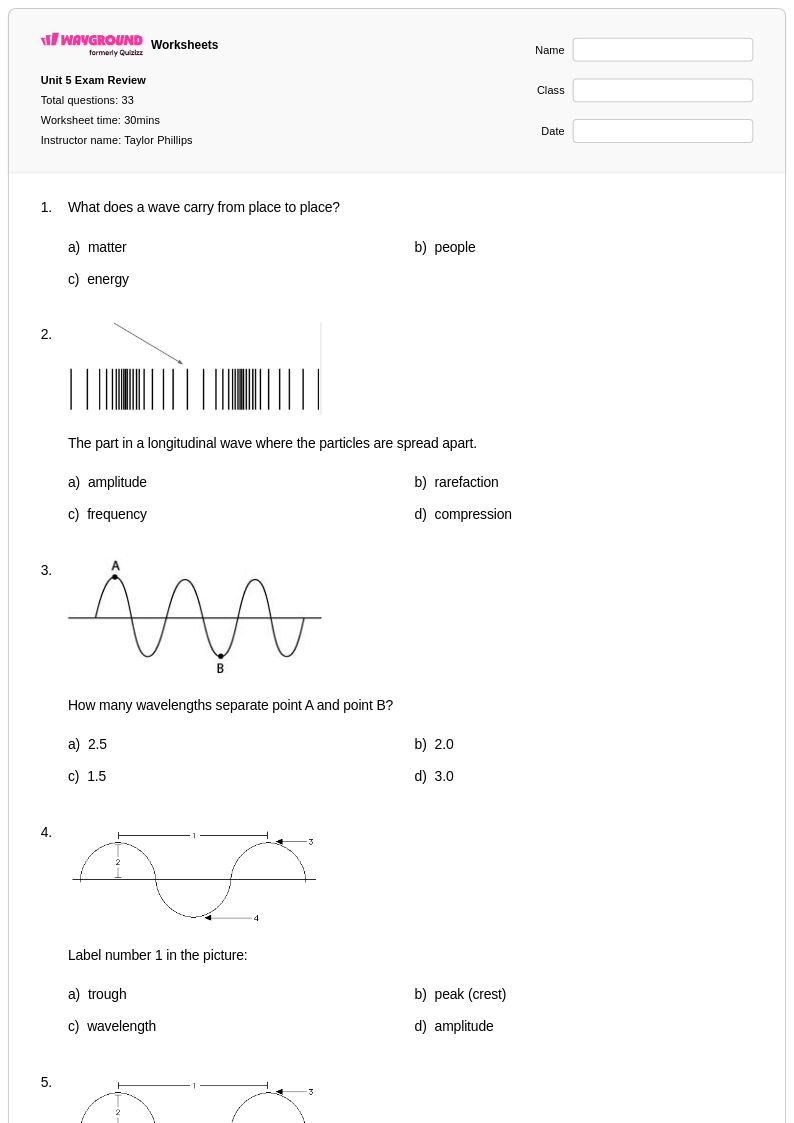
Explore Wayground's free Class 2 orientation biology worksheets and printables that help young students practice spatial awareness and directional concepts through engaging science activities with answer keys included.
Explore printable Orientation worksheets for Class 2
Class 2 orientation worksheets from Wayground (formerly Quizizz) provide young learners with essential foundational activities that develop spatial awareness and directional understanding in biological contexts. These carefully designed printables focus on helping students recognize and identify basic positional concepts such as above, below, left, right, inside, and outside as they relate to living organisms and their environments. The worksheets strengthen critical observational skills through practice problems that ask students to describe the location of animal body parts, identify where plants grow in different habitats, and understand how organisms orient themselves in space. Each worksheet comes with a comprehensive answer key, making it simple for educators to assess student progress and provide immediate feedback on these fundamental spatial reasoning abilities.
Wayground's extensive collection of millions of teacher-created resources ensures educators have access to diverse, high-quality orientation materials specifically tailored for second-grade biology instruction. The platform's robust search and filtering capabilities allow teachers to quickly locate worksheets that align with curriculum standards while offering differentiation tools to meet varying student needs within the classroom. These resources are available in both printable PDF format and interactive digital versions, providing flexibility for different learning environments and teaching preferences. Teachers can easily customize activities for targeted skill practice, use them for remediation with struggling learners, or implement them as enrichment opportunities for advanced students, making lesson planning more efficient and responsive to individual student requirements in developing spatial awareness within biological concepts.
FAQs
How do I introduce biology orientation concepts to students at the start of the year?
Begin by anchoring students in the scope of biology: what living systems are, how scientists study them, and why biological organization matters. Introduce key vocabulary (cell, organism, ecosystem, homeostasis) before moving into the scientific method, so students have the language to engage with lab procedures and inquiry activities. Building this conceptual scaffold early prevents confusion when students encounter more complex content later in the course.
What topics should a biology orientation unit cover?
A biology orientation unit should cover the characteristics of living things, levels of biological organization (from cells to ecosystems), an introduction to the scientific method, basic laboratory safety protocols, and foundational scientific vocabulary. These topics collectively establish the framework students need to access all subsequent biology content, from cellular processes to ecology.
What practice exercises help students learn biology orientation content?
Effective practice for biology orientation includes vocabulary matching and definition exercises, scientific method sequencing tasks, biological organization classification activities, and short-answer questions that ask students to apply lab safety rules to real scenarios. Repeated low-stakes practice with these foundational concepts builds the automaticity students need before tackling more complex biology units.
What mistakes do students commonly make when learning biology orientation concepts?
Students frequently conflate 'living' with 'moving,' leading them to misclassify things like fire or crystals as alive. They also struggle to distinguish between the levels of biological organization, confusing tissues with organs or populations with communities. Another common error is treating the scientific method as a rigid linear checklist rather than an iterative process, which limits their ability to design or evaluate experiments accurately.
How can I use biology orientation worksheets in my classroom?
Biology orientation worksheets on Wayground are available as printable PDFs for traditional classroom use and in digital formats for technology-integrated environments, giving teachers flexibility for in-person, hybrid, or remote settings. Teachers can also host these worksheets as a quiz directly on Wayground, enabling real-time student responses and instant feedback. Each worksheet includes a complete answer key, making them practical for independent practice, guided review, or formative assessment at the start of a biology course.
How do I support students with different learning needs during a biology orientation unit?
On Wayground, teachers can apply individual accommodations to students during digital worksheet sessions, including read-aloud support for students who need text read to them, extended time for students who need more processing time, and reduced answer choices to lower cognitive load for struggling learners. These settings can be configured per student without notifying other students, and they carry over to future sessions automatically. This makes it straightforward to support diverse learners during an introductory biology unit without creating separate materials from scratch.