Free Printable Stress Response Worksheets for Class 9
Class 9 Biology stress response worksheets and printables help students master how organisms react to environmental pressures through engaging practice problems, free PDF resources, and comprehensive answer keys from Wayground.
Explore printable Stress Response worksheets for Class 9
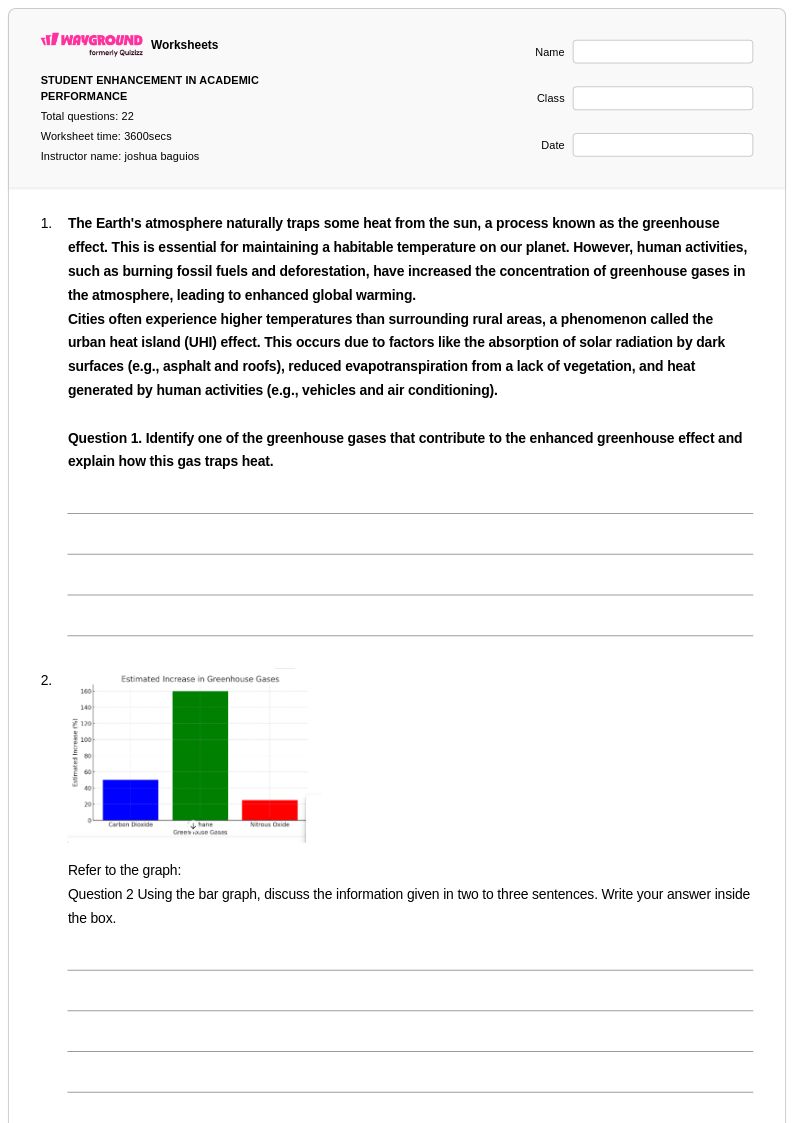
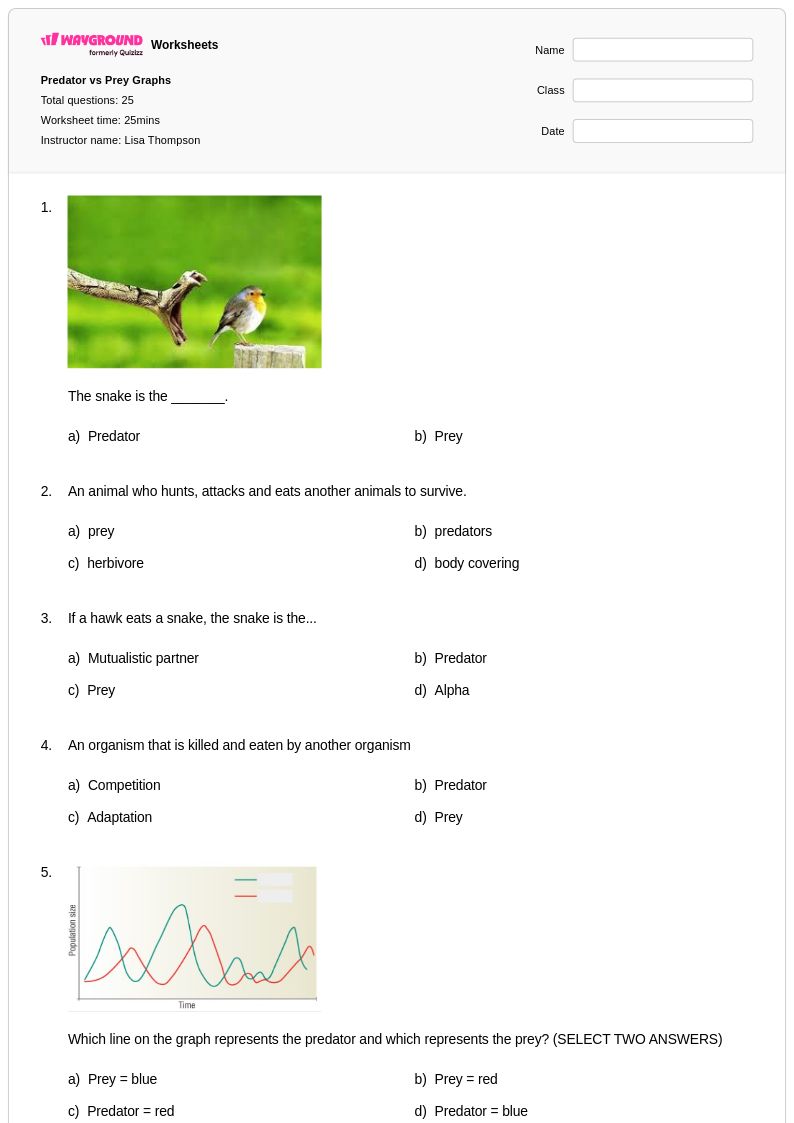
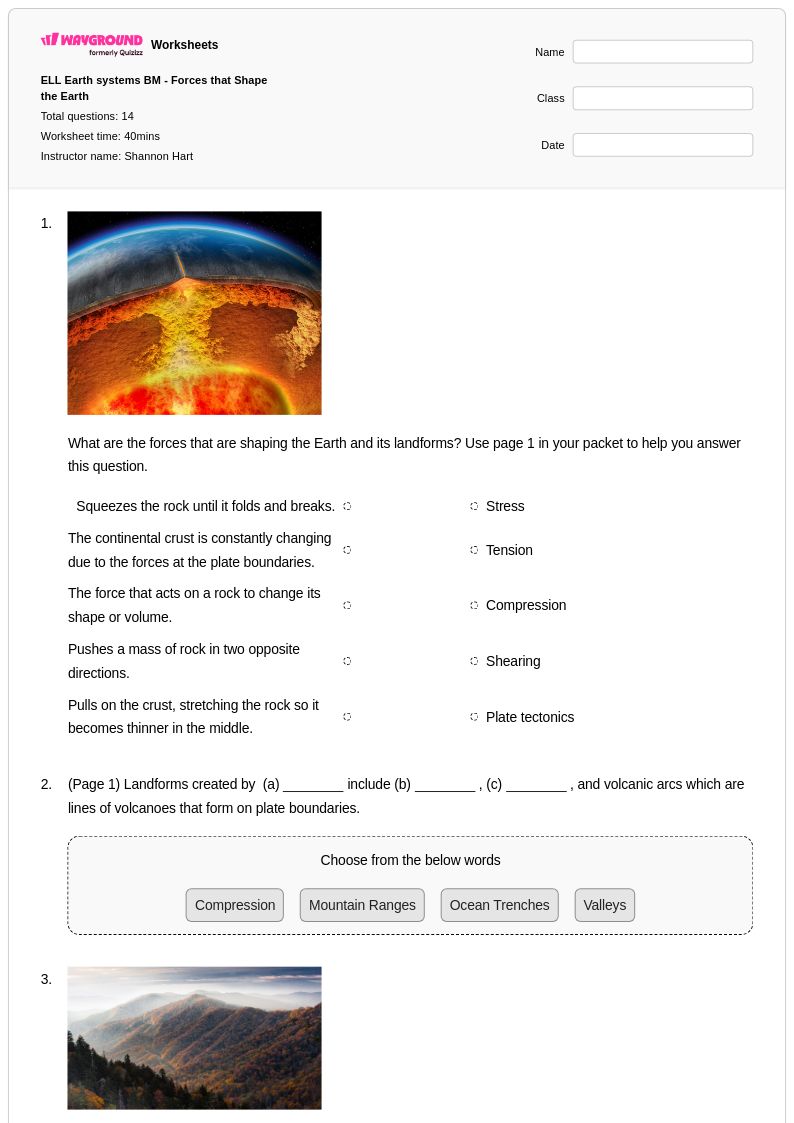
Stress response worksheets for Class 9 biology provide comprehensive coverage of how organisms detect, process, and react to environmental stressors at cellular and systemic levels. These educational resources guide students through the complex mechanisms of stress detection, from initial stimulus recognition to the activation of physiological response pathways including the fight-or-flight response, hormonal cascades, and cellular adaptation strategies. The worksheets strengthen critical thinking skills by challenging students to analyze real-world scenarios, interpret data from stress response experiments, and connect molecular-level processes to observable physiological changes. Each resource includes detailed answer keys that support independent learning, and the materials are available as free printables in convenient pdf format, making them accessible for both classroom instruction and home practice. Students work through practice problems that explore topics such as cortisol release, sympathetic nervous system activation, and adaptive versus maladaptive stress responses across different biological systems.
Wayground, formerly Quizizz, empowers biology educators with an extensive collection of teacher-created stress response worksheets drawn from millions of high-quality educational resources. The platform's advanced search and filtering capabilities allow instructors to quickly locate materials that align with specific curriculum standards and learning objectives, whether focusing on human stress physiology, plant stress responses, or comparative stress mechanisms across species. Teachers benefit from robust differentiation tools that enable customization of worksheet complexity and content depth to meet diverse student needs, supporting both remediation for struggling learners and enrichment opportunities for advanced students. All materials are available in flexible formats including printable pdf versions and interactive digital worksheets, facilitating seamless integration into various instructional approaches from traditional paper-based activities to technology-enhanced learning environments. This comprehensive resource library streamlines lesson planning while providing educators with scientifically accurate, pedagogically sound materials that enhance student understanding of stress response mechanisms and their biological significance.
FAQs
How do I teach the stress response to biology students?
Begin by grounding students in the HPA axis and autonomic nervous system before introducing the hormonal cascade, specifically cortisol and adrenaline release. Use stimulus-response diagrams to trace the pathway from stressor detection to physiological output, then layer in comparisons between acute and chronic stress to build conceptual depth. Connecting stress physiology to immune function gives students a practical anchor for why prolonged stress has measurable health consequences.
What worksheets or exercises help students practice understanding the stress response?
Effective practice exercises include labeling and sequencing diagrams of the HPA axis, fill-in-the-blank hormone pathway questions, and short-answer problems comparing acute versus chronic stress adaptations. Comparative species analysis tasks push students to apply the same physiological framework across different organisms, reinforcing that stress response mechanisms are evolutionarily conserved. These types of structured practice problems build fluency before assessments.
What common mistakes do students make when learning about the stress response?
Students frequently conflate the roles of cortisol and adrenaline, or treat the two as interchangeable rather than understanding that adrenaline mediates immediate sympathetic activation while cortisol drives longer-term metabolic and immune effects. Another common error is failing to recognize the feedback loop component of the HPA axis, leading students to describe the response as linear rather than self-regulating. Misconceptions about the immune system being uniformly suppressed by stress, rather than selectively modulated, also appear frequently in assessments.
How can I use stress response worksheets to support students with different learning needs?
Wayground's stress response worksheets can be assigned digitally, which allows teachers to apply individualized accommodations directly to student accounts, including read aloud support for dense physiological terminology, extended time per question, and reduced answer choices for students who need lower cognitive load. These settings can be configured per student from the Students tab or session settings page and carry over to future assignments without notifying other students. This makes it straightforward to differentiate across the same worksheet without creating separate versions.
How do I use Wayground's stress response worksheets in my classroom?
Wayground's stress response worksheets are available as printable PDFs for traditional classroom and lab use, as well as in digital formats suited for remote or hybrid instruction, and can also be hosted as a graded quiz directly on the Wayground platform. Each worksheet includes a complete answer key, reducing prep time and making them practical for independent study, formative assessment, or structured review sessions. The digital format is especially useful for assigning individual practice and collecting responses without additional grading tools.
How do neuroendocrine feedback loops fit into a stress response unit?
Neuroendocrine feedback loops are central to understanding why stress responses are time-limited rather than continuous. The HPA axis relies on negative feedback, where rising cortisol levels signal the hypothalamus and pituitary to reduce CRH and ACTH output, effectively downregulating the response. Students who grasp this mechanism are better equipped to explain conditions like chronic stress or Cushing's syndrome, where feedback regulation breaks down.